Tag: covid2019

  • Same channels in Across Genres, but TV viewership continues to decline

    Same channels in Across Genres, but TV viewership continues to decline

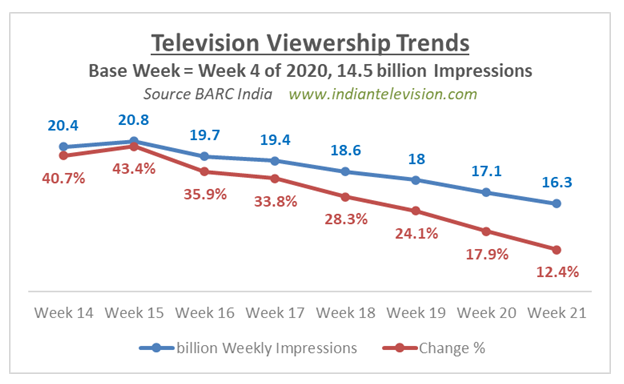
    BENGALURU: Indian television viewership seems to be declining after the lofty peaks of the early COVID2019 (COVID-19) Lockdown as India enters Unlock 1.0, when compared to Week 4 of 2020. The drop in television consumption continued in Week 21 of 2020 (Saturday, 23 May 2020 to Friday, 29 May 2020, week or period under review) with viewership declining to 16.3 billion impressions during the week under review. However, overall television consumption in terms of impressions was still 12.4 percent more in Week 21 of 2020 as compared to Week 4 of 2020 which had garnered 14.5 billion impressions.

    Broadcast Audience Research Council of India (BARC) and Nielsen have set the average viewership data between Weeks 2 and 4 of 2020 as the yardstick to measure television consumption trends during COVID-19 weeks. While the lockdown in India commenced on 25 March 2020, which was midweek of Week 12 of 2020, BARC-Nielsen COVID-19 reports are available for weeks between Weeks 11 and 20 of 2020 at the time of writing of this paper. The author has considered Week 4 of 2020 as the reference week here.

    As is obvious from the chart below, viewership has been dropping over the past few weeks.
    Top 10 Channels on All Platforms Across Genres

    The combined weekly impressions of the Top 10 Channels on All Platforms Across Genres declined by 2.2 percent in Week 21 of 2020 as compared to the previous week. All of the ten channels in the list were the same as in the previous week with some changes in the rankings.

    BARC’s weekly list of Top 10 Channels on All Platforms Across Genres comprised of four Hindi GECs’, three Hindi Movies channels and one channel each from the Kids, Tamil and Telugu genres. From the networks’ perspective, there were three channels from Star India, two channels each from Sony Pictures Network India (SPN)and Zee Entertainment Enterprises Limited (Zeel) and one channel each from, Enterr 10 Television, the Sun Tv Network, Viacom18.  While Dangal is available on both the pay TV and FTA platforms, Zeel’s acquired Hindi GEC Big Magic is FTA. The other eight channels were Pay TV. It must be noted that Dangaland Sony SAB had higher impressions in Week 21 of 2020 than in week 20, despite the lower combined ratings of the Top 10 channels in the list.
    Please refer to the figure below:
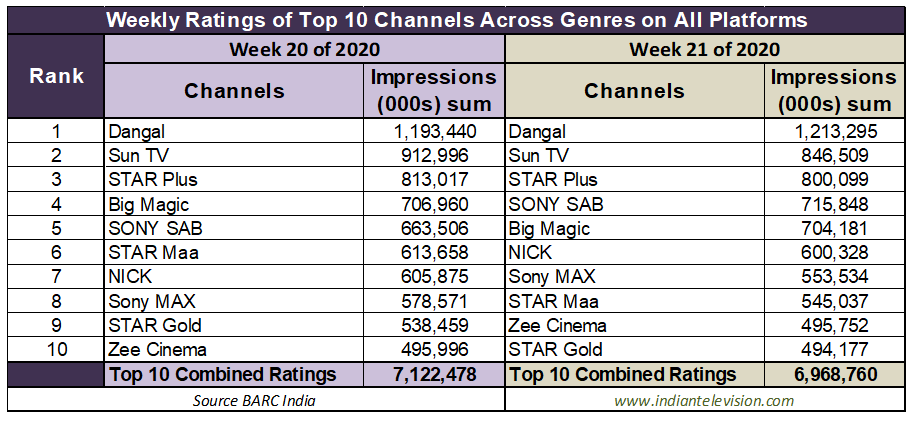
    Top 10 Pay Channels Across Genres

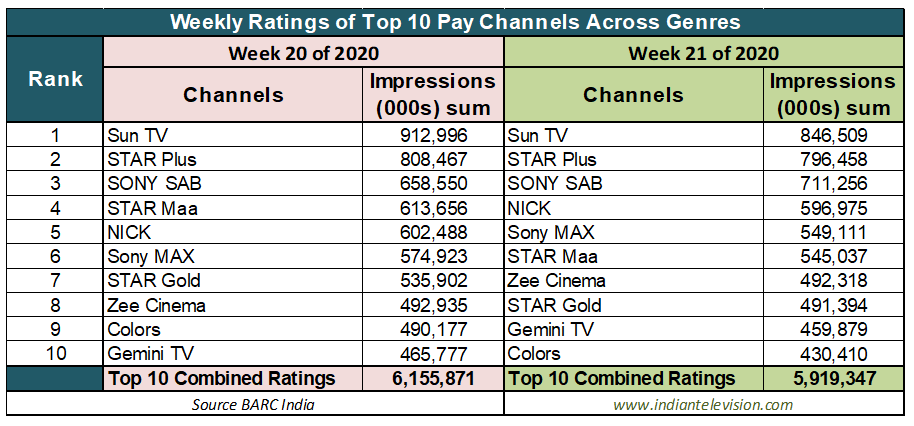
    The combined weekly impressions of the Top 10 Pay Channels Across Genres declined 3.8 percent in Week 21 of 2020 as compared to the previous week. All of the channels in the list in the week under review were the same as in Week 20 of 2020 with some changes in the ranks.

    There were three channels each from the Hindi GECs’ and Hindi Movies genre, two Telugu channels and one channel each from the Kids and Tamil genres in BARC’s weekly list of Top 10 Pay Channels Across Genres in week 19 of 2020.  There were three channels from Star India, two channels each from SPN, the Sun Tv Network and Viacom18 one channel from Zeel in the list.
    Please refer to the chart below:
    Top 10 Free Channels on Across Genres

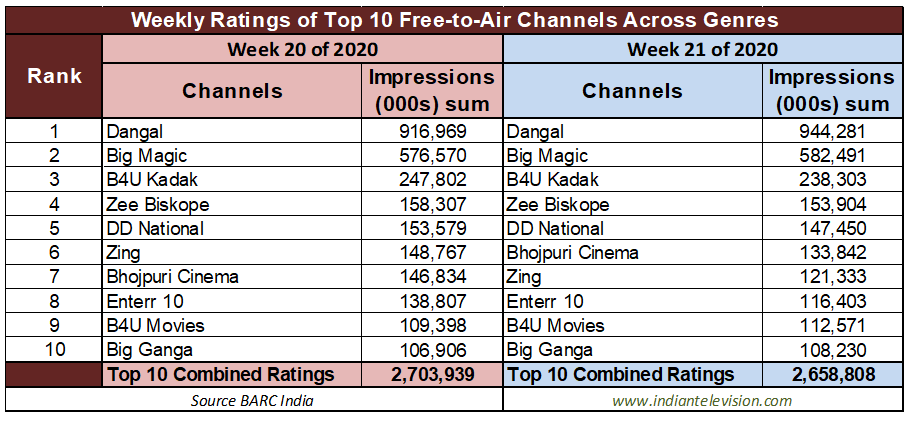
    BARC’s weekly list of Top 10 Free Channels Across Genres shows that the combined weekly impressions of the top 10 channels in Week 21 of 2020 were1.7 percent lower than in Week 20. All the channels in the list in Week 21 were the same as in week 20 with some shuffling in the ranks.

    There were three channels each from the Bhojpuri,  Hindi GEC and Hindi Movies genres, and there was one Youth channel in BARC’s weekly list of Top 10 Free Channels Across Genres for Week 21 of 2020, There were four channels from Zeel, three channels from Enterr 10 Television, two channels from B4U Network and one channel from the pubcaster network Doordarshan or DD during the period under review.

    Please refer to the chart below:


  • Covid2019 is changing how brands communicate

    Covid2019 is changing how brands communicate

    The Covid2019 pandemic has caused a major disruption to both life and economy, forcing businesses to shut down, million becoming jobless, and many other forced to work from home and with salary cut. During this time, brands need to consistently communicate with their consumers and stakeholders to stay connected and maintain the brand recall. As traditional forms of brand engagement are not applicable in the current scenario it is absolutely necessary that brands need to utilise digital engagement or remote engagement. As we prepare to resume our lives at the end of the lockdown, albeit with a few restrictions, these learnings of engagement across platforms is going to stay for a while.

    Brands are also waking up to the renewed importance of relevant communication. Right from building narratives and relevance to creating a positive brand image is becoming extremely crucial than it was ever before; more so for SMEs and MSMEs and smaller brands.

    Here are four ways how brand communication is going to change Post-Covid.

    Building Narratives: The way narratives are created post Covid2019 is set to drastically change. There is a major shift in building narratives that is moving from a brand centric conversation to a consumer centric narrative. As a result, earlier conversations around brand offerings, their benefits and many more, are now shifting towards consumer education, empathy, sharing useful information on health, and how consumers can leverage what the brand has to offer during this crisis. Brands are creating narratives that focus on the consumers’ needs rather than what they have to offer, with an empathetic narrative that reflects the brands commitment towards the best interest of its consumers.  And this change in narrative is going to stay long after the lockdown is gone.

    Integrated Communication: Post Covid2019, brand communication is being replaced by more holistic and integrated forms of communication. On ground campaigns are definitely going to take some time to build their traction and connect with consumers and stakeholders. But during the pandemic brands have been able create a good mix of both traditional and digital media to communicate the right messaging to increase brand visibility. PR, online advertising, social media marketing, influencer marketing have all been beneficial and brands have been successful in creating the right marketing mix to get the desired results. And this approach is going to last for a long time, after the lockdown has been lifted.

    Utilising the right media channels: Communicating the right message to the right audience is very crucial during this time of crisis and being able to judiciously use the right media is the biggest factor. Social distancing has changed how media is consumed and after lockdown though traditional form of media will remain but the online media will become an integral part of all communication campaigns. Apart from social media and digital marketing, innovation in new age media, including OTT, branded content, influencer collaborations and in-film branding  are set to become popular.

    Internal Communication: While the external stakeholders have always been extremely important, the pandemic has forced people to work from home, making brands realise the significant role that employee engagement. From giving clarity about the business to informing employees on where they stand, internal communication has a gamut of significant roles that can be beneficial to both the businesses and the employees. Keeping employees in confidence on the recent developments is a very crucial and humane thing to do for businesses and brands are slowly opening up to this aspect of building employee engagement to create long term loyalty.

    Using Technology: Due to Covid2019 the dependency on technology has suddenly increased manifolds; all forms of communication, messaging and engagement activities are being done through technology. Right from the use of app like Zoom and Skype for virtual meetings to using hangouts, Instagram and Facebook live sessions for webinars, mass engagement has transformed forever. While traditional media will always be there but the nuances of technology will never be forgotten and will be utilised to further engage with audiences. 

    The post Covid2019 scenario is going to be a new market for brands and to be able to survive here, it is important for them to adapt to the new rules of engagement. A fresh and relevant communication strategy is needed to grow and be successful in this market and be connected with consumers.

    (The author is co-founder, Scenic Communication. The views expressed are her own and Indiantelevision.com may not subscribe to them.)

  • Why Indian OTT services should adapt to survive after pandemic

    Why Indian OTT services should adapt to survive after pandemic

    Despite huge spikes in streaming service viewership during Covid209 lockdown, OTT streaming services in India need to remain vigilant in these uncertain times, especially with the global recession reaching its worst. The stakes are especially high for independent players who have heightened pressures to meet their metrics, or else face the same fate as OTT platforms like Viu and HOOQ.

    According to Evergent VP and GM Paolo Cuttorelli, streaming services need to entice consumers to keep their memberships for the months ahead with new bundles, services, and special retention offers to keep users on their platform. a global provider of revenue and customer management for telcos, streaming providers, and digital entertainment companies. In an interview with Indiantelevision.com, he provides some insights on the pitfalls streaming services in India have to avoid at this time.

    Excerpts:

    What are some pitfalls streaming services in India have to avoid during this time?

    Currently, streaming services around the world, India included, are capitalizing on an increase in subscribers during country lockdowns. Having said that, Covid2019 will pass, meaning viewership and subscriber numbers may fall as individuals are allowed to socialize and resume their everyday activities. Streaming services need to entice consumers to keep their memberships for the months ahead and can do so by having the agility to respond accordingly with new bundles, services, and special retention offers to keep users on their platform. With respect to India in particular, overall video viewing behaviour continues to increase in both the traditional Pay TV or OTT segments. We expect this trend to continue beyond COVID for the foreseeable future.

    How can streaming services stand out from the crowded space of OTT?

    To stand out, OTT players need to leverage innovation and digitalization. The legacy mindset must be replaced with a new approach focused on delivering value to customers. Digital (and even traditional) players need to utilize integrated revenue and customer management platforms to help reduce time to market for products and services. This also helps them simplify the complex monetization models and back-office processes so that they run more efficiently.

    OTT businesses must also genuinely engage with consumers to help them manage and subscribe to new services without being invasive. The ability to listen to their audience and quickly pivot both systems and people will help keep Indian video streaming businesses on course for continued success. Combining these improvements together will result in dramatically improved customer experiences. Enabling customers to digitally manage all aspects of their connected services provides superior customer experience and sets the stage for personalized offers that are much more likely to succeed.

    How can OTT streaming services navigate the landscape in India post-pandemic?

    As mentioned above, businesses must understand the need to convince customers to continue with their services post-COVID or risk getting left behind. An unwillingness to innovate, listen to their customers, and adapt, coupled with a refusal to evolve with the market will have devastating effects on any business — it is crucial that streaming services keep this top of mind post-pandemic. Streaming services must respond accordingly to the needs of their customers with new bundles, services, special retention and win-back offers.

    For streaming services in India to be successful, it's absolutely critical to have a deep understanding of payment, product and content preferences specific to each market. It’s also important for OTT providers in India to look beyond their borders and understand how they can best service their international audiences who may be more inclined to pay for access to OTT services that give them a taste of home. Getting the mix of offers, promotion and payment types right by region is critical to the success of any OTT platform with global aspirations. In addition, it is essential to adopt a continuous learning mindset and avoid the temptation of replicating models that work elsewhere — all markets are completely different and streaming services need to acknowledge this from the get-go.

  • Magazines and in-app communication to promote Marriott’s welcome-back discounts

    Magazines and in-app communication to promote Marriott’s welcome-back discounts

    NEW DELHI: The Covid2019 pandemic has led to many businesses within the country shut their shops completely, including the $22billion hotel industry. For the past two months, with stringent travel restrictions in place, the industry faced clumps of losses. However, as the lockdown starts easing, the players are slowly prepping to get back on their feet.

    Recently, US-based Marriott International announced the launch of an interesting deal as a welcome-back offer curated specially for South Asian countries including Asia, under which people can make the hotel bookings now within the month of June, choosing between three different complimentary offers, and avail them any time by June 2021. They will be able to save 30 per cent and above on these bookings.

    Sheraton Hyderabad GM Vikas Sharma told Indiantelevision.com that it is an initiative by the hotel chain to get the cash flowing within the hotels. He said that just within five days of the announcement of the offer, his hotel has already received bookings for 50 room nights.

    “In fact, the whole Marriott chain has been receiving queries and bookings. People have reacted to it pretty well,” Sharma added.

    Most of the bookings received are for the month of June and July 2020. “My hotel is an area where most bookings are made for business purposes. However, another trend that I am seeing is people booking the hotel for staycations.”

    Marriott is also preparing all its hotels to ensure complete safety for its team members and guests and has been ensuring proper sanitisation of the spaces, and introducing touch-free options for facilities like check-in, bill payments, and food & dining experience, etc.

    “The hotels have been working with partners like Ecolabs and Diversey to get the best sanitisation practices in place. We have stringent quality control over each other product that will be used in our hotel, as well,” Sharma said.

    Marriott is also working on in-house technologies to provide keyless check-in to its guests using QR codes and innovating to introduce maximum touch-less experience at shared spaces like elevators.

    The hotel chain is looking at utilising print media, like magazines, personalised communication to its patrons, and in-app notifications on its Bonvoy platform to communicate about this offer. Sharma added that they are also looking forward to a lot of word-of-mouth publicity about the offer.

    While he is expecting a positive response to the discount and thinks people will soon start travelling for business and staycation purposes, he believes that it won’t be before the first quarter of CY2021 that the industry will be able to get back on its feet.

    “I have at least 75 per cent occupancy at my hotel in this time period (June-July) and I will consider myself lucky if we manage to get even 25 per cent this time. The industry will take some time to get back to normal,” Sharma concluded.

  • Covid2019 impact on the M&E industry: A mix of pain, hope and opportunities

    Covid2019 impact on the M&E industry: A mix of pain, hope and opportunities

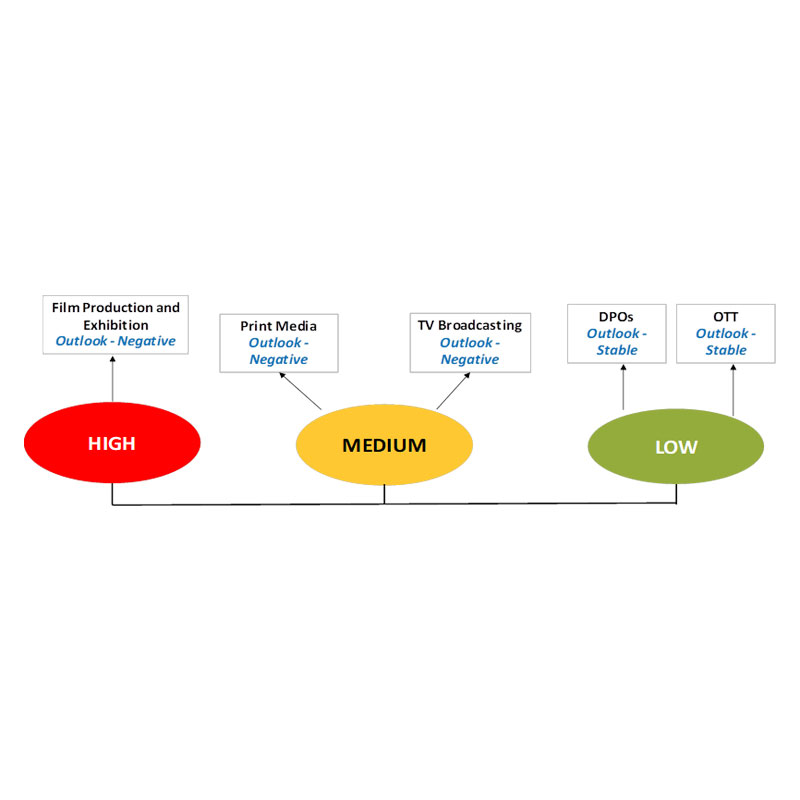
    MUMBAI: The Covid2019 outbreak has impacted the domestic media and entertainment industry, comprising of film production and exhibition, print media and TV broadcasting segments, besides DPOs and OTT Platforms.

    ICRA has a negative credit outlook for the film production and exhibition, print media and TV broadcasting segments of the Indian media and entertainment (M&E) industry. Besides the direct impact by way of lost sales due to the shut-down of cinema halls, given the adverse impact on the overall economy, sharp reduction in advertisement spends has been observed in April and May 2020, and is expected to continue over the short-term. This, in turn, will dampen the revenues and profit margins of the aforementioned segments of the Indian M&E industry in FY2021.

    ICRA assistant vice president Sakshi Suneja says: “Cinema halls were the first ones to shut down, even before the lockdown started, and are expected to be amongst the last segments to witness relaxations. This segment will thus witness a complete loss of revenues in Q1 FY2021. Even after the theatres resume operations post the lockdown, occupancy is expected to remain sub-par as consumers, as a means of caution, are likely to stay away from crowded places. Corporate advertisement spends will witness a decline, adversely impacting the advertisement revenues of film exhibitors. Overall, ICRA estimates a 60-65 per cent YoY degrowth in revenues in FY2021 for the entities engaged in the film exhibition industry. Furthermore, low footfalls once cinema halls resume operations will result in lower box-office collections, adversely impacting the revenues of the film producers”.

    Around 40-45 per cent of the total cost of the film exhibitors (primarily multiplexes) is fixed in nature, with lease rental being the major component accounting for 20-22 per cent of the total cost. To minimise the impact on losses and cash outflows, most of the multiplexes have invoked force majeure clauses in their rental agreements, so that they do not have to pay rental and common area maintenance (CAM) charges during the period of lockdown, and are also negotiating a variable rental structure with the mall owners, once the operations resume. Salary rationalisation and pay cuts have also been undertaken by the exhibitors. Overall fixed expenses have been curtailed on an average by 2/3rd (of earlier levels) during the Covid2019 pandemic.

    ICRA expects the credit metrics for the players in the film production and exhibition segments to weaken materially, though ICRA-rated portfolio has a healthy credit profile.

    For the print media segment, circulation revenues were adversely impacted by 40 per cent on YoY basis in April 2020, amid distribution challenges due to the ongoing lockdown restrictions. Furthermore, advertisement revenues, which were already pressurised during FY2020 amid subdued economic conditions, declined by 60-70 per cent YoY in April 2020.

    Advertisement revenues have also been adversely impacted for the TV broadcasting segment in April 2020. While news and movies genre are on the lower end of the spectrum, with an average decline of 25-30 per cent in advertisement revenues (vis-a-vis average monthly revenues), general entertainment channels (GECs) and sports channels have witnessed a sharp 55-60 per cent reduction in advertisement revenues in April 2020. This is in turn explained by the absence of fresh content (given the shutdowns and travelling restrictions) and deferment of high viewership driving sports events. Subscription revenues, comprising 30 per cent of the total revenues of TV broadcasters, are, however, holding steady as consumers have increased their TV viewing (led by movies and news genre) during the lockdown.

    ICRA vice president Kinjal Shah said: “Weakened advertisement revenues will moderate the revenues and profit margins for entities engaged in the print media and TV broadcasting segments in H1 FY2021, though some recovery in advertisement revenues is expected in H2. Expected normalisation in circulation revenues for the print segment in coming quarters as lockdown restrictions ease and low newsprint prices are some positives. For the TV broadcasters, steady state subscription revenues will provide some shield to revenues. However, fresh content production remains a key challenge. We expect the credit metrics of entities engaged in the print media to weaken in FY2021, though ICRA-rated entities have strong liquidity to weather the impact. The TV broadcasting segment will also witness moderation in credit metrics. The credit outlook for both these segments is negative.”

    ICRA has a stable outlook on the DPOs and the OTT platforms. The impact of the pandemic on the DPOs will be limited as subscribers are expected to hold on to their current subscription packages. New subscriber acquisitions have, however, been impacted as very few new installations are being carried out by DPOs, though the same is expected to resume once the lockdown restrictions ease. Prolonged lack of fresh content from TV broadcasters may, however, increase subscriber churn towards DD Free dish.

    The current lock-down has led to a surge in consumption of OTT platforms as consumers stay home. While currently OTT platforms have an advertisement revenue-dominated business model, the current crisis provides an opportunity to increase the proportion of paid subscription, led by the new habit formation of at-home OTT viewing. Furthermore, with the shut-down of cinema halls and expected aversion to outdoor viewing of films, OTT (especially large platforms) are also being considered by the film producers for their film releases. A shift in advertisers’ preference towards online platforms (vis-a-vis linear platforms) is also expected as they attempt to garner more eyeballs and especially, after the deferments and cancellations of various sports programmes, which were to be aired on linear TV. OTT platforms, however, are also facing dry up of fresh and quality content. Platforms with large content library are thus better placed to ramp up subscribers during the current crisis.

  • Disney+ and Apple TV+ see success during first six months

    Disney+ and Apple TV+ see success during first six months

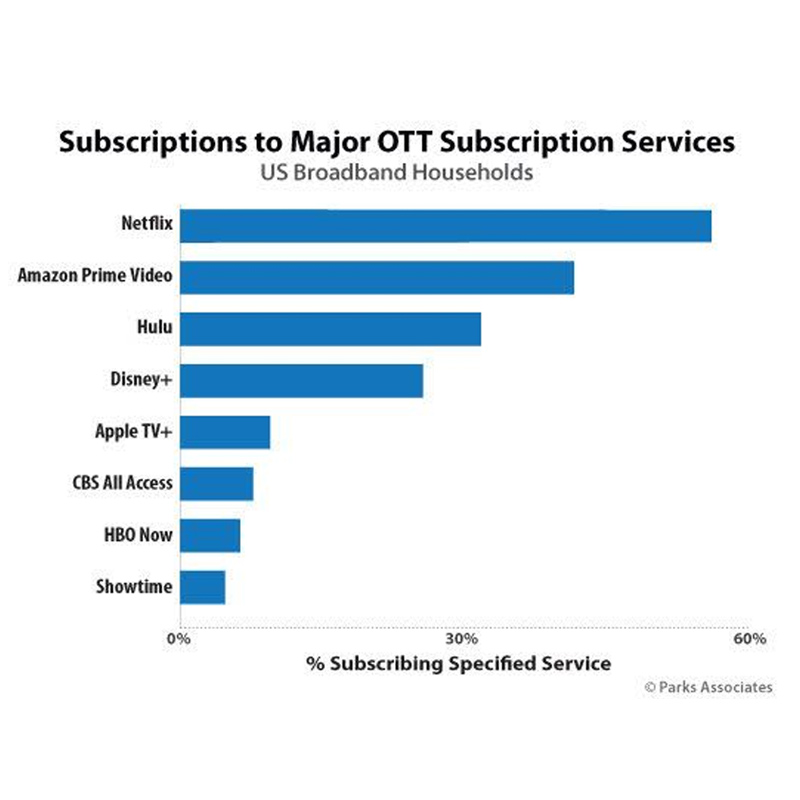
    MUMBAI: New OTT services Apple TV+ and Disney+ have captured significant market share in the streaming video space, rounding out the top five behind the "Big 3" Netflix, Amazon Prime Video, and Hulu, according to a recent consumer survey research by Parks Associates.

    The research firm's Market Snapshot: Disney+ and Apple TV+ highlights the impact of the entry of Disney+ and Apple TV+ in the OTT market, including insights into the factors driving their growth.

    Disney+ has skyrocketed to 25 per cent adoption among US broadband households after just six months in the market. Apple TV+, which launched around the same time, has reached nearly 10 per cent adoption. Disney+ and Apple TV+ are fourth and fifth, respectively, among SVOD services adopted by consumers.

    Data presented in this market snapshot were drawn primarily from an online survey of more than 10,000 consumers fielded between 8 March and 3 April to heads of broadband households, after the Covid2019 crisis had begun in the United States.

    Additional data from the market snapshot:

    Nearly three in ten broadband households report their use of online video services has increased because of the Covid2019 outbreak.

    81 per cent of Disney+ subscribers subscribe to Netflix, as do 72 per cent of Apple TV+ subscribers.

    Nearly one-half of Disney+ subscribers cancelled another OTT service over the last 12 months, as did roughly two-thirds of Apple TV+ subscribers.

    "Disney took a broad-based content approach to its Disney+ service, including its Pixar, Stars Wars, Marvel, Nat Geo, and 20th Century Fox properties to make it broadly appealing, far beyond its traditional audience of families with young children," said Parks Associates research director Steve Nason. "Very few Disney+ subscribers subscribe only to this service, so households are not picking up Disney in place of another service but adding to their home's other OTT services. We will see, as household budgets tighten up, if Disney+ has done enough to become an 'essential service' for its subscribers."

    Disney+ also benefited from promotions such as the introduction of the Disney+/Hulu/ESPN+ bundle and its partnership with Verizon where unlimited mobile subscribers and new internet subscribers get a free year of the service.

    "Apple TV+ promoted a small stable of original programming and is now looking to supplement that with more third-party content," Nason said. "Apple TV+'s growth is due largely to a free year of service for those who recently purchased an Apple device, which brings the firm's brand loyalists into the service. Apple TV+ does have a higher percentage of exclusive non-Netflix subscribers, plus a higher number of households that recently cancelled another OTT service, so it appears Apple does have a core group of dedicated subscribers. Apple's challenge is to expand beyond that group."

    Parks Associates is an internationally recognized market research and consulting company specializing in emerging consumer technology products and services. The company's expertise includes digital media and platforms, entertainment and gaming, home networks, Internet and television services, etc. 

  • Lay’s launches new campaign #Heartwork as ode to unseen heroes

    Lay’s launches new campaign #Heartwork as ode to unseen heroes

    MUMBAI: Lay’s has launched a campaign to share gratitude towards the unsung heroes’ who have brought joy to millions. Aptly titled #Heartwork, this campaign is a heartfelt, emotional ode to each hero in the brand’s supply chain who works relentlessly against all odds to ensure Lay’s brings joy to millions across the country.

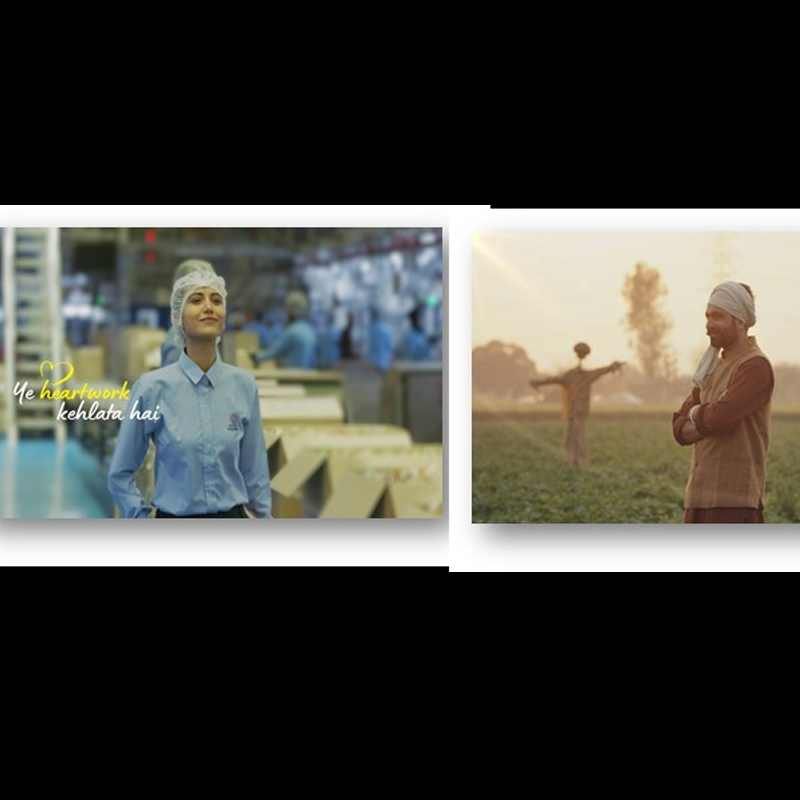
    The campaign film signifies that each pack of Lay’s is a celebration of the #heartwork of unseen heroes; farmers, factory workers, truck drivers, distributors, sales force, retailers, and delivery executives, whom we don’t always get a chance to thank in person. Through this film the brand extends its sincere appreciation and gratitude to them on behalf of the company and every consumer who enjoys Lay’s.

    The film applauds the “Heartwork” of the Indian farmer who puts in utmost care and love in growing the best quality potatoes that go into making Lay’s. It thanks the factory workers, who work day and night to ensure production of Lay’s. It recognises the efforts of the truck drivers who often drive long miles across the country, to reduce the distance between the consumer and one of their most loved brands. And, last but not the least, the film expresses gratitude to the retailers and delivery executives who ensure that the snack brand reaches the consumer. It’s a succinct yet heartwarming depiction of #Heartwork from lush green potato farms to fingers that consume a pack of Lay’s with utmost joy.

    PepsiCo India senior director and category head – foods Dilen Gandhi said, “Every step of the journey from farm to finger is filled with countless stories of people who face tough challenges but overcome them with dedicated efforts and with a smile on their face. They might be working behind the scenes, but they are the real heroes of the story. With the #HEARTWORK campaign, we want to extend our sincere gratitude and appreciation to each one of them. It is thanks to their efforts that Lay’s is able to bring joy to millions of consumers in India.”

    PepsiCo Foods WPP India lead Ritu Nakra said, “#Heartwork is our latest endeavour acknowledging the tireless spirit of all the people who are behind the scenes who have ensured the uninterrupted supply of Lay’s to the consumers. This community spirit inspired Team WPP to create a warm and touching story of deep gratitude. LAY’S helps build and celebrate connections and with this film we expand the narrative of heartfelt connections to the unsung heroes.”

    Lay’s India works with over 24,000 farmers, 4300 factory workers, 2400 distributors, 6.5 lakh retailers, and 5000 sales staff, who are proudly delivering joy across the country each day.

  • Asianet starts airing popular serials

    Asianet starts airing popular serials

    MUMBAI: Prominent GEC in Kerala Asianet is back with some exciting entertainment for the audience. TV shoots which were stalled due to the Covid2019 outbreak have resumed following the guidelines issued by the government.

    The GEC has started airing a few episodes in the content bank and the newly shot episodes from 1 June. Popular shows Maunaragam and Kudumbavilakku will go on air from 15 June.

    The channel will also telecast popular series Kannante Radha at 5.30 pm, Sanjeevani at 6 pm, Vanambadi at 7 pm, Pournamithingal at 7.30 pm, Seethakalyanam at 8 pm and Kasturiman at 8.30 pm.  

    Sanjivani is one of the popular medical dramas which portrays the lives of a group of doctors. The show has Surbhi Chandna, Namit Khanna, Mohnish Bahl, Gurdeep Kohli and Gaurav Chopra in the main roles.

  • Covid2019 communication: Is it time to change OOH messaging?

    Covid2019 communication: Is it time to change OOH messaging?

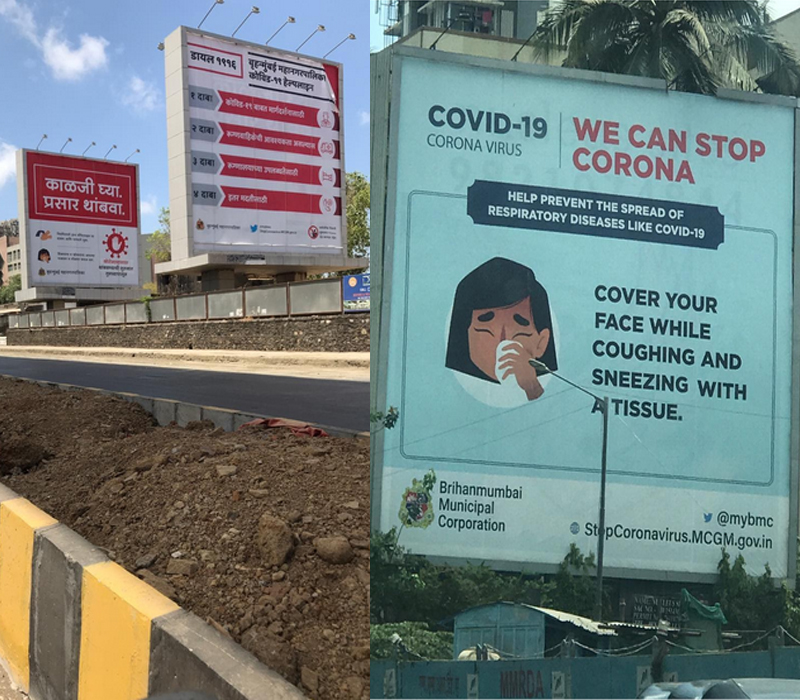
    NEW DELHI: It has been close to three months since the announcement of a nationwide lockdown in the wake of Covid2019 and even longer since the governments across states have been trying to promote the necessary social distancing and other precautionary measures via advertising. While there has been constant innovation in digital and TV commercials, with the constant addition of newer faces and updating of messaging with changing scenarios, OOH hoardings are still covered in the initial set of messaging. Case in point, the following hoardings spread across Mumbai, which have been a constant for months now!

    Posterscope India director Fabian Cowan believes that for communication to be effective it needs to be refreshed with time, based on the current environmental cues and prevalent truths. Therefore, a refreshed set of creatives and communication is most certainly required to be promoted by the civic bodies.

    “The elements and tone need to be in line with the current stage of the pandemic. If staying at home was the single-minded focus at the start of the pandemic, maintaining the right kind of social distancing could be the line of thought in the current context as restriction begins to ease.”

    Laqshya Media group CEO Atul Shrivastava adds, “The Covid2019 communications had utilised the OOH space for over two months. However, awareness is still needed especially in the larger cities where the curve is still climbing. Therefore, a few strategic locations with high visibility should be chosen for specific Covid2019 communications. As people start going back to offices across the country and supply chains open up, there needs to be a healthy balance between public service and commercial activity.”

    Kinetic India co-CEO Charanjeet Arora feels while it is important to refresh the messaging, it is totally the government’s call to do it or not. “Honesty, it is a pandemic and the government understands the magnitude of it. In their long list of priorities, I think saving lives is on top right now.”

    He continues, “If I talk about just Delhi and Mumbai, they are much evolved markets and internet penetration is quite high. People are aware but there is a constant need for communication because the memories in our country are constantly shuttling. It is important to have this (Covid-centric) communication but there is a need to work on the frequency as we have to build the sentiments of businesses back. For example, in Delhi, at least 30 per cent of all OOH billboards should have this communication but the areas should be chosen based on the need.”
    So, should the brands be taking the onus of acquiring OOH space and share Covid-related messaging?

    Arora doesn’t think it will be wiser for brands to constantly keep talking about the pandemic in their messaging. “Brands need to be subtle and empathetic in their communication, surely. It shouldn’t look like a high-decibel sales pitch. But they should be talking about their own brand experience and usage.”

    If Cowan as to be believed, brands too are looking forward to incorporating the same style of out-of-home messaging going ahead. He says, “Currently there are encouraging signs with regards to the increased number of enquiries and considerations being made on possible open markets, especially with respect to green zones. We see this as a positive development. While these discussions currently are in the realm of media possibilities and its deployment our sense is that the communication will largely be centred around sales and benefits of ownership of such products given the current context.”

    Shrivastava says that most brands are trying to strike a balance between awareness and sales pitch and the pure commercial advertising will take a few more weeks to come back. “They are keeping marketing communications sensitive, meaningful, relevant and optimistic. Many companies have launched new initiatives to give them an edge in the age of the New Normal. The brands are communicating these initiatives more to portray to the consumers that they care for their employees and their consumers.”

  • SPN to discontinue AXN, AXN HD from 30 June

    SPN to discontinue AXN, AXN HD from 30 June

    MUMBAI: Sony Pictures Networks India (SPN) has decided to discontinue the operations of two of its English general entertainment channels (GECs) with effect from 30 June. The major broadcaster has circulated a letter informing the shutting down of AXN and AXN HD.

    “With reference to the aforementioned subject matter, kindly note that we will be discontinuing the operation of our channels AXN and AXN HD, Genre- General Entertainment Channel (English) w.e.f the midnight of 30 June, 2020,” SPN distribution operation associate vice president Anuj Yadav stated in a letter.

    "In keeping with our growth strategy, we are realigning our channel portfolio. Accordingly, we have decided to discontinue AXN and AXN HD. This decision comes into effect on June 30, 2020," SPN clarified when Indiantelevision.com reached the broadcaster for reaction.

    English channels were majorly hit by the new tariff order (NTO) rolled out in 2019. Several reports have indicated that English pay-TV channels would see a massive drop in their revenues post the NTO. Moreover, the emergence of OTT platforms offering English content has also spelt doom for the English channels. Adding to the cup of woes of the broadcasters, the Covid2019 crisis has badly affected the advertising revenues also.