Tag: covid2019

  • Most searched recipe trends during lockdown include a mix of baking and culinary delights : Foodfood

    Most searched recipe trends during lockdown include a mix of baking and culinary delights : Foodfood

    MUMBAI: Food trends in India during Covid2019 lockdown threw up some very interesting results, a detailed report by Foodfood, India’s favorite food and lifestyle channel. With India locked down for two months, there was a rise of people experimenting with their passions and interests and among them cooking took first place. This was many times a necessity and many other times an indulgence. 

    According to social media and google search analysis done by Foodfood, most searched recipe trends included a mix of baking and culinary delights that the country was cooking during the lockdown period of April and May. The top most searches were Cake, Dalgona Coffee, Samosa, Jalebi, Dhokla, Chicken momos, Panipuri among others. While 'Dalgona coffee recipe at home' spiked 5,000 per cent, searches for 'chicken momo recipe' grew 4,350 per cent and searches for "mango icecream recipe" saw 3,250 per cent rise on google search.

    Chef Sanjeev Kapoor said, “It has been our attempt with our shows and our channel (Foodfood) to help people discover their passion for cooking and this lockdown been proven that – Har dil mein chef rahta hain. During my innumerable live on social media during lockdown, I have interacted with people who have become overnight stars with their cooking recipes on the internet and are discovering their cooking talent.” 

    What’s interesting is the rise in search has been mainly driven by metro cities including Mumbai, Bangalore, Delhi, Kolkotta, Hyderabad and Chennai accounting for more than 25 per cent share. States that lead the search include Maharashtra, West Bengal and Karnataka. The first weeks of lockdown saw an increase in buying of staples and spices including rava and maida which were flying off the shelves as people were experimenting with delicious treats rather their normal fare. 

    Devendra Chawla, CEO, Nature’s Basket & Spencer had said “As people get adjusted to restricted living as the new normal and lack of options to eat out, consumers are increasingly taking on the chef role, a trend which will continue post lockdown too” 

    Some of the other trends during lockdown were: 

    Baking 

    Everyone with an oven was baking and who didn’t have an oven were baking in pressure cooker. Whether it was cakes, cookies or even breads, people were trying one thing after the other. 

    Banana Bread 

    With bread supply disrupted, people started making bread at home and Google saw a surge in search of banana bread recipes. Many variations of like banana cake, banana muffins and banoffee pies also made it to list but Banana Bread ruled the roost! 

    Quarantine Snacking

    “Quarantine snacks” became the top trending snack search as more and more people stayed inside and experimented with their pantries. In an interview with Bloomberg Quint, Future Group President Food & FMCG Kamaldeep Singh had said, “The definition of basic necessity has changed in a couple of weeks from basic foods to snacking and munching items.” Infact recipes like Samosa, Chinese Bhel, Khaman Dhokla has seen a 300% increase on the searches on websites of Sanjeev Kapoor and Foodfood. 

    Street Food 

    With Street food a strict NO and all options gone, renowned chefs and food bloggers took to Instagram to share their versions of some of the best chaat preparations at home. Aloo Chaat! What’s more, Google insights reported that recipe searches on Youtube increased by 20% for street food recipes! And, the top most-searched recipe was Pani Puri recipe with an increase of 107% search rate. Other recipes that have been widely searched in street food include Baked Potato Chips, Paneer Shawarma Mexican Paneer Fajita (Source Foodfood website). 

    Comfort Food- One-Pot Meals 

    Khichdi and biryanis have been our comfort food for as long as we remember, and also double up as a gourmet dining experience when we want it to be. Making it quick and easy or a time consuming fare, these recipes can be as easy or as tedious as we want them to be. Keywords like easy, quick & tasty have been associated with rice recipes and searches have delivered pulao, fried rice etc. Google insights has reported with restrictions in availability of ingredients people are looking for alternative ingredient options to savour their favourite dishes without missing out on taste. A 200% growth in searches with the word, “without” has been recorded in the Food & beverages category. 

    Handmade Pizzas

     With kids at home and no pizzas to order, home-made pizzas has been one of the most successful attempts families are making with kids involved. Many chefs have given out recipes and videos and to make easy pizzas at home starting from the dough with variations including sour dough combinations. Live on Social media showcasing handmade pizzas have garnered huge views and been very popular across the board. This pandemic has taught us many things and most of self-reliance to a lot of men and women about cooking who weren’t cooking before. Now nobody is afraid to step into the kitchen and learn how to make things from recipe videos. Women were cooking and experimenting way before this pandemic have learnt to share their art and passion.
  • India loves advertising more than any other country: Piyush Pandey

    India loves advertising more than any other country: Piyush Pandey

    NEW DELHI: The past few years have generated a heated discussion on the role of creativity v/s the role of technology in advertising and marketing. With machines dominating almost every aspect of the functioning of an agency, there have been debates on understanding the role of human touch and sensibility in the future of communications and how technology can or cannot be a substitute for human emotions. 

    Addressing the same in a free-wheeling fireside chat with Indiantelevision.com founder, CEO and editor in chief Anil Wanvari, Ogilvy chief creative officer worldwide and executive chairman India, Piyush Pandey said that technology is there to help the advertisers in creating different creative stories. “Technology is not the story,” he quipped. He elaborated the role of human emotions and sensibilities will never go out of advertising and the agencies will have to learn how to strike a fine balance between the two. 

    Speaking about India’s stand when it comes to creative trends in advertising, he said, “‘Trends' is a strange word. I will never compare Indian advertising with any other country. More people in India love advertising than any other country in the world. The cynicism is not there. We might not win Oscars but people appreciate our good movies.”

    However, Pandey also noted that communication, as we know today, has to change for the better. “It has to be more sensitive as communication is not only about transactions, it is also about relationship building. It is not the time to sell, it is the time to build relationships.” 

    He added, “I feel today, a fruit vendor has more sense of communication and tone than most people in the advertising industry.”

    Does it mean that advertising shouldn’t be focussing on delivering ROIs?

    Pandey disagreed. “ Which client ever, and sensibly so, would not want sales? You can do a bad piece and run it 50 times a day and you can do something impactful and run it 10 times a day only, to deliver similar sales. That’s what the differentiator is.” 

    He continued, “You have to know the consumer to understand what is the aspect of your brand that the consumer will appreciate. If we can engage a consumer and touch hearts, that always works well (for a brand).”

    The thespian also lauded the good world that many agencies have done during the Covid2019 lockdown with limited resources and lots of constraints. Be it the work for Asian Paints, which he wrote and did the voiceover for, or the work to promote the Aarogya Setu app, Pandey thinks there was a lot of creativity that was unleashed during the lockdown across agencies. 

    “I think agencies everywhere have done a good job during the pandemic, given the constraints. It is a testing time for everybody; much more testing time for communicators than anybody else. Yes, our feet are tied but not our hands, not our pens or computers. My personal favourite piece of work is “Family”, which my brother (Prasoon Pandey) created with Bollywood celebrities like Amitabh Bachchan and Rajnikanth.”

    The one ad that did not make the cut for him was Memec Ogilvy’s #StayHome for Honda. “You will have to see what the ad was for instead of what the ad was. Instead of showing something remarkable, like shooting with a mini car, and making people wonder how they did it, they just put it out there in the video. When you show how fantastic a director you are, what a fantastic editor you are, then I am looking at you and not the car,” he explained. 

    Pandey, who is not just a globally-celebrated advertising industry champion, but also a cricketer (has played CK Naidu Cup and Ranji in his younger days,) a lyricist (he has contributed to the iconic Mile Sur Mera Tumhara), a scriptwriter (Bhopal Express), a voiceover artist (a number of ads including the latest Asian Paints’ Har Ghar Kuch Kehta Hai), and an actor (Madras Cafe and a few ads), also touched upon his life and experiences during the chat. 

    Chuckling about the mention of his work outside his home industry, Pandey said, “I am a hardcore advertiser. I am not a voiceover artist not an actor. In fact, I am a terrible actor. I did Madras Cafe for my friend Shoojit Sircar. R Balki also tried a few times to get me into movies, but after testing me for several times, he understood that I can’t do it.” 

    On being asked about his retirement plans, Pandey mentioned that he has never seriously thought about it as he is loving what he is doing currently. He did mention that he will continue writing. 

  • This pandemic has shown that planning is meaningless: FCB Ulka’s Anindya Banerjee

    This pandemic has shown that planning is meaningless: FCB Ulka’s Anindya Banerjee

    MUMBAI: In these unprecedented times, it is easy to lose focus and develop a sense of anxiety or fear. Hence, people around the globe are utilising their lockdown time to invest in personal growth and learning skills. In a special interaction with indiantelevision.com, FCB Ulka executive creative director Anindya Banerjee shares some of his favourite activities, new skills he learnt during lockdown and more.

    Excerpts:

    What are the few things that you learnt during this lockdown?

    • Learnt that people land up in time for virtual meetings (Microsoft teams or Zoom) while being incorrigibly late for meetings in the real world.
    • Learnt that people usually keep video on while on a zoom call with friends and keep the video off while on zoom call with colleagues.
    • Learnt that physical meetings are a waste of time and resources. I’ve now learnt how to present film scripts online and I am liking it.
    • Learnt how to shoot a film without being actually present. It’s tough, but do-able.
    • Learnt how to change the punctured tyre of a car.  

    Have you tried to learn a new game or have you enjoyed playing a game for hours?

    I am learning how to play poker. Although, I suspect, I am a long way off from being proficient at it. I am also enjoying going back to the good old games of the analogue age: monopoly, chess and scrabble.  

    Have you taken time to reflect what you have accomplished in the past years and what goals you'll be setting for the coming years?

    Most people have said that this is a time for reflection. But frankly, with the work pressure, I have had even less time to think of the future. In any case, the pandemic has shown that planning is meaningless.

    Have you made a list of things which you are grateful for?
     
    I wake up in the morning and mentally thank god. I am grateful to be alive. Secondly, I am grateful to my profession that I have my hands full when it comes to work. How many people can stand up and say that?
     
    What business-related book has inspired you the most?

    I love reading. But if there’s one book that has inspired me, and honed my craft more than any other, it is "The Copy Book". In fact, it is the Bible for any advertising person. In every writer’s life, there are moments of fear and utter blankness. 15 minutes on any page are enough to dispel any self-doubt.  

    If you three wishes, what would you change in the world?

    • I would change people’s mindset about wastage. Wastage is the biggest crime today and it should be punishable by law.
    • I would make comics tax-free. Everyone loves reading comics. They are simple, entertaining and easy to read. A comic book can go a long way in eradicating illiteracy.

    What habits helped you become successful?

    Success is a highly contentious topic. Who’s to decide what is successful and what is not?

    What mindsets have helped you?

    The world is full of super talented people. And I know I am not one of them. So, I try and over-compensate it by working twice as hard.

    If you had the chance to start your career over again, what would you do differently?

    I am in advertising for the love of advertising. We influence society, thoughts and in many ways, I believe we are far ahead of the curve when it comes to changes. It’s an entertaining business and I get paid for it. Why would I want to do things differently?

  • Telemedicine gets much-needed boost due to Covid2019

    Telemedicine gets much-needed boost due to Covid2019

    MUMBAI: Covid2019 has forced the entire medical workforce to focus on just the pandemic creating a shortage of clinics and hospitals for other medical needs. This has trained the lens on telemedicine as an alternative option. Telemedicine is a tool that allows a patient to consult a respective Medical Council verified doctor 24*7, from anywhere in the country.

    Communicating with a doctor is a huge problem in India, given the skewed doctor-patient ratio in the country that stands at 1:1700. The situation is tense especially in the non-metro areas. Experts believe that telemedicine can function as a great force multiplier in such a scenario.

    The system has been around in developed countries for decades and has flourished well. However, in India, it failed to get going due to a lack of technological adoption and an overall reliance on conventional healthcare. The benefits of telemedicine and remote-monitoring have come to fore during the ongoing pandemic crisis.

    According to experts, technology supporting telemedicine has been available in India for many years now. However, the reluctance among the public was primarily due to the perception that it is a complicated process suitable to tech-savvy people only. But now, when stepping out is advisable only in times of emergency, teleconsult plays an important role.

    Experts also suggest that in the coming years, AI/ML will be used heavily in the healthcare sector. AI/ML can help optimise the limited medical resources countries have by differentiating between emergency and non-emergency cases. So wherever influx is higher and resources are limited, AI/ML can be pivotal. This has encouraged countries to implement long-term telehealth tools and enhance interoperability of electronic medical records. 

    Practo chief healthcare strategy officer Alexander Kuruvilla told indiantelevision.com that in the last few days Practo received requests from many hospitals and clinics to make online consultation services live for them. The company is also reaching out to a lot of establishments so it can continue consulting their patients online.

    He also mentions that the government’s push towards the telemedicine sector will play a key role in giving a fillip to the industry.

    According to McKinsey, India could save up to $10 billion in 2025, if telemedicine replaced 30 to 40 per cent of in-person outpatient consultations and there is digitisation in the overall healthcare industry.

    Portea Medical COO Vaibhav Tewari says that all doctors and nurses working with the firm have passed rigorous hiring standards, with their backgrounds and medical knowledge verified by senior authorities.

    Tewari notes that India has a severe shortage of qualified doctors and the doctor to patient ratio gets worse from non-metro city areas. Telemedicine addresses this problem by providing access to qualified doctors from all parts of the country. It is highly affordable too.

    Lybrate is a free platform for users and doctors to use. Users can consult their choice of a doctor privately by paying a consultation fee online. On top of the doctor’s consultation fee, the user has to pay an internet handling fee to Lybrate which makes up for the company’s revenue.

    At Portea Medical, patients register on the portal by filling in their details. Subsequently, the patient can consult the doctor, get prescriptions reviewed, diagnostic tests analysed and also seek the doctor’s advice on the treatment process to be adopted. According to Tewari this is usually faster and more affordable than taking a telephonic appointment with a doctor.

    Kuruvilla explains,  “We wanted to ensure patients and doctors can connect at any time, communicate asynchronously or synchronously depending on their needs. We support three modes of communication on our platform. The first is real-time text-based chat which allows patients and doctors to talk asynchronously where patients can share documents and photos with the doctor real time. For cases that require more attention especially where visual and verbal cues are important, we also support audio and video chat.”

    He further adds that built-in features like image sharing, voice calling and video call (only on the app) ensure that doctors get all the required information for a diagnosis and refer for a physical visit to a clinic if required. The response time to get in touch with doctors is also as low as one to 60 seconds in some specialties.

    According to Practo Insights, 1 March 2020 onwards, online consultations on the platform grew by 500 per cent, 35 per cent of the consultations are from women while 65 per cent are from men. 60 per cent of the overall queries were from metro cities while 40 per cent of all teleconsults were from Tier-2/3 cities.

    Metro cities from where most of the queries are coming include Bengaluru, Delhi NCR, Hyderabad, Mumbai, Pune, and Chennai. Non-metro cities from where most of the queries are coming from are Ahmedabad, Jaipur, Lucknow, Bhubaneshwar and Indore.

    Lybrate witnessed a jump of over 120 per cent since the outbreak and the subsequent lockdown. The highest jump has been witnessed from Mumbai, Delhi, Pune, Ahmedabad and Chennai.

    Portea Medical saw a 60 per cent spike in teleconsultation since the pandemic broke out and the company is planning to integrate telemedicine as an integral aspect of its future initiatives.

    Tewari mentions that digital stethoscopes, ventilators, home dialysis machines, heart monitoring devices and various other remote diagnostic/monitoring tools are used in telemedicine. He also points out that the equipment used by telemedicine service providers is more advanced than the equipment used by doctors at their clinics or in-local hospitals.

    Portea Medical currently manages about 120,000+ patient visits each month and works with more than 50 leading hospital partners, 15 pharma majors, and leading insurance companies in India.

    According to the Practo, there has been a surge in specialties like gynaecology, (250 per cent), pediatric (350 per cent) and psychiatry (200 per cent). 

    Queries on mental health grew by 80 per cent in the metro cities in the last two weeks while consultations in tier 2+ cities grew by 35 per cent. Top queries discussed were loneliness, anxiety and stress management and panic attacks.

    Discussing the growth plans Kuruvilla quips, “Over the last few days, we’ve received requests from many hospitals and clinics to make the online consultation services live for them. We’re also reaching out to a lot of establishments, so they can continue consulting their patients online.”

    Lybrate does not offer bundled service wherein only a handful of doctors are available on the platform. “Going forward, we are aiming for 50 per cent of the doctors in the country to offer teleconsultation through Lybrate,” says Lybrate founder and CEO Saurabh Arora.

    Other than that, the company is also focusing on tapping next generation users, especially the youth, not just in metro cities but also in Tier 2 and Tier 3 cities. The focus is to understand their emotional, mental and development needs.

    Portea Medical has been seeing a 30 per cent to 50 per cent growth year-on-year. Within home care, elder care is a major focus area for the company. It also has plans to tie up with NGOs and event agencies to create workshops for their new service line, that is, Portea Health Prime to grow elder communities in key cities.

    "It will be optimistic to say people will depend upon telemedicine services for healthcare-related issues like they are doing now once the situation normalises. While the trend would see a decline when the situation would begin normalising, it is likely to settle at a point which will be notably higher than the pre-crisis level,” concludes Arora.

  • Sri Adhikari Brothers Initiative 2.0 to enable migrant workers to show hidden talent

    Sri Adhikari Brothers Initiative 2.0 to enable migrant workers to show hidden talent

    MUMBAI: While India is battling Covid2019 at its forefront, unemployment has shaken the very core of its economy and its impact is likely to change the dynamics of its labour force essentially of migrant workers. To imbibe the PM’s thought of AtmaNirbharata, Sri Adhikari Brothers has opened a gateway of employment, to the less fortunate migrant workers who have been rendered jobless, through Sri Adhikari Brothers Initiative 2.0.

    Sri Adhikari Brothers will use its network channels including Mastiii, Dabang, Maiboli and digital platforms to call out to millions of migrant workers who might have any talent that they would want to showcase. Be it dancing, singing, acting or any other performing arts would be welcome. The program would shortlist thousands of individuals month on month who have a hidden talent and will monetarily reward the chosen 1000 people by means of direct bank transfer to their accounts. The chosen ones will also be aired on the network channels of the group.

    Sri Adhikari Brothers, through its association, would further attempt to maximise growth for the talent by providing them a break in suitable professional opportunities.

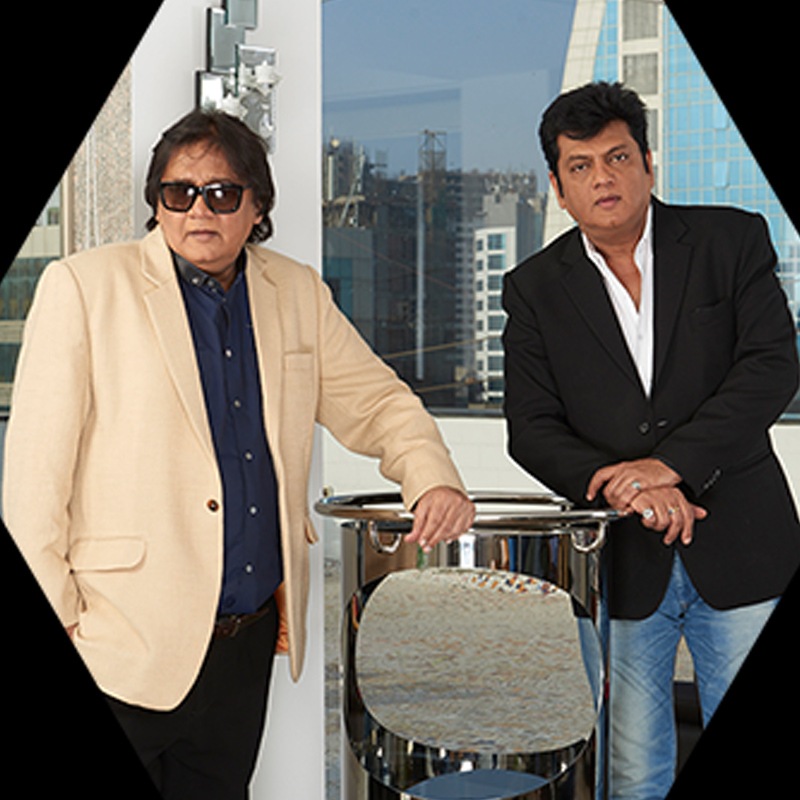
    Co-founder Markand  Adhikari said, “Mostly all business minds get focused on protecting their business and bottom lines in such tough times. We are aware that millions of Indians have had to return back to their villages after being left with no option. No matter what job they were in, there’s a possibility that many of them had talent that they once in life might have had to compromise to earn their livelihood. We have often seen videos of people on the street singing or dancing as well as any professional. Some fortunate ones have even touched the stars. Our attempt is to put a structure, reach out to millions of Indians in a planned manner – give them hope, give them employment and ensuring direct transfer of money into their accounts and thereby give them self-belief to be AatmaNirbhar.”

    For this initiative, Sri Adhikari Brothers has put aside a dedicated team that will be driving this program.

  • Value and innovation are essential for brands in the post-pandemic recession

    Value and innovation are essential for brands in the post-pandemic recession

    MUMBAI: Persistent safety concerns, financial pressures and sticky new behaviours mean consumers will not return to pre-pandemic behaviour any time soon. Marketers will need to pivot to finding growth in recession, delivering increasing value in the short-term to address growing economic concerns while innovating their way to sustained relevancy as behaviours and priorities change long-term. These are the findings from the fifth wave of Kantar’s COVID-19 Barometer,  global study tracking people’s attitudes, behaviours and expectations across more than 50 markets.  

    Post-pandemic recovery delayed

    Only one-third of people (37 per cent) expect to return to non-essential consumer behaviour before two to three months. Even as many countries relax lockdown laws and commercial businesses reopen, across the world, 66 per cent of people say they will continue to avoid busy places, meaning a drag on physical retail environments. 

    Beyond mandated hygiene and social distancing measures, 50 per cent of people want regular testing for all and 43per cent want mandatory facemasks, led by demand in Asia, but more reluctance in western markets. 

    Nearly everyone is experiencing increased anxiety over money. 56 per cent of households across the world have now experienced a loss of income due to Covid2019. In India, the impact is even more acute, with 74 per cent of households have experienced a loss of income due to Covid2019. This rises to 68 per cent of the millennial generation and 65 per cent of GenZ. A further 19 per cent expect an impact on their income in the future. 

    Brands and retailers need to prove their value

    As the financial impact of the crisis becomes increasingly apparent, across the world consumers consistently speak of a sense of pride in finding value, making smart decisions, and quietly enabling their own long-term success. 53 per cent of consumers are paying more attention to products on sale (vs 36 per cent in wave1). Offering discounts and promotions is now the third-highest expectation of brands, (vs 5th in wave 2). 69 per cent of consumers say a shopping list is more important now globally as well as in India. 

    Beyond pricing strategies, consumers expect brands to keep advertising and acknowledge the crisis; three in four (74 per cent) are happy with the volume of advertising, and only 14 per cent want to see pre-pandemic ‘normal’ advertising. Two-thirds of consumers are looking for help and advice – for themselves (64 per cent) and their communities (65 per cent) in the adverts they see and in actual brand behaviour. In India too, more than half of consumers would like to see a lot more of advertising which shows what brands are doing to help the community (57 per cent) and the people themselves (54 per cent).

    Grocery stores are recognised as delivering value in the short term. 40 per cent of consumers globally and 60 per cent in India perceive their grocery store experience to be more positive while 69 per cent perceive employees to be friendly and helpful and grocery stores to be acting on their promises; both metrics significantly outperforming CX benchmarks. 

    Ecommerce usage continues to soar. 40 per cent (vs 33 per cent in wave 3) of consumers now say they have increased or significantly increased their online purchasing, rising to 48 per cent for households with children and millennial households. India too shows a positive trend for Ecommerce usage (45 per cent vs 40 per cent in Wave 3). Low pricing and promotions rank as the biggest reasons.

    Innovate to align with the new rhythms of life

    People have started to like their lockdown habits. More than half believe they will maintain lockdown behaviours post-pandemic. In India too, people are likely to maintain behaviours adopted during the pandemic. Increased hygiene, healthier eating, spending time with the family and personal development are most likely to be maintained. More than half the world now claim to be trying to exercise more. 

    These changes all lead to different needs and spending patterns, and with more than half the world also feeling financial pressure, brands need to ensure their products make the cut in being considered vital in the new rhythms of life. This is amplified by the increase in willingness to switch. 45 per cent (rising to 50 per cent+ of households with kids,) of consumers say they are prepared to keep using products and online stores they found while in lockdown.  

    Kantar chief client officer South Asia insights division- Soumya Mohanty said, “Indians are still in the phase between a lockdown and unlock. Some habits are starting to stick – eating healthy, hygiene while new ones around social distancing are emerging. The way we shop and interact will change but in an emerging, aspirational market the meaning of sustainability and responsible consumption differs. Brands will need to move from emotional succour and social solidarity to fundamentals of value, functionality, innovative delivery and simple mental availability. Simplicity could well be the new mantra as we navigate an uncertain world.”

    Kantar chief innovation officer – Rosie Hawkins, observed, “Adapting to life post-pandemic, we’ve started to appreciate, and want to maintain our newly formed healthy behaviours, our more considered and purposeful personal connections and our online shopping habits. Brands and companies first and foremost need to ensure that their goods and services are safe to use and that precautions have been taken to guarantee this. As lock down restrictions lift, consumers' lives will continue to change and so brands will need to reassert their relevance in these new environments.”

  • Kerala ad market pins hopes on Onam to bring respite

    Kerala ad market pins hopes on Onam to bring respite

    NEW DELHI: The South Indian ad market is a flourishing one, moving on an upward trajectory for the past decade. In 2019, it accounted for 30.7 per cent of the overall ad expenditures in India, as revealed by TAM AdEx’s Southside story report, contributing Rs 21,500 crore to the industry. Kerala market alone contributed Rs 4200 crore to the pie. 

    However, the past two years have been pretty difficult for the Kerala market, which was washed by floods in 2018 and 2019, and then  Covid2019, becoming one of the first states to get impacted by the contagious pandemic. 

    If Mplan CEO Parag Masteh is to be believed, the novel coronavirus alone has led to a 80-90 per cent drop in the investment cycle by advertisers. 

    Madison Media chief buying officer Vinay Hegde tells Indiantelevision.com, “The dip in Kerala ad market due to Covid2019 is roughly estimated to be around 75 per cent and largely in line with most other markets. Expectedly, it was the “essentials” categories like FMCG, foods and CSR for Covid2019-related issues that were active. Retail, a major player in Kerala, was just about present, being reduced drastically to around eight to 10 per cent of regular months.” 

    Maitri Advertising managing director Raju Menon adds, “February to May are the best months for Kerala market because of the tourist and wedding season. Around 30 per cent of the overall yearly sales happen during this time. However, it was a complete washout for us because of the lockdown. There are a few markets that work really well here, including banks, real estate, loans, textile and gold. But the pandemic left a negative impact on everything.”

    He continues, “For us at Maitri, there was a 60 per cent loss in billing during this lockdown. Not only was there a dip in queries, but some of our old bills, from January-February, were not cleared as well.” 

    Menon also shares that a few categories like automobiles, especially two-wheelers segment performed well than others given the market sentiment, but overall the whole industry witnessed a massive dip in revenues.

    In terms of television advertising, GECs saw their revenues down by more than 80 per cent YoY, both due to low inventory sales as well as discounts, reveals Hegde. He adds, “With the pandemic and the lockdown becoming the focal point, viewership shifted to news and the spike was exponential. A major shift from GECs to news was inevitable and visible and the channels did their best to hold on to their rates and monetise on the spike. This genre managed to rake in some ad revenues, yet inventory fill rate was lower than the normal average. April actually saw a dip in ad spends by almost 25 per cent Q4 of LY, but in May there was a massive spike of 120 per cent with retail and other clients making a beeline for the news genre.” 

    However, according to Menon, this growth in ad spends doesn’t necessarily mean more revenue for news channels. “If I give you an example, when the chief minister or the health minister is addressing the state via news channels, you can’t run commercials during that. So, advertisers buy the space on L-band, which costs around 97 per cent lesser than a slot for a video commercial. So, if you would have spent Rs 100 on a channel for video ads, you are spending only Rs 3 for the spot on L-band. Additionally, the inventory prices are kept low as the advertisers don’t have much money to spend. They are more concerned about paying their own people and keep their businesses afloat with the production-supply chain shut for most categories.  In terms of revenues, I believe they must have recorded a minimal growth of three to four per cent at max.” 

    Masteh shares that apart from the news genre, the ad spends from GECs were reallocated to digital media, which became a core part of the marketing strategy for even those brands which earlier refrained from it. He is hopeful that OTT will continue to grow and garner advertisers’ attention from here on. 

    As the lockdown eases, the industry is hoping to witness some progress in the advertiser as well as the consumer sentiment. 

    Hedge states, “Ease of lockdown has definitely seen an improvement in advertiser sentiment accompanied by the many relief schemes announced by the government in an effort to boost consumer sentiment and hence, demand. While the damage in Q1 of FY21 will take some time to heal, the additional forecast of economy contracting also needs to be considered by advertisers going forward. However, not advertising may not be an option as a short-term or long-term strategic call and hence, as the lockdown is being eased, we are seeing advertisers flocking back. TV, OOH and radio may still take more time to recover and as it happens, the competition will follow the competition.” 

    The industry is pinning its hope on the Onam season to bring a much-needed respite. 

    Menon says, “Onam counts for around 60 per cent of sales in the state and we are hopeful that will bring the advertisers back to the market. However, it will depend on the rains that we have. There are predictions for a good monsoon, but if the rains are heavy like the past two years, it is going to be a washout for us again.”  

    Hedge further adds, “August will also see the advent of festive season and it would be imperative for the advertiser to be visible. Also, by that time, lockdown would have eased even further. June is already seeing a much higher level of inquiries from advertisers compared to April and May. With originals making a comeback, July onwards, we should be seeing a fair degree of normal activity in terms of inventory consumption. Onam is an important festival in Kerala and is between 30 August to 2 September. That should be signaling a major recovery.” 

    But this recovery will be tampered by the gloomy forecast by the national and international bodies of contraction and recession, which however does not seem to be on top of the mind of advertisers and they would be looking at the most efficient extraction from media for their brands while the broadcasters/publishers will be looking to monetise demand uplift to also compensate for the loss of the first quarter, Hegde concludes. 

  • Covid2019 uplifts health insurance sector, but premium segment sees decline

    Covid2019 uplifts health insurance sector, but premium segment sees decline

    NEW DELHI: With the Covid2019 health crisis surging, the concern for health and wellbeing is at an all-time high. While other sectors saw revenues spiral downward, the health insurance sector saw the highest collection during the pandemic when compared to even FY18 and FY19.

    However, the surge in the sector only caters to health and lifeline products. The spark in the Covid2019 cases has led to the demand for health and insurance policies. The premium collection of various brands have suffered heavy losses, which can also see another phase of decline, as with fewer chances of travelling this year, customers will be cautious about spending a hefty amount.

    Industry officials believe that there will be a surge in life claims in the coming months and customers will be inclined more towards the health insurance segment.

    Policybazaar.com head – product and innovations Vaidyanathan Ramani says, “This year we expect motor and other general insurance lines to be impacted while health and life insurance should see an uptick as is evident from trends so far. The extent of outcome deviant from past years will depend on how long the Covid2019 shadow hangs over us. The growth in medium-term should, however, return back to reflect the economic growth with health running above this average as our penetration still remains below par despite the recent upswings.”

    In March when the lockdown was initiated across the country, insurance companies changed their strategies and moved towards the online distribution model. Many companies took proactive steps on the product innovation front. Past trends indicate that the industry heavily depends on the offline market and the digital medium only contributes single-digit additions. However, companies at the earliest shifted their business online, which has helped them grow.

    Policybazaar has also adopted a revamped messaging strategy. “We are communicating a very clear messaging that informs customers that they can secure the future, by ensuring their health and life for a very reasonable sum. Insurance is becoming a more pull product than push owing to the current situation,” says Ramani. 

    He adds that telemedical check-ups are the new normal, which is here to stay even post the lockdown. “A large proportion of health and life policies have already been sold on our platform via telemedical,” he shares.

    Insurance companies have been advertising heavily during the pandemic. Recently HDFC launched a safety grid campaign to adhere to social distancing even after the lockdown is lifted. On the contrary, DSP Mutual Funds released an OHH campaign ‘Avoid’ in Mumbai, highlighting the preventive measures for SarsCoV2.

    However, as India’s financial system is restricted, that will also mean expensive policies. A mid-size private insurer CEO, who chose not to be named, explains, “People are in a hurry to protect their lives, thus, investing in health insurance will see a hike in health claims globally. Reinsurers who are bearing the brunt of higher claims by insurers are planning to hike rates. This will be passed on to customers.”                    

    Recently, the government also allowed FDI in insurance distribution, which is being seen as a welcome move. Ramani elaborates, “It’s a great move as it will bring in additional capital to support innovation and distribution for insurance in the country. India has always retained a fair interest in the insurance markets of the world and among its participants. The additional capital will be welcome and can add to some of the interesting innovations being built around us.”

     While the Covid2019 graph is on the rise, insurance companies have seen a rapid increase in queries for pandemic cover by businesses. The fear among people has pushed them to realise the importance of adequate health insurance.

    Religare Health Insurance head – products and business process Ashutosh Shrotriya says, “The present situation has made us realise that health insurance is no more optional but a basic necessity. With the shift from physical distribution and servicing to a completely digital process, we have seen an increase of about 30 per cent in our digital business during this period, as compared to the previous financial year. In the coming months, we foresee a further increase in inquiries for comprehensive health insurance covers.”

    The government has also mandated that all employers, which have resumed functioning, to provide medical insurance to their employees. The insurance regulator body has advised insurers to offer comprehensive health insurance policies to individuals or as per the government's directions. This has led to a surge in group insurance packages.

    “Each company either will opt for individual or group claims. As companies resume operations in the coming months, many will invest in group packages, as the premium is much better compared to the individual policy,” says KM Dastur Reinsurance Brokers general manager Maneck Dastur.

    He also mentions, “There would be a rise in the medical premium of around five to six per cent. Despite the rise, today, except for a few medical policies, the market is still slumping. It will take time for the premium market to grow up."

  • Zee Entertainment undertakes national-level CSR drive for Covid2019 cause

    Zee Entertainment undertakes national-level CSR drive for Covid2019 cause

    MUMBAI:  Zee Entertainment Enterprises Ltd (ZEEL)  announced a national-level CSR drive towards enhancing the country’s healthcare infrastructure, further strengthening its fight against Covid2019.

    In line with its CSR Policy, approved by the board, the company will support state governments and local governing bodies with critical interventions across 10 cities viz Mumbai, Noida, Chandigarh, Jaipur, Kolkata, Bhubaneswar, Bengaluru, Hyderabad, Kochi and Chennai. 

    The company will be utilising the sanctioned CSR budget (for the fight against Covid2019) to provide the following:

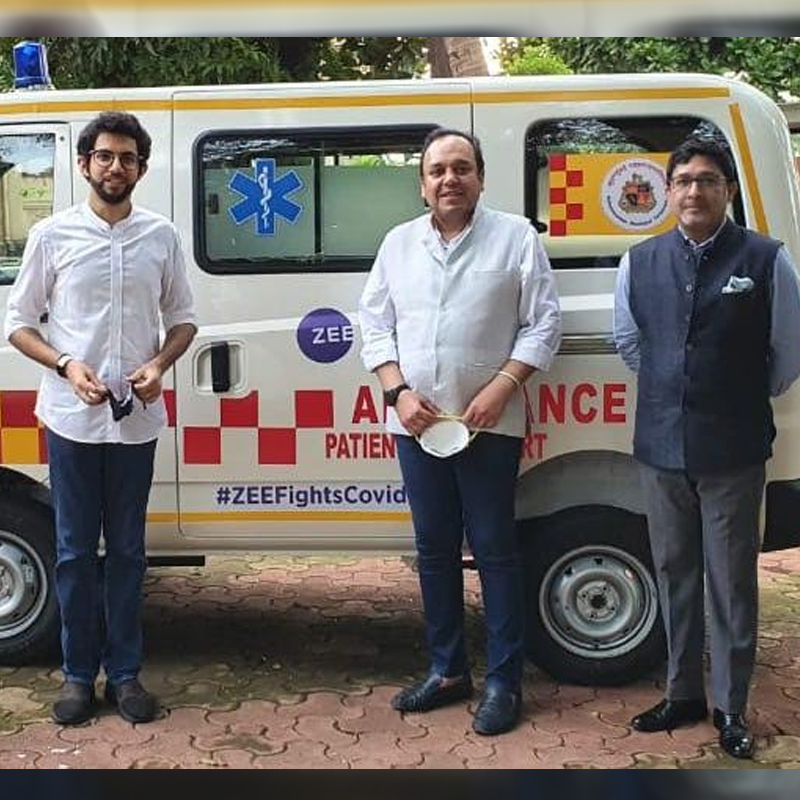
    ·    Ambulances – 200+ ambulances to be donated to the municipal corporations (46 ambulances have already been donated to BMC).

    ·    Humidifiers – 50 high flow heated respiratory humidifiers to be donated to the Brihanmumbai Municipal Corporation (BMC).

    ·    PPE (personal protective equipment) Kits – 40,000+ kits to be donated to municipal corporations across the Nation.

    ·    Portable ICUs – 100+ ICU units to be built with state-of-the-art tech support across the Nation.

    ·    Daily meals – 600,000 meals to be provided to 10,000 migrants.

    With the support of Maharashtra state government, the company has flagged off the national level CSR drive against Covid2019 with Mumbai, in the presence of chief minister of Maharashtra Uddhav Balasaheb Thackeray, minister for tourism, environment and protocol Aaditya Uddhav Thackeray and ZEEL managing director and chief executive officer Punit Goenka, by donating 46 ambulances and 50 high flow heated respiratory humidifiers to BMC. This support will help build capacity and enhance the existing healthcare infrastructure in Mumbai.

    The company will approach and work with all state governments and local governing bodies across the nation, to formulate an action plan that is structured on fulfilling the immediate requirements to fight the pandemic.

    Over and above the support towards healthcare relief, ZEEL has also partnered with Akshaya Patra Foundation to provide 600,000 daily meals which will support 10,000 migrants across the Nation for a month.

    Goenka said, “The effects of the Covid2019 pandemic in India has been far-reaching and calamitous for vulnerable communities. It is important that we stand up during such times and step up our efforts as responsible members of society. ZEEL is committed to continuing its strong support towards the government, with a key focus on strengthening the overall healthcare infrastructure, to save our nation from this pandemic. We are also significantly increasing our efforts on-ground to provide relief to migrants across the country. We will continue to do our best to serve the nation in these challenging times.”

    Aaditya Thackeray said, “The scale of this pandemic is enormous, and the government of Maharashtra is working round the clock to enhance the modular medical facilities and support our frontline workers. Every step ahead is a successful step towards beating the current humanitarian crisis. We would like to thank Punit Goenka and ZEEL for their support in this time of need towards Covid2019 response and relief.”

    BMC commissioner Iqbal Singh Chahal added, “We are dealing with challenging times where being ahead of the virus is key to fighting the war against Covid2019. We have implemented several path-breaking innovative measures across the city to curb the increase in the number of cases and are ramping up our medical facilities. We are glad to receive this support from ZEEL that will further strengthen our efforts while also ensuring the well-being of the citizens. It is humbling to see organisations such as ZEEL coming forward and fighting this crisis together with us.”

    Earlier, ZEEL had announced financial support to over 5000 daily wage earners working directly or indirectly with the company. The company had also encouraged all its 3400+ employees to contribute towards PM CARES Fund. The amount generated was matched by ZEE, and the collective proceeds were routed to PM CARES Fund.

  • How Covid2019 is fast-tracking digital transformation in experiential marketing

    How Covid2019 is fast-tracking digital transformation in experiential marketing

    Consume or connect ? We didn’t know it at the time but somewhere in the middle of March we all got enrolled in a digital bootcamp. Covid2019 didn’t fast track digital transformation, it literally beamed us into the future. I have never witnessed such far-reaching change at such a pace.

    For an industry built on enabling human connections, Covid2019 rudely hit pause and with little warning. For those who will get the reference, it felt like Mr Freeze was on a rampage in real life. And when things thawed, we were in the future. Engagement changed overnight, calls were replaced by zoom/teams/blue jeans and webex. In a few short weeks we had already graduated to zoom fatigue and realised blue jeans were fading fast. And it wasn’t just about video messaging, the humble WhatsApp became part of the retail renaissance as the mom and pop stores leap frogged into the future and Ludo rivalled call of duty for family time.

    As isolation and social distancing become the norm for now, engagement and interaction has moved to our devices. The buzz in the experiential industry is all about pivoting to digital events. The tech jargon is flying fast and furious and it’s all about innovating or becoming irrelevant.

    Digital transformation isn’t about the adoption of technology, video conferencing has been around since the 80s and live streaming since the 90s. Most of the tech being adopted has been around for a while now and the first virtual conferences were held more than a decade ago. Digital transformation is all about staying real in a virtual environment, looking at screens not as devices to consume but as spaces to create live engagement. The screen is the new experiential touchpoint. Not just a place for content consumption but place to enable real human connections through live digital experiences.

    I am not sure if it was insight or instinct ( or maybe a combination of both) but the lockdown pioneers of digital engagement seem to understand the difference between creating digital content and producing live digital experiences. They understood that being present on the other side of a screen is not the same as participating with the on-screen experience.

    Vir Das hit a home run (no pun intended), with At Home, his online comedy tour for Covid2019 relief. A brilliant and effective use of zoom creates live engagement with the audiences. They are not watching a Vir Das special on their screens, they are part of a live experience. Kommune, the artist collective did something very similar when they created Lockdown Love , a play performed live on zoom. With every performance the experience became more engaging, with audience interaction seamlessly made part of the narrative. These early experiments by creators like Vir and Kommune clearly show that it is possible to connect with people on the other side of the screen.

    Almost every pre-pandemic human engagement has moved online. From fitness to education and everything in between. A recent article in Forbes states that virtual events are up 1000 per cent Since Covid2019, with 52,000 on just one platform called 6Connex!

    Take a look at some of the virtual events scheduled during the next few months. This July, Nintendo will host its flagship event, Pokemon GO Fest in a virtual format. XBOX is following suit with the XBOX 20/20 launch through a series of virtual events. From gaming to finance, with digital payments on the rise, June has seen the opening of Virtual bank branches across the globe from TSB in New Zealand to the Al Salam Bank in Bahrain. Hong Kong is going to see more than five different virtual banks open shop in the coming months. Commerce is not just going digital, it is going virtual. Closer home, the iconic Lakme Fashion week is going digital with the launch of “Virtual Showroom”. A digital engagement platform for designers and artists to showcase their collections to buyers and suppliers. The showroom is set to launch in Q3 with the upcoming LFW.

    We are seeing similar transformations across industries; each is an opportunity for digital experiential marketing because commerce is more than just a transaction. Digital experiential has the ability to elevate the experience and create human connections across the screen and there lies the real transformation. So while we navigate the new and wait for some of the old to return, remember it’s not just about pivoting, it’s about persevering.

    (The author is Geometry Encompass CEO. The views expressed are his own and Indiantelevision.com may not subscribe to them)