Tag: covid2019

  • TRRAIN partners with JP Morgan to support 3000 women employees in retail sector

    TRRAIN partners with JP Morgan to support 3000 women employees in retail sector

    MUMBAI:  TRRAIN, a not for profit organisation, in partnership with JP Morgan has launched a rapid response program with the aim to assist 3000 women employees in the retail sector whose livelihoods have been impacted as a result of the Covid2019 crisis.

    The program will support women in Mumbai, Delhi, and Bangalore who have lost jobs or income and provide immediate relief in the form of an income bridge for three months until they can seek alternative employment.

    TRRAIN has also partnered with Haqdarshak, a technology platform that connects citizens with their eligible schemes, to link beneficiaries and their families to appropriate government schemes. It is also collaborating with industry leaders such as RAI, Images Safexpress, Marks & Spencer Reliance India, Siyarams, DLF-Mall, Inorbit, Levis and through Give India’s platform for donors, to expand its efforts to reach more individuals impacted in the retail sector.

    TRRAIN founder BS Nagesh said, “The Rs 1.2 crore program will support 3000 women and their families.  A huge number of women workforce in the retail sector have found it challenging to sustain their incomes due to country-wide lockdowns. Many of them are the sole breadwinners for their families and are most likely to have lost their employment or may not receive salaries in the coming months. This program will provide access to capital to help such individuals tide over their immediate financial needs.”

    All beneficiaries of the rapid response program will be on-boarded onto the TRRAIN Circle mobile app and will have access to counseling services over the phone, and e-learning skills training.

      JP Morgan head – CSR & philanthropic initiatives Maneesha Chadha said, “This philanthropic investment is part of our global commitment to address the immediate needs of hard-hit communities and help boost an inclusive economic recovery. The retail industry employs a number of women who have been disproportionately impacted in the current situation. This initiative will help such women get access to critical support through which they and their families can overcome immediate financial challenges as well as use the opportunity to ensure their long-term financial health. We are proud to partner with TRRAIN on this important initiative.” 

  • 5 million cable TV subscribers cut the cord during Covid2019

    5 million cable TV subscribers cut the cord during Covid2019

    KOLKATA: The lockdown and its lack of content on television seem to have had an impact on viewers. About 4.5 to five million subscribers have gotten off TV and DTH services since lockdown started. Additionally, several others have downgraded their subscription packages. Coupled together, they have held back revenue income for companies.

    Star and Disney India distribution and international business president and head Gurjeev Singh Kapoor shared the numbers in a webinar hosted by Indiantelevision.com. Kapoor attributed the loss to two reasons – one is commercial establishments cutting the cords and the other is migrants returning home. While he agreed that loss of subscribers coupled with the downgrading of packs led to a revenue loss, he is confident that the ecosystem is in a position to get those consumers back, especially when the economy opens fully. 

    Even though subscribers left or changed packs, the existing viewers provided more eyeballs, most likely because of movies and news keeping them entertained and informed. “During the lockdown, we had 1.2 trillion minutes a week which was the number during the month of April and May and prior to that 0.9 trillion was during January, February. The average time an individual was spending before the lockdown was closer to 20 hours and after lockdown, the number of hours was 27. Television became a good mode of entertaining,” he said.

    The first lockdown with its strict rules made it difficult for cable operators to collect subscription even though TV and cable services were provided uninterrupted. The government even classified them as essential services. To help them out, Star India started a digital recharge campaign to help the fraternity. IndiaCast Media Distribution Ltd president Amit Arora also spoke of initiatives like running tickers and scrolls to push subscribers to pay digitally. There were several reports indicating a drastic fall of DPO collection by 40-50 per cent but Arora said it was not down by such a huge number.

    The lockdown period has been a boon for OTT platforms that saw a surge in users, motivated by free premium packs. This is likely to be a challenge for television. “The whole set of subscribers which came in March have started trickling away in April. So, now we are more preoccupied with how to take this entire journey forward. The business and revenue have to grow for the entire value chain. The customer is going to be very stingy. This time he has discovered new content on OTT.  Is he really going to loosen the purse to hand over money to the traditional platform and broadcasters, these challenges will come as time goes by. It’s more and more partnering between platforms and broadcasters to see us through the entire time of crisis and the bigger challenges that pose ahead of us,” Arora added.

  • TV ad volumes on Kannada channels grow as Covid2019 situation improves

    TV ad volumes on Kannada channels grow as Covid2019 situation improves

    NEW DELHI: The third biggest contributor to south India’s ad space, amounting to Rs 5,000 crore in the year 2019 (as per TAM AdEx South Side Story), Karnataka is a crowded space when it comes to advertisers and marketers both. With the hub of digital agencies and regional offices of many mainline agencies in Bengaluru, the market is a very competitive one too. And going by the words of industry insiders, probably, the least impacted by Covid19 lockdown. 

    Mplan CEO Parag Masteh tells Indiantelevision.com that lesser number of Covid2019 cases in Karnataka, compared to other southern states, and a positive market sentiment helped the Kannada media companies maintain a steady grip on their advertising revenues. News and movies genres had an easy time, but there was a good dip in GEC numbers. 

    “Though the nationwide lockdown and advertisers’ reluctance to splurge forced the TV market to lessen the ad rates by almost 50 per cent, the cumulative loss is nowhere near to what markets like Kerala faced. They, in fact, managed to maintain their revenue cycle in place.” 

    The Media Ant co-founder Samir Choudhry reveals, “Overall there is a dip of more than 25 per cent in business (Kannada-language channels) in Q2 (April-June) vs Q1 (January-March).” 

    Karnataka ad market is one of those where television still holds a greater affinity than other media and it remained the same during Coid2019 period, too. In fact, TV news genre managed to gain business during the time as per industry experts.  

    Choudhry adds, “When it comes to Kannada markets, we have seen an increase of 10 per cent in the business when it comes to news channels. But yes, there was more than 30 per cent drop for the remaining genres during the Covid2019 period.” 

    As per Masteh’s prognosis, news genre might have managed to hold 40-45 per cent of its regular business. 

    If we look at the overall share of the television ad market, the advertiser sentiment seemed to be gradually increasing as the situation improved and fresh programming began. 

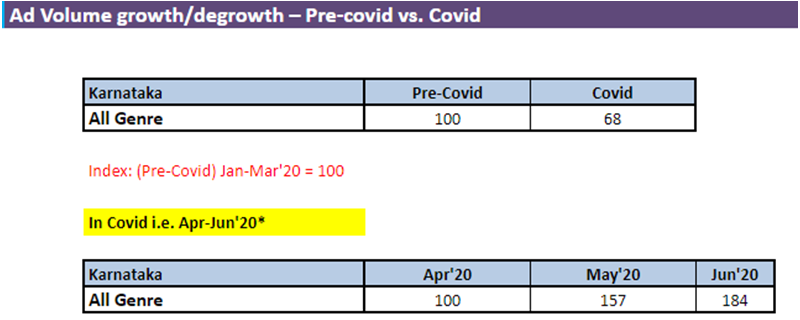
    As per data shared by TAM AdEx, while there was a 32 per cent drop in overall ad volume across genre during the Covid2019 period, the numbers increased month-on-month. Ad volumes surged by 57 per cent in May and 84 per cent in June over the month of April.

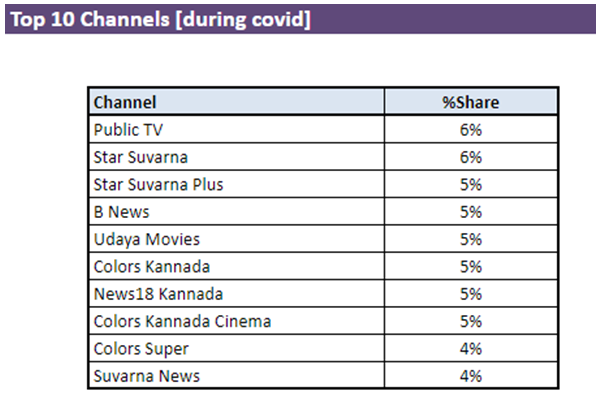
    The top 10 channels, which consist of four channels from news genre and three each from GECs and movie genre, amounted for 50 per cent of the advertising volume shares. Top brands included HUL, RB, Brooke Bond Lipton, Wipro and Colgate Palmolive, all big national-level advertisers.

    The biggest sufferer in the market has been print and OOH for very obvious reasons; distribution problem for print and lack of advertiser interest in case of OOH. As the market slowly starts moving to normal, print is expected to get its advertiser share back sooner than later, but for OOH companies the fight is going to be tough. Even with lockdown restrictions gradually lifting, the OOH players are forced to sell the ad space at 90 per cent lesser than their original prices. This is hardly able to help them survive and pay salaries, shares an industry insider. 

    The Kannada-language market has already started seeing positivity when it comes to ad volumes and revenues will follow soon. But that is not happening right now as per Choudhry. 

    Masteh believes that the situation will start improving for the media players by the end of August if the Covid2019 numbers remain on a downward trend and the peak doesn’t hit the state, as expected to happen in September-October. 
     

  • Despite spike in viewership, Malayalam news channels record dip of 60% in ad revenues

    Despite spike in viewership, Malayalam news channels record dip of 60% in ad revenues

    NEW DELHI: While Covid2019 has had an unprecedented impact over businesses across the country in the past few months, the media and entertainment consumption witnessed some interesting upward trends during the time period. As per weekly data shared by BARC-Nielsen during the course of the nationwide lockdown, TV viewership peaked by 43 per cent (highest value, at week 13 as compared to pre Covid2019 i.e. Week 2 to Week 4), during the period. Time spent on TV was up by 7 per cent in week 20, as compared to the pre-covid2019 period. News genre was one of the biggest gainers when it came to viewer interest and eyeballs, with total viewership up by 15 per cent in week 20. 

    Malayalam news channels also witnessed a similar trend, recording a 141 per cent hike in viewership, recorded in week 20. However, this growing viewership did not result in the sort of advertising revenue it would have garnered in pre-covid2019 days. 

    While the number of advertisers did not see much of a dip across Malayalam news channels; as shared by TAM AdEx India, the number of advertisers in pre-covid days (Jan-March’20) was 440 and dipped to 352 in covid times (April 20-June 20), the ad revenues went down by as much as 40-60 per cent due to lower inventory pricing, shares an industry insider. 

    Madison Media chief buying officer Vinay Hegde shares with Indiantelevision.com, “Typically with the pandemic and the lockdown becoming the focal point, viewership as in other markets shifted to news and the spike was exponential. A major shift from GECs to news was inevitable and visible and the channels did their best to hold on to their rates and monetise on the spike. This genre managed to rake in some ad revenues, yet inventory fill rate was lower than the normal average. April actually saw a dip in ad spends by almost 25 per cent Q4 of LY, but in May there was a massive spike of 120 per cent.” 

    When it comes to FCTs, Mplan CEO Parag Masteh shares that the numbers were more or less similar for the top channels, as compared to pre-covid2019 times, with some even recording positive growth. 

    TAM AdEx India data reveals that News18 Kerala and Manorama News witnessed positive ad volume growth of 28 per cent and eight per cent, respectively, the ad volumes of channel 24 remained almost similar to pre-covid2019 times. 

    Mathrubhumi News CEO Mohan Nair says, “While we witnessed a 25 per cent spike in viewership during the period, the ad revenues dipped. I may say that because we couldn’t record some of our outdoor programmes and the news coverage was also centred primarily on Covid2019, for nearly two months we had hardly any business. If I look at these three months, we must have recorded a business of around 30 per cent of the pre-covid days.”

    Kairali News’ Suresh Kumar quips, “The FCTs dropped drastically for us and so did the advertiser number. There were very few regular clients from the jewellery segment who were active on our channel and most of the ad space was brought by government ads and the hospitals. Our ad revenues used to touch Rs one crore per month before Covid2019 and for the past three months, the figure stands below 50 per cent. One of the reasons is that we had to bring down our inventory prices by 30 per cent in most cases.” 

    Asianet News Network VP sales and marketing Unni Krishnan shares, “Though we recorded 3x ratings, the advertiser sentiment was really low. If you look at the Kerala ad market, retail clients are amongst the top advertisers on news channels and they were not active at all in the initial days. Though they are trying to make a comeback, it is not with the same budgets as they used to spend earlier. In fact, most of our major clients were not active during the past few months and the only ads we got were from some new clients.” 

    He adds, “These were not big-time clients. To give some numbers, if on a normal day a client used to come with an investment of Rs five lakh to Rs 10 lakh, we were getting billings of up to Rs 50,000 to Rs one lakh only. So, if you look at the number of advertisers, we used to get the same revenue from 10-20 clients earlier, which we got from 40-50 clients now.

    While Kumar, Nair and their teams reworked their inventory prices and announced some discounts to keep up the advertiser sentiment, Krishnan avoided changing ad rates. 

    “While most of our competitors were announcing discounts and combo packages to keep the advertiser sentiment positive, we at Asianet avoided it. It definitely caused us a bit of a loss in the initial days, and we had a slow start in April, but fortunately for us, the ratings improved. We also did not increase our inventory prices when the viewership peaked,” Krishnan highlights. 

    Nair shares, “The good thing that happened during the pandemic is that categories which earlier refrained from advertising on news genre like sanitisers and washing-related products have started advertising on our channels. While I am hopeful that the upcoming monsoon and Onam will bring in some positive movement from advertisers, if you look at Kerala, Covid2019 cases are again rising. And we can’t be sure what the situation will be in the coming months.” 

    Krishnan elucidates, “Kerala was the first state to recover, but if you look at some other markets like Chennai or Mumbai, the lockdown is still in place and the numbers of patients are continuously rising. Even in Kerala, fresh cases are coming up, and while earlier the number was 20-30 cases a day, it has now peaked to 120-130. Our all yoy projections have already gone for a toss. While Onam and monsoon are a good season for us, we can’t be sure of the situation then. Yes, July, which usually is dull for the Kerala news market, has shown signs of improvement for us; going ahead, market sentiments largely will decide our fate.” 

    As the lockdown restrictions ease and the bright festive period approaches, starting August, the channels are expecting their fortunes to improve but they are still apprehensive of the growing cases. 

     

  • Hindi GECs get back in business

    Hindi GECs get back in business

    MUMBAI: Ground zero of the entertainment industry, Mumbai, has been on standstill for over three months. Finally, the wheels have begun moving as production across film, TV and OTT have resumed. GECs, which had resorted to showing re-runs and movies during the lockdown, have begun reshooting their shows.

    &TV's Ek Mahanayak Dr BR Ambedkar and Santoshi Maa Sunaye Vrat Kathayein have also resumed shooting. Zee TV shows Kundali Bhagya and Kumkum Bhagya have restarted shoot with a limited crew. Star Plus popular daily soaps Ye Rishta Kya Kehlata Hai, Kasauti Zindagii Ki, Yeh Rishte Hai Pyaar Ke and Ye Hai Chahatein have resumed shooting.

    Enterr10 Television Network’s Dangal TV has resumed shooting for Pyar Ki Luka Chuppi and Devi Adi Parashakti. The shooting is taking place at Naigaon and Umbergaon.

    Enterr10 Television Network head of marketing Arpit Machhar says, “While we are very excited about resuming shoots and enthusiasm levels are very high, we all have a responsible role to play. Safety and well being of all present on sets is extremely important. We are constantly communicating with our on-set production teams and have briefed and advised them on introducing additional necessary measures that might be required in addition to following the guidelines that have already been laid down. Our production teams are well equipped and will ensure that while the shoot has resumed, all guidelines and rules will be adhered to.”

    Dangal TV gained significant viewers and today, it is one of the most popular Hindi GECs. It emerged as the undisputed leader in the rural Hindi speaking market (HSM), while maintaining a decent hold in urban areas as well.

    Colors also started TV shoots for its show Shakti-Astitva Ke Ehsaas Ki, Choti Sarrdaarni and Barrister Babu in Palghar and Thane. Its tentpole show Khatron Ke Khiladi 10 also returns on the channel. New episodes have started airing from 27 June. KKK10 airs on Colors at 9 pm every Saturday and Sunday.  It aired the last episode on 29 March 2020, a few days after the nationwide lockdown was imposed.

    A source from Viacom18 told indiantelevision.com that though it aired some episodes in the first few days of the lockdown, upon realising that there is no fixed date when normalcy will return, the makers decided to halt the show. As all the episodes are pre-shot, the makers didn’t want it to get consumed before the last episode is ready. The final few episodes are likely to be shot by the end of July.

    KKK season 10 features contestants namely Karan Patel, Karishma Tanna, Shivin Narang, Dharmesh Yelande, Tejaswi Prakash, Adaa Khan, Balraj Syal while contestants who are evicted from the show are Amruta Khanvilkar, RJ Malishka and Rani Chatterjee.

    The channel announced the airing of new episodes with a video of contestant Dharmesh Yelande on social media.

    Last week Sony Pictures Network India (SPN) issued an official statement saying that the network has obtained all required government permissions to resume production.

    It read, “The network is working closely with its production partners to ensure shoots resume in a controlled environment with strict compliance to all necessary government rules, regulations and safety protocols. At SPN, health, hygiene and sanitisation are taken very seriously, and the network is doing all that it can to ensure the safety of its cast, crew and production partners. Other than cast and crew members, visitors will not be allowed on the sets.”  

    The network also informed that effective from July 2020 to December 2020, full payments of the cast and crew will be released within a 30-day time frame, unlike the usual 90-day period. The channel will also bear 100 per cent of the Covid2019 insurance cost for its cast and crew. It has also asked the producers working with Sony TV to strictly adhere to all government guidelines. 

    Barrister Bahu producer Shashi Mittal told news agency PTI, “All this is new to all of us. It is the new normal, but it is not normal. It was essential to make it a habit, so we trained our crew members for ten days before shooting began. There is a small team, so there is warmth. We will become more comfortable slowly. This is a difficult time, and everyone is being cautious.”

  • West Bengal TV successfully resumes shooting with strict compliance norms

    West Bengal TV successfully resumes shooting with strict compliance norms

    MUMBAI: The Bengali TV industry is one of the first to have resumed shooting and successfully started off with compliance protocols. The single most confidence-building step was to make sure that every artist and technicians participating in shoot have been provided with an insurance cover. 

    Despite reeling under the impact of Covid2019, and having witnessed one of the worst cyclones ever, a major part of Tollywood industry returned to the sets on 11 June 2020. The Bengali television industry has been working collaboratively towards the best possible solutions to make the age-old habit of television experience a fantastic one for the audience. The immense love towards the return of their favourite shows reflects the success of the shows in the very first week itself.

    SVF  co-founder and director Mahendra Soni  said, “Initially, we too like everyone, were sceptical on starting the shoot, but I must congratulate everyone and especially leaders at federation,  artist forum and broadcaster for working together and setting detailed guidelines and also assuring everyone that we will stand by everyone affected by the crisis. I think it's a great example on how to fight back in scary times like this by staying together and resuming life in ‘new normal’.”

    The state government announced earlier this month that shoots can be resumed indoors with a maximum of 35 people in TV and film shoots, respectively, following all health and safety protocols. While most of the filmmakers are waiting for further easing of restrictions, the shoots of the popular TV serials resumed from 11 June. From regularising the shoot timings to following sanitation guidelines, the producers and channels have undertaken several safety measures to run the show smoothly. The Federation of Cine Technicians & workers of Eastern India had been very supportive to extend every possible support to run the shoots adhering to safety protocols.

     Actor turned director and writer Parambrata Chatterjee said, “I think it’s been a success, the resumption of the shoot at least so far. I know many had reservations. All of us were apprehensive, to begin with but I think getting back to work was necessary for a lot of people and we realised that. A lot of deliberations were done about SOPs and other verticals. Managing the insurance for artistes and technicians wasn’t an easy task, especially for a so-called regional industry.  Films and web will start soon, fingers crossed. I would like to thank the efforts of everyone, from the administration to the respective guilds and the individual artists and technicians.”

    While it was slow to start with, as everyone was learning to operate in the new normal, artistes and technicians in two weeks have adapted to the new pace of shooting. There are specific timelines within which the shoots are wrapped up each day. Everybody on the set is cognizant of the fact that safety measures need to be followed strictly, social distancing norms are to be maintained and so on. 

    President of Cine Technicians and workers association Swarup Biswas said, “We are living in the ‘new normal’ world now, hence, we have to keep that in mind when we step out for our daily chores. It’s essential for us to ensure the safety of our artistes and technicians on resuming the shoots of TV shows. Thanks to all the producers, channels and partners for their collaborative efforts. With the new insurance scheme in place, we can build on this new normal to deliver the best of content as we always do. It’s my pleasure to reveal that our TV shows are performing well and audiences are appreciating the effort being put behind the making of them. It's been 15 days now that the TV show shoots have been going on successfully through these hard days of Covid2019 pandemic looming fiercely on our society, yet the hard struggle, determination and commitment of all manpower involved in the team-of producers, channels, artists, technicians, and FCTWEI, that we have overcome the hurdles and presented good teamwork in the face of the formidable challenge and presented to the audience some good productions. We hope this resilience and tenacity to overcome the obstacles, to face the challenge as a team is the essence of a sphinx and that we would be able to bring back that old ‘normal world’ once again and hope that those days are not far off.”

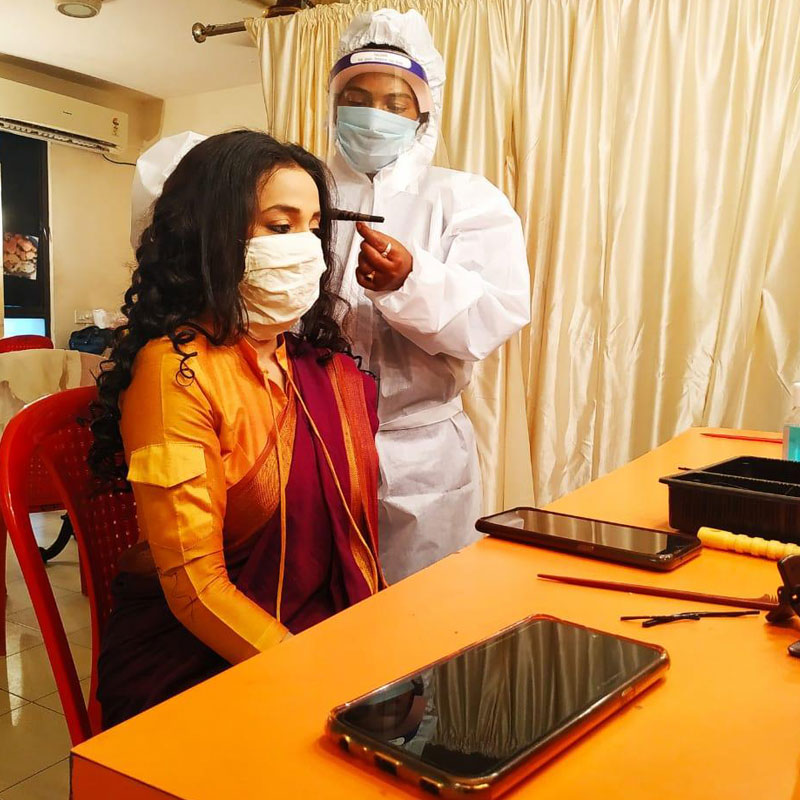
    Producer Saibal Banerjee said, “Everybody was sceptical in the beginning but as days passed by we gained confidence. We have tried to sketch a foolproof SOP and everyone is strictly adhering to it. We have a strong monitoring cell keeping vigil on day to day activity. Artists are feeling safe with the new arrangements in the make-up rooms and the safety standards maintained by the make-up artists. We are using fumigation techniques to sanitize costumes and makeup materials. New techniques are adapted for master shots to give an illusion of more artists in the set. Mannequins are used for giving a feel of proximity. In other words, we are innovating new ways and not compromising with the storyline. Technicians too are feeling safe with the adequate safety arrangements.”

    Meanwhile, exhibitors in India are hopeful that the government will soon permit the reopening of cinemas halls in the next few months. Even though movie theatres are shut and the film industry at a standstill, the producers, distributors and exhibitors have been putting guidelines in place to ensure that they are ready to start functioning, in full compliance with health and safety norms.

    Follow Tellychakkar for the consumer facing news & entertainment

  • Glad U Came introduces pay-by-results service during Covid2019

    Glad U Came introduces pay-by-results service during Covid2019

    MUMBAI:  As the country tries to plot a safe return to work and a restarting of the economy, the short- and long-term effects of the pandemic are taking shape.Glad U Came, a leading PR and Influencer Marketing agency introduces unique Pay-By-Results service to any business, irrespective of brand category, size or industry.

    This service is the perfect opportunity for brands to grab the eyeballs towards their products as clients only pay for what they get and good work by agencies gets rewarded.Spanning from retail, beauty, FMCG, Tech, hospitality to e-commerce, this service can be a useful tool for anyone looking to improve and strengthen brand relations and awareness at this tricky time for the global economy when client budgets are under more pressure than ever.

    With a PBR (Pay-by-Results) option, clients are billed only for tangible outputs and effective outcomes. Meaning we carry out work, and you only pay when there is something worthwhile to show for it. Often talking brands out of paying for services that aren't right for their business at this time. Instead suggesting tactics that will help build strong foundations, and support in the creation of an efficient marketing plan. 

    Glad U Came is the first, and the only boutique PR agency to offer such services on a pay-for-performance basis. The latter being a cost-effective alternative to the conventional retainer – whereby a flat fee is charged each month, irrespective of the results achieved. 

    Innovation is not a new word for Glad U Came fondly known as GUC. Within the mere span of 4 years it has set trends that many contemporaries now draw inspiration from. 

    Founder of Glad U Came shares, “If COVID-19 has taught us anything it’s that actions speak louder than words. The crisis has created a moment of truth in which we can all evaluate and judge whether the actions and choices being taken by business are a true reflection of their purpose and values.This isn't something you see offered by PR agencies very often, but we are sufficiently confident about our ability to generate meaningful results”.

    Glad U Came also has a gamut of tailor-made customised PR services that work in the most specific and efficient manner. Their tariff options are flexible and results-driven. Providing effective and high-quality brand services, with flexibility and value for money. You can visit their website – www.gladucame.in

  • Netflix sees 60% surge in Twitter discussions in last 90 days

    Netflix sees 60% surge in Twitter discussions in last 90 days

    KOLKATA: As the lockdown opened up the corridors to OTT content, several reports suggest that Netflix has been one of the top gainers. This was reflected on Twitter as well, where the influencer discussions related to ‘Netflix’ spiked more than 60 per cent during March-May 2020, over the previous 90 days, according to GlobalData, a leading data and analytics company.

    There is a huge spike in influencer conversations in April, when the company announced that it added an eye-popping 15.8 million new subscribers in the first quarter of 2020 due to home restrictions and reported quarterly revenue of $5.77 billion against the estimated $5.76 billion. In addition to this, the Covid2019 crisis has a positive impact on the company’s stock price as it is up by almost 14 per cent since the beginning of 2020.

    GlobalData influencer expert Prashant Saxena says: “Due to Covid2019, people are streaming more content online as they spend more time at home, bringing companies like Netflix to a bright spot in the entertainment sector, with significant growth in new subscribers and higher viewing time.”

    In March, there was another spike in conversations on Twitter when the company announced that it agreed with EU in a deal to slow down the speed of its streaming service for 30 days to reduce traffic across Europe by 25 per cent and ensure that broadband networks perform adequately as millions of people were confined to their homes.

    Saxena concludes: “As the world starts easing lockdown restrictions and slowly reopening restaurants and other recreational destinations, it is expected that the viewership and membership numbers for Netflix will likely be impacted in the next coming months.”

  • Brands needs to address that war against Covid2019 not over yet

    Brands needs to address that war against Covid2019 not over yet

    NEW DELHI: The world is still in the thick of a raging pandemic, which is continuing to take its toll on humanity, but not many are addressing it in recent times as was done earlier. The virus in India has been spreading like wildfire, but the fear among the people has evidently gone down.

    According to WASH (Water, Sanitization and Hygiene) Index, India has ranked very poorly. Now with Unlock phase-1 and the virus at its peak, is India ready to take responsibility in its hand? How can companies put in their best to get through with a lower death toll? Addressing this and more, Indiantelevision.com founder, CEO and editor in chief Anil Wanvari in a virtual round table with industry leaders including Pee Safe’s vice president – growth Pragya Upadhyay, The Man Company co-founder and director Bhisham Bhateja and Apollo Hospital and KMC Centres senior consultant of sales and marketing Dr Nagarajan Pandurangen discussed the issues of health and hygiene in the corporate world, day to day lives and how companies are contributing to improving them.

    The panelists said that it is exceedingly important that people continue to adhere to guidelines by the government and maintain social distancing but not emotional distancing. “Brands needs to address that the war against Covid2019 is not over yet; it's still there. It’s important to spread the word,” the panelists said unanimously.  

    “It's been a difficult situation, both personally and professionally. The initial few weeks of the lockdown were full of struggles but somehow, we bounced back, because most of our products come under essential category and we were looking to serve the people, and these products were required. We even launched our new brand in February, which was to be launched in May. It had products including hand sanitizer and masks, to reach people when they are required the most. But it has been difficult, especially in terms of interstate travel for our team members coming from Delhi and coming down to our warehouse in Gurugram. It has been a challenging two-three months, but we are putting our hundred per cent to ensure that things go well for everyone,” Upadhyay shared.

    She added that Pee Safe launched a brand called Raho Safe in March, amidst the rising concern around personal hygiene in India and the consecutive increase in demand for hand sanitizers, multi-surface protectants and other products.

    Bhateja shared that The Man Company too has been focussing on hygiene products as well as its own category to serve and support everyone. “For us, the first two weeks of April were completely washed out in terms of business, but we somehow managed to bounce back by regulating the online business and gradually started coming back on track. The offline sale at the moment has taken a backseat, although unlock phase 1 has happened and malls have opened but there are no footfalls yet. We have launched our pro hygiene series where we are offering sanitizers, hand washes, body washes and alcohol wipes because these products are the need of the hour and we are trying our best to fulfill to as many customers as possible.”

    Sharing experiences from the hospital front, Dr Pandurangen said, “For the last one or two months, all the ICUs are running full, all the beds are taken up probably by the positive patients, because of which the hospitals are left to fend with no beds, which is not a situation that you see on a daily basis. It’s a rare thing to witness. We see a situation like this in peak season but today we are seeing that every day.  We get calls in the middle of the night saying that a person is is need of a ventilator and is going to succumb in a very short span of time and it takes a toll on a person, psychologically too.”

    He added that Apollo is trying to make makeshift beds as hospitals are running out. “We are looking at the railway coaches with ventilators. There was about Rs 1500 crore allocated for the ventilators, and we in the healthcare fraternity feel that still might be less. There might be a huge clamour for ventilators which will come up, probably one month down the line. And we are already facing a huge shortage as far as the beds are concerned. So, we are now starting to do home quarantine for people. Apollo has come up with a home quarantine kit, where it contains a thermometer, a pulse oximeter, masks and sanitizers. And we’ve given a booklet which is multilingual so that people can try to take care of themselves at home rather than coming to the hospital. So, it's a question coming out of syllabus for a common person as well as for healthcare professionals. Even in the healthcare sector we have to come up with new products almost every other day.” 

  • Ayush ministry orders Patanjali to stop advertising Covid2019 drug

    Ayush ministry orders Patanjali to stop advertising Covid2019 drug

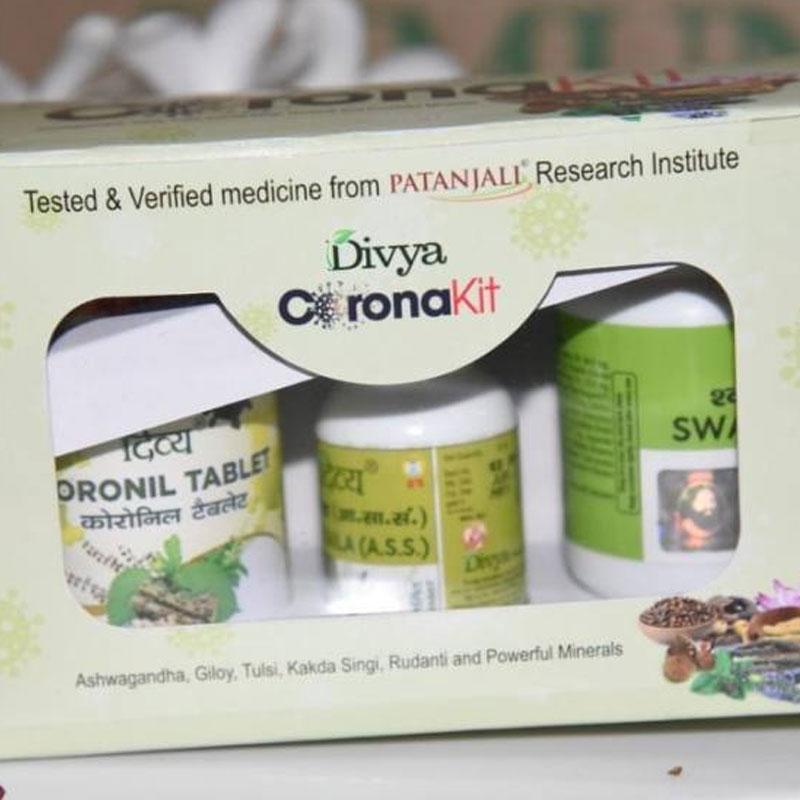
    NEW DELHI: The Ayush ministry has asked Patanjali to immediately stop promoting and advertising its Covid2019 drug, Coronil, until such claims have been examined. Yoga guru Baba Ramdev yesterday launched the Ayurvedic medicine for treating Covid2019 patients claiming that it can cure the disease within seven days.

    ICMR and Ayush ministry distanced themselves from the announcement of Patanjali’s medicine and said that such advertisements of drugs including Ayurvedic medicines come under the purview of Drugs and Magic Remedies (Objectionable Advertisements) Act, 1954. It has asked the brand to provide details of the name and composition of the medicine being claimed for Covid2019 treatment at the earliest.

    "Ayush ministry has taken cognisance of news in media about ayurvedic medicines developed for Covid2019 treatment by Patanjali Ayurved Ltd,” said its statement.

    The ministry has also asked to provide details for site(s)/hospital(s), where Patanjali conducted its research study for Covid2019 treatment and other details regarding protocol, size of the sample/s, clearance by Institutional Ethics Committee, registration with CTRI and results data of the study.

    It has also requested Uttarakhand government’s licensing authority to provide copies of license and product approval details of Patanjali’s Coronil, the Ayurvedic medicine which is being claimed for the treatment of Covid2019.