Tag: covid2019

  • Faber-Castell art business grows by 300% y-o-y during Covid2019

    Faber-Castell art business grows by 300% y-o-y during Covid2019

    NEW DELHI: Faber-Castell is a name most children grow up with. As one of the leading manufacturers of wood-cased pencils with a varied range of products for writing, drawing, and creative design, as well as decorative cosmetics, it also found Covid2019 challenges and is now changing its strategy.

    Faber-Castell marketing director Sonali Shah says, “When the country was in complete lockdown, schools were shut, stores were shut, we were completely shut. But we saw a lot of latent demand coming from e-commerce. And when stores started opening, we saw that a lot of people started putting their attention towards DIY (do it yourself) products and art which helped us gain demand for our products.”

    Self isolation, work from home and study from home options led to a growth in demand for art and other stationery supplies. Faber-Castell tied up with Swiggy Genie to make stationery available at the doorstep for its consumers. 

    “Demand for products including highlighters, text liners, which are generally used for office purposes, now because of digitisation, people actually want to do hands-on things. Our art business has grown by 300 per cent over last year and we have recently launched our liquid paint. Art is divided into dry medium and liquid medium. Dry medium products include crayons and coloured pencils and liquid medium is acrylic paints, fabric paints, poster colours and watercolour. Our liquid paint business has grown by 84 per cent,” she shares.

    Faber-Castell had restrained from any overt advertising during the pandemic. “I thought it's quite insensitive for us to do it. But what we continue doing is putting up tutorials on different techniques that people can use to do art and crafts and DIY techniques and how they can spend their time at home. So, that was something that we had done during the lockdown. Now that things are opening up, we will probably look at launching eco-friendly products, make in India products because that’s the need of the hour. So, we are launching our paper pencil and eco pencil. For now, we have taken a conscious call to not do any overt advertising as such, but we will try and put as much content out there to help people get through this tough time,” she shares.

    With the thrust being given to Make in India products and eco-friendly items, Faber-Castell will refocus its attention and fast-track its product developments to meet the demand.

  • Zenith: global ad spend to dive 9.1% in 2020

    Zenith: global ad spend to dive 9.1% in 2020

    MUMBAI: There appears to be doom and gloom for the media sector, considering the sharp downturn in consumer sentiment and in advertising courtesy Covid2019.  Global agency Zenith concurs with this view and has revised its numbers for 2020.

    In its latest Advertising Expenditure Forecasts report, it says that the decline in global ad spend will be 9.1 per cent in 2020, much lower than the 9.5 per cent drop experienced during the recession of 2009. And it is also optimistic about 2021 when it says ad dollars will rise by 5.8 per cent buoyed by the Olympics in Tokyo and the UEFA Cup in Europe.

    It explains that advertisers pulled the plug when the scale of the pandemic started becoming clear and the worst period was between March and May 2020, with the timing varying by country, the agency said. But with the unlocking happening in many territories ad spends will start climbing back again.  

    Zenith pointed out that various regions are expected to decline with differing intensities. US adex is expected to dip just seven per cent, benefiting from political spending around the presidential elections in November. Asia Pacific is forecast to shrink by eight per cent, thanks to the success of some markets in keeping the virus under control. Advertisers in western Europe cut spend aggressively in Q2 and there the shrinkage will be a sharper 15 per cent. Central and eastern Europe will decline eight per cent, Latam 13 per cent and MENA by 20 per cent.

    Legacy media such as print, television and radio are all expected to be impacted, though the latter two will have it easier. TV and radio are expected to be hit by 11 per cent and 12 per cent drops, while newspaper and magazine advertising are expected to get 21 per cent and 20 per cent shaves in what advertisers spend on them. Zenith says that the crisis has only exacerbated the long term decline that print advertising has been witnessing for some time now. Out-of-home and cinema have suffered the most from government restrictions on movement, and consumers’ avoidance of public places. Out-of-home advertising is forecast to shrink by 25 per cent in 2020 and cinema by 51 per cent.

    Digital advertising will end 2020 with just a thin slice of two per cent cut out of its growth. Consumption of digital media, along with television, spiked in the early weeks of lockdown. Although both are now trending down again, they are not expected to retreat to pre-crisis levels any time soon. Together with the rise of e-commerce and data, this has driven a rapid shift in media budgets from traditional to digital media, accelerating the trend that was already taking place. Zenith now forecasts that digital advertising will account for 51 per cent of global ad spend this year, up from the 49.5 per cent it forecast in December.

    Digital ad budgets were cut quickly in the crisis’ first phase, says Zenith, given that it is generally easier to cut without penalty. But as time progressed, brands allocated more budget into digital channels to take advantage of their flexibility and ability to optimise performance, particularly important qualities in an uncertain time. Zenith does not expect any of digital’s share to return to traditional media as the crisis eases – its market share is forecast to reach 54.6 per cent in 2022.

    The agency disclosed that the pandemic has imposed some behavioural changes in consumers, they are relying increasingly on e-shopping and e-commerce. It cited global research by Criteo which said that in recent months 53 per cent of consumers have discovered at least one form of online shopping that they plan to continue. Retail footfall will be subdued for months, if not years, to come, says Zenith. This has forced brands to accelerate digital transformation efforts and made it critical to have a robust commerce strategy in place, either D2C or through retail partners.

    The crisis also raised the value of first-party data for brands. First-party data gives brands powerful insights into their customers’ behaviour and provides a real competitive edge. It will allow brands to navigate changes to consumers’ behaviours and attitudes as the crisis develops, and identify when it’s time to start investing for the upturn.

    Zenith is not optimistic about the prospects for advertising in newspapers and magazines in 2021, both will continue to slide. As compared to this TV and radio will grow two per cent and one per cent respectively. While OOH and cinema will spurt 16 per cent and 65 per cent respectively in 2021, they will not revert to the 2019 peak even by 2022.

    “The Covid2019 forced brands to embrace digital advertising even faster than expected and made digital transformation of businesses more urgent than ever,” said Zenith’s head of forecasting Jonathan Barnard. “This year will be the first in which digital advertising will attract more than half of total global ad spend, a milestone we previously expected in 2021.”

  • “Our media investment is lower than last year”: Hyundai Motor’s Tarun Garg

    “Our media investment is lower than last year”: Hyundai Motor’s Tarun Garg

    NEW DELHI: Even as the automobile industry was only beginning to cope with the changes from BSVI norms, the pandemic battered it. Deteriorating demand has affected production, factories’ closure and the extended lockdown led to labour disruption. As India eased into Unlock mode, auto brands are engaging in refreshed marketing activities to boost sales.

    In an interview with Indiantelevision.com, Hyundai Motor India Ltd director- sales, marketing & service Tarun Garg says that due to the fear of the virus among people, the customer sentiment is shifting towards personal mobility over shared mobility. “We believe there will be an increase in traction for the compact and used car segments.”

    The industry witnessed one of its sharpest declines in domestic sales in March 2020. As per SIAM reports, sales of commercial vehicles – light, medium and heavy carriers of passengers and goods – declined by 88.05 per cent to 13,027 units in March 2020 compared to 109,022 units in March 2019.

    The brand recently launched a virtual reality experience, ‘The Next Dimension’, an immersive expression of different cultures with human-centric design. According to Garg, "Digital platform has the power to transform the world and we have received an overwhelming response on the event with 39 million views and counting and engagement of over 1.1 million.”

    “Perfectly harmonising the dynamics of physical and digital worlds, the entire 33-minute capsule, except the cars and presenters, was shot by using the advance level CGI & VFX technologies, presenting a larger-than-life storytelling experience,” he adds.

    He shares that the auto industry will see some revival in the festive season and is likely to normalise early next year. Garg admires that the Indian market has been highly resilient in challenging conditions.  “We will be quicker to overcome the adversities than other countries. We will evaluate the environment and determine the future course of production plans.”

    Auto industry body, Society of Indian Automobile Manufacturers (SIAM), recently, in a statement, said that the sector was already "facing an unprecedented challenge with 18 per cent de-growth last year and as per an assessment, the impact of COVID2019 on demand for vehicles in the current financial year, the sector could have a decline between 22 per cent to 35 per cent in various industry segments, if the overall Indian GDP growth is at zero to one per cent for FY 21.”

    Since consumer sentiment is not substantial and the sector is not performing well, Hyundai’s first aim is to resolve customer anxiety. “Under the ambit of Hyundai Cares, we have introduced multiple financial schemes to enhance customer confidence through programs such as EMI assurance and associations with banks to offer unique customer-centric car finance schemes,” adds Garg.

    In the lockdown period, auto companies slashed their advertising spends, especially on TV, and focused on the digital space with campaigns mostly about the pandemic. However, now the momentum is picking up in the Unlock phase and digital and TV viewership is on a record high. Brands are working on new strategies to connect with the target audience.

    According to Garg, this unprecedented situation has taught learnings such as to have a sustained communication, focus on digital mediums and customer relationship. However, he shares that though Hyundai has optimised its media mix and investments, it is lower than last year’s level and based on market priority.

    He asserts, “The consumption of digital mediums has gone through the roof. We optimised these mediums very strategically. Today, more than 30 per cent of our customer sales queries are coming through digital sources, i.e., 2X over what we recorded last year.”

    In an extremely challenging market, Hyundai seems to have made a positive beginning towards normalcy. In the month of June, Garg says it registered a cumulative sale of 26,820 units. The ‘All-New CRETA’ has recorded over 45,000 bookings including 5000 units exported in May, maintaining its SUV dominance for the month of May and June.

  • Covid2019 & brands: Better consumer connections & brand recall

    Covid2019 & brands: Better consumer connections & brand recall

    NEW DELHI: Like it or not, the Covid2019 pandemic has pushed brands to the heights of innovation. Along with it comes creativity coupled with responsibility in ad commercials. As the pandemic swelled, advertisers saw an opportunity in showing their empathetic side to consumers.

    According to industry experts, brands that maintain a presence during a crisis or an economic downturn are noticed and best prepared to benefit from the recovery period. Brand experts also feel that such campaigns resonate well with consumers, which in turn helps the brand to make a positive impact.

    AdLift co-founder and CEO Prashant Puri believes, “For a brand, timing is everything and during this pandemic, empathy is everything. Consumers need to know that the brand understands them, the current reality and their needs and trials. Covid2019 frontline workers today are seen as saviours and heroes. By saluting front line warriors through their campaigns, brands are trying to assuage consumers by telling them they are with them in this fight against the pandemic. Consumers will feel a bond with a brand that reflects their feelings and emotions.”

    IdeateLabs director Vrutika Dawda believes that consumers are expecting brands to showcase human values and this has the potential for the brands to have lasting relationships with them. “Brands have tweaked messaging from spreading awareness to celebrating the real heroes who are stepping forward to help others. This also portrays that they care and are there to support the people during such conditions. This will lead to loyal customers and strong brand recall in the future. The major objective of such brand campaigns is to build a long-term relationship with their consumers and strengthen their positioning in the market.”

    Brands are effectively using social media platforms to create awareness. Some brands even temporarily changed their logos to show solidarity. The list includes Tech Mahindra, Coca-Cola, McDonald’s, Audi, Volkswagen, Shopper’s Stop and CARS24.

    BC Web Wise creative director Anthony Padayachi says, “Brands across segments have often displayed a sense of solidarity with causes that their audience or the masses, in general, are concerned about. When done sensibly and with genuine intent, such campaigns manage to humanise the brand, thereby triggering brand love. Templatised storytelling doesn’t create any impact. It’s important to rethink how these stories are crafted, right from the insight stage. This will lead to stories that are sensible and different.”

    Lets Influence founder Bhawna Sethi feels these campaigns drive brand recall without hard-selling the brand’s products. “It resonates well with the audience and can surely help brands to strike an emotional chord with the customers. However, brands should ensure that these campaigns are not force-fit and are in line with its overall purpose and ethos.”

    “Marketers and brands are working real-time to outsmart all the changes happening in our ecosystem. While we want to stay on top of every rising tide and trend in the industry, it is important to distance ourselves from any kind of opportunistic messaging. We rather build foundation and integrity than just market share. Tactical trends are going to be momentary however strategic creative pursuits and shareable have always stood test of time,” adds DViO Digital founder & CEO Sowmya Iyer.

    Here are some brand campaigns from recent times:

    SUN PHARMA

    Sun Pharma has launched a ‘Thank you Doctor’ campaign to express gratitude towards doctors for their sacrifices and selfless service. The campaign features a one-minute TVC which is based on testimonials of 12 real-life patients who have recovered from cancer, heart attack, Covid2019, among others. The patients are seen thanking doctors for their bigger role of being their family, friend and nurturer. Originally shot in Hindi, the video has been dubbed in six regional languages.

    OPPO

    OPPO India announced an initiative to honour the unsung heroes of Covid2019. Under this initiative, named “Salute to the Ultimate 120 with the Power of Change”, the brand showcased 120 Covid2019 innovators from all domains of life on their strategy to manage this pandemic and acknowledge some out-of-the-box ideas. These innovators vary across innovation, endurance, performance and style. This initiative is a testament to salute those leaders who are assisting people to help each other and offer creative solutions to tackle the pandemic.

    Quaker

    Supporting the tireless devotion of our frontline workers, who are bringing hope to many during these challenging times, Quaker Oats, from the house of PepsiCo India, launched a digital film based on the The Real Fit Heroes – our healthcare community. Through this film, Quaker urged netizens to salute and thank the Real Fit Heroes – doctors, nurses and many more such healthcare professionals for their compassionate and heroic work in the fight against the pandemic.

    Jyothy Labs

    The brand launched a new television campaign in support of the #Vocalforlocal appeal made by prime minister Narendra Modi. The launch comes at a time when the entire nation is witnessing an emotion of patriotism and self-reliance. The campaign focuses on the centricity of Jyothy Labs’ evolution and functioning being driven by ‘Bharat’. It depicts the joy and happiness of being a true Indian homegrown company serving its consumers through its various innovative products across the nation.

    Hyundai

    Hyundai Motor India Ltd (HMIL) released an anthem as a tribute to the ‘Indomitable Spirit of India’. The corporate brand anthem ‘Haq Hai Humara’ aims to bring together the people of India and salute their resolve to stand united and stay strong in this unprecedented adverse situation. The song ‘Haq Hai Humara’ depicts gratitude to all frontline workers and the citizens of the country who have risen up to this challenge with their steadfast spirit and for their invaluable contribution in the fight against the Covid2019 pandemic.

    Mondelez

    In April this year, Mondelez India launched the limited-edition Cadbury Dairy Milk Thank You bar, to highlight India’s spirit of generosity, by acknowledging those who help us every day. To acknowledge and show heartfelt gratitude to those who contribute to our lives every day but often go unnoticed.

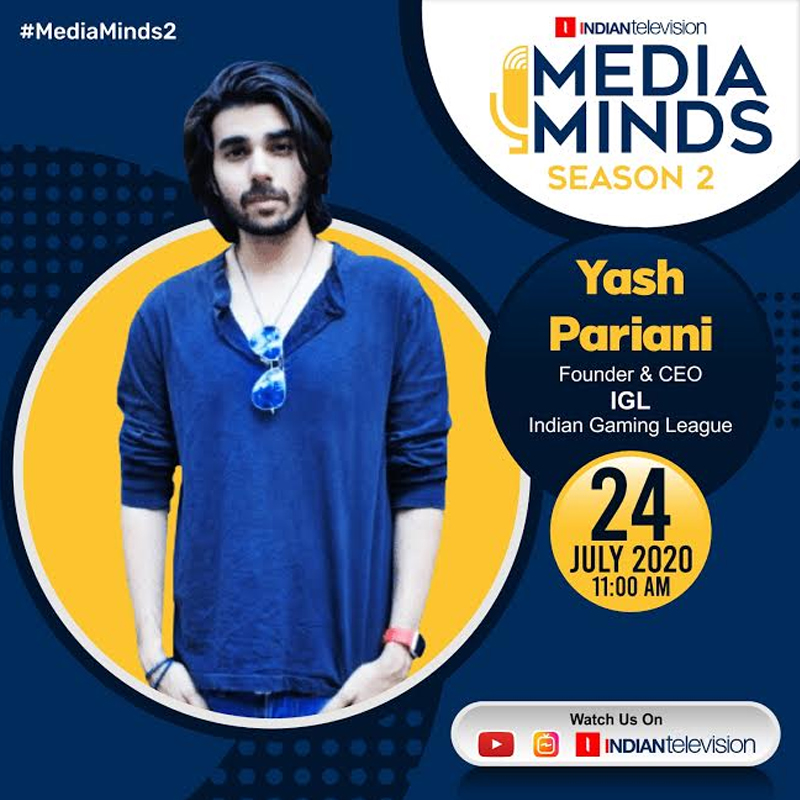
  • #MediaMinds2 | IGL founder-CEO Yash Pariani talks about evolving e-sports ecosphere in India

    #MediaMinds2 | IGL founder-CEO Yash Pariani talks about evolving e-sports ecosphere in India

    NEW DELHI: Covid2019 turned out to be a rather interesting and better time for the e-sports ecosystem, leading to large jumps in user numbers as well as tournament viewership and Yash Pariani’s Indian Gaming League was one of the beneficiaries there. 

    In the third episode of Media Minds 2, Pariani sits down to talk about how the lockdown led to a rise in the popularity of e-sports and catalysed the way for its further growth, going ahead. 

    Speaking about the same, Pariani shares, “Casual games will definitely see higher traction compared to your expert first-person shootouts or your strategy games; that has got the highest number of traction during the lockdown. Ludo will be number one, second will probably be PubG and followed by Call of Duty. I would say these three games, based on our platforms and statistics have seen the largest growth as well.”

    On his future plans for IGL, Pariani quips, “Eventually, our goal is to have multiple best teams with our roster but for that, we wanted to first identify all the players. So, within the nearby future, we want to ensure that we have multiple tournaments occurring where we are able to give casual gamers a chance to actually prove their worth and climb our leaderboards. Based on that, we will be able to help identify who are the consistent players that are performing better than others and then establish and help those players and curate an international future for them as well, as a career option so that they can take part and represent India in future tournaments.” 

    Watch the complete episode here:

  • Non-metro markets to propel India’s recovery: EY

    Non-metro markets to propel India’s recovery: EY

    NEW DELHI: In the face of unprecedented economic disruption caused by the COVID2019 pandemic, non-metro markets are likely to recover faster than metro markets, an EY survey found. 

    The EY report ‘Will non-metro markets propel India's recovery’, revealed a higher percentage of respondents from non-metro markets expect to spend more than before on several categories compared to metro markets indicating that when the lockdown ends, green shoots of recovery would probably sprout faster from the non-metro markets.

    The survey covered a varied demographic mix of more than 4,000 respondents (2,000 each from metro and non-metro markets) to understand the potential impact of the pandemic from the consumer sentiment perspective. It covered key aspects linked to the current and expected attitudes, behaviors and spending trends of consumers as they adapt to the new reality. 

    EY India partner and media & entertainment leader Ashish Pherwani said, “The COVID2019 pandemic has radically shifted our way of life. However, despite uncertain and challenging conditions, our research shows that non-metros express a higher degree of resiliency and a resolve to bounce back quicker compared to metros. We may see long-term and even permanent changes in consumption patterns”. 

    The survey results reveal that the pandemic and the ensuing social distancing measures put in place have led to fundamental changes in how Indians are consuming media, necessities, luxury products education and travel. 

    Some of the key insights from the survey are:

    Health, hygiene and online services will continue to grow

    While COVID2019 has impacted overall consumption, categories like heath products, household products, hygiene products, vitamins and supplements and online services (gaming, home entertainment, online education, online banking) are expected to benefit.

    Non-metro market recovery is excepted to be faster than metro recovery

    Categories like consumer goods, travel, entertainment, automobiles and white goods are all expected to see increased and faster recovery of demand from non-metro markets post the lockdowns. 

    Increase in digital adoption

    Digital trials increased significantly during the lockdown period.  However adoption was higher for metros vis-à-vis non-metros.  Some of the obstacles stated by non-metro respondents included lack of technological knowledge, absence of smart phones and fewer language interfaces.

    Newspapers remain the most trusted medium

    The impact of the SarsCoV2 has unfolded at a dynamic rate, causing a sense of urgency to absorb information, increasing the consumption of news coverage at unprecedented levels. Newspapers continue to remain the most trusted news source. 42 per cent respondents in non-metro markets spend more than 20 mins in reading a newspaper compared to 36 per cent in metros.

    Follow Tellychakkar for the consumer facing news & entertainment

  • Quash Maharashtra govt’s age limit on sets: IMPPA to Bombay high court

    Quash Maharashtra govt’s age limit on sets: IMPPA to Bombay high court

    MUMBAI: The Maharashtra government allowed shootings to resume but barred people above the age of 65 from participating, deprived them of a livelihood and because of which they are facing starvation, said the Indian Motion Pictures Producers' Association (IMPPA) in its petition, urging the Bombay high court to quash the state government's directive.

    The association represents thousands of film and television producers, short films, programmes, artists and technicians. IMPPA’s petition comes a day after the high court, on a petition by artist Pramod Pandey, questioned the basis of the state government's restriction.

    IMPPA’s petition, filed with the help of advocate Ashok Saraogi, stated that prior to the lockdown, thousands of cast and crew members aged above 65 years participated in the shooting of programmes. But now, the shootings of such films and programmes have been left in between due to non-availability of such people.

    IMPPA president TP Aggarwal stated that for all senior producers, directors, actors and technicians the creative medium is the only source of income and the guideline was not practical and was not fair as in no other profession this condition was imposed. He added, “After sending requests many times, we had to move to the high court for demanding the rights of earning one’s livelihood for these senior people from the fraternity.”

    The IMPPA petition cites how the Karnataka high court had been specifically informed by the central government that individuals above 65 years of age had all the rights to carry out their work and the said restriction was only an advisory to stay at home. Hence, it isn't a binding order and every individual has the right to work for his livelihood and the government could not impose such regulations.

    The petition also informed that the entire trade has come to a standstill and several members who are associated with the film trade are starving and many have committed suicide.

    Follow Tellychakkar for the consumer facing news & entertainment

  • Ad commercial shooting resumes after Covid2019 lull

    Ad commercial shooting resumes after Covid2019 lull

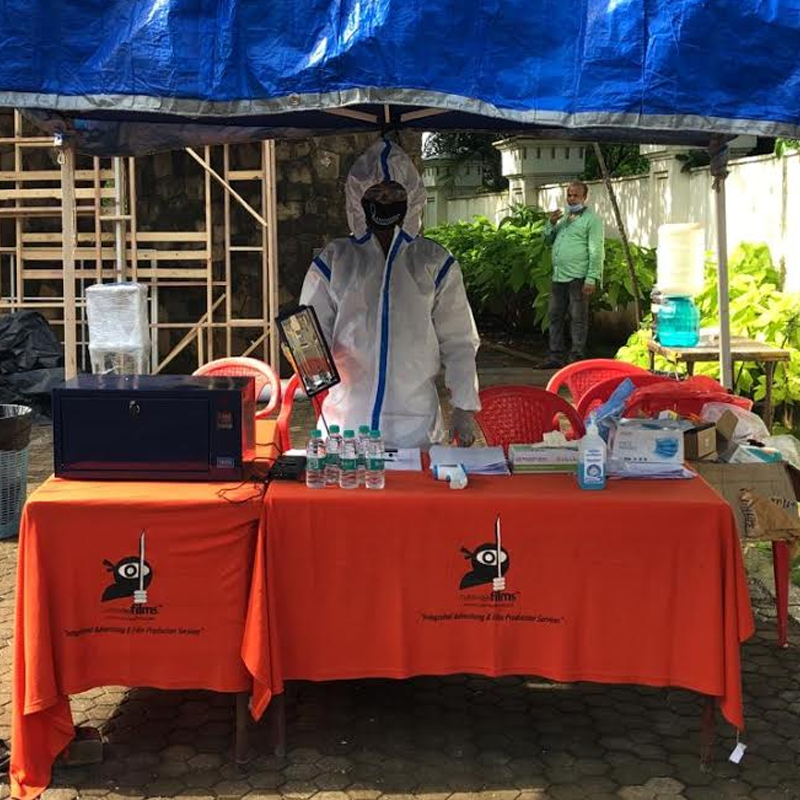
    NEW DELHI: With more relaxations in Unlock 2.0, productions houses are currently trying to adjust to the new style of doing business, with reduced crew members on the set and strict protocols. TV commercial shooting, too, has commenced in full swing and is strictly adhering to the safety measures given by the Association of Advertising Producers (ASAP).

    Recently, ASAP laid down a list of extensive measures to be adopted for shoots. It advised that all work environments must have hand sanitisers and handwashing facilities with soap while offices are encouraged to install sensor-based sanitisers to ensure hands-free dispensing and manually operated dispensers must be kept handy at all times. Furthermore, it suggests that workplaces should have Covid2019 risk assessments and plans in place, leave of absence must be insisted if anyone has symptoms of illness even if it is regular influenza or cough and safe transport of all employees, freelance or otherwise, must be provided.

    ASAP honorary general secretary and Corcoise Films executive producer Cyrus Pagdiwala says that personal interactions are out and even scripts are written keeping in mind the current situation. “We are not doing more than 10 shoots a day; it is not like the old days. The government has passed the order that only 33 per cent crew will be used currently, so everyone is trying to shoot in residential spaces. We are trying to make survival possible within the budget clients have. Each production house had at least one or two projects lined up during March-April. Thousands of films have been shelved due to the onset of the pandemic, but it will be difficult to get a figure for the other months because April-June was completely washed out.”

    According to sources, the industry has lost around Rs 300 crore potentially due to the pandemic and now, budgets have been cut down by 30-50 per cent.

    Cutawayy Films executive producer Gaurrav Dhar says that it has reduced the group count, asking food partners to follow a strict guideline and insured its crew members in case they test positive for Covid2019.

    “We have shot commercials for Maggi and Crompton and during the shooting, both clients and agencies worked on remote access. We were flashing the live footage to the agency and the client. After every shot, the director used to ask their approvals. We took care of the sanitisation process. A company called COVID Sanitization Squad took care of hygiene and kept everyone safe on the sets. From oxygen level to temperature check, we took care of everything,” he shares.

    Although Dhar says that the output has not been affected, the process is still time-consuming. Working on video calls is slow. “15-minute meetings are taking 40 minutes for simple approvals. Otherwise, it has been a smooth transition as we are saving a lot of money and time. I think video call is a boon and an enemy as well,” he says.

    10 films executive producer Shovik Basu says that budgets have reduced. He has made commercials with brands including Amazon, Hotstar, Disney and McDonald’s during this time.

    Basu says, “One of the setbacks, we are facing is to get people to come for shoots because not everyone is agreeing and in situations where there are multiple people in the same scene, it becomes difficult to execute keeping all the precautionary measures in mind. We are trying to find out a new way to do this, with a minimum crew, sanitising the entire place, etc. For agencies and clients, we are setting up a live video field, wherein they can supervise the entire shoot from home and if they have any comments we can implement them immediately.”

    Firecracker director Harsh Dave shared that it too has started shooting in extremely strict conditions. “It’s tough to shoot during these times, travelling to a different location is a problem, a lot of models don’t want to be touched by make-up artists. Being in India, I don’t think we have understood the concept of personal space, so it’s tricky. We have got ourselves Covid2019 marshals and PPE suits are given. Everything is happening on Zoom calls, from client meeting to agency meetings. Chinese whispers take place but a lot is lost in translation. But this pandemic is not getting over anytime soon so I think it only makes sense for us to take precautionary measures to keep the show up and running.”

    The government’s move to allow the sale of non-essential products on e-commerce and the reopening of retail stores in safe zones have given brands an opportunity to introduce fresh campaigns. E-commerce brands, video-streaming services, digital payments, health and wellness brands and delivery aggregators, too, are making a splash. Slowly but steadily, clients have started coming in, though not at a rapid pace.

  • RB announces $25 million for Reckitt Global Hygiene Institute

    RB announces $25 million for Reckitt Global Hygiene Institute

    NEW DELHI: RB today announced the launch of a global initiative to generate high-quality scientific research-based evidence to inform public health recommendations and promote behaviours that improve global hygiene. The Reckitt Global Hygiene Institute (RGHI) is a public health research and innovation hub that will bridge epidemiology, public health and behavioural insights to generate practical, high-quality scientific research that leads to enduring behaviour change. 

    “The Covid2019 pandemic has pushed public health to the top of the global agenda. At RB, we see the need for a new paradigm that brings together the highest quality scientific based evidence and informed public health recommendations to generate large-scale behaviour change for a cleaner, healthier world,” said RB CEO Laxman Narasimhan. “Today we’re announcing our commitment to convene a group of multi-disciplinary experts who, like us, believe real change on a global scale is within reach if we translate science-based evidence and consumer behavioural insights into sustainable hygienic practices that can be adopted globally. This ambitious goal is the result of our belief that the highest quality hygiene is a right and not a privilege.”  

    RB’s commitment to global hygiene research and education includes: 

    A multi-year, $25 million investment in research aimed at filling the gaps in our understanding of the science-based evidence around hygiene and the behaviours and solutions necessary to sustain it. 

    The formation of an Expert Panel—comprised of cross-discipline luminaries—to guide these research efforts at leading academic institutions around the world. 

    The creation of a Global Hygiene Institute with physical infrastructure, a Governing Board supported by full-time staff, ongoing research, and education programming driven by expert researchers and educators. 

    Through the establishment of a fellowship program with leading universities, RGHI will generate practical, informed public health research and recommendations that champion global hygiene as the foundation of health. The RGHI Governing Board will determine specific areas for research and will work with the Expert Panel to award the fellowships to promising early career academics, who will become Reckitt Fellows. In addition to the fellowships, the Institute will award grants to institutions for open, collaborative, cross-functional research. The Expert Panel will further define the parameters of these awards. 

    RB is honored to announce the founding members of the governing board and expert panel including: 

    Professor Peter Piot, director of the London School of Hygiene & Tropical Medicine 

    Dame Sally Davies, master of Trinity College, Cambridge 

    Professor Feng Cheng, research center for public health, Tsinghua University School of Medicine, Tsinghua 

    Dr Randeep Guleria, Director, All India Institute of Medical Sciences (AIIMS) 

    Professor Dr Albert Ko, department chair and professor of epidemiology, Yale School of Medicine  

    Professor Teo Yik Ying, Dean, Saw Swee Hock School of Public Health, National University of Singapore 

    “The purpose of RB—to protect, heal, and nurture in the relentless pursuit of a cleaner, healthier world—resonates more than ever in the current environment. I am excited to work with the Expert Panel and combine the deep experience in their respective fields with RB’s expertise in hygiene and consumer behaviours,” said RB chief safety officer Simon Sinclair, who has been named executive director of RGHI. “We look forward to partnering across disciplines and geographies to generate the information necessary to support the right behaviour changes for a healthier world.” 

    Updates about RGHI are forthcoming as additional details about the initiative are confirmed. The formal launch of the Institute will be in the autumn of 2020.  

    Follow Tellychakkar for the consumer facing news & entertainment