Tag: COVID 2019

  • Emergency plan in place, cable operators are prepared to counter Covid

    Emergency plan in place, cable operators are prepared to counter Covid

    KOLKATA: During the Covid2019 outbreak last year, cable operators in India served the country’s entertainment and infotainment needs as an essential service. It was not easy to operate in a lockdown for an industry that involves huge on-ground operation as well as close contact with consumers. From running out of inventories to fall in payment collection, the operators face an array of issues. Now, with the country feeling the heat of the second wave, the industry says it is better prepared than last year.

    Fastway Transmissions group CEO Prem Ojha said that the MSO is not facing any issue presently, because only a few parts of the country like Delhi and Mumbai have been significantly impacted. Most of the other geographies are normal right now, barring weekend and night curfews in some places. He noted that field activity gets very limited post 10 pm, right up to 6 am in the morning anyway. Hence, there is no such disruption as of now.

    Although Ojha is uncertain how things will pan out with cases on the rise, the leeway of being part of essential services will play in their favour. But partners and teams have to brave it out, risking their own health to continue to serve, added.  The company already has a contingency plan with the right amount of technical support and equipment in place should matters turn more critical.

    “There will be some hardship but the work will carry on. It will be a challenging scenario but nothing will get stalled. This time people are braver, more confident than last year. Uncertainty factor is lesser compared to last year,” he said.

    GTPL Hathway cable TV head & chief strategy officer Piyush Pankaj acknowledged that due to the looming possibility of a lockdown, certain problems are creeping back. But they have experience on how to deal with the crisis, and the company is well prepared for the situation, he asserted. Since Covid cases began to surge in late March, efforts are underway to cope with the issues.

    PPE kits are ready for staff, digital payments have been established. Moreover, customer communications are being taken care of through online and telephonic medium rather than in-person visits. “We have already taken precautions on ground. We are not facing the mounting problem that we faced last time,” he summed up.

    As of now, the situation on their end is under control, said Siti Networks CEO Anil Malhotra. While the Covid curve began peaking 10-15 days back, the MSO has not seen any major impact so far. However, more operators and staffs are getting affected. Unfortunately, people were not being cautious this time, which will further compound problems, he mused. The company has already started telling people how to take precautions, and is helping those who are suffering.

    “It can’t get worse than last year. We have learnt in 2020 how to work with little or skeleton staff. This time, I am more worried about our staffs and it would be great if the government can insure these people,” Maharashtra Cable Operators Federation president Arvind Prabhu highlighted.

    Despite the sector’s resolute outlook, operational challenges have already cropped up. Although the government has issued a notification where cable service is categorised as essential services, transport is becoming an issue. There is also the risk of infection. At present, operators are rotating the staffs so all of them don’t fall sick and in case someone falls sick, they have backup, Prabhu mentioned.

    Other than workforce issues, the industry faced shortage in inventory and other supply chain issues during lockdown. The same situation is playing out again; there was no disposable income to purchase stock in advance, as cable operators took a 40 per cent hit in revenue last year, Prabhu pointed out. Apart from some of the big players, no one else has kept inventory ready.

    Fastway’s Ojha highlighted a significant trend. With more offices being closed again, the incremental demand for broadband is going up. That traction is visible now, Ojha added. The demand will further go upwards, and therefore the operator is ensuring inventory and other things are in place so they can meet the demand.

    Some of the major MSOs have started work-from-home provision again. One-third of GTPL Hathway’s staff is working from home currently. Siti Networks has also initiated WFH option for non-critical employees and is providing necessary apparatus for that. While all Fastway workers are operating from home, the company is being flexible with employees who are travelling from containment zones or showing any Covid symptom. All of them are ready to ask more staff to work from home if the situation deteriorates.

  • Throwback2020: The great show that Indian e-commerce industry put up

    Throwback2020: The great show that Indian e-commerce industry put up

    NEW DELHI: It was more than a decade-and-half long journey for the e-commerce industry in India to grow from a ticket booking platform to an  offeror of everything – from a needle to a car – online. The initial hurdles of  low internet accessibility, pricey data charges, and lack of trust were vaporised  by Reliance Jio in 2014, giving a major boost to the industry. And then came 2020 and  the much spoken about coronavirus, that made e-shopping more of a necessity than an option for almost all on planet earth. It has been said by many and trusted by all that what 2020 did for the digital and e-commerce industry, wouldn’t have been possible to happen in the next five years or so. Here’s an overview of what all went down in 2020 that made e-commerce a stronger and stiffer chap, giving a tough competition to the offline retail stores that remained the predominant choice of buying and selling for most, up until 10 months ago.

    2020 growth story

    The Indian e-commerce industry was  struggling, climbing a steep incline for the past many years, given the strong intent of policymakers to support a digitally-enabled India. From increasing FDI in e-commerce ventures to signing MoUs with banks to rolling out 5G fibre networks, the past few years have seen great strides being made in that direction. However, the 2020 growth story was more the gift of an unexpected catastrophe than organised attempts in the direction. Yes, the sector faced some hiccups in the beginning, because of the uncertain situations and market slowdown, It, however set a new peak in terms of growth this year.

    Starcom CCO Rajiv Gopinath notes, “The e-commerce industry has seen a massive boost in 2020 all over the world due to the pandemic. Global retail e-commerce will hit a staggering 3.9 trillion dollars in 2020– the equivalent of 17 per cent of all retail sales. Meanwhile in India, the industry saw a momentary fall in March and April due to the pandemic and the resultant logistics constraints and curbs on sales of non-essentials. However, after April, there has been a steady rise in the number of orders placed.”

    Overall, it grew about 35-40 per cent and achieved a GMV of around 38 billion dollars, as per IBEF and Redseer Consulting estimates. A report by Kantar and Amazon Advertising indicates that 42 per cent of Indian urban active internet users were shopping online during COVID times.

    Hustlers of the e-comm town

    The e-commerce industry hogged most of the spotlight this year, given the situation the consumers found themselves in with the Covid-2019 imposed lockdown. However, according to data from Venture Intelligence — a firm that tracks private companies’ investments, financials and valuations, private equity and venture capital (PE-VC) investments in e-commerce companies in India from  January to September dropped by 55 per cent as compared to the same period last year. It stood at $1223.12 million in 2020. Additionally, only 66 firms raised funding in 2020 against 107 in 2019. The reasons behind this could possibly be attributed to anti-China sentiments and consolidations within the industry.

    Yet, majors like Amazon, Flipkart, and the biggest star Reliance managed to keep the mills running with a great infusion of dollars.

    Amazon invested $95.51 million in its Indian payments unit AmazonPay, in October. It was the second round of investment into the platform after the company pumped in Rs 1,355 crore in January. Additionally, as the e-grocery industry heated up, Amazon announced the expansion of its ‘Amazon Pantry’ to over 300 new cities in India, delivering to 10,000 pin codes across the country.

    Amazon also forayed in the food-delivery business, an alcohol-delivery service, and an online prescription medicine delivery service, making the most of the year.

    Its closest competitor, the Walmart-backed Flipkart found its base strengthening further as Tencent, the second-biggest shareholder in the e-commerce marketplace, put in $62.8 million in it.

    Additionally, Flipkart tied up with e-pharma company 1MG, foraying into the e-med space. It rolled out ‘dark stores’ to service customers in nearby localities, and unveiled its plans in the wholesale market with the unveiling of its exclusive B2B marketplace – Flipkart Wholesale. Flipkart also acquired the wholesale business of its parent company Walmart in India.

    And of course, most of the headlines space was reserved for Reliance this year as well. Its stock values went through a crushing journey early in the year, dropping to Rs 880 by the end of March from the peak of Rs 1,610 in December 2019, due to the pandemic. However, it was quick to get back on its feet as RIL sold about 10 per cent of Jio Platforms to Facebook in April. A series of marquee investors followed the suite, including Google, and Jio Platforms secured investments of $20.6 billion.

    Reliance Retail Ventures also secured investments worth over $5.1 billion through various investments from leading global investors including two tranches from Silver Lake (1 and 2), KKR, General Atlantic, Mubadala, GIC, TPG, ADIA and PIF.

    The launch of Jio Mart was one of the biggest events in the Indian e-commerce space this year. The megacorp also announced important acquisitions including digital pharma marketplace Netmeds, a chunk of the Future Group’s businesses, and Urban Ladder.

    It created an omni-channel retail strategy which smartly included its brick and mortar presence with its ecommerce wings also spurred the next phase of its growth, which we will see giving fruit in the future as well. Some of the smartest moves in this direction were partnering  with SBI in Jio Payments Bank and collaborating with Facebook-controlled WhatsApp that has launched its UPI-based payment platform.

    Enough space for everyone

    What essentially started as a space for fashion hauls and ticket bookings, the  e-commerce industry really got its due in 2020 with purchases, across all the categories being driven online. According to Google Trends, the interest in the category went up by around 50 per cent since this time last year.

    Logicserve Digital founder & CEO Prasad Shejale shares: “The number of e-commerce shoppers has at least doubled during Covid. Talking about the wide reach of the online shopping phenomena, a recent report by Bain & Co. suggests that 97 per cent postal codes in India ordered at least 1 item online in the last year, which is great. The report also mentions that for many businesses, including the small sellers, 60-70 per cent of the sales happen through e-retail.”

    Gopinath notes:  “Online marketplaces have witnessed a total growth of 30-40 per cent of new users. E-commerce leader in India, Flipkart recorded a new user growth of close to 50 per cent right after the lockdown, with tier 3+ regions registering the highest growth of 65 per cent during the "unlock" July – September phase. Consumers from tier 2 and tier 3+ regions also spent the most time on the platform, signalling a continuing rise in user engagement and a shift in shopping preferences. From the supply side, it saw close to a 35 per cent increase in sellers on board in 2020, in comparison to the same period last year.”

    22Feet Tribal Worldwide Preetham Venkky adds, “Brands have significantly upped their investment on both owned channels as well as a marketplace (Flipkart, Amazon, Nykaa etc.). While investments in the marketplace have borne fruit immediately, in mid and high involvement categories, brands have shown interest in growing their branded e-commerce platforms. For instance, we’ve seen a growth of over 40 per cent on e-commerce in the home appliances space.”

    Gopinath elaborates: “The top-selling category in e-commerce has long been electronics, especially mobile phones, followed by apparel. Rather, in January-March, the most searched categories included personal care, men's clothing, footwear and women's clothing. Though these still remain the dominant categories, a “work from home” category is emerging primarily due to Covid-2019, consisting of products related to office activity like laptops, chargers, small furniture, etc.

    “However, during the lockdown, food and nutrition, household, toys and audio products witnessed the highest demand among consumers. Grocery and FMCG goods were one of the biggest beneficiaries during the pandemic even though fulfilled orders were only a fraction of the total in-demand orders (due to a steep hike in demand). However, even after the lockdown ended, e-grocery orders have been seeing an upward trend.”

    According to a study by RazorPay, categories like beauty and personal care and home furnishings also witnessed massive growth, especially after May. While the former saw an increase of almost 295 per cent in the number of transactions, the latter saw a spike in orders in May and June given lifestyle changes and the need to work from home.

    dentsu Asia Pacific (APAC) Chief Data & Product Officer and dentsu Programmatic – South Asia CEO Gautam Mehra adds, “Sectors that benefitted the most were electronics, pharma and education. Even fintech to a large extent benefitted, with more and more demat accounts, digital-only savings accounts being opened and UPI usage increasing.”

    The Indian retail market also saw a new wave of direct-to-consumer brands such as Lenskart, Licious, Zivame, Epigamia, BoAt, Wow Skin Science, Healthkart, Mamaearth, MyGlamm, SUGAR Cosmetics, IncNut, Country Delight, among others, establishing a strong market  presence. Relying on technology and smart interactive solutions, these brands have made big within the industry.

    Growing in potential

    The industry not just grew in numbers but also made great investments in improving the overall customer experience. They relied heavily on smart-tech interventions and UI/UX development to make the consumer journey more smooth sailing.

    More and more brands were forced to step into the online world and create their own shopping platforms. According to the report titled ‘E-commerce Trends Report 2020’ by Unicommerce, there has been a 65 per cent increase in brands developing their own website in India. Bisleri, Cornitos, Nivea, Kiehl’s and Amaris Jewels were some of the brands that launched their own shopping platforms in India this year. Apple, which used to get 30 per cent  of its annual sales in India from e-commerce sites here, also launched its own online store for India.

    At the same time, brand websites have witnessed 88 per cent order volume growth compared to 32 per cent for ecommerce marketplaces.

    Carwale SVP (used cars) Abhishek Patodia mentioned in an Indiantelevision.com virtual roundtable that the platform included video upload option for car-sellers, which eventually driven up the number of consumers on their platform.

    Baggit head of marketing Atul Rohan Garg added that they are working on incorporating options like video-calling and on-call assistance for its shoppers to make the experience more transparent and wholesome. The same plans are in place for a number of lifestyle, fashion, and jewellery brands.

    Many restaurants, QSRs, and salons adopted options like e-menus, pre-bookings, on-app valet services to fit into the new normal and make physical stores more comfortable and safe.

    Venkky quips: “The growth of e-commerce will be on the back of four services: technology, user experience design, dynamic creative optimisation and performance marketing. This creates the need and demand for fully integrated digital agencies, which will benefit the maximum.

    Driven by Technology

    Mehra notes: “Digital commerce is almost entirely tech-driven. From better warehousing to better personalisation to customers, every part of the commerce journey has an opportunity to be disrupted or innovated on. Ad-tech / mar-tech will play an important role in the acquisition and driving lifetime value, whereas traditional operations where SAP/ERP used to be deployed are now being disrupted by startups like Khatabook and several others.”

    According to Shejale, personalised SaaS-based platforms that are powered by AI also gained great preference from the e-commerce players as they work on systems that ensure that a seamless omnichannel approach is followed.

    The year, therefore saw, ecommerce software platforms making a big mark in India Brands and e-commerce platforms partnered with payment gateways, cloud computing and analytic service providers. Ready-to-use ecommerce software from Shopify, Magento, Ecwid, BigCommerce, Volusion, Wix and others eased out the pain of setting up online stores, making D2C bigger than ever in the country. Use of inbuilt RFID, GPS, and IoT, and telematics played a crucial role in evolving the ecomm world.

    Additionally, brands are also experimenting a lot in closing the gap between the online look and  feel of the product and how it physically is. This has attracted great strides in involving technologies that can create realistic 3D imageries, refine digital texture and colour palette and at the same time keep the site design simple and light. Jewellery brands invested in technologies that can help the retailers and e-platforms to customise designs, do online virtual trials  on a real-time basis.

    Another simple platform that greatly assisted e-commerce players this year was Whatsapp. Reliance Industries started limited use of WhatsApp to connect customers to grocery stores. JioMart successfully interacted with its customers on orders using WhatsApp, simplifying the whole process. Jewellery brands like Mellora are also relying on the Facebook-owned platform to reach consumers.

    In the papers and on the screens

    Keeping up with the buoyancy in online shopping, e-commerce and digital-first players greatly supported the Indian advertising industry too. Online gaming platforms like Dream 11, also the sponsor of IPL, MPL, Poker Stars, e-learning platforms like Vedantu, WhiteHat Jr, and BYJUS, and e-shopping platforms like Flipkart, Myntra, and Amazon were some of the top advertisers this year, keeping the industry afloat.

    Not just that, the marquee sales events like Myntra End of Reason Sale, Amazon Great Indian Sale, Pepperfry Shubh Aarambh Sale, Paytm Maha Cashback Sale, etc. got the bucks moving in the brand’s direction as the sales and supply chains remained largely impacted through the year.

    Has the inflection point been reached. Observers are betting their hats that there’s no going back from here; only forward. 

  • Indian news industry needs mid-course correction: Zee News’ Sudhir Chaudhary

    Indian news industry needs mid-course correction: Zee News’ Sudhir Chaudhary

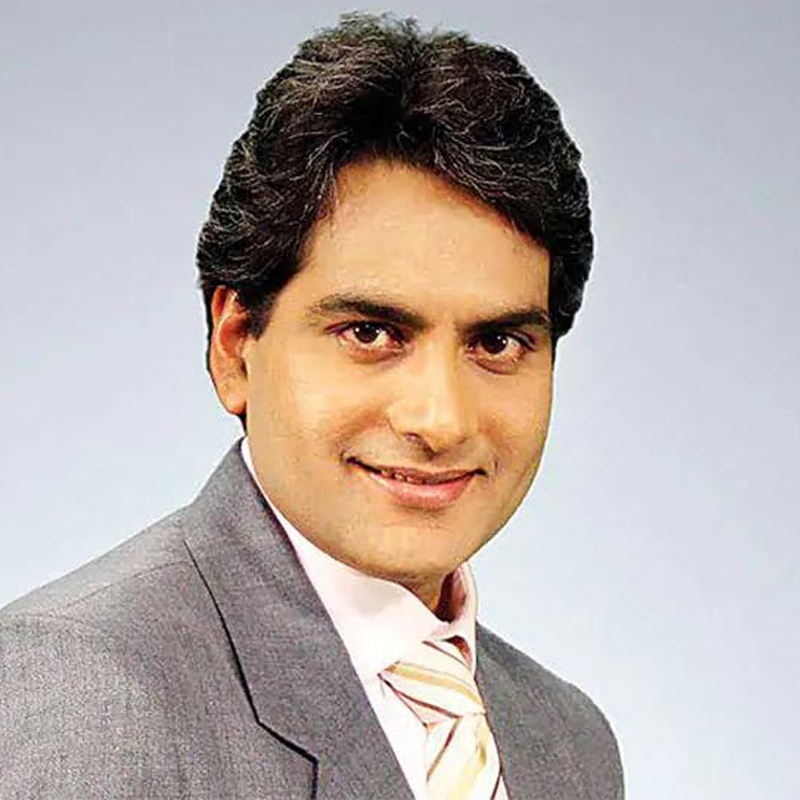
    NEW DELHI:, Zee News CEO and editor-in-chief Sudhir Chaudhary expressed his discontent towards BARC ratings and the news channels flaunting them on a weekly basis during a virtual fireside chat with Indiantelevision.com founder, CEO, and editor-in-chief Anil Wanvari on the concluding day of News Television Awards Summit 2020. 

    “I think the main problem with BARC ratings is that the sample size is so small. Statistically speaking, we are a 32,000 crore industry and BARC has its meter in just 44,000 homes. As we traditionally say that of the overall sample size only 10 per cent watch news, we are left with just 4,400 boxes, which is very less for a huge market like India,” he elaborated. 

    He added that it is probably the reason why the Indian news industry is failing to grow and getting monotonous in its programming too. 

    Read more about Zee News 

    “You see each GEC has a different programming structure, each channel has a distinct identity. Similar is the case with every other genre, be it kids or sports. But in news, you see all the news channels have a similar programming line-up. They have a bank of 10-20 similar issues that they cover. BARC ratings confuse the editors so much that sometimes I question if an editor is really the editor or a producer, and for that matter, if the anchors are really actors,” Chaudhary commented. 

    The Daily News and Analysis host also blasted the news channels that flash BARC data every Thursday in a bid to lure advertisers and viewers. “As per BARC Guidelines, no channel is allowed to declare themselves number one based on only a week’s data. One needs to have at least four weeks of data to call themselves number one. But which channel is following this guideline? BARC data was never meant for the audience but the news channels are using that to influence them.”

    He further stated that to move past this, advertisers will themselves have to make their own investments in time, efforts, and technology. “I agree that no single technology will be acceptable to everyone. We may start using some tools for measurement but my clients or advertisers might not agree to that. Therefore, it is important to agree on a uniform tech tool for measurement.”

    Chaudhary emphasised that the whole news industry needs a mid-course correction otherwise the audience will start taking news channels as entertainment channels. 

    On being asked by Wanvari if the break on TRP ratings of news channels implemented by BARC in the wake of the recent TRP manipulation scam will change the industry, Chaudhary replied, “If I look at my own experience, I still feel nothing is going to change. But as an optimistic person, we are trying to change the programming of our own channels.”

    He continued, “When this break was announced, I told my teams that this is a constructive window of three months and we can use that to our advantage. I also asked my viewers what sort of content they want to see from us and got thousands of responses. The top suggestions we got were news on employment, education, healthcare, and local heroes. So, as an experiment, we have already started a special programme that talks all about job opportunities, hiring, skill development, etc.” 

    Chaudhary went on to reveal that Zee News earned a 100 per cent increase in its digital audience during the Covid-2019 period.

    “I cannot clearly talk about the numbers on the broadcast side because there is not much clarity but we have seen a hundred per cent spike on our digital platforms. Even if we come down from here (in post-pandemic times), we will still retain 70-80 per cent of our new audience,” he said.

    But what the news space needs the most right now is good, solid editorialised content, insisted Chaudhary. News channels really need to buck up when it comes to creating valuable news content, and establish their own distinct identity.

  • CMOs on road to recovery, but challenges ahead: Dentsu survey

    CMOs on road to recovery, but challenges ahead: Dentsu survey

    NEW DELHI: Today, CMOs find themselves at a critical juncture in determining the future of their brands. As they chart the course of recovery and rebuild their fortunes, they are facing a fresh set of challenges, a new survey by Dentsu has revealed.

    The survey comprising 1,361 CMOs across 12 markets analyses how, despite a period of unforeseen disruption, CMOs are reclaiming the strategic agenda with a particular focus on product development. More than 450 CMOs from Australia, China, India, and Japan were surveyed.

    The study finds that despite the general advice that brands should not ‘go dark’ during periods of economic slowdown, nearly two-thirds (62 per cent) of CMOs said that their marketing budgets are forecast to decline or remain flat over the coming 12 months. As a reference point, in Dentsu's 2019 survey 41 per cent of CMOs forecast this level of decline in their budgets.

    Pessimism is running rampant in Australia as it predicts a significant decline (36 per cent) in marketing budget. Japan anticipates that budgets will stay flat (29 per cent vs global average 22 per cent). By contrast, positive sentiments are high in China where the budget is predicted to increase 56 per cent in the coming year.

    But the number one challenge facing CMOs is not marketing spends, rather, it is understanding which consumer behaviours will change permanently and which will fall away in the post-Covid environment. CMOs report that there is the added difficulty of aligning the business around changing consumer needs quickly enough and falling consumer spend.

    The report also flags concerns that half (49 per cent) of CMOs concede they are basing their response to the coronavirus crisis on strategies that were pursued during previous recessions. Globally, just one in ten CMOs are looking at entirely new strategies. In the Asia Pacific, nearly half (46 per cent) in India are using ‘completely’ similar strategies to those pursued in previous recessions, compared to 17 per cent global average. China once again bucks the trend, with only 6 per cent doing so.

    However, exceptional times call for exceptional thinking, and a handful of resourceful individuals are staying ahead of the curve by cultivating a new brand of marketing leadership. According to findings, “Frontier CMOs” are well placed to manage the recovery and are doing so by focusing on a handful of key strategies that set them apart from the rest: 

    Hyper-empathy: Developing superior consumer intelligence
    Hyper-agility: Rapid development of new messaging, products and services
    Hyper-collaboration: Integration across all elements of the marketing mix
    Hyper-consolidation: Building resilience across brands and through M&A
    Hyper-transparency: Ensuring purpose permeates all aspects of the business
    Frontier CMOs are also significantly more likely to be accountable for digital transformation than other CMOs, proving their value and impact to company boards as they navigate the future of their business and industry.

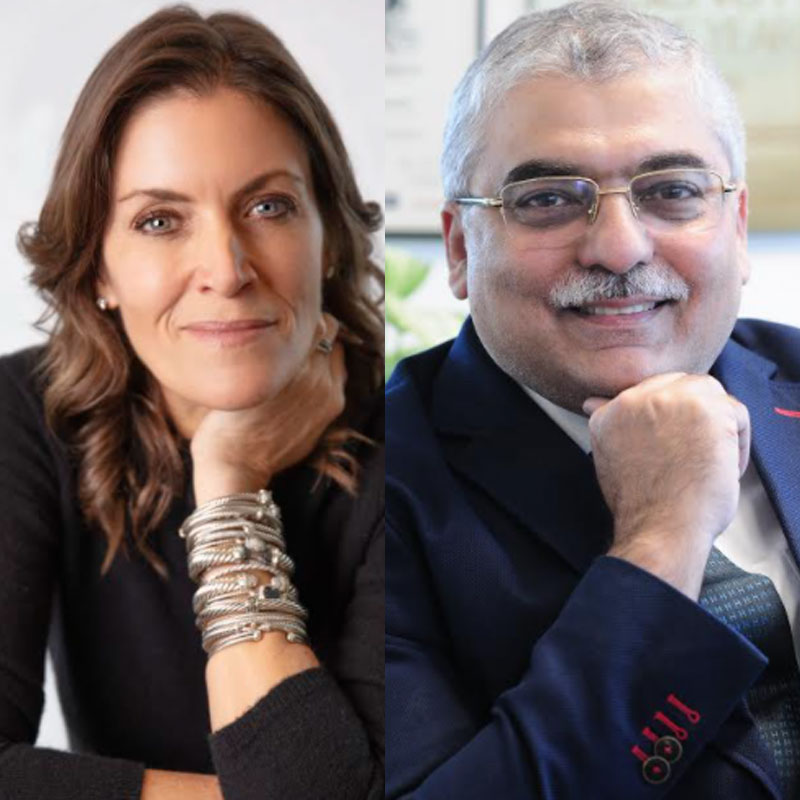
    “The Covid-2019 global health crisis has yielded an incisive economic downturn that creates an unknown and largely unpredictable environment for CMO's to navigate,” said Dentsu global CEO Wendy Clark. “However, we also see a new cadre of Frontier CMO's emerging who are leading their organizations into the unknown with confidence. These Frontier CMO's are reclaiming the strategic marketing agenda and, instead of buying into the idea that marketing’s role has somehow been denuded, they’re now leading their brands to recovery and growth.”

    Dentsu Asia Pacific CEO Ashish Bhasin added: “With every disruption comes its own sets of winners and losers. It is crucial for CMOs to keep up with the new skills required in today’s new world to ensure success in the discontinuity. We are right in the midst of a change and this is exciting.”

  • Emami Healthy & Tasty presents “Har Nivala Immunity Wala”

    Emami Healthy & Tasty presents “Har Nivala Immunity Wala”

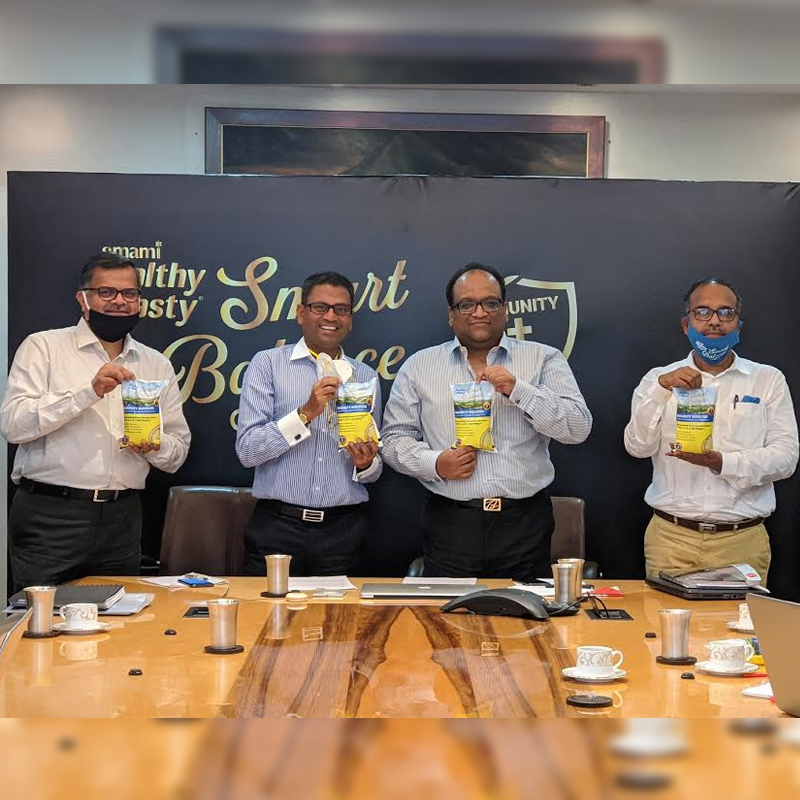
    NEW DELHI: Emami Agrotech Ltd, producer of well-known edible oil brand Emami Healthy & Tasty brings has launched in its latest variant of edible oil for the consumers. The new variant Emami Healthy & Tasty Smart Balance Immunity Booster Oil offers a unique value addition of “immunity’ in edible oil for the very first time in India. 

    The pandemic attack of the Covid2019 virus has exposed the vulnerability of humankind like never before. Building up immunity in the face of such public health concerns has gained immense relevance in a new normal world all over again.  The new variant from the popular brand Emami Healthy & Tasty addresses this basic need of a consumer to build immunity from within.

    Emami Group director Aditya V Agarwal said, “There is a rising concern of family wellbeing in general in the post-Covid2019 world. Consumers are in search of food products and supplements to enhance their family’s immunity.   Amidst this, our Research & Development team has developed India’s 1st Immunity Booster Cooking Oil under the brand name of Emami Healthy & Tasty that promises to provide ‘Har Nivala, Immunity Wala’.

    Emami has a legacy of deep consumer insight and offering product solutions for possible consumer need gaps and we believe that our target consumers would appreciate this product also which will help them to take care of their immunity derived from their daily & regular intake of food.”

    Emami Group director Manish Goenka, commented, “We do strongly believe that Emami Healthy & Tasty Smart Balance Immunity Booster Oil will delight our consumers with both its immunity boosting properties and taste.  It is the first time that any edible oil in India is having 5 key immunity building nutrients together to make this variant a one-stop solution to good health.  Moreover, addition of Vitamin C, well known for its immunity building properties, in an edible oil is also the very first in the country.  Use of Emami Healthy & Tasty Smart Balance Immunity Booster Oil will ensure immunity in every bite one takes.”

  • The modest kirana and its pandemic-induced evolution

    The modest kirana and its pandemic-induced evolution

    NEW DELHI: Sixty-nine-year-old Tejinder Singh, the owner of a kirana store in Ghaziabad, opens his shop at the crack of dawn every morning without fail for the last 21 years.  Not much has changed for him apart from the fact that Singh, and his store, faced a little cash crunch during the initial days of the lockdown in March.

    While e-commerce was battling red-tapes during lockdown, the local kirana stores were serving their consumers with doorstep deliveries. Within three months of lockdown, consumer spends in kirana stores increased by over 40 per cent.

    Singh sits at the counter with a mask covering half his face, disposable gloves and hand sanitiser next to him. Every customer who walks in has to first sanitise their hands before touching anything in the store. Singh has two staff and his two sons who assist customers with their purchases. He ensures that no one is without masks and gloves.

    “Lockdown came as a shock for every business. But we also saw this as an opportunity to help our customers with essentials. We provided door to door deliveries by following hygiene measures. We made several trips to godowns in private vehicles to bring goods to stores, personally because there was lesser manpower.  We start at 6 am in the morning every day and informed the customers about the goods when it became available again. We see new and younger customers coming to our stores or calling us to order. We are following the protocols and not letting sales staff into the store. We sanitise each and every product before handing it out to a customer,” Singh says.

    According to Pontem Integrated co-founder and BBDO Advertising former president Rajesh Sikroria even before Covid2019 outbreak, almost 90 per cent of India was still buying groceries and daily need items from kirana stores. As the pandemic struck and the country went into lockdown, even people who preferred organised mega retail stores or e-commerce for their daily grocery needs were left with no options. It took some time for organised retail and e-commerce to get their machinery going but the good old kirana was still there.

    “I believe there are a few things that have always worked in favour of kiranas; the Covid2019 crisis has just reinforced them. There is a greater trust and dependability on kirana stores because these people are a part of the community, so in case of a crisis, familiarity helps build that trust. A huge factor that works in favour of kirana is credit, which large stores and e-commerce companies cannot match. And lastly, very personalised service and the neighbourhood kirana always remains a faster option to get anything. Most of the mass FMCG brands have always had the largest share of their distribution pie residing with the kirana stores. But the last few years have also seen newer and some smaller brands focusing on only modern trade and eComm channels. A lot of such brands would have struggled and may continue to struggle for some time because of their absence from the biggest retail network,” Sikroria shares.

    Bizom recently released a report on India kiranas wherein it states that India’s retail ecosystem is unique from most parts of the world. Indians buy over 85 per cent of consumer products from small kirana stores, making its markets driven by general trade. 

    The report also mentions howSarsCov2 impacted the revenues of kiranas in March 2020. It says that kiranas saw a drop of 15 per cent in the number of transactions but picked up soon after as people started stocking essentials which saw a hike in the number of transacting and it somewhat lessened the impact of non-transacting outlets.

    In the initial phase of lockdown, many shopkeepers were struggling to replenish stocks. The kirana stores used to seek replenishment every two to three days. Items such as packaged flour, biscuits, soaps and instant noodles were no longer available and many had to wait for further supplies stating transportation being an issue. Fintech companies including Paytm, Google Pay, PhonePe are also bridging the gap between the store and the customers by making payments hassle-free experience. 

    FLC Marketing & Events business head India operations Rohit Shah says, “Panic-stricken and safety-conscious shoppers are visiting the traditional retail shops kirana stores to buy essential food items. The shoppers now avoid hypermarkets like Big Bazaar and Spencer’s to avoid huge public gathering and safety issues. Also, the new category of ‘work for and from home’ shoppers in the metros want to make short trips to neighbourhood stores due to time constraints. They also want to socialise for some time in kirana stores by maintaining social distancing parameters. Seeing and touching the product physically before buying also make people visit kirana stores. People are now experimenting in the kitchen. They demand kirana stores to stock items required to prepare new and age-old recipes and are ready to wait for long durations for unavailable products. People are even ready to buy local brands if they meet the requirement in the recipe.”

    The digital transformation of the kirana business that has been underway for the past few years was accelerated in the past three months, bringing more kiranas online, making buying and selling more efficient, digitalising bookkeeping and inventory management. Players like ShoppyFier, an online to offline hyperlocal deal discovery platform, sent out push notifications through which users can see all the offers/discounts running nearby and merchants can promote their long-term and short-term offers.

    As of February, India had 6.65 million kirana stores in the country, according to Nielsen. Unlike in the west, general trade stores in India form nearly 90 per cent of the country’s total trade. The overall contribution of supermarkets and organised grocery stores remains at 10 per cent. 

    Reportedly, the government is planning to set up a chain of 20 lakh retail shops called ‘Suraksha Stores’ across India which will provide daily essentials to citizens while maintaining stringent safety norms. The Suraksha Stores initiative will convert the neighbourhood kirana stores into sanitised retail outlets selling daily essentials while adhering to safety norms such as social distancing and sanitisation to control the spread of Covid2019.

    “It seems that big brands are now thinking of helping out the modest kirana stores to navigate the new normal. A consortium of brands is trying to partner with government and help convert the local kirana stores into sanitised, professional retail operations. This will see traditional kirana stores turning into registered ‘suraksha’ stores. They will be listed on the GoI’s Aarogya Setu App for following proper sanitation practices, using masks and gloves and implementing social distancing at their outlets,” Sikroria adds.

    Pulp Strategy founder and MD Ambika Sharma says that buying local and relying on your neighbourhood store has captured the consumer imagination but re-evolution of kirana stores will not impact sales of big brands.

    “For brands, this will not impact sales however it does call for the necessity of improving the supply and delivery channel to kirana stores. For gourmet brands, this shift may result in a dwindling uptake, with the advantage of impulse buying no longer available. Gourmet brands also do not have a strong supply channel with kirana stores and this would be an area of improvement as the trend becomes stronger,” she says.

    “All the brands that have effectively communicated about taking all the safety and precautionary measures, showed how they are taking care of the consumer and also set up ease of shopping have managed to stay afloat. Innovation has been the key to all brands to stay alive during this pandemic,” said Spicetree Design Agency founder Shiraz Khan.

    For Option Designs co-founder Rahul Gandhi, the kirana stores were able to sail through the storm of difficulties because of their alacrity to adaptability and agility. Where on the one hand they intensified their delivery services, on the other hand, they took to transformation by going digital which brought them overwhelming results.

    “In a similar way, brands must also adapt themselves to the changing situations. By understanding the changing consumer behaviour they must come up with some real brand strategies that are in sync with the needs or demands of the consumers. Brands must constantly upgrade themselves by innovating and that will help in reaching out to a wider consumer base,” he says.

  • ASCI looks into  533 objectionable ads in March-April

    ASCI looks into 533 objectionable ads in March-April

    MUMBAI: During the months of March and April 2020, ASCI investigated complaints against 533 advertisements, of which 115 advertisements were promptly withdrawn by the advertisers on receipt of communication from ASCI. The Consumer Complaints Council (CCC) evaluated the remaining 418 advertisements, of which complaints against 377 advertisements were upheld. Of these 377 advertisements, 187 belonged to the healthcare sector, 132 belonged to the education sector, 15 to the food & beverages sector, nine belonged to the real estate sector, five to the personal care and the immigration sector each and 24 were from the ‘others’ category.

    The ministry of AYUSH sought help from the ASCI team to alert them about such advertisements. The ASCI team picked over 50 such COVID cure advertisements in April, notifying the advertisers to withdraw them forthwith within a week.  ASCI closely monitored digital media, social media handles and web-sites of the advertisers. Over 90 cases of potential violation of the drugs and magic remedies regulations were also flagged to the regulator. During this period, the CCC continued their meetings over video conferencing.

    According to ASCI chairman Rohit Gupta, “I am very proud of our ASCI team that has remained accessible and responsive to all stakeholders during this pandemic situation. Our Consumer Complaints Council has been very efficient as we continue to deliberate via video conferencing. We appreciate the cooperation being extended by the complainants as well as the advertisers to ensure self-regulation of advertising content by ensuring time bound compliance.”

    Follow Tellychakkar for the consumer facing news & entertainment

  • YAAP creates stirring tribute to the spirit of independent agencies in India

    YAAP creates stirring tribute to the spirit of independent agencies in India

    MUMBAI: In the wake of the Covid2019 crisis that has affected countless lives and crippled industries in ways that we could have never imagined, unity with a sense of collaboration and staying high-spirited have become more important than ever. 
    Echoing the same sentiment, digital content company, YAAP has released a stirring tribute dedicated to independent agencies and their workforce, who have had to show immense strength and resilience in the face of adversity.
    The video, which was published on YAAP’s social media pages, is an acknowledgment of their struggles as well as a symbol of solidarity for the advertising and communications industry at large, in these trying times. 

    The tribute draws inspiration from the iconic ‘Here’s to the crazy ones’
    advertisement and uses this iconic advertisement to pay respects to the people working hard behind the scenes.

    In their pursuit of paying respect to independent agencies and extending their support for the industry, YAAP is giving preference to those who have been displaced, by offering them a role in the organisation.

    YAAP creative director Manoj Pandey explained his process, “While we’re faced with the larger crisis as humanity, we, as a community of independent agencies, also have a set of day-to-day realities to deal with. Keeping the lights on, delivering work for our
    clients with minimum disruption, and most importantly, keeping everyone inspired. At this juncture, we felt, this needed to be said – we’re all in this together and we’ll all sail through it too. This film is an ode to the unflinching spirit of independent agencies. A homage that draws inspiration from one
    of the most iconic works in the history of advertising.”

    In supporting their fellow independent agencies, YAAP has also released a series of recruitment ads, which themselves are an ode to the signature, old-school copy-based ads with a contemporary splash of colour. The ads urge professionals who have fallen victim to mass retrenchment across
    independent agencies to apply and get preference at YAAP.

    Partner at YAAP Manan Kapur said, “This has been a challenging time for our industry and it’s more important than ever that we come together and try to make the best of these testing times. This initiative is YAAP’s way of supporting the talented professionals who have lost their jobs by offering them the opportunity to come work with us. We want to show them that while YAAP may be a new home for them, they’re still in the same family – a family of passionate, like-minded people from independent agencies.”

    This film was created in collaboration with KSlient Productions.

  • Uday Shankar’s tips to win COVID2019 crisis

    Uday Shankar’s tips to win COVID2019 crisis

    MUMBAI: It is hard to measure the impact of COVID2019, harder to predict when everything will get back to normalcy. The uncertainty created by a virus, which is worse than a war, is instilling fear into minds. How does someone come out stronger amidst this chaos? The Walt Disney Company APAC chairman and Star and Disney India president Uday Shankar suggests simple measures – building core strength, reduce liabilities, taking calibrated risks and strategising.

    Even as the fear of catching the virus looms large, the economic instability is adding more worry. However, Shankar prioritises safety and reminds that unless you are safe there is nothing to look forward to.

    “The economy does look bad. There’s no trying to soften the bad news. So, let’s all get prepared. Today, if the entire country is going to be locked down, the wings of economy have come to a halt and it looks like a couple of quarters will be lost in terms of economic value,” he says reminding us about upcoming second-order, complex challenges like reduction in salaries, job losses, businesses struggling with liquidity and cash, etc.

    “This is a kind of economic setback that this country has not seen since independence. We had many hiccups and turbulences along the way but this kind of undifferentiated and pan-national economic crisis is not something we have seen,” he states.

    Despite all the negativity surrounding us, Shankar advises us to have a positive outlook. “I think the world has become tougher. This virus has created a crisis which is unprecedented. However, the world is not going to come to an end; this is not Armageddon. It has seen crises like this and has survived to grow stronger,” he says.

    Calling himself a ‘practitioner’, as is true with Shankar’s shift and rise from a journalism background to being one of the world mavericks of the media and entertainment world, his suggestion is to not let the fear of the unknown overtake you.

    Here are his four tips:

    Calibrated risks

    Shankar’s first tip to everyone – individuals and businesses –  is to reduce the risk. Focus on your core skills and build on that by acquiring knowledge. “Invest your time in learning a new skill. Knowing something is always uplifting. It gives you confidence. It is a journey from awareness to knowledge,” he says.

    However, he warns against gambling in this uncertain period. “There’s a difference between a gamble and a risk. You don’t know if this is the bottom or it’s further down. So, I don’t recommend gambling,” he points out.

    Reduce liabilities

    With less cash in your pockets, everyone needs to reduce their liabilities. Anything that’s not urgent can wait. Sharing an anecdote from his life at Star India, Shankar says that right after he took over the business, the world was hit by the 2008 economic crisis.

    “It looked like the world that would come to an end but I decided that there has to be an opportunity. My team and I decided to build on our core strength – our entertainment channel Star Plus. We decided to invest in that and not do anything new for some time. After that, our core business got stronger and we had fewer liabilities,” he shares.

    Strategise

    Even without an MBA background, Shankar spells out strategy in simple words: making choices. “There’s no better time than now to take decisions on what you will do, absolutely not do or postpone. All you need is clarity and purpose. Hit pause, rethink and think about how to lighten your load,” he guides those in the webinar.

    What has helped Shankar take the right calls in his journey from being a journalist to a media honcho is going with his gut instinct. He advises not to turn away from any information but process it for yourself.

    Star India, being one of the biggest content churning broadcasters, gets a lot of story pitches on a daily basis. Shankar picks what his gut says will work. “There’s no guarantee it will succeed but I will know that I failed doing what I wanted to do rather than what someone else wanted to do. You don’t want to fail and feel miserable that it was someone else’s suggestion. In most cases, the first attempt is not successful but if it’s something you’ve always wanted, you will make it work,” he says.

    Conviction

    Star India’s OTT platform Disney+Hotstar, launched five years ago as just Hotstar is today one of the top world players. But, in 2015, Shankar’s ambition was criticised. India was an expensive and data-dark market. But Shankar envisioned that people without TVs but with access to smartphones would want to consume video content. So, despite someone warning him that his “company has too much money and bosses too much faith in him”, akin to saying you’re investing in a losing proposition, his bet has played off.

    As data got democratised, opportunities opened up. “I wouldn’t have had the confidence if I did not have the conviction,” he says.

    Similarly, the company placed a bet on sports when everyone thought it had nothing new to offer. “I believed the power of cricket was only going to grow. That’s been our experience in the last five to six years. The number of consumers has doubled. The other is the story of kabaddi. They believed it was a 1000-year-old dead sport. Ronnie (Screwvala) was one of the first to believe that people will watch kabaddi if it’s made to look like a serious modern sport. Today, it is the second-most-watched sport in the country,” he reminisces.

    Along the way, he rejected taking up many other sports, such as basketball, which have been successful in other countries. “I believed I understood India and I realise that Indians would like to watch something they’ve grown up with and seen in their neighbourhood. So, my message is to stay with your conviction and do not go for applause in the stadium,” he says.

    His final message is to stay positive. If you're safe and healthy you will be able to finally triumph. He also tells people to look into the failures of those who have been successful. “There are a lot of us who admire many leaders. The problem with all of us is we read only the success. Rarely do we get an insight into the journey to success. All the people that I admire have had to face many setbacks, failures and handicaps before gaining the success that the world admires,” he states.

    Praising the country’s tackling of COVID-19, Shankar mentions, “This country has been ahead of the curve. Yes, a lockdown is miserable. But individuals and the country will come out stronger. We need to be positive and not selfish. Today, we need community, friends, family and the nation even more than we have needed in the past.”

    In a short Q&A session, Screwvala posed a question on how the youth can have long-term views rather than weekly. Shankar reiterates the need to think long-term because the short term is only likely to get worse.

    “It is going to be fluid and bad. Though we should hope for it to get better, we need to be realistically prepared for it to get worse. India is a country of youth. We have a long life ahead of us. A few quarters and even a year or two is not what we’re planning. The youth are impatient and full of energy. They want to achieve everything overnight. You will dissipate a lot of energy and get frustrated in doing that.

    To do that, Shankar says that people need to build endurance which he thinks is a skill visible in a marathon, even though the marathon runner may look ‘unattractive and unsexy’ as compared to a 100-metre sprinter.

    Speaking on consumer patterns, the Disney boss is aware that people will be extremely cautious about being in crowded places and that will determine their behaviour. The environment is going to be cynical and full of fear. Consumers will be conservative as the changing lifestyle will persist even after the lockdown is lifted. Hence, instead of going for five things at a time, he asks to take one-two tasks and see if they can deliver the same business goals.

    While many have been pushed into working from home, Shankar is no different. But this new normal, for him, has brought more efficiency.  “It is exhausting and tiring because there is no difference between work and home but I find myself more productive since I can focus more on what’s important and urgent. At work, we spend a lot of time doing trivial and inessential things,” he shares about his work-from-home experience.

    Leading a bunch of teams across APAC, Screwvala asks what qualities he admires in other countries. To this, Shankar says that China’s discipline and Japan’s dedication and collaborative spirit are admirable.

    To leaders, Shankar says that it is a time to pause and start again. He calls the COVID-19 crisis a washout. Just because something worked before the crisis, does not mean it will afterwards, too. “Production of our [Star India] shows has stopped and the habit may have been interrupted. The fact that it was doing well before lockdown is not the reason why the show will be watched again,” he says grimly.

    To the youngsters looking at a career in media, he says that one of the key reasons to choose this field is because “Even Corona doesn’t stop the consumption of media”. Shankar says that whenever the world feels uncertainty, it gravitates to media – content. Information and awareness give you a sense of comfort and assurance in the volatile world.

    However, the media is also relentless and if you don’t mind challenging yourself every single day, and being fine with the fact that what you’re going to say is going to be judged by every person, there’s every reason to be in media.

    He concludes with a cricket analogy. “It’s the time to watch every cricket ball and let most of the balls go. Then pick your ball and hit it out of the park.” 

  • CoVid-2019: Modi and India fight back

    CoVid-2019: Modi and India fight back

    It was hardly  a month ago that prime minister Narendra Modi’s image appeared to be taking  a beating what with the nation getting divided between those pro-NRC and pro-CAA and those against the two proposed measures to curb illegal immigrants. Marches, followed by clashes, the anger that those participating in them demonstrated, and the government’s I-can’t-hear-you-response to the protests made the headlines. And a tirade of criticism against Modi and his men rained from all sides.

    Clearly, the government led by Modi appeared to be stumbling – alienating a sizable portion of the population, especially the younger, and possibly the pseudo secular lot. The economy was not doing well either, with companies unable to pay back loans, banks getting sick with undigestable assets, and overall economic growth slowing down.  The sentiment was downright negative.

    Cut to 20 March 2020. The world is grappling with its worst natural disaster in recent memory. The CoVi-2 virus is on the rampage in nation after nation, sending mostly the elderly to an early death.  Leaders the world over seem to be at a loose end to halt the onward march of the dastardly microbe. Predictions and fears are that millions are going to be slain by SARS CoV-2, similar to that carnage that took place in 1918 when the dreaded flu hit the world.

    However, one leader who has emerged squeakingly clean from the crisis is but of course Modi.  His deft handling of the CoVid 2019 doom has won him plaudits the world over. He has been relatively quick – at least it appeared so at the time of writing – by sealing off the nation from outside travellers, then rallying all the chief ministers of the vulnerable states to enforce lockdowns at state and even district-levels in some of them. He had the editorial heads of the leading news services on a video conference where he and his bunch of hardworking men briefed them on the importance of right positive communication around SARS CoV-2 to deal with the situation. This would help stem the rot of panic and rumour-mongering that could lead to further disaster.

    His coup d’etat was when he got a billion Indians to heed his call and come out of their self-imposed quarantine and ring bells, sound conches, jangle their steel utensils, play drums, clap from their balconies for around 10 minutes as a form of gratitude and salutation for the men and women in white in hospitals who are risking their lives while saving the lives of those afflicted with the demon virus. Of course, there were some rogues who misunderstood his call to action. Instead of social distancing themselves, they came out in large groups, stuck to each other as they marched out on the streets in their own version of thanking doctors and all other service providers for doing their jobs so that they could stay alive.

    Many marketing mavens are calling this a marketing coup of sorts. The images and videos that were flashed across the world showed a united India, a society, culture, a civilisation  which is resilient and has lasted thousands of years of various invasions. The narrative was of ONE India; the earlier trope of an India, which is Hindu-Muslim polarised, has been pushed into the background. Hopefully to be forgotten – the common modern young Indian millennial cares not for caste or religion; it is the very rich or those living on the margins of poverty who get swayed by political vitriol.

    Even as Modi’s image has received a boost as a decisive leader, he and other Indian leaders have many challenges ahead.  SARS-Cov-2 is a silent spreader; it moves stealthily and fast. Those afflicted feel nothing, until it takes over the cellular infrastructure of the human body, blocks the respiratory pathways, and by then it is too late, especially for the infirm among the elderly.

    With that background, team Modi has to maintain the isolation momentum amongst India’s billion plus population, many of whom may be thinking a big fuss is being made about nothing. This should be targeted not just at the general public but even at those occupying seats of power in local governments. Hence, hammering across messaging about the CoVid-2019 precautions that need to be taken should continue with even greater gusto; and it should not stop. And this should continue through television, social media, billboards, bus backs, SMSes, radio, and what have you. Local administrations and police need to ensure that curfews and home quarantines are being strictly adhered to.

    Modi needs to be seen at the forefront of this man vs microbe battle. He needs to make regular appearances, portraying his confidence in the nation’s ability to fight back against the invader.

    Of course, the infrastructure should also be put in place to test and treat those whom the SARS-CoV-2 virus has afflicted. Industrialists are stepping forward to do their mite: Anand Mahindra has said he would re-fit his factories to make ventilators as well as make his holiday resorts available to house the sick. Mukesh Ambani has quickly built a 100-bed facility with all the gizmos to treat those with Covid-2019.  Many more surely will come forward, and they should. Vaccines are some time away. In the meanwhile, attempts will be made with alternative local treatments; India has so many schools of medicine. Some will work; some will be utter disasters.

    As Modi, said, the CoVid-2019 fight has just begun.

    Late in the evening of 24 March, he came on national television to declare a national lockdown of 21 days, something he urged Indians to strictly follow. "Coronavirus is a killer which spreads fast. We have to take these painful steps," he said emphatically. "Failing which we will go back 21 years."

    (updated at 21:00 hrs on 24 March 2020)