Tag: covid-19

  • Ed-tech platforms reap gains during lockdown

    Ed-tech platforms reap gains during lockdown

    MUMBAI: When you are cooped up in your home courtesy the Covid-19 lockdown, you can spend your time cribbing or carping or learning a new skill by signing up with an online platform to make up for a gap you did not learn in university or school. It looks like Indians are preferring the latter, if one goes by the flurry of signups with education or edtech platforms. Signups aside, learners are also getting glued for longer on online courses daily at about 45 minutes as against 20 minutes prior to the explosive spread of the COVID-19 virus.

    Take the case of the Ronnie Screwvala-backed upGrad which took front page ads in mainline newspapers earlier this year.  According to its co-founder & chairman Mayank Kumar, the inflection point commenced in the second last week of February. Says he: “From that week (17-24 February) onwards, we started witnessing exponential traction towards our platform. In the last week of February, leads (interested learners / prospects) increased by around 34 per cent compared to the week before. In the first week of March, our interest went up by 75 per cent as well.”

    Additionally, discloses Kumar, the programme completion rate at upGrad is 80 per cent as of now, which is relatively high and he is quite certain that it is going to increase, as online education is no longer an option but becoming mainstream.

    Unacademy too has seen an eye popping uptake of its services. It recorded a whopping one billion minutes of watch time in the month of March across its platforms and YouTube channels.

    “We announced over 20,000 free live classes on the platform to ensure learners’ education is not obstructed amidst the COVID-19 crisis. We also opened up our platform for all educational institutions such as schools and colleges to conduct live classes for their respective students,” says Unacademy VP marketing Karan Shroff. “The number of new enrollments increased considerably during the month of March. We witnessed an increase of 110 per cent in new subscribers leading to over 1.5 million learners learning on the Unacademy platform, since the beginning of March.”

    Karan highlights that even searches for competitive courses like SSC, bank and railway entrance exams, UPSC have multiplied manifold.  Users are logging on to the platform to improve their knowledge of subjects and learn how to improve their exam scores through mock tests, quizzes, and feedback from educators.

    Schoolguru Eduserve founder & CEO Shantanu Rooj noticed some behavioural changes amongst the students as the daily logins have gone up by 2.5 times. He also highlighted that the app downloads have gone up, an indication that those who had earlier procrastinated their studies are completing them now. The participation in the virtual sessions has gone up. Course completion rates have also increased.

    He adds: “We have onboarded about 4000 new paid students for the degree programmes in March over and above our current 200,000 students. We have seen about 12-15 per cent of daily active users to monthly active user ratio."

    Simplilearn CEO Krishna  Kumar says the subjects which are traditionally popular like  data science and cyber security have gained importance during this lockdown.  There is a lot of uptake in the enquiries. “We have close to 10,000 enrolments in regular months. March was also pretty much the same. The real testing time is going to be April when the lockdown was extended. The last few weeks of March were challenging as people were still adjusting to the reality. April onwards we are hoping for an increase as people are sitting at homes they have more time.”

    At upGrad the domain of data science is the most popular, followed by digital marketing. Areas of machine learning (ML) and natural language processing (NLP) are also popular considering the current workforce. According to Mayank Kumar, the digital macro-trend, coupled with an increase in usage of data, is going to now drive the workplace ecosystem.

    He further adds: “We had brought global MBA programmes to India towards the end of February with Deakin University and Liverpool Business School, which eventually got popular in the following month. Both the programmes are seeing interest amongst working professionals, and around 50,000 individuals and counting have shown interest so far.”

    Experts believe that the current environment is a net positive for online education. It took a global pandemic to bring online education into the mainstream, which has otherwise played second fiddle to the offline model.

    Upgrad's Kumar elaborates: “Two to three weeks ago (in March), we used to get 2,500 enquiries a day, but there has been a 50 per cent upside with over 3,800 enquiries per day.”

    “Additionally, in Q4 upGrad recorded over 100 per cent Q-0-Q jump, as it expanded its portfolio twofold in the last quarter by adding new programmes under its management and data verticals. With our outcome-based learning approach, which comprises deep subject knowledge, finest university credentials, strong mentorship and finally steadfast placement support, upGrad is in a position to command the highest ARPU of Rs 2.4 lakh in the Indian online education sector,” he adds.

    In March Unacademy witnessed a significant rise in the number of daily active users and also a sharp increase in the views per week. The daily active users increased to around 500,000 per day and viewers per week for the free special classes increased by 150 per cent.

    At Simplilearn enquiries have grown by 30 to 40 per cent. On a quarterly basis they have 50,000 monthly active users. However, at present 75,000 monthly active users are scouring the platform for upskiling themselves.

    Simplilearn and Schoolguru are opting for LinkedIn and other social media sites as the best medium to promote their content. Schoolguru is also using direct e-mail marketing and PR as marketing platforms. This apart, the edtech platforms are also using events (both physical and digital) sporadically and participating in several industry events and rolling out  reports and whitepapers from time to time.

    Shroff says: “Our marketing efforts are focused on supporting this business vision and helping learners stay focused and prepare for their dream exams, even during this crisis. As part of these efforts to help build awareness that learning never stops with Unacademy, we are running our "Let’s Crack It" campaign on TV and other digital formats.”

    Unacademy recently launched the second edition of Legends on Unacademy – a programme for   learners where they bring well-known personalities to teach live classes on the platform. In this edition, they have Shashi Tharoor, Kiran Bedi, Virat Kohli and Anushka Sharma who will teach about international relations, crisis management, motivation, and determination, among other topics. In the first edition, that took place in early March, they had legendary cricketers such as Brian Lara, Bret Lee and Jonty Rhodes who took live classes on mental strength, dealing with failure, etc.

    In order to create awareness during the lockdown period Schoolguru has offered its learning experience platform (Lurningo) free of cost for the first three months across various colleges and universities in the country.

    Indeed, Covid-19 has left deep scars across many sectors which have been locked down. But, for the edtech industry, it has been a boon of sorts. And the men behind it are probably glad, as it has helped accelerate their business plans. Which is clearly good news for the promoters and their investors.
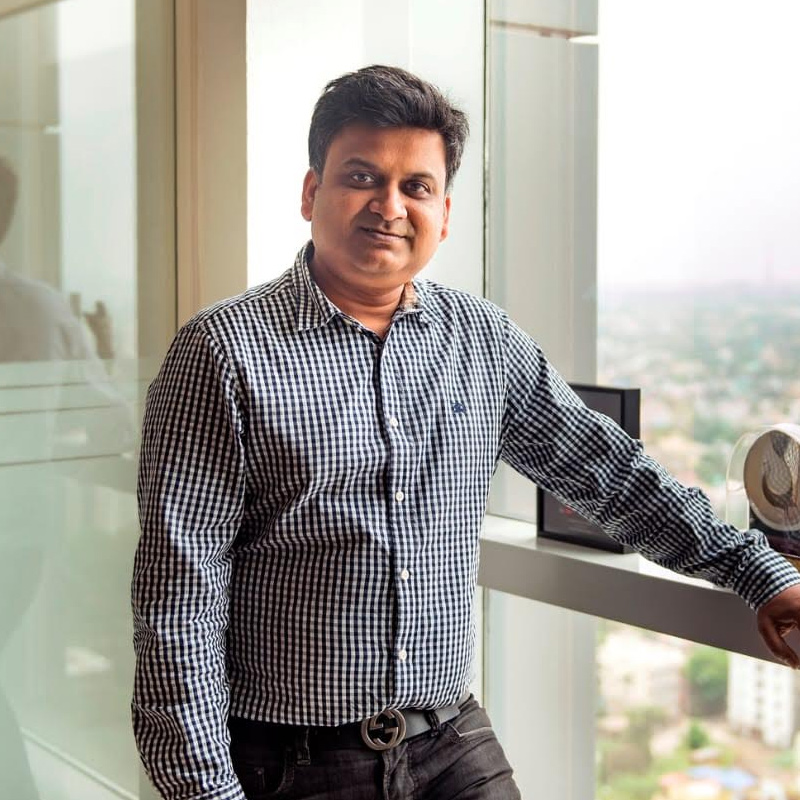

  • This is not the time to think of loss or profit: SVF’s Mahendra Soni

    This is not the time to think of loss or profit: SVF’s Mahendra Soni

    MUMBAI: The unprecedented COVID-19 crisis has thrown a spanner in the works of both large companies as well as small and medium enterprises. SVF, one of the biggest production houses in East India, is also not an exception. Although its over-the-top platform Hoichoi has fared well, its massive film and TV production business, which had seven daily soaps going on, has come to a halt. SVF co-founder and director Mahendra Soni acknowledges the crisis but he thinks it is a time to support the fraternity, rather than overdoing the loss count.

    In an interaction with Indiantelevision.com, Soni spoke on wide-ranging topics including the impact of the crisis in the Bengali market, on SVF and the way forward.

    Edited excerpts:

    What will be the overall impact of the crisis on the Bengali industry?

    If we take the financial year 2020-2021, I think there will be at least 30-40 per cent drop than the last year for sure, if it opens before May end or around that period. So, I think August will be a very important time period in the Bengali market because by that time people should start coming back to theatres and we can have a few footfalls by Durga Puja. But if we continue beyond that (May end), then it becomes difficult because the whole cycle is stuck. At this moment all I can say is that it’s not about loss or profit, it is about at least looking after the people that work there, daily wage workers, etc. Honestly, we are not also thinking beyond that.

    How does this crisis impact SVF's overall finances as well?

    No one was prepared for it. It’s not the time to be thinking about balance sheets. I am not listed on the share market so I am not worried about that. We know that we have a pool of great creative talent and whenever it opens, we will bounce back stronger. At this moment our priority is to be safe and make sure that everybody stays in their home and also reach out to everyone who can help in any way. In fact, I would like to appeal to others in the industry to be strong, support your people, stand by them and not think of losses.

    How many projects of yours are stuck and how many were in the initial stage?

    We were working on almost seven new films. Six were already shot or in the production/post-production stage. Apart from that, there are six-seven films that we were planning from April to December, all those films got stuck.

    How much impact are you seeing on TV production?

    To be honest, TV is a daily loss. As it has stopped, we are not making any money or any content. So that’s revenue-wise more impactful and the team size is also bigger there.

    Since you have a robust movie library and you have worked along with Bengali Star Jalsha, Zee Bangla, are you planning to offer some of your movies to the channels?

    So we spoke about that but almost 80 per cent of my library is already with Jalsha.  I also feel that TV broadcasters are a little reluctant to invest in new content. At least, I can say from the regional perspective because the advertising revenue has definitely gone down. I had some discussions about monetising that content with a couple of channels but I feel that also has been stuck because of their budget issues and cash flow issues because they also have to look after so many people they have already employed.

    How are you focusing on the development part of the projects currently?

    We have divided the teams into two-three groups. Everybody is working from home and we use Microsoft Teams to connect. One team speaks to directors. A lot of creative things are happening because the scenario would change a lot after this even when we come back; how people feel, how people see things, how we're going to change ourselves so that’s also going to create a lot of content that we create every day. So those discussions are happening. We are going back to also thinking what all we have done and what has gone wrong so we should not be doing those mistakes again.

    So, we do one meeting every week to figure out what they have watched and from there we would pick up at least seven-eight ideas that can be developed or looked into.

    Once things resume, how much time will it take for you to go back to normalcy for your production?

    I don’t think we will take even half a minute to go back to normalcy. We are paying our dues, we are supporting our people, we don’t see any reason for a delay of anything.

    Are you expecting any support from the government?

    Again it's not the time to ask that. It is the time to get past through it. I am sure the government also would be supportive but at this moment we should support our government to just make sure that the poor people, the homeless people, the medical fraternity should be looked after well and whatever we can do for them is more important than doing for our business.

  • News channels under lockdown burden

    News channels under lockdown burden

    MUMBAI: The extension of nation-wide lockdown has affected the business of news broadcasters which are burdened with increased operating costs and less advertisement revenues.  

    The government has put the news channels under the essential services category. Going forward, the news channels will face the daunting task of sustaining operations with little or reduced ad revenue. The operating costs are the expenses for the maintenance and administration of business on a day-to-day basis.

    Asianet News Network chief operating officer Abhinav Khare is of the view that the extension of lockdown may impact the news channels’ business adversely. “From 30-45 days earlier, the network now is running on exceptional 90-day working capital due to this unprecedented virus situation.”

    “Revenue collection has become a massive issue for news channels and they are likely to face cash crunch issues sooner or later”, Khare says. “The advertisers are not able to pay news broadcasters immediately as their businesses are not operational due to the lockdown.”

    The lockdown, in a way, has come as a blessing in disguise for the news channels as they have been able to cut down on the operating costs of news channels. “Reporters don’t have to go out for reporting like they used to do before; they do stories digitally. Guests are joining shows virtually. Transport costs have also come down as employees have been asked to work from home,” a source from a leading Hindi news channel says.

    “Operating costs are currently manageable and measures to curb it will only be decided once this extended lockdown ends,” says Mathrubhumi News chief executive officer Mohan Nair. “With Kerala likely to be re-opened partially from Monday, there are chances that the situation may get back to normal.”

    Nair believes that it would be too early to predict anything about the future course of action with respect to the network’s business. “This is indeed true that we are unable to get advertisers on board, but expect that operating costs would normalise with the situation returning to normal.”

    Concerned about high operating costs amid the lockdown, News Broadcasters Association president Rajat Sharma has written to the central government either to reduce, remove or bring the goods and services tax in line with the print media industry. GST on advertising for the broadcasting industry is at 18 per cent and for print media it is at five per cent.

    ABP News Network chief executive officer Avinash Pandey says: “In terms of COVID-19-related programming, we have taken numerous initiatives and introduced innovative line-ups on all our news channels. These specially curated shows have garnered tremendous viewership and we have roped in sponsors for our channels.”

    Pandey, however, indicated that there won’t be any retrenchment or salary cut in order to reduce the operating costs. He believes that once the crisis is over, the network will be able to come back stronger with its strong content and programming line-up.  

    Brand and agency experts believe that despite high viewership, news channels are unable to attract maximum advertisers due to the substantial reduction in overall ad spend. They have been re-working their advertising strategy due to the COVID-19 situation.

  • Effective communication imperative during crisis

    Effective communication imperative during crisis

    Till as early as February, businesses across India were aggressively planning long-term strategies for expansion, growth and diversification. Others were looking at ways to find newer consumer bases abroad and making active hiring decisions. However, in a matter of weeks, the situation has changed dramatically with uncertainty and anxiety clouding the economy in the wake of the global COVID-19 crisis. The sudden shift and the need for an absolute lockdown and shutting of most manufacturing operations have resulted in a crisis that needs to be tackled using innovative strategies and effective communication. Yes, effective communication is a critical component for organisations manoeuvring through this crisis as a gap in communication often leads to an information lag and anxiety among stakeholders.

    It is imperative therefore that organisations and businesses adopt an effective communication strategy at this hour of crisis to provide timely updates, keep the stakeholders informed and build yourself as a thought leader with a humane touch. Communications and PR agencies are playing active roles as active communication strategy providers for organisations in this situation. 

    Reassuring stakeholders

    This is a key element of any communication that goes out from an organisation at a time of crisis – whether an internal crisis or an external one impacting the business. Stakeholders include consumers of your products and services, investors and shareholders as well as employees. As all these stakeholders face an uncertain future, timely information, updates and a transparent approach from the organisation’s end can go a long way in reassuring them. This is the right time to communicate regularly about how you are planning to stay afloat during this crisis, what your contingency plans are and how you plan to keep the strategies you are adopting to keep the business running during this extraordinary situation. A number of organisations have already come forward to announce their contingency plans; others have assured their employees that they will receive advance salaries to keep their households running at this difficult time in history.

    Address misinformation

    Misinformation and fake news is a major nuisance of our times. Be it health-related information or a government directive, it takes just a fake WhatsApp forward to spread a piece of false information disseminate like wildfire. To cite an instance, the COVID-19 crisis has impacted sales of newspaper publications due to fear about their potential in spreading the virus. Such was the impact that even the minister of information & broadcasting Prakash Javdekar had to tweet and clarify that touching newspapers will not spread the infection and that newspapers were critical to getting the right information at this period of time.

    For organisations dealing with this crisis, it is therefore important to use their communication channels to effectively dispel any misleading information. The teams in charge of our communication strategy must keep themselves abreast of such developments and religiously follow authentic sources of information such as WHO, ministry of health and other public health organisations. For hospitals and organisations in the healthcare domain, dispelling false narratives is all the more important. Addressing misinformation with alacrity is critical to any communication strategy at this hour.

    Build thought leadership

    A series of communications by Lifebuoy educating people about the importance of washing hands in this crisis has earned much praise in India. The communications published on bought space refrain from promoting Lifebuoy but clearly ask people to wash hands with whichever soap they have to prevent the infection.

    A global crisis is a difficult time for businesses but it is also an opportunity to establish you as a thought leader. Effective and innovative communication strategies play a vital role in this. Communication and PR agencies must aggressively scout for opportunities through which an organisation  or individual can build an image of a thought leader by addressing public concerns over the issue, offering innovative solutions to tackle the problem and advocating policy approaches for the government.

    Communicating with a humane approach

    At a time when countries across the world are living through disastrous tragedies, using communication strategies with a humane approach is another critical need. Communication strategists must keep this vital ingredient of strategy in mind. Communication should be mindful of the human tragedy and try to reach out to the people who are at the end of the suffering. If you were planning community-based CSR ideas, this is the right time to put them into action and communicate your plans through the media.

    (The author is co-founder and director, Teamwork Communication Group. The views expressed are hers and Indiantelevision.com may not subscribe to them.)  

  • Despite re-runs, sports broadcasters continue winning streak in week 14 of BARC

    Despite re-runs, sports broadcasters continue winning streak in week 14 of BARC

    MUMBAI: With no live sports across the globe, sports broadcasters have been trying alternatives to keep sports enthusiasts engaged by showing the re-runs of archived historic matches of cricket, wrestling, kabbadi and football. This, indeed, has helped sports channels to gain traction, as per the last four-week data of Broadcast Audience Research Council (BARC) India.

    Though the impressions on these channels are not as good as when live sports matches are broadcasted, sports have definitely turned nostalgic to watch, be it the broadcasting of WWE’s legendary fights of veterans or cricket world cup matches aired by Star Sports.
    BARC’s week 11-14 has gradually seen a rise-fall-rise in viewership pattern with week 13 (28 March-3 April) gaining most out of all four. As per the third edition of crisis consumption joint report of BARC-Nielsen, “Sports had surged by 21 per cent in week 13 over the last week on the back of telecast of classic India cricket matches & WWE.”

    Star India is the official broadcaster to telecast the re-runs of historic matches, whereas WWE is a property of Sony Pictures Network. Week 14 (4-10 April) of BARC has seen marginal dip by over three per cent in terms of weekly impressions as compared to week 13. The current week is the second-highest in viewership during COVID-19 period all thanks to the re-runs of Cricket and WWE matches.

    The first two weeks (Week 11 and 12) were weak for sports broadcasters to garner eyeballs as they were still grappling with the challenges of what to show exactly and how to keep the audience engaged. However, in the following week, Star Sports came up with nostalgic India versus Pakistan world cup matches and Sony put their weight behind a new show called ‘WWE Blockbusters’, a re-run.

    Week 12 could be termed as a weakest week among all four weeks during the COVID-19 pandemic. Sports channels during this week fell by around 14 per cent as compared to week 11, but immediately picked up in the following week by gaining at least 32 per cent in terms of weekly impressions.
    The fourth edition of the crisis consumption joint report of BARC-Nielsen India says: “Wrestlemania-20 along with Indo-Pak classics led to highest viewership for sports genre during COVID-19 period.” The report shows a week 14 grew by five per cent to 10.3 billion viewing minutes as compared to 9.8 billion viewing minutes in week 13 in India 2 plus category during COVID-18 period.

    COVID-19 has not only halted live sports but also the production of film and TV content. Dominating the re-run game, Doordarshan has been leading the pack by bringing back all 90’s hit shows along with two mythological shows such as Mahabharat and Ramayana. Viewers are flocking to TV channels to get nostalgic by watching re-runs.

  • Twitter banter between India Today and Republic TV on viewership

    Twitter banter between India Today and Republic TV on viewership

    MUMBAI: Every news channel wants to be number one, and it, of course, tries to find some metrics to declare itself as most-watched. This viewership battle has turned into a Twitter banter between two English news channels: India Today and Republic TV.

    The banter started with India Today mocking Republic TV for its ‘For The Record’ tag, wherein the latter has been boasting about its viewership gain for being a leader so far this year than its peers in all India males-22-plus-individuals’ category, as per BARC.

    India Today shared two promos on its Twitter handle with the caption ‘For The Record’. The first promo, which is a 21-second video, has a gramophone playing audio as similar to Republic TV’s editor-in-chief Arnab Goswami’s voice.

    The second promo is even more creative, wherein an image of a cracked gramophone disc, which also called as a record, is shown with Republic TV’s name below it. India Today mocking its rival praised itself with the tagline: ‘A news channel (India Today) that doesn’t sound like a broken record’.

    Retaliating to the mockery, Republic TV in its eighth part of ‘For The Record’ edition took a veiled dig at India Today quoting BARC’s data tweeted: “Republic requests SMALLER channels not to fudge numbers when BARC official data is available publicly.”

    The record being the keyword here, India Today tried to play with the word and portrayed Republic TV as ‘Broken Record’ in its promo. Post week 14 numbers were out, the former ran a campaign of it being the most-watched news channel with a tag line ‘Where It Matters’, it indirectly touted the latter with its viewership growth in megacities TG males between week 12- 14, as per BARC.

  • Premier League fans take a trip down memory lane through special shows on Star Sports Select

    Premier League fans take a trip down memory lane through special shows on Star Sports Select

    MUMBAI: As the pandemic COVID – 19 reached the remotest corners of the world, life for football fans around the globe has come to a standstill. Football fanatics, especially the passionate and vociferous Premier League (PL) fans are feeling the void of not being able to live, talk about and breathe the great game of football. For the first time, in the 28-year history of the Premier League, the season came to a standstill with no end in sight yet. To fill the empty abyss in the lives of the vast number of Premier League (PL) fans in India, Star Sports Select will broadcast an array of Premier League programs from April 18, 2020, onwards.

    Even though the pandemic has put a hard stop to all the live football, the hunger for the game has not diminished in the slightest amongst fans. A list of specially curated shows on Star Sports Select namely PL Classic, Soccerbox, PL 100, PL 1-to-11, PL Legends, PL Goals & Reviews will help satiate the appetite of every Premier League fan as they try to subsist through these tough and uncertain times.

    The 28-year journey of the Premier League has seen the birth of footballing legends who have risen to the status of demi-Gods by their crazed legion of fans. In honour of some of their most memorable performances, the Star Sports Networks has curated a special show called PL Legends which will explore the performances and the lives of legends like Paolo Di Canio, Neville Southall, Ian Wright, Thierry Henry, Tony Adams and Gianfranco Zola to name a few.

    Keeping in mind the emotions of the fans of all the major clubs, the show PL Classic will showcase some of the most nail biting and best PL matches. Every fan of the major Premier League clubs will be able to see great performances of their teams especially against the classic rivals.

    Some of the other exciting shows by Star Sports are – Review of the season, a program that reviews Premier League seasons from the last decade; Soccerbox, a show that includes Manchester United’s legend Gary Neville, reliving most gripping matches with his former rivals or teammates; PL 100, a show that talks about an elite group of players who have scored more than 100 Premier League goals; and 1 to11', a programme where each episode features a different PL legend  or current player discussing the best 11 players they have played with and against.

    The true fans of the 90-minute game can catch their favourite matches once again EXCLUSIVELY on Star Sports Select 1 and Star Sports Select 1 HD from 18 April 2020 onwards.  

    Call your operators to subscribe to Star Sports Select

    Time

    Activity

    18th April, Saturday

    12:00 AM

    PL Classic: EVE 3-0 LIV 06/07

    8:00 AM

    PL Legends: DI CANIO

    6:00 PM

    Classic: MNC 6 – 1 NEW 15/16

    6:30 PM

    Classic: TOT 1 -3 MNC 17/18

    7:00 PM

    Classic: LIV 2 – 1 MNC 14/15

    8:00 PM

    PL Classic: CHE 2 – 3 MNU 12/13

    10:00 PM

    PL Fan Zone #179

    10:30 PM

    PL Classic: LEI 5-3 MNU 14/15

    19th April, Sunday

    12:00 AM

    PL Classic: LEI 5-3 MNU 14/15

    4:00 PM

    PL Classic: SUN 1 – 2 ARS 11/12

    5:30 PM

    PL Legends:  ZOLA

    6:30 PM

    PL Classic: BHA 1 – 4 MNC 18/19

    10:30 PM

    PL Classic: MNC 2-3 MNU 12/13

    20th April, Monday

    4:30 PM

    PL Legends: WRIGHT

    10:00 PM

    PL Daily #6

    10:30 PM

    PL Classic: WHU 2 – 3 TOT 06/07

    21st April, Tuesday

    12:00 AM

    PL Classic: WHU 2 – 3 TOT 06/07

    4:00 PM

    Classic: ARS 4 – 1 STO 11/12

    7:00 PM

    Classic: LIV 3 – 2 TOT 12/13

    8:30 PM

    PL Legends: VAN NISTELROOY

    10:00 PM

    PL Daily #7

    10:30 PM

    PL Classic: ARS 0 – 3 CHE 09/10

    22nd April, Wednesday

    12:00 AM

    PL Classic: ARS 0 – 3 CHE 09/10

    4:00 PM

    Classic: CHE 3 – 5 ARS 11/12

    5:00 PM

    Classic CHE vs LIV 02/03

    7:00 PM

    Classic: LIV 3 – 2 MNC 13/14

    8:00 PM

    Classic: MNU 8 – 2 ARS 11/12

    8:30 PM

    PL Legends:  SCHMEICHEL

    10:00 PM

    PL Daily #8

    10:30 PM

    PL Classic: MNU 6-1 SOU 01/02

    23rd April, Thursday

    12:00 AM

    PL Classic: MNU 6-1 SOU 01/02

    4:00 PM

    Classic: ARS 5 – 0 MNC 00/01

    10:00 PM

    PL Daily #9

    10:30 PM

    PL Classic: STO 2-0 MNC 15/16

    24th April, Friday

    12:00 AM

    PL Classic: STO 2-0 MNC 15/16

    8:00 PM

    Classic: WHU 3 – 5 MNU 01/02

    10:00 PM

    PL Daily #10

    10:30 PM

    PL Classic: TOT 4-0 LIV 11/12

    25th April, Saturday

    12:00 AM

    PL Classic: TOT 4-0 LIV 11/12

    10:00 PM

    PL Fan Zone #181

    10:30 PM

    PL Classic: MNU 3 – 0 LIV 07/08

    26th April, Sunday

    12:00 AM

    PL Classic: MNU 3 – 0 LIV 07/08

    10:00 PM

    PL Classic: WBA 2 – 3 LEI 14/15

    27th April, Monday

    10:00 PM

    PL Daily #11

    10:30 PM

    PL Classic: CHE 2 – 2 TOT 12/13

    28th April, Tuesday

    12:00 AM

    PL Classic: CHE 2 – 2 TOT 12/13

    6:00 PM

    Classic: MNC 3 – 1 MNU 05/06

    7:00 PM

    Classic: LIV 3 – 1 EVE 05/06

    10:00 PM

    PL Daily #12

    10:30 PM

    PL Classic: MNC 2-0 WHU 13/14

    29th April, Wednesday

    4:00 PM

    Classic: ARS 5 – 1 CRP 04/05

    5:00 PM

    Classic: CHE 2 – 1 MNC 13/14

    7:00 PM

    Classic: MNU 1 – 4 LIV 08/09

    10:00 PM

    PL Daily #13

    30th April, Thursday

    10:00 PM

    PL Daily #14

  • How regional producers are struggling during COVID-19

    How regional producers are struggling during COVID-19

    We have been subjected to further extension of COVID-19 lockdown. By now we all have got used to the situation with right from the PM and CM issuing the do’s and don’ts of the coronavirus; they also are asking us to be at home and "entertain" ourselves by TV/OTT entertainment. It’s such irony and the truth is that every time any catastrophe strikes us, including the world wars in the past, the one thing that has kept us all engaged and "alive" is this very "entertainment".

    I am happy to be one of the members of this cult of the vast film industry that’s spread across the pan world and in India and regionally.

    As a filmmaker, I am being very honest that I was lucky till today that I never had to bear the brunt of any catastrophe until this Covid-19 struck on me literally. My maiden film ‘Abaani CD's release got terminated by a sudden lockdown announced by the government. Only to prove that nothing is ever constant in this whole evolving world and for filmmakers whose films were aligned for a mid-March release came to a screeching halt. March and April have been witnessing a maximum release every year especially in the Marathi region and even this year was jam-packed by about eight Marathi films and two big Hindi movies. Abaani Cd was slotted in the premium category due to the presence of two stalwarts: Amitabh Bachchan and veteran Vikram Gokhale. However, our misfortune was that we could not compete and are now almost subjected to no release or have a digital release.

    So how does one cope up with situations like this and what are the situations ahead for us all? One thing is sure that cinema has really evolved a lot from big screen to an idiot box to computers and now on to your mobile phones- OTT. So all of us are now subjected to an OTT release and the ones who can afford to wait can re-align the release until this whole drama fizzles out. But I have my doubts about people turning up to theatres as China is one of the biggest cinema markets which had to shut theatres after the COVID-19 attack. So the impact is not only on the filmmakers but also on the theatres, exhibitors as well as the distributors.

    The second larger issue is that even if there are many OTTs in the market stacked up with over 5000 hours of entertainment already, I am unsure if they would want to go out and buy additional content. The question arises on how much of focus would be on the regional cinemas is a task in itself. Now coming to the selling of the satellite rights, this is one area which I feel can work for filmmakers if they are willing to go in for a world premiere on television. In a scenario where the filmmaker chooses to go for a standalone television premier, he would be subjected to only revenue sharing by digital mediums. "Pay per click" as televisions and OTTs’ audience is almost the same and hence the digital platforms will never buy it by paying a license fee and instead choose the other option.

    The only ray of hope is that you choose any platform to be it TV or OTT at least will be assured that it will be watched but again my statistics don't make me happy as at the max if the content is above average or good at the max you shall get an audience of until 10 lakhs on OTT and about 50 lakhs on television, so not even 10% of the total population of Maharashtra will watch it.

    The answer to this frankly lies in how we would make films in future and how are we going to secure it, especially Marathi cinemas? One should sell the film as early as possible to an established platform and secure your cost of the project, second is lower the cost of the projects are best suited for these situations and the third is to start making cinemas for home experience by keeping the production expense low and add a certain margin to give it away permanently.

    However, if luck is your way none of the above situations can affect you and the answer to that is “the content!”. Whatever be the scenario if your project is good, be ready to earn from home.

    The author is a film producer, brand imaging expert, business incubator, head of talent management and a philanthropist. The views expressed are that of the author and Indiantelevision.com may not subscribe to them

  • Television viewership peters down slightly in Week 14

    Television viewership peters down slightly in Week 14

    BENGALURU: The first three weeks of Indian COVID-19 lockdown have expanded television viewership in India to an extent that was probably never imagined earlier. As many average Indian citizens, bound by the lockdown within the confines of their homes, sought to comfort their minds with news of what was happening within the country and the world and with the pseudo realism that Movies provide, their television viewership habits changed week-on-week. Here’s how.

    Viewership

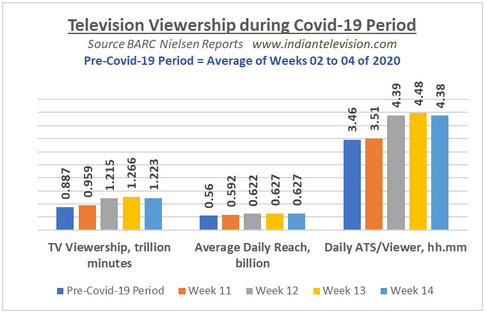
    In the third week of the Indian COVID-19 lockdown (week 14 of 2020, Saturday, 4 April 2020 to 11 April 2020), television viewership at 1.223 trillion minutes was 37.9 per cent higher when compared to the average of Weeks 2 to 4 of 2020, or the pre-COVID-19 period according to joint Broadcast Audience Research Council of India (BARC) Nielsen reports. But then, this was 3.4 per cent lower than the 1.266 trillion minutes of the previous week, despite the same average daily reach of 627 million television viewers. Hence, the average time spent was obviously lower at 4 hours 38 minutes in Week 14 of 2020 as compared to the 4 hours and 48 minutes that television viewers spent in Week13.

    As is obvious from the chart below, TV viewership has grown like never before during the lockdown week, but week 14 data shows that week-on-week, viewership in Week 14 of 2020 is slightly lower than the previous week, which has so far seen numbers peak at high levels. Please refer to the chart below:

    Effect on genres

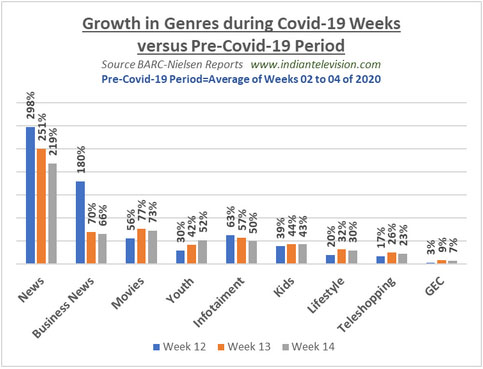
    News, which until the COVID-19 period had seven per cent share of viewership, saw it triple to 21per cent in Week 12, or the first week of the Covid-19 Lockdown in India. Though news is still the leader in terms of growth in viewership, the growth of the genre in relation to the Pre-Covid-19 period has been lower in Weeks 13 and 14 as compared to Week 12 of 2020. Business news also seemed to be following the trends of its larger sibling, news. The other seven genres have seen growth in Weeks 13 and 14 vis-à-vis the Pre-Covid-19 Period averages.

    Since no fresh content was being produced, GECs’ saw the smallest growth during the first three weeks of the Covid-19 lockdown. It must be noted that GECs’ are the largest genre in terms of viewership, so the 9per cent and 7per cent growth in Weeks 13 and 14 respectively versus the Pre-Covid-19 are good numbers.

    In the Pre-Covid-19 Period, Hindi GECs’ had a 32per cent share of viewership of the Hindi speaking market of HSM. Hindi GEC’s in the urban Hindi speaking market or HSM (U) which reduced to 29per cent in Week 14. Despite this Hindi GECs’ in HSM (U) attained an all-time high of 4 billion impressions. HSM (U) viewership grew by 26per cent in Week 14 in relation to the average of the Pre-Covid-19 Period. This growth could be attributed mainly to GECs’ resorting to airing old classics. The major growth drivers of the genre were pubcasterDoordarshan’s GECs’ DD National and DD Bharti which saw the return of programmes such as Ramanand Sagar’s Ramayan and B R Chopra’s Mahabharat, as well as soaps like Dekh Bhai Dekh, Byomkesh Bakshi, Shaktimaan, ShrimanShrimati, Buniyaad and Circus. The other GECs’ generally saw flat growth according to BARC.

    Please refer to the figure below:

    GECs’ in South India continued to lead viewership in Week 14 of 2020, but with a lower share as compared to the pre-COVID-19 period. The movies and news genres saw higher viewership in Week 14 as compared to the Pre-Covid-19 Period. Please refer to the chart below:

    Who was watching television when?

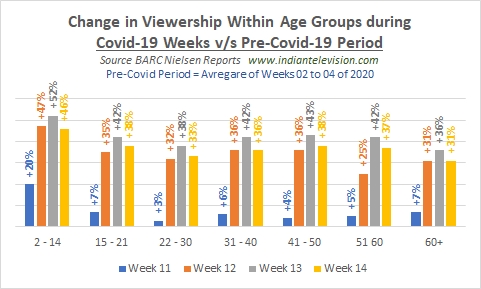
    Growth in viewership continued to be led by the younger generation –the 2-14-years age groups followed by the 15-21 and the 31-40-years age groups as well as in the week preceding (Week 11) the lockdown and during the three weeks of the lockdown (Weeks 12, 13 and 14 of 2020). However, growth was lower amongst all age groups in Week 14 of 2020 as compared to Week 13 with respect to the Pre-Covid-19 Period.

    Please refer to the figure below:

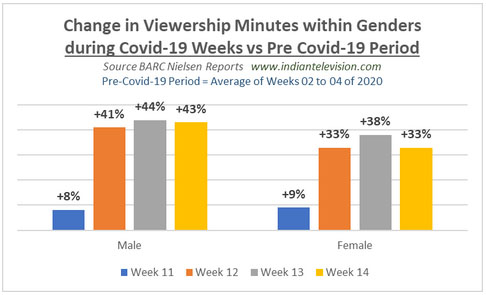
    Since people spent time at home, growth in time spent in minutes for watching television was higher among males. The change was slightly lower in Week 14 of 2020 as compared to Week 13 for males and females with viewership of both the weeks in relation to the Average of the Pre-Covid-19 Period. Please refer to the chart below:

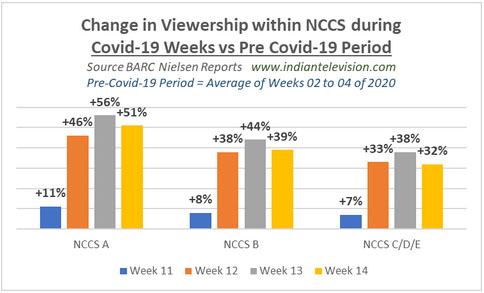
    A BARC Nielsen Report dated 16 April 2020 said that BARC’s NCCS A saw the highest growth during the three weeks of the lockdown as well as Week 11 of 2020 as compared to the average of the Pre-Covid-19 Period.  NCCS A has seen the highest growth in Weeks 12, 13 and 14, with growth peaking in Week 13 of 2020 and then petering slightly in Week 14 of 2020. Please refer to the chart below.

    Non-primetime continued to be a growth driver of Television viewership in Week 14. While Full Day All India Television viewership grew 38per cent in Week 14 as compared to the Pre-Covid-19 Period, Rural India viewership growth was driven by non-Primetime viewership. Primetime viewership grew 10per cent in Urban India, while it remained stable in Rural India.

    News is event driven. Week 15 of 2020 has seen the Covid-19 lockdown in India being extended to 3 May 2020. Prime Minister Narendra Modi’s speech on 14 April 2020 announcing the extension of the lockdown which was aired on 199 channels garnered the highest ratings at 3,937.3 million viewing minutes as compared to his previous 3 addresses to the nation on the Covid-19 crisis.

  • Sri Lanka offers to host IPL, BCCI says no

    Sri Lanka offers to host IPL, BCCI says no

    MUMBAI: The Sri Lanka Cricket Board has offered to host the thirteenth edition of Indian Premier League considering the uncertainty revolving around organising the cash-rich tournament amid the COVID-19 pandemic. However, the BCCI is not keen about it. It is of the opinion that there is no point in talking about such a proposal at this moment in a "closed world" fighting the COVID-19 pandemic. 

    The Sri Lanka cricket board, through a letter, had offered BCCI to host this year’s IPL tournament. “Apparently it will cost the BCCI and its stakeholders more than $500 million to cancel the IPL," Shammi Silva, SLC president, told Sinhala daily Lankadeepa, reports ESPNcricinfo. "So perhaps, they can minimise those losses by hosting the tournament in another country.”

    The BCCI has extended the suspension of the domestic league until further notice amid the COVID-19 pandemic.

    Sri Lanka has also been under stringent lockdown for the last four weeks, and the virus has not impacted the island country as much as it had in the western countries. There have been a total of 238 confirmed cases registered with only seven deaths due to the virus.

    The tournament was supposed to begin from 29 March to 24 April; however, the BCCI on 13 March postponed the tournament till 15 April amid the virus outbreak.

    SLC president says: “If they play it in Sri Lanka, it's easy for Indian audiences to watch the games on TV. There's precedent for this because they've played the IPL in South Africa before. We're waiting for the Indian board to respond to our proposal.”

    In the past, the tournaments have been played in foreign countries twice during general elections in India, once in 2009 in South Africa and the other in 2014 in the UAE. The organisers shifted the venue to foreign soil because the tournament is one of the most premium and expensive events in the country.

    "If the Indian board does agree to play the tournament here, we're ready to provide facilities in line with the requirements and recommendations of medical professionals. It would be a substantial source of income for Sri Lankan cricket as well," adds Silva.

    Estimates are that close to $1.5 billion is riding behind the IPL in terms of advertising, sponsorships and ticket sales. Global advisor Duff & Phelps, in March, estimated that the IPL ecosystem value will reduce by $700 to $1,000 million range (around 10-15 per cent) if IPL is cancelled.