Tag: covid-19

  • Industry pins hope on pent-up demand post-Covid2019

    Industry pins hope on pent-up demand post-Covid2019

    NEW DELHI: Which marketer doesn’t know about the theory of lipstick effect? Tracing its roots to the great depression of 1929, the theory substantiates that glum consumers will continue to spend money on small luxuries during or after times of economic crisis to keep up their spirits. Several reports indicate a similar behaviour demonstrated by Americans after the 9/11 and also the global recession of 2008.

    Most recently, consumers in China recreated the scenario as sales of cosmetics plummeted as much as 80 per cent in February. According to the Chinese ministry of commerce, resumption rate of large supermarket chains and convenience stores reached 99.5 per cent and 95.4 per cent in the month of May, respectively, with their sales volume surpassing the levels recorded in the same period last year.

    The industry is expecting a similar reaction to the lifting up of lockdown in India and is preparing for it.

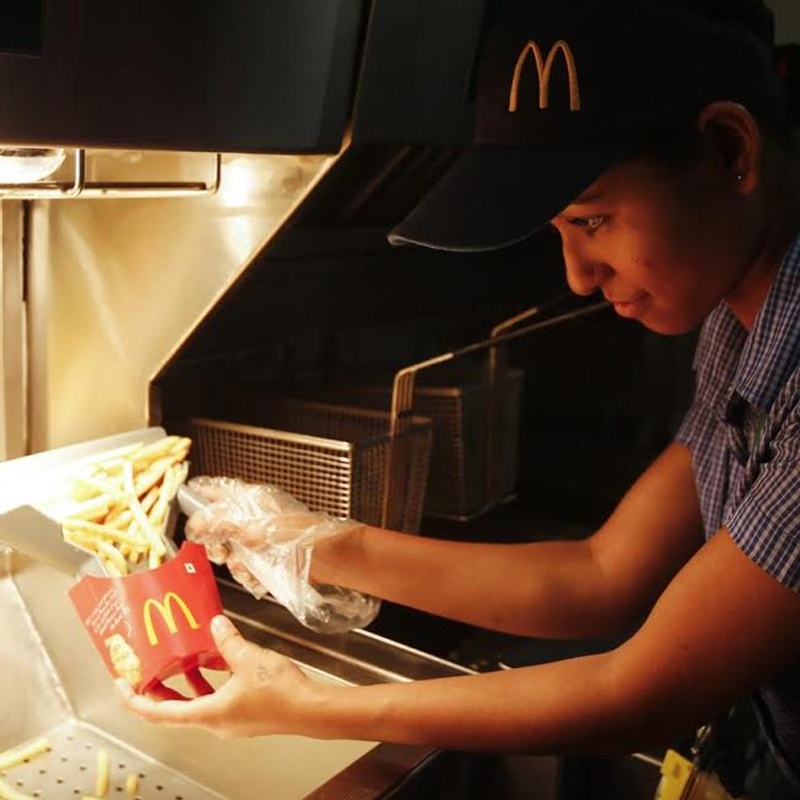
    According to McDonald’s India West and South head of marketing Arvind RP, the market is observing a lot of pent-up demand in his industry segment as people are reliant on home-cooked meals for over a month because of the lockdown.

    He said: “There is a lot of pent-up demand among the consumers and they will be looking for high-quality, hygienic food. Will it be more towards dining out or deliveries is a separate question, but I guess it will be more towards the latter.”

    He added that since the customer might be frugal and careful with the spends, brands like his, which serve in the value category, will see an upsurge in the sales. He also noted that there will be little to no concept of brand loyalty while making these purchases.

    Wavemaker India VP Kishan Kumar Shyamal said: “Brand availability is going to be greater than brand equity.”

    Madison World Sigma CEO Vanita Keswani put herself in the consumer’s shoes and admits that even she is looking forward to visiting places like Hypercity for purchasing her ration than going to the local stores.

    She also noted: “As per a Kantar study, Indians are hopeful that they will bounce back from the situation quickly. Also, international researches indicate that the recession will not be very terrible in the country.”

    Initiative India CEO Vaishali Verma also pointed out while categories like fashion and apparel are suffering because of the lockdown, there is definitely a lot of pent-up demand that will arise once the situation normalises.

    However, she added that consumers will be more rational in their choices and brands will have to adapt to their needs to benefit the most out of the situation.

  • Amazon’s net income down to $2.5 billion in Q1

    Amazon’s net income down to $2.5 billion in Q1

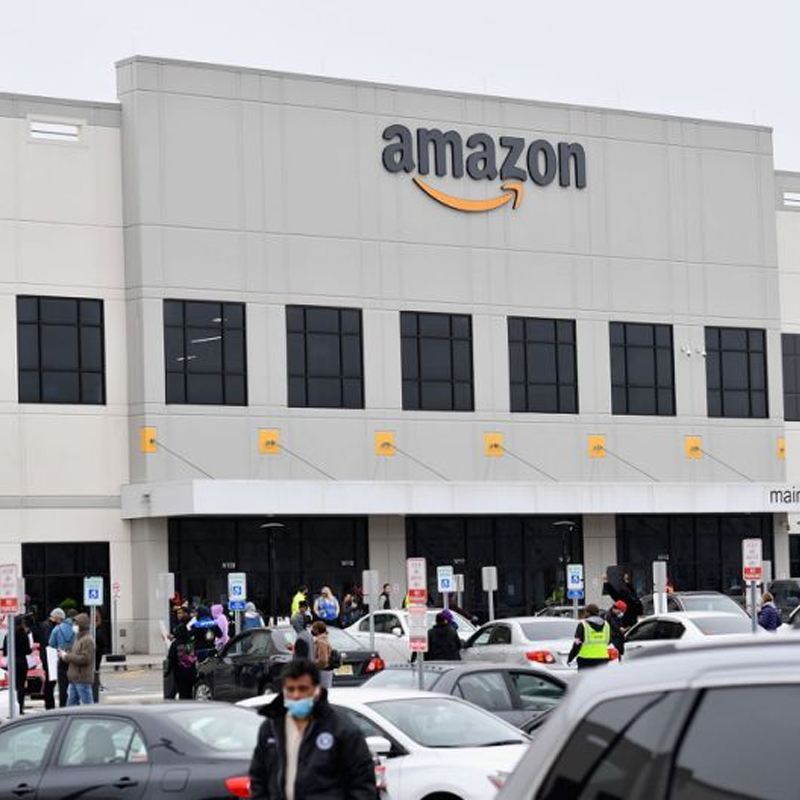
    MUMBAI: Amazon.com, Inc. today announced financial results for its first quarter ending March 31, 2020. The result is a measure of how the Covid2019 pandemic is affecting the overall online shopping experience.

    Net income decreased to $2.5 billion in the first quarter, or $5.01 per diluted share, compared with net income of $3.6 billion, or $7.09 per diluted share, in first quarter 2019.

    Operating cash flow increased 16 per cent to $39.7 billion for the trailing twelve months, compared with $34.4 billion for the trailing twelve months ended March 31, 2019.

    Free cash flow increased to $24.3 billion for the trailing twelve months, compared with $23.0 billion for the trailing twelve months ended March 31, 2019.

    Net sales increased 26 per cent to $75.5 billion in the first quarter, compared with $59.7 billion in first quarter 2019. Excluding the $387 million unfavourable impact from year-over-year changes in foreign exchange rates throughout the quarter, net sales increased 27 per cent compared with first quarter 2019.

    Operating income decreased to $4.0 billion in the first quarter, compared with operating income of $4.4 billion in first quarter 2019.

    “From online shopping to AWS to Prime Video and Fire TV, the current crisis is demonstrating the adaptability and durability of Amazon’s business as never before, but it’s also the hardest time we’ve ever faced,” said Jeff Bezos, Amazon founder-CEO.

    He further added: “Under normal circumstances, in this coming Q2, we’d expect to make some $4 billion or more in operating profit. But these aren’t normal circumstances. Instead, we expect to spend the entirety of that $4 billion, and perhaps a bit more, on Covid-related expenses getting products to customers and keeping employees safe. This includes investments in personal protective equipment, enhanced cleaning of our facilities, less efficient process paths that better allow for effective social distancing, higher wages for hourly teams, and hundreds of millions to develop our own COVID-19 testing capabilities.”

    “There is a lot of uncertainty in the world right now, and the best investment we can make is in the safety and well-being of our hundreds of thousands of employees. I’m confident that our long-term oriented shareowners will understand and embrace our approach, and that in fact they would expect no less,” he added.

    Covid2019 and employees

    Amazon made over 150 significant process changes in its operations network and Whole Foods Market stores to help teams stay healthy — and it conducts daily audits of the measures we’ve put into place.

    “A team of Amazonians — from research scientists and program managers to procurement specialists and software engineers — has moved from their normal day jobs to a dedicated team working to build incremental testing capacity. The team is building its first lab and has begun a pilot to test front-line employees. We’re not sure how far we will get in the relevant timeframe, but we think it’s worth trying, and we stand ready to share anything we learn. In March and April, we announced plans to and have now hired 175,000 people in our fulfillment and delivery network in response to increased customer demand and to assist existing employees. We are happy to welcome these new hires to our team and are continuing to hire,” said the company.

    Alexa is helping customers stay informed and connected, and can now answer tens of thousands of questions related to Covid2019.

    “We’re working to provide accurate and timely information from official government and news sources, globally. Alexa also provides an experience that helps customers in Brazil, Canada, India, Japan, Mexico, and the U.S. check their risk level for COVID-19. Customers can ask, “Alexa, what do I do if I think I have COVID-19?” or “Alexa, what do I do if I think I have coronavirus?” Alexa then asks a series of questions about the person’s symptoms and possible exposure and provides guidance sourced from local health authorities.”

    Amazon is supporting small businesses by partnering with American Express and its Stand for Small initiative, providing free use of business tools that help with virtual communication and collaboration, such as Amazon Chime, Amazon WorkDocs, and Amazon WorkSpaces, as well as enabling small businesses to use the cloud at no charge for 12 months with AWS Free Tier.

    Shopping and entertainment

    Amazon ranked #1 in the 2019 American Customer Satisfaction Index Internet Retail Category and has been ranked in the top 10 for the past 11 years. In the UK, the Institute of Customer Service named Amazon as the company with the best customer service score for the past decade.

    Prime Video launched Prime Video Cinema in the US, the UK, and Germany. Prime Video Cinema is a premium movie rental offering that allows customers to stream in-theatre movies at home, including titles such as Birds of Prey, Emma, The Invisible Man, Onward,andTrolls World Tour.

    Customers in the US, the UK, and Germany can now rent or buy hundreds of thousands of video titles directly from the Prime Video app on Apple iOS 12 devices and the Apple TV Gen 4+, including new release movies, award-winning TV shows, and Oscar-nominated movies.

    Prime Video premiered several new Amazon Original series including the reality competition Making the Cut, hosted and executive produced by Heidi Klum and Tim Gunn; The Forgotten Army in India; Love Island in France; Celebrity Hunted in Italy; and the docuseries The Test: A New Era for Australia’s Team in Australia.

    Prime Video and the National Football League (NFL) announced a multi-year agreement to renew their partnership to deliver a live digital stream of 11 Thursday Night Football games as well as exclusive global streaming rights to one additional regular season game. All NFL games on Prime Video are available at no extra cost to Prime members.

    Amazon launched Amazon.nl and a new Prime program for the Netherlands marketplace. Amazon Prime includes unlimited free shipping, Prime Video, Twitch Prime, and Amazon Photos.

    Devices and Alexa

    Alexa is available on even more devices including TV, mobile, and auto and is now available on select LG and Samsung Smart TV 2020 models and the new OnePlus 8 mobile phone. Additionally, BMW customers in the U.S., and MINI customers in the U.S., France, Italy, Spain, and Austria can now access Alexa on select models.

    Amazon introduced a new speaking style for Alexa skills, enabling U.S. developers to build more natural long-form content experiences by adding conversational pauses to Alexa’s speech when reading articles or blogs.

    Fire TV’s content catalog continues to grow internationally with new apps, including Disney+, available on Fire TV and Fire Tablet devices in the UK, France, Germany, Italy, and Spain.

    Amazon Web Services

    AWS announced the opening of the AWS Europe (Milan) and AWS Africa (Cape Town) Regions. AWS now spans 76 Availability Zones within 24 geographic regions, with announced plans for nine more Availability Zones and three more AWS Regions in Indonesia, Japan, and Spain.

    AWS announced the general availability of Amazon Detective, a security service that makes it easy for customers to conduct faster and more efficient investigations into security issues across their AWS workloads. Amazon Detective automatically collects log data from a customer’s resources and uses machine learning, statistical analysis, and graph theory to build interactive visualizations that help customers analyze, investigate, and quickly identify the root cause of potential security issues or suspicious activities.

    AWS announced the general availability of Amazon Keyspaces (for Apache Cassandra), a scalable, highly available, and fully managed database service for Cassandra workloads. Amazon Keyspaces supports the same application code, Apache 2.0 licensed drivers, and developer tools that customers running Cassandra workloads use today. With Amazon Keyspaces, customers can easily migrate on-premises Cassandra workloads to the cloud, without having to provision, configure, and operate servers or large Cassandra clusters, or needing to manually add or remove nodes or rebalance partitions as traffic scales up or down.

    AWS announced the general availability of Amazon Augmented Artificial Intelligence (Amazon A2I), a fully managed service that makes it easy to add human review to machine learning predictions to enhance model and application accuracy by continuously identifying and improving low confidence predictions. Human review for model predictions can be added to new or existing applications using reviewers from Mechanical Turk, third party vendors, or a customer’s own employees.

    AWS is helping schools around the world quickly deploy and transition to online learning through its EdTech customers and partners. In Egypt, the Ministry of Education and CDSM Thinqi are standing up instant access to online learning content, where 22 million K-12 students are able to continue their education in the midst of COVID-19; and in India, EdTech startup Impartus is launching virtual classrooms for more than 530,000 students — the online equivalent of 13,000 physical classrooms. AWS is also working with Blackboard, the largest education technology and services company in the world, enabling them to scale to 50x their usual capacity within a 24-hour timeframe to meet the global surge in demand of daily users for their virtual teaching and learning platform.

    Second quarter 2020 guidance

    Net sales are expected to be between $75.0 billion and $81.0 billion, or to grow between 18 per cent and 28 per cent compared with second quarter 2019. This guidance anticipates an unfavorable impact of approximately 70 basis points from foreign exchange rates.

    Operating income (loss) is expected to be between $(1.5) billion and $1.5 billion, compared with $3.1 billion in second quarter 2019. This guidance assumes approximately $4.0 billion of costs related to COVID-19.

    This guidance assumes, among other things, that no additional business acquisitions, investments, restructurings, or legal settlements are concluded.

    Follow Tellychakkar for the consumer facing news & entertainment
  • News key TV consumption driver, but declines on weekly performance

    News key TV consumption driver, but declines on weekly performance

    MUMBAI: For the straight sixth week, the news genre continues to be the television consumption driver; it has grown by over 160 per cent in the week 16, says the sixth edition joint report of Broadcast Audience Research Council (BARC) India – Nielsen India. However, the news broadcasters continue to fall marginally in terms of viewership week-on-week basis.

    This week, the Hindi news channels fell by over 11 per cent while English dropped by 4 per cent. The COVID period has given news channels an upper hand to gain in viewership than other genres but has been failing to sustain its weekly performance and tumbled for the straight fourth week now.

    Slipping to the fourth spot from the second, ABP News fell most of the top five Hindi news channels by over 20 per cent to 211,859 weekly impressions in week 16. While despite being the most-watched channel for the sixteenth week in a row, Aaj Tak declined by over 15 per cent to 295700 weekly impressions in week 16, followed by Zee News, which slumped by 13 per cent in the current week to 211294 impressions. Zee Media’s Hindi news channel has retained its position in the top five list.

    Retaining its third position, India TV fell marginally by over 6 per cent to 233, 017 weekly impressions in week 16. For the first time so far this year, Republic Bharat has outperformed all its peers except Aaj Tak to become the second most-watched Hindi news channel with almost the same viewership numbers that of last week. It secured 244,354 weekly impressions in week 16. The channel’s prime-time debate show Poochta Hai Bharat has become most-watched in terms of viewership in week 16.

    The English news channels reported a mixed performance in the current week as three news channels out of the top five registered marginal growth, while the other two fell substantially.

    Republic TV, Times Now, and CNN-News18 grew marginally this week by over seven, five, and six per cent respectively as compared to week 15.  Republic TV has continued its dominance of being the most-watched English news channel, followed by Times Now, which had slipped to third position last week, has regained its second position week 16. CNN-News18 failed to get featured last week in the top five English news channels and has reclaimed its stand at the fourth position in the current week.

    Zee Media’s English news channel WION, securing the fifth position in the top five list, has tumbled substantially by over 30 per cent in terms of viewership. The channels gained 415 impressions in week 16 as compared to 600 impressions in the previous week. While India Today fall back to its third position after climbing one spot up, it declined by over 18 per cent to 837 weekly impressions in the current week as compared to 1031 impressions in the earlier week of BARC.

    BARC-Nielsen India has been coming up with television and digital consumption report every week. The report compares the current lockdown period to week two to four (11-31 January) of BARC, which is termed as pre-Covid2019 period.

    Says the sixth edition of BARC-Nielsen report: “News enjoys a higher share in megacities in week 16 in the premium panel;  its viewership during prime-time across megacities is higher.” It further adds that the ad volume in news genre by language grew marginally as against pre-Covid2019 period, the highest growth is registered in Hindi, English, Gujarati and Oriya news market

  • Social distancing makes clients, agencies bond well

    Social distancing makes clients, agencies bond well

    MUMBAI/NEW DELHI: With the whole country at a standstill because of the Covid2019 crisis, there is hardly anything that seems positive to businesses across the spectrum. It has been well reported that media spends are being cut as clients deal with massive liquidity issues raised by problems in supply and distribution chains. But what this crisis has managed to do beautifully is create human relationships, which are going to be the spirit of agency-client bonding in the years to come.

    According to industry insiders, this time has given them an opportunity to bond well with their clients, which are more trustworthy and dependable.

    There have been significant examples of brands and agencies working remotely yet coming together with great pieces of work. Some time back, Indiantelevision.com had covered how Ogilvy came on board with brands like Asian Paints and Tata Sky to shoot videos from home.

    Elaborating more on how the client-agency relationships have improved in recent times, Publicis Worldwide MD Srija Chatterjee said during one of our virtual roundtables: “We have started understanding each other more. There is much more transparency now. As an agency, we know what the issues are that they face with the cash flows and we are trying our best to help them out.”

    She elaborated that they are tackling each client’s problem with a different approach, catering to their specific needs. “Clients are going through a tough time and we are working with them on a 60-90 day plan. We workshop together and discuss ideas. For example, for a client like Cars24, we are expecting that once the lockdown is removed, the demand for second-hand cars may rise as people who did not have a vehicle in their house faced mobility issues and the brand must benefit. So, we are creating hypotheses like that and working on it.”

    Madison Media and OOH group CEO Vikram Sakhuja shared that while clients are facing issues with cash flows right now, customers like to get some reassurance in times of a crisis. “We are trying to tell brands that these things (advertisements) will help in the longer run. Strong brands will come out stronger and we are encouraging them to advertise.”

    DDB Mudra Group’s CEO and MD Aditya Kanthy said: “There is a lot of work but its nature and form are different from business as usual. It is more consultative in the spirit of client partnership; working together to find answers to the hard questions that are emerging each day for their businesses and ours. It is important to acknowledge that change regardless of increased media consumption.”

    Digitalkites senior vice president Amit Lall says that brands are understanding the needs of consumers right now and creating ads according to that. "The consumer is not in the right frame of mind; the sentiments are relatively low. The thing which is important to him now is something he can survive on. Hence, for categories which are supporting consumers, whether it is to boost his immune factor; like Dabur Chyavanprash or sanitizers, the sales which have gone up. From the advertising point of view, purchasing is out of the radar. At this challenging time, it is important for brands to come forward and speak in a motivational way."

    Ogilvy India CCO Sukesh Nayak also feels that brands have a role to play during the time of crisis. "It has happened with both the brands; Tata Sky as well as Asian Paints. At the end of the day, consumers are your guide. Ads are created for them.  Today we all are at very challenging times in our lives. Everybody is struggling with their own fear, anxiety, and pressure," he said.

    Follow Tellychakkar for the consumer facing news & entertainment
  • ChyronHego unites broadcasters to source, compile US Covid2019 data

    ChyronHego unites broadcasters to source, compile US Covid2019 data

    MUMBAI: ChyronHego today announced that the company has been collaborating with Nexstar, Sinclair, and Quincy Media to source and aggregate current US statistics on the spread of the Covid2019 down to the county level. Working with ChyronHego, the competing broadcast groups have united to ensure that local broadcasters nationwide can provide their viewers with the information they need to navigate the crisis.

    With reporters on the ground at call-letter stations, the broadcasters are uniquely positioned to gather and contribute data that reflects the current impact of the virus across all 50 states and Washington, DC ChyronHego is aggregating and organizing this data, along with information from leading health organizations, to support more accurate and timely updates at the national, state, and local levels.

    "We undertook this initiative because we saw a clear need for better, more readily available information on the spread of Covid-2019," said Drew Hahn, senior vice president, customer success at ChyronHego. "We knew that with our technology and the human resources of our broadcast partners, we could help to ensure that local news outlets have the tools and information they need to tell this story for their communities. Our hope is that by presenting more complete data than is available from other sources, with granular detail down to the county level, we can support journalists in originating local news stories that educate and inform their viewers."

    Founded by former journalists, NewsTicker is a robust, web-based content management platform for the creation of on-screen ticker displays. Leveraging the powerful data management capabilities of PRIME Graphics, NewsTicker makes it easy for local stations to deliver localized channel branding, with seamless display of weather alerts and other breaking news stories. The HTML 5-based user interface ensures producers can control shows remotely from their laptops or tablets.

    Nexstar, Sinclair, and Quincy Media have standardized on NewsTicker at the local level, and combined with NewsTicker's other call-letter stations, their stations cover almost all of the United States. Employees from ChyronHego and the four broadcast groups worked after hours and on weekends to bring the COVID-19 database to life quickly, the sooner to help local communities get through the crisis and get back on their feet.

    "Through unprecedented and unselfish cooperation, broadcast industry leaders are demonstrating the vital and powerful role journalism can play in serving local communities," added Hahn. "Our team worked day and night to help make this collaboration a success. We're proud that the database we've created ultimately will help people and communities across the US to stay informed and stay safe in this very difficult time."

    Information about the full ChyronHego product portfolio, including the NewsTicker ticker and branding solution, is available at www.chyronhego.com.

    ChyronHego is headquartered in New York with operations in 11 countries. ChyronHego is a portfolio company of Vector Capital, an investment and management firm dedicated to the growth of technology companies.

  • Lockdown blues prompt brands, agencies to rethink strategies

    Lockdown blues prompt brands, agencies to rethink strategies

    MUMBAI: Even in a lockdown, the show must go on, even if it means cutting down your exenses. With cash crunch being a problem across the world, brands and agencies are figuring out how to optimise communication at the lowest cost.

    Indiantelevision.com reached out to a cross section of brands and agencies to get their perspectives on this.

    According to FCB Ulka ECD Anindya Banerjee, this is the period of hand-holding both the client and the consumer. “While the sentiments and the bottom-line have taken a hit, we can’t disappear from the lives of our consumers. Also, some businesses like financial services and banks haven’t stopped. The idea is to tailor-make messages for the consumer.”

    Giving a helping hand to clients, Marcom Avenue director Divanshi Gupta says that it is curating more personal content and strategies such as industry opinions, post-pandemic come-back strategy presentations, blogs, articles, that can help its clientele to establish themselves once Covid2019 is under control.

    Brands have been figuring out how to get through this difficult phase as well. For Liberty Shoes, the months from March to June are key for business. Says its retail executive director Anupam Bansal: “New season’s merchandise was placed in the shops, sales teams were geared up, marketing campaigns for ‘back to school’ or ‘marriage season’ was all set, but unfortunately the pandemic hit at the same time. It was difficult to quickly act on the situation and with social distancing and lockdown, mindsets are cash-conservative.”

    Without demand and revenue, Liberty’s marketing expenses also took a hit. It had to safeguard finances for rainy days, deducting the ad expenses, which, according to Bansal, was an articulated decision. The company is looking at consumer behaviour staying constant for another two quarters.

    The challenge before brands and agencies is to balance their economic losses while staying present among consumers. DigitalKites senior VP Amit Lall says that brands are reluctant to allow their focus to dilute and wish to stay relevant to the consumers. This is where digital comes into the picture with its ability to provide faster reports on investment.

    Barco India head of marketing Vijayant Khattry feels that it is only natural that most of its current campaigns revolve around remote meeting as well as virtual learning products like ClickShare Conference and weConnect as it expects their demand to increase substantially even after people go back to the office post-pandemic.

    The lockdown has seen digital spends shoot up. Banerjee says: “The pandemic has forced all companies to go digital. Fortunately, at FCB, we’ve been aligning ourselves to not work as a traditional agency for quite some time and that has helped us during these times.”

    In order to maintain the balance, Marcom Avenue has shifted its focus to branding and community building rather than sales/lead generation activities. Gupta adds, “Some of our clients have introduced new product lines during the pandemic like masks/hazmat suits/infra-thermometer, etc., looking to make available medical products to the health industry and further requiring us to create end-to-end marketing for these essential products in demand. Further, we took an initiative to analyse and tap into different industries that are booming like e-learning and pharma, so that we can help them increase their revenue and RoI.” 

    Apart from shifting focus from OOH and print to TV and digital, brands are looking at other options as well. Liberty Shoes is improving the UI/UX of its website to give a better customer experience. The company is also improving the website SEO to future-proof itself. It is also looking at strengthening its social media/influencer marketing tools to stay relevant. “Personalised communication with consumers is also taking place using the CRM database,” says Bansal.

    MediaTek marketing and communication deputy director Anuj Sidharth says, “We are also trying to increase our focus on offline public relations activities such as virtual roundtable conferences, webinar sessions, etc. MediaTek is maintaining consumers’ focus on the interesting mix of technologies that we power, especially products like mobile phones, tablets, smart TVs, wi-fi routers and voice assistant devices, which have become even more vital. We are also devising marketing mix strategies for mobile and non-mobile segments.”

    While brand building and marketing is a difficult thing for most brands to undertake simultaneously right now, communication is still essential in some way or the other.

  • The luxury industry shares its assessment of COVID-19 and the impact on global luxury businesses at Power Panel hosted by SP Jain Global

    The luxury industry shares its assessment of COVID-19 and the impact on global luxury businesses at Power Panel hosted by SP Jain Global

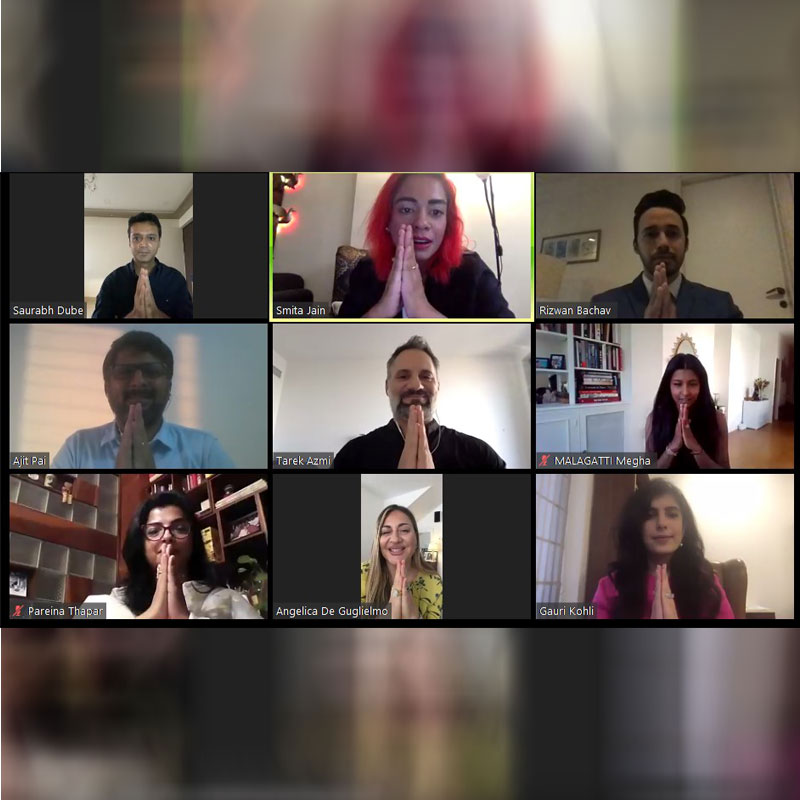
    How has the Coronavirus affected the global luxury industry? How can luxury companies emerge stronger, more innovative and purposeful after the battle against the Coronavirus has been won? To answer these important questions and more, SP Jain School of Global Management hosted, for the very first time, a ‘Power Panel Webinar’ bringing together luxury leaders and stalwarts from across the globe to share their insights, perspectives and relevant facts.

    The webinar was attended by over 300 participants from around the world and included an eminent panel comprising:

    Megha Malagatti, Business Development Director – L’Oreal, Paris
    Angelica Di Guglielmo, Luxury Brand Management Specialist & Worldwide Sales Director, Mischka Aoki, Milano
    Ajit Pai, CEO Audi, Audi Thane & Mumbai West Region
    Gauri Kohli, Director – Luxury, PR Pundit, Delhi
    Pareina Thapar, Co-Founder, Longform PR, Delhi
    Saurabh Dube – Director of Sales & Marketing, St. Regis, Mumbai
    Tarek Azmi – Founder- Here's Good News Training & Co-founder – Grey matter KSA, Dubai
    Sharing her experience of hosting the Power Panel, Ms. Smita Jain, Director of the Master of Global Luxury Management program at SP Jain said, “Through this panel, we wanted to highlight global perspectives across segments and economies, and understand the impact of the current crisis on luxury businesses worldwide. The perspectives that emerged from the panel indicate that certain segments within the luxury space may tweak their business strategies and more importantly, personalise experiences for customers. We are receiving tremendous response to the session, and are aiming to create an ecosystem of experts that will provide a robust stimulus to the industry.”

    In response to the most pressing questions facing luxury brands today, the panelists highlighted key trends that will set the tone for a possible new era in the global luxury industry.

    India to occupy a coveted top spot in the global automobile production space

    The automobile sector relies greatly on China, with the country accounting for 29% of the world’s total automobile manufacturing. While production in China cannot be avoided entirely, industry experts are expecting a shift to markets like India for production. India already has manufacturing capabilities; however, holds a small share of the pie at 2.9%. While the transition will take time, the shift is likely to put India on the global automobile map, as it holds the potential to impact the employment and economy in the long run.

    Domestic leisure travel to be the saving grace for the hospitality / aviation industries

    Arguably, the hospitality and aviation sectors are amongst the most impacted segments due to COVID-19, with the Indian Hospitality industry suffering losses to the tune of USD 4.5 billion. However, the industry is anticipating making a comeback by Q4, with certain sub segments ruling over the others. While Inbound and Outbound tourism is expected to be slow, owing to the restrictions placed by countries on international travelers, the domestic corporate travel may also take a hit depending on the state of business in the country. However, domestic leisure travel is said to rebound swiftly, and will be a major factor in helping the industry recover post the pandemic.

    In-store luxury experiences will continue to dominate in the post-COVID world

    While most sectors are shifting to digital means of shopping, the luxury retail segment has a unique stand. The segment is driven by the consumers’ need for indulgence and immersive experiences, which cannot be fulfilled through online platforms. Luxury holds a more symbolic value over function for most consumers, and industry experts believe that digitalisation of brands is a temporary solution. Although brands are acknowledging the need for omnipresence in times of the COVID-19, most retailers believe that in-store experiences will continue to dominate post the pandemic when it comes to luxury shopping.

    Conscientious, responsible luxury is the future

    Luxury brands have always enjoyed an air of exquisiteness, and an association with being glitzy. However, the industry is now witnessing a change in consumer behavior, with more and more people gravitating towards conscientious, responsible luxury as an effort to lead a more sustainable lifestyle. This has caused a ripple effect, leading brands and creators to seek slower lines of production that promote sustainability and creativity. Luxury brands are focusing on curating collections to address responsible consumption, and slow living, while maintaining their exclusiveness, and premium quality at the same time.

    These insightful, industry-relevant events are just part of SP Jain’s curriculum, which enables students to get hands-on learning, while hearing up-to-date advice and information from leading experts.

  • How brands position and compete during Covid2019

    How brands position and compete during Covid2019

    The world has come to a literal standstill in the wake of the deadly Covid-2019 pandemic. It wouldn’t be wrong to say that all of us are in the midst of an unprecedented crisis. Even the marketing and communications industry is seeing a downward trajectory, with most companies struggling to stay afloat and keep themselves relevant in times like these. 

    A lot of challenges await brands as they look to maintain their presence among consumers during the lockdown. Market sentiments have hit the purchasing capacity of consumers, both in terms of behavioural and economic approach. It won't be too early to say that humans have adopted 'social distancing' as their way of life, and have begun to understand the difference between ‘needs’ and ‘wants’.

    Amidst all of this, how can a brand gain attention of existing and potential consumers? How does it ensure that its voice is heard? The answer lies in humour, banters with other brands, and showing empathy; at least these options have found some amount of success with a lot of brands that have been trying out these cool new initiatives. 

    And this is also backed by data. According to a Barometer India study by Kantar conducted from 19-22 March, 28 per cent of their respondents are still keen to observe their brands’ creativity in sharing trusted information with the audience. Also, the study has suggested that 79 per cent of the consumers want to experience how helpful brands can be in a new world post Covid-2019, in their everyday lives. This clearly shows that consumers are going to be way more alert and intuitive before building their loyalty towards any particular brand.

    The aviation industry has generally been a big trendsetter in this aspect. A few days ago, Indigo poked some harmless fun at Vistara with a quirky tweet stating 'not flying higher these days we heard?' with the hashtag #StayingParkedStayingSafe. Other Indian airlines were quick to join the conversation with their own witty comebacks, with Delhi Airport finally rounding up the conversation with a hopeful-for-the-future kind of tweet. With no certainty of any of these brands being back to business soon, they not only conveyed the importance of staying home, but also kept themselves relevant in the audience’s mind through a unique take on the current situation. 

    A similar kind of attempt was made by the Mumbai Police to educate netizens to stay home by quoting some of Alia Bhatt’s hit movies.

    This allowed netizens to participate in conversations, and also gave a big boost to the Mumbai Police’s initiative of taking creative routes to impart education about staying home. 

    The radio industry isn’t staying far behind either. Radio has emerged as one of the most credible sources of information during lockdown with credibility score of 6.27. According to AZ Research PPL, 82 per cent of the masses have been relying on radio for gaining access to authentic pieces of information. Radio brands have kept aside their rivalry and joined hands to keep the brand relevant in their own creative ways.

    It all started when Fever FM tagged Radio Mirchi and subtly poked them, asking if they are still happy as Radio Mirchi, playing on the tagline – "Mirchi Sunne wale always khush." Ishq FM and Radio Nasha soon joined this online conversation.

    It is intriguing how brand communications are adapting to evolving consumer sentiment in a short span of time. It’s like the pandemic imparted a whole new perspective to their approach. Whether it is to poke fun, or to show empathy, brands are now connecting more with competitors, without caring too much about fighting for audience mind space. 

    Even influencers have taken up the mantle to educate while staying relevant to their audience on social media. With Covid-2019 bringing all sporting events to a halt, sports personalities like Usain Bolt have also engaged in some fun, albeit educative conversations. He used the iconic picture from his 100m race win at 2008 Olympics to advocate social distancing, while also subtly poking fun at his competitors by showcasing how he had outpaced all of them.

    Once all of this is over, it will be interesting to see how brands approach their communication strategies. Will they continue to remain as empathetic to competition, and creative in their approach to communication? Will we see an innovative and collaborative approach to keep their ‘reborn’ consumers engaged? Only time will give us answers to all these questions.

    (The author is a communication specialist. The views expressed are personal and Indiantelevision.com may not subscribe to them)

    Follow Tellychakkar for the consumer facing news & entertainment
  • Covid2019 might push traditional advertising towards negative growth

    Covid2019 might push traditional advertising towards negative growth

    NEW DELHI: The world economy has been brought to its knees by a medical crisis called COVID-19. The pandemic has battered the situation for even the most developed nations, and India, which was already dealing with a bruised economy for the past few quarters has found itself in a bigger soup. The ongoing lockdown has desisted liquidity across industries translating into a tough time for the media and advertising world, which has slowed down the business greatly mid-March onwards.

    DAN India CEO Anand Bhadkamkar tells Indiantelevision.com, “The pandemic has impacted the entire economy and the effects of it are being felt across all businesses. Manufacturing and other core businesses have been affected the most. People have stopped interacting in physical spaces. They are not moving out of their homes. Consequently, the entire economic activity has slowed down considerably. Advertising and communications tend to fuel the growth of commerce massively, thereby, accelerating its growth forward. Now, given that commerce has been badly hit, advertising is suffering equally.”

    DDB Mudra Group CEO and MD Aditya Kanthy shares that advertising reflects and shapes the economy and there has been a slump in the work opportunities because of the situation. “The demand side problems are obvious. Even in categories where there is demand, there are huge supply-side/ supply chain and distribution issues. Liquidity and credit is a challenge. Advertising is dependent on all of these factors. The industry depends on marketers who have the appetite and the means to invest. That is compromised in the current market scenario. It cannot operate in isolation.”

    While there has been a great surge in media consumption, both on digital and television, it is not resulting in ad monies for the platforms, given the market uncertainty. As per BARC-Nielsen data, weekly viewing minutes in week 15 of 2020, starting 11 April, grew by 40 per cent to reach 1,239 billion, as compared to 887 billion during the time period between 11 and 31 January, however, the number of advertisers dropped to 1,021, as compared to 1,378.

    If Madison Media and OOH group CEO Vikram Sakhuja is to be believed, the advertising growth, which was pinned by his firm at around 10 per cent at the beginning of the year,  will take a big hit in this calendar year. “We were expecting around a six per cent growth for traditional and around 28-30 per cent for digital media. However, looking at the current scenario, traditional media might observe a negative growth, while digital will also shrink considerably. We will be lucky if we can see a 1-2 per cent growth this year.”

    He elaborates, “The January-March quarter was already difficult for TV because of the NTO-2.0 and the second quarter is hit by COVID impact. Third-quarter might see a rise if we have a good Diwali season but it will depend largely on the market sentiments then.”

    Bhadkamkar notes, “We were hoping that advertising spends would grow by 10-10.5 per cent in 2020 as per industry estimates. Now, however, this growth is expected to be half of that. And, if the impact continues, the ill-effects would be much larger on the calendar year.”

    “The first quarter has been severely impacted, and recovery might start after h2. Q3 should return with recovery but again, that is only an assumption at the current stage and depends on how COVID 19 situation improves. Certain economists are predicting that the GDP growth (that was estimated at about 4.5 per cent) by May dip up to 1.5-1.9 per cent. If that happens, we will be slipping down by more than half almost. We just have to wait and watch how things pan out. For now, everything seems very tricky. However, from a long term perspective, the outlook for India is definitely positive, once the country starts getting out of COVID 19 downturn.”

    The industry insiders are hoping for some relief and support from the Indian government to pad the losses advertising industry is facing. Recently, AAAI chairman Ashish Bhasin had written to union minister of information & broadcasting Prakash Javadekar detailing a set of recommendations to support the industry.

    Bhadkamkar supports the decision as he says, “The government intervention is necessary for the current situation because the pandemic has affected the advertising industry severely. The letter stresses on how the Government can help in providing the stimulus to the advertising industry and not for any add-on benefits or expecting any specific fiscal measures. At present, the liquidity is getting tighter and there is a lot of slackness in the market. Hence, we need to protect the businesses by providing more liquidity as well.”

    He adds, “Right now, what is needed, is to protect the entire ecosystem because as an industry, advertising generates a lot of employment and more importantly acts as a catalyst for the growth of businesses. In my view, the letter is trying to address this and seek action towards this more so in this immediate period. Once, this lock-down ends and hopefully, we get ahead of the COVID-19 challenge at the earliest, things will come back to normal. But till then, the industry would need that additional support.”

    Kanthy also believes that the government will have to extend support to the whole ecosystem. “The government’s intervention in all parts of the economy is necessary at this time, whether it is on the stimulus or on the tax side. There is a need to put some extra cash in the hands of consumers as well to stimulate some demand. From an industry perspective, it will help us in access to liquidity and credit.”

    Sakhuja adds, “Government support will be really helpful right now so that brands treat advertising as an investment. Also, the government owes a lot of money to media and advertising companies. They need to pay that back as well.”

  • Adani Group expresses gratutude towards frontline warriors

    Adani Group expresses gratutude towards frontline warriors

    MUMBAI: Adani Group has joined hands with DDB Mudra, to salute the frontline warriors with a heartwarming film, #GoodnessNeverStops. The film pays homage to the workforce at Adani Group for its relentless efforts and unwavering support during the lockdown amid the COVID2019 crisis.

    The film narrates how Adani Group’s engineers, security personnel, healthcare professionals and sanitation workers have been stepping out each day to make sure the citizens of the nation do not go without essential services. The film is an extension of the group’s philosophy of ‘Growth with Goodness’, where each of their business has evolved to play a part in empowering India.

    While the entire nation has come to a standstill, Adani Group’s army of heroes continue to do their jobs to ensure that essential goods and services are delivered to the citizens of the country. Hundreds from the Adani Group’s workforce at ports, power plants, transmission sites, edible oil refineries, residential townships and city gas distribution businesses have been working seamlessly so that lockdown does not impact the basic needs of people.

    Elaborating on the objective of the campaign, Adani Group group president – corporate brand custodian Paresh Chaudhry said, “This crisis demanded continuous supply of certain essentials so that people can stay indoors safely. Thanks to our ever-reliable workforce, we were able to deliver when it mattered the most. This film is our tribute to our workforce and to all those who are working relentlessly to help bring the country back to normalcy.”

    Talking about the concept and execution, DDB Mudra VP – strategy Shekhar Pandey said, “In this unprecedented scenario, there are so many fellow citizens who are putting duty and the country above everything else. This film is our tribute to all such brave hearts who are truly demonstrating the goodness that is inherent in humanity. As we faced various execution-related limitations due to lockdown, we decided to take up the animation route and produced this film totally in-house at our Ahmedabad office.”

    The film was released on Adani Group’s social media handles and has received over half a million views across Facebook and Instagram.

    Link to work: https://www.facebook.com/AdaniOnline/videos/227697331787084/

    Follow Tellychakkar for the consumer facing news & entertainment