Tag: Court

  • Bombay High Court stays BARC order against India Today

    Bombay High Court stays BARC order against India Today

    NEW DELHI: The TRP manipulation row has embroiled several parties including news broadcasters, research agencies and police authorities. The row is getting murkier as it goes along.

    Last week, the Bombay high court stayed an order passed by BARC disciplinary committee and directed BARC India not to take any coercive action against India Today Group subject to a deposit of Rs 5 lakh with the court. Now, after various sections of news media purportedly misreported facts in the case, India Today has issued a clarification.

    Referring to the plea it filed against the BARC order, TV Today said in a statement, “The petition filed challenges an order passed by the BARC disciplinary committee on the grounds that it was without an appropriate quorum and without presenting evidence, among other criteria. The court has stayed the order and directed that no coercive action be taken subject to a deposit of 5 lakh with the court– and not with BARC– and without prejudice to our rights.”

    The media house pointed out the misinterpretation of the court order by several news outlets that TV Today must pay a fine of Rs 5 lakh to BARC. “It is unfortunate that certain sections of the media are misreporting the reasons for TV Today approaching the Bombay high court against BARC,” it said.

    The network also clarified that the Hansa report has nothing to do with the case filed by it against BARC. “Similarly, any mention of TV Today's name in the Hansa report is something we are completely unaware of. We are not privy to any such information, and neither has BARC informed us of the report.”

    The TRP manipulation scam was unearthed by the Mumbai police on 8 October. Since then, several news broadcasters have been reeled into the controversy surrounding the matter. Charges and allegations have freely flown and a string of law suits and FIRs have been filed, with no end seemingly in sight.

  • Court orders Star to maintain feed, gives InCable 2 days to clear outstandings

    Court orders Star to maintain feed, gives InCable 2 days to clear outstandings

    First it was ESPN Star Sports. Today it was the turn of Star India to get drawn into a legal spat with the Hinduja Group’s InCable Network in Mumbai. The Bombay High Court today ruled on an application moved by the MSO that the existing consent agreement would remain binding on both parties till its expiry on 30 June 2002.

    The HC gave its ruling after InCable moved it to restrain Star India from switching off its feed for the MSO’s not having signed on to the new subscription regime that went into effect from 1 January. According to a notice that was served on InCable on 21 January, that was to expire at midnight, Star had the option of switching off its feed to the biggest MSO in Mumbai if it failed to sign on to the new rates of Rs 40 for the network’s seven channels. InCable has been paying at the rate of Rs 28.50 for all Star channels.

    While the court disallowed Star from switching off, it ordered InCable to pay the broadcaster Rs 16 million within two days for three months in outstanding subscription dues that is still owed to the network for the months of October, November and December 2001.

    The court, while ruling that InCable would continue to pay Star at the rates agreed to in their consent agreement, ordered that the balance remaining as the difference with Star’s new rate structure would have to be deposited with the court by the 10th of every month. The HC left the issue of the new subscriber regime to be resolved through arbitration.

    InCable’s case is that there is a consent agreement in place that is binding on both parties till 30 June 2002. Speaking for the MSO, Ashok Mansukhani, executive V-P, corporate services, HTMT, said the agreement that was signed last year stipulates that there is to be a gradual upward revision of connectivity. From a connectivity of 135,000 when the deal was signed in July it was upped to 150,000 from January and will again be raised to 165,000 effective March 2000, Mansukhani said.

    Mansukhani pointed out that for the cable industry, rate and connectivity were both seen as a component of price. Since InCable had increased connectivity there was no justification in Star’s implementing its new rate regime was what was argued in court, he added.

    “A gradual upward revision is what we are asking from pay channels until the addressable era becomes a reality,” Mansukhani declares.

  • Court orders Star to maintain feed, gives InCable 2 days to clear outstandings

    Court orders Star to maintain feed, gives InCable 2 days to clear outstandings

    First it was ESPN Star Sports. Today it was the turn of Star India to get drawn into a legal spat with the Hinduja Group’s InCable Network in Mumbai. The Bombay High Court today ruled on an application moved by the MSO that the existing consent agreement would remain binding on both parties till its expiry on 30 June 2002.

    The HC gave its ruling after InCable moved it to restrain Star India from switching off its feed for the MSO’s not having signed on to the new subscription regime that went into effect from 1 January. According to a notice that was served on InCable on 21 January, that was to expire at midnight, Star had the option of switching off its feed to the biggest MSO in Mumbai if it failed to sign on to the new rates of Rs 40 for the network’s seven channels. InCable has been paying at the rate of Rs 28.50 for all Star channels.

    While the court disallowed Star from switching off, it ordered InCable to pay the broadcaster Rs 16 million within two days for three months in outstanding subscription dues that is still owed to the network for the months of October, November and December 2001.

    The court, while ruling that InCable would continue to pay Star at the rates agreed to in their consent agreement, ordered that the balance remaining as the difference with Star’s new rate structure would have to be deposited with the court by the 10th of every month. The HC left the issue of the new subscriber regime to be resolved through arbitration.

    InCable’s case is that there is a consent agreement in place that is binding on both parties till 30 June 2002. Speaking for the MSO, Ashok Mansukhani, executive V-P, corporate services, HTMT, said the agreement that was signed last year stipulates that there is to be a gradual upward revision of connectivity. From a connectivity of 135,000 when the deal was signed in July it was upped to 150,000 from January and will again be raised to 165,000 effective March 2000, Mansukhani said.

    Mansukhani pointed out that for the cable industry, rate and connectivity were both seen as a component of price. Since InCable had increased connectivity there was no justification in Star’s implementing its new rate regime was what was argued in court, he added.

    “A gradual upward revision is what we are asking from pay channels until the addressable era becomes a reality,” Mansukhani declares.

  • India’s Marathi film ‘Court’ out of Oscar race

    India’s Marathi film ‘Court’ out of Oscar race

    MUMBAI: The National Award winning Marathi film Court, which was India’s official entry to the Oscars, is out of the Best Foreign-Language Film category for the upcoming 88th Academy Awards.


    Nine features will advance to the next round of voting in the Foreign Language Film category for the 88th Academy Awards. A total of 80 films had originally been considered in the category.


    The nine films that have made the cut for the Best Foreign-Language Film category are as follows:Belgium’s The Brand New Testament directed by Jaco Van Dormael; Colombia’s Embrace of the Serpent directed by Ciro Guerra; Denmark’s A War directed by Tobias Lindholm; Finland’s The Fencer directed by Klaus Härö; France’s Mustang directed by Deniz Gamze Ergüven; Germany’sLabyrinth of Lies directed by Giulio Ricciarelli; Hungary’s Son of Saul directed by László Nemes; Ireland’s Viva directed by Paddy Breathnach and Jordan’s Theeb directed by Naji Abu Nowar.


    Foreign Language Film nominations for 2015 are being determined in two phases.


    The Phase I committee, consisting of several hundred Los Angeles-based Academy members, screened the original submissions in the category between mid-October and 14 December. The group’s top six choices, augmented by three additional selections voted by the Academy’s Foreign Language Film Award Executive Committee, constitute the shortlist.


    The shortlist will be winnowed down to the category’s five nominees by specially invited committees in New York, Los Angeles and London.  They will spend 8 January through 10 January, viewing three films each day and then casting their ballots.


    The 88th Academy Awards nominations will be announced live on 14 January, 2016 at the Academy’s Samuel Goldwyn Theater in Beverly Hills.

  • India’s ‘Court’ to compete with films from 80 countries at Oscars

    India’s ‘Court’ to compete with films from 80 countries at Oscars

    MUMBAI: India’s official entry to the Oscars – Court – will be competing with films from 80 countries in the Foreign Language Film category for the 88th Academy Awards.


    The Oscars have this year received film entries from 81 countries in this category including Paraguay, which is a first-time entrant.


    The Marathi language film Court is directed by Chaitanya Tamhane. Giving Court tough competition will also be renowned director Majid Majidi’s Iranian film Muhammad: The Messenger of God, which is Iran’s official entry to the Oscars this year.


    On the other hand, Paraguay’s maiden film entry for the Oscars is titled Cloudy Times, directed by Arami Ullón.


    The 2015 submissions for the Foreign Language Film category are:


    Afghanistan: Utopia directed by Hassan Nazer

    Albania: Bota directed by Iris Elezi, Thomas Logoreci

    Algeria: Twilight of Shadows directed by Mohamed Lakhdar Hamina

    Argentina: The Clan directed by Pablo Trapero

    Australia: Arrows of the Thunder Dragon directed by Greg Sneddon

    Austria: Goodnight Mommy directed by Veronika Franz, Severin Fiala

    Bangladesh: Jalal’s Story directed by Abu Shahed Emon

    Belgium: The Brand New Testament directed by Jaco Van Dormael

    Bosnia and Herzegovina: Our Everyday Story directed by Ines Tanovic

    Brazil: The Second Mother directed by Anna Muylaert

    Bulgaria: The Judgment directed by Stephan Komandarev

    Cambodia: The Last Reel directed by Sotho Kulikar

    Canada: Félix and Meira directed by Maxime Giroux

    Chile: The Club directed by Pablo Larraín

    China: Go Away Mr. Tumor directed by Han Yan

    Colombia: Embrace of the Serpent directed by Ciro Guerra

    Costa Rica: Imprisoned directed by Esteban Ramírez

    Croatia: The High Sun directed by Dalibor Matanic

    Czech Republic: Home Care directed by Slavek Horak

    Denmark: A War directed by Tobias Lindholm

    Dominican Republic: Sand Dollars directed by Laura Amelia Guzman, Israel Cardenas

    Estonia: 1944 directed by Elmo Nüganen

    Ethiopia: Lamb directed by Yared Zeleke

    Finland: The Fencer directed by Klaus Haro

    France: Mustang directed by Deniz Gamze Erguven

    Georgia: Moira directed by Levan Tutberidze

    Germany: Labyrinth of Lies directed by Giulio Ricciarelli

    Greece: Xenia directed by Panos H. Koutras

    Guatemala: Ixcanul directed by Jayro Bustamante

    Hong Kong: To the Fore directed by Dante Lam

    Hungary: Son of Saul directed by Laszlo Nemes

    Iceland: Rams directed by Grímur Hákonarson

    India: Court directed by Chaitanya Tamhane

    Iran: Muhammad: The Messenger of God directed by Majid Majidi

    Iraq: Memories on Stone directed by Shawkat Amin Korki

    Ireland: Viva directed by Paddy Breathnach

    Israel: Baba Joon directed by Yuval Delshad

    Italy: Don’t Be Bad directed by Claudio Caligari

    Ivory Coast: Run directed by Philippe Lacote

    Japan: 100 Yen Love directed by Masaharu Take

    Jordan: Theeb directed by Naji Abu Nowar

    Kazakhstan: Stranger directed by Yermek Tursunov

    Kosovo: Babai directed by Visar Morina

    Kyrgyzstan: Heavenly Nomadic directed by Mirlan Abdykalykov

    Latvia: Modris directed by Juris Kursietis

    Lebanon: Void directed by Naji Bechara, Jad Beyrouthy, Zeina Makki, Tarek Korkomaz, Christelle

    Ighniades: Maria Abdel Karim directed by Salim Haber

    Lithuania: The Summer of Sangaile directed by Alante Kavaite

    Luxembourg: Baby (A)lone directed by Donato Rotunno

    Macedonia: Honey Night directed by Ivo Trajkov

    Malaysia: Men Who Save the World directed by Liew Seng Tat

    Mexico: 600 Miles directed by Gabriel Ripstein

    Montenegro: You Carry Me directed by Ivona Juka

    Morocco: Aida directed by Driss Mrini

    Nepal: Talakjung vs Tulke directed by Basnet Nischal

    Netherlands: The Paradise Suite directed by Joost van Ginkel

    Norway: The Wave directed by Roar Uthaug

    Pakistan: Moor directed by Jami

    Palestine: The Wanted 18 directed by Amer Shomali, Paul Cowan

    Paraguay: Cloudy Times directed by Arami Ullón

    Peru: NN directed by Hector Galvez

    Philippines: Heneral Luna directed by Jerrold Tarog

    Poland: 11 Minutes directed by Jerzy Skolimowski

    Portugal: Arabian Nights – Volume 2, The Desolate One directed by Miguel Gomes

    Romania: Aferim! directed by Radu Jude

    Russia: Sunstroke directed by Nikita Mikhalkov

    Serbia: Enclave directed by Goran Radovanovic

    Singapore: 7 Letters directed by Royston Tan, Kelvin Tong, Eric Khoo, Jack Neo, Tan Pin Pin, Boo Junfeng, K. Rajagopal

    Slovakia: Goat directed by Ivan Ostrochovsky

    Slovenia: The Tree directed by Sonja Prosenc

    South Africa: The Two of Us directed by Ernest Nkosi

    South Korea: The Throne directed by Lee Joon-ik

    Spain: Flowers directed by Jon Garano, Jose Mari Goenaga

    Sweden: A Pigeon Sat on a Branch Reflecting on Existence directed by Roy Andersson

    Switzerland: Iraqi Odyssey directed by Samir

    Taiwan: The Assassin directed by Hou Hsiao-hsien

    Thailand: How to Win at Checkers (Every Time) directed by Josh Kim

    Turkey: Sivas directed by Kaan Mujdeci

    United Kingdom: Under Milk Wood directed by Kevin Allen

    Uruguay: A Moonless Night directed by German Tejeira

    Venezuela: Gone with the River directed by Mario Crespo

    Vietnam: Jackpot directed by Dustin Nguyen


    The 88th Academy Awards nominations will be announced live on 14 January, 2016 at the Academy’s Samuel Goldwyn Theater in Beverly Hills.


    The 88th Oscars will be held on 28 February, 2016, at the Dolby Theatre in Hollywood. The Oscar presentation will be televised live in more than 225 countries and territories worldwide.

  • Film on Tagore’s sister-in-law wins top award at Washington S. Asian Fillmfest

    Film on Tagore’s sister-in-law wins top award at Washington S. Asian Fillmfest

    NEW DELHI: Bengali film Kadambari by Suman Ghosh about Kadambari Devi, sister-in-law of Rabindranath Tagore with whom he is supposed to have had a close personal relationship and who eventually committed suicide, won the Best Film award at the Fourth Washington South Asian Film Festival.


    Chaitanya Tamhane won the Best Director award for Court, a Hindi and Marathi film, which is India’s official entry for the Academy Awards.


    Aparna Sen received the Special Achievement Award, while Huma Beg from Pakistan (Veils and Walls) got the Special Appreciation Award Documentary. Sarmad Khoosat received the Special Award for Contribution to Pakistan TV and Films.


    The Festival of independent alternate cinema on the theme of “Art and culture transcend boundaries” had 14 features, 10 shorts and one documentary from India, Pakistan, the United States and Canada.


    Rough Book by Anant Mahadevan won the best story award, while the actor awards went to Kishor Kadam (Partu) and Konkona Sen Sharma (Kadambari). Bonjour ji by Satinder Kassona was adjudged the best short film.


    The audience rated Partu by Indian-American Nitin Adsul as the Best Film and Billu’s Flight by India’s Mayank Tripathi as the Best Short Film.


    Indian-American entrepreneur and philanthropist Frank Islam, who inaugurated the festival said the theme of the Festival reflected a reality. “This is so even though we live in a deeply divided world. These are unsettling times-wars, refugees, terrorism, hate crimes of all types, and boundary disputes. Events such as these dominate the headlines daily,” he said.


    He said marketing was a big challenge for independent films, which had to compete with extravagant, studio-backed and star-studded films from Bollywood.


    In order to succeed, independent films from India must overcome this stereotype and sea of noise, Islam said.


    “This year there was more awareness about the film festival here in the US and in South Asian countries,” said DCSAFF executive director Manoj Singh.


    Saari Raat, Aparna Sen’s film adaptation of Bengali playwright Badal Sircar’s drama, was the opening film. There were three films from South Asian Americans: PartuMiss India America by Ravi Kapoor and For Here or To Go by Rucha Humnabadkar.


    The festival also featured two Pakistani films, Manto by actor-director Sarmad Sultan Khoosat on the life of short-story writer Sadat Hassan Manto, and Shah by actor-director on Pakistani boxer Hussain Shah who won the bronze medal at 1988 Summer Olympics. 

  • Kannada film starring Esha Deol enters Oscars race in mainstream awards

    Kannada film starring Esha Deol enters Oscars race in mainstream awards

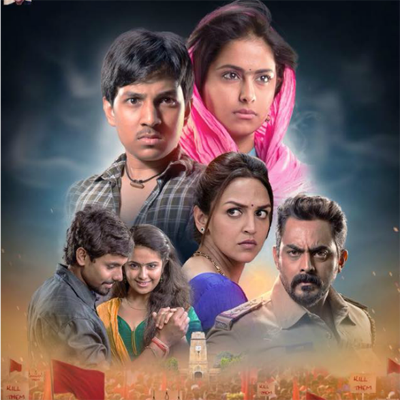
    NEW DELHI: Though the Marathi film Court by Chaitnya Tamhane has been selected as the official entry for the Best Foreign language film category race in the Academy Awards, south Indian director Kishan Srikkanth’s film Care of Foothpath 2 (Kill them Young) in Kannada starring Esha Deol has made a ‘lateral’ entry.


    Srikkanth is known as the boy who features in the Guinness book of records for being the youngest director of a feature film at the age of nine years.


    The movie is an action film, based on the story of four slum teenagers who are believed to be criminals. Srikkanth spent two years researching juvenile crime for the movie. 


    Explaining the ‘lateral’ entry, Srikkanth says that he wants the film to compete in that category so that he can seek awards for technicians and actors, like Best Film, Best Director, Best Actor in a leading role, Best Adaptive Screenplay etc. under the guidelines of Academy Awards.


    The film also fulfils intricate technical specifications with regard to the quality of sound, picture, and such other parameters, which they adhered to while shooting the movie. The Academy loves films, which have unique scripts and different and follow high creative standards.


    Srikkanth said, “We are thankful to Esha. We approached her for the challenging role of an advocate, who specialises in juvenile crime. She absolutely loved the concept and came onboard. She was so supportive. The film is a sequel to my 2006 film, which deals with juvenile delinquency. We got in touch with the Academy a year and half ago who explained to us that besides our creative script, the strict standards and technical specifications.”


    “The film has to be released in the US with all publicity in the mainstream media and get it reviewed and rated. We would be releasing the film in October in Los Angeles, and have earmarked a budget for the same,” he added.


    Besides Deol, the film also stars well known TV artiste Avika Gor. Srikkanth hopes that with his film, the flood gates will open for Indian made films in the mainstream category for the Academy Awards. 

  • National award winning Marathi film ‘Court’ is India’s entry for Oscars

    National award winning Marathi film ‘Court’ is India’s entry for Oscars

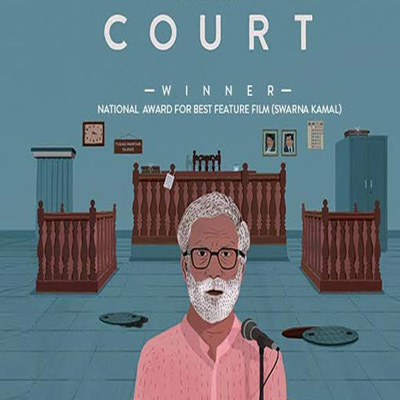
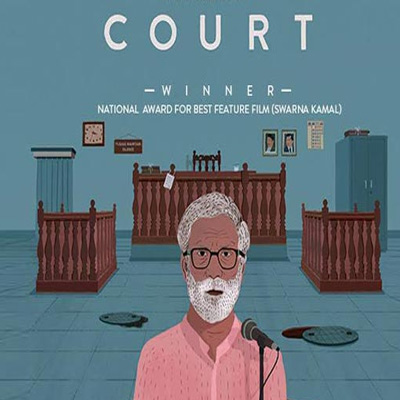
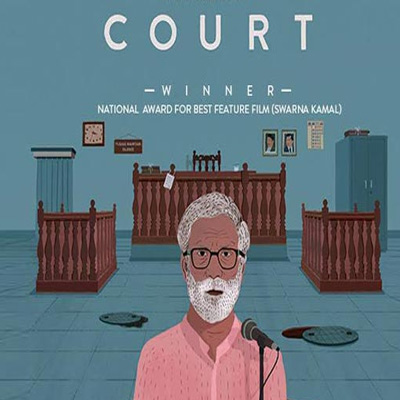
    NEW DELHI: The National Award winning Marathi film Court, written and directed by first-time filmmaker Chaitanya Tamhane, is India’s official entry for the Oscars in the foreign language category.


    The decision was taken by a 16-member committee headed by Amol Palekar set up by the Film Federation of India (FFI), which met in Hyderabad. Other contenders included MasaanPK and Baahubali.


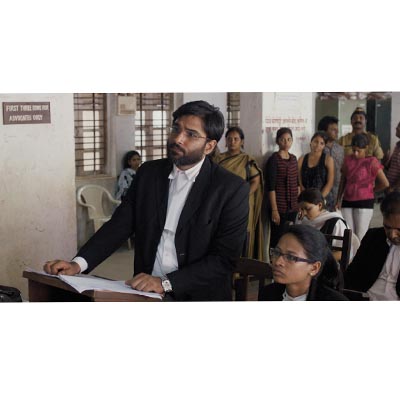
    Court, which has already been to several international film festivals and won national and international awards, is the story of a radical poet who is accused of waging war against the state. It follows the never-ending trial of a balladeer who is accused of encouraging a municipal worker to commit suicide through his fiery songs. The multi-lingual arthouse drama examines the Indian judicial system from the perspectives of the accused, the lawyer defending him, the public prosecutor, and the judge presiding over the case.


    Court was premiered at the Venice Film Festival in 2014 where it won the Lion of the Future Award for the best first feature as well as the top prize in the non-competitive Horizons category. Court also won the National Award for Best Feature Film at this year’s National Film Awards.


    The movie’s cast includes its producer Vivek Gomber, Marathi stage veteran Geetanjali Kulkarni, and Vira Sathidar. It has been shot by Mrinal Desai and edited by Rikhav Desai. Tamhane and Gomber are in Japan at the Fukoka International Film Festival where the film is being screened.


    This is the third Marathi film to be sent for the Oscars. The first was Sandeep Sawant’s Shwaas in 2004, while the second was Harichandrachi Factory by Paresh Mokakshi.


    India has never won an Academy Award in the best foreign language movie category though it has figured in the nominations thrice: for Mehmoob Khan’s Mother India, Mira Nair’s Salaam Bombay and Ashuthosh Gowarikar’sLagaan.

  • Sporty Solutionz to take Badminton Association of India to court

    Sporty Solutionz to take Badminton Association of India to court

    MUMBAI: Sporty Solutionz, which is the commercial rights holders and promoter of Indian Badminton League (IBL), has called the Badminton Association of India’s (BAI) move to terminate its IBL contract as unlawful, unwarranted and against the very basics of the IBL agreement.


    Sporty Solutionz legal counsels are studying the case and will respond with an appropriate legal action against the Badminton Association of India and the Maharashtra Badminton Association.


    The Badminton Association of India and the Maharashtra Badminton Association signed the IBL agreement with Sporty Solutionz for a period of 10 years.


    A spokesperson from Sporty Solutionz said, “However, in the best interest of IBL, players and sports lovers, we are open to dialogue for an amicable resolution of the issue.”


    Sporty Solutionz is also open for a debate on any platform. The company categorically said that the Badminton Association of India’s demand for a bank guarantee of Rs 50 crore in itself was against the IBL agreement, which was signed between the three parties. Sporty Solutionz maintains that there have been no defaults on its part.


    “In spite of that, post discussion a sum of Rs 15 crore was agreed as the bank guarantee. This was captured in Sporty Solutionz’ last communication to the BAI on 10 March, 2015. We are awaiting a response from BAI on this,” added the spokesperson.


    “On three occasions BAI agreed on a window for IBL season two and back-tracked on its words. On each occasion, Sporty Solutionz had set the ball rolling, engaged international players, incurred expenses on operations and bookings,” he further informed.


    The onus of payment to the players, like in all leagues, rests with the franchisees as they enter into “employment” agreements with the players. However, in any inadequacies from franchisee and partners, Sporty Solutionz has come forward and resolved the situation. “We are in receipt of acknowledgements from these players that all their accounts are duly settled,” said the spokesperson.


    Furthermore, Sporty Solutionz has also apologized to the players, fans and all stakeholders. The company reiterates its commitment that the most successful badminton league worldwide will be in action soon.


    “We have full faith in the law of the land and we are optimistic that under our legitimate rights, we shall soon be sharing a lot of positives about the league,” concluded the spokesperson.

  • ‘Margarita With A Straw’: Limited appeal

    ‘Margarita With A Straw’: Limited appeal

    MUMBAI: Margarita With A Straw is one of the five projects chosen in the Work In Progress Lab section of the Film Bazaar 2013. 

    This can be called a personal film in the sense that it is the story of an individual who is very talented but physically challenged. And unlike My Name Is Khan, it does not have an agenda or a depiction of heroics of a fictional character who suffers from autism. This film is more real and true to life. Its protagonist’s character has a close resemblance to the American stand-up comedian and actress, Geri Jewell, who has cerebral palsy and later discovers that she is  lesbian.

    Kalki Koechlin suffers from cerebral palsy and is wheelchair bound. She can’t stand on her feet nor are her hands under her total control. She just about manages to make her words discernible. But she is intelligent and talented. In her mid-teens, she also has urges like all normal people. At home and at college in Delhi University where she studies, her life is made easier and happier by her friends and the caring family, especially her mother, Revathi, for whom Kalki has to be treated like a child all her life. 

    Her friends in college treat her as they would any normal fellow collegian. She is part of her college band and their star lyric writer. But it is that age when Kalki’s sexual urges start working on her. She starts with watching porn and later indulging in self-gratification and then is bold enough to take another wheelchair bound friend to a secluded college corner for a huge smooch. She has no inhibitions and, with her college friend, even goes shopping for a vibrator. 

    Everybody around Kalki has made her feel normal. She chats with them late at night and falls in love with one of her band members. But she is soon brought down to earth and shown her place when she is told that her college won the first prize at a music competition because the judges tweaked the decision in their favour because a physically challenged Kalki had written the words. Later, when she declares her love to her band member, he does not acknowledge it.

    But, Kalki’s disillusion with the world around her doesn’t last long as her admission to New York University is confirmed. Hers is a mixed marriage family, a Maharashtrian Revathi married to a Sikh and living in Delhi. The father is docile and mother’s word is the last. Kalki gets her way. 

    New York is an all new world to Kalki where she discovers herself. The fact that she is an intelligent student despite her drawbacks remains but what is more important to her, her sexual leanings, are revealed to her. Here she meets a blind girl, Sayani Gupta, an offspring of a Bengali-Pakistani parentage, and a lesbian. Sayani has an inherent instinct and feels the sexual urges of Kalki and soon initiates her into her kind of sex: lesbian love. Kalki finally learns of her orientation and true love. It is a match made out of need and belonging. 

    Soon Kalki returns home on a vacation, with Sayani tagging along. It is time to confide in her mother, who is shattered to know what her daughter is up to. But, Revathi is counting her days and she must come to terms with her daughter’s choice. After all, what she wants is her daughter’s happiness. 

    But, soon, Kalki’s grim life catches up with her as Revathi gives into a sickness and Sayani leaves her. She is back to her old friends. 

    This is a tricky and brave subject and the scripting is taut. Direction by Shonali Bose is excellent. The songs are purely situational. Dialogue is true to the script. Cinematography is complementary. This is a Kalki vehicle all the way and, despite some discrepancies in her movements and manners of a challenged person, she excels and makes a strong claim for some awards. Sayani Gupta provides a perfect foil. Revathi, the seasoned artiste that she is, underplays effectively. Rest of the actors are good too because of a good casting. 

    Margarita With A Straw is a film purely meant for the discerning audience in India and for the festival circuit. 

    Producers: Shonali Bose, Nilesh Maniyar.

    Director: Shonali Bose. 

    Cast: Kalki Koechlin, Shonali Bose, Revathi. 

    ‘Mr X’: Old wine in a new bottle

    Mr X is a fantasy film that everybody from a child to a grown up would identify with. The film was made by Nanabhai Bhatt in 1957 and has been made again quite a few times again ever since. This time, the difference is that, Nanabhai Bhatt’s son, Mukesh Bhatt, attempts to make it.

    The last film one remembers abiout a man going invisible, is Mr India with Anil Kapoor playing the invisible hero. The latest Mr X stands up to none of the earlier versions.

    Emraan Hashmi is an ace officer in an anti-terror outfit and is in love with his colleague, Amyra Dastur, also a top-rated officer. The romance is blooming but on one of the operations, where the duo along with their team is out to rescue a bus load of passengers taken hostage by a terrorist, Emraan risks his life to save the hostages while a bomb is ticking. This has shaken up Amyra who suggests that they had better part since Emraan could have killed himself in the process.

    The lovers’ tiff does not last as Emraan soon proposes marriage using a plastic bottle neck ring. Sure, it would be replaced by a real ring the next day. The occasion calls for a song. That done, the couple fix their marriage date.

    Though both are on leave from their jobs, one day before the marriage, they are assigned an important mission. The Chief Minister is due to give a speech at a hotel hall where a terrorist is hiding on the fourth floor preparing to assasinate him. Amyra is supposed to hear the conversation being taped by her colleagues in the next room and Emraan is supposed to look after the safety of the CM.

    Emraan soon realises that he has been trapped. The CM is going to be shot and Emraan has to do it; Amyra is at a gunpoint. Either he can save her or the CM. The deed is done in view of the audience and the media, shooting the incident live. The perpetrators are his own people and they can’t let Emraan stay alive to tell the story. Emraan is taken to a deserted building, which is blown up along with him.

    Emraan has survived though his body is fully singed and hair gone. Someone whom Emraan had helped returns the favour by taking him to his sister, who is a scientist. Emraan’s body has been affected by atomic reaction and can only be saved by an antidote the lab is working on. It is untested but Emraan is willing to take the risk. The potion cures his burns but makes him turn invisible in the dark though he can be seen in lit areas.

    The stage is set for revenge. Emraan changes his name to Mr X who can’t be seen and starts with killing one of the three men who trapped him.

    Mr X is the poorest of all the Mr X films. The script is insipid. The first half is spent on romance and is boringly slow. The second, half when excitement is supposed to begin, is grossly predictable. There is no thrill at any time. While such a film would be expected to have some fun for children, this has none. Songs have no appeal though background score is good. Heavy editing could have helped. 3D effect does not help much as it is forced.

    With the script not holding much promise, writer-director Vikram Bhatt can do little to salvage the film. There is no scope for performance nor do any of the three main artistes, Emraan, Amyra and Arunoday try to, though Amyra lands some freshness with her presence. The end has been kept open for a sequel but that seems unlikely.

    Mr X lacks in major aspects of an entertainer. The film has had a below par opening and promises no prospects of improving.

    Producer: Mukesh Bhatt.

    Director: Vikram Bhatt.

    Cast: Emraan Hashmi, Amyra Dastur, Arunoday Singh.

    ‘Court’: Worth a watch

    Films winning a National Awards are often mired in controversy. Not everyone is happy with the choice. In the case of this year’s Best Film award winner, Court, there seems to be total consensus of the jury and audience alike. Court has already made its mark in the international festival circuit, being honoured at the 71st Venice International Film Festival and having won many more awards thereafter. Though this is a fictional film, it comes across as a very real life drama.

    A court room drama, this film is very different from all court room dramas and sequences seen so far in Indian films. It is more about how the police functions and how the archaic British era laws are implemented (while the newly enacted laws have no implementation). It is about how the cops interpret the laws and consign a person to custody and frame charges around the set laws with no inclination to build a case around it.

    The film revolves around a person from the scheduled caste and not even the police (in Mumbai) seem to care to go deeply into the case. The police thinks its job is over as soon as the case is handed over to the court. The public prosecutor is in a hurry for the alleged criminal to be put behind bars for 20 years so that the case does not linger, justice notwithstanding.

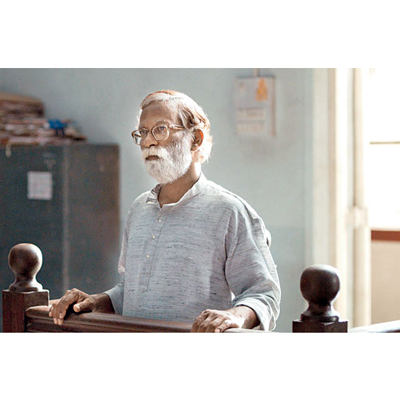
    Vira Sathidar is a shahir, a Marathi folk singer whose forte is to present songs that evoke deprived masses’ feelings and prod them to rise and do something. He is an on the spot singer who starts singing and the crowds gather around him when he starts.

    One day, the police pick him up for inciting a Mumbai sewer worker to commit suicide through a song he sang outside his chawl. The song allegedly provokes all sewer workers to commit suicide. The fact that many a sewer worker die in Mumbai gutters while cleaning because they are contracted labourers, are poorly paid and provided no safety equipment, does not matter to the police nor to the court. They follow the Penal Code. In this case, a law laid down by the British Raj in 19thcentury. While the law has always been about the logic of the time, logic never finds a place in the deliverance of justice by law.

    Vira is lucky to get a lawyer, a Gujarati, Vivek Gomber, who metes out free service through his NGO for such people. He takes up Vira’s case. He is faced with a by-the-book public prosecutor, Geetanjali Kulkarni, who only quotes laws and wants to be done with the case soon as she can; her idea of ending a case is to deliver the accused to a jail. To Vivek’s credit, he is never frustrated nor exasperated by Geetanjali’s ways.

    The case lingers on and on as it happens in Indian courts. The judge, Pradeep Joshi, also goes by the book and does not think the accused deserves bail, so what if he is a senior citizen. The police regularly fails to produce witnesses.

    After years of contesting, Omber finally manages to get a bail for his client. The surety is Rs 1 lakh, which even the judge knows this poet and singer can’t manage but which his benevolent lawyer arranges. Vira, by now, is a sick man suffering from multiple ailments.

    Within a few days of his bail, the police visit him again and arrest him on another charge.

    Court is a grim film when in court room scenes. But the script and direction have made sure it does not remain all grim. The film is about juxtapositions all the way: between the law and the outside world, between the way of life of Maharashtrian schedule caste and literate Maharashtrians, between Maharashtrian and Gujaratis, and between lawyers and government prosecutors deciphering the same laws.

    Though the script is well written, the film takes too much footage to narrate it. Surely, some leisurely shot portions can be edited for better effect. Though Chaitanya Tamhane, may have been indulgent at times, this is a triumph for him as a first-time feature film director. The Marathi inspirational songs are exactly that: inspiring. What Tamhane has done is to bring in families of the lawyer, Omber, as well as the prosecutor, Geetanjali, and these aspects prove to be respites after court scenes rather than distractions. His account of the afterhours of a Marathi family taking to a typical thali restaurant followed by a Ravindra Natya Mandir Marathi drama on an off day compared to the Gujarati lawye’s visit to an upmarket South Mumbai thali joint makes a statement on their way of life. The film deals mainly in Marathi but has some major scenes in Gujarati, English and Hindi.

    While Omber is excellent despite his faulty Gujarati, Geetanjali is fine as a mannequin-like public prosecutor. Vira excels despite limited footage. Pradeep as the judge sends you a message: avoid courts!

    Watching Court is an experience worth having.

    Producer: Vivek Gomber.

    Director: Chaitanya Tamhane.

    Cast: Vira Sathidar, Vivek Gomber, Geetanjali Kulkarni, Pradeep Joshi.