Tag: Counterpoint Research

  • Global TV shipments rise for second quarter in a row in Q3 2024

    Global TV shipments rise for second quarter in a row in Q3 2024

    MUMBAI: This is one piece of research that deserves closer attention. Global market research firm Counterpoint Research data around a week ago showed that TV shipments have maintained their buoyancy in Q3 2024. The growth year on year for the period was at 11 per cent to  62 million units, which was the second quarter in succession that the TV market showed a rise. Research data also showed that growth was distributed even across all regions, except Japan. East Europe showed the maximum jump at 24 per cent. North America and western Europe also showed healthy growth. 


    Global TV shipments

    Model wise, premium TV sets consisting of OLED, QD LCD, and MiniLED LCD shipments rose 51 per cent year on year, which was an all-time high. A lot of that growth came courtesy the Chinese brands Hisense and TCL, which more than doubled their shipments year on year, climbing to second and third place. Samsung of  course led this segment at 30 per cent, but it lost 13 per centage points of market share to the Chinese brands. Because of the Chinese aggression, LG was pushed to the fourth spot. 

    The premium TV segment saw shipments of MiniLED LCD TVs rising 102 per cent year on year, racing past OLEDs which accelerated by a mere 13 per cent year on year. QD LCD TVs also climbed past four million units –  50 per cent growth year on year.


    Premium TV shipments

    Overall for TV shipments, Samsung Electronics retained its top slot with a 15 per cent market share, but that  had slipped marginally compared to the previous quarter.  HiSense sprinted ahead of TCL by increasing its shipments by 19 per cent. LG was at the fourth spot with a close to 10 per cent share, by shipping out mor  seven per cent more TV sets.

    Counterpoint Research researcher Lim Soo-jung said, “In the TV market where replacement demand is the main issue, the fact that there has been year on year growth for two consecutive quarters can be interpreted as a shortened replacement cycle,” adding, “As TV companies continue to release new high-definition, large-screen models, it stimulates consumer purchases for users who want to enjoy videos on a larger screen at home.”


  • Glance’s active user base crosses 160 million in India

    Glance’s active user base crosses 160 million in India

    Mumbai: Lockscreen content platform Glance recorded 163 million active users as of Q3 2021, according to Counterpoint Research’s Quarterly Mobile Application Tracker. Experiencing consistent growth since its inception, its active user base which now consists of 30 per cent of India’s smartphone users, grew by eight per cent QoQ in Q3 of 2021.

    Glance’s presence is highly prominent in the $100- $250 price segment, with nearly two-thirds of the active users coming from this price band. Upper-mid-and-affordable premium ($250 and above) comprises about 20 per cent. Over the past year, the lockscreen content platform has expanded its reach beyond India, and is currently also available on devices across Southeast Asia.

    Glance enables its users to access a wide range of content, including live interactive content, on their smartphone lockscreens. This content is curated from top publishers and developers in India across categories such as sports, current affairs, fashion, travel, food, commerce and entertainment.


    Commenting on the development, Research Analyst Arushi Chawla said, “The lockscreen is the most visited real-estate on a smartphone. It is the first screen users see every time when unlocking their smartphone. Being present on this surface, Glance makes content discovery frictionless and improves the opt-in rate for interactive broadcasting, compared to any other in-app event features that require users to login. Glance’s recent foray into Live, interactive content has also helped it to differentiate itself as a platform and has helped boost user engagement levels.”

    “As per our estimates, about a billion smartphones will be sold in the next five years in India, which brings a huge opportunity for a content platform to expand using Hardware as a Distribution (HaaD) model. Being a multilingual, pre-installed application in many leading smartphone OEMs it serves as a gateway to the latest content for many first-time smartphone users,” she added.

    Glance continues to come up with engaging ways to create stickiness on the platform. With the launch of Glance Live, and a rise in interactive, real-time content, it is progressively bringing newness in content delivery. Content from Roposo’s top creators onto the Glance lockscreen platform has increased content uniqueness as well.

    India is a price-sensitive and highly competitive market for OEMs. In many cases, it directly affects their operating margin and ability to maintain their market position. As the market dynamics are moving from hardware-level competition to providing an overall holistic experience, most of the OEM’s strategy will concentrate on maximising the customer’s lifetime value. In such a scenario long-term loyalty and value creation will depend on providing differentiating over-the-top services. Content will certainly play a key role in developing brand stickiness.

    (The findings are based on a sponsored survey to better understand the brand’s presence in the Indian smartphone market.)

  • boAt audio leads in TWS earphones category: Counterpoint Research

    boAt audio leads in TWS earphones category: Counterpoint Research

    NEW DELHI: Homegrown consumer tech brand boAt Lifestyle has been ranked number one in the True Wireless (TWS) earphones category, as per the latest report by Counterpoint Research (Q3 CY2020). The brand sailed through the pandemic to break all records and has seen 385 per cent growth as compared to Q2 CY2020 in the TWS category.

    According to Counterpoint Research, boAt has captured 18.3 per cent market share (in terms of volume) in the TWS Category (Q3, CY2020), overtaking brands like Xiaomi, Realme, JBL, Apple amongst others to become number one overall. The TWS category has grown by 172 per cent since the earlier quarter, while boAt has grown by 385 per cent during the same period.

    Counterpoint Research analyst Shilpi Jain said, "Aggressive marketing backed with strong product line-up at affordable prices, strong channel partnerships, portfolios across various price tiers and building a strong consumer base are some of the strategies that worked in its favour. Its Airdopes 441 model became the second best-selling model in Q3 2020 with its features like water resistance and up to 25 hours battery life coming at an affordable price point".

    Rise in ‘from Home’ culture like ‘Work from Home’, ‘Study at Home’ and ‘Stadium at Home (with IPL) has acted as a catalyst this festive season for consumers to buy boAt audio products. The rise in sales this year comes on the back of new customers coming in mainly from tier-2 cities at the recently concluded Diwali sales by Flipkart and Amazon. boAt has also witnessed a positive shift in demand for the wireless category. Specifically, in the TWS Earphones (Airdopes) range the brand has created a well-rounded portfolio of products with best in class features like Bluetooth 5.0, IPX capabilities, and long battery life. In January 2020, boAt sold around 40 per cent of wired and 60 per cent wireless products. As of November 2020, the sales for wireless have increased to 70 per cent with wired at 30 per cent.

    boAt audio co-founder Aman Gupta said, “Being an Indian brand boAt understood the requirement of its TG i.e. the millennials who cannot be influenced through traditional marketing strategies but through quality experience. The Counterpoint report is a result of our commitment towards boAtheads, to provide them a product that isn't just fashionable and aspirational but affordable.”

    boAt has been challenging the status quo in a sector dominated by established global brands. It has ramped up quickly in a short span of just over four years, through its core high-quality, smart, efficient, stylish and durable line of audio products.

    The company has witnessed a 20 per cent surge in demand for its products in Covid2019 times and today sells more than 15,000 units a day as against 8,000-10,000 in pre-Covid2019 times.

    In 2019, boAt audio was the leading brand with more than 20 per cent market share in the earwear category as per the market data released by leading IT market research and advisory firm International Data Corporation (IDC) in 2019.

  • India captures second spot globally in smartphone shipments in 2019

    India captures second spot globally in smartphone shipments in 2019

    MUMBAI: Move over US. Now it’s the turn of India, which has just beaten it for the first time on an annual basis to take the second spot as far as smartphon shipments are concerned. In 2019, more than 158 million phones were shipped in the country, registering a seven per cent year on year growth. That means so many more phones consuming video and data on their apps like Hotstar, Zee5, SonyLiv, Voot, Netflix, Prime Video and what have you.

    Market research firm Counterpoint released the data over the weekend. The company said that the sales were spurred by the growth of the mid-tier segment in which Chinese brands introduced many flagship grade features and capabilities, thus luring customers to buy their first or second smartphones. Additionally, the online channels became the preferred selling platforms to introduce these products faster into the market.

    Says Counterpoint Research associate director Tarun Pathak: “Although the rate of growth for the smartphone market was only single digit for the first time on an annual basis, India is underpenetrated relative to many other markets; 4G penetration among subscribers being around 55 per cent. Going forward, we expect this demand to grow further due to the ongoing transition from feature phones to smartphones and progressive diffusion of key smartphone features to the entry-level price tier as a result of hyper-competition among multiple players. We further expect brands to have multi-tier strategies involving partnerships in the mobile ecosystem from hardware, software and services, thus creating opportunities within different segments like entertainment, gaming, financial services and more.”

    While the smartphone market registered YoY growth, the feature phone market saw a steep decline of around 42 per cent YoY in 2019 and 38 per cent YoY in Q4 2019. This is due to a slowdown in new shipments from Reliance Jio. However, the players such as itel, Lava, Nokia and Micromax registered positive annual growth despite the overall segment decline.

  • OnePlus is India’s fastest growing Android smartphone

    OnePlus is India’s fastest growing Android smartphone

    MUMBAI: OnePlus continued its growth in the overall Indian premium Android smartphone segment (above $400) by capturing 48 per cent market share in Q4 2017, as per International Data Corporation’s (IDC) latest Quarterly Mobile Phone Tracker Q4 2017.

    The IDC data also highlights the growing importance of the premium Android smartphone segment that outperformed the overall market with 97 per cent year-on-year growth (vs 54 per cent for overall premium smartphone market and 14 per cent for the overall smartphone market). During 2017, OnePlus grew by a staggering 1116 per cent in the premium smartphone segment as it further strengthened its robust performance in the online market and entrenched itself in the minds of smartphone users in India by consistently staying ahead of players like Apple and Samsung.

    According to the Counterpoint Research report for the last quarter on the Indian handset market, the premium smartphone segment was the second fastest growing segment in CY 2017 driven by the strong performance of OnePlus and Apple.

    Talking about the findings from the Q4 2017 report, Counterpoint Research associate director Tarun Pathak says, “While India’s smartphone market continues to grow in double digits, the premium segment, the category of less than Rs 30,000 is all set to grow faster by 20 per cent  than the overall smartphone market in CY 2018. In such a scenario OnePlus, the fastest growing brand in this segment, is likely to grow as it enjoys a strong brand loyalty in India while positioning itself as a flagship-killer in the segment.”

    OnePlus general manager Vikas Agarwal adds, “It is truly remarkable that OnePlus has become the biggest Android premium smartphone brand within just three years of entering the Indian market. It is a great validation of our user focused approach and online first business model. We are truly humbled and grateful to our business partners and loving community for their continued support.”

    Globally, OnePlus became a $1.4 bn brand in the fourth year of its operation with India as its biggest market, contributing to one-third of the global business. With a single flagship a year product strategy and limited availability (Amazon.in for online and Croma for offline), OnePlus has emerged as the biggest brand in premium Android smartphone segment within just three years of its operations in India.

    With industry leading features like 8GB RAM, dash charging and latest Android Oreo based OxygenOS, the attractively priced OnePlus 5T has become the best-selling premium smartphone with a average product rating of 4.6 which is the highest rating for any smartphone on Amazon.in as on 22 Feb 2018. The recently launched OnePlus 5T Lava Red edition was one of the most popular products on Amazon.in and quickly sold out during the Republic Day and Valentine Day sale events.

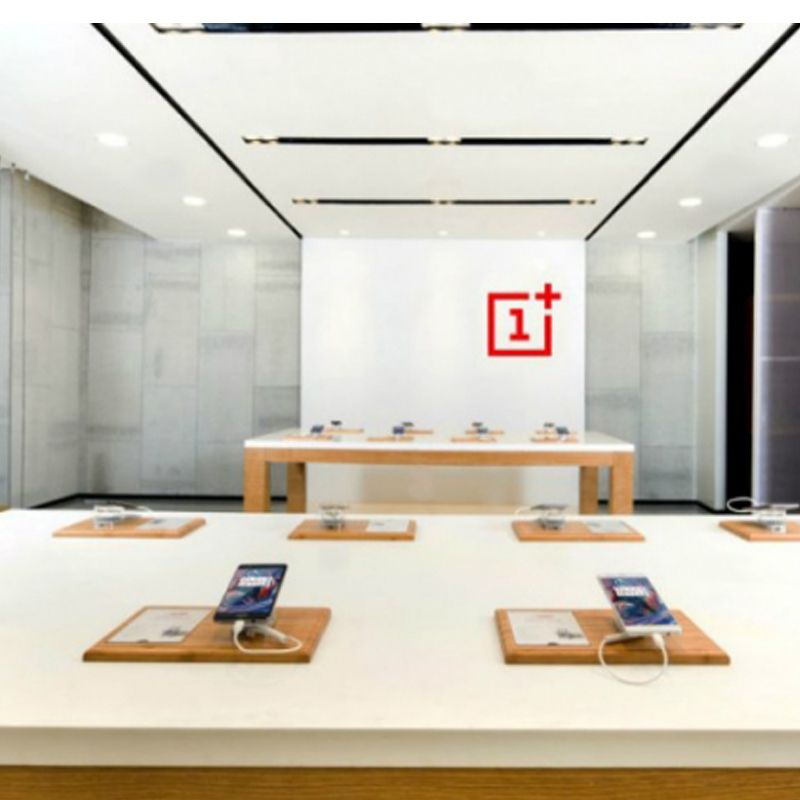
    To further enhance the user experience and complement its online only presence, OnePlus has recently expanded its offline footprint with the launch of its first authorised store in Mumbai. OnePlus has also partnered with Croma to increase the number of physical touch-points and is in the process of opening large format exclusive experience stores across top cities.