Tag: Copyright infringement

  • ANI lawsuit against OpenAI for copyright infringement

    ANI lawsuit against OpenAI for copyright infringement

    MUMBAI: Cheating may seem harmless until the consequences come crashing down—a classic case of “play stupid games, win stupid prizes”.

    Imagine the titan of artificial intelligence, the very force reshaping our understanding of innovation, now standing accused of stepping over the ethical boundaries it once sought to redefine.

    With a jaw-dropping market cap of $157 billion as of October 2024, OpenAI—the so-called savior of human progress—is now grappling with a high-stakes copyright infringement lawsuit filed by Asian News International (ANI) in India.

    This legal clash, steeped in complexity and a touch of irony, pits the ambitions of cutting-edge AI against the enduring principles of intellectual property rights. Could this be a case of progress overstepping its bounds? Or a necessary infringement in the name of human advancement?

    ANI has taken OpenAI to court, accusing the tech giant of unauthorised use of its copyrighted content to train its large language model (LLM). The case not only raises pressing questions about copyright infringement and fair use but also dives deep into the murky waters of territoriality and intellectual property in the age of artificial intelligence. The stakes? Nothing less than the future of AI innovation and creators’ rights in one of the world’s fastest-growing digital economies.

    ANI accused OpenAI of using its copyrighted material without permission and highlighted the inadequacy of OpenAI’s opt-out policy, which ANI claims fails to prevent its content from being scraped through third-party websites. ANI also alleged that OpenAI’s models produced outputs either verbatim or substantially similar to its copyrighted content, further compounding the copyright violation. Additionally, ANI flagged fabricated responses generated by ChatGPT that falsely attributed interviews or news stories to the news agency.

    OpenAI defended its practices by citing fair use, which permits limited use of copyrighted material under specific conditions. It argued that its models do not reproduce content verbatim and that it sufficiently transforms language to comply with copyright exceptions. On fabricated responses, OpenAI stated it resolved issues flagged by ANI and committed to addressing such problems promptly in the future.

    ANI is seeking an interim injunction to prevent OpenAI from storing, publishing, or reproducing its content and has requested a prohibition on accessing ANI’s material through any channel, including subscribers. OpenAI countered by asserting that no legal action could apply within India, as its data processing and model training occur outside the country, with no offices or servers in India.

    The lawsuit brings two critical issues to the forefront: the balance between copyright infringement and fair use, and the challenges of territoriality in data storage. India’s existing copyright law lacks explicit provisions regarding AI training, making the applicability of fair use a grey area. Moreover, the absence of text and data mining (TDM) provisions complicates the country’s approach to fostering innovation while safeguarding content creators’ rights.

    The territoriality argument further underscores complexities in applying local laws to global AI platforms. Data sovereignty issues arise as distributed AI models utilise data generated in India but processed across international cloud environments, challenging traditional legal frameworks.

    Globally, AI platforms and news publishers have clashed over the use of copyrighted material. While some publishers have entered licensing agreements with AI firms, others, such as The New York Times, have pursued legal action. ANI’s lawsuit reflects a broader struggle over how GenAI platforms interact with intellectual property.

    India’s policymakers face the task of balancing innovation in AI with content creators’ rights. A permissionless innovation approach, which allows experimentation with new technologies while addressing harms retrospectively, may provide a pathway for advancing AI while protecting intellectual property.

    This lawsuit will likely serve as a landmark case in determining the accountability of AI developers for content generated by their platforms. As the first legal action of its kind in India, the outcome will influence how AI platforms navigate copyright, fair use, and territorial regulations in the country.

  • Viacom18 secures dynamic injunction order to combat Bigg Boss copyright infringement

    Viacom18 secures dynamic injunction order to combat Bigg Boss copyright infringement

    Mumbai: In a significant legal triumph, Viacom18 has successfully obtained a dynamic injunction order from the Hon’ble Delhi High Court, marking a significant milestone in its unwavering fight against copyright infringement. The order grants Viacom18 the authority to protect from infringement of the ongoing reality shows, including Bigg Boss Hindi, Bigg Boss Kannada and the upcoming Bigg Boss Marathi.

    Bigg Boss, a highly popular reality show celebrated for its distinctive format featuring contestants from diverse backgrounds cohabiting and undertaking challenges for the coveted prize, is broadcast on the Viacom18 network through its COLORS branded Hindi and regional channels and on the JioCinema OTT app.

    The Delhi High Court, in its recent order, directed various rogue and pirate websites to be suspended/locked by respective domain name registrars. The court recognised the immense popularity of the shows in India and acknowledged Viacom18’s right in protecting the content. The order specifically restrains the rogue websites mentioned in the suit and further instructs Internet Service Providers (ISPs), the Department of Telecommunications (DoT), and the Ministry of Electronics and Information Technology (MeITy) to block access to such rogue websites. The order also allows Viacom18 to add any additional infringing websites using the name “Bigg Boss” in their domain or any other websites that are telecasting the program ‘Bigg Boss’ illegally and extend the injunction to such additional websites as well. This action aims to curb piracy and safeguard Viacom18’s substantial investment in producing and broadcasting these shows.

    This dynamic injunction order empowers Viacom18 to enforce its exploitation and broadcasting rights for the upcoming Bigg Boss events, ensuring that infringing activities are promptly addressed.  

    Commenting on the court’s decision, Viacom18 general counsel Anil Lale stated, “The issuance of this Dynamic Injunction Order underscores the court’s profound recognition of the inherent value of content and the pressing need to combat piracy in real-time. The proactive stance taken by the Honourable court provides invaluable support in our continuing fight against piracy.”

  • Copyright infringement: Kross awarded injunction against ‘Pushpaka Vimana’, hearing on 12 Apr

    MUMBAI: The Bombay High Court has issued an ad-interim injunction restraining further exhibition and distribution of the Kannada film, “Pushpaka Vimana” in any manner or in any medium including cinema theatres, television, CDs/DVDs. 

    Kross Pictures is a cross-border film and television production company with offices in Seoul, Los Angeles, and Mumbai. 

    The order restrains the film-makers from awarding any rights in relation to satellite or telecast rights of the film for its exhibition. The Court further directed defendants to disclose to the court the earnings from the film and all contracts with artists involved with the movie.

    The Bombay High Court stated that the Kannada film prima facie appears to be a copy of the Korean film called “Miracle In Cell No. 7” the rights to which are owned by Kross Pictures India. The original film was released on 23rd January 2013, first in Korean and then on Youtube in English in 2014. Kross Pictures had moved the Bombay High Court claiming copyright infringement against the producers of the Pushpaka Vimana. Dr. Birendra Saraf, instructed by Anirudh Rastogi of TRA and Ankita Singh of A&P Partners, appearing for Kross Pictures drew the court’s attention to at least fifteen instances where producer AR Vikhyat  of Vikhyat Chitra Productions has publicly admitted that he ‘adapted’ the screenplay of the Korean film for Pushpak Vimana.

    Kross acquires high-concept and proven intellectual property to produce localized films in different languages.  Kross’s Indian operation started in 2015, and has produced the 2016 Hindi film “TE3N” which is based on the Korean film “Montage”, and is currently producing “Suspect X” (directed by Sujoy Ghosh) for Amazon India.

    The court order can be seen here:

  • Matrix directors sued for alleged copyright infringement

    Matrix directors sued for alleged copyright infringement

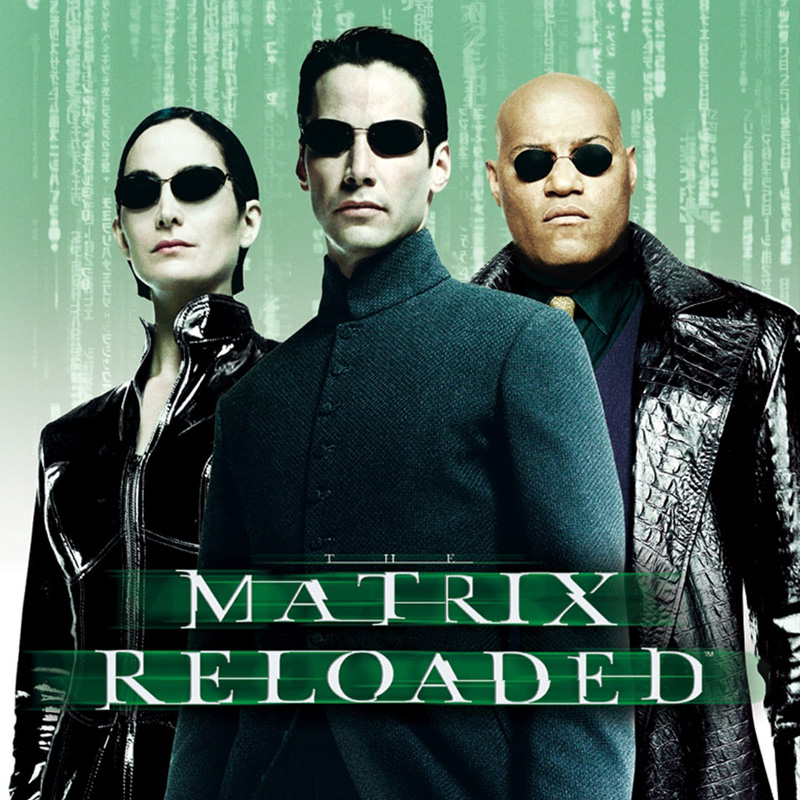
    MUMBAI: Andy and Lana Wachowski, the writer-director duo behind films like The Matrix Reloaded and The Matrix Revolution are being sued for USD 300 million by a writer who claims that the siblings stole his idea.

    Hawaii-based writer Thomas Althouse has filed a lawsuit against the siblings, along with Joel Silver and Warner Bros in a Federal Court for copyright infringement. Althouse is representing himself in the case, it is understood.

    Althouse claims that the two films were based and formulated in substantial part upon his screenplay. He has further accused all defendants of willfully infringing on his copyright for purposes of commercial advantage.

    In his complaint, the Hawaiian born says that he wrote a screenplay titled The Immortals that was registered with the Writers Guild of America in 1993 and copyrighted with the US Copyright Office in 1996.

    He also claims that he subsequently submitted his screenplay to Warner Bros through his attorney in 1993 and the studio acknowledged receipt of his play at that time.

    Although the ‘Matrix‘ sequels released in 2003, Althouse says he didn‘t see the films until 2010, and it was then that he began investigating the similarities.