Tag: Copyright Act

  • SC upholds TRAI Act over Copyright Act in tariff order case

    SC upholds TRAI Act over Copyright Act in tariff order case

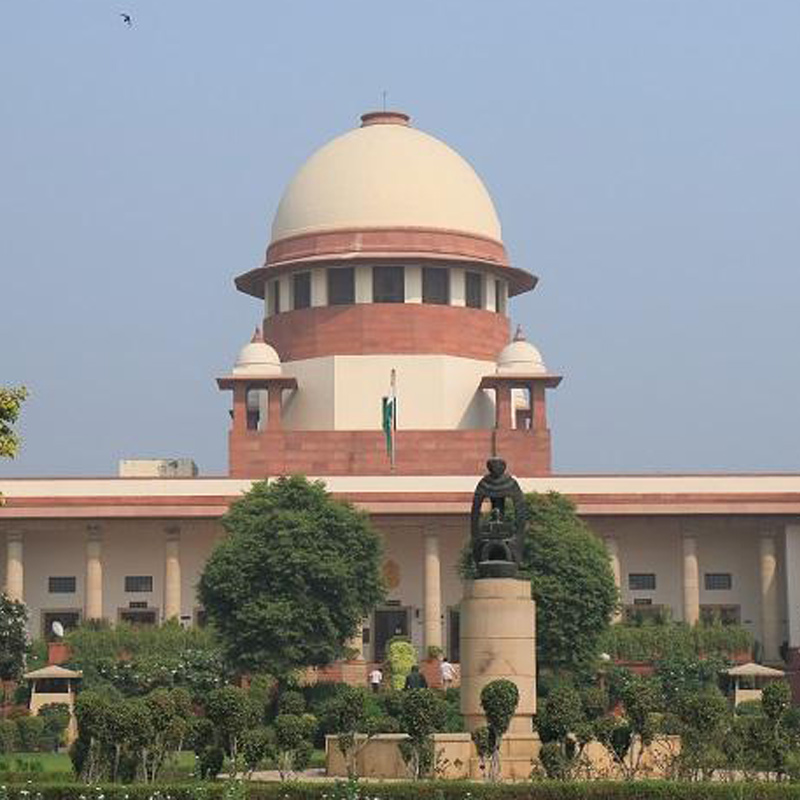
    MUMBAI: The two-judge bench of the apex court with Justices Rohinton Fali Nariman and Navin Sinha dismissed the Star India’s appeal against Telecom Regulatory Authority of India’s (TRAI) recent tariff order. The principal area of the argument by the broadcaster was that the pricing of the content cannot be regulated by TRAI as it comes under the Copyright act. The verdict has clearly pronounced that the as TRAI Act is in public interest, it should prevail over the Copyright Act.

    “The best way in which both statutes can be harmonised is to state that the TRAI Act, being a statute conceived in public interest, which is to serve the interest of both broadcasters and consumers, must prevail, to the extent of any inconsistency, over the Copyright Act which is an act which protects the property rights of broadcasters. We are, therefore, of the view that, to the extent royalties/compensation payable to the broadcasters under the Copyright Act are regulated in public interest by TRAI under the TRAI Act, the former shall give way to the latter,” the Supreme Court order said.

    The 123-page judgment read that a copyright is meant to protect an owner’s work (original or re-broadcasted) and isn’t concerned with the interest of the end user or consumer and hence does not fall under the purview of the Copyright Act. It is the TRAI Act that needs to focus on the consumers’ interest.

    The Supreme Court added that the Copyright Act will operate within its own sphere giving broadcasters full flexibility to change royalty or compensation. On the other hand, TRAI does not, in substance, impinge upon these acts. It even observed that broadcasters have freedom to provide their own choice of content and arrange their own pricing as long as they aren’t discriminatory or force subscribers to choose either bouquets or a-la-carte.

    In the Supreme Court order, it was also noted that one of the functions of the authority, is to “facilitate competition and promote efficiency in the operation of telecommunication services (which includes broadcasting services) so as to facilitate growth in such services.”

    The tariff order has been the subject matter of extensive discussions between TRAI, all stakeholders and consumers. The order read further that the focus of TRAI has always been to provide a level playing field to both broadcaster and subscriber.

    Though the impending ruling led to lack of clarity, all the major broadcasters published their Reference Interconnect Offers along with the line of the order. As Star India was the petitioner, it did not publish its RIO.

    “The SC order has empowered consumers across the nation. While the overall media and entertainment landscape has been evolving rapidly, it is for the first time in 26 years that such a strong and positive step has been taken to eradicate the lack of transparency in the cable and broadcast value chain,” ZEE and Essel Group chairman Subhash Chandra commented.

    “This is the watershed moment we have all been waiting for. We feel that the new framework will bring in much needed transparency, parity, promote exercising of choice for the consumer and ensure orderly growth of the sector. The onus is now on all service providers to put their best foot forward and keep consumer interest in mind by complying with the required initial timelines and activities at the earliest,” AIDCF president Rajan Gupta said.

    While along the same line TRAI chairman RS Sharma said it is a big win for consumers as per a PTI report, the verdict undoubtedly has far-reaching impact in broadcast industry.

    Earlier in the Madras High Court, division bench consisting of Justice M Sundar J and Chief Justice Indira Banerjee gave a spilt verdict. While M Sundar’s ruling was in favour of Star India, a third judge upheld the tariff order except certain riders.

  • TRAI jurisdiction case listed for 31 July to peruse compliance report

    NEW DELHI: The Madras High Court has listed for 31 July 2017 the Star India-Vijay TV’s challenge to jurisdiction of the Telecom Regulatory Authority of India after the latter said it would file its written submission only after scrutinising those of the broadcasters.

    Counsel for both the broadcasters objected to the statement by TRAI Counsel P Wilson refusing to file and serve written submissions.

    After hearing all sides, the bench directed the broadcasters to serve their submissions by 5 pm today to TRAI and the interveners All India Digital Cable Federation and Videocon d2h.

    It asked TRAI to serve its submissions on the other parties tomorrow. Thereafter, the Court will on Monday take note of the compliance of submission of the written statements from the court registry.

    Meanwhile, both interveners filed their submissions in Court today.

    Arguments had concluded in the matter on 19 July and the matter had been posted for today for filing of written submissions.

    Star India and Vijay TV’s challenge to the jurisdiction of TRAI to issue tariff orders is on the ground that content comes under the Copyright Act.

    In the hearing on 19 July 2017, the Court had refused to accept an affidavit by the Indian Broadcasting Foundation..

    Although the Supreme Court had in early May while staying the tariff order directed the Madras High Court to complete hearing within four weeks, the High Court had commenced hearing only in the last week of June.

    Meanwhile, TRAI TV reference interconnect offer (RIO) and Quality of service order (QoS) came into effect from 2 May following the order of the High Court. (However, the Tariff order comes into effect only from 2 September 2017.)

    Apart from the Tariff order which had originally been issued on 10 October last year, the regulator also issued the DAS Interconnect Regulations which had been issued on 14 October last year, and the Standards of Quality of Service and Consumer Protection (Digital Addressable Systems) Regulations which had been issued on 10 October last year.

    The orders can be seen at:
    http://trai.gov.in/sites/default/files/Tariff_Order_English_3%20March_2017.pdf
    http://www.trai.gov.in/sites/default/files/QOS_Regulation_03_03_2017.pdf
    http://www.trai.gov.in/sites/default/files/Interconnection_Regulation_03_mar_2917.pdf 

    Also Read:

    Decks cleared for TRAI tariff order implementation as HC declines stay (updated)

    Star India case questioning TRAI jurisdiction over content postponed 

  • Hearing to end next week in Madras HC on Star India challenge to TRAI Tariff order

    NEW DELHI: The Madras High Court was today told by Telecom Regulatory Authority of India counsel Saket Singh the reasons for moving from analogue to digital and the necessity of the new tariff order.

    Concluding his arguments in the petition by Star India and Vijay TV challenging the jurisdiction of TRAI to issue tariff orders on the ground that content came under the Copyright Act, Singh said digital addressable system had led to greater transparency leading to the subscriber base going up, which led to higher advertising revenue.

    While adjourning the matter for 17 July, the Court indicated that arguments will commence on behalf of intervenors All India Digital Cable Federation and Videcon d2h. This will be followed by rejoiner arguments by the petitioners, after which the court will reserve its orders.

    Singh said the aim was to create level playing field for rates to distributor platforms  and give an effective and informed choice to the consumer.

    The new tariff had asked broadcasters to declare their minimum retail price per channel to consumers and give a la carte price for pay channels. This would give greater cChoice to consumer.

    The bench asked why HD and SD cHannels could not be regulated in the same bouquet. Singh also wondered why broadcasters are using this as one of the contentions as they themselves during the consultation process wanted HD and SD to be separated. They had also said so in their responses to the consultation paper on the subject.He said that the channels at that stage had only wanted the free-to-air and pay channels to be in separate boiuquets.

    Singh showed to the court the broadcasters comments during consultation process.

    He said prior to the tariff order, broadcaster would sell distribution right to multi-system ioperators at wholesale prices level and MSOs would accordingly sell to the consumers. Thus the consumer had no direct link to pricing.

    The new tariff had taken away the power of distributors in terms of pricing and that has been given to the broadcaster. Hence they are the master of their channel and can price the consumer accordingly.

    The consumer also got the right to refuse to pay for channels he did not watch. Singh also explained the concept of carriage fee.

    Although the Supreme Court had in early May while staying the tariff order directed the Madras High Court to complete hearing within four weeks, the High Court had commenced the in the last week of June.

    The hearing had commenced with the pleadings of counsel for the petitioners.

    Meanwhile, TRAI TV reference interconnect offer (RIO) and Quality of service order (QoS) came into effect from 2 May following the order of the High Court.

    In the hearing in April-end, it had said Section 3 of the Tariff order and all other consequences of such implementation/enforcement would be subject to the outcome of the main petition.

    Apart from the Tariff order which had originally been issued on 10 October last year, the regulator also issued the DAS Interconnect Regulations which had been issued on 14 October last year, and the Standards of Quality of Service and Consumer Protection (Digital Addressable Systems) Regulations which had been issued on 10 October last year.

    The orders can be seen at:
    http://trai.gov.in/sites/default/files/Tariff_Order_English_3%20March_20…
    http://www.trai.gov.in/sites/default/files/QOS_Regulation_03_03_2017.pdf
    http://www.trai.gov.in/sites/default/files/Interconnection_Regulation_03…

    Also Read

    Decks cleared for TRAI tariff order implementation as HC declines stay (updated)

    Star India case questioning TRAI jurisdiction over content postponed
     

  • Chief Justice of MHC to hear Star India case against TRAI under Copyright Act

    NEW DELHI: The case by Star India and Vijay TV challenging the jurisdiction of the Telecom Regulatory Authority of India in the matter of tariff orders, which has taken surprising turns with three judges recusing themselves from the hearings, Is now coming up anew for hearing before the Chief Justice Indira Banerjee of the Madras High Court on 24 April.

    The All India Digital Cable Federation has filed its intervention in the case which has been filed as a fresh petition by Star India and Vijay TV and it has been numbered WP MP 11131/2017.

    The fresh petition became necessary as the matter is being heard afresh by the Chief Justice. Star India SVP – Legal and Regulatory – Pulak Bagchi confirmed that while the primary case remained on the grounds of the Copyright Act remained the same, a new petition had been filed because it was coming up before the Chief Justice.  

    The case had taken a surprising turn early this month the two judges — Justice S Nagamuthu and Justice Anita Sumanth –  recused themselves from the case and referred it to the chief justice for being referred to another bench. Another judge — Justice Govind Rajan — also recused himself earlier this week.

    Though it was not clear, it appeared that the two judges had received a letter which prompted them to withdraw from the case.

    The petition had been filed by Star India and Vijay TV under the Copyright Act on the ground that TRAI could not give any directive that will affect the content since that did not fall in its purview.

    Last month, Star India and Vijay TV decided not to press for their pleas for extension of the tariff order following TRAI’s announcement that its tariff regulations which were slated to come into effect on 2 April were being deferred to 2 May 2017. The court had fixed the matter for further hearing on 3 April even as TRAI counsel commenced his arguments following the conclusion of the arguments by the broadcasters over two days commencing last Friday.

    Earlier, on 3 March, the regulator had issued three regulations after getting a directive from the Supreme Court on its appeal against a stay granted by the Madras High Court. While granting the appeal, the apex court also asked the high court to conclude hearing in 60 days.

    Apart from the Tariff order which had originally been issued on 10 October last year, the regulator also issued the DAS Interconnect Regulations which had been issued on 14 October last year, and the Standards of Quality of Service and Consumer Protection (Digital Addressable Systems) Regulations which had been issued on 10 October last year. The orders can be seen at:
    http://trai.gov.in/sites/default/files/Tariff_Order_English_3%20March_20…
    http://www.trai.gov.in/sites/default/files/QOS_Regulation_03_03_2017.pdf
    http://www.trai.gov.in/sites/default/files/Interconnection_Regulation_03…

    Following these regulations, the broadcasters had filed an amended petition and TRAI had also replied to the same last week. Concluding his arguments for the broadcasters, senior counsel P Chidambaram argued that TRAI’s action of fixing tariff for TV content was in violation of the Copyright Act. He also submitted that TRAI did not have the jurisdiction to fix tariff since the exploitation of IPR was part of the Copyright Act.

    Also Read: 

    Star – TRAI copyright case: In dramatic turn, Madras HC judges withdraw

  • TRAI tariff: Madras HC extends status quo; SC to hear regulator’s appeal on 16 Jan

    TRAI tariff: Madras HC extends status quo; SC to hear regulator’s appeal on 16 Jan

    NEW DELHI: The Madras High Court today extended to 19 January 2017 the status quo with regard to any TRAI tariff orders or regulations for the broadcast sector in a case by Star TV and Vijay TV.

    Meanwhile, the Supreme Court is scheduled to hear on 16 January 2017 the appeal by the Telecom Regulatory Authority of India against this interim order issued last month by Madras HC.

    In the Madras High Court, the broadcasters had sought to argue that the TRAI orders are in conflict with the Copyright Act 1957. As a result of that court order and pending the full hearing of the case, TRAI would not be able to pass any guideline for issues such as broadcast tariff, broadcast interconnect, and quality of services.

    A TRAI spokesperson said that although it was still waiting to receive the order from the Court, one immediate result would be that the draft tariff and interconnect guidelines issued by the regulator will be subject to the order of the High Court in this regard unless the apex court accepted the regulator’s appeal.

    A few months ago, TRAI had issued draft guidelines on tariff interconnect and quality of service, while TRAI chairman RS Sharma had told indiantelevision.com earlier this month that the regulator would come out with its final recommedation by the end of the year.

    It may be recalled that the Indian Broadcasting Foundation had also said in a submission to TRAI that the regulator’s draft guidelines were in direct conflict with the provisions of the Indian Copyright Act and similar regulations under the Berne Convention.

    The IBF had said the Copyright Board is fully empowered to adjudicate upon disputes between any person and Content or Broadcast Reproduction Rights owners. Hence the Copyright Act and Rules provide for protection, monetisation, enforcement and adjudication procedures for all copyrightable work and broadcast reproduction rights.

    Also read: Maintain status quo on broadcast guidelines, Madras HC tells TRAI

  • TRAI tariff: Madras HC extends status quo; SC to hear regulator’s appeal on 16 Jan

    TRAI tariff: Madras HC extends status quo; SC to hear regulator’s appeal on 16 Jan

    NEW DELHI: The Madras High Court today extended to 19 January 2017 the status quo with regard to any TRAI tariff orders or regulations for the broadcast sector in a case by Star TV and Vijay TV.

    Meanwhile, the Supreme Court is scheduled to hear on 16 January 2017 the appeal by the Telecom Regulatory Authority of India against this interim order issued last month by Madras HC.

    In the Madras High Court, the broadcasters had sought to argue that the TRAI orders are in conflict with the Copyright Act 1957. As a result of that court order and pending the full hearing of the case, TRAI would not be able to pass any guideline for issues such as broadcast tariff, broadcast interconnect, and quality of services.

    A TRAI spokesperson said that although it was still waiting to receive the order from the Court, one immediate result would be that the draft tariff and interconnect guidelines issued by the regulator will be subject to the order of the High Court in this regard unless the apex court accepted the regulator’s appeal.

    A few months ago, TRAI had issued draft guidelines on tariff interconnect and quality of service, while TRAI chairman RS Sharma had told indiantelevision.com earlier this month that the regulator would come out with its final recommedation by the end of the year.

    It may be recalled that the Indian Broadcasting Foundation had also said in a submission to TRAI that the regulator’s draft guidelines were in direct conflict with the provisions of the Indian Copyright Act and similar regulations under the Berne Convention.

    The IBF had said the Copyright Board is fully empowered to adjudicate upon disputes between any person and Content or Broadcast Reproduction Rights owners. Hence the Copyright Act and Rules provide for protection, monetisation, enforcement and adjudication procedures for all copyrightable work and broadcast reproduction rights.

    Also read: Maintain status quo on broadcast guidelines, Madras HC tells TRAI

  • TRAI draft tariff order skewed in favour of DPOs, will harm industry: IBF

    TRAI draft tariff order skewed in favour of DPOs, will harm industry: IBF

    NEW DELHI: The Indian Broadcasting Foundation (IBF), an apex body of broadcasting companies, has criticised sector regulator TRAI for over-regulating and proposing draft guidelines on tariff and interconnection that are skewed in favour of distribution platform operators (DPOs).

    Responding to Telecom Regulatory Authority of India (TRAI) draft orders relating to tariff, inter-connections and quality of service, IBF said the new regime will lead to “de-growth” of the industry and discourage investments and production of good quality content in the television industry.

    Pointing out that the proposed regulatory regime “regresses rather than advances”, IBF in a lengthy reply has said with over 830 channels for consumers to choose from and a large pubcaster offering of over 100 private and public TV channels, whether there a “need to regulate all aspects of a set of 200 odd pay TV channels”.

    “The question for the Authority would be, is there proven evidence of market failure that a dire need has arisen to over-regulate these 200 odd pay TV channels(?). We are of the firm belief that there is no compelling reason to regulate these channels and, accordingly, only a light touch regulation, if at all, ought to have been proposed,” IBF has submitted justifying its criticism of  draft  guidelines.

    Contending that pay TV channels (read cable and DTH services) were not essential services IBF counters there was no compelling reason to regulate these channels. “The present tariff order is based on the ‘erroneous premise’ that pay TV channels are essential services,” the broadcasting industry body said.

    Citing international copyrights and IPR laws, IBF pointed out that whole exercise undertaken by TRAI was in direct conflict with the provisions of the Indian Copyright Act, 1957.

    According to IBF, the proposed tariff and inter-connect orders conflict with the Copyright Act in the following ways and need to be “harmonised”:

    a.       The proposed tariff order(s) that impose restrictions on nature of content, prices of channels, mandated discount caps and commissions, manner of offering, etc have to be reviewed and modified in the light of specific copyright laws providing freedom to broadcast organisations to charge royalties and any other consideration/fees for their works and BRR in accordance with the market demands and contract laws.

    b.      The draft interconnect regulations issued by TRAI that take away the broadcast organisations’ exclusive rights to deal and imposes restrictions on their contractual abilities and takes away their ability to negotiate the terms of trade need to be reviewed and modified to harmonise the same with the provisions of the Copyright Act pertaining to voluntary licensing and assignments by Broadcast Organisations by permitting mutual negotiations.

    c.       The existing commercial tariff orders and regulations issued by TRAI in relation to commercial establishments is also at odds with copyright laws in as much as the Copyright Act clearly provides broadcast organisations the right to charge differential rates of royalties and license fees on commercial establishments vis-a-vis domestic/residential subscribers.

    Going a step further, IBF has raised questions over transparency and the manner in which draft guidelines were issued: “The draft consultations also do not meet the threshold of transparency mandated by Section 11(4) of the TRAI Act 1997, which requires that the Authority will ensure transparency while exercising its powers and discharging its functions.”

    Also Read:

    TRAI unlikely to take final call on draft orders soon

  • TRAI draft tariff order skewed in favour of DPOs, will harm industry: IBF

    TRAI draft tariff order skewed in favour of DPOs, will harm industry: IBF

    NEW DELHI: The Indian Broadcasting Foundation (IBF), an apex body of broadcasting companies, has criticised sector regulator TRAI for over-regulating and proposing draft guidelines on tariff and interconnection that are skewed in favour of distribution platform operators (DPOs).

    Responding to Telecom Regulatory Authority of India (TRAI) draft orders relating to tariff, inter-connections and quality of service, IBF said the new regime will lead to “de-growth” of the industry and discourage investments and production of good quality content in the television industry.

    Pointing out that the proposed regulatory regime “regresses rather than advances”, IBF in a lengthy reply has said with over 830 channels for consumers to choose from and a large pubcaster offering of over 100 private and public TV channels, whether there a “need to regulate all aspects of a set of 200 odd pay TV channels”.

    “The question for the Authority would be, is there proven evidence of market failure that a dire need has arisen to over-regulate these 200 odd pay TV channels(?). We are of the firm belief that there is no compelling reason to regulate these channels and, accordingly, only a light touch regulation, if at all, ought to have been proposed,” IBF has submitted justifying its criticism of  draft  guidelines.

    Contending that pay TV channels (read cable and DTH services) were not essential services IBF counters there was no compelling reason to regulate these channels. “The present tariff order is based on the ‘erroneous premise’ that pay TV channels are essential services,” the broadcasting industry body said.

    Citing international copyrights and IPR laws, IBF pointed out that whole exercise undertaken by TRAI was in direct conflict with the provisions of the Indian Copyright Act, 1957.

    According to IBF, the proposed tariff and inter-connect orders conflict with the Copyright Act in the following ways and need to be “harmonised”:

    a.       The proposed tariff order(s) that impose restrictions on nature of content, prices of channels, mandated discount caps and commissions, manner of offering, etc have to be reviewed and modified in the light of specific copyright laws providing freedom to broadcast organisations to charge royalties and any other consideration/fees for their works and BRR in accordance with the market demands and contract laws.

    b.      The draft interconnect regulations issued by TRAI that take away the broadcast organisations’ exclusive rights to deal and imposes restrictions on their contractual abilities and takes away their ability to negotiate the terms of trade need to be reviewed and modified to harmonise the same with the provisions of the Copyright Act pertaining to voluntary licensing and assignments by Broadcast Organisations by permitting mutual negotiations.

    c.       The existing commercial tariff orders and regulations issued by TRAI in relation to commercial establishments is also at odds with copyright laws in as much as the Copyright Act clearly provides broadcast organisations the right to charge differential rates of royalties and license fees on commercial establishments vis-a-vis domestic/residential subscribers.

    Going a step further, IBF has raised questions over transparency and the manner in which draft guidelines were issued: “The draft consultations also do not meet the threshold of transparency mandated by Section 11(4) of the TRAI Act 1997, which requires that the Authority will ensure transparency while exercising its powers and discharging its functions.”

    Also Read:

    TRAI unlikely to take final call on draft orders soon