Tag: Copyright

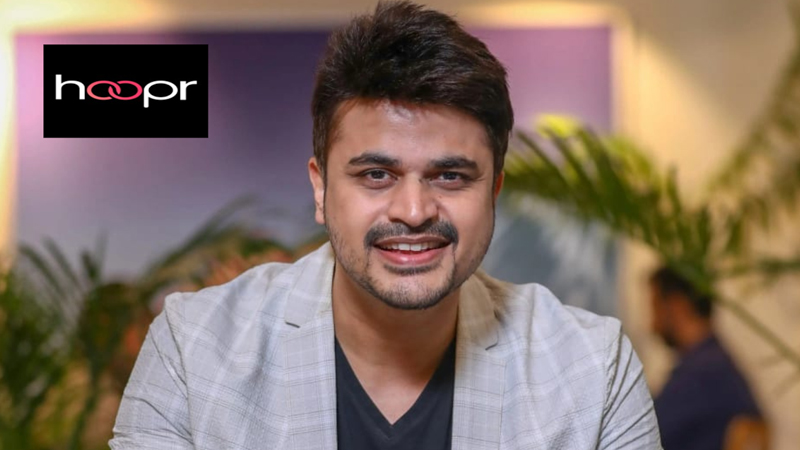
  • “We aim to build a vast catalog with the best quality music in the world:” Hoopr.ai’s Gaurav Dagaonkar

    “We aim to build a vast catalog with the best quality music in the world:” Hoopr.ai’s Gaurav Dagaonkar

    Mumbai: In a world where music elevates every visual experience, the quest for the right soundtrack is crucial yet challenging. Finding music that not only resonates with your project but also adheres to copyright laws can be a complex task for creators and businesses alike. As digital content grows exponentially, the need for accessible, high-quality, and copyright-safe music is more pressing than ever.

    This is where innovative solutions by Hoopr.ai come into play. Founded by music director and entrepreneur Gaurav Dagaonkar, Hoopr.ai offers a comprehensive solution to the music licensing puzzle. Combining Dagaonkar’s engineering precision with his deep music industry experience, Hoopr.ai provides India’s largest library of original, copyright-safe tracks. The platform bridges the gap between creators and high-quality music, making it easier than ever to enhance content with the perfect soundtrack.

    Delving deeper, Indiantelevision.com caught up with Hoopr.ai co-founder & CEO Gaurav Dagaonkar to know more about his music career, Hoopr’s inception, growth strategies, projects and initiatives, and more…

    Edited Excerpts:

    On the inspiration to start Hoopr.ai, and your background in music and business shaping its development; Also the key challenges you faced, and how did you overcome them

    I did my engineering from Mumbai and my MBA from IIM Ahmedabad. This period of time really shaped my interest, inclination and exposure to music. Engineers are known to have a ‘jugaad’ or let’s-automate-it approach in life and coming from a premier business institute like IIMA, I was strongly instilled with business values where I got an opportunity to interact with some stellar peers, faculty and industry leaders.

    I started my music career in 2007 and continued it till 2017. In these 10 years I realised that as a composer what was the legacy that I was building. The music and entertainment field can be quite short-lived as new talent comes in everyday and trends change at the drop of a hat. What is it that I can create which will be solely mine?

    That’s when my co-founder, Meghna and I started Songfest in 2017. Songfest specialised in creating viral ads and campaigns for brands using music as a vehicle to build long-lasting and high-recall communication for the brand.

    A few years into working on Songfest, we realised that not every brand can afford a large campaign but they may want to explore music as a strategy for their brands. This was also the unfortunate period when Covid struck and marketing budgets took a hit. Yet, digital content creation sky-rocketed with everyone aspiring to make content digitally. The OTT content boom also happened in this period. We felt that this was a massive opportunity. The Indian market clearly lacked a good music platform for copyright-safe music and there was a dearth of high-quality original Indian music on the existing platforms. That is how the idea of Hoopr was born in 2022. Today, two years later, we are India’s largest music library with over 12500 tracks, 6500 plus music artists working with us and 220,000 creators using our platform.

    On Hoopr.ai differentiate itself from other music licensing platforms in the market

    In the Indian market, Hoopr is a first-mover and a first-of-its-kind platform. There are several platforms available for stock music and royalty-free music. However, Hoopr is the only platform that covers a diverse range of original, high-quality Indian sounds, background music, instrumentals and soundtracks in multiple Indian languages.

    For filmmakers, creators and brands, Hoopr becomes a one-stop solution for all their music needs – whether generic or bespoke.

    We also work with a vast network of 220,000 plus creators via our music platform and hence we are equally capable of amplifying music and messaging through our platform, which is not available on any other platform currently.

    We like to believe that we stand at the cusp of music, technology and community.

    On Hoopr.ai supporting musicians in monetising their music, and the opportunities it offers them

    I have worked as a singer-composer in the Indian music industry and continue to be associated with it for over 15 years now. I have realised that the music market is vastly driven by Bollywood or film music which is managed by labels and they are all at the end of the day for-profit companies looking to make profits on big releases. Due to this, they tend to get into a zone where they keep making more of what sells – the same type of songs, same artists and this makes breaking into the mainstream music scene very difficult for independent artists.

    Hoopr provides a fair and equal platform for such artists. Doesn’t matter where they are based and what genre of music they make. As long as they are able to produce music that is original, platform-friendly and high quality, we are thrilled to work with them.

    We are proud to state that today Hoopr has a network of over 6500 artists that we commission music from for our platform. This includes sound engineers, producers, singers, instrumentalists, etc.

    On some success stories where Hoopr.ai significantly impacted a content creator or musician’s project

    Yes, we are very proud of the work we have done with some top creators such as Chef Ranveer Brar, Tanya Khanijow and Gaurav Taneja (Flying Beast).

    All of Ranveer’s content on social media is backed by copyright-safe music from Hoopr.

    We also did a fabulous bespoke song for Gaurav Tanejas’s Desh ka Dhoni video called Zidd Hai.

    With Tanya Khanijow we collaborated with an exclusive Hoopr track called Safar Anjana.

    There are many such stories to mention.

    On your innovative music contests like ‘Retro Reimagined’ and ‘Sing to Sync’ and these contests contributing to the growth and engagement of Hoopr.ai’s community of musicians and content creators

    Sing2Sync is a platform-led property that we built that allows brands or labels to use our artist community to commission new tracks or create UGC recreations of their cult songs or language variations of their legacy soundtracks.

    Retro Rewind was one such successful execution for a large music label, Universal Music Group. The mandate was to crowdsource multiple recreations of their cult track, Baahon ke Darmiyaan, from the classic film Khamoshi. They wanted to expand their existing catalog by adding innovative recreations. They also wanted to buy out the top five tracks and add it to their prolific catalog.

    We executed this activity over a span of 90 days. The first step was to create an engaging contest page, which was promoted on social media and with our existing community of 6500 plus artists. We received close to 10,000 registrations, and 1270 submissions of which 160 songs qualified in the screening. We shortlisted the top 14 tracks for selection to the UMG panel. An esteemed panel from Hoopr and UMG jointly judged the shortlisted 14 tracks and finally UMG actually took home eight creations instead of the original commitment of five tracks.

    On the upcoming projects or contests that Hoopr.ai has in the pipeline, and are there any new initiatives you’re working on as a music director

    While we are not at liberty to discuss the details of upcoming projects, I can tell you that there are some major brand projects in the pipeline from some gigantic brands which you will see individual announcements about in the coming months.

    Apart from that there are some major strides that Hoopr is poised to take in the music licensing industry but I would like to speak about it when the time is right.

    I do miss my music as most of my time is now devoted to being a full-time CEO and running a company but yes there will be some interesting pursuits on that front as well.

    On the trends you see emerging in the music licensing industry, and Hoopr.ai’s positioning to capitalise on them

    There are a bunch of macro trends that are shaping the licensing landscape in India as we speak. The first of those being the music streaming stats in India which seem to be doubling every three years. In 2020, India was streaming 230mn music streams, and today in 2024 that number stands at 470mn. Today 80 per cent of the top trending videos across YouTube are music videos. Globally, music has become the highest form of content that is being consumed and it also has a high repeat value unlike other formats.

    Music labels and artists are becoming increasingly aware and alert of the loss of monetisation that they incur every time their music is being used without proper licensing or remuneration. Hence, we’ve seen them coming down hard on brands that use their music in an unauthorised manner and we’ve seen massive brands being engaged in legal battles that result in loss of goodwill and huge legal penalties.

    Lastly, the meteoric rise in the size of the creator market in India, which is growing at a CAGR of 20 per cent year on year. The current size of this marketing in India is three to five million at a pessimistic best. Of these, only the top 1.9 per cent are able to monetise their content. One major reason for this is the lack of awareness around the use of copyrighted music for their content.

    Hoopr works are the intersection of music, technology and community where by using our platform, brands can have access to copyright-safe music which will save them precious legal dollars, and creators can effectively monetise their content without fear of take-downs. And all of this is driven by a tech-first platform.

    On your future plans for Hoopr.ai and its growth in the next few years

    We envision a geography-agnostic, platform-led, tech-driven marketplace ecosystem where music artists, creators, and brands exist and thrive. This marketplace will give artists the opportunity to collaborate with other artists, secure brand deals and employ creators for digital amplification.

    For creators, this becomes a one-stop shop to secure brand deals and promotional projects that help them monetize their channels all while having access to the highest quality of original, copyright-free music.

    For brands, this becomes a turn-key solution, where they can license sounds and music for their brand, collaborate with artists for bespoke solutions and use Hoopr’s creator-verse to amplify their brand messaging.

    At some point, Hoopr also envisions itself as a massive, platform-led label with the best musical talent on its roster and the default tech platform for all music monetisation and licensing needs for all independent artists or full-blown labels in the music industry. We aim to build a vast catalog with the best quality music in the world. There will come a day when Hoopr will be synonymous to Google for music search. We want people looking for music to just Hoopr it!

  • PPL & Novex: The music royalty collection question

    PPL & Novex: The music royalty collection question

    Mumbai: Are music royalty collecting agencies like Novex Communications and Phonographic Performance Ltd (PPL) entitled to collect performance royalties on behalf of their clients from organisations such as hotels and others? Well, the Bombay high court (court) has adjudicated (decision) that they are in a bunch of matters, namely Novex Communications vs Trade Wings Hotels Ltd, Comip suit No. 264 of 2022 and others (said matters), despite them not being registered as a copyright society. A single judge bench passed a detailed judgement on 24 January 2024 in favour of the two (plaintiffs).

    In 2022, the duo had filed a bunch of suits against various third parties (defendants) seeking injunctions against them from using the sound recordings, wherein the former own copyright by way of assignments from the respective producers (said songs), without obtaining licences from the plaintiffs.

    The defendants raised a preliminary issue that the PPL and Novex cannot carry on the business of licensing without being registered as a copyright society under section (s.) 33 of the Copyright Act, 1957 (“Act”).

    Rival contentions:

    Plaintiffs inter alia contended the following:

    (i) As per s.18(2), Plaintiffs being the assignees are the owners of copyright in the said songs. Further, as per  s.30, the Plaintiffs, being the owners / duly authorised agents of the owners, are entitled to grant licenses;

    (ii) Relying on compulsory license and statutory license provisions under s. 31A to D, Plaintiffs contended that these provisions do not mention copyright societies which implies that copyright licensing business need not be done only through a registered copyright society;

    (iii) Chapter VII relating to copyright societies which was introduced by 1994 amendment to the Act did not affect the rights of a copyright owner to issue licenses for its work. This is corroborated by s.34 of the Act which allows a copyright owner to withdraw itself from the copyright society. Thus, the copyright society provides an additional option to the owners to grant licenses through a copyright society in addition to (and not in exclusion to) issuing licenses on their own;

    (iv) S.33(1) of the Act which provides that no ‘person’ shall carry on the business of licensing without being registered as a copyright society does not include the ‘owner’ of a work. If ‘owner’ is deemed to be included within the term ‘person’, then s.30 which empowers an owner to issue license will be rendered negatory;

    (v) Two conflicting provisions (s.30 which entitles an owner to grant license and s.33 which entitles only a registered copyright society to grant license) should be reconciled by restricting each to its own object. Relying on the headings of s. 30, 33 and 34, Plaintiffs contended that all that is required is if a copyright society wants to do business of issuing licenses, then it must be registered as a copyright society as per s.33 and this does not curtail the owner’s right to license under s.30;

    (vi) The term ‘business’ in s.33 of the Act should be given a contextual meaning to read as ‘business of issuing licenses in respect of works which are not owned by such person’. If the term ‘business’ is given a wider meaning, then 99 per cent of the ownership rights will be taken away and the copyright owners would only be able to license their rights for philanthropy;

    (vii) Considering there is an apparent conflict between s.30 and 33 of the Act, s.30 is the leading provision and s.33 is a subordinate provision which must give way to s.30;

    (viii) The second proviso was needed since the Parliament was clear that s.33(1) did not prevent all owners including authors from licensing their copyrights for profit and since parliament wanted to draw distinction between the authors and the owners the second proviso became necessary. Hence it is specifically mentioned that licensing by the authors of the underlying works will only be done by the copyright society; ‘Parliament is deemed to know the law and therefore the fact that the Parliament has amended s.33(1) in 2012 by adding the second proviso shows that Parliament itself did not think s.33(1) barred every owner of a copyright from carrying on the business of licensing his works’.

    (ix) As per second  proviso to s.33(1), in case of underlying works forming part of sound recordings, the rights of owners to grant licenses have been taken away. Such a prohibition is not there for sound recordings. This means that rights of owners of sound recordings to grant licenses have not been curtained. With respect to Madras High Court order in Novex v DXC Technology (“DXC case”), the Madras High Court wrongly applied the second  proviso to sound recordings;

    (x) Defendants are rank infringers and they have no plausible defense;

    In response, the defendants inter alia contended the following:

    (i) The term ‘person’ in s.33(1) of the Act includes ‘owner’. Thus, without registration as a copyright society, no one can carry on the business of licensing;

    (ii) There is no conflict between s.30 and 33 of the Act. s.30 provides a right to an owner to grant license. Once the owner carries on business of licensing, then it has to first seek registration as a copyright society. Assuming there is any conflict, s.33 being a special provision must prevail over s.30 which is a general provision;

    (iii) S.33 does not take away the right of an owner to grant license as contended by the Plaintiffs. It merely regulates the same by way of providing an obligation to register as a copyright society;

    (iv) 1st proviso to s.33 which exempt owners in their ‘individual capacity’ from registration as a copyright society does not apply to Plaintiffs who are not acting in their individual capacity;

    (v) The assignment deeds in favour of the Plaintiffs are executed to circumvent the requirement of registration as a copyright society;

    (vi) Plaintiffs’ acts are in contravention of s.33(1), and therefore, they are not entitled to any reliefs from this Hon’ble Court;

    (vii) PPL was earlier registered as a copyright society and it is still trying to obtain registration. This shows that PPL is aware that it is required to be registered as a copyright society;

    (viii) If Plaintiffs’ contention is accepted, then s.33(1) would be rendered redundant;

    (ix) The law intends that there must be a single copyright society for one class of work to ensure a single window for end-users;

    (x) The law clearly seeks to address a mischief, i.e., of a person carrying on the business of licensing without regulation. Accordingly, Heydon’s Rule or Mischief Rule must be applied to suppress the mischief that was intended to be remedied, especially when Parliament has consciously made an amendment to the law;

    (xi) The Supreme Court’s decision in “ENIL v Super Cassette Industries Ltd”, the Parliamentary Debates and extracts from Copinger make it amply clear that the object of copyright societies is not just to promote rights of owners but to balance it with public interest by protecting the interests of users.

    Decision:

    After considering the rival contentions and provisions of the Act, the Court observed as follows:

       S.30 empowers an owner / duly authorised agent of an owner to grant license;

       The idea of a copyright society is to assist the owner and not take away rights from an owner.

       As per s.34(1)(b), an owner can either issue license through a registered copyright society or withdraw its authorisation to copyright society and grants license on its own;

       Chapter VII relating to copyright society does not take away the rights of owners to grant license. It only gives a choice to the owner to either exploit its copyright on its own or through a copyright society;

       The word ‘person’ in s.33(1) does not include the ‘owner’, otherwise s.33(1) would take aware the right of owner under s.30;

       S.33(1) applies to those entities which carry on the business of licensing of work which is owned by ‘others’;

       S.30 is the leading provision and s.33(1) is the subordinate provision which must give way to s.30;

       DXC case overlooked s.30 and wrongly applied second proviso of s.33(1) which relates to underlying works;

    In view of the above, the court held that the plaintiffs are entitled to carry on the business of copyright licensing without being registered as copyright societies. The court further clarified that the decision will also apply to ‘exclusive licensee’ as under s.54, the ‘owner of copyright’ also includes an ‘exclusive licensee’.

    Comments:

    The court has analysed the provisions of the act in detail and passed the decision on a long pending question. However, the decision is diametrically opposite to the detailed judgment in DXC case against which appeals are pending before the division bench of the Madras High Court. It remains to be seen if the decision is carried in appeal. Considering the differing stands taken by the courts, it would be in the interest of all that the question is tested and answered once and for all, by the Hon’ble Supreme court.

    Written by Anushree Rauta – equity partner- head of media and entertainment practice, Shwetank Tripathi – associate partner, Shrija Verma- associate, and Savan Dhameliya – associate.

    This is an article sourced from the Indiantelevision.com group legal representative firm, ANM Global, and the group need not subscribe to the views contained in it.

  • Bolo Indya temporarily removed from Google Playstore

    New Delhi: Google has temporarily removed home-grown social media app Bolo Indya from Playstore following a copyright complaint made by music giant T-Series. The live-streaming platform has around 70 lakh users.

    Super Cassettes Industries Pvt Ltd, which operates under the brand name T-Series is the largest music record label in the Indian music industry. Last year, the company served an infringement notice to social media and video sharing platforms to pay around Rs 3.5 crore in damages from using its copyrighted contents and “render accounts of all revenues illegally earned” by the platforms from the copyrighted content.

    While most of the companies including Mitron, MX Player’s Takatak, Triller, and Josh have settled the issue with the music company, Bolo Indya has not resolved the matter yet, according to T-Series.

    “We had sent them (Bolo Indya) various legal notices but they continued to infringe our copyrights and, thus, we wrote to Google under applicable laws to take down this infringing app from their app store. We take infringement very seriously and will not shy away from taking more stringent legal action against Bolo Indya and any other such infringing platforms to protect our copyrights,” T-Series president Neeraj Kalyan told PTI.

    Bolo Indya spokesperson said the company is temporarily unavailable from Google Playstore due to some conflicts with T-Series and it is in talks with T-Series and Google to resolve the issue at the earliest and the platform will be back on playstore shortly.

    “We assure our users that all their created content and transaction details for in-app currency purchases are safe and Bolo Indya will be back soon on playstore for them to continue having their friends download the app to enjoy the new features,” said the spokesperson.

  • IPRS kicks off ‘IPRS for Fair Music’ campaign

    IPRS kicks off ‘IPRS for Fair Music’ campaign

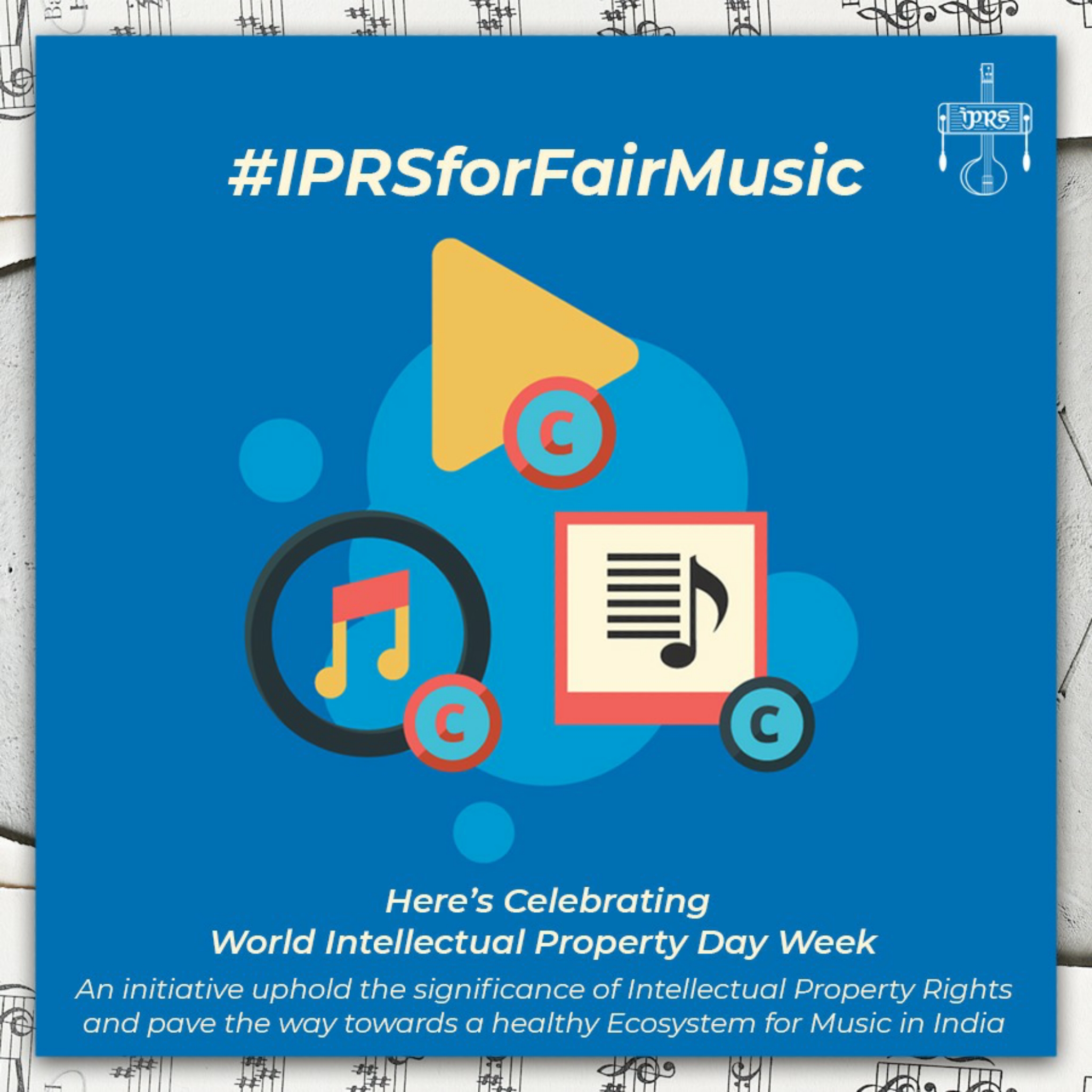
    New Delhi: The Indian Performing Right Society (IPRS), representing nearly 6,500 authors, composers, and publishers from all over India, has launched the ‘IPRS for Fair Music’ campaign to strengthen the music ecosystem in the country.

    The week-long campaign that began on 26 April will witness a slew of activities including panel discussion, virtual knowledge sessions, felicitation of fair music partners to create awareness about the need to safeguard the creators’ right to fair compensation.

    “At IPRS, we strongly advocate why fair trade of music is critical and how it will help the original creators. Digitisation and other technological advancements have empowered creators and taken the music far and near. But at the same time, the creator stands a higher risk of his/her creative ideas getting copied. So, there is a need to protect the rights of the music right holders,” said IPRS CEO Rakesh Nigam. “We are pleased to launch this campaign to spread this message across platforms. Fairtrade music is a practice that needs to be accepted and followed in India.”

    On Monday, IPRS organised a virtual panel discussion in partnership with Indiantelevision.com and Iprmentlaw, which focused on the challenges and opportunities and the need to build a healthy ecosystem for music in India.

    It will also organise ‘Know Your Rights’ – a virtual knowledge session with eminent lawyer Ameet Datta. There will also be a session on music licensing and fair pay for music to address the frequently asked questions about different licensing options based on usage and platform. IPRS will also felicitate its fair music partners, for endorsing fair trade music.

    “The exploitation of any creative work is entitled to be duly credited and remunerated. We need to build more awareness about fair pay and fair play of music,” said noted lyricist, poet and screenwriter Manoj Muntashir.

  • Law college apologises for Suits vs Jolly LLB 2 ad

    Law college apologises for Suits vs Jolly LLB 2 ad

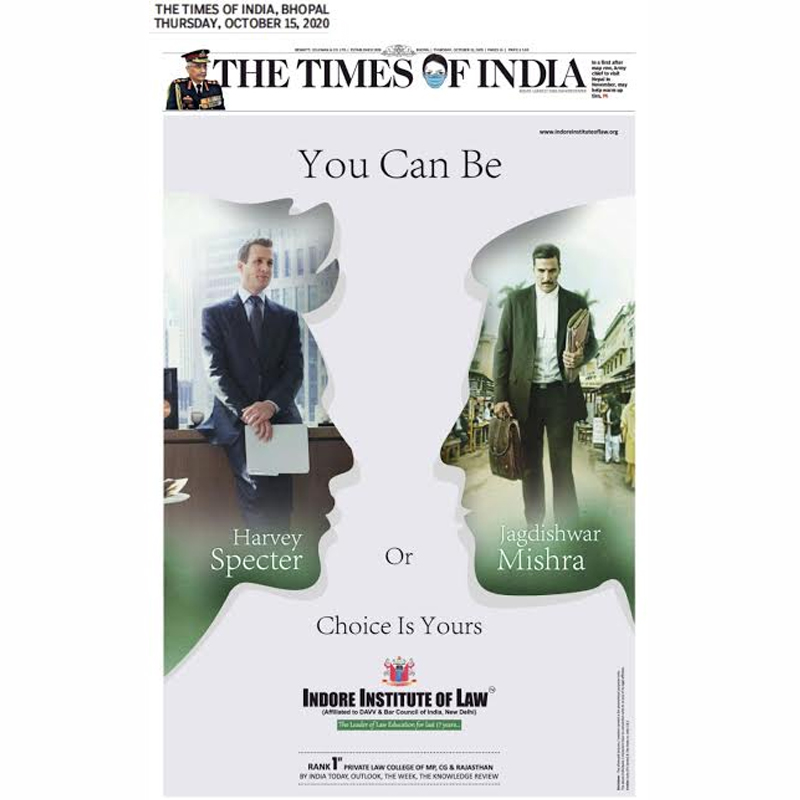
    NEW DELHI: Last week, readers came across a curious ad on the front page of The Times of India’s Bhopal edition. The print advert by Indore Institute of Law drew a comparison between two fictional characters Harvey Specter from American TV series Suits and Akshay Kumar from Jolly LLB. It bore the caption that an aspiring lawyer could be either – “Choice is yours.”

    The picture started doing the rounds on social media platforms and netizens were quick to slam the college’s perceived elitist stance behind the ad. Others accused the institute of denigrating the “dignity of Indian lawyers.” Social media pundits also questioned whether the college had obtained permission from the original creators before running the campaign. A fair few wondered why the institute chose fictional characters instead of its own alumni or famous practitioners of law in the real world.

    The overall impression in certain sections of social media was that the ad was in poor taste and problematic; and not the inspired idea that the advertisers imagined it to be.

    Facing flak, the law college later issued an apology saying, “We assure everyone that it was absolutely not our intention to offend anyone or defame any section of the legal profession.”

    But the damage was already done and the ad-makers were brutally trolled for their creative sense.

    Please find our clarification regarding our advertisement published on 15/10/2020. We would like to make clear the…

    Posted by Indore Institute of Law on Thursday, 15 October 2020

    Being a Law Institute, the college should have known better than to draw such a superfluous comparison, besides flagrantly violating the Intellectual Property and Trademark code on top of that. As per rules, no agency or brand can use any celebrity or work of any other firm without their approval, and if it has done so then the company has to pay the penalty under the Copyright Act. However, if the ad is published on social media, not many will raise the question of ethics.

    Using others’ IP in an advertisement is not uncommon, but this case has come into the limelight because the brand chose the ATL medium. Had the flyer had been limited to social media, it probably wouldn't have caused such a ruckus.

    ASCI secretary-general Manisha Kapoor shared that the council has not received any complaint in this regard as of now.

    Explaining the due process of dealing with violations, Kapoor said: “The advertiser will be asked to furnish the required permissions and an independent consumer complaints council will duly examine the objections and the advertiser’s response, and ascertain if the ASCI code has been violated. The advertiser will be asked to modify or withdraw the advertisement in question if it is found violating the ASCI code.”

    ASCI seeks to ensure that advertisements conform to its code for self-regulation, which requires advertisements to be legal, decent, honest, and truthful and not hazardous or harmful while observing fairness in competition. The code also describes that the ad should not be derogatory to competition without any plagiarism. It should not use indiscriminately for the promotion of products, hazardous or harmful to society or to individuals.

  • YouTube tools to help creators understand copyright issues

    YouTube tools to help creators understand copyright issues

    MUMBAI: YouTube will offer creators more transparency about content to curb copyright issues. The platform is adding new tools for creators with more details on content triggering copyright complaints.

    According to Forbes report, the platform is also adding an Assisted Trim editing tool directly within YouTube Studio’s copyright details page. Creators will be able to trim out the reported copyright content.

    To give the best viewer experience YouTube is working on adjustable endpoints for claims within the Assisted Trim feature.

  • TRAI-Star case back to Madras HC with SC rider

    TRAI-Star case back to Madras HC with SC rider

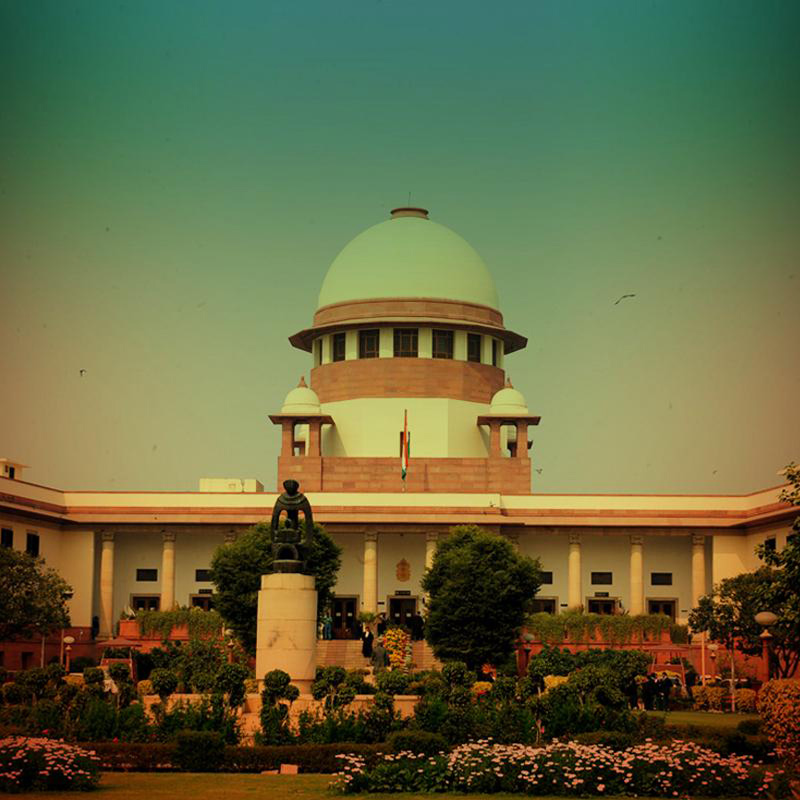
    NEW DELHI: The Supreme Court (SC) today referred the case relating to the Telecom Regulatory Authority of India (TRAI) and Star India involving the proposed tariff regulations back to the Madras high court (HC) with a rider that the judgement should be delivered within a month.

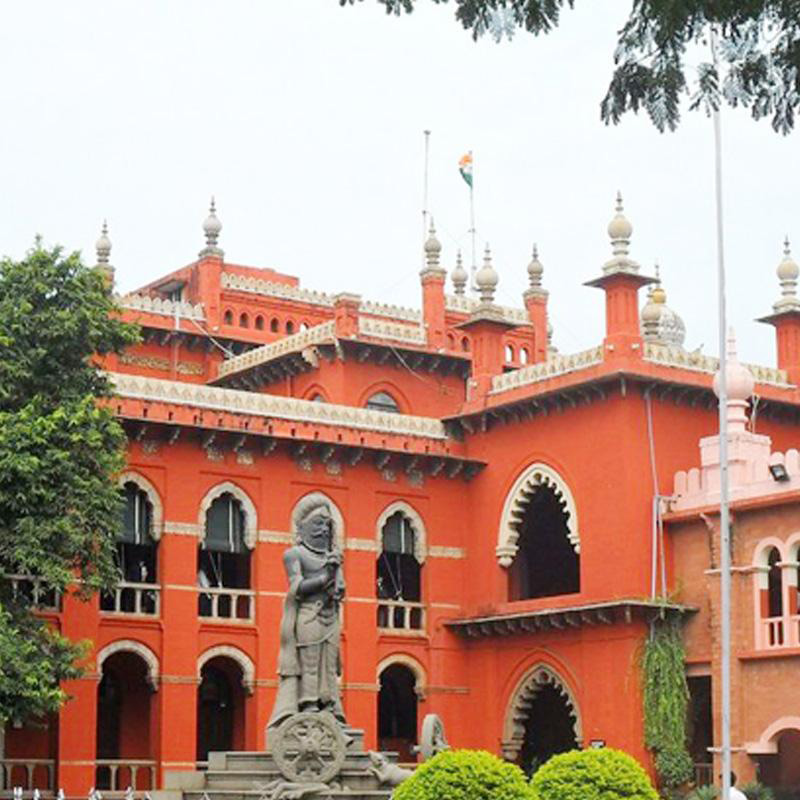
    TRAI had filed a review petition in the SC after the Madras HC delivered a split verdict on the case on 2 March 2018.

    The Madras HC judges, while agreeing that various tariff-related points (such as capping the discount offered by broadcasters and maximum retail price [MRP]) in the TRAI’s proposed tariff regulations were arbitrary, could not arrive at a consensus whether the regulator had overstepped to regulate business models related to copyrights over content.

    The Madras HC had further said that another judge would hear the issues. It was hearing the case as petitioners Star India and Vijay TV had filed a case against the 2016 tariff regulations and the SC had directed the HC to dispose of the case within a certain time frame. While striking down certain aspects of the tariff guidelines (MRP and discounting limits), issued by the TRAI late in 2016 and upholding the petitioners’ plea, the two-judge bench of the high court referred to another yet-to-be-decided judge the issue of jurisdiction of the TRAI on matters such as copyright over content.

    “The reason for putting a cap of 15 per cent to the discount on the MRP of a bouquet disclosed in to the impugned tariff order is that, as per data available with the TRAI, some bouquets are being offered by the distributors of television channels at a discount of up to 80-90 per cent of the sum of a-la-carte rates of pay channels constituting those bouquets. Such high discounts force the subscribers to take bouquets only and thus reduce subscriber choice. This, in my view, cannot be a reason to restrict the discount,” the judgement observed at one point.

    The lengthy verdict (over 140 pages) of the two-judge bench of the HC, which had been hearing a case filed by Star TV and associate Vijay TV challenging the TRAI’s tariff guidelines on various grounds of copyright and whether the regulator had the jurisdiction to make regulatory guidelines, was delivered after the hearings got over several months back and the verdict was kept in abeyance.

    Also Read:

    SC could take up TRAI-Star case on tariff regulations

    Madras HC gives split verdict in Star India versus TRAI case

  • SC could take up TRAI-Star case on tariff regulations

    SC could take up TRAI-Star case on tariff regulations

    MUMBAI: The Star India-TRAI (Telecom Regulatory Authority of India) case, which attracted a split verdict in the Madras High Court (HC) recently, took another turn today with the Supreme Court (SC) while adjourning case till Monday showed inclination to dispose of the case itself.

    As per reports emanating from the SC, the broadcast carriage regulator TRAI will likely file in SC a transfer petition by Monday when the apex court will look into the case for possible listing for likely hearing in July 2018.

    The Madras HC judges, while agreeing that various tariff related points (like capping discounting offered by broadcasters and MRP, for example) in TRAI’s proposed tariff regulations were arbitrary, could not arrive at a consensus whether the regulator had overstepped to regulate business models related to copyrights over content.

    The Madras HC had further said that another judge would hear the issues. It was hearing the case as petitioners Star India and Vijay TV had filed a case against the 2016 tariff regulations and the SC had directed the HC to dispose of the case within a certain time frame.

    As hearings continued in the HC, other industry bodies like AIDCF and a couple of companies joined the issue with high profile lawyers arguing the case for and against the petition.

    Also Read :

    Madras HC gives split verdict in Star India versus TRAI case

    MSOs move Madras HC seeking relief on inter-connect pacts

    Orders reserved by Madras HC on TRAI jurisdiction case

  • Madras HC gives split verdict in Star India versus TRAI case

    Madras HC gives split verdict in Star India versus TRAI case

    NEW DELHI: While parts of the country took a break on a moderately warm day after playing Holi, the Madras High Court delivered a split verdict in a case involving Star India and the Telecom Regulatory Authority of India (TRAI), apart from several other private and government organisations. This effectively means that the Supreme Court will again have to take a stand on whether the regulator’s proposed tariff order relating to broadcast and cable sectors could be implemented or remains in suspended animation.

    While striking down certain aspects of the tariff guidelines (maximum retail price and discounting limits), issued by TRAI late 2016, and upholding the petitioner’s plea, the two-judge bench of the high court referred to another yet-to-be-decided judge the issue of jurisdiction of TRAI on matters such as copyright over content.

    Now that the high court has delivered a fractured verdict, raising fears of a status quo and non-implementation of the TRAI tariff guidelines in certain sections of the cable distribution industry, the Supreme Court could likely early next week take a view whether TRAI can go ahead and implement the regulations or further judicial clarity is needed.

    “The reason for putting cap of 15 per cent to the discount on the MRP of a bouquet disclosed in to the impugned Tariff Order is that, as per data available with TRAI, some bouquets are being offered by the distributors of television channels at a discount of up to 80-90 per cent of the sum of a-la-carte rates of pay channels constituting those bouquets. Such high discounts force the subscribers to take bouquets only and thus reduce subscriber choice. This, in my view, cannot be a reason to restrict the discount,” the judgement observed at one point.

    The lengthy verdict (over 140 pages) of the two-judge bench of the high court, which had been hearing a case filed by Star TV and associate Vijay TV challenging tariff guidelines of TRAI on various grounds of copyright and whether the regulator has the jurisdiction to make regulatory guidelines, was delivered after the hearings got over several months back and the verdict was kept in abeyance.

    While stakeholders refused to comment on the verdict officially, saying the fine prints of the lengthy order need to be studied over the weekend, TRAI could not be reached for its version on the Madras HC verdict.

    However, an industry observer opined that considering the high court’s observations on MRP and discounts relating to TV channels, implementing the remaining part of TRAI’s proposed tariff and inter-connect guidelines would make less sense as both the issues frowned down upon by the high court form an integral part of the overall regulations.

    The tariff issue has been in the courts since late 2016. The Delhi High Court too is hearing a similar matter involving TRAI’s proposed tariff guidelines. In this case the petitioners are DTH operators Tata Sky and Airtel Digital.

    ALSO READ:

    MSOs move Madras HC seeking relief on inter-connect pacts

    Orders reserved by Madras HC on TRAI jurisdiction case

    SC stays new TRAI tariff, asks Madras HC to complete hearing in four weeks


  • Copyright infringement or inspiration — it’s still a war

    Copyright infringement or inspiration — it’s still a war

    MUMBAI: Whenever a good movie crosses over into India, the first thought that pops up in one’s mind is — Whether it is copied or is it inspired?

    The war between infringement and inspiration is not only reaching the courts of law but spicing up discussions too. Well, copying in a unique way is inspiration, but copy an original idea or a format or a script is absolute infringement, say legal experts.

    The Sixth Annual Media, Advertising and Entertainment Legal Summit 2017’s session on ‘The converged mediascape and a creative India – It’s copyright cries’ had a spicy kickstart with the panelists — Government of India joint secretary – department of justice, ministry of law and justice, Raghavender GR, Luthra & Luthra Law office partner Deepak THM, Dhir & Dhir Associates partner Siva K Gopinatham, Law Chambers of J Sai Deepak founder J Sai Deepak and Ogilvy and Mather VP and head – legal Kanan Rele.

    The panel was moderated by Raymond director – legal Zameer Nathani.

    Discussing the key topic ‘Infringement of copyright – copyright or mere inspiration,’ Deepak THM said, “It may not be an infringement of cinematograph film but there can be an infringement of script. To compare, certain tests needs to be applied. Substantial similarity test copyright infringement, copyright to characters and copyright to script are some tests to be done before claiming infringement.”

    He added: “India’s one of the biggest blockbuster scripts, Bombay, is based on the play Cohens and Kellys. In the play, the Jewish girl and Irish boy fall in love and secretly marry. ‘Bombay’ is the film on the wrath of communal riots when a Hindu boy gets married to a Muslim girl. But, the movie was not infringed, some portions of the play were inspired and seen in the script, but the script’s elements along with the concept was depicted in a unique pattern.”

    Gopinatham added that copying in a unique way was inspiration, but “in an original way” was absolute infringement.

    Nathani put some light on copyright and royalty. He said, “The idea of introducing royalty cost was to understand the mathematics that if an additional figure is included in the production cost, then how to bear it, and who should bear it. Fundamentally, the exploiter is supposed to bear the royalty fee. For example, a movie was sold to Star (channel). So, every time, a song from the movie is broadcast on Star, the revenue generated from the advertisers will take out a portion for the lyricist. The portion will be decided by copyright society which is not yet decided.”

    Seeing the present era, Nathani added that Facebook is engaging top 10 newspaper agencies to authenticate the news for article infringement and to stop fake news.

    Raghavender spoke about 2012 amendment which was in line with WCT and WPP. He said, “WIPO Copyright Treaty (WCT), introduced in 1996, is a special agreement under the Berne Convention that deals with the protection of works and the rights of their authors in the digital environment. But, there is divergence in convergence because the Digital Millennium Copyright Act 1998 is slightly different from the way we have done it because of the copy control provisions that are there and access control techniques used. Flexibilities, however, are included in WPP and WCT provision.”

    He added: “The concept of flexibility expanded the tricks to protect the interest of the technological, administrative, financial, socio-cultural conditions of the developing countries under Article 6 and 66 Paragraph 1.”

    Kanan, talking about the misery faced by her company owing to the Copyright Amendment Act, said, “I am from the advertising industry, and we are facing two issues due to this amendment. Our employees directly work for us but they are also entitled to royalty. But, there is no society-firm from where these royalties can be collected. The second issue we faced is that Section 18 gives protection to authors that they are not supposed to waive the rights to receive royalty. So, if an author wants to collect money for example an X amount as his lifetime royalty, he has no right under the Copyright Amendment Act to receive that.”

    On consolidated royalty, Raghavender added, “There is a continuous exploitation based on revenue of author-writers in terms of consolidated royalty. And also, s/he is needed to be a member of IPRS as far as royalty rights are concerned.”

    Raghvender briefly explained the reasons of delay in statutory licensing for broadcasting. He said, “Section 31D under the Copyright Amendment Act was introduced for the radio industry, which was later extended to television broadcasters. The purpose of having the statutory licensing provision was to entitling the radio broadcasters to play sound recordings seamlessly, without going through the extortion of negotiations for broadcast by paying a prefixed consideration for such usage.”

    “Earlier, a radio broadcaster had to take three voluntary licenses before exploiting a song either for promotion or for commercial purpose. But, after the denial by the radios for paying high copyright amount demanded by the owner, voluntary licence was denied as per the Berne Convention provisions and statutory license were made. Under statutory licence, the rates of royalty for radio broadcasters shall be different from television broadcasting, and the government shall decide the rate which will be later fixed by the Copyright Board separately for radio broadcasting and television broadcasting. It is restricted to television and radio, and does not apply on webcasting.”

    Kanan shared the key takeaway from the Delhi High Court case of Suneet Varma Design vs Jas Kirat Singh Narula. It was a 2006 case of copyright infringement on Yashraj’s film “Bunty Aur Babli,” using a creation from the designer Suneet’s 2003 collection to dress up an actress in the film — Rani Mukerji. Narula said that he had not designed but purchased the same from a retail shop named Baby Bell in a shopping mall in Mumbai. Based on the provisions of Section 51-52 of the Indian Copyright Act, 1957, the case was dismissed.

    Kanan said, “There are certain guidelines that filmmakers, photographers, etc. need to be given certain liberties as far as creative expression is concerned. Because, it is very difficult to take approval for each and every product or material that is used in the artistic representation of the film.”

    On India’s position at WIPO Broadcasting Treaties, Raghavender said, “At present, the planning committee at WIPO is discussing the numbers, and it has been a point of discussion since the last 15 years. Since then, the WCT and WPP provisions came, the understanding among the stakeholders has increased to 191 in rival states, raised last week by WIPO panel and the reason behind the difference is technology.”

    He added: “In 2005, WIPO rushed with their final round with consensus of rival states on diplomatic content. On one clause of transferring the rights, with the lack of consensus, it took 11 years to revive.”

    “India has denied having implicit webcasting treaty,” he said.

    “In the 20th association, the knowledge data market value, the international norms will be done in the standing committee on copyrights and royalty rights where countries give proposals which become an agenda, and discuss whether there should be a treaty or not. On the basis of all the proposals, a final document is prepared. In the committee, textual negotiations are also discussed. The inclusion of comma and column in language took two days to finalise whether India opposed the proposal, but later, it was sorted out.”

    J. Sai Deepak said: “The Copyright Board should be merged with the Intellectual Property Appellate Board (IPAB), which is a good step, but unfortunately the existing provisions of Copyright Board (Section 11) does not support this, it needs amendments.” IPAB seeks to amend the Copyright Act so as to transfer the functions of the Copyright Board to IPAB, which as of now deals only with matters relating to trademarks, patents and geographical indications.”

    ALSO READ:

    Copyright Board may become part of Intellectual Property Appellate Board

    Star-Vijay Copyright case hearing next week, TRAI to file counter

    Star – TRAI copyright case: In dramatic turn, Madras HC judges withdraw