Tag: Contiloe Entertainment

  • Digital success via differentiated content, good story-telling, partnerships

    Digital success via differentiated content, good story-telling, partnerships

    MUMBAI: Bollywood, Hollywood and sports content will certainly get you traction, but ultimately well thought out differentiated content, partnerships with platforms and targeted audience will not only get the eyeballs, but also return on investment for content creators on OTT platforms.

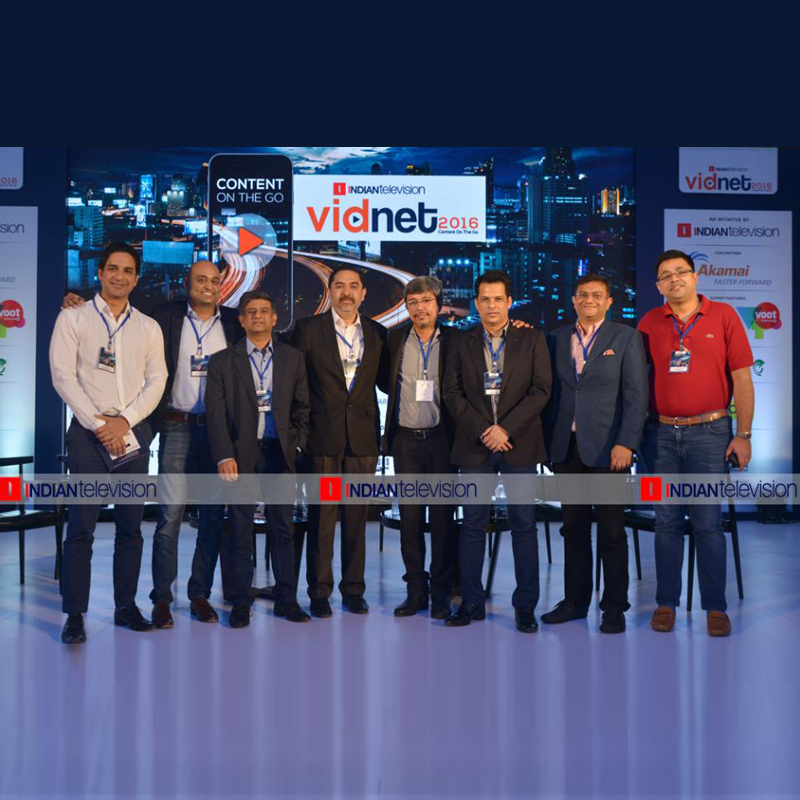
    This was the over-arching message from content creators and OTT platform operators at the session on content paradigm at Indiantelevision.com-organised conference related to OTT here yesterday, aptly themed Vidnet 2016.

    The panel included Abhimanyu Singh, CEO, Contiloe Entertainment, Mahesh Narayanan, MD, Saavn, Salil Kapoor, MD, HOOQ India, Uday Sodhi, EVP and Head Digital Business, Sony Pictures India, Varun Mathur, Co-Founder and Director VEQTA, Viviek Bhargava, MD and CEO iProspect and Yash Patnaik, Founder, Beyond Dreams Entertainment.

    The session’s basic underlying theme, highlighted by moderator Anil Wanvari, Founder and Editor-in Chief, Indiantelevision.com, revolved around the type of content that could work in the digital world while keeping in mind the needs of advertisers, agencies and investments.

    The variety of online content is vast, Sony’s Sodhi said, adding since the ecosystem is fairly new, consumption is from television content catch up. “There is a fair demand for movie viewing, including short films,” according to him as he pointed out sports too is majorly consumed by OTT subscribers.

    However, Sodhi was candid enough to admit that presently in an evolving eco-system it cannot be said with guarantee what works and what does not.

    As SonyLiv depends a lot on streaming of sports content on the platform, a question was raised whether programming differentiation on major OTT platforms was needed and also whether a global player like Netflix, focused on fictional series and movies, needs to re-strategize in India.

    Pointing out that OTT platforms ultimately will come out with their strengths, Sodhi said, “We come with a huge legacy of sports. We believe it works well for us and gives us an automatic connect between our users on TV and digital (platform), acting as an entry point for consumers.”

    While Sony Liv is banking on sports, HOOQ is finalising plans to launch in India as a VOD platform.

    Educating the uninitiated that HOOQ is a joint venture amongst Sony Pictures TV, SingTel and Warner Bros., HOOQ India chief Kapoor was of the opinion that the new digital evolution is about “pull and not push” and, therefore, “good content will get pulled (by consumers).”

    “All sorts of stories and entertainment can co exist in this (digital) space,” Kapoor said, adding that the criteria for success in the digital world were quality of content as people appreciate good content on every format.

    As per HOOQ, the criteria to measure the success of engagement is not downloads (of an app), but continuous engagement and number of active users.

    However, the experts on the panel did agree that since there is more television content, `catch up’ is a big issue presently. The next step ought to be and should be engagement of consumers with original content and the players are experimenting with that as to what’s relevant to digital natives.

    For example, Saavn, the music streaming app, has its own formula to engage audiences. The strategy for audio players is to package their content differently to provide a unique experience.

    Sharing the company’s varied ways of consumer engagement, Saavn’s Narayanan said an interesting property the company created was Saavn Live where live gigs happen on a stage in the company office with artistes performing at a pre-set time that goes live on Facebook.

    Saavn counts on social media to push its content and offers unplugged version of songs.

    The mechanism of how digital content is working has a big influence on advertising sector as well. iProspect’s Bhargava pointed out while previously brands found advertising cheaper than creating content, digital content creation has minimised cost encouraging brands to produce their own content.
    According to Bhargava, this gives brands an opportunity to engage consumers on their own platforms through licensed content and brand communication becomes easier.

    A digital advertising expert, Bhargava also felt that a shift in advertising pattern has happened past 2-3 years where a large chunk of a client’s budget has been dedicated to digital advertising. “This has given brands an opportunity to reduce advertising costs through content. Digital provides same amount of engagement in less money,” he added.

    But the question remains as to which content works and gives the correct RoI. The content creators on the panel were of the opinion that platforms and advertisers can only succeed with the right shows when a good story is created and told well. The message from the content creators was clear: better storytelling does work wonders.

    Contiloe’s Singh pointed out that television has witnessed a downfall in viewership as there was a “disengagement” with “discerning” viewers/consumers. “Platforms and (content) makers will have to shift to making differentiated content,” he explained, adding not only the plot, but storytelling method has to go undergo a change too.

    “There is a severe need to reinvent the way audiences are engaged with plots and characters,” Singh said, adding that the good news is India has a rich tradition of story-telling and an equally rich bank of tales.

    Though in today’s world there is palpable excitement about the digital eco-system, Patnaik from Beyond Dreams expanded the perspective highlighting that television, cinema and digital are separate platforms catering to the same audience and, hence, “viewership will fluctuate” according to quality of content.

    With the kind of buzz digital space is witnessing, brands, production houses and channels are launching their own platforms or attempting to. Could this clutter the digital space?

    Hinting that existing OTT platforms like Sony Liv could be used by content owners and creators, Sony’s Singh said not everyone needs to have their own platforms and, instead, they need to collaborate to create content.

    Yes, collaboration between content creators and platform operators did resonate with the panellists with most having their own perspectives.

    While Contiloe’s Singh supported the collaboration angle as a way forward, HOOQ’s Kapoor said that instead of everybody trying to do everything, partnerships should be explored.

    VEQTA’s Mathur added that sports as a segment is an under-served one in India and more variety in this space would add to the spice.

  • Digital success via differentiated content, good story-telling, partnerships

    Digital success via differentiated content, good story-telling, partnerships

    MUMBAI: Bollywood, Hollywood and sports content will certainly get you traction, but ultimately well thought out differentiated content, partnerships with platforms and targeted audience will not only get the eyeballs, but also return on investment for content creators on OTT platforms.

    This was the over-arching message from content creators and OTT platform operators at the session on content paradigm at Indiantelevision.com-organised conference related to OTT here yesterday, aptly themed Vidnet 2016.

    The panel included Abhimanyu Singh, CEO, Contiloe Entertainment, Mahesh Narayanan, MD, Saavn, Salil Kapoor, MD, HOOQ India, Uday Sodhi, EVP and Head Digital Business, Sony Pictures India, Varun Mathur, Co-Founder and Director VEQTA, Viviek Bhargava, MD and CEO iProspect and Yash Patnaik, Founder, Beyond Dreams Entertainment.

    The session’s basic underlying theme, highlighted by moderator Anil Wanvari, Founder and Editor-in Chief, Indiantelevision.com, revolved around the type of content that could work in the digital world while keeping in mind the needs of advertisers, agencies and investments.

    The variety of online content is vast, Sony’s Sodhi said, adding since the ecosystem is fairly new, consumption is from television content catch up. “There is a fair demand for movie viewing, including short films,” according to him as he pointed out sports too is majorly consumed by OTT subscribers.

    However, Sodhi was candid enough to admit that presently in an evolving eco-system it cannot be said with guarantee what works and what does not.

    As SonyLiv depends a lot on streaming of sports content on the platform, a question was raised whether programming differentiation on major OTT platforms was needed and also whether a global player like Netflix, focused on fictional series and movies, needs to re-strategize in India.

    Pointing out that OTT platforms ultimately will come out with their strengths, Sodhi said, “We come with a huge legacy of sports. We believe it works well for us and gives us an automatic connect between our users on TV and digital (platform), acting as an entry point for consumers.”

    While Sony Liv is banking on sports, HOOQ is finalising plans to launch in India as a VOD platform.

    Educating the uninitiated that HOOQ is a joint venture amongst Sony Pictures TV, SingTel and Warner Bros., HOOQ India chief Kapoor was of the opinion that the new digital evolution is about “pull and not push” and, therefore, “good content will get pulled (by consumers).”

    “All sorts of stories and entertainment can co exist in this (digital) space,” Kapoor said, adding that the criteria for success in the digital world were quality of content as people appreciate good content on every format.

    As per HOOQ, the criteria to measure the success of engagement is not downloads (of an app), but continuous engagement and number of active users.

    However, the experts on the panel did agree that since there is more television content, `catch up’ is a big issue presently. The next step ought to be and should be engagement of consumers with original content and the players are experimenting with that as to what’s relevant to digital natives.

    For example, Saavn, the music streaming app, has its own formula to engage audiences. The strategy for audio players is to package their content differently to provide a unique experience.

    Sharing the company’s varied ways of consumer engagement, Saavn’s Narayanan said an interesting property the company created was Saavn Live where live gigs happen on a stage in the company office with artistes performing at a pre-set time that goes live on Facebook.

    Saavn counts on social media to push its content and offers unplugged version of songs.

    The mechanism of how digital content is working has a big influence on advertising sector as well. iProspect’s Bhargava pointed out while previously brands found advertising cheaper than creating content, digital content creation has minimised cost encouraging brands to produce their own content.
    According to Bhargava, this gives brands an opportunity to engage consumers on their own platforms through licensed content and brand communication becomes easier.

    A digital advertising expert, Bhargava also felt that a shift in advertising pattern has happened past 2-3 years where a large chunk of a client’s budget has been dedicated to digital advertising. “This has given brands an opportunity to reduce advertising costs through content. Digital provides same amount of engagement in less money,” he added.

    But the question remains as to which content works and gives the correct RoI. The content creators on the panel were of the opinion that platforms and advertisers can only succeed with the right shows when a good story is created and told well. The message from the content creators was clear: better storytelling does work wonders.

    Contiloe’s Singh pointed out that television has witnessed a downfall in viewership as there was a “disengagement” with “discerning” viewers/consumers. “Platforms and (content) makers will have to shift to making differentiated content,” he explained, adding not only the plot, but storytelling method has to go undergo a change too.

    “There is a severe need to reinvent the way audiences are engaged with plots and characters,” Singh said, adding that the good news is India has a rich tradition of story-telling and an equally rich bank of tales.

    Though in today’s world there is palpable excitement about the digital eco-system, Patnaik from Beyond Dreams expanded the perspective highlighting that television, cinema and digital are separate platforms catering to the same audience and, hence, “viewership will fluctuate” according to quality of content.

    With the kind of buzz digital space is witnessing, brands, production houses and channels are launching their own platforms or attempting to. Could this clutter the digital space?

    Hinting that existing OTT platforms like Sony Liv could be used by content owners and creators, Sony’s Singh said not everyone needs to have their own platforms and, instead, they need to collaborate to create content.

    Yes, collaboration between content creators and platform operators did resonate with the panellists with most having their own perspectives.

    While Contiloe’s Singh supported the collaboration angle as a way forward, HOOQ’s Kapoor said that instead of everybody trying to do everything, partnerships should be explored.

    VEQTA’s Mathur added that sports as a segment is an under-served one in India and more variety in this space would add to the spice.

  • Colors bets big on historical ‘Chakravartin Ashoka Samrat’

    Colors bets big on historical ‘Chakravartin Ashoka Samrat’

    MUMBAI: History repeats itself… or so they say. From the time Indian television was born, historical and mythological shows have been an integral part of it. In the early 90s, Sunday mornings were dedicated to Mahabharata and Ramayana and today prime time slots are dedicated to the numerous gods and kings, as they battle it out for the ratings.


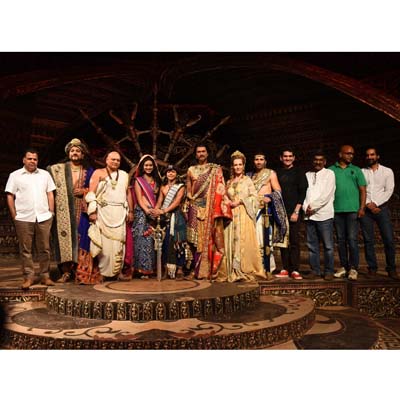
    Colors, the channel synonymous with edgy content and reality shows, is once again dabbling with historical show with Chakravartin Ashoka Samrat. Through the tale of a great emperor who charted the course of Indian history, the channel aims to write its own saga in the genre.


    “It is one of the biggest shows of 2015 from Colors stable,” said Colors CEO Raj Nayak at the dusty yet magnanimous sets of the show at ND Studios in Karjat. The idea of launching another historical show after Veer Shivaji was always on the cards, but the actual work on the new series started six months back.


    “We took Veer Shivaji off air because it gave us low ratings as compared to other shows on the same time band across channels. But in hindsight, we realised that we shouldn’t have. Hence, we have always been toying with the idea but it has taken us a lot of time to build on it. And we are glad that we have been able to put a great team together,” said Nayak.


    The one hour long historical, which goes on air from 2 February, is produced by Contiloe Entertainment and will see set designers Omung Kumar and Nitin Desai collaborating.


    “Our brief to the production house was simple – the show needs to be the best ever,” proclaims Nayak.


    Contiloe Entertainment, which has numerous genres to its credit, isn’t new to historic shows as well. After creating shows like Jhansi ki Rani, the production house is optimistic about the latest show on its platter. “Everybody knows about Ashoka the emperor and the story will resonate with urban as well as rural India. The show is about creation and will inspire viewers too,” said Contiloe Entertainment CEO Abhimanyu Singh.


    The show will follow the story of young Ashoka’s journey in a dramatised manner. “There are always gaps in history, which need to be filled and we’ve made sure that the dots are joined in a responsible way,” said Singh.


    A huge research team under the guidance of Srikant Sharma worked on the show. “A number of books have been written on it and we have read almost everything on the era to get story as real as possible,” added Singh.


    The young Ashoka is played by Dhoom 3 star Siddharth Nigam and will see Pallavi Subhash (Dharma), Sameer Dharmadhikari (Bindusara), Manoj Joshi (Chanakya), Tej Sapru (Seleucus Nicator), Suzanne Bernert (Helena), Sumit Kaul (Justin) and Ankita Sharma (Noor Khorasan) among others etching the roles.


    It wasn’t an easy task to get the cast right. According to Nayak, if the cast is right then a show will work. After numerous auditions, Nigam was shortlisted and had to undergo a three-month long training to play the part with ease.


    So far, 10 episodes have been canned. Shot with three Alexa cameras, an episode takes almost four to six days to shoot. “We shoot from 7 am till 10 pm, depending on the demand of the script. However, things have improved now as we have all got a hang of it,” said Prasad Gawandi, who has directed the show.


    Planned to be a finite show, which will be on air for six months, the channel will take a call on extending it based on audiences’ reaction. “At Colors we are very clear; if something doesn’t work, we kill it. But that doesn’t stop us from experimenting and taking a risk,” points out Nayak, when asked if the show will get an extension or if the one hour time slot would be shortened in the future.


    With Ghari Detergent as its title sponsor, Nayak is confident that many will follow suit once the show is up and running. “In case of fiction shows, one doesn’t have to bother about sponsors as they come on their own as ratings scorch unlike non-fiction where one has to get sponsors on board beforehand as they are expensive,” highlighted Nayak.


    The channel, which has a premium charge attached to it, expects Rs 1.5 to Rs 1.8 lakh for a 10 second ad slot.


    Media planners too believe that since the story has not been told on the small screen before, it will tend to work in favour of the show and the channel. “Other stories have been told and retold but the story of Ashoka on small screen with modern technology should work,” said a media planner.


    To market the show, Colors is routing through unconventional methods. For instance, Mumbai metro travellers are in for a surprise as they will get a coin used in the Mauryan era rather than the usual ticket token for a week. Apart from this, a special school contact programme will be executed in close to 200 schools in 50 towns in tier II markets where students will, in an interactive way, learn about Emperor Ashoka and his life.


    “A number of melas and yatras are on in the country and we are tapping in to these as well to give viewers a real life feel of the characters. For instance, people can engage through archery to get a feel of the era gone by,” said Nayak.


    One of the most expensive fiction shows apart from 24, the channel is betting high on the story of the young emperor and only time will tell how it fares.

  • ‘Bhanwar’: Sony revives its tried and tested label in the crime genre

    ‘Bhanwar’: Sony revives its tried and tested label in the crime genre

    MUMBAI: It’s survival of the fittest in a highly-competitive TV world. One needs to keep re-inventing oneself and that’s exactly what works wonders in the end. Likewise, Sony Entertainment Television (SET), has gone back to its tried and tested formula gory crime!


    The crime genre has until now, been the bread and butter for the channel.  Programmes like C.I.D, Crime Patrol and at times, Adaalat have gripped audiences and thus, Sony has unanimously got a thumbs-up for its non-fiction, criminal offerings.


    SET literally takes the viewer through a virtual reality show. It gives them a gripping courtroom drama series, an enthralling and emotional journey, engaging their consciences in matters of right and wrong, and the ultimate balance of justice.


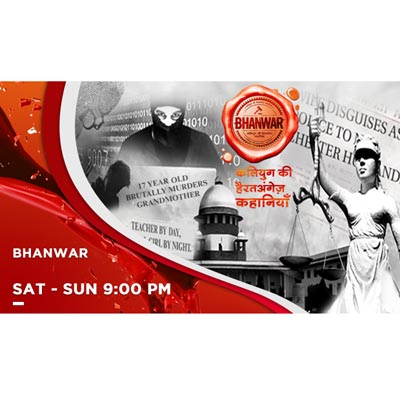
    Christened – Bhanwar – Kalyug Ki Hairatangez Kahaniyaa, its provocative stories will compel our society to sit up and take cognizance of the fact, that for every crime committed under the Indian Penal Code, there is an equally harsh justice system meted out.


    You may recall, in the late 1990s, Sony had launched a series with an identical name that dealt with landmark judgements from the Indian judicial system. Produced by TV18, the show was so popular that it enjoyed re-runs on SAB and Fox History to boot. Its audiences were treated royally for over two years on Sony, and its episodes were remarkably directed by Sanjay Ray Chaudhari.


    It’s back with a bang with a fresh menu of juicy, judicial cases. Come 10 January, 2015, the two veterans of TV production, Contiloe Entertainment’s Abhimanyu Singh and Sunshine Rise Productions’ Anshuman Kishore Singh, will present true-to-life stories of human excesses, which depict volatile social relationships of today.


    SET chief creative director, Ajay Bhalwankar, believes that the name of this series is defined by the twists and turns of true events, which often shows that ‘truth is stranger than fiction.’ “Presented in a unique style, the show promises to raise the benchmark of crime shows on Indian television.”


    He feels, “The channel has invested a lot of time in researching and digging out real-life stories that take place in a courtroom. It took three months for the channel to pick up the best stories, which were then executed in a fictional manner.”


    With this new property, the channel now has a complete portfolio focusing only on crime properties on weekends, starting with Adaalat at 8 pm, Bhanwar in close succession at 9 pm, followed by C.I.D and Crime Patrol at 10 pm and 11 pm respectively. “Sony has been a pioneer in crime genre. We have made a lot of sense and the outcome has turned out very well. We are confident that audiences will relate to this kind of drama that occurs in a courtroom,” asserts Bhalwankar.


    “I think this is a good move that the channel has made. In a way, they want audiences to stay tuned to the channel and sample the content one after the other. C.I.D and Crime Patrol both have been consistently delivering decent numbers and Bhanwar will follow suit and jump on the bandwagon, considering its different content. But on the other hand, experimentations have happened on the channel, but viewers haven’t really accepted it; I hope this one pays off for Sony,” says a media planner.


    The one-hour courtroom drama TV series is going to face tough competition from Bigg Boss eight on Colors, Sa Re Ga Ma Pa L’il Champs five on Zee TV, Diya aur Baati Hum and Yeh Rishta Kya Kehlata Hai (Saturday) and Airlines (Sunday) on Star Plus, Supercops vs Supervillains… Shapath on Life OK and The Great Indian Family Drama on Sab.

  • ‘Highway’…road to nowhere

    ‘Highway’…road to nowhere

    MUMBAI: A road movie is a genre with its roots in the United States (US) where it became more popular with the post World War II auto boom and peaked in the 60s when a lot of things changed in how the youth looked at life. America had the road, the spirit of adventure and the type of cars and bikes coupled with social movements which did not tie one down. In India, road movies are rare and far in-between and gained some momentum only thanks to inspiration through easy accessibility to DVDs. Despite a few attempts in the last decade or so, the only memorable Indian road movie I can think of is the 1972 Mahmood film, Bombay To Goa. (I would even call Mahmood’s Sadhu Aur Shaitaan a road movie; so what if it was shot only within Bombay limits!) Probably because it was not a DVD inspired film and if it was inspired from external forces, it was very well adapted to suit the Indian taste. A road movie formula is one where the lead characters come of age, grow or improve in the process of the journey.

    Highway, going by the definition of a road movie, is a copybook road movie as far as its characters go. The tough as tungsten male protagonist melts like a candle while the female matures enough to break all shackles of social norms and bindings. The problem with Highway is that, while the rules of road movies are already laid down for it, sadly, the content for the length of the film acceptable to Indian audience, where you can’t remain indifferent to romance and fitting in songs, does not come with the formula. Probably, that is why the percentage of Hindi road movies working at the box office is so small. (Some films I can recall: Bombay To Goa, Ginny Aur Johny, Chalo Dilli, Zindagi Na MIlegi Dobara, Dil Hai Ke Manta Nahi and Daud)

    Producers: Sajid Nadiadwala, Imtiaz Ali.

    Director: Imtiaz Ali.

    Cast: Randeep Hooda, Alia Bhatt.

    Randeep Hooda works for a gang which is for hire; they commit crimes on contract basis. On a mission to loot a petrol pump, Hooda comes across Alia Bhatt who is out to get some fresh air with her boyfriend. To make good his escape, Hooda dumps Alia’s boyfriend but takes her as a hostage till he reaches his partners and own vehicle. Kidnapping Alia was not on his agenda and why he does not dump her is a question. Alia comes from the house of a very influential man in Delhi and the gang members expect trouble. On account of this, Hooda decides to go on his own and demand ransom for Alia. This is a road movie so instead of cooling his heels in one place, he just takes his truck around the country (except Southern parts). In the era of electronic surveillance, he manages to hide from the authorities merely by changing the number plates of his truck; description of the vehicle does not matter.

    While Hooda may give Alia a slap or two, he never tries any sort of mischief with her. As expected, Alia is drawn towards him and won’t let him go. She does not want to go home where she is being molested by an uncle since she was nine. She wants to hang around with Hooda and keep travelling. They end up somewhere in the mountains, borrow a house and set up a kitchen with Maggi noodles! By now you have had enough and decide that if the police won’t find them, you yourself will call them when there is a bang. The police who did not manage to nab him while he roamed about the highways of India, passing state check posts, finally find him in this remote mountain and without warning just shoot him down.

    There is nothing such as a story in this movie. This has been shown in a number of films where the captive falls for the goon. Otherwise, this film is a kind of Bharat Darshan taking you to places you would not go to otherwise. In a weatherman’s parlance, the film is 133 minutes but feels like 300 and with just two characters to carry it off, offers no distraction except change of scenery.

    Highway is touted to be aimed at the gentry audience but one would assume even gentry go to cinema for entertainment, which this film is lacking.


    Darr @ the Mall

    Stolen ideas…

    Horror has not really been a favourite Indian genre and neither are there original writers for this breed of film. The preference here is mainly feel good fare or soaps or romance. Obviously, the ‘inspiration’ has to come from Hollywood films. Horror movies don’t have repeat value, in most cases does not even gain a first-time audience, provides no scope for music which is a must in Indian movies and, generally, don’t entertain. In which case, why would anybody want to make one is a mystery! As suspected, Darr @ The Mall comes from a 1989 Hollywood film called Phantom of the Mall: Eric’s Revenge.

    Contiloe Entertainment is a TV content providing company making a foray into film production and the film will be learning experience for the company.

    Producers: MSM Media Motion Pictures, Contiloe Entertainment.

    Director: Pavan Kriplani.

    Cast: Jimmy Shergill, Nushrat Bharucha, Arif Zakaria, Asif Basra.

    Phantom of the Mall: Eric’s Revenge was about one Eric Matthews who lives in a huge house which burns down; Eric is reported dead but he has been able to save his girlfriend. Soon, a mall comes up where his house was. Eric is not dead though badly burnt. He haunts the mall, killing people, especially those who set an eye on his girlfriend.

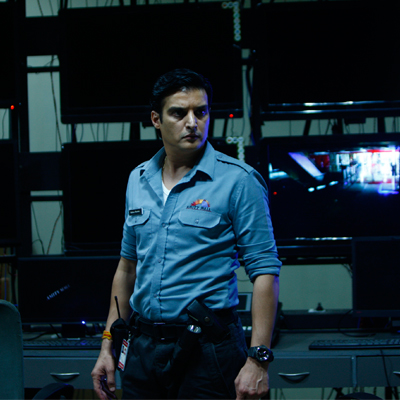
    Darr @ The Mall is about a mall, ironically called Amity Mall, that has come up at a location where an orphanage run by a kindly nun stood once. The orphanage burns down killing the nun as well as all the children save for one child who, though wounded, manages to escape. A mall has come up where the orphanage stood. Soon, the mall is in the news for all the wrong reasons. Workers and sentries get killed at random at the mall. As a result, nobody is willing to take charge of the security at this mall when Jimmy Shergill, an ex-army man, gets an offer he can’t refuse. He accepts the job at the mall.

    Even as Shergill takes charge, the killing spree continues though no harm comes to him. From the sundry staff, the killing progresses to the families of the owners. To salvage the reputation of the mall, the owners decide on an evening party at the mall paving way for an item number too! That evening, which is never-ending for the viewer in this film, lasts most of the film. There are purposeless killings and illogical incidents. Why, when the culprits are available for the picking, does the revenge seeker kill innocent sentries and others?

    Darr @ The Mall is a poorly written horror film where nothing works. While in the original, it was a private property, an orphanage is not owned by the orphans, and just by killing its inhabitants one can’t take over the premises! This is a pathetic effort by Pavan Kriplani. There is no horror, only gore to pass of as horror. Writer director Kriplani is totally at a loss with this project. While the rest are caricatures, it is sad to see Shergill being totally wasted in this whim of fancy. Excuses have been created to fit in a few songs but in vain. Editing is poor. Photography is passable. Background score is jarring.

    Darr @ The Mall stands no chance at the box office.

  • Jimmy Shergill promotes his next with quirky tweets

    Jimmy Shergill promotes his next with quirky tweets

    MUMBAI: Actor Jimmy Shergill, who will be next seen playing a security officer in upcoming horror flick ‘Darr@The Mall’, found an amusing way to deal with the exhaustion on the sets of the film, which was mostly shot at night at various malls in the city.


    Jimmy said, “During the night shoots, we all used to be sleepy and exhausted as we had to go about our daily routine during the day too. So, whenever I used to see members of the cast catching a nap in a chair or something, I would click their pictures and put them up on social networking sites, with funny comments accompanying them about how the director was making us work so hard.”


    Apparently, Jimmy’s friends and associates found this quite amusing and they got back to him to tell him about how much they enjoyed the funny tweets. Hopefully, they will enjoy the movies that much as well.


    The film is directed by Pavan Kripalani and produced by MSM Motion Pictures and Contiloe Entertainment stars Nushrat Bharucha, Arif Zakaria, Asif Basra, Nivedita Bhattacharya, Shraddha Kaul and Neeraj Sood and is slated to release on 21 February.