Tag: ContentRegulation

  • FICCI, IBDF oppose TRAI’s proposed framework for broadcasting under Telecom Act

    FICCI, IBDF oppose TRAI’s proposed framework for broadcasting under Telecom Act

    MUMBAI: Imagine walking a tightrope without a safety net, knowing that a single misstep could send you plummeting.

    That’s exactly the precarious position the Telecom Regulatory Authority of India (TRAI) finds itself in after daring to blur the lines of its statutory jurisdiction. Like a rebellious teenager ignoring well-meant advice, TRAI’s bold move to propose a framework for regulating broadcasting services under the Telecommunications Act, 2023, has sparked a firestorm of backlash. Industry heavyweights, including the Indian Broadcasting and Digital Foundation (IBDF) and the Federation of Indian Chambers of Commerce & Industry (FICCI), are up in arms, accusing TRAI of overstepping its authority by attempting to shoehorn content regulation into licensing conditions. The result? A Pandora’s box of controversy that could reshape the broadcasting landscape.

    IBDF and FICCI argue that content regulation should remain under dedicated legislation, overseen by the Ministry of Information and Broadcasting (MIB), and not be conflated with telecommunications services. TRAI’s role, they assert, should focus solely on carriage-related aspects such as signal transmission and spectrum allocation.

    IBDF’s submission criticised TRAI’s proposal as an overreach. “The framework attempts to regulate content, which is beyond TRAI’s jurisdiction as defined by the TRAI Act, 1997,” IBDF stated. The association emphasised that Section 11(1)(a) of the TRAI Act limits TRAI to recommending licensing terms and conditions, not fundamentally altering the regulatory structure of broadcasting.

    Similarly, FICCI highlighted the historical context, noting that broadcasting was placed under telecommunication services in 2004 as a stopgap measure to regulate distribution services. “Broadcasting is a distinct sector, and equating it with telecommunications disrupts industry operations and consumer satisfaction,” FICCI stated.

    The News Broadcasters and Digital Association (NBDA) also opposed the move, cautioning that the framework could impose restrictive telecommunications-style authorisations on broadcasting. “TRAI should collaborate with MIB to develop a coherent strategy that avoids overregulation and supports self-regulation mechanisms for content,” NBDA recommended.

    Both IBDF and FICCI called on TRAI to focus on carriage issues and exclude content from the proposed framework. FICCI further suggested strengthening self-regulation for content and maintaining the sector’s distinct regulatory framework under the MIB.

    TRAI has concluded the consultation process and will announce the date for an open house discussion with stakeholders to finalise the framework.

  • Bangladesh high court petition seeks ban on Indian TV channels

    Bangladesh high court petition seeks ban on Indian TV channels

    MUMBAI: In the sweltering heat of early August, Bangladesh found itself at the crossroads. The once-bustling streets of Dhaka were now battlegrounds, echoing with the cries of a populace yearning for change. The crescendo of protests reached its peak on 5 August 2024, when prime minister Sheikh Hasina, facing mounting unrest, sought refuge in India. Her departure marked a significant turning point, plunging the nation into further turmoil. The ensuing days were marred by intensified violence, with supporters of the Awami League becoming targets of widespread retribution. Amid smoldering buildings and shattered dreams, the mantle of leadership passed to Nobel laureate Muhammad Yunus, tasked with steering a country bruised and battered by its own internal strife.The nation stood on the precipice, its democratic aspirations hanging in the balance, as it grappled with the aftermath of a toppled regime and the quest for a new beginning.

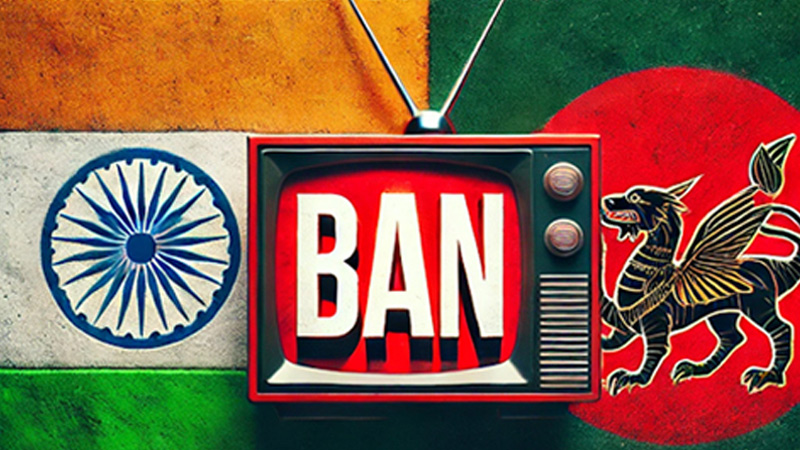
    Five months after this chaos, a writ petition has been filed in the Bangladesh High Court, calling for a ban on Indian television channels, citing their alleged negative impact on Bangladeshi society and culture. The petition, submitted by lawyer Ekhlas Uddin Bhuiyan, demanded action under the Cable Television Network Operation Act, 2006, seeking to halt broadcasts of channels such as Republic Bangla, Star Jalsha, Star Plus, and Zee Bangla. 

    The petition highlights concerns over provocative news coverage and unregulated content that allegedly opposes Bangladeshi culture, claiming these broadcasts are ‘destroying the youth’ and contributing to a cultural disconnect. A hearing is expected to take place in the HC with justices Fatema Najib and Sikder Mahmudur Razi presiding over the matter.

    The petition has named the information ministry, home ministry, and Bangladesh Telecommunication Regulatory Commission (BTRC) as respondents. It alleges that these Indian channels fail to adhere to regulatory norms and calls for a rule to ban them altogether.

    This development comes amid rising concerns over minority safety in Bangladesh. Violent incidents, including attacks on Hindu communities, temple desecrations, and clashes in Chattogram, have sparked national and international outrage. In recent events, tensions escalated after the arrest of a former priest, Chinmoy Krishna Das and the hoisting of a saffron flag above the national flag in Chittagong, which further fueled unrest.

    India has consistently urged Bangladesh’s interim government to ensure the safety of minority groups and take appropriate steps to curb violence.

    The petition reflects growing societal concerns about the influence of foreign media on Bangladeshi culture and the nation’s youth, potentially setting the stage for significant regulatory decisions regarding cross-border broadcasting.