Tag: Content

  • Chicken Soup for the Soul Entertainment acquires Locomotive Global

    Chicken Soup for the Soul Entertainment acquires Locomotive Global

    Mumbai: Chicken Soup for the Soul Entertainment which operates streaming advertising-supported video-on-demand (AVOD) networks has acquired a majority stake in Locomotive Global Inc.

    The homegrown production company is currently producing and developing some original productions including an original series in development with Amazon Prime Video, as well as Indian local language remakes of well-known series including “Ray Donovan” for Netflix India.

    “Expanding into India has been a top priority for us in our international expansion strategy and we are excited to be entering the market with an ambitious company like Locomotive Global,” said Chicken Soup for the Soul Entertainment chairman and CEO William J Rouhana Jr. “This acquisition allows us to utilise Locomotive’s revenue, cash flow and presence in India as a base for further expansion in the region.”

    Locomotive Global is led by industry former programming and acquisition strategy head for the Hallmark Channel Scott Anderson, who also was with Starz/Encore and Liberty Media Corporation, and QYOU Media India co-founder and former EVP for Sony Pictures Television Networks India Sunder Aaron.

    “India is arguably the largest and most accessible media market in the world right now. While we will continue to manage the business in India, as part of the Chicken Soup for the Soul Entertainment family, we now have the resources to capitalise on our ambitions and expand more quickly in this market,” said Anderson.

    Elaborating on the move, Sunder Aaron said, “There continues to be a major opportunity to produce high-quality content for platforms and services in India. Production costs are also lower than in most Western markets, and we can use our development and production capabilities here to meet this growing demand for quality content. The AVOD business is primed for growth in India as broadband connectivity, FAST channels, and usage of connected televisions are expanding rapidly.”

  • Mipcom 2021: Stage set for world’s largest content market

    Mipcom 2021: Stage set for world’s largest content market

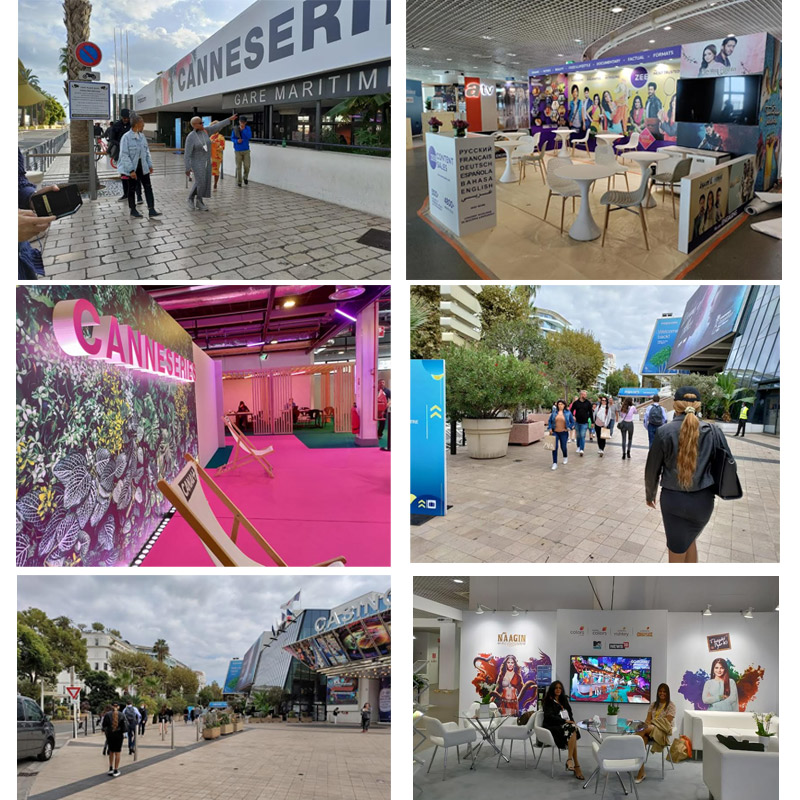
    CANNES: All the naysayers must be regretting not hoofing it down to the south of France for the annual jamboree of the content trading and production community – Mipcom 2021. Not only were the planeloads coming into Nice full of TV, streaming, and feature film executives, the weather gods too seemed to be playing fair, by keeping the sun out blazing strong, and the rain away.

    The streets of Cannes were bustling with people most unmasked, the restaurants overflowing onto the sidewalks. Tables at favourite restaurants were hard to get.  Welcome Back, read the signs everywhere. It felt like the old times of the content market were back. The Palais was playing host to screening some of the most premium series and TV films. Conversations were being struck in bistros, on the Croisette, on sidewalks. There were smiles everywhere as new acquaintances were made, and old friendships revived.

    The reality, however, is that RX France (into which Reed Midem has now been absorbed) announced that it was expecting 4,000 attendees for MIPCom from 11-14 October. That may pale compared to the 13,000-14,000 professionals, it attracted in Mipcom 2019, but once again if truth be told, the number is impressive in pandemic times:

    – when only select vaccines are recognised in Europe;

    – when media and entertainment companies are still reeling from the financial side effects of covid 2019;

    – when travel red alerts and bans continue to be in place between nations;

    – when corporate cutbacks have not been reversed,

    – when fear and confusion continue in the minds of all about the stage we are in conquering the virus

    – when the virus continues to mutate and the new Delta Plus bug now seems to lay millions to waste the world over.

    For those not in the know, the Palais’ basement or P-1 where almost 30-40 per cent of the exhibitors used to collect in their booths, is shut this year on account of safety protocols. Riviera 7 area is this year’s new basement as the premium area has been reorganised to accommodate as many booths as possible. But it is here where some of India’s leading content producers, distributors, has decided to locate themselves.

    Zee Entertainment (called Zee Content Sales), Indiacast, and AnimationXpress (part of Indian Television Dot Com group) have set up the tent in this very premium location. Around 35 Indians are slated to attend this year’s extraordinary Mipcom. Among some of the known professionals: the new head of Zeel content syndication Ashok Nadmboodri, the new Indiacast distribution boss Sheetal Mehra. Of course, Mipmarkets India, Pakistan Sri Lanka, and Bangladesh head Anil Wanvari was seen going from stand to stand to resolve any issues Indian clients face or requests they may have.

    Hopes were running high that offers would be made; deals and collaborations would be struck from 11-14 October.

    For those in the Riviera 7 and eight sections of the Palis de festival, however, things were buzzing as the clock counted down to the opening of the exhibition. And those who have chosen to stay back home can also be part of the Mipcom experience by signing up for the digital version of MIPCOM.  With a simple-to-use user interface and networking tool, RX France has outdone itself, corrected, whatever errors popped up in the previous edition.  

  • The Q’s client list has grown 6 times since its launch on DD Free Dish: CEO Simran Hoon

    The Q’s client list has grown 6 times since its launch on DD Free Dish: CEO Simran Hoon

    Mumbai: Since its launch in December 2017, growing the channel’s distribution has been a top priority for The Q. Realising the potential of small-town India for which television is still either the only or main source of entertainment, the media start-up hopped on to DD Free Dish in March-April and the numbers thereafter are a testimony to the plan’s success.

    Earlier this year, the Company issued a statement declaring that it has “reached its 2021 goal of distribution to 100 Million TV Households as a result of launching on both DD Free Dish and Dish TV in April. The Q India has gone live to 50 million additional TV homes in the month of April.”

    As regards GRPs – the vital metric used to project revenue growth – The Q recorded the highest-ever GRP of 53 in Barc Week 21 (June) in addition to an eight-week average of 46.23, indicating it’s heading into the big league of channels. Buoyed by the growth the ‘start-up’ is gradually expanding into a full-fledged network. It has also ventured into content production with the first TV original ‘Jurm Ka Chehra’ launching in September.  

    While the figures speak for themselves, Indiantelevision.com decided to decode the recent developments on the creative, business, and organisational front in a candid interaction with The Q CEO- Simran Hoon who joined the Company in April. With over two decades of experience in the industry having worked for leading brands including Viacom18, ZEEL, STAR, and SET, Hoon is responsible for driving The Q’s overall growth and vision. The marathoner and animal lover CEO charts the brand’s trajectory post coming on to DD Free Dish.

    Programming for a Changing Audience

    From VOD to DTH and now DD Free Dish, the path trodden by The Q has been quite unlike any other in the Hindi GEC space. Yet, says Hoon the “journey became more interesting April onwards, since launching on DD Free Dish.” Previously, the channel’s programming was targeted at an urban audience, but with the footprint expanding into the hinterland, the content evolved into a more massy and family-inclusive tone. “The moment we came on to DD Free Dish we had to address the big households in Tier 1 and 2 towns without antagonising the urban viewer who obviously has a lot in common with the smaller towns; the differentiation is more pronounced in the minds of the marketers.”

    The change has translated into a preponderance of shows such as ‘Yo-Yo Yogesh’ and ‘Baklol’ over the likes of ‘Tantra by Vikram Bhatt’ and ‘Living in Trends’ (LIT) in the content mix.

    Through all the experimenting with family-oriented shows and now with content production, the channel has been able to successfully uphold its brand ethos of ‘Zara Hat Ke’ and having a ‘social element’ in all its programming. While other players in the FTA space are running repeat content consisting mostly of family dramas that are over a year old, The Q has no plans of going the ‘saas-bahu way’ which according to Hoon is suited for an older audience. “Though finally family-inclusive, we have stuck to our core TG of 15 to 35-year-olds and the promise of offering them more fun, differentiated and easy kind of programming. Our content is carefully curated to suit all age groups,” she shares adding that comedy is a big genre on the channel now.

    Since its launch as an independent advertiser and influencer-marketing-supported Hindi youth entertainment channel, The Q has been redefining TV to mean ‘social’ by delivering digital programming to the medium. For the unorthodox FTA player, the description of ‘Connected TV’ entails not just a connection to the internet, but to the network of people as well. Going forward, even as the Company steps up original production, it will ensure a social connect for all its content. Sharing an example, Hoon reveals, “The casting for our upcoming crime show ‘Jurm Ka Chehra’ was done on ‘Chingari’ (the short video app). In the future, the audience will see a lot of stuff where we bring social to TV.”

    The Advertising Windfall

    Hoon shares that as a brand offering fresh (on TV) content, The Q has not faced the problem of discounted ad rates like other FTA players, and now, with the steady growth in viewership post launching on DD Free Dish, there has been an increase in advertiser onboarding, awareness and acceptance of the channel.

    From around five clients in the first quarter of CY 2021, the numbers have grown six times to include 30 advertisers in the current list. “The mainstay of the FTA channels is FMCG, but we have a lot more e-commerce, pharma, and digital payment companies coming in, even as our client list continues to grow further,” shares Hoon.

    In order to service the increasing demand, the Company hired Ashish Kotekar as head of ad sales for South & West regions in May, and Pankaj Rai for North & East in August. The channel also has plans to go regional, but for now, the focus will be on the HSM.

    Recently, The Q and Chtrbox (an influencer marketing platform acquired by The Q in June) announced the launch of an integrated marketing platform BharatBox which will deliver integrated advertising solutions across linear and digital platforms to marketers, thus maintaining the channel’s ‘social DNA’ even on the business front. “It’s a unique proposition where we will be offering to brands integrated advertising solutions that synergise the reach of social media influencers with The Q’s TV reach.  BharatBox will reach out to tier 2 and 3 towns,” Hoon elaborates.

    Future-ready

    Moving ahead from content and business, The Q has a lot of action happening on the organisational front as well. In addition to Krishna Menon’s elevation as the COO in May, and the new hires for ad sales, the Company appointed Sujata Samant as head of marketing this month. It is pertinent to note here that The Q has not launched any extensive marketing campaigns till now. Further, a distribution consultant and HR head were brought on board recently.

    Hoon credits Tanya Shukla, the programming head, for bringing the brand to where it stands today in that context. Shukla has been in the role for a year now. Giving an understanding of the Company’s overall vision, Hoon remarks, “We are in the process of maturing from a small operating company, a start-up that we still are, to a full-fledged organisation. More people are starting off in different roles and departments even as we speak right now. The recognition that The Q has got has been a little overwhelming for us, but with the right elements in place, we are ready to be seen as a ‘network for the future.”

  • Understanding ALTBalaji’s ‘under 35 viewers’ with Divya Dixit

    Understanding ALTBalaji’s ‘under 35 viewers’ with Divya Dixit

    As ALTBalaji senior vice-president – marketing and revenue, Divya Dixit has played a pivotal role in driving the company’s vision in the fast-growing and dynamic OTT sector. She carries over two decades of experience in business, marketing and brand building across the digital, OTT, broadcast, telecom, music, and retail industries. Before joining ALTBalaji in 2018, she was with ZEE5 where she conceptualised and developed the brand ‘ZEE5 ‘and ‘ZEE5 Originals’, as well as launched the platform and multiple original shows.

    At ALTBalaji, Dixit looks after marketing budgets and recovery via direct subscription revenue. She is also responsible for the overall growth of the platform, program scheduling, and analytics as well. Under her leadership, ALTBalaji has been one of the top three grossing OTT apps, having doubled its direct revenue YOY in the years 2018-19 and 2019-2020.

    On Tuesday, Balaji Telefilms announced its financial results for AMJ 2021, as per which ALTBalaji sold a total of 1.8m subs, up 35 per cent QoQ. Its direct subscription revenues stood at Rs 17cr. Boasting a current active subscriber base of 2.4m (excluding subscribers on partner apps), AltBalaji continues to drive growth for the Company.

    Interestingly the platform is also turning younger everyday with 80 per cent of the current viewers being less than 35 years of age. The brand has registered a 100 per cent YoY growth with respect to the same, especially in the hinterland markets. According to Counterpoint Research’s Survey, AltBalaji’s 25-35 audience accounted for 59 per cent of its users in 2019. The development is significant because ultimately it is this age group which drives the OTT market.

    Indiantelevision.com’s Ashee Sharma got into a freewheeling conversation with ALTBalaji, senior VP – marketing and revenue, Divya Dixit to understand this under-35 viewer base and more.

    Edited Excerpts

    On ALTBalaji’s young viewer base and the value it holds for the brand

    Youth programming continues to be our focus at ALTBalaji. We are striving constantly to keep the stories as young, inclusive, and as vibrant as possible in the hope of making a difference to the future of society. Some of our top viewed shows in this category have been Broken But Beautiful Season 3, Puncch Beat, Dev DD, Crashh, Dark7white, and LSD.

    We are here to make disruptive content that breaks stereotypes and is relatable to New India, and this development is significant for us because it implies that our brand has been able to crack the code for the youth and those young at heart. It has made ALTBalaji the benchmark for other OTT platforms. We expect a steady surge in viewership, especially among the 18-35 year olds who are leading the binge-watching trend today.

    On the difference between this audience and the rest in terms of consumer behaviour

    Most of OTT consumption happens with viewers under the age of 35 years who are far more tech-savvy, however also most often the busiest. Shorter attention spans seem to be a universal thing with this demographic unless their interest is piqued. So it becomes necessary for us to create content that catches the viewers’ attention right from the get-go. Nowadays, content is all over the internet, and with the intense competition, cracking the code to a viewer’s interest is most important. We believe we have been successful in this regard. Our engagement metrics have gone up from 48 minutes a day in FY18-19 to 83 minutes currently and the audience comprises 21.29 per cent women, with men dominating at 78.71 per cent. 

    On the content and marketing strategy for the <35 yrs TG

    At ALTBalaji, digital marketing is an important element of the marketing mix. Associating with like-minded brands, engagement across short format apps, using actors’ social media reach, and activities with youth influencers for content promotion, have been our primary approaches.  We have a robust analytics platform with a live dashboard that provides us information on views and engagement, as well as the demographic details of our subscribers. This helps us in understanding behavioural consumption patterns, and drives our content and marketing strategies.

    The youth has most definitely made a shift towards OTT platforms over traditional means of entertainment. However, the debate over their preference for movies or shows is still on. ALTBalaji has noticed the people under 35 lean in favour of shows that break stereotypes and have unique narratives, and so we continue to launch shows across genres such as thriller, crime, romance, and drama, all the while maintaining our focus on out-of-the-box story ideas.

    Moreover, our content is tailor-made to attract larger audiences. Currently, in India, the most widely spoken language among approximately 70 per cent of the population is Hindi which has been the priority for ALTBalaji. 95 per cent of our content is Hindi originals, although various other shows have been dubbed to ensure that the content is not limited to the Hindi-speaking populace. . Our recent shows like Broken But Beautiful, Mai Hero Boll Raha Hu, His Storyy, and The Married Woman have given us a massive surge in viewership. 

    On the thought process behind targeting this age-group 

    This age group is the one that sparks maximum creativity among writers and content creators, and that’s because they have a voracious appetite for unique narratives. Also, it made sense to cater to an audience that is well-versed with technology, willing to experiment and pay upfront for content. The phenomenon of Binge-watching actually started them, and so, it was only reasonable for us to work with the low hanging fruit first. We saw a huge increase in subscriptions, with growth percentages doubling in multiple cities including Lucknow, Rohtak, Ludhiana, Srinagar, Guwahati, Shimla, and Ranchi, to name a few.

    On the impact on advertising revenue, and if attracted similar brands to the platform – brands that catered to younger audiences.

    In 2020 alone, ALTBalaji has partnered with almost 25-30 brands for various shows. Our marketing strategy includes brand collaborations as it helps us to reach out to a larger audience. The partnerships have also kept our existing users incredibly engaged with all the collaborated offers they receive. 

    Young brands including Imagicaa, Pipo Popcorn, My Imagine Store, Growfitter, Ferns N Petals, and Ixigo have recently partnered with us for our youth drama Puncch Beat 2. These associations include value-added services to our existing customers. For instance, Ferns and Petals, our official gifting partners for Puncch Beat 2, provided a 20 per cent discount coupon to our viewers on their next billing. Ixigo is associated with us as the travel partner allowing 20 per cent off exclusively for ALTBalaji subscribers. The offering is based on the insight that the youth love discovering the world. Growfitter, the fitness partner for our recent shows, provided free one-month Growfitter Premium Subscription to the ‘fitness-conscious’ contest winners. In addition, brands like Imagicaa, Pipo Popcorn, and My Imagine store have been roped in as entertainment, snack, and gadget partners, respectively, thus encouraging the new audience to get on board.

    On the evolution of the business and subscription models of ALTBalaji

    Brands are increasingly starting to be aware of the growing popularity of OTT. Associating with the right brands would be a win-win for both partners by gaining visibility among the right target audience through in-show integrations and surround marketing. In 2020 alone, revenue from mobile internet advertising in India was Rs 7331 Cr and is predicted to rise to Rs 22,350 Cr in the next five years, increasing at a 25.4 per cent CAGR as per PwC’s Global Entertainment & Media Outlook 2021-2025. Utilising this fast-paced growth to the maximum potential will prove highly lucrative to businesses. However, the revenue model is still evolving. Constant innovation and timing are both the key and the challenge in this sphere. Getting it right could prove extremely fruitful for both players in the partnership.

    Talking of subscription models, there is a consumer out there for every content choice. AVOD/SVOD/TVOD are business models and the only choice the consumer has to make is if he/she wants an ad free experience or is comfortable with ads interrupting the viewing experience. As far as TVOD goes, it’s yet to see some traction in India as OTT platforms are still priced very economically. However, in developed countries where SVOD is largely the order of the day, TVOD as sampling for a particular piece of content works very well.   

    I believe in the long term SVOD is a more sustainable model, and the good news is that more and more audiences are willing to pay for content which has moved the SVOD needle up from 5 per cent, three years ago to almost 25 per cent currently. Our subscription model is priced at INR 300 annually while our quarterly plan costs 100, and half-yearly is set at 180. This is not just for youth but for democratisation of content in the country.

  • COLORS Bangla bolsters programming line-up with five new shows

    COLORS Bangla bolsters programming line-up with five new shows

    Mumbai: COLORS Bangla has just announced a line-up of five new shows including a musical reality show and four fictional dramas all of which will premier in the months of August and September.

    The channel has roped prominent producers like Nispal Singh Rane from Surinder Films, Snehasish Chakraborty from lues Production, and Shashi Sumeet who has done more than 40 shows nationwide to produce the upcoming shows. The non-fiction show will be produced by Raj Chakraborty, who was behind the launch of various non-fiction shows in the Bangla television industry. Jeet Ganguly and Anupam Roy are composing the title tracks for the shows.

    The new content line-up also marks the return of stalwarts like Papia Adhikari, Debolina Dutta, Anjana Basu, Sudipa Basu back to the small screen, said the channel on Thursday. 

    Speaking on the launch of COLORS Bangla, business head, Sagnik Ghosh said, “We are set for the launch of the first tranche of our content line up. Through our characters and stories, we want to alleviate the anxiety and adversities that the Bengali society and our core viewers are facing today. Our shows will encourage people to dream and aspire and provide our existing as well as new viewers with superior quality content and an enhanced viewing experience. “

    The upcoming content line-up includes:

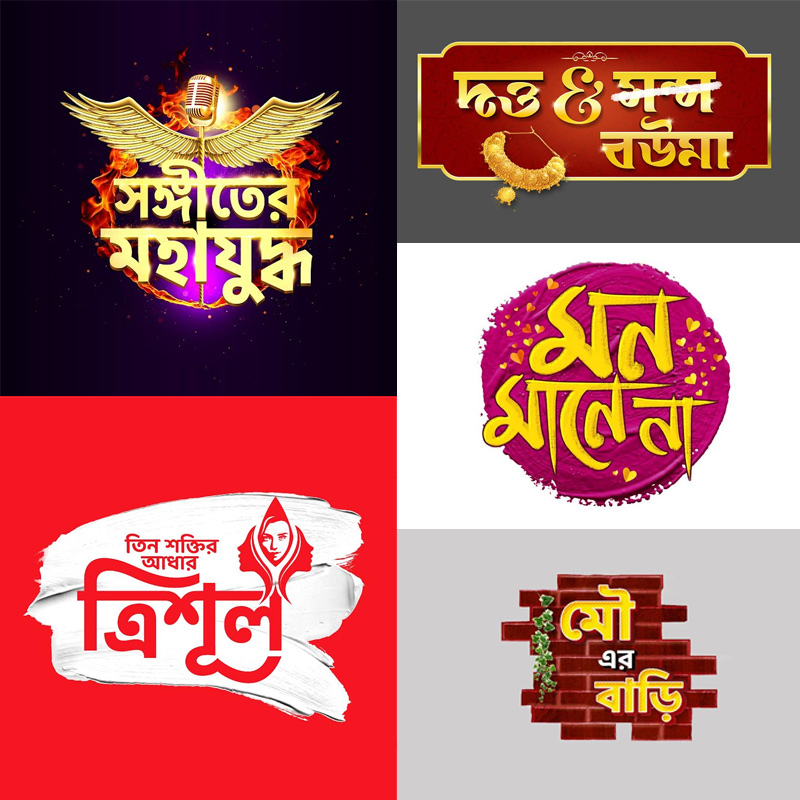
    MOU ER BARI is the story is about the life and struggles of a woman who marries into a new family but gets her own parents to live under the same roof. Her husband is her support in her endeavours and helps her achieve everything that she ever wants. The show produced by Surinder Films will go on air from 30 August every day at 6.30 p.m.

    TEEN SHAKTIR AADHAR – TRISHUL is the story of three sisters, Tara, Durga and Kali hailing from a poor, village based weaving family. Affluent and powerful, Rajnandini is a fashion tycoon renowned worldwide. Circumstances bring the three sisters and Rajnandini face to face, and the sisters seek to avenge the humiliation meted out to them by Rajnandini. The show has been produced by Snehasish Chakraborty, and will go on air from 30 August every day at 7.00 p.m.

    MON MANE NA is a classic rugged love story between two diametrically opposite characters. This is the story of the love and hate relationship of Rudra, an uneducated and rowdy villager and Gauri, an educated woman who values principles above anything else. The show will be produced by Surinder Films, and will go on air from 30 August every day at 7.30 p.m.

    DUTTA AND BOUMA is an unusual love story where the role of daughter-in -law takes precedence over that of a wife. Can a daughter-in-law take charge of the family business? The story is set in a traditional Jewelry business family. The story will be produced by Shashi Sumeet production. The show will go on air from 30 August every day at 8.00 p.m.

    SANGEET ER MOHAJUDDHO is an epic saga of a musical battle to be hosted by Mir. The show produced by Raj Chakroborty, will have the best of talent- come together on one platform and fight for the crown. The show will be judged by the best names from the industry including Ustad Rashid Khan, Lopamudra Mitra, Jeet Gannguli and Abhijeet Bhattacharya. The show will go on air from 4 September every Saturday and Sunday at 8.30 p.m.

    The launch will be supported by a 360-degree marketing and communication campaign encompassing TV, cable, on-ground, radio, outdoor as well as digital platforms, and the channel is also planning for a fresh identity on the day of the launch. 

  • Viacom18 names Viraj Raje the head of programming for Colors Marathi

    Viacom18 names Viraj Raje the head of programming for Colors Marathi

    New Delhi: Viacom18 on Wednesday announced the appointment of Viraj Raje as head of programming for Colors Marathi. He will be responsible for managing the channel’s content strategy and creative framework.

    Raje comes with over 25 years of experience in the industry, having led creative teams across Marathi television and films. Prior to joining Colors Marathi, he has worked with Disney+Star India, Reliance – Big Productions, and as a freelance film director, wherein he revolutionised Marathi entertainment by creating novel and engaging content, said the channel in a statement.

    Welcoming Raje on board, Viacom18, head – regional entertainment (Kannada and Marathi clusters), Ravish Kumar said, “Marathi entertainment, especially on television, caters to audiences with extremely varied preferences – connecting viewers in both urban metros as well as rural parts of the state. Colors Marathi has been paving the path for content that resonates with this diverse audience, bringing stories that are modern yet seeped into the culture of the land. Viraj’s rich experience in the entertainment industry and knowledge about the pulse of the Marathi viewer will help us further enhance the channel’s footprint and bring delight to our audiences.”

    Elaborating on his new role, Raje said, “Content creators today need to be subservient to the fact that to captivate the audience’s interest, one needs to bring the right balance of novelty and mass appeal. I am excited to embark on this exciting journey at Colors Marathi and look forward to creating unique stories that truly reflect the ethos of the Marathi audience.”

    In his career spanning 25 years, Raje has been honoured with numerous awards like the Maharashtra State Award: Best Director for the feature film “Shyamche Vadil“, Best Social Film and Screenplay for “Babanchi Shala“.

  • Aiming to produce 50 % of content outside of traditional non-fiction space: Gaurav Gokhale

    Aiming to produce 50 % of content outside of traditional non-fiction space: Gaurav Gokhale

    An accomplished professional with an MBA from INSEAD (France/Singapore), and over a decade-long experience in the industry, Gaurav Gokhale has been at the forefront of handling the day-to-day operations for Endemol Shine India since October, 2018. The content production company has been credited with the success of several large format shows including Bigg Boss, Khatron Ke Khiladi, and MasterChef India in multiple languages. As the chief operating officer (COO), Gokhale is also responsible for the long-term strategy and P&L of the content production company.

    In his career spanning over 13 years, Gokhale has worked with several organisations including BCG India, where he helped organisations solve strategic issues and improve business performance. Later on, he went on to work with Nimbus Communications as head of strategy and business development. In his previous stint at Star India, he handled the strategic mandates across sports and distribution businesses. He also played a pivotal role in launching the Indian Super League and Hockey India League, and was instrumental in managing the business transition of Star Sports.

    As the OTT boom brings a content revolution in the media and entertainment industry, Indiantelevision.com got into a freewheeling conversation with Endemol Shine India, COO, Gaurav Gokhale to understand how the company is gearing up for this evolution. Gokhale also delved upon the challenges in meeting the burgeoning demand for content, growth opportunities in regional markets, and how the company is executing multiple scripted productions in parallel.

    Edited excerpts

    On the OTT boom and how it has changed the consumption patterns of viewers? Also elaborate on new opportunities that it offers in terms of content production.

    We’re seeing more of a big-bang moment in the OTT space rather than a boom. Digital content consumption is going through an exponential expansion phase. At one end, cheap data and entry-level smartphones have made streaming content easily accessible. Today, we have about 800 million smartphones in India priced from Rs 1,000 onwards. One hour of watching streamed content consumes about 500-700 MB of data and costs around Rs 7. Monthly, that’s around Rs.210, which is the average cable TV bill in the country. We can say that watching quality streaming content has now become truly democratised in India.

    Moreover, consumption of content on personal mobile devices offers better privacy and convenience over communal TV viewing. At the delivery end, streaming services and OTT platforms are bettering their streaming infrastructure and content supply to meet this burgeoning demand. A billion-dollar industry today, the OTT content ecosystem is estimated to grow 15X in the next nine years! These numbers are indicative and convey an upward move in demand and supply. As creators of content, we are happy to ride the wave and do what we do best – churn out quality content to satiate the rising consumption.

    On how media entertainment companies can meet this burgeoning demand for fresh, high-quality content, and the underlying challenges

    We need to re-invent ourselves constantly to feed this burgeoning demand and keep making investments into the sector. Media companies, producers and broadcasters need to re-think their existing models and come up with more efficient work-flows to accelerate content creation. Unlike a manufacturing process, AI and Robots cannot replace human creativity. One machine cannot substitute 10 writers and create 10X output. The only way to scale up production in a human-intensive industry such as ours, is to quickly build skills and efficiency and try and shorten the turnaround timelines.

    On the production setup, there are genuine supply-side constraints. There are a limited number of trained writers, technicians, artists and HODs who can work on OTT shows. It’s a problem the Indian IT industry faced 20 years back, and they solved it with concerted skilling initiatives across over two decades. By 2025, it is projected to become a $100 billion industry contributing in excess of five to seven per cent GDP. We need to push ourselves and aspire to reach there one day. This requires fresh thinking in the way we plan shows, the turnaround times for development, the post-production cycle and so on. These are real challenges today and over time, we need to find ways to optimise them.

    On Endemol Shine India’s plan for TV, OTT and cinema going forward

    As a production house, we produce quality content agnostic of form-factor and medium of consumption. Over the last decade, we have produced shows for TV – both fiction and non-fiction and in the last few years, we have ramped up our production for OTT platforms. We are also steadily building our films slate and have announced a few interesting collaborations in this space.

    On the balance between non-fiction factual, drama, dailies and cinema

    We have historically been known for our large format non-fiction shows such as Bigg Boss, MasterChef and Khatron ke Khiladi. These shows have given us the experience and expertise of delivering big productions in tight timelines and to a budget. Platforms prefer us for this proven track record, our audit transparency and clean operations — an emerging new factor for international platforms as they commission marquee scripted shows in India. That is a natural extension to our existing skill-sets.

    Over the last couple of years, we put in place a very efficient modular setup for executing multiple fiction productions in parallel. This year alone, we have more than 10 fiction shows on the floor. Over the next few years, our ambition is to produce 50 per cent of content outside of the traditional non-fiction space.

    On the growth opportunities in regional markets

    Regionalisation is critical for all content creators. OTT has made content language-agnostic and as we have seen from shows like Money Heist and Narcos. Good content finds its takers all around, irrespective of the language in which they are created. We must also remember that in India, nearly 40 per cent of TV viewership comes from regional markets. Over time, regional budgets have also gone up and today we have streaming services and OTT platforms dedicated to regional content. We are currently producing five versions of Bigg Boss for the regional markets (Tamil, Telugu, Marathi, Kannada, Malayalam), four regional versions of MasterChef and four regional daily fiction shows. We are producing both theatrical and finite fiction content in Tamil. There is a lot of talent and creativity in regional that is waiting to explode and the potential is huge.

    On whether co-production will become the new norm, and if yes, then the kind of financial structuring deals we might see coming in this area.

    If you look at the macro trends, we have a roughly Rs. 25,000 crore TV content industry growing at 10-12 per cent annually, and a nascent Rs. 2,000 crore OTT content industry growing at over 30-40 per cent annually. To fuel this kind of future growth in volumes of production, we need to create content hubs and content factories that can churn out shows on a large scale. This will require innovative ways of working and new kinds of investments and partnerships that bring together different individuals and entities with diverse and complementary skill-sets. In such a ‘co-production’, idea-generators join hands with execution experts like us to pitch and create multiple shows. The ‘creative producer’ then takes over development and the overall creative onus while the ‘line producer’ takes on execution onus and delivers the financial target. Such a partnership is based on implicit trust between the stakeholders but if done well, the synergies can yield hugely positive outcomes and most importantly, faster turn-arounds.

    Apart from the traditional commissioning model where platforms fund development and production and are deeply involved in creating a platform original, we are seeing a growing demand from platforms for ready-for-sale shows that help fill content gaps at relatively lower costs, especially given the longer turn-around of commissioned shows. A natural need-gap situation has emerged and offers a very interesting opportunity for an institutionalised fund play.

    Today, wealth managers and funds in India are sitting on undeployed capital and need a differentiator to sell to their HNI clients. Now, if done right, here is an opportunity to invest in a low-risk vehicle with fairly guaranteed returns and a fundamentally strong demand cycle and with an implicit X-factor. With the right production partner to bet on, I see a lot of organised financial investors wanting to participate in this asset class.

    On whether Endemol Shine India is looking at the studio model too, wherein it will work as an aggregator and distributor for smaller producers

    Strategically, our interest lies in producing shows we can actively shape. While tactical distribution opportunities may arise due to our strong relationships with platforms, our core business is to develop and produce shows that we strongly believe in, with talented writers and accomplished show-runners.

    On the company’s positioning in India

    Endemol Shine India is today an end-to-end content production powerhouse. We produce premium fiction and non-fiction shows; regional daily fiction shows and also factual content. We manage some of the largest shows produced in India and our USP is managing large productions within agreed timelines and budgets. We are well positioned to take advantage of the growing demand for more original fiction content from India. We are producing shows for all leading platforms – Netflix, Amazon, Disney+ Hotstar, Lionsgate, MX Player, Discovery Plus and AltBalaji.

  • Netflix’s Monika Shergill talks about crafting stories for every mood on OTT

    Netflix’s Monika Shergill talks about crafting stories for every mood on OTT

    New Delhi: The OTT platforms have taken the world by storm. If there is one key trend that has completely revolutionised the way content is now being created across mediums, it is definitely these new-age platforms. And leading the way is OTT giant Netflix which currently boasts of over 209 million subscribers worldwide.

    From originals, sit-coms, documentaries, adapted formats to movies, the platform offers something for every kind of viewer. It will also be completing ten years in original programming soon, globally.

    “In all these years, we have tried to offer all kinds of stories on our platform – stories that feel real, and have universal emotions. We have had powerful novel based series, and multiple seasons each told in a fresh way,” says Netflix India, vice president, content, Monika Shergill at the fifth edition of The Content Hub 2021, which concluded recently.

    The three-day mega event organised virtually by Indiantelevision.com brought content makers from the world of television, films and OTT on one platform to delve upon the evolving media and entertainment industry. Indiantelevision.com’s founder and CEO Anil Wanvari got into an engaging fireside chat with Shergill about Netflix’s journey of creating content for the Indian masses.

    “Netflix is creating stories for every mood,” highlights Shergill. “As a streaming service, we are designed very uniquely. Everyone’s version of Netflix is different. You can experiment according to your taste, and try new content anytime you want. The way Netflix is designed, it is to really reflect as many lives as we can, mood within moods, genres, creating an ocean of stories and unlocking its full potential.”

    The French series, Lupin which was released on the platform in January remained among its Top 10 shows across most countries for weeks. It recently released Taapsee Pannu starrer Haseen Dillruba, and Kriti Sanon’s Mimi, and is gearing up for the release of the much-awaited fifth season of Spanish drama Money Heist. Then, there is the American teen romantic comedy, The Kissing Booth 3 in August.

    Haseen Dillruba has been trending ever since it was released. Ray (an anthology based on the works of Satyajit Ray) also spiked audience’s interest. Money Heist remained in Top 10 for 117 days last year,” Shergill says joyously. “What we are beginning to do is to create programming catering to different tastes. One story cannot work for everyone and we understand that everyone has different tastes, which we must cater to. Viewing of Kids content has increased by 100 per cent, and also the documentaries and films in different languages.”

    The final season of Money Heist is now set to launch in two instalments of five episodes each on 3 September and 3 December.

    The platform had announced as many as 41 titles early this year, and has a huge pipeline of new series, shares Shergill. “Finding Anamika will mark Madhuri Dixit’s debut on OTT. Then we will have another web-series, Yeh Kaali Kaali Ankhein in August which is a dark romantic series, bound to surprise everyone. R Madhavan will be seen in the comedy series, Decoupled. So, yes, we programme for every mood and taste,” adds Netflix India’s top executive, “Family dramas are also close to our hearts, and they appeal to the widest set of audiences.”

    According to Shergill, the platform has also made its mark as a global platform that has been successfully bringing best of stories from the world to India and vice-versa. “At a time when people cannot travel physically, we are taking them to different places through our stories. We are glad we are able to do it. All we want to do is entertain, and we promise that we have something for everyone. And, we deliver it to them in a responsible way,” she sums up.

    The fifth edition of the Content Hub 2021 was co-presented by IN10 Media Network and ZEE5, and co-powered by Applause Entertainment and Tipping Point, the digital content unit of Viacom 18 Studios. PTC Network was the supporting partner.

  • Content Hub 2021: How OTTs met the burgeoning demand for content in 2020

    Content Hub 2021: How OTTs met the burgeoning demand for content in 2020

    Mumbai: Any talk of content in a post-pandemic world is incomplete without deliberating on the impact it has had on the OTT industry and vice versa.

    The fifth edition of the ‘Content Hub 2021 – TV, Film, Digital Video, and Beyond’ organised by Indiantelevision.com brought together the heads of three of the country’s leading OTT platforms – Viacom 18 Digital Ventures, COO – Gourav Rakshit, ZEE5 India, chief business officer – Manish Kalra, and SonyLIV, head of originals – Saugata Mukherjee – and renowned content producers – BBC Studios India’s general manager (production), Sameer Gogate and Juggernaut Productions’ COO (OTT), Samar Khan, to throw light on the evolving phenomenon. Kurate Digital Consulting, founding partner, Uday Sodhi moderated the discussion.

    The impact of the pandemic on the OTT industry is not lost on anyone. As the lockdown-induced demand for new content skyrocketed, people were motivated to sample OTT platforms. As a result, the evolution of consumers in terms of OTT adoption which would have otherwise taken at least a couple of years to happen, transpired within the course of a few months.

    The more noteworthy aspect of it, however, was that people were now willing to pay for content. According to industry experts, this marked a huge milestone as far as consumer behaviour is concerned, more so in the Indian market which was hitherto believed to be largely AVOD-driven for OTT players.

    Viacom’s Gourav Rakshit called it the second “tipping moment” for the industry, next only to cheap data. The development was extremely positive, but it came along with a big challenge of retaining consumers by providing them new, relevant and engaging content, which meant bringing quick and drastic changes in content strategies. The growth in consumer appetite for content was thus accompanied by a proportional rise in the risk-taking ability of OTT players.

    “If we didn’t genuinely think that everyone is just a mouse-click away from joining OTT, we would have never put a property like Bigg Boss on digital alone,” asserted Rakshit.

    “Despite the production troubles and scarcity of right content, the demand gave us the confidence to take big bets. For the first time we decided to bring a blockbuster like Radhe on TVOD. Although we were quite sceptical of TVOD as a model and about Indians paying for a one-time rental, the results were pleasantly surprising. 30 per cent of our Radhe consumption happened on TVOD. In the process, we kind of ‘forcefully’ moved our content strategy to movies and regional,” added Kalra.

    SonyLIV’s Saugata Mukherjee agreed that the pandemic was a huge learning curve for the industry, and the changes (VOD consumption, consumer willingness to pay, OTT movies, and long-format shows) affected by it are here to stay. “Starting out with half-a-million subscribers on 18 June, today we have crossed six million. The pandemic has really expedited OTT adoption, and we have managed to keep pace with it by dropping new shows every month despite the difficult production scenario. There have been a few good shows like ‘Maharani’ and we also had ‘Scam’ walking away with all the glory. Both were well received across segments, signifying that the right kind of story will have takers everywhere.”

    With the requirement of content growing every day, content producers found themselves in a tough position having to deal with the challenge of coming up with fresh story ideas at a mind boggling rate. “So many stories were being told that it became quite challenging for us to find the next big idea. Moreover, with every success the bar kept getting higher,” stated Juggernaut Productions’ Samar Khan.

    Gogate of BBC Studios shared a slightly different perspective. “While I don’t think there is scarcity of ideas and talent, the way we tell stories needs constant reinventing. This effectively means that the ‘premiumness’ of content in terms of writing and making, not the cost, has to get better. The second big challenge is to keep resetting the mix in accordance with the predicted demand scenario for at least six months hence. The game has become far more dynamic than what it used to be,” added Gogate.

    Talking about how the content mix on their respective platforms is changing, Kalra’s shares an interesting finding from ZEE5’s research which reveals that viewers look at OTT as a ‘buffet’. “What people watch at any given point of time is a function of their mood, and hence it is important for us to cater to all taste clusters,” he said.

    As regards the ‘buffet menu’, the panelists agreed that there is currently an overdose of ‘high-concept’ and crime shows on OTT platforms making them slightly metro and male-skewed. There’s not enough content to service the staggering demand for tentpole premium dramas suited for family viewing. Both Gogate and Khan shared the opinion that comedy, being a difficult genre, is most underserviced at present.

    Crystal gazing at the next 18 months, Kalra remarked that, “already 65 per cent of our consumption is happening on connected TV, so most of the demand is going to come from the family-viewing space. Big-screen viewing, tier two and three audiences, and regional content will be on the rise.” As believers in the potential of regional content, Rakshit and Mukherjee also agreed that the authentic and relevant stories and characters that they are looking for will come from the tier two and three, regional markets.

    “Regional scripted as a genre hasn’t taken off yet, but there is a lot of work happening on it. It could well be the next frontier in the coming six to eight months. Regional markets have a lot of talent and stories, but they are essentially individual-driven. If we can get the discipline of the big companies to percolate into these markets through collaborations, things will change overnight,” said Gogate. 

    Coming to the big question around the comparative demand for series and films and whether OTT theatricals can become a phenomenon, trends so far have shown that the demand for series is far higher. However, with an exception of Samar Khan who believes that the direct-to-digital release wave was a function of theatres remaining closed and a significant chunk of the audience will go back to them when the situation normalises, others on the panel were more hopeful about it.

    Contending that “movie-making and film distribution will not be the same again”, SonyLIV’s Mukherjee noted, “While theatres will always be around, there’s going to be some demarcation as far as the medium is concerned. A lot of scripts which didn’t find a theatre or platform to showcase will possibly come to OTT. This, in itself, is a big market opening up. Theatrical experience will become somewhat limited to the slightly bigger spectacle movies, with the more midlist category films looking for a direct-to-digital release.”

    Mukherjee and Gogate also held that being quite a young industry, the ‘OTT movie making’ grammar is still evolving, as is the grammar around making eight-hour long form series. The answers to these questions will emerge as and when more and more content starts getting made specifically and exclusively for the OTT platforms. 

    Adding to the conversation, Kalra shared that Zee5 witnessed considerable demand for regional theatricals coming from the tier two and three markets. “Although theatres shutting down had the greatest impact, producers have surely developed an appetite for risk-taking. What remains to be seen is whether the phenomenon will continue as ‘direct-to-digital’ or ‘delayed-from-theatrical’. That is something we will learn in the process.”

    Last but not the least, talking of government regulation the panelists maintained that it hasn’t disrupted life and work for them in any significant manner yet. The impact will become clear only when the first 10-15 cases arise. That being said, Rakshit opined that “one of the positive rub-offs of it is that dissent gets centralised and doesn’t run into unnecessary PILs and courts all over the country which is just negative for the industry. On that note, it’s actually quite welcome.”

    The fifth edition of Content Hub 2021- ‘TV, Film, Digital Video, and Beyond’ was co-presented by IN10 Media Network and ZEE5, and co-powered by Applause Entertainment and Tipping Point, the digital content unit of Viacom18 Studios. PTC Network is the supporting partner. 

  • Bomanbridge Media strikes global distribution partnership with IN10 Media Network

    Bomanbridge Media strikes global distribution partnership with IN10 Media Network

    Mumbai : Singapore-based content distribution and production company Bomanbridge Media has signed a global distribution partnership with the Indian infotainment channel EPIC, from the house of the IN10 Media Network which has businesses in broadcast, digital, and production under its umbrella.

    This alliance will see Bomanbridge exclusively selling more than 500 hours of Indian original content from EPIC’s catalogue which features factual content, including series like Raja Rasaoi Aur Anya Kahaniyaan and Regiment Dairies. In addition to the distribution of original finished content, the partnership will also explore co-productions and other mutually beneficial IP projects in efforts to increase cross border storytelling.

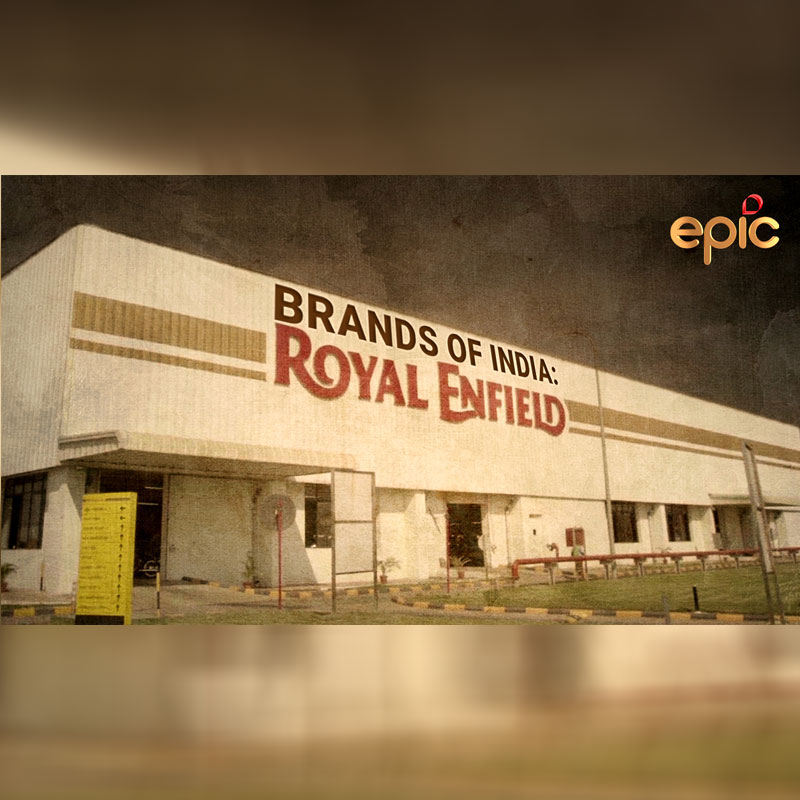
    To kickstart the new collaboration, Bomanbridge has also announced the first milestone deal on the factual documentary special, Royal Enfield – Brands of India (1×60’) with SBS Australia. The 1 x 60’ programme will air later this year. The series follows the legendary brand, Royal Enfield, and its unique story – a vintage motorcycle company that has an English pedigree but an Indian upbringing.

    Royal Enfield Bullet, is the world’s oldest continuously made motorcycle which has legions of fans and followers who love its sound, looks and riding comfort. This is the story of the rise, fall and rise of Royal Enfield – an iconic motorcycle company, the company said on Thursday.

    “We are so impressed with the growth of IN10 Media Network’s channels and overall service expansion. It’s clear to us they are ambitious and we are keen to share this adventure with them, support the growth through sales of their high quality content, and embark on a new slate of projects together,” said Bomanbridge Media, CEO, Sonia Fleck.

    Commenting on the partnership, IN10 Media Network, VP – Corporate strategy and development, Mansi Darbar said, “We are elated to partner with Bomanbridge Media, whose expertise will take our flagship channel EPIC’s premium content to a global audience. At the Network, we are committed to associate with captivating content which has a universal appeal and caters to a wide set of viewers. This strategic partnership strengthens our commitment towards factual content.”