Tag: Content

  • ZEE5 Global rolled out a campaign titled ‘The Great ZEE5 Giveaway’ which offers guaranteed gifts

    ZEE5 Global rolled out a campaign titled ‘The Great ZEE5 Giveaway’ which offers guaranteed gifts

    Mumbai: In a special holiday season initiative, ZEE5 Global, the streaming service for South Asian content, has rolled out a campaign titled ‘The Great ZEE5 Giveaway’ which offers guaranteed gifts ranging from gift vouchers to vacations for US consumers on purchase of its 4K packs or add-on packs.

    Launched in association with the online South Asian marketplace in the US, Quickly, the Gift cards rewards partner, the consumer giveback program was announced during the recent launch of ZEE5 Global Add-ons – a strategic move to aggregate multiple South Asian streaming platforms on the ZEE5 Global platform. This initiative will offer a one-stop destination to consumers for easy and seamless access to their favourite South Asian content.

    With this limited period offer timed especially with the holiday season, subscribers can participate in a new year sweepstakes for a chance to win vacations to Hawaii, wireless headphones, tablets, smartwatches and more. In addition, every subscriber gets a guaranteed gift voucher worth $10 with a ZEE5 4K monthly subscription and $40 with an annual subscription.

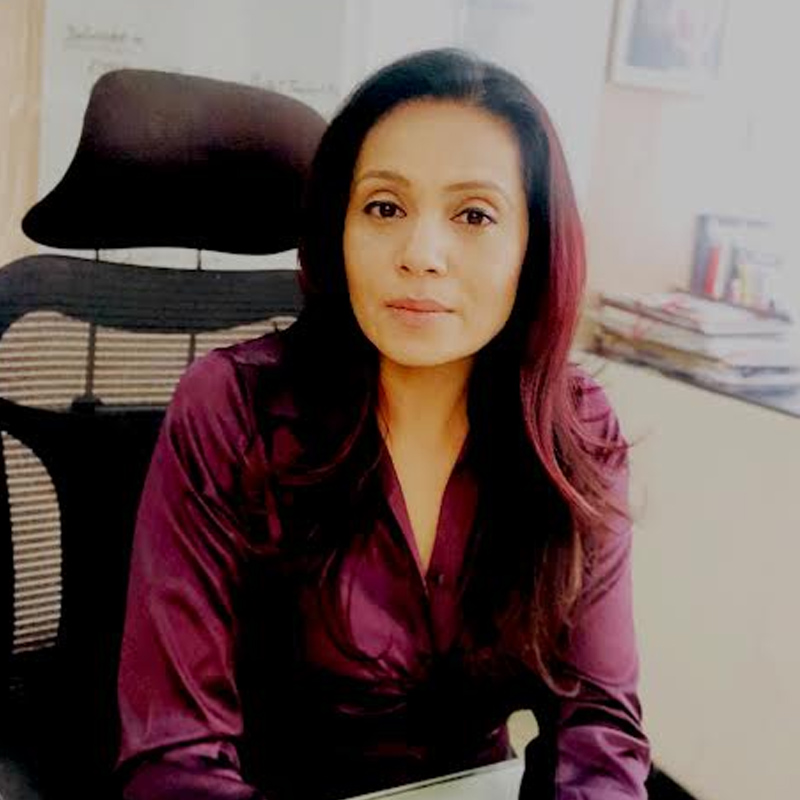
    ZEE5 Global chief business officer Archana Anand said, “It’s been a huge year for us here in the US as we’ve become the leading South Asian streaming platform in the shortest possible time and it’s all on the back of the massive love from our consumers.  To say thank you and express our gratitude, we’re now looking to delight our consumers through multiple initiatives. From the recently launched ZEE5 Add-ons which will simplify how they subscribe to and access their South Asian content now on a single platform, to offering guaranteed rewards with every subscription in partnership with another key South Asian brand, Quicklly, as well as a chance to win exciting Hawaii vacations and other gifts in our upcoming New Year sweepstakes, we want to ensure that this holiday season is even more memorable with ZEE5 Global.”

    Sharing about the partnership COO of Quicklly Inc Pritesh Velankar said, “At Quicklly, we are thrilled to collaborate with ZEE5 Global to bring a unique blend of entertainment and cultural convenience to our users. With our aligned mission and values, we believe this is just the beginning of a partnership that will redefine the way people engage with their favourite entertainment, flavours and fashion from the comforts of their home.”

    ZEE5 Global Add-ons is available across platforms like Android, iOS, www.zee5.com, Fire TV, Apple TV, Roku, and Samsung TVs.

    For more information on the campaign, please visit https://www.zee5.com/global/blog/the-great-zee5-consumer-giveaway/

  • “Success potential lies in creating fresh content that highlights India’s emerging generation’s aspirations”: Vivify Asia’s Vikram Bhalla

    “Success potential lies in creating fresh content that highlights India’s emerging generation’s aspirations”: Vivify Asia’s Vikram Bhalla

    Mumbai: Entrepreneurship is the art of turning ideas into action, where innovation meets determination. It’s a journey marked by risk, resilience, and relentless pursuit. Entrepreneurs are the architects of change, crafting their destinies with a blend of passion and practicality. In this dynamic realm, every challenge is an opportunity, and success is the sweet reward for those who dare to disrupt the status quo.

    In this interview, we have an industry veteran – Vikram Bhalla who is an entrepreneur/filmmaker with a diverse career spanning over 30 years. His journey reflects his enduring passion for events, content creation, and innovation. Vikram’s professional life began right after school when he worked as a telephone instrument salesman in 1992. However, he found his true calling in the world of music and events. He transitioned to managing bands, including Daler Mehndi, in partnership with the international agency PNG, all under Golden Melodies in 1993.

    Vikram’s expertise in lifestyle, music, and the audio industry is the foundation of his creative endeavors. He has actively engaged in various lifestyle segments, including motorcycling, music, audio, cycling, and coffee culture. He envisions Vivify Asia as a platform for nurturing entrepreneurs, embracing the gig economy, and fostering creativity.

    Indiantelevision.com in conversation with Vivify Asia founder and director Vikram Bhalla discussed his entrepreneurial journey, Vivify Asia’s USP, and more.

    Edited Excerpts:

    On the inspiration behind your transition from selling telephone instruments to managing bands, and eventually founding Vivify Asia

    The evolution transpired as my awareness heightened during the sales process, revealing that particular brands wield a premium despite offering fundamentally equivalent products as their counterparts. This realisation prompted a heightened cognizance of the pivotal role that marketing assumes in augmenting the perceived value of products.

    On your experience as a DJ in Delhi contributing to the foundation of Vivify Asia, and the role that your passion for music played in shaping the company’s identity

    I became involved in live events out of a fascination with the factors that contribute to their success. This curiosity led me to delve into various aspects of the event process. Initially, I took on the role of a DJ, and as I embarked on different projects, I gradually assumed responsibility for additional facets of the events. This evolution saw me not only handling the musical aspects but also taking charge of technical aspects and eventually delving into the thematic treatment of events. Through this progression, I gained a comprehensive understanding of the diverse elements that come together to create a memorable and successful event experience.

    On the USP of Vivify Asia in providing high-quality content at affordable prices and balancing cost-effectiveness with maintaining content quality

    Leveraging insights gained from millions of human and consumer interactions, coupled with our adept skill in crafting impactful scripts, we seamlessly integrate our understanding of the human mindset into content creation. This synergy allows us to produce compelling content that effectively resonates with audiences without exceeding budgetary constraints. Drawing on decades of experience in the production process, we strike a harmonious balance between effectiveness and cost-efficiency. Our approach combines a deep understanding of consumer behavior with the art of crafting persuasive narratives, ensuring that our content not only engages but also aligns seamlessly with the financial parameters of the production journey.

    On your engagement in various lifestyle segments being diverse, and ensuring the appeal of your documentaries extending beyond enthusiasts

    The goal is to spark curiosity and provide a glimpse into the enriching experiences that a joyful lifestyle can offer. This initiative aims to open a window for individuals, offering them the opportunity to explore and uncover exciting aspects of life that may have previously escaped their attention. By doing so, we hope to introduce people to novel and enjoyable activities they may not be familiar with, ultimately enhancing their overall sense of well-being.

    On the genre or type of content that you believe, holds the most potential for success in the current market

    The potential for success lies in creating fresh content that highlights the aspirations of the emerging generation in India. Whether it’s fictional narratives or real-life stories, there’s a growing audience eager to witness and hear about individuals who are ambitiously pursuing their dreams and forging unique identities. The opportunity resides in showcasing the endeavors of this new wave of Indians who are thinking big and striving to carve out their distinct paths. People are keen to engage with content that reflects the spirit of these endeavors, making it a promising avenue for storytellers to explore and captivate audiences with narratives that resonate with the dreams and ambitions of the contemporary Indian persona.

    On navigating the dynamic landscape of a rapidly evolving industry, balancing traditional and new-age approaches, to position Vivify Asia effectively

    Examine all propositions critically, embracing methodologies that demonstrate efficacy while scrutinising established industry practices that may have diminished in effectiveness over time. Assume the role of a devil’s advocate in assessing each approach, thereby identifying and endorsing those that withstand rigorous scrutiny.

    On the success stories where Vivify Asia played a crucial role in fostering someone’s creative endeavors or business ventures

    The alumni of Vivify have successfully established a minimum of ten businesses. Situated in proximity to our initial office, a local community expressed interest in employment opportunities, prompting several individuals to join as production assistants. Over time, these individuals transitioned to establish a prosperous set designing enterprise, collaborating with industry leaders. Such success stories abound within our community.

    On the advice that you would give to aspiring entrepreneurs

    For aspiring entrepreneurs, my advice would be to dedicate 10,000 hours to your craft, embrace challenges with an open mindset, and persevere through adversity. Take ample time to observe various customer interactions, as they hold valuable insights. By doing so, you’ll discover that the customer often guides the way forward.

  • We want high-quality OTT content available, accessible, and affordable to consumers:  Tata Play chief communications officer Anurag Kumar

    We want high-quality OTT content available, accessible, and affordable to consumers: Tata Play chief communications officer Anurag Kumar

    Mumbai: Tata Play’s (formerly known as Tata Sky) over-the-top (OTT) platform, Tata Play Binge, has enabled 17 streaming apps in addition to gaming under one roof. “It is not an easy task to create effective communication with consumers, especially when the brand is as big as Tata,” shares Tata Play chief communications officer Anurag Kumar in an exclusive conversation with Indiantelevision.com, while making sure that the newly launched OTT aggregator reaches more people and that they have access to quality content at a cheaper price.

    With its campaign “Bachcha Bachcha Janta Hai,” Tata Play hopes to bring the expansion to all of its smartphone users without the need for a DTH subscription.

    Currently having 17 OTT platforms, including Disney+Hotstar, Eros Now, MX Player, Voot Select, and Zee5, in its app, Tata Play Binge targets to increase the number to 25 by the end of the current fiscal year.

    Kumar also discussed the campaign, strategy, rebranding, Tata’s legacy, and technological disruption for Tata Play Binge.

    Edited Excerpts

    On the campaign

    When we first launched the campaign, I believe one of the most important insights we had was that while consumers often knew the names of the shows they wanted to watch, they didn’t always remember the platform on which they could watch them.

    We gained the advantage of seeing that any show you could think of should be available on Binge by aggregating content from all of our partner apps in one place.

    With its tagline, “Baccha Baccha Jaanta Hai,” Tata Play Binge wanted to convey the ease of accessing any type of content. This marks the beginning of the campaign.

    So far, we’ve received a positive response, with over 1.5 million views and over one lakh likes on Instagram.

    On the strategy

    Every time a campaign is created, the initial step is to determine what unique problem remains to solve. This will provide an exact focal point to follow throughout the campaign.

    Creating communication is an art, and to overcome the difficulties, creative people are needed to do it well.

    To sketch the perfect strategy, it is important to be clear about the target audience. How do I reach them? Where are they available? Are they available on television? What role does digital play as it grows in importance? What kind of incremental reach does each medium add to reach more people? And how much engagement can be generated through social media platforms?

    On customer response for Tata Play Binge

    I believe we have reached nearly a million Tata Binge customers already, primarily through DTH but also through non-DTH sources.

    We are very excited about the opportunity that we are providing to consumers. The first step is to discover the content. Second, it should also be accessible for download on smartphones and can be watched on another screen. As a result, accessibility was a critical factor, and finally, it should be affordable, which is why the Rs 59 pack is the cheapest for the consumer.

    The overall concept is to have paid OTT with high-quality content that is available, accessible, and affordable. We have a very strong proposition to offer, and the campaign is gaining acceptance and popularity.

    On the rebranding

    One of the things that helped us when we rebranded from Tata Sky to Tata Play was the brand name, given how well-known and reputable Tata is in India.

    Consequently, that stayed as one significant contributing aspect due to its enormous brand. However, the primary roles are still present, and Sky to Play is altering. Before completely switching to a new game, the brand name made our task a little easier.

    Having said that, I believe that was the startup guide. We concentrated on raising as much awareness as possible because we wanted to send the message that we had rebranded and did not want any confusion.

    We went through the entire process of creating something extremely dense. We had not one, but three to fourteen commercials saying the same thing: Tata Sky has become Tata Play.

    On the Tata brand

    By far the most valuable brand in the country is Tata. Because quality represents trust, when you mention the Tata name, there is something we must live up to—something that cannot be denied, something you cannot fall short of.

    It puts pressure on other companies as people have expectations and we have to fulfil that, there is a positive side too as the brand has a legacy.

    On technological disruption

    Binge is a product of tomorrow. Today, a higher percentage of web consumption occurs on smartphones. Problems people face while watching, like content buffering, will vanish as soon as they switch from 4G to 5G networks on their phones. Tomorrow, they’ll have much faster speeds.

    It’s actually a boon to the product. It will increase online video consumption in the country; we already have nearly 415 million viewers who watch online videos, which includes all free content such as YouTube and everything else, social media and whatnot. However, the number of people who pay for OTT, or paid subscribers, is a very small percentage, estimated to be around 60 million.

    We believe Tata Binge will actually help to accelerate paid online consumption by people who are currently watching free content but want quality content at a low cost because of our accessibility, availability, and affordability. They will pay for OTT because paid OTT will grow and really help people access the quality content that is typically only available in paid form.

    On new trends

    We anticipate that more players will attempt to launch OTT aggregation services. Customers will realise that this is a very convenient way for them to access OTT. We also believe that more content partners will create apps that will become part of the OTT aggregator. We have a few apps lined up for collaboration in the coming days. Both of these trends will accelerate, and I believe they will be very beneficial to consumers. I am pleased that people now have access to a wider range of content in more convenient formats.

    On the copyright

    The content policy must be adhered to. Tata Play follows the same policies regardless of who owns the content. We strictly follow the rules and don’t process anything that is not allowed.

    The primary goal of making a product like Tata Binge easy to access and use, as well as affordable, is that when more companies/aggregators like us enter the picture, it will reduce issues like copyright violations and plagiarism. People who watch illegal videos will be able to afford high-quality content at a low cost, lowering the overall cost.

    On the opportunities

    Our primary focus will remain on transitioning consumers from cable and free-to-air to Tata Play because the experience we provide is far superior.

    For Tata Binge, our primary focus will be on consumers who watch free online videos and will assist them in transitioning to paid content consumption due to the high-quality content available through a unified interface.

    On the gaming

    Today, we have not only 17 apps but also games. We collaborate with players in the gaming industry, giving our database customers another reason to visit Binge and engage with it. We believe that gaming is a fascinating opportunity.

    On coexistence of TV and OTT

    Both will coexist, in my opinion, according to industry partners. I strongly believe that, and I believe that many of these are valid reasons. The nature and type of content available on television are the most important considerations. Then there’s the fact that the types of content available on OTT aren’t the same. They are, in fact, complementary.

    The majority of television viewing is done on a large television screen. Whereas in India, approximately 95 per cent of OTT viewing occurs on mobile devices. So, rather than competing, they are, I believe, complementing each other in many ways.

    Over time, there will be some changes. However, I believe that, in the long run, despite what you may have heard about TV dying talk in developed markets such as the United States, nothing of the sort has occurred. Consequently, it is also improbable that it will occur in India any time soon.

  • Bob Chapek exits Disney; Bob Iger returns as CEO for two more years

    Bob Chapek exits Disney; Bob Iger returns as CEO for two more years

    Mumbai: US and global media conglomerate Disney has announced that Robert A. Iger is returning to lead Disney as CEO, effective immediately. Iger, who spent more than four decades at the company, including 15 years from 2005-2020 as its CEO, has agreed to serve as Disney’s CEO for two years, with a mandate from the board to set the strategic direction for renewed growth and to work closely with the board in developing a successor to lead the company at the completion of his term. Iger succeeds Bob Chapek, who has stepped down from his position. Chapek spent less than three years as CEO. Chapek’s contract had been extended in June 2022 for three years. The earlier contract had been scheduled to expire in February 2023.

    “We thank Bob Chapek for his service to Disney over his long career, including navigating the company through the unprecedented challenges of the pandemic. The board has concluded that as Disney embarks on an increasingly complex period of industry transformation, Bob Iger is uniquely situated to lead the company through this pivotal period,” said The Walt Disney Co. chairman of the board Susan E. Arnold. “Iger has the deep respect of Disney’s senior leadership team, most of whom he worked closely with until his departure as executive chairman 11 months ago, and he is greatly admired by Disney employees worldwide—all of which will allow for a seamless transition of leadership.”

    The position of chairman of the board remains unchanged, with Arnold serving in that capacity.

    “I am extremely optimistic for the future of this great company and thrilled to be asked by the board to return as its CEO. Disney and its incomparable brands and franchises hold a special place in the hearts of so many people around the globe—most especially in the hearts of our employees, whose dedication to this company and its mission is an inspiration. I am deeply honoured to be asked to lead this extraordinary team once more, with a clear mission focused on creative excellence to inspire generations through unparalleled, bold storytelling,” Iger said.

    During his 15-year stint with Disney, Iger helped build Disney into one of the world’s most successful and admired media and entertainment companies with a strategic vision focused on creative excellence, technological innovation, and international growth. He expanded on Disney’s legacy of storytelling with the acquisitions of Pixar, Marvel, Lucasfilm, and 21st Century Fox and increased the company’s market capitalization fivefold during his time as CEO. Iger continued to direct Disney’s creative endeavours until his departure as executive chairman last December, and the company’s pipeline of content is a testament to his leadership and vision.

  • GUEST ARTICLE: The creator economy and how it has evolved over the last few years

    GUEST ARTICLE: The creator economy and how it has evolved over the last few years

    Mumbai: For many decades, we have relied on traditional media outlets like television, radio, and print for our information and entertainment, consuming content created and curated by a few major media houses based on the preferences and requirements of the masses. The advent of the internet and web 2.0 brought a significant shift in how we consumed information by decentralising content communication, creation, and distribution. Thanks to the opportunity offered by social media, we found ordinary people like ourselves writing, filming, and creating niche as well as mass content that resonated with people worldwide.

    And as a result of this, people moved away from traditional media sources. They started surfing the internet to consume content and connect with people who shared similar interests and experiences. Over time, people learned to market their skills, hobbies, and interests online. This resulted in the rise of a new economy built by millions of independent content creators, curators, and community builders, marking the beginning of the “creator economy.”

    Today, the creator economy is estimated to be worth more than $100 billion, and it includes everyone who is a part of the web economy, such as social media, blogs, videos, software tools, and tech platforms like Hypothesis designed to help them grow and monetise.

    More than 50 million people worldwide identify as “creators,” with two million or more earning a living from their passion through platforms such as YouTube, Instagram, Twitch, TikTok, and others. According to a survey, YouTube content creators contributed a whopping Rs 6,800 crore to the Indian economy in 2020.

    The evolution of the creator economy

    ●      The birth of social media platforms

    Towards the end of the 2000s, we witnessed the birth of many social and content channels like YouTube, Instagram, Spotify, Medium, Linkedin, and more. The rise of the creator economy has relied heavily on the development of these platforms. We wouldn’t have creators if you didn’t have platforms on which they could create. It was due to social media sharing that content distribution became normalised. Today, creators are no longer at the mercy of large production companies, as these platforms have equipped them well to solve their distribution problems.

    ●      The emergence of influencer marketing

    Brands began to see the value in investing in creators to promote their products and services to their large on-platform audiences as they began to build a dedicated audience engaging with their content due to their skills and personalities. This proved a very successful marketing strategy, aka “influencer marketing,” as it allowed brands to tap into a new market and advertise to a niche audience more likely to be interested in the brand’s product during their moment of consumption.

    Brand sponsors began paying creators on platforms such as Instagram and Tiktok in exchange for their reach to an audience gained through the platforms.

    ●      Covid impact 

    As social media platforms proliferated, people found themselves increasingly attracted to screens, both as creators and consumers. What many believed would be a passing phase, like the dot-com era, soon became a compulsion.

    With the onset of the pandemic, millennials and gen-z turned towards social and subscription based platforms either out of boredom or to supplement their income due to the economic slump. Because of the nationwide lockdown, everyone was forced to use online health, education, shopping, and entertainment resources.

    This has led to the growing dominance of content creators in mainstream media who are willing to pay for tools that help them grow their content reach and maximise their revenue.

    ●      Creators are brands within themselves

    With the constant influx of influencers, competition for branded collaborations is becoming increasingly fierce, prompting influencers to seek alternative revenue streams.

    Instead of chasing revenue through generic clickbait content, influencers are becoming the new brands. Today, creators have gained enough loyalty from their audiences to be able to sell any product better than the traditional brands. Creators are launching their brands without investing millions of dollars in a team and resources, instead relying on a combination of audience and reach, good branding, and a distinct point of view with their product.

    Today, many brands consider working with creators an essential part of their brand and marketing strategy. But it remains a largely unorganised space, with discovering the right talent to work with and measuring success depending on how each brand structures its efforts. The creator economy needs a unified platform to connect brands with customers through the right influencers and manage the entire campaign pipeline. At the same time, it requires a platform for creators to engage with their audience and build meaningful relationships with brands.

    That’s where “influencer marketing software services” step in, allowing agencies and brands to discover the right creator, conduct outreach, set up campaigns, and track performance on one platform. On the supply side of the ecosystem, it empowers creators and influencers to reach their audiences by understanding their content performance and audience affinity and collaborating with brands and agencies.

    The author of this article is Hypothesis senior VP product and analytics Himani Agrawal.

  • MIB orders central ministries, state governments to exit broadcast business

    MIB orders central ministries, state governments to exit broadcast business

    Mumbai: The ministry of information and broadcasting (MIB) has issued an advisory which asks any ministry/department of the central and state/UT governments and entities related to them to exit the broadcasting business by 31 December 2023.

    If the ministries of the central government, state/UT governments, and entities related to them are already broadcasting their content, it must be done through Prasar Bharati, through appropriate agreements between Prasar Bharati and the concerned central, state, and union governments. The advisory will affect the Tamil Nadu and Andhra Pradesh state governments, which operate in the content distribution space.

    The advisory will mean the withdrawal of Tamil Nadu and Andhra Pradesh state governments from the content distribution space. The Tamil Nadu government owns and operates a cable distribution company called Arasu Cable TV  while the Andhra Pradesh government runs the AP Fibernet service, which has a triple-play offering of IPTV, internet, and telephony. The Tamil Nadu government also operates an educational channel ‘Kalvi Tholaikkatchi’.

    The Telecom Regulatory Authority of India (Trai) had made recommendations on “issues relating to the entry of certain entities into broadcasting and distribution activities” dated 12 November 2008, 28 December 2012, and 22 January 2015. Its recommendations dated 28 December 2012 have been accepted by the MIB and the ministry of law and justice.

  • Netflix recovers with 2.4 mn subscriber gain in Q3

    Netflix recovers with 2.4 mn subscriber gain in Q3

    Mumbai: In the third quarter ending September 30, 2022, Netflix reported 2.41 million net new paid subscribers. It now has 223.1 million paid subscribers globally. Earlier, the expectation was to gain one million subscribers. The expectation for Q4 is 4.5 million paid net additions versus 8.3 million in Q4 2021.

    The company said that after a challenging first half, it believes that it is on a path to reaccelerate growth. The key, it says, lies in pleasing members. Its focus has always rested on winning the competition for viewing every day. When its series and movies excite members, they tell their friends, and then more people watch, join, and stay with the platform.

    Speaking about competition, it said that while competitors are investing heavily to drive subscribers and engagement, building a large, successful streaming business is hard. Netflix estimates that they are all losing money, with combined 2022 operating losses of well over $10 billion, versus Netflix’s five to six billion dollars annual operating profit.

    For incumbent entertainment companies, this high level of investment is understandable given the accelerating decline of linear TV, which currently generates the bulk of their profit. Ultimately, though, Netflix believes that some of its competitors will seek to build sustainable, profitable businesses in streaming—either on their own or through continued industry consolidation. While it’s early days, we are starting to see this increased profit focus—with some raising prices for their streaming services, some reigning in content spending, and some retrenching around traditional operating models which may dilute their direct-to-consumer offering. Amidst this formidable and diverse set of competitors, it believes that its focus as a pure-play streaming business is an advantage. Netflix explains that its aim remains to be the first choice in entertainment and to continue to build an amazingly successful and profitable business.

    Netflix said that it operates in a highly competitive industry where people have many different entertainment choices—from linear TV to streaming, YouTube to TikTok, and gaming to social media. The silver lining is that the opportunity is very large and growing, and Netflix is still very small relative to that opportunity (for example, eight per cent of total TV time in the US and the UK, two of its most established countries). Its annual revenue of $30 billion or more in the 190 countries in which it operates is roughly five per cent of the combined estimated $300 billion pay TV/streaming industry, $180 billion branded advertising market, and $130 billion consumers spend annually on gaming. So, Netflix believes that it has a long runway for growth if it can continue to improve its offering steadily over time.

    Netflix also stated that its six per cent year-over-year revenue growth in Q3 was driven by a five per cent increase in average paid memberships and a one per cent increase in average revenue per membership (ARM). Excluding the impact of foreign exchange (F/X), revenue and ARM grew 13 per cent and eight per cent year-over-year, respectively. The sequential decline in revenue was entirely due to F/X.

    In the third quarter of the fiscal year in the Asia Pacific region, revenue grew by 19 per cent, excluding F/X, as average paid memberships rose 23 per cent year-over-year. ARM fell three per cent year on year, excluding F/X, owing in part to lower ARM in India. This was somewhat offset by higher ARM in Australia and Korea. It added 1.4 million paid memberships in the region (versus 2.2 million in the last Q3).

    Excluding F/X, EMEA revenue and ARM grew 13 per cent and seven per cent, respectively. Paid net additions totaled 0.6 million, down from 1.8 million in the previous quarter. In Latin America, revenue increased 19 per cent year-over-year, supported by ARM growth of 16 per cent vs. the year ago quarter excluding F/X. It added 0.3 million paid memberships, in line with membership growth in Q3’21. ARM and revenue grew by 12 per cent and 11 per cent, respectively, in the US and Canada, which is its most penetrated market. Paid net adds totalled 0.1 million (similar to the 0.1 million in Q3’21).

    For Q4 of 2022, it is expecting revenue of $7.8 billion, with the sequential decline entirely due to the continued strengthening of the US dollar vs. other currencies. On a constant currency basis, this equates to nine per cent year-over-year revenue growth. The revenue growth forecast is driven by the expectation of 4.5 million paid net ads (vs. 8.3 million in Q4 ’21) and ARM growth of six per cent year-over-year, excluding F/X. The paid net adds forecast assumes that it experiences its usual seasonality as well as the impact of a strong content slate, counterbalanced by macroeconomic weakness, which leads to less-than-normal visibility. While it is very optimistic about the new advertising business, the company does not expect a material contribution in Q4 2022 as it is launching its Basic with Ads plan intra-quarter and anticipates gradually growing its membership in that plan. Its aim is to give prospective new members more choice—not switch members off from their current plans.

    Members who don’t want to change will remain on their current plan, without ads, at the current price, the company explains. It has forecasted a Q4 2022 operating margin of four per cent compared to eight per cent in the year-ago period. The fourth quarter is typically its lowest operating margin quarter of the year as it is usually its largest quarter in terms of content and marketing spend.

  • India’s smart TV market grew 74 per cent YoY in Q2’ 22: Report

    India’s smart TV market grew 74 per cent YoY in Q2’ 22: Report

    Mumbai: mediasmart, an Affle company, has published the second edition of its India CTV Report 2022, titled “India Says Yes to Connected TV!” The report stated that India’s smart TV market grew 74 per cent YoY in Q2’22.

    The report focuses on consumer adoption trends in metro and non-metro areas, as well as a significant shift in CTV ad potential for brands and marketers. According to its report, CTV viewing is a part of the daily routine and a preferred source of entertainment. CTV consumption is driven by adults, including grandparents. 78 per cent had a smart TV, of which 93 per cent used the internet to consume content.

    TV subscriptions stood at merely five million subscribers in 2020, but quickly doubled to 10 million in 2021. By 2025, this figure is expected to become 4x.

    mediasmart vice president (India & SEA) Nikhil Kumar said, “Our report this year goes deeper into the reach and impact of CTV. It is interesting to see how far CTV has grown into the metros and non-metros. It’s a stark revelation to see CTV’s growth into a family viewing phenomenon that is bringing people back to their living rooms. The audience for CTV is fairly well spread across the diversity of content offered by multiple OTTs and is now beginning to explore newer genres like games and live news as other top choices. This consumption shift has also led to significant growth in co-viewing, which is not restricted to a certain demographic or geographic segment either. This holds huge potential for advertisers who can leverage emerging technologies like mediasmart’s CTV Household Sync to connect the worlds of TV & mobile and drive impact.”

    The report highlighted that viewers spend an average of four hours daily watching CTV content, as opposed to three and a half hours in 2021. 69 per cent spend  one to four hours/day watching CTV.

    72 per cent of respondents above 35 years of age consume CTV content after 6 p.m., indicating that CTV is a preferred source of entertainment for people to wind down after work.

    50 per cent of respondents said they prefer Smart TVs for watching content at home, while only 36 per cent prefer mobile devices. 84 per cent of households have more than one person watching CTV, and 64 per cent of respondents claimed to prefer watching CTV together with their families, unlike the solo viewing experience.

    The covid-19 pandemic accelerated the adoption of wired broadband connections in homes. As the country enters the holiday season, more users are discovering CTV as a new way to consume content at home with their families. Adults, including users from older demographics, drive the co-viewing phenomenon on CTV in many Indian households.

    On-demand content on OTT continues to remain the preferred choice for most viewers (41 per cent) with music (17 per cent), games (11 per cent), news (10 per cent) and user-generated content (21 per cent) being other options. 66 per cent have a subscription to more than one OTT app.

    The reports stated that people use multiple OTT apps across global, national, and regional apps and switch between multiple apps based on the content genre of their preference. 82 per cent of CTV devices generate active bid requests from more than four OTT platforms.

    Marketers are using CTV for high-impact storytelling, increased brand engagement, and driving action and conversions on mobile globally and in India. With CTV’s ability to provide measurable advertising on television and to connect users’ journeys both online and offline, CTV presents remarkable opportunities for brand impact during the current holiday season.

    Nine out of ten CTV viewers recall being exposed to advertisements, and 81 per cent of those exposed to advertisements claim that the advertisements influenced them. Nudging the users on their mobile devices within 24 hours helps improve the purchase intent for users who have seen ads on connected TV.

    VTION chief business officer Shailesh Varudkar said, “Our partnership with mediasmart in 2021 was the first-of-its-kind research on CTV viewers in India and their habits, sliced-and-diced by various demographics, and came at a time when there was little industry knowledge about this category. This year, as we go deeper and wider into the country, the newer learnings from our CTV2.0 report will further give an impetus to the growing appetite and enthusiasm for CTV among consumers and advertisers.”

    Elaborating on India’s potential as a robust market for CTV adoption, Interactive Avenues co-founder & CEO Amardeep Singh said, “CTV has the potential to truly democratise TV advertising by allowing even low-budget advertisers to connect with audiences on TV. This edition of mediasmart’s report will help advertisers understand the nuances of the medium better along with changing consumer behaviour and also instil confidence regarding CTV’s role as an impactful advertising medium through measurable technologies like mediasmart’s CTV Household Sync.”

    mindshare head of digital (South Asia) Gopa Menon added, “India is a young market with tremendous potential for CTV adoption and offers great opportunities to advertisers where they can get strong consumer insights on viewing habits and also target specific cohorts to drive the brand message effectively and efficiently.”

    Madison Digital CEO Vishal Chinchakar added, “We have come a long way from last year, when the ecosystem in India was just beginning to explore the CTV opportunity, to now when top clients are insisting on the inclusion or better understanding of CTV in their media plans.”

    Commenting on CTV’s impact for brand lift, Havas Media Group India CEO Mohit Joshi said, “CTV ecosystem creates meaningful exposures to reach the target audience. The platforms and the formats have opened up a vast opportunity for us in terms of innovation, strategy, and creating best practices for CTV advertisers.”

    PivotRoots founder & managing director Shibu Shivanandan said, “The good thing about CTV advertising is that, unlike traditional TV, advertisers get to choose their potential audience. Hence, a complete shift from spot buys to audience buys on a large screen is now possible with digital targeting capabilities and can be bought and served programmatically.”

  • Bharat24’s attempt towards becoming a national news channel for an emergent India

    Bharat24’s attempt towards becoming a national news channel for an emergent India

    Mumbai: Bharat24, the latest entrant amongst the Hindi news channels, is all set to pave way for new commencements in this market with its path-breaking news reportage. It aims to lead the national news scene and become the ‘Voice of India’ focusing on a credible first-to-report content strategy for the channel.

    As a news organisation, Bharat24 is striving to act as a bridge between the government and its people to provide them with transparent and right information. With the aim of setting a high benchmark for news reporting, the channel has put in place a strong network of 4000+ reporters (one reporter in each of India’s 4000 constituencies) and bureaus in all major states across India. It has set up a news control room with dedicated hotlines for seamless news gathering from its reporter network and news agencies. While it is observed that most national Hindi news channels focus on two or three states, Bharat24’s network strength has enabled it to focus on all Indian states, equally.

    Bharat24 has allotted 30 per cent of its screen to the news flash bands highlighting the significant 15-20 news stories from each state, mapping Twitter updates of prominent personalities in each state, international news events, etc. adding up to 1000+ news stories.

    In comparison to the silos of conventional set-ups, Bharat24 targets to be a disruptor news brand and has created an integrated news environment for the seamless broadcast of news. The channel has blurred the lines between the departments of input, assignment and output and the same teams remain vigilant across all aspects of news from news gathering to breaking it to the viewers.
    Within a short span of time, Bharat24 has also gained phenomenal advertiser support. It has roped in more than 35 clients within a month from launch – Amul, Policy Bazaar, Muthoot Finance, Reliance Retail, Kelvinator, R-pure masale, Jio Mart, Ankur Salt, JSW Paints, Wonder Cement, FOGG, BL Agro, Rajesh Masala, Rajdhani Besan, JK Cement, Suhana Masale, to name a few.

    While speaking about the channel’s strategy, Bharat24 chief business officer and strategic advisor to the board Manoj Jagyasi added, “Our intention is to improve the viewer engagement and experience of TV news consumption. I am delighted with the positive response that Bharat24 has been generating since its launch. The channel has resonated well with viewers and advertisers alike. It is a matter of great pride the channel was launched with many credible advertisers.”

    Inspite of being a late entrant in the news scene, the channel is at par with its competitors and is grasping the quickly changing market dynamics by adapting new-age technologies. Bharat24 boasts to be the first to introduce augmented reality (AR) enabled studios which enable the channel to deliver clean, clutter-free enhanced audio-visual content on-air. The channel also operates on the latest broadcast technology.

    Bharat24 is well distributed across all major DTH, online and cable networks.

  • Ficci Frames 2022:  Experts discuss the evolving trends in M&E across segments

    Ficci Frames 2022: Experts discuss the evolving trends in M&E across segments

    Mumbai: The media and entertainment industries have evolved over the years, and post-pandemic growth has been shared across segments.

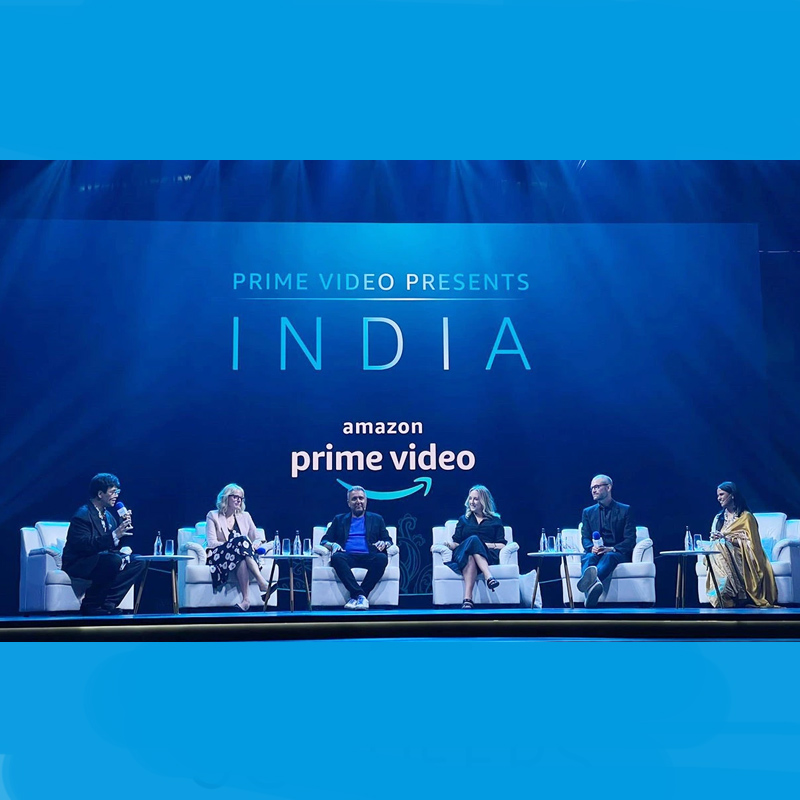
    In a recently organised session on ‘M&E Consumption: Evolving Trends Across Segments’ at Ficci Frames 2022 discussed how media has evolved and new emerging trends are helping or affecting business. The panel discussion was moderated by EY LLP media and entertainment advisory services partner Ashish Pherwani.

    The expert panellist included Viacom18 youth, music and English entertainment head Anshul Ailawadi, International Media Acq (IMAC) CEO Shibasish Sarkar, Indian music industry president & CEO Blaise Fernandes, Pocket Aces CEO & co-founder Aditi Shrivastava and Amazon Prime Video head & SVoD business head Sushant Sreeram. 

    Starting the discussion, Anshul Ailawadi shared insights on how MTV has reached every corner of the country and helped youth have an audiovisual experience. 

    “There are two specific needs: the discovery of the channel and an audio-visual experience, and we try to give them to the audience.” He also expressed that each platform has its unique role.

    Shibasish Sarkar shared, “We have seen a substantial amount of growth in digital consumption. This discussion happens whenever there is a new emerging medium, and will it end the cinema? But it has survived, and even after a pandemic, people are watching movies in theatres.” 

    He further added that in these two years, there has been a substantial level of quality content consumption that has happened by the audience across all video platforms.

    “Today, Hindi language consumers have been consuming the best of Korean, Tamil, Telugu, and Spanish language content, so the consumer’s expectation for good quality content is higher,” he said.

    “Storytelling does not necessarily always need to be expensive. He added that it has to be in touch with the audience with the thought, “What will the audience like?”

    Blaise Fernandes expressed that music is not regional anymore and any music can be consumed in any part of the world; creators just need to choose the right platform.

    When talking about user-generated content, Aditi expressed that “audience is a god, content is a king, and distribution is a queen.”

    Audiences are starting to understand the business of content. And that is opening up possibilities for creators and platforms.

    She said, “Earlier, audience creation was restricted to putting something out. They’re trying to become obsessed, and some of them are becoming influencers. Brands are ditching celebrities and collaborating with digital influencers and micro-influencers to promote the product.”

    “UGC is going to move in the direction where people will buy things and make money based on content,” she added.

    She believes 80 per cent of big influencers and 20 per cent of small influencers will be in the ratio. “You will see digital avatars are beginning to participate in metaverse concerts,” she said.

    Anshul, agreeing with Aditi, said, “New monetisation opportunities, new sorts of avenues, and new platforms will emerge in coming years.”

    Sushant Sreeram talked about content on Amazon Prime where he said, “We programme to an extremely heterogeneous customer expectation across languages, across accessibility, across price points, and across an infrastructure and streaming simplicity.”

    He further added, “We absolutely continue to explore all forms of collaboration. In our journey over the last six years, we have explored a variety of models to work with producers, studios, and theatres.”

    While discussing TV vs OTT, Aditi expressed that it’s important to define because TV is just a device now and its content is consumed on mobile phones as well. Anshul talked about how the audience has done demarcation between OTT, TV, social media, and their functions.

    Aditi further talked about how her company is focusing more on short formats and engagement with the audience rather than how many views they have got.

    “We would like to see content increase across platforms. We would like to be a content provider. Now we are working on engagement. Distribution is very important. But it’s also very expensive to build. The way we are building distribution is by having channels across platforms. We have put out content that our marketing spend and we believe in organic growth.”

    While talking about price and content, Shibasish expressed that the audience won’t pay if they don’t like the content. He believes that good content will make audiences pay irrespective of the medium, and that all mediums will co-exist if they serve good quality content.

    Sushant agreed with Shibasish and talked about how international content on Amazon Prime is consumed not only by the Indian diaspora but also by natives of those countries because of quality content.

    Sushant suggested three things to keep in mind: customer delivery, collaboration with creators, and empowering the creative economy. Aditi advised to drop the elitism when it comes to content, Shibasish asked creators to understand the audience, Blaise stressed that only subscriptions could help creators  while Anshul emphasised how audiences can hate or love but can’t ignore creators.