Tag: Content

  • Good writers are hard to find, says the television industry

    Good writers are hard to find, says the television industry

    MUMBAI: The heartbeat of any television programme lies in its story and content. Developing good content through various ideas and imagination is a significant priority for television channels and producers. Story-telling, as they say, is an art and the small screen is constantly looking for compelling scripts that tell stories which entertain, engage and enrich the audience. Over the past few years, the Indian television industry has been exploring new formats and series of programmes in order to give the viewers an excellent TV viewing experience.

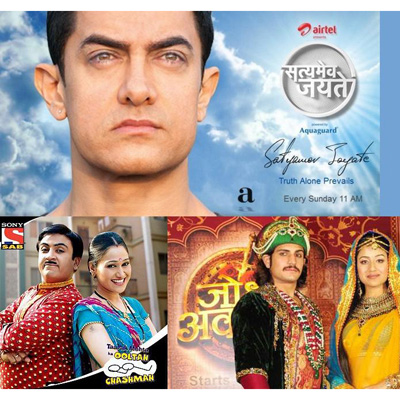
    Television director and creator of the unique chat show Satyamev Jayate, Satyajit Bhatkal says, “To be honest, we did not have any preconceived model for content creation or the kind of show we hoped to do. We made 6-7 documentaries on real life people and we realised that there was so much happening in the country. The common man faces so many problems and we needed to address these serious issues and give a 360 degree look to the matter.”

    However, except for a few who are willing to take up the challenge of creating something new, many are still stuck with the tried and tested.  According to Bhatkal, television, today, is way too cautious.  He elaborates, “It is a challenge that we have to cater to people of various education levels and social backgrounds. However, I feel we are not willing to move to a different level of aesthetics.”

    Director of many popular television series like Amanat, Kyunki Saans bhi kabhi bahu thi, and the current hit show Jodha Akbar, Santram Verma believes that there is a division amongst the audiences today as while some of the viewers want to watch fresh content, the older generation wants to stick to the same stories that were showcased years back. As a result, he feels that it is hard for the industry to evolve.


    He says, “Everybody is sticking to the safe formula of ‘saas-bahu’. Good writers are hard to find these days. Writers lack the fire in them to come up with fresh concepts. TV is not experimenting with novel ideas.”

    Speaking on the quality of writers, producer of the very popular show, Taarak Mehta Ka Ooltah Chashmah, Asit Kumar Modi says, “There is a lack of good writers. Generally speaking, channels go with writers that they have previously worked with. If we want to encourage new content, channels should have better adaptability for new writers and then, we can produce better content.”

    When asked whether broadcasters give the makers enough support and freedom, Modi informs that Sab played a good role in encouraging fresh content and promoting comedy shows like his on the channel.


    Bhatkal expresses that Star has been an extraordinary and participative partner for his show, “Star allowed us to feature the show on a Sunday morning instead of an evening prime time slot as we wanted the whole family to watch. Since it did not have a Telugu channel, the network gave the broadcast rights to its Telugu competitor as we wanted the programme to air in every Indian language. Star even permitted SMJ to be aired simultaneously on Doordarshan on the same day and at the same time, at the expense of its own traffic. What more could I ask for?”

    Talking about the concept of seasonal shows, Verma says, “Seasonal shows are the best. If implemented fully on Indian television, it will have a better emotional connect with the audience.”

    According to Modi, it is a good idea to have seasonal shows as after a point even the audience gets bored. However he is quick to point out that channels should also be convinced of the format.

    Channels need to have more confidence in seasonal formats and help in the distribution of the same. Modi emphasises that irrespective of ratings, losses and profits, one needs to constantly experiment on Indian television.

    To discuss more about the content on television, Indiantelevision.com is organising the ‘Content Hub’ that brings together writers, creators, producers, artistes and broadcast executives, both for TV and digital, all under one roof. This initiative is meant for all professionals, newbies and anyone who is keen to know about writing, producing and creating content for television and the digital space.
     

  • DQE strengthens digital media strategy to monetise content

    DQE strengthens digital media strategy to monetise content

    MUMBAI: As part of its digital media strategy, entertainment production and distribution company DQ Entertainment have launched two YouTube channels- Power Kids and Tiny Toonz in association with leading multi channel network Whacked Out! Media (WOM).

    Power Kids will showcase animated content for children aged five and above while Tiny Toonz will be aimed at younger children. It will also launch its content and games on other platforms such as Google Play store, Amazon and iTunes.

    The reason for the new digital initiative is to make full use of its rich animated library and target all platforms including apps, smartphones, tablets, social media etc. DQ is banking on this to substantially add to grow revenue. WOM will be a strategic digital media partner for YouTube, allowing DQ to monetise its animated properties and mobile games.

    DQ Entertainment chairman and CEO Tapaas Chakravarti said, “The majority of our audience today are constantly online consuming large amounts of animated content through mobiles, tablets and smart TVs from YouTube and other digital media platforms. Having established our footprint globally, DQE is perfectly positioned to leverage our extensive resources and content library for this high growth sector of the entertainment industry. We hope this will help us to reach wider global audiences. We are excited to work with WOM who are a leading MNC with vast experience in the digital ecosystem. We are confident that WOM will help us expand our global digital presence and reach new markets.”

    Whacked Out! Media MD Ramkrishna Veerapaneni said, “We are delighted to be working with DQ Entertainment to create a new online platform for children. We hope that DQE Digital World will become the ultimate destination for catrtoons, games and lots of fun content for kids all over the world.”


    DQE content includes The Jungle Book, Peter Pan, Lassie, Iron Man, Robin Hood, Casper etc. It will also show exclusive online educational entertainment content.


  • MIPCOM 2014: Best time to invest in India, say Indian media barons

    MIPCOM 2014: Best time to invest in India, say Indian media barons

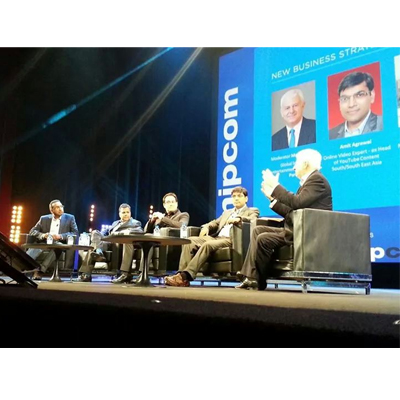
    CANNES: Indian content market is going through an exciting phase, and putting the scenario upfront to the world, through one of the biggest stages at the ongoing MIPCOM 2014 was the India panel which comprised of Colors CEO Raj Nayak, Balaji Telefilms group CEO Sameer Nair, Rajshri Entertainment managing director and CEO Rajjat Barjatya and online video expert and ex-head of YouTube content south/south east Asia Amit Agrawal. The session on ‘New business strategies from India’ was moderated by PwC global leader, entertainment and media Fenez Marcel.


    Setting the stage for some heated discussion was Nayak when he highlighted one of the biggest issues the country faces: lack of broadband. “Lack of connectivity is an issue. If the experience of watching becomes smooth, it will be a game changer,” he said.


    Comparing the online market in India with that of the world, Agrawal said that the Indian market has both traditional medium and online play “and both are very strong,” he informed adding that this meant huge opportunity to tap into.  


    Agrawal went on to say that while India consumes a lot of content online, almost 30-40 per cent of this content is not made in India. “That’s a huge chunk. I am seeing an emergence of micro-communities with technology. This will enable the content producer to tackle the right community. It will happen and very soon, may be in the next 12-18 months,” he stressed.


    There is too much of fragmentation in the country, currently. Mentioning the Telecom Regulatory Authority of India’s regulation about ad-cap for pay TV, Nayak said, “Once this happens, the supply and demand ratio will change. This will also help in the yield going up, because the demand will go up. We have to come at a point where the FTA channels will carry advertising with no limitations, pay channels which will have 10+2 advertising and very premium channels will have no advertising.”


    Barjatya who wears the hat of both traditional movie maker and digital feels that India is at a cusp of digital revolution. “For me the opportunity is to reach the global audience, especially through mobile. Traditional media rules cannot be applied on mobile,” he said.  


    The YouTube journey in India started with traditional media content that was distributed to audience which was moving away from traditional media. “But now, over the last one and a half years, I see so many online channels coming up on comedy, food, music, news, tech bloggers have all come up,” informed Agrawal.  


    With a contradicting viewpoint, Nayak said that YouTube is the biggest competitor to the broadcaster. And that it is due to this, that the broadcaster, since the last month, has taken its hit show Comedy Nights with Kapil off YouTube. “I am a big believer of digital media and I feel it is the future, but I also feel that it will co-exist with television and they will grow parallel.”


    Viacom itself is looking at a lot of short formats. “But the problem is that unless broadband issue is not addressed, monetisation will remain a huge problem. If you look at the money, YouTube does Rs 500-600 crore business from India, where television is a Rs 7000 crore business, so the numbers are small and that will not grow until and unless the bandwidth issues are addressed,” said Nayak.


    Nayak believes that no one in India has so far mastered the art of monetising content on the digital media, social media the way it should be, given its increasing reach and targeting abilities.. 


    “Monetisation will happen with broadband and hopefully this should be resolved with the rollout of 4G,” he added.


    The panel also put forth its wish list for the new government formed under Prime Minister Narendra Modi. According to Nair regulation for content already exists, which is beneficial to the whole industry. Highlighting PM Narendra Modi’s ‘come make in India’ campaign, he said that the government is giving open invitation for people to come to India. “As for Raj’s point that producers in India are not partnering with broadcasters and thus not sharing risks, we are looking at that very seriously and are encouraging everyone else to do it. If there is a risk-reward mechanism, everyone can benefit,” explained Nair.  

    As for Nayak, keeping in mind the dynamic & tech-savvy PM the country currently has, who understands the power of the Digital media, connectivity and broadband will get addressed in a much faster footing.  Given that electricity is still erratic in rural India, people will communicate and consume content through mobile phones. “I would ask him to release spectrum because that’s a big issue that’s coming in the way of growing business. Another thing that I would request  is complete implementation of the digitisation, process which is expected to be over by 2016 . He further added that broadcasters are not getting their fair share of subscription revenue and this can only happen once the digitisation process is complete and all stakeholders start seeing the benefits,” he said.


    Barjatya’s wish list consists of wiring up India and encouraging Indian entrepreneurs to have a global outlook rather than be restricted to Indian audiences alone. “We need to appeal to the audience outside of India,” he said.


    For Agrawal, the government should remove hurdles. “Out of all the YouTube content that we produce, more than 70 per cent of the viewership for programme comes from global audiences. We haven’t done a great job in marketing ourselves and make people aware of the country,” he added.


    Nayak is hoping for a dynamic change in the media industry, with the new PM.   


    The discussion also touched upon the consumer behaviour in the country.  “We see a lot of consumption happening on handheld devices. When we began, 10 per cent of our views were from handheld devices, today it is almost 50-50 and that number is higher in India than in the rest of the world. India’s next billion people will access internet on mobile, and will not know about PCs,” opined Barjatya.


    Agreeing to this, Nayak said that the reason it will happen is because for mobile, one doesn’t need electricity. “We have 160 million homes and 900 million handheld devices right now, which is expected to go up to 1.5 billion handsets. So the explosion is happening. Power will take a lot of time to be addressed, but if you have internet, you can consume content,” he informed.


    Nair classified the audiences and the programmes being made. He said, “The television industry currently is programming for newer audiences who are more into household dramas. Then there are also those who have already lived through all this and are now looking for more. The audience is evolving. There will be more niche channels.”  


    All the panelists felt that this is the best time to invest in India. “In India, people are ready to match dollar to dollar. And we are ready to put the money where our mouth is,” announced Nair.  


    Concluding the session with one advice to entrants in the market, Nair said, “It is important to be patient. We are still at the ground floor, but we can build.”

  • I want to restore choice and option for consumers, says Netflix’s Ted Sarandos

    I want to restore choice and option for consumers, says Netflix’s Ted Sarandos

    CANNES: For Netflix chief content officer Ted Sarandos this is the golden age of storytelling. Sarandos was giving a keynote on day two of MIPCOM 2014.


    Talking about Netflix and its engagement with the audience, he said, “We have been able to innovate and advance technology that favours the consumer. We have been able to innovate the audience, who are on-demand viewers.”


    Netflix which has 50 million paid subscribers in 40 countries, recently launched in France and Germany. Talking about the viewership pattern Sarandos said, “We have been very encouraged with viewing behaviour in France and unsurprisingly, Orange is the New Black is the most watched show in France and Germany for Netflix, in the first couple of weeks and we are excited about it since the shows have not been previously available in these markets.”


    According to Sarandos, what works for Netflix is the fact that it caters to the desire of people who have heard about shows, but not been able to see it. 


    Netflix offers 70 per cent TV shows and 30 per cent movies, “and that’s the way people watch as well,” he informed.


    On his catalogue being small at the time of launch, he said, “What we launch within a new territory is half of the programming that the territory will have in the next 12 months. And we are literally adding content everyday wherever we launch.”


    For Sarandos, it is each passing day that gives him the idea of the viewing habits of consumers. “So what you see at the launch is what we know pretty much about the market without even being there and then depending on the viewing behavior, we licence content that people want to see.  So it is an intentional move to launch with less content,” he added.


    Netflix also recently launched in Germany and talking about the lessons from the market he said that viewing hours per subscriber was very impressive.


    The platform offers consumers the level of choice that they haven’t seen yet. “So while there are a lot of pre-conceived notions, one needs to have dubbed content while also have subtitled programming.”


    The platform may also have plans for original French production. “We have found large audiences for existing French content around the world already. We have started working with French animation houses for co-productions,” he said while adding that they have already aggregated a lot of audiences around the world for French shows.  

    So is the business profitable overseas? Answered Sarandos, “We are investing continuously in expansion, we want to be a global company. We are at serious investment phase.”


    Sarandos believes that Netflix is a destination for content, for ability to choose and enjoy in one’s own timetable.


    The platform which is now also moving into making movies, but doesn’t get involved in writing the script, aims to be active on distribution. “We pick storytellers and let them tell the stories. We don’t dictate creative storytelling,” he said.


    Netflix doesn’t want to kill windowing, instead wants to restore choice and option. He also touched upon the point of Netflix’s data analytics. “We use the data to help determine the potential size of the show. The ability to invest in the show was because of the data we had. We didn’t use the data to influence the creative of the show,” he clarified. 


    Will Netflix move to sports and news as well? Sarandos quickly said, “It is on-demand that makes Netflix desirable and sports and news are linear events, so we can’t do anything interesting in sports and news right now.”

  • “Indian media is going through a digital tsunami”: Aroon Purie

    “Indian media is going through a digital tsunami”: Aroon Purie

    NEW DELHI: The world is going digital and so is the print medium, which currently is at the forefront of a digital revolution. The digital boom has redefined print business. “Those in the medium, now call themselves as content producers,” said The India Today Group chairman and editor in chief Aroon Purie.


    According to Purie, print medium has gone a step further, as it now engages with the audience. Talking on monetisation in print at the CII Big Summit 2014, Purie emphasised on the growing need for those in the publication business, to engage with consumers in different ways. “We are going through a digital ‘tsunami’. The good news for print medium is that we are riding on top of this tsunami. But it is moving so fast that one doesn’t know where he/she is heading,” said Purie.


    While there was a time when print was in a depressed mood, things now have changed drastically. For Purie, print has converted the tsunami into an opportunity, where they are generating revenue not just by advertising in the print format but also on digital.


    Currently India has 240 million internet users, which according to reports will jump to 350-400 million in the next three to four years. “These are opportunities where content can be transferred,” he informed. The good thing, as for Purie, is that publishers in India have good content and so there is nothing to worry about when they go to the digital medium.


    But he agrees that the print content needs to be modified as per the medium, which is a challenge. “Traditional business is declining, while there is an increase in the digital business,” he informed.


    While advertisers are ready to catch the young eyeballs on the internet, digital advertising currently is not very prominent. “But the future is digital and if you don’t invest in that now, you will soon die,” he added.


    In order to have a healthy business, Purie suggested that the print industry should look at transforming itself into multi-platform, get into contextual advertising, build clients, brand launches for advertisers and also look at hosting events. “Sometimes the events become more popular and profitable than the publication itself,” he said. 


    Digital revolution has also changed the kind of content being produced. “Today, content needs to be designed in a way that it can be availed on any screen. It needs to be interactive, sharable and available all the time,” informed Purie.  

  • Pay for content and not channel say broadcaster legal counsels

    Pay for content and not channel say broadcaster legal counsels

    MUMBAI: Regulation in India, unlike the US, is very static. Not only this, any regulation that comes out, does not address the future, but the past. New technology is proving to be a remarkable challenge, not only for the industry, but for the regulators as well.


    These were the major points of discussion at the 2nd Legal Era Media & Entertainment Law Forum, where legal counsels for various broadcasters, emphasised on how the regulatory regime in India is very backward. A normal broadcaster today has to go through the tedious task of applying to the Ministry of Information and Technology (MIB), Department of Space (DoS) and WPC approvals. As per statistics, at present approximately 800 files for channel licence is pending with the MIB and some 600 with the DoS.


    Stressing on the rise of technology, Zee Entertainment Enterprises Limited (Zeel) director corporate Amitabh Kumar said that by the year 2020 linear transmission of channels will be replaced by video on demand (VoD). Kumar also stressed on the need for change in the way licences are given to broadcasters. “The broadcasters’ licence should have provision for VoD, VOIP etc. There should also be a provision, as per which the licence services should be allowed to expand, with no entry fee. The regulatory body must have scope for widening the ambit of services for lifetime,” opined Kumar.


    For Kumar, the regulators need to be pro-active rather than reactive to the new technology advancements.


    Content consumption is undergoing change. “Content cannot be controlled, it can be self regulated, which is working beautifully,” informed Viacom 18 Media group general counsel Sujeet Jain. He also brought to the fore how the functioning of Broadcast Content Complaints Council (BCCC) had forced even the I&B to retract from interfering in the content. “Government should completely take its hands off content,” he added.


    Agreeing with Jain was Singh and Singh Law Firm LLP partner Tejveer Bhatia who said that tariff of the VoD content should not be regulated. “If consumer is demanding a particular kind of content, the media industry should have the freedom to decide the tariff. There cannot be a benchmark on the demanded content,” informed Bhatia.


    According to Star India president and general counsel, legal and regulatory affairs Deepak Jacob the quality of content is directly proportional to the money spent on it. “If we want to produce high quality content for linear TV, there is cost that is attached to it. While in the past 15 years, the ARPUs have remained flat at Rs 150 to Rs 200 and the broadcasters’ fair share of this has also remained the same, the content cost has increased 20 times. So Rs 1 lakh per episode expense, 15 years ago, has today gone up to Rs 15 lakh to Rs 20 lakh per episode,” informed Jacob.


    Jacob also questioned the whole ‘must provide’ clause that was introduced by the Telecom Regulatory Authority of India (TRAI). “All this will kill broadcasters. What is the incentive that a broadcaster is getting for creating content for mobile devices or other platforms?” questions Jacob.


    Another important point raised during the panel discussion was that unlike in the US and UK, where channels are sold as events, in India, this arrangement doesn’t exist. “We should be moving towards a regime, where consumers can subscribe to events and not channels. And the subscription should allow one to view the content not only on TV but mobile, tablet or computer also. Content, not channel should be highlighted and consumers should be able to pay for content,” said Kumar.


    According to Jain, while with change in technology, the format and consumption pattern of the content will change, but the content will remain the same.  “The regulation has to incorporate this aspect and there should be a level playing field,” he opined.


    The panelists also suggested that a lot of licencing should go away and what the government should really look at, while moving towards convergence is providing ease of access. “The Prime Minister is talking about making broadband available across the country, but for this access will be needed,” said Jain.  He also highlighted the need for strict laws against piracy. “Taxation needs to be rationalised in order to give fillip to the sector. That apart, ministries will have to merge so that entire ecosystem can merge,” opined Jain.


    The session also touched upon the issue of carriage fees and if there was any end to it. According to Jacob, while carriage fee, which is an artificially created monster needs to vanish, placement fee is something which will not cease to exist. “Placement is an individual choice that broadcasters make. It will be unfair of broadcasters to expect a certain number of LCN, without incentivising the MSO,” he concluded. 

  • Zee Cinema extends ‘Dopahar Zee Cinema Par’ campaign

    Zee Cinema extends ‘Dopahar Zee Cinema Par’ campaign

    MUMBAI: Zee Cinema, known for its captivating line-up of movies and consumer engagement, is set to give kids an extra week of vacation time by bringing back the annual flagship property – Dopahar Zee Cinema par!


    Starting 23 June up to 27 June, Zee Cinema will be airing exciting contests during the movie breaks. All kids have to do is stay tuned-in and watch their favourite movies. Amidst the five breaks between the movies, five questions will be asked in the form of fun and quirky riddles.


    Zeel Hindi Movie Channels VP head of programming Ruchir Tiwari stated, “Winning the ‘Best Day Time Programme Spot’ at the PromaxBDA Global awards has re-instated the innovative and engaging content mix of ‘Dopahar Zee Cinema Par’. Brining back our annual flagship property we at Zee Cinema, we believe in not only showcasing excellent content but also engaging and gratifying our viewers.  Through this campaign, we intend to give the children a chance to enjoy fun and entertaining movies before their schools start and also give them a chance to win exciting gifts.”

  • Ravi Mansukhani to handle content business for IMCL associate Indusind Entertainment

    Ravi Mansukhani to handle content business for IMCL associate Indusind Entertainment

    MUMBAI:  For quite a while now, multi-system operator (MSO) IndusInd Media and Communications Limited (IMCL) has been focused on distribution though it started out with local content. However, the MSO has decided to revisit its core strength, with none other than former MD Ravi Mansukhani taking up the gauntlet.


    Ever since Ravi stepped down from his position in February, making way for Tony D’Silva, speculation has been rife about his next move. In the midst of all this, indiantelevision.com found out that he will be returning to the fold, albeit in a new role. “Digitisation has new content challenges and that content needs to be segmented,” Hinduja group sources say.  “He has played a crucial role in IMCL in the last decade, but prior to that, he was also in charge of content. So, he has experience in different spheres. Now, it is up to the promoters to utilize his services.”


    The Hinduja Group is looking at developing content as a major international vertical.


    Ravi meanwhile said, “Yes, I will be taking up the role. But nothing is finalized yet. The exact role still needs to be discussed,” before clarifying that there would be clarity on his new job profile only after a couple of more meetings.


    The Hinduja Media group , according to industry sources, is not only interested in localised content but also animation and some of this would be sourced from Indusind Entertainment.  If they are to be believed, Ravi may be involved with content related to animation and might be working closely with Ambika Hinduja. Further, the company may also be looking at setting up an animation facility with Ravi working on it.


    With the Hinduja group acquiring the license for its Headend In The Sky (HITS) project, and phase III and phase IV to be tapped by both the MSO and the HITS platform, will foraying into content help? “Content can do well, only if the distribution does,” said a source.

  • Now MipTV roadshow to hit Bengaluru today

    Now MipTV roadshow to hit Bengaluru today

    BENGALURU: Today is the turn of India’s garden city Bengaluru (Bangalore)  to get insights on  how its animation, gaming, TV channel and production and film executives can take audiovisual content from Karnataka global through markets such as MipTV and MipCom which have been organised in Cannes for decades now.


    An intimate audience in Chennai  (having a similar profile) engaged with Reed Midem representatives Ted Baracos, Paul Barbaro and India representative Anil Wanvari on 20 January.


    “Bengaluru has built up its reputation as India’s Silicon Valley,” says Baracos. “We, at Reed Midem, would love to see it known for its prowess in the media and entertainment space too. MipTV and MipCom offer the biggest gatherings of buying and selling executives from TV and digital from all over the world, and can work well to catapult Bengaluru in front of these folks. It could well serve as a good starting point to start the Karnataka content export engine to new markets.”


    “For that to successfully happen, Karnataka’s industry will have to take a bold step in wanting to be a part of a content export  economy which runs into billions of dollars each year,” adds Barbaro. “In recent times, Korea, Russia, Turkey and even provinces in China have been step by step increasing their initiatives in this direction. There is a huge pie out there in the 100 or so countries that participate in MipCom and MipTV respectively.”


    To reach out to the community in Bengaluru, a partnership was struck by Reed Midem  with the Association of Bangalore’s Animation Industry (ABAI) a couple of years ago. And today’s get together will see that relationship bearing fruit as ABAI is sending scores of its representatives to attend the seminar entitled “Content without boundaries.”


    “MipTV offers scores of opportunities: right from simple syndication to co-production to licensing to co-creation,” says Wanvari. “The neighouring state of Andhra Pradesh has already taken strides in that direction and its government has been encouraging producers and creators to go global. I believe Karnataka’s content production industry can use these opportunities to gradually get their revenues moving northward.”


    The industry get together will take place this evening at the Hotel Aloft in the swanky IT district – the Whitefield area – from 7:00 pm onwards. 


    The road show will next move to Mumbai where a seminar is planned for 24 January.

  • GroupM India adds another feather to its cap with Porter Prize

    GroupM India adds another feather to its cap with Porter Prize

    MUMBAI: GroupM India has won the award for ‘leveraging unique activities’ at the prestigious Porter Prize 2013 event.


    GroupM is the first company from the media and advertising field to win this award. Elaborating the reasons why GroupM was chosen, Institute for Competitiveness India honorary chairman Dr Amit Kapoor said: “GroupM reflects effective rendering of activities across the value chain, how activities reinforce and synergies are created across its range of activities through a interlocking system that becomes basis for competitive advantage and sustainability. GroupM reflects an understanding that clearly states that good strategies depend on the connection among many things, on making interdependent choices and making a tailored value chain that competitors cannot easily imitate.”


    Porter Prize is one of the coveted awards in the field of strategy and competitiveness and is supported by the Institute for Competitiveness India.


    Speaking on the occasion, GroupM South Asia CEO CVL Srinivas said: “We are delighted to win the prestigious Porter Prize. This award is testament to GroupM India’s strategic approach to building the business that has resulted in a strong leadership position in this market. The diversified offerings of GroupM have scaled up over the years to become the new core of our agency. Our integrated product helps us provide unique value to clients to build their competitive advantage. All this wouldn’t have been possible without the support we get from our clients and business partners, the dedication and hard work put in by our talented team over the years, and the encouragement we get from GroupM regional, global offices and WPP to keep innovating and shaping the market.”


    GroupM India has continued its great run in 2013. Its agencies have dominated all industry awards, won over 60 new businesses and it has launched several initiatives in digital, content, experiential marketing and analytics.