Tag: Content

  • Apple signs multi-year deal with Oprah Winfrey

    Apple signs multi-year deal with Oprah Winfrey

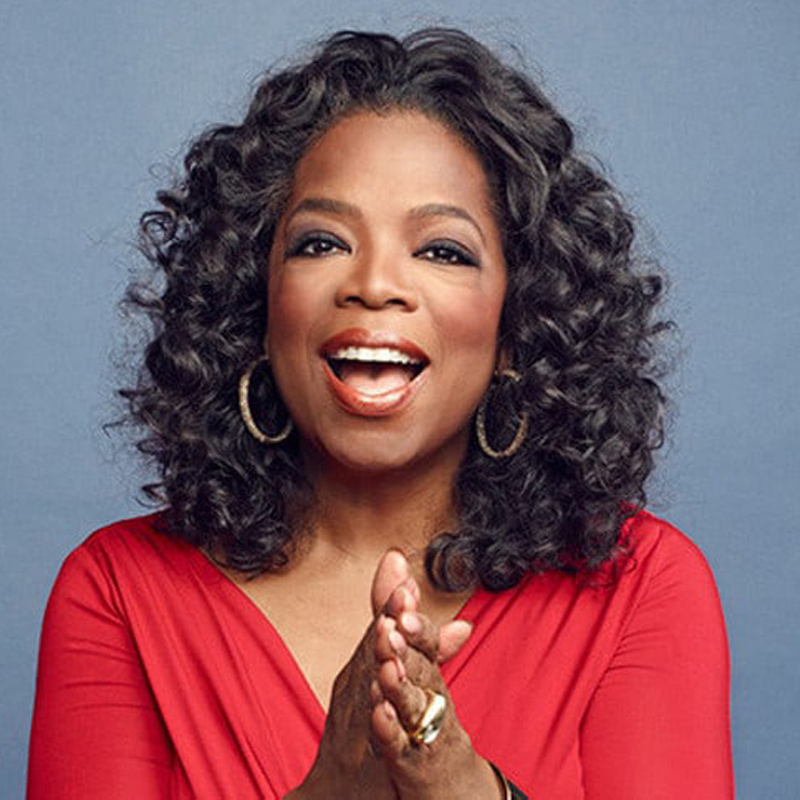
    MUMBAI: Remember the Oprah Winfrey show? The unstoppable business woman  behind the show has now signed a multi-year content partnership with technology company Apple. Winfrey will work with the iPhone maker to produce TV shows for its forthcoming streaming service.

    Winfrey is a renowned media proprietor, talk show host, actress, producer, and philanthropist.

    Together, Winfrey and Apple will create original programs that embrace her incomparable ability to connect with audiences around the world. The deal includes making of a film, tv, applications, books and other content that could easily be distributed on Apple’s platform.

    Winfrey’s projects will be released as part of a lineup of original content from Apple.

    Winfrey’s Harpo Films will own any and all content produced under the Apple partnership, in line with Winfrey’s longtime business model. However, she will continue in her role as chairman and CEO of Discovery Communications-backed cable network OWN.

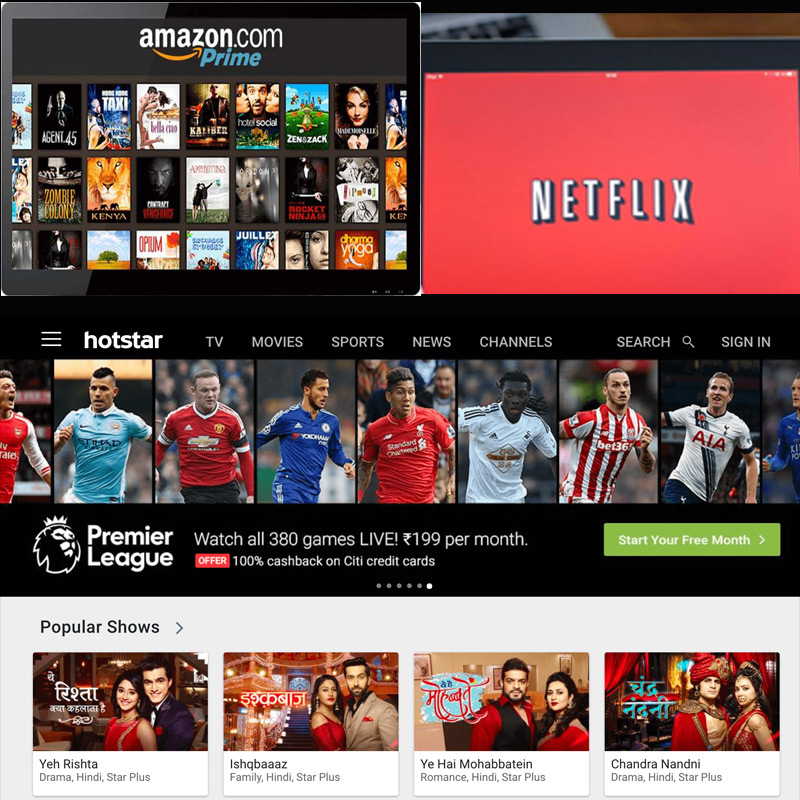
    Apple has stepped up against other OTT giants Netflix and Amazon Prime who have signed multiple celebrities and personalities in the last year. Apart form Winfrey, Apple recently also signed Jennifer Aniston, Reese Witherspoon and Steven Spielberg to reboot its original content plans.

    Earlier last week, Nicole Kidman joined hands with Amazon for a first-look film and TV deal.

    While Apple’s $1 billion push in original programming is big money, Netflix spent $6.3 billion while Amazon splurged $4.5 billion in 2017.

  • Broadcasters aiming at quality content on both TV, digital

    Broadcasters aiming at quality content on both TV, digital

    MUMBAI: The impending death of the television is something people have been talking about but that future is yet to arrive. However, one can’t ignore the fact that today’s audiences do consume content anywhere and from any platform.

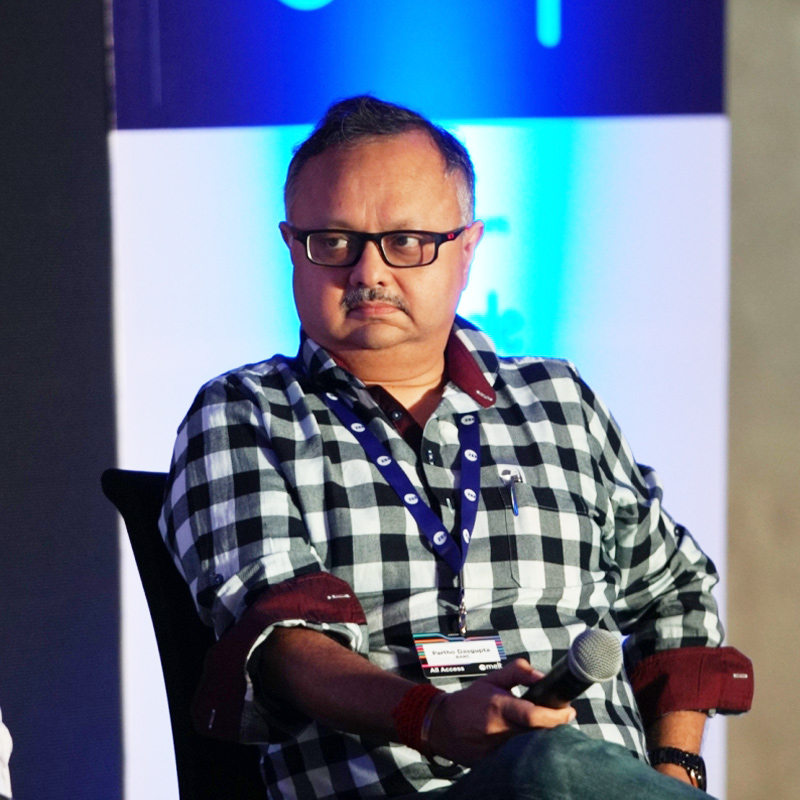
    Zee Melt 2018 saw a session on ‘The Next Seismic Shifts in Television’ with panellists Zeel domestic broadcast business CEO Punit Misra, Mediabrands IPG CEO Shashi Sinha and BARC CEO Partho Dasgupta. Provocateur Advisory principal Paritosh Joshi moderated the panel.

    When asked about the move to launch Zee5 as being a defensive strategy or a move to be at the front foot in the industry, Misra said, “Advertisers look for ROI. ROI on TV is significantly higher than any other. But it is a business of content and there is huge consumption happening on digital. However, if you do just digital, ROI can go horribly wrong.”

    He added that consumers would find ways and means to consume content as long as it is great content. “I see the synergistic benefits of having an OTT platform which will benefit from the content that is being made for the consumers as they want and equally we will create content which is tailor made for the audiences. In fact, I am thinking of how to bring digital to television again,” he said.

    Sharing his views on the path proposed by BARC to tackle non-TV screens, Dasgupta said, “It is all about how you measure content. Unfortunately, it needs to be discreet in this digital space. Although there is a convergence at every level, which makes it important to measure what India watches today now more than ever.”

    Dasgupta further explained that TV ratings body BARC is moving towards convergence, where telecom operators are moving towards distributions and distributions are moving towards telecoms. “You’ll see convergence at every turn,” he said.

    Sinha said that cost per thousand (CPT) as a currency for buying commercial time on TV has its own advantages. “I believe for a variety of reasons that CPT is a way of life. A lot of advertisers in the country use CPT and so too do agencies. CPT has multiple advantages. I presented a tool to a client that makes cross-media comparison much easier. For planning, CPT is there. But don’t mistake that for negotiations that happen. By and large, as markets evolve and as digital gets more share it is a matter of time where the agency and clients move towards gross impressions. It is happening.,” he said.

    The panellists agreed to one point that it is too soon to say whose future is brighter –TV or digital. But content will be the winner as people will consume content by any means and ways.

    Also Read :


  • Netflix CCO Ted Sarandos says India is ‘TV starved’

    Netflix CCO Ted Sarandos says India is ‘TV starved’

    MUMBAI: This could really make television executives in India, who have built a multi-billion dollar business, gnash their teeth. We are referring to Netflix chief content officer Ted Sarandos’ comment at the fifth MoffettNathanson Annual Media & Communications Summit, which is on in New York between 14 and 15 May.

    “There is no real great local television in India,” he said. “It is a television starved market.”

    He went to add that the interesting thing about the Indian market is that it is a culture that loves cinema. “What we are trying to do is bring something new to the country with cinema-infused television. Bit budget big scale productions in long form storytelling. We think this is going to differentiate us from the market,” he explained. “We believe that it is the big budget production with scale and local stars  which I think people like as much as the movies.”

    Sarandos went to explain that the streaming app has six tent pole shows under various stages of production in India and the first one to see the light of day will be Sacred Games.

    The streaming service obviously has got big plans under its sleeves for India. Amongst the senior professionals that it has hired for India  and is currently training in its US HQ figure Shrishti Behl, the Netflix director for originals, and former Fox senior executive Swati Mohan, who will be looking after marketing for Netflix as a brand in India.

    Sarandos added that productions are underway in 17 countries. And the reason that the streaming app is getting into originals is that clearing rights from existing content owners and studios was getting tooi expensive compared to the value they offered. Netflix has no control over the quality of the shows or the structure, hence that was a chellenge, he explained. Also  being able to get early windows was challenging. Additionally, Netflix users were increasingly watching original programming, hence the drive will be more towards creating new shows.

    He pointed out that the French press  read  Netflix’s  withdrawal from the Cannes Film competition wrongly. “We are totally interested in complying with the law that says that films need to be released in theatres and cannot be streamed online on a subscription model until three years between theatrical release is complete,” he said. “That law means we do not release our films in France in theatres. The past year the Cannes Film Festival applied this rule that we have to introduce our films in theatres in France to be eligible for the competition. We decided to pass because we would rather release our movies for millions oif viewers online in France than a limited number involved with the Cannes Film Festival.”

    Also Read :

    Netflix announces unscripted series on Mumbai Indians

    Localised content the way forward for Netflix in India

    Indian content at Netflix to be creatively lead by Disney’s Simran Sethi


  • We are becoming more platform and screen agnostic: Sudhanshu Vats

    We are becoming more platform and screen agnostic: Sudhanshu Vats

    He heads the youngest Indian network engaged in general entertainment television. Sudhanshu Vats, group CEO, has, over the past six years, steered Viacom18 India into launching a clutch of new channels catering to the different regions of India as well as niche segments. He has built a rock-solid leadership team to run the services, which have been growing at a rapid clip.

    Vats, a former long-serving Hindustan Lever (Unilever India) executive, has also seen the company transition from being a joint venture with global media major Viacom to one which is now majority owned by Mukesh Ambani’s Reliance Industries.

    A thought leader in the industry, he is constantly propagating the message that India is rich with media and entertainment potential at both domestic and international confabs. Vats was at the Media Partners Asia-run APOS in Bali late last month. On stage having a conversation with Vivek Couto, Vats spoke freely on a range of topics right from Viacom18, the Reliance ownership, Voot and the pay TV ecosystem in India. Excerpts from the interview.

    Your views on the pay TV ecosystem in India?

    At one level, the pay TV ecosystem is not developing as well as it should. Partly, all of us, as part of the ecosystem, are to blame. There is lack of addressability. There is lack of customer centricity and customer service attitude with the distribution partners. India being a poor country there will also be a pressure on free to air up to a particular stage.

    My view of the country is that it will be a hybrid ecosystem of both pay and free to air. And, in my opinion, both can exist. But for pay to exist, pay will have to earn its right. And as content players, we are concerned because it’s not going the way we would like it to.

    Free to air is growing and will grow and we need to find models, largely advertising-led models, to make that happen–that piece is okay. But the pay subscription growths are not commensurate–the addressability is not there. Recognition of change of viewership; change of pattern is not there today.

    And I think no better than us, we have leading channels in almost all genres; but our ability to get subscription income is very little. Because it is all dependent on this. Pick up a genre and we have a leading channel. We are not recognising the changes; we are not addressing the customer and not being customer specific.

    How is the Indian television ecosystem faring overall?

    There were two events in India in the last couple of years—GST and demonetisation. They affected ad sales in my opinion. But the good news is that in the last two or three months, it is coming back. We are clearly seeing certain sectors performing very well—FMCG is back and very strongly. Automobile is back in a reasonably big way. Consolidation in telecom will lead to more telecom spends. Handsets are there, they have always been there. Rural economy is also doing quite well. We are seeing a surge in the regional rural pieces quite a lot within our portfolio.

    If you look at Viacom18 per se – I think we have had a pretty good year in FY18, which we closed. We delivered 20 per cent top line growth led by our performance in films as well with Toilet ek Prem Katha. But even in ad sales, we have delivered a mid-teen growth for the year.

    And interestingly this has come at a time when our leading channel Colors was slightly muted because of the impact properties on Colors that came in. It’s the portfolio, which we built that has helped us—its regional, it’s FTA, it’s niche. I personally feel, moving forward, the ad sales will rebound to the levels that India has been used to seeing.

    The ad market will go to mid-teens and some of the better companies may look at doing even high teens.

    How has the change of majority ownership impacted the organisation you head?

    The advantage for us with the consolidation with Reliance is two-fold. Ambition and the things we can do is one big thing today. The second big thing is the resources that can come in which could be of a different level. Because, as a joint venture, we were balancing some of those pieces. Now perhaps we can take concurrent bets as we go forward. So that’s fantastic news for Viacom18. We need to continue to motor on what we have built as a culture that is critical for us. So, if we retain that culture and we bring in that ambition and resources, it’s good news.

    Your digital piece, Voot, how is that faring?

    Voot has been primarily advertising led. The good news here is that we have been growing quite rapidly. We exited March of 2018 at 3X the number we were at March of 2017 on almost all parameters.  So, today, according to App Annie, we are number two in everything which you see after Hotstar. We are number two in downloads; we are number two in active users. We are actually number one sometimes in time spent. We are between one and two in time spent. We have about 35-40 million monthly actives and close to about 45 minutes of watch time.

    The Voot service is doing very well. Interestingly, there is a lot of work which we are doing which is tailored for it. If you look at our content: the breakup of our viewership – if I were to give you an order of magnitude – would be about 60 odd per cent of what you have on television – that’s catchup maybe 60 to 65 per cent. About 20-odd per cent or sometimes 20-22 or 25 per cent is what we call Voot exclusives or content around content. So it is content which is running on television, that is the theme is running on TV – especially non-fiction – and there is a lot of content which is not on television which is shown here. That’s gaining a lot of traction. And finally there are originals and kids. That stacks up the full piece.

    What plans do you have for Voot?

    Our thinking moving forward is that this is just the beginning. It’s an AVOD piece, again advertising is coming in reasonably well from a very small base – we are doubling every year. But what we also do is we’ve built in a freemium layer, for people who are at the higher end where we offer them an ad free environment, maybe additional services—that is the thinking that is there.

    The second thinking that is there is that we are going to do something for Voot Kids. That’s a space we are very bullish on. We want to go well beyond video, we want to well beyond watch, we will go into spaces of watch, learn, play and all that. We are looking at the edutainment piece. You will come into it for entertainment, but you will have light gaming, some number of e-books, some amount of learning or options available to you particularly at the pre-school stage. We are not getting into pedagogy or hard-core education. That’s not the space we want to be in.

    We are looking four to five million daily active users currently. The kind of data you are seeing now is pretty rich. And we are just about beginning to learn to mine that data.
    On the original front, it has been part of our journey. This year you will see us going into overdrive or at least accelerate our originals. You will see a lot more of them in Hindi, you will see them in regional. And as we speak, there is work happening on many of them. We may use some of them to go behind our freemium service as well.

    You seem to have changed your mind on sports as a piece of content? Will Viacom18 drive deeper into sports?

    We have dabbled a bit in sports. We piloted a few things. We actually did the Nidahas Trophy on our channel. We are looking to see if there is a way of putting sports together that may not have cricket. Cricket, as you may know, is with Uday now. We are continuously looking at areas that might be of interest to us.


  • Netflix deal will help in customer retention, revenue enhancement: Tata Sky’s Harit Nagpal

    Netflix deal will help in customer retention, revenue enhancement: Tata Sky’s Harit Nagpal

    Tata Sky MD and CEO Harit Nagpal has been a bit of an early mover in terms of innovation and building a world-class satellite TV operation. Whether it has been in the case of HD or VAS or top-notch customer services, Tata Sky has been driving many of the path-breaking initiatives in the DTH sector. Nagpal announced a major strategic partnership with Netflix under which Tata Sky subscribers will be able to watch the world-class streamer’s on-demand content, including TV shows, films and documentaries, in the coming months through the direct-to-home operator’s platforms.

    Nagpal was in APOS Bali and was on stage for a conversation with MPA’s Vivek Couto. He openly spoke about the reasons behind the Netflix partnership, how it will benefit customers, what it means for Tata Sky and how does he see the satellite TV leader continuing with its leadership status. Sources indicate that Tata Sky is generating close to a billion dollars in revenue from about 15 million subscribers. Excerpts from the conversation:

    Why the Netflix tie-up?

    We don’t look at us as satellite TV platforms, we look at ourselves as the equivalent of grocers in this industry that produce and distribute content. We are a distributor part of the content, depending on the customer, whenever he wants to buy wherever he wants to watch we are privileged to provide him that—that was our thinking.

    Some customers of ours—not all, a very small fraction in India—are having access to good quality broadband, which can carry video. Also, they have the capability of paying for the broadband. And third, they don’t have the time to watch when it is broadcast; they’d rather watch it at their time.

    Who are these customers?

    Unlike the western world, where almost everybody falls in this category, in our country, a very small fraction falls in this group. Fortunately, we are providing linear television services to this kind of customers and today there are about 3.5 million such customers who are paying about $10 plus per month on content in a country whose ARPU is much lower. We have two million of these customers. So, it’s been our endeavour to create a platform. Because the lunch is lying in front of me, I would rather eat it rather than wait for someone else to come and eat it. We met Reed (Hastings) and Bill two years ago at their villa in Bali during APOS. And the rest is history.

    How will you differentiate from other service providers and mobile companies?

    We are going to distribute almost everything but not on-demand content like the mobile guys did. Mobile guys could best take a phone and put in five, six, seven eight apps. We were distributing television very differently. We were going to Sony, Star, Zee, Colors and buying content in bulk but providing it to the customer by genres making content discovery easy. That means if a linear TV customer says I don’t have kids, I like music, I don’t like sports, and I speak Malayalam, then I see no reason why he should not be watching on-demand content in the same way.

    It is my job to get all the content from various sources or on demand platforms and make the content discovery as easy as I have made it on the TV screen. We are giving him probably seven days catch-up TV for what he is subscribing on linear. To that you add Netflix, Amazon, Hotstar, YouTube, and whatever else become the prominent apps. You distribute that content via genre and offer it to him for a little over what he is willing to pay for linear TV.

    Is the Netflix addition mostly about ARPU enhancement in India?

    It’s retention and revenue enhancement. We have noticed that a customer when he gets into one of our services, his inclination to churn reduces. To the extent of around 75 per cent. The moment he gets dependent on a DVR, the 12 per cent churn becomes three per cent churn.

    So one more dependency for another service which is OTT will drive down the churn or deactivation even if it is for a short duration. The premium segment which accounts for 15-20 per cent of our base, there is no more price increases you can take on them and hence grow revenue.

    They are also consuming almost every single genre of content that is there. There is no genre to go into and select. We can lure in these guys by giving him additional services.

    Will the tie-up work against Tata Sky? Don’t you fear competition?

    Competitive intensity is good for the industry especially at the stage we are in. We need more high-quality competition to come into this business. I don’t want to run a monopoly because monopolies become very lethargic and they don’t feed the customer and they don’t grow the industry. At this stage, the more, the larger number of good quality competition that comes in it will keep us on our toes it should be there. It will help get good quality of product to the customer and is welcome.

    It’s not going to be a single platform. It’s going to be a combination. Just like a set top box is HD, DVR, SD and all those kinds of things. It’s going to be low cost to high cost. Even the customer price models will be different. You pay upfront a lot and don’t make me subsidise, you pay less per month. You make me subsidise the equipment, you pay me more per month.

    Has not the pay TV market slowed down in India? What about free to air?

    Deceleration is not happening. First of all the pay TV mass in India was not growing. What was happening was the transition from analog cable to digital platforms. If you look at the last five or six years, the pay TV base has not grown tremendously. 50 million people we have migrated from cable TV to DTH. That was growing at a pretty fast pace earlier. In the last two years, it slowed down. First year was because of free to air (FTA). We licked that problem in May last year. And since that the FTA growth has been curbed.

    There has been a lack of competitive intensity amongst the DTH competitors in the last one year. Primarily because a couple of them were busy panning out the merger and they were not participating in the competition in the market. Which has probably led to the slowing down of migration from cable TV to DTH. It’s a momentary thing, I guess. It’s going to come back.

    We don’t treat FTA as competition. FTA is a good thing. FTA provides me a pool from which I can source customers from. Because the customer does not buy a TV and decide to pay subscription simultaneously. He first buys it as subscription is going to be free. Then some of them upgrade to a paid service and that’s the pool we can tap into.

    Where do you see growth coming from?

    I see growth coming from phase IV. Two thirds of India lives in phase IV. They

    live in small villages which have 50 and 100 households. Drawing a cable to that village is uneconomical. If the cable operator who was serving those 150 households, if he loses 50 households then serving the balanced left-over subs become uneconomical.

    Will the march of the telcos like airtel, Jio, Idea Vodafones into content and distribution also impact your business?

    I welcome the telcos getting into the content business because it will keep the addiction to content alive. Compare it to the time when we only had land lines, we talked for 200 minutes a month. And we added mobiles, we are talking for 600 minutes a day. Because I am not restricted to my sofa and talking. I can be in the car, on the road, in the loo, wherever. Similarly, if I am restricted to my living room, then there are chances of addiction not become addictive enough.

    If I have the option I am watching something on the phone then I come back and again watching it on the TV, the addiction will stay. So, it’s additive not subtractive. And nobody has watched content on a six-inch screen if a 42-inch was available in front of him. You will watch it if the remote is taken from you by your wife or the kid, you will watch it on the mobile sitting in the same room: I am not deprived of the content I want to watch.
     

  • Vice India raring to break into a sprint

    Vice India raring to break into a sprint

    MUMBAI: Vice India is betting big on its creative agency Virtue Worldwide, which has helped provide solutions to brands in several markets.  Among the brands under its banner are ABInBev, Samsung, Uber, Airbnb and Google.

    Now, the agency within the Shane Smith, Suroosh Alvi-founded outfit is rolling out its suite of brand solutions in India.  Among the first partnerships, it has announced, is the one with PepsiCo’s Mountain Dew.

    The collaboration will see the Vice crew follow and explore the journey of a real-life hero Arjun Vajpai as he attempts to climb Mt Kangchenjunga – one of the most difficult summits to conquer.

    “We are excited to be the first to work with Vice India, that aims to be the vehicle and voice for the Indian youth. This partnership represents the convergence of two brands coming together to tell an inspiring story of courage to millions of young consumers across the country,” says Pepsico India associate director –Mountain Dew Naseeb Puri.

    Adds Vice India chief executive officer Chanpreet Arora:  “We are happy partnering with PepsiCo on one of our first content pieces in India so that the stories we want to tell reach out to the country with the help of one of India’s biggest and most recognisable brands.”

    Arora, along with head of content Samira Kanwar, has been working on roping in more than 40 young journalists, editors, producers and creatives in India to focus on content production, editorial, creative services and content distribution. The focus, according to a Vice India release has been to put in place “a local, young and experienced leadership team, deeply embedded in the culture of India.”

    She hopes that other brands will sign on with Vice India, which is being positioned as a full-scale media company with content at its centre and a multi-platform distribution plan – producing scripted, film, news and culture content from India for television, SVOD, OTT and digital platforms. The launch date is planned for April, and the teams in both the cities have been working at a frenetic pace to get things up and running by D-Day.

    Points out the Delhi-based Arora: “We are committed to building a company that speaks to a generation that is defining today’s cultural conversation in India and that is based on values of empathy, equality and inclusion. All our decisions, including choice of partners, must reflect this core belief.”

    Vice India’s planned local content will span conversations across topics like food, music, sex, identity, nightlife, arts, politics, literature, and comedy, showcasing the realities and diverse aspects of India without conforming to the boundaries set by multiple languages or cultures.

    Reveals the Mumbai-based Kanwar who is spearheading all the content offerings that Vice will dish out: “Content sits at the centre of everything we do. We hope to create content and experiences that matter to India’s youth irrespective of the language or regions we come from. Vice India will be a platform for young people to speak up, be heard and also feel at home about their own identities and ideas.”

    Adds Vice CEO Asia Pacific Hosi Simon: “Vice India’s goal is to be deeply locally relevant for youth across all parts and cultures of India. We are very thankful for our partnership with The Times of India, led by Times Bridge. Together, we have architected as ambitious a launch as Vice has put together anywhere in the world.”

    The Times Group investment arm Times Bridge CEO Rishi Jaitly, highlights that Vice India is poised to delight millennial and GenZ audiences across the country from day one. Says he: “The stories and experiences produced by Vice India will engage youth culture here in a manner not previously seen. We’re proud of our team and look forward to a breakthrough 2018.”

    For Vice globally, one of the big changes that happened earlier this month was the elevation of Shane Smith as executive chairman from CEO and the stepping in of former A+E Networks CEO Nancy Dubuc as his replacement. A&E was one of the earliest investors in Smith’s vision for Vice.  Smith was kicked upstairs to focus on content creation and forging strategic deals and partnerships to grow the company. 

    Also Read :

    Chanpreet Arora appointed CEO of Vice Media India

    Vice Media to launch Vice India on April 2

    Vice Media to build largest OTT platform, expand to 80 markets by early ’18

  • OTT players up the ante with niche content

    OTT players up the ante with niche content

    MUMBAI: With the digital era progressing at a geometric rate, India’s media and entertainment industry has seen the proliferation of a number of over-the-top (OTT) players, including many international players. As a result, several niche genres of content are finding a place to grow. Viewers are coming to associate each platform with a type of personality represented through its content.

    According to FICCI’s 2018 report, digital subscription in 2017 grew by 50 per cent, riding on the back of niche content. Global content, sports and, increasingly, OTT-only content are also other factors behind the whopping growth of rising viewership on digital.

    India’s burgeoning OTT market already has more than 40 OTT players according to estimates. To draw viewers, each platform has to make a separate identity for itself. Subscription-based video on demand has, however, a long way to go as only three per cent of Indian households are paid subscribers of online video-streaming services. To attract more paying subscribers, the video platforms need to come up with content which users will think are worth paying.

    Despite making inroads into several developed countries, Netflix is yet scraping the surface of the Indian arena. Its major international competitor, Amazon, has left it far behind here. However, Netflix has created its signature with its large number of original series such as The Crown, House of Cards, Bojack Horseman, Stranger Things etc. Moreover, other than the originals, Breaking Bad, Better Call Saul, Rick and Morty, Brooklyn Nine-Nine and Sherlock are streaming on Netflix attracting a large number of binge watchers. A report by Netflix stated that 88 per cent of its Indian viewers are binge watchers, the third highest in the world. The country finishes series in three days compared to the global average of four days.

    But the country lacks in good local content. Though it has added some famous Hindi movies to its library, it does not have enough regional content to offer. Realising the demand, Netflix announced a new multilingual original series in partnership with Shah Rukh Khan’s Red Chillies Entertainment.

    Compared to Netflix, Amazon Prime Video is doing good business in India. According to App Annie’s February report, Amazon Prime Video had 13.4 million active users but Netflix had 6 million active users. One of the main reasons for its success is that Amazon has a brilliant movie library for India’s Bollywood crazy fans. The e-commerce major has potential deals with five big long production houses-Yash Raj Films, Excel Entertainment, Dharma Productions, Vishesh Films, and T-Series. Data shows that Indians don’t mind consuming longer content on data connections. Viewers love to watch Hindi movies on the platform. Amazon realised early on that in multi-lingual India, you can’t make do with just Hindi and so delved into regional content as well.

    Star India’s OTT arm Hotstar is sprinting here with its large content library. The live streaming of sports matches is one of its best features. For multi-lingual audience, it offers a wide range of catch-up content in several languages while urban folks can watch shows from HBO, Disney, Fox such as Game of Thrones and Westworld.  

    IPL streaming on Hotstar is one of the biggest boosts for it. This year, it will be telecast in six languages – Hindi, English, Tamil, Telugu, Kannada, and Bengali. 

    Among other platforms, Voot has youth-centric TV shows including Big Boss, MTV Unplugged, Roadies, Splitsvilla. Gaurav Gandhi’s successor as Voot COO is likely to bring some change. Sony Liv also has exclusive rights of cricket matches from several countries.

    Amidst a huge number of OTT platforms and a long list of contents, content discoverability is a major issue. In this context, almost every platform is unable to satisfy audience with proper suggestions despite having a large variety of contents. To enhance their recommendation engines, the platforms have to implement artificial intelligence and machine learning. However, a recent study showed that none of these are yet able to beat good old word of mouth.

    OTT players have the work cut out for them here. From branding themselves to ensuring there’s something for everyone, the challenges lie spread out.

    Also Read :

    Hotstar Trends 2017: Women, small town, cross-language consumption rises

    Amazon’s content spend at $5 bn a year, confirms report

  • Guest column: Taking Indian content to the global market

    Guest column: Taking Indian content to the global market

    The year 2017 has been a year of paradigm shifts in the wake of Digital India. Over the last couple of years, international OTT and VOD players such as Netflix, Amazon Prime Video, etc, have been making inroads in the Indian market to unlock the true potential that our increasing digital-first audience provide. Telecom, print, broadcasting, FMCG, and virtually every industry has ventured into the digital space. India’s journey on the digital path saw a rise in the number of homegrown content streaming platforms, with some creating original content and some taking and distributing content from external creators. While it came as a boon to India’s digitally driven audience, there was still a paucity of locally relevant content creators and platforms. On the other hand, short length format shows/series soon began to launch in regional markets as well. Additionally, region specific OTT platforms took shape. These developments assured that not just millennials, but family audiences as well were fed entertaining content on digital that matched their tastes and preferences.

    Internet penetration and adoption in India has been at an all-time high. As per the KPMG India – Indian M&E report 2017, currently there are 462 million internet users in the country out of which 82 per cent of them access the web through mobile devices. Competitive mobile data pricing and the overwhelming mass adoption of 4G led to a revolution of gigantic proportions for content creators in the digital space. It positively aided the growth of OTT/VOD platforms and thereby, short format content. However, while we continue to open windows for international players and brands to get more and more access to Indian audiences, either by placing our shows on their platforms or striking partnerships to deliver their content here, the most significant question for me is how far are we actually taking ourselves beyond India and Hollywood?

    While India’s vision of digital continues to get served, how is that making a difference to the country’s economy? How far are we expanding our digital footprints beyond existing geographies by leveraging both homegrown and international OTT platforms? The year 2018 might well be a step in this direction which in turn would begin to provide the answers to us. A SWOT analysis for the possibility of this happening in the near future would give some key insights on the plan of action.

    Focus on the strength – Content, the driving force

    While we speak about the generalisation of Indian content across territories through OTT platforms, a similar example was already set this year. Dangal’s staggering success numbers in other countries and approx Rs 200 crore (fifth-highest earning non-English film in global box office history) in China speaks for itself. A similar fate followed for Secret Superstar. These examples prove the potential that lies for Indian content creators to venture into untapped regions beyond India. These mega movies clearly state that strategy plays a vital role in accomplishing the desired results. India is another key selling factor is the original content curated by every media and entertainment entity which brings a fresh perspective. With such great pool of data that lies with us, only selling it won’t serve the purpose. Where do you sell it and how is what will decide its best outcome.

    Understand weaknesses

    The major roadblock in venturing into other regions is the language barrier. Upon deciding the target regions, next thing to consider is the national language of the country and whether its audience prefers the global language. Analysing this would mean additions or modifications for dubbing or sub-titles in the content, such that it match the sensibilities of the audience across different languages and sensibilities.

    Tap into the right opportunities

    India’s rich content resonates well with the masses. We are fed with entertainment from across the world, likewise, there also exists a majority of Indian diaspora in regions where we haven’t made in-roads yet. Evaluating such regions helps tapping onto a ready audience base. In order to expand the reach further, it is very crucial to research about the consumption pattern of the region, the inclination towards short-format content, internet usage statistics, number of mobile device users in that region. The digitally savvy audience looks for great content, be it from any source. A populous region having an audience base with varied tastes automatically ensures effective penetration of content into a newer market.

    Evaluate the threats –  adapt a differentiated approach and have an evolving nature

    The digital world in itself is quite vast with various existing and upcoming mediums that provide access to entertaining content making it widely available. A stark comparison would be between Asia’s first premium VOD service Hooq and the homegrown platform Voot. Hooq’s strong strategy reflects in its distinguished offering. It serves its customer with varied options to choose from Hollywood, local and regional shows across multiple platforms. On the other hand, Voot has tactfully planned its expansion across geographies in a short span of time. There is this agnostic nature of the players from other territories looking at a similar expansion plan that would increase the competition for Indian content creators to gain visibility overseas. Building a differentiated plan of action and being flexible is the key in such a scenario.

    While we analyse the various means by which we can best cater to the potential markets across territories, the digital platforms and content creators should continue to maintain a strong foothold within India itself. Having a catalogue of rich content and effective reach pan-India will attract more international brands that look at reaching out to their TG in the country. This in turn will bring in more international buyers which will eventually pave way for homegrown content to have a global presence few years down the line without having to actually root for the expansion, the other way round. This indeed will be a game changer in taking Indian content to global markets.

    The author is the CEO of Worldwide Media.The views expressed are personal and Indiatelevision.com may not subscribe to them.

  • Increased revenue from traditional media boosts Shemaroo numbers

    Increased revenue from traditional media boosts Shemaroo numbers

    BENGALURU: Integrated media content house Shemaroo Entertainment Limited (Shemaroo) reported 18.3 percent higher year-on-year (y-o-y) consolidated total revenue for the quarter ended 30 September 2017 (Q2 FY 2017-18, the quarter under review) stood at Rs 1,345.7 million as compared with Rs 1,138.6 million in Q2 FY 2016-17. The company’s consolidated profit after tax for the quarter under review improved to 29.9 percent y-o-y to Rs 188.2 million (14 percent margin) as against Rs 144.90 million (12.8 percent margin) in the corresponding quarter a year ago.

    Revenue from operations increased by 18.3 percent y-o-y to Rs 1,343.7 from Rs 1135.5 million. In its earnings release, revenue from traditional media rose by 11.8 percent y-o-y during the quarter under review to Rs 1002 million as compared with Rs 896 million in the corresponding year ago quarter. Revenue from new media increased by 42.5 percent y-o-y in Q2 FY 2017-18 to Rs 342 million from Rs 240 million.

    Shemaroo’s EBIDTA, including other income, during the quarter was Rs 363.2 million (27 percent margin on total income of operating revenue) increased by 13.7 percent y-o-y from Rs 319.4 million (28.1 percent margin on total income of operating revenue).

    A look at the other numbers

    Total expenditure (TE) in Q2 FY 2017-18 at Rs 1,079.6 million (80 percent of operating revenue) grew by 19.5 percent y-o-y from Rs 903.5 million (79.6 percent of operating revenue). The company’s cost of raw materials consumed declined by 19.9 percent y-o-y to Rs 692.5 million (51.5 percent of operating revenue) as compared with Rs 864.3 million (76.1 percent of operating revenue).

    Employee benefits expense during the quarter under review grew by 35.7 percent y-o-y to Rs 98.5 million (7.3 percent of operating revenue) from Rs 72.6 million (6.4 percent of operating revenue). Other expenses declined by 7.7 percent y-o-y in Q2 FY 2017-18 to Rs 50 million (3.7 percent of operating revenue) from Rs 54.2 million (4.8 percent of operating revenue).

    Also read:

    Shemaroo makes key hires to boost business

    Backed by new media, Shemaroo reports improved numbers for first quarter

    Rahul Mishra Shemaroo’s new general manager marketing

  • Content need not only be comedy, fashion etc., says One Digital COO as ‘SOS’ gets under way

    Content need not only be comedy, fashion etc., says One Digital COO as ‘SOS’ gets under way

    MUMBAI: One Digital Entertainment has come up with its brand new documentary web series titled ‘SOS’- Survivors Of Suicide. The series brings forth stories of people who have put on a brave face and overcome prejudices and struggles that plague our society when it comes to mental illnesses.

    The six-episodic series got under way on 10 October, on occasion of World Mental Health Day.

    The network is aiming to spread awareness about mental health issues and stamp out the stigma associated with the help of this series. The show will unveil intimate stories of suicide survivors suffering from varied issues ranging from clinical depression to bipolar disorder to PTSD. The docu-series is also encouraging the suicide- attempt survivors to shun their cloaks of anonymity.

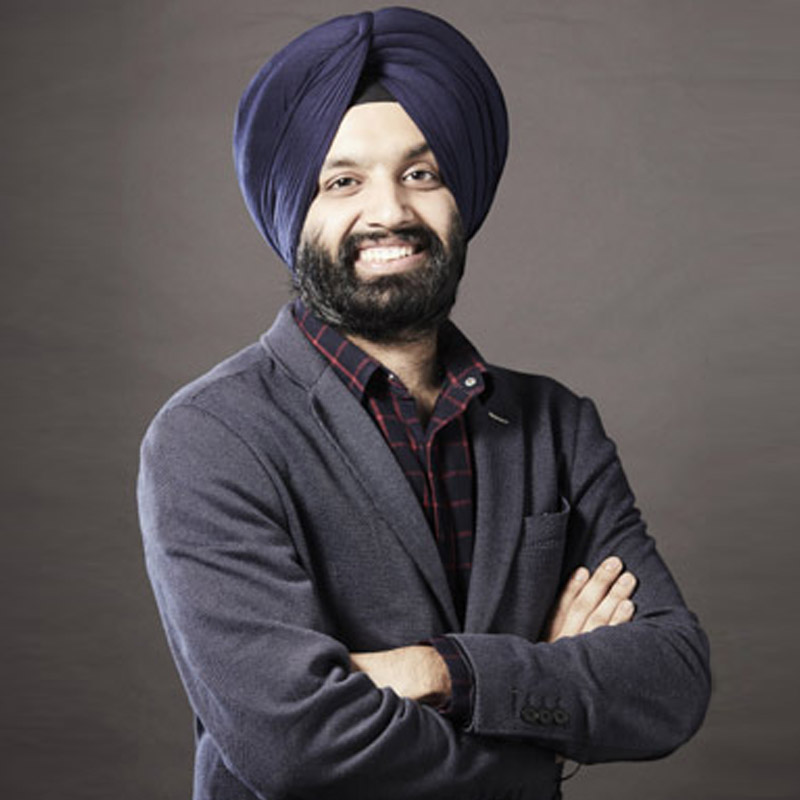
    One Digital Entertainment COO and co-founder Gurpreet Singh Bhasin said, “We had two prime reasons of choosing the topic of mental health and suicide for this documentary web series. As a team we truly believe that these are stories that need to be told. There are over 50 million people in our country who suffer from mental  illnesses in silence out of shame and fear. We want to change this attitude and mindset. It is essential for survivors to speak up so others can be inspired to do the same. Secondly, we wanted to showcase that digital content need not necessarily be restricted to comedy, fashion and entertainment. We asked ourselves, why should the quality content debate be restricted to films and television? With that, we took the bold step of launching this series that will get people talking about this grave issue, accepting it and along the way inspiring them to speak up and seek help.”

    At a time, when one third of India’s population suffers from the hidden burden of mental illnesses, ‘Survivors of Suicide’ serves as a beacon of light to many of us who have grappled with mental illness directly or indirectly behind closed doors. They aim to initiate a very important conversation around mental health which is the need of the hour & raise awareness about the big issue through varied, uplifting, hopeful and inspiring stories.

    ALSO READ :

    One Digital Entertainment launches Nokia campaign

    One Digital launches ‘Hip Hop Highway’ on Saavn

    Yatra.com partners with You​Tube sensation Prajakta Koli