Tag: Content

  • “Looking at creating multinational co-funded and co-financed content”: Applause Entertainment’s Sameer Nair

    “Looking at creating multinational co-funded and co-financed content”: Applause Entertainment’s Sameer Nair

    Many believe this is the golden age for content creators. Applause Entertainment is one of those at the forefront of creating digital content today. However, the company’s ambition isn’t just restricted to India but rather a global audience. Some of the recent names that can be credited to the Sameer Nair-run company are Hostages, Criminal Justice, Rasbhari, Hasmukh, The Office, etc. Under development are an Israeli thriller adaptation for India – Fauda, as well as Luther.

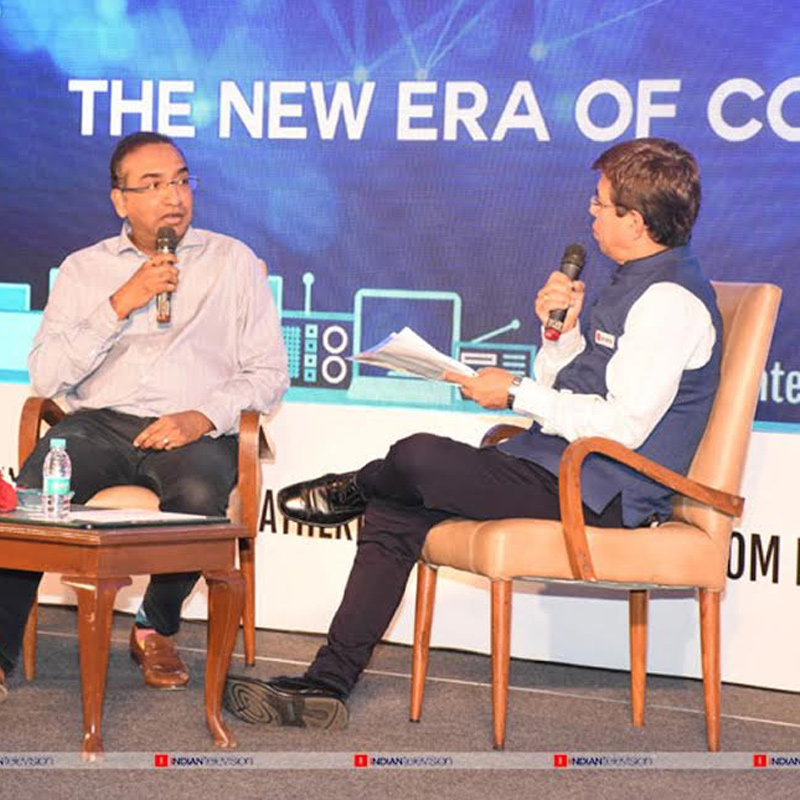
    In the second part of this interview, Applause Entertainment CEO Sameer Nair, in a virtual fireside chat with indiantelevision.com founder, CEO and editor in chief Anil Wanvari spoke at length about content creation for global audience, co-production in different countries, short-form content, TikTok, the role of streamers in today’s digital world and much more.

    Read the first part here

    Edited Excerpts:

    The pandemic has been longer than what we have suspected, do you think it will change the way viewers live. Due to lack of fresh content at their disposal audiences are moving from GECs to OTT now.

    I think what the pandemic has done, in India especially, is that it has exposed a new giant audience to the OTT platform. It is a forced thing that has become a habit now. I think it’s a good thing; the distribution of content via the internet is a golden age of content consumption and content creation. Television, theatre and OTT are very important parts of our business. I don’t think any one part of the business can or should replace the others. From a content creator point of view what you want to have is multiple revenue channels. If it gets monopolised then it will create distortion in the market. 

    Do you think that Indian content has not travelled the world? Also the broadcast industry is heavily dependent on advertising and subscription is not coming to the level it was expected.

    I think from our scheme of things the world is an open playground. For now, we are an Indian studio but thankfully due to streamers content is travelling globally. The US market exists all over the world but in the next 15 or 20 years, the Indian market will have the same influence. Initially, Chinese had a lot of power with their technology and the Koreans have done that but as India seems to have a large market one can be happy because it is such a huge market. But now what global streamers have automatically created is a system where content can be viewed in any part of the world.

    Certain animation studios have set outposts in Hollywood and they are starting co-production and are hiring locals from there. So are you looking at penetrating American market with American style shows rather than doing Indian shows alone?

    It is definitely a possibility and different people in different ways have done that. The story of Hollywood is like when they run out of money they find a new investor. Originally, it was run by Jews then Germans and Russians came and the Indians went for some time. If you talk about co-production in America, I believe they are already more qualified than Asians. It is more about growing together, partnerships, collaborations because they are already doing great stuff and maybe we can contribute to it.

    Is there a chance to do a co-production between India, France and the UK?

    Yes, in fact, we have been approached by a documentary company to figure out if we can co-produce some documentaries which would be partly financed by the French and partly financed by Applause Entertainment. We were looking at monetising it in a way where France would take care of Europe and we could take care of the rest of the world and India. Actually streamers while arriving are shaking up the global content. Originally what used to happen in the  West is that anyone in the US or Europe is completely aware of how these whole syndication licencing models work, how multiple financing models work or how to create content in one market and sell in different countries. Streamers have put a planner in place and they are doing this very effectively.

    We are looking at these partners and seeing how to create a multinational content which is co-funded and co-financed. Finally, what has to work is the economy, the business of it, who pays and the ways to recover money.

    What is your opinion on 15-second 30-second and 90-second short-form story format? Are they lending good storytelling?

    I think the whole TikTok revolution and before that what YouTube did and a lot of short-form content has democratised storytelling. Before the internet and social media came along, only a few could create that content. Either you have to be a filmmaker or a media and TV producer. Then YouTube came and TikTok took it even further. I think storytelling is a form of expressing creativity. I don’t believe it is right to judge anybody. With millions of pieces of content on YouTube some things rise up some things catch our attention and that is how a YouTube star or TikTok star is created just like any other platform. Story of content and its quality remains fundamental. People should be allowed to express their story.

    What do you think about the TikTok ban, now a lot of indigenous brands that have come up or do you think Indians will create a better version then TikTok?

    TikTok is more than a brand and replacement; it is an ecosystem that has been built over so many years. It has been built on very clever insight and how audiences and market works. It is not something that is replaceable; it was also an economic model that needs financial backing. In the end, a lot of social media platforms have huge financial resources that look at building customer acquisition. Personally, I think the TikTok ban will be revoked and it will be sorted out

    Do you think it is important to entertain and impact society at the same time with content?

    I think in a way we are already doing this. What we are today is the outcome we have created for ourselves. Different creators, filmmakers are trying to influence society. One can influence society in a good or a bad way. There are many movies that make you sit and think and there are also some dumb comedies. I don’t think one size fits all or there is a right way. That goes into a dictatorial regime which is against creativity. If I want to laugh about something, then I should be allowed to do so. I don’t have to be meaningful all the time. Television has been the biggest influencer in India but to what extent it has influenced, that we don’t know.

    How do you choose a story or a subject of a story and what is the process of greenlighting the project? Also, which are the genres you are looking at developing further?

    One filter for our selection process is to do something which we are already not doing or have just done. If I have three to four thriller series in development then maybe I won’t do the fifth one right now. There are some broad genres we want to focus on: thriller, crime, homeland security, military biopic, inspirational stories, romance, family drama and historical.

    For us, the process is very simple. The idea of a story comes to us, sometimes it comes through a producer or a writer, then we get into development. We are always involved in the process. We are responsible for every product that comes out of Applause Entertainment. Sometimes the idea comes attached with the producer who then comes with his own director then actors come on board. This is the overall process but it starts with writing.

    Tell us more about your joint production with Gurinder Chadha and Sunder Aaron for Seeker?

    Locomotive Global’s Sunder Aaron was already in talks with Bend it Films & TV’s Gurinder Chadha. They have developed an idea after which they approached Applause Entertainment. I have met Sunder a couple of times where I explained to him about our work. It took some time to complete the paperwork and now we are creating a multi-country writers room. There is a writer in New York then there is a writer’s room in India  and all of us at Applause Entertainment are putting this together. I am very excited about this project.

  • TheSmallBigIdea thinks big

    TheSmallBigIdea thinks big

    MUMBAI: In advertising the Big Idea comes from a small insight. That was the inspiration behind former Reliance Big executive Harikrishnan Pillai and Ex-Times Network's Manish Solanki naming their agency soon after they quit their jobs. Six years down the line, their full-service digital agency,TheSmallBigIdea (TSBI), has grown to a team of 84 professionals, having served clients such as Star Sports,&TV, Colors, Zee Bioskope, Seychelles Tourism, IDFC Bank, HDFC Life, Asian Paints, Chennaiyin FC, and Big Magic. Recently,the agency created headlines for winning the social media mandate for movies like Love Aaj kal and Shubh Mangal Zyada Savdhan.

    For Pillai, it has been a dream journey from 2014, when he started the TheSmallBigIdea as a self-funded venture, by imbibing his experience from the Zee network and Reliance Broadcast Network.  
    His fruitful stints at Zee and Reliance helped him a lot. Talking about his past experience, he said: “If we have hunger and perseverance they gave us the opportunity. It is probably the biggest legacy that I have carried into my team. As I have said, most of our team is home-grown, all trained internally with strong ethos. The team at TheSmallBigIdea is creatively strong.  They are leading the team as if they themselves are the entrepreneurs. The second lesson learnt has been a focus on delivery. A great idea without impeccable execution is nothing. So, while we are idea-driven, we are extremely focused on executions, delivery, and measurement.”

    While brands in the media and entertainment category contribute 60 per cent of its business, TheSmallBigIdea has a stronghold and focus in tourism, education, e-commerce and BFSI. Then around 15-18 months ago,  it ventured into movies. “Movies happened last year with Badhaai Ho. Then we did Bala, Good Newzz, Dream Girl, and so on. Our primary focus is on sustainability and growth. What is going to give us sustainability is the large clientele that we have; our focus has been to provide services to them so that they can stick around us. The other most important factor is growth. When you look at sustainability you also look at growth,” said Pillai. 

    Largely based out of Mumbai, it has reps in Bangalore, Delhi, Punjab and Chennai. 

    The agency also has a sprinkling of media-only clients for whom it does the planning and buying like: Seychelles Tourism, Bahrain Tourism, Welingkar Institute and Dalmia College. Realising the potential in going local, TheSmallBigIdea launched TSBI Bharat as it saw the need to reach out to the next 100 million people who are going to come online. It's not just about language translation but studying how regional markets behave, how they consume internet and the role of neo-social apps in their ecosystem. 

    “We want to understand their sentiments, what kind of content they want to consume, etc. It is about addressing a larger ecosystem rather than addressing one particular language,” says Pillai. 

    TheSmallBigIdea is expecting a lot of growth coming from TSBI Bharat. It is pushing brands to create content in regional languages using neo-social apps. “We are also focusing on TSBI studios, which is the production division at TheSmallBigIdea to create more short-format content, podcasts and ad films. Our analytics tool ACE allows business to derive actionable insight through a thorough evaluation of social and enterprise data,”he added. 

    The agency, is looking at hiring more people to reach the 100-mark. Going forward, TheSmallBigIdea envisages a brighter future. “What works for us are the insights and the content,” says Pillai confidently. “Not only our ideation team but our service team is very strong and that is reflected by the fact that 80 percent of our clients renew contract on Y-o-Y basis. What is not working for us is the reputation of being a media and entertainment company, which is not true. Like I have said we get only 60 percent of revenue from media and entertainment. This perception I would like to change.” he concludes.

    Now that’s what sounds like a sound idea. A big sound idea. 

  • Erosion of credibility of mainstream media gave birth to ‘Facts First with Faye’

    Erosion of credibility of mainstream media gave birth to ‘Facts First with Faye’

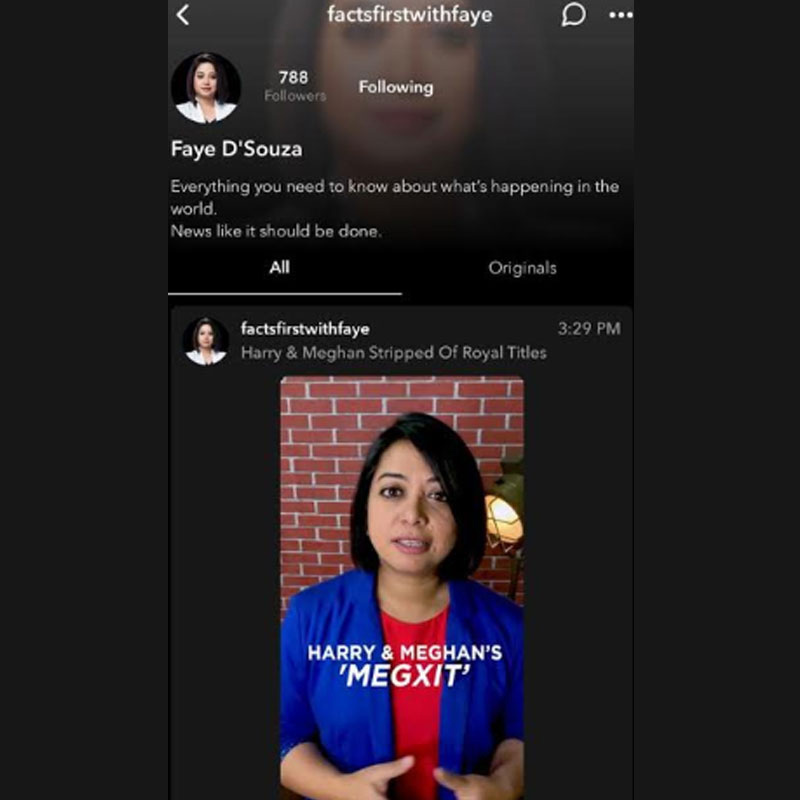
    MUMBAI: She has been a vociferous anchor on primetime news. She has been a fierce role model for women in the media industry. And now she’s embarking on a new journey as an independent content creator. Faye D'Souza, former Mirror Now executive editor, spilt the beans about her new channel ‘Facts First with Faye’ that launched last week in a joint venture with Firework India – a short-video sharing app.

    Facts First with Faye is an information-based channel, wherein the firebrand journalist will speak on global and national news stories in 30-seconds.

    D’Souza, speaking to Indiantelevision.com, said, “Though the format of news sharing is 30-seconds, the offering is credibility as there has been an erosion of credibility of mainstream media. And, that’s causing the audience to look outside for news that’s not adulterated by any sort of compulsion.”

    Adding further, she said, “Don’t see mainstream media as competition at all. And, if mainstream media was able to hold its audience, it wouldn’t be looking for information in independent digital sources.”

    D’Souza clarifies that she isn’t an employee of Firework India. Rather it is a partnership through a revenue-sharing model. She added that the primary aim is to get as much as the traction of premium and intelligent consumers on the channel and eventually on the platform.

    Terming it as an exciting journey to work with Firework India, D’Souza explained, “The challenge for me, especially, coming from the television is to tell news in 30 seconds and I believe we are doing fairly well so far and hope the audience resonates with it.”

    Going forward the channel will also have an interactive chat session through conversations with the audience of all the important stories of the day. “Rather than watching a debate on television, the audience can participate in the conversation with the help of a new chat feature,” she revealed.

    On Firework, content generation is not measured in hours. For now, her channel is posting an average of four stories per day. The content is information-based and not opinionated that audiences can watch ‘on the go’.

    D’Souza clarified that Facts First With Faye is one of the projects she is working on multiple content creation platforms.

    The channel has already garnered at least 727 followers. The videos shared are simple and have her giving a piece-to-camera interspersed with graphics.

    Firework launched its video network in India in October 2019 and takes pride in its two-step moderation protocol. While its moderation is largely based on AI algorithms, its content also goes through careful human moderation.

  • Content creators discuss binge-worthy content at Vidnet 2019

    Content creators discuss binge-worthy content at Vidnet 2019

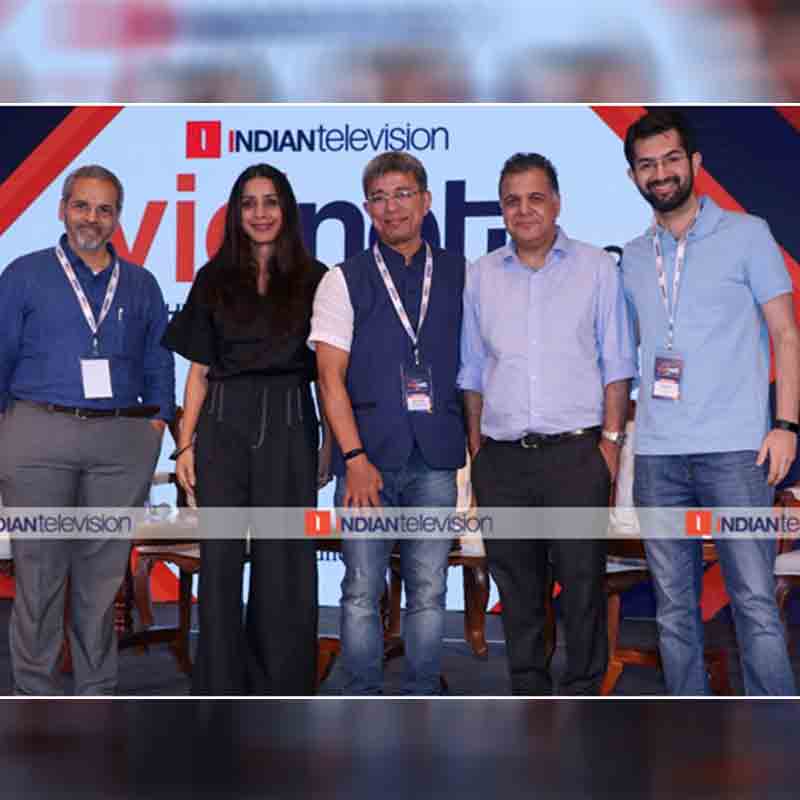
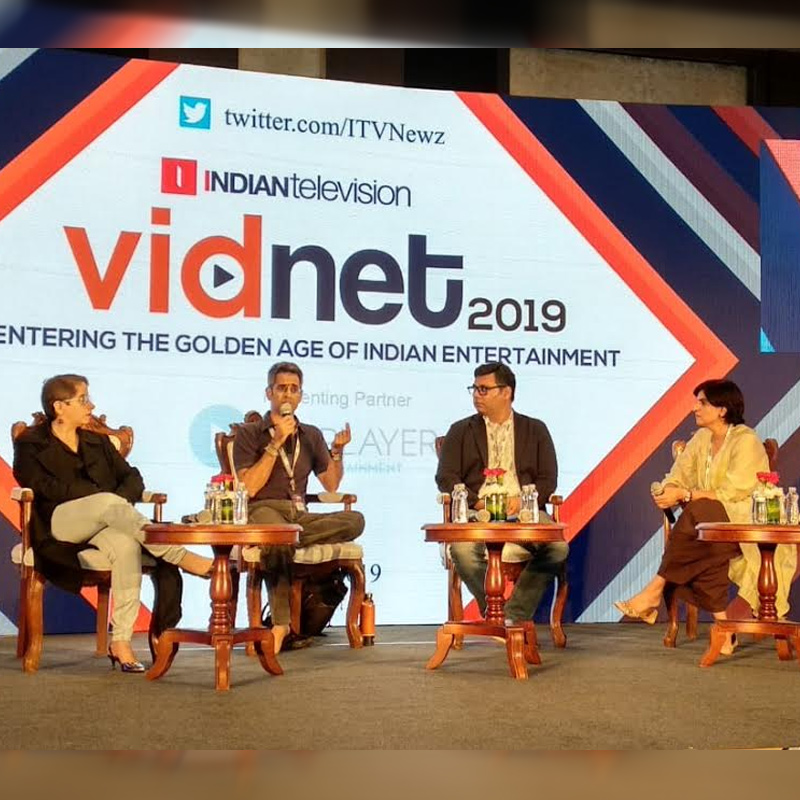
    MUMBAI: Binge-watching has become synonymous to over the top (OTT) platforms and content. Indiantelevision.com’s summit Vidnet 2019 had an interesting panel discussion on creating binge-worthy content. The panel was moderated by Indiantelevision.com founder CEO and editor-in-chief Anil Wanvari while MX Player CEO Karan Bedi, House of Cheer founder & CEO Raj Nayak, Vikatan Group managing director B Srinivasan and Viniyard Films founder Ashvini Yardi were the panellists.

    Wanvari started off by asking the panellists about the shows they have binge-watched on Netflix. Yardi has binge-watched The Boys, Bedi watched The Spy, Nayak binge-watched Unbelievable and Srinivasan has watched Mirzapur.

    Yardi first gave her definition to binge-watching by saying, “If we go beyond the allotted time in our head for the show, that’s binge-watching where we are hooked to the story.” On the other hand, Nayak says that you can’t categorise particular content as being binge-worthy. He said, “If we are creating content that it is good, people will watch it.”

    Yardi argued, “Content can be made for binge-watching. Every online platform has guidelines according to the viewership data they have. For OTT – the first five minutes, in-between and the last seven minutes are very important. Those times are planned accordingly to hook the viewers. On television, we plan according to the breaks. Since OTT doesn’t have breaks, everything is planned from the storyline; it’s not just simple storytelling.”

    Yardi believes that if content creators follow OTT’s format and create cliffs at regular intervals to hook the audiences, they can succeed in creating binge-worthy content.  

    However, Nayak said, “OTT players have those set rules but otherwise also I feel these are the basics that content creators do because we want our viewers to come back on the show. So, we have to create those hooks due to which they stay on television or OTT.”

    Whereas, Srinivasan said, “The character and content are behind the success. Definitely there is a science to it and data involved on how to refine the whole process. But I would say content and characters are important.”

    MX Player has delivered 5 to 6 successful shows in the last six months. Sharing his experience, Bedi said, “Creating content on any platform requires a lot of efforts. On online, there is a huge difference while creating content for AVoD or SVoD platform. SVoD people have already paid and they are watching as they have invested in it. On AVoD, customers move in and out as they have not invested money for viewing there, so the level of hook that content creators need to create is very high.”

    Wanvari also inquired whether the content creators constantly think of hooks or they line-up the story and then get into the hooks. Yardi replied, “We create the story and build the characters first and then get into hooks.”

    She also informed, “Currently, in India, everyone is learning. Most of the platforms are using what they have from parent companies and try to localise the format. It’s not necessary what works on Netflix or Amazon in America will work here because our lifestyle and mindset is different. I feel it’s a trial and error period for OTT.”

    Srinivasan also said, “We are trying to understand what kind of stories work for the OTT platform. We want to create that content. We have enough knowledge of the ecosystem but the biggest constraint would be getting the writers to write in a format that is required for OTT.”

  • Indian content creators must find out right stories to reach global audiences

    Indian content creators must find out right stories to reach global audiences

    MUMBAI: Over the top platforms have opened up the doors for content creators to share their creativity across the world. Despite the influx of major companies such as Netflix and Amazon Prime Video in India, content creators are still figuring out how to make their stories go global.

    At the stage of Indiantelevision.com’s Vidnet 2019 summit, some of the successful creators spilt the beans on their strategies. The creators of Delhi Crime, Lunch Box and Bard of Blood believe that stories that resonate and connect emotionally with the global audiences do travel. 

    The panel discussion ‘Making Indian Stories Travel’ in the creators’ track was moderated by BookMyShow VP content and strategy Manisha Singh Katial and the panellists were MUBI India content advisor Guneet Munga, Delhi Crime creator, director and writer Richie Mehta, and Red Chillies Entertainment chief revenue officer Gaurav Verma. 

    Katial opened the discussion by stating, “Yes, stories that are good do travel. But they also have to be culturally connected and I think that also becomes the challenge. Something that culturally connects with you resonates more, and something that connects with you emotionally, definitely works. I do feel making stories that travel is a challenge because it depends on the content that one is creating.”

    Katial asked Mehta to share the feedback he received on Delhi Crime. “The feedback for Delhi Crime is global. I have been hearing that the story has travelled quite far, and seems to have resonated with people all over the world. I knew this when I was conceiving the project.”

    He further elaborated, “I was in Delhi when the crime happened. So I reacted to it as somebody in India would. Then I left and went to Toronto and there I realised that this wasn’t just an ‘Indian’ thing, this was a humanitarian issue for the planet’s citizen. When I pieced together my work I figured out that it could have deep meaning for the Indian audience.”

    Mehta’s aim was to show a positive representation of India through his story. “It is the worst thing that has ever happened in this country and if you can spin that around to make a story of the extreme positive environment, especially for somebody outside with no knowledge and understanding about India, I certainly want to make it like that,” he said.

    Monga, the creator of Lunch Box, also expressed that content creators have tried to represent Indian beyond Bollywood’s depiction. Distribution has been the challenge previously. She said, “Across the world there are different sets of distribution, buyers and strategies. So it was not the same release day of films worldwide. Lunch Box released over two years around the world. And it is important for us to understand there are many layers to this.”

    Monga said that films can travel either because of its content or because of the choice of distribution partners. Sometimes a really good film is unable to travel because it does not have the right access. “So having the right access and having that distribution division, which is not just diaspora, is important. I feel with Netflix coming in India the lines are merging and now people will be able to see what India is with all its languages and colours, all its type of filmmaking and storytelling.”

    Katial commented that while having partners like Amazon and Netflix is great, it is also necessary to think internationally. To this, Verma added that one should not try to attempt an international story with the pressure that one has to appeal to seven billion consumers because emotional stories will connect to people. The best way to dazzle the audience is through content and script. Verma also opined that the industry is facing the issue of lack of talent. OTT platforms need writers who can understand the audiences’ need. 

    The panellists also said that apart from appealing stories and subjects, subtitles and dubbing of the content in different languages are also extremely pivotal in reaching global audiences.

  • Content choice drives Indians’ subscription to multiple OTT platforms

    Content choice drives Indians’ subscription to multiple OTT platforms

    MUMBAI: OTT subscription fatigue is a myth in India for now. While subscribing to multiple OTT services, Indian subscribers rely on content as the driving force. There are three primary reasons for this – demand for more content options (42 per cent), satisfying the content needs for an entire family (42 per cent) and all content not being available on one single OTT service (42 per cent).

    “Our research findings suggest that the online TV consumer in India sees the value in TV content whether they are paying with greater focus and attention, or with their money,” says Brightcove India sales director Janvi Morzaria.

    The study run by Brightcove polled 9,000 participants across nine countries in Asia, including 1,000 consumers in India. It also revealed that 79 per cent of respondents welcomed the hybrid model of OTT. The report said that 35 per cent of respondents are open to a reduced monthly subscription package that serves ads depending on the price, whereas 44 per cent said they would definitely sign up.

    25 per cent of Indian respondents wants to pay nothing and watch ads as a trade-off to consuming content while 25 per cent elected to pay a lower fee with limited ads. Just 14 per cent agreed to pay a higher fee to be free from ads and 14 per cent would like an option where they can customise their price and ad packages. 37 per cent of respondents wanted to pay less than $1 per month, 27 per cent would pay $1-$4 per month, and 16 per cent would pay $5-$9 per month.

    “Indian consumers do not mind seeing ads as part of their shows, especially if they are getting a deal. 79 per cent of Indian respondents stated that they are open to a hybrid plan of ad-funded SVOD that comes with a reduced price,” she added.

    It also emerged that offline downloads, access on mobile, and using less data on mobile were the top three OTT service features most wanted by Indian consumers. 22 per cent of Indian respondents found two ads as an acceptable advertising load per ad break and 13 per cent were open to three ads per break. In addition to that, 67 per cent of respondents were receptive to the idea of shoppable TV.

    “OTT service providers should take advantage of this preference and make the advertising experience engaging while limiting ad loads per break. Consumers are now willing to watch ads if they have the option to subscribe to a reduced price plan,” she commented.

  • The digital content boom – trends in 2019

    The digital content boom – trends in 2019

    When is the last time you followed a full show on TV? With the advent of digital streaming platforms, it’s something that is hard to recall for most people. There was a time when having access to digital content in itself was exciting. But in this user-driven world and the dynamics that come with it, we are now way beyond that. The way audiences consume videos is changing at a fast pace, with new technologies and constant innovations being introduced in the same year. With every new invention comes the scope for innovation, and the subsequent need to make this new concept more user-friendly. Some brands have perfected the art of researching resulting in their products to become an instant hit! Others have taken a different route, that of almost dropping a new interface out of thin air and then tweaking it according to ‘what users want’.

    Either way, it’s bound to always be about the users, who just seek something ‘new’ every time they log in an entertainment platform through their phones. Either through content or through experience, users today are looking for something fresh and novel in terms of either content or experience, and are quick to reject contents or platforms that offer none. Considering the same, here’s a look into what you can expect in 2019 from the most favoured form of content consumption:

    Brand videos backed by purpose

    People are more aware than ever before, and they don’t hesitate to voice themselves online. With the rise in the number of mediums to express oneself, you can talk about current issues on your status, an Instagram story, a twitter poll or even a GIF. Videos, have the ability and the capacity to showcase issues more than most other mediums. Brands are noticing the kind of impact videos with a purpose have on their audiences, and there is a large scope for worldwide discussions to arise from the same. Businesses see the scale and impact caused by videos of this kind and aim to define their stance and responsibilities through them. Be it campaigns to save water, or on global warming or the right to vote, video content with current relevance strikes a chord with audiences and is here to not only stay, but to grow.

    Device compatibility a necessity

    Smartphone penetration is increasing at a speed never imagine before and video content accounts for the highest amount of data consumption. Having access to internet data and Wi-Fi almost everywhere we go has facilitated the increased use of mobiles to consume video content. But times have moved beyond when it used to be a thrill just to be able to watch video content on your phone. Now, it is all about making that viewing experience even better, by way of customisation or the norms that define comfort. Platforms such as Instagram’s IGTV have already accommodated and steered this trend, by making it exclusively for vertically-shot videos that are full-screen. Smartphones are also where people are most open to watching ads. According to a survey by data analytics company MoMagic Technologies, 40 percent of Indians prefer to watch video, even advertisement videos on their mobile phones over other platforms.

    Bigger role to play for regional language content

    The surge of digital content in the past few years has opened up many avenues, a major one of which is for vernacular languages to break into the mainstream. This is thanks to the wider reach of online streaming to consumers from regions other than Tier I cities. A 2017 report by KPMG and Google, found that there were 234 million internet users consuming content in Indian languages and 175 million English users in 2016. The report further stated that the period between 2016 and 2021 will see 9 out of 10 new internet users using local languages. Platforms such as Voot and Hoichoi already have a wide user base, leading the way for vernacular languages to be at par with the rest.

    Better content value and storylines

    Gone are the days when the “Big Screen” was seen as graduating from the “Small Screen”. With great storylines compelling audiences to get hooked onto shows on OTT platforms, native content is becoming increasingly popular. Both well-known as well as newcomer actors, directors and icons are getting more and more involved with shows and movies online, a thrill for audience thanks to engaging storylines and better production values. The focus is shifting from the “who” to the “what”, and overall quality is taking precedence. This is something that we can expect to see more of on OTT/streaming platforms in the rest of 2019.

    Virtual Reality (VR) put to better use in marketing

    Out of the many new developments in technology, VR has been talked about more than it has been implemented. The industries that VR is currently used in are limited to those such as gaming and leisure. However, there is great scope for the use of VR to heighten user interest by giving them a sense of control and involvement across industries. Somewhat like a video-game concept of controlling the story with the moves you make, interactive viewing experiences are on the rise. Digital content platforms have already begun using this tactic, the most popular of which has been Netflix’s Bandersnatch. It is an interactive viewing experience, where audiences get to choose the storyline as they watch it. This also means there are several possible endings and storylines, which piques user curiosity and engagement altogether.

    Transcripts and annotations to boost video content

    Almost all TV service providers have subtitles on their English entertainment channels, most without an option. Apart from these, even most video content platforms have their default settings as subtitles/closed captions “On”. As a result, most consumers have gotten into the habit of watching video content, whether movies, shows or music, with subtitles. Not only does this provide clarity in the AV experience, but it also helps online content be found and presented to the ‘right’ audiences. Platforms such as Google and YouTube use algorithms to track keywords, and having descriptions and transcripts embedded into the content helps build solid Search Engine Optimisation. Additionally, closed captions help when one is watching videos in a noisy environment, as well as when they want or need to watch video content on mute. In 2019, we will see brands incline towards having their content aligned for videos with sound and soundless videos alike.

  • Content makes social media influencers popular

    Content makes social media influencers popular

    MUMBAI: A session on young media influencers was held on day 2 of FICCI FRAMES,the global media and entertainment conclave. These media influencers are being used by brands to promote their brands through social media. These infleuncers have a huge following on their social media platforms.

    "I think earlier it was about the fact that if you are a celebrity, there should be a mystery around it. Now your celebrity status has everything to do with your relatability to the people." Said Rohan Joshi.

    "I think when it comes to sponsorship and collaboration, brands come to us depending on the age group of our audience and if that matches up to their brand value." Srishti

    Actor Gaurav Gera, popular on social media for his characters like Chutki and Shopkeeper, said: "I think we are like TV channels. You know where we have subscribers and steady audience like the way TV channels have. We are primarily making videos to entertain and to engage with people." 

    Talking about maintaining consistency of the content, Prajakta Koli, a YouTuber known as MostlySane, said: "It has to be a full-time job. We have to be in search of content and there is no day off for us. Especially, in our initial days, when we are doing everything — writing, performing, editing. But then, once you get a strong connection with the audience, you just go on."

    Have the digital influencers got their dues?

    "I was having a conversation with someone who was saying how much budget is allotted for digital marketing, and the amount was massive. It tells us how the whole ballgame of marketing has changed. Whereas they want a Bollywood star for his/her reach, they also want a social media influencer for its relatability factor."

  • India to be APAC’s fourth largest online video subscription opportunity by 2023: MPA

    India to be APAC’s fourth largest online video subscription opportunity by 2023: MPA

    MUMBAI: The latest report by Media Partners Asia (MPA) predicts that by 2023, India will be Asia Pacific’s fourth-largest online video subscription opportunity after China, Australia and Japan.

    The Asia Pacific Online Video & Broadband Distribution report goes on to say that Asia Pacific’s online video revenue, comprising net ad spend and subscription fees, is expected to grow at 18 per cent CAGR, up from $21 billion in 2018 to $48 billion by 2023.

    The growth of online video subscription has been impressive in China, with fees rising from less than $850 million in 2015 to a projected $5 billion in 2018. The growth of online video subscription fees has also been strong and increasingly scalable in Australia and Japan, while meaningful opportunities are opening up in India, driven by the growth of payment infrastructure as well as investment in sports rights, local movies and series. Online video sub fees in Southeast Asia (including Hong Kong) are relatively low, at a projected $267 million in 2018. This could grow to $724 mil by 2023, driven by greater momentum in Hong Kong, Indonesia and the Philippines.

    China will account for the lion’s share of industry value, with more than 60 per cent of Asia Pacific online video revenue and more than 75 per cent of direct-to-consumer SVOD subs by 2023. After China, the largest markets by revenue in 2023 will be Japan, Australia, India, Korea and Taiwan. 

    MPA executive director Vivek Couto said,“Online video monetisation is starting to scale, supported by rising investment in premium entertainment and sports as well as the growth of broadband and digital payments. Strong digital ecosystems are emerging, especially in China while telcos are also becoming important aggregators of video services in markets such as Australia, India and Southeast Asia. Advertising is a major revenue stream for online video across the region, while subscription is also key, especially in Australia, China and Japan, and growing from a low base in India, Southeast Asia, Korea and Taiwan. Different payment models are emerging across China, India and Southeast Asia incorporating, including TVOD and shorter time commitments, freemium tiers, bundles and loyalty programs tied to a broader mix of digital services.”

    Net online video ad spend in Asia Pacific will grow from $13 billion in 2018 to $30 billion by 2023. Ex-China, this opportunity equates to more than $11 billion by 2023, versus $5 billion in 2018. YouTube and to some extent Facebook will remain dominant, with 73 per cent of online video ad spend ex-China by 2023, versus 78 per cent in 2018. The biggest online video ad markets after China by 2023 will be Japan, Australia, India and Korea. Local players will gain share with India leading the way, although Southeast Asia will lag behind.

    Online video content costs across Asia Pacific grew by 27 per cent in 2017 to reach $13 billion, with China contributing 85 per cent. Asia Pacific online video content costs will grow from $16.6 billion in 2018 to $31.5 billion by 2023, a 14 per cent CAGR, according to MPA. Ex-China, OTT video content costs will grow from $2.7 billion to $5.9 billion over 2018-23, a 16.5 per cent CAGR, with Australia, India and Japan driving momentum, followed by Korea.

    Advances in broadband will provide a significant boost to online video consumption, reach and monetisation. Mobile broadband will continue to grow, including the first flowering of 5G in North Asia and Australia post-2020, alongside a slow but steady transition to next-generation fixed broadband. Mobile broadband penetration in Asia Pacific ex-China will reach 80 per cent per capita by 2023 versus 57 per cent in 2018, with some of the biggest growth coming from India, Indonesia and Thailand. With China included, average mobile broadband penetration in Asia Pacific will grow from 74 per cent to 94 per cent per capita over the 2018-23 period. Average fixed broadband penetration in Asia Pacific will grow steadily from 50 per cent to 54 per cent of households over 2018-23, with the focus increasingly on upgrading networks using fibre and next-generation cable technologies.

    High level of online piracy leads the list of barriers to the growth. Apart from China, many local players are also struggling to scale in fragmented marketplaces. The top three SVOD players in a market typically have 50 per cent or more of online video subscription revenues, according to MPA analysis, leaving scope for future consolidation.

    Couto added: “We are in the early innings of an industry evolution which will require high levels of investment and strong balance sheets. For standalone players, there is no clear path to significant free cash generation in any market over the medium term, while integrated digital giants and large-scale TV players are subsidising losses for their online video services, although operational breakeven is likely in the near-to-medium term for local platforms in Australia, China, India and Japan.”

  • Eros Now enters Sri Lanka with Dialog  Axiata

    Eros Now enters Sri Lanka with Dialog Axiata

    MUMBAI: Dialog Axiata, Sri Lanka’s premier connectivity provider, has announced its partnership with India’s video over-the-top (OTT) platform Eros Now. This association allows users to seamlessly browse through over 20,000 hours of original Indian content in over 10 languages.

    Available via the Dialog ViU app, Eros Now gives subscribers access to a high-quality content library which comprises of over 11,000+ movies with multi language subtitles, originals, music and entertainment shows in high definition (HD). Additionally, along with a vast library of diverse content, the app will allow users to curate movie and content playlists, receive personalised recommendations, view content offline and sync all devices for a superior viewing experience.

    There will be a monthly fee of Rs 100 and taxes.

    Speaking on the launch Dialog Axiata PLC senior general manager – global and content services Mangala Hettiarachchi said, “Dialog has always strived to provide customers with the best video experience on the best streaming network in Sri Lanka. Dialog ViU has allowed approximately one million customers to access the best of local, regional and international entertainment, and we are proud to exclusively partner with Eros Now, to give Dialog ViU users further access to an impressive content catalogue of Indian blockbusters.”

    Commenting on the partnership, Eros Digital CEO Rishika Lulla Singh said, “We are delighted to announce our arrival in Sri Lanka with our partner Dialog Axiata PLC. This partnership will help us offer the subscribers in Sri Lanka a one-stop-shop where they can watch a wide variety of Indian language, Bollywood and regional content. Sri Lanka is a growing market for digital entertainment and we truly believe that Eros Now’s extensive content bouquet will appease the audiences increasing entertainment demands.”