Tag: Content Strategy

  • Netflix global TV head Bela Bajaria dishes on ‘local impact strategy’

    Netflix global TV head Bela Bajaria dishes on ‘local impact strategy’

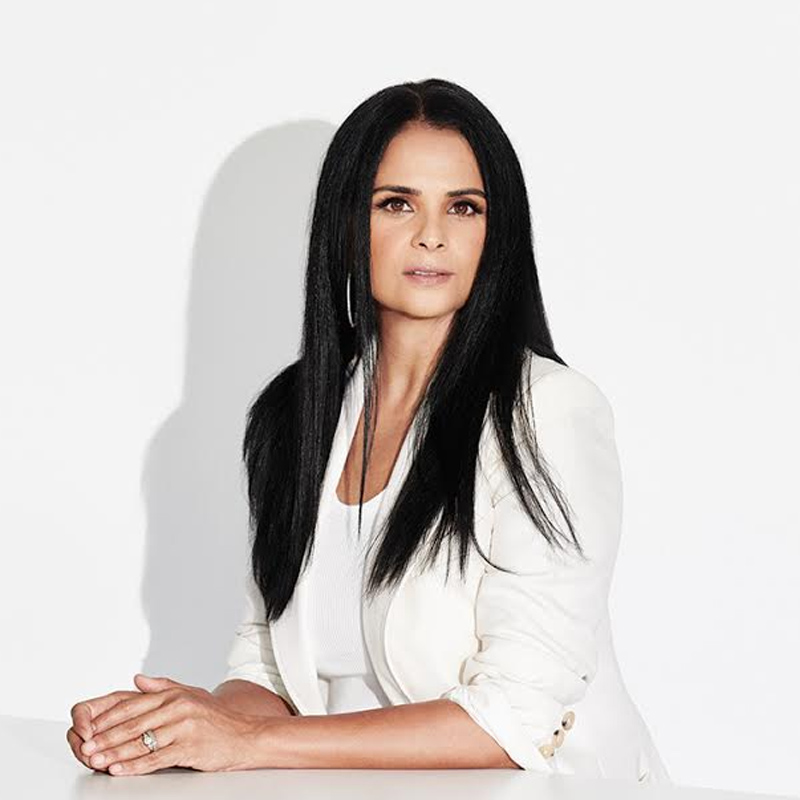
    KOLKATA: Among a host of over-the-top (OTT) platforms in India, Netflix has always been considered as the “premium” one in terms of pricing and content. To break the stereotype, the streaming giant has taken several measures like launching a mobile-only plan. Netflix global TV head Bela Bajaria said the platform wants to “please many more members” with its diverse content offering as well.

    Speaking on day one of APOS 2021, Bajaria, who smilingly disclosed her “personal bias” for the market because of her ethic roots, remarked that the platform wants to have a wider breadth of offerings for the country. She pointed to the much-hyped slate of more than 40 originals which consist of different categories of originals.

    “I think sometimes when we’re in a country, we make the first couple shows people externally and even sometimes [viewers] internally perceive us as just a platform having premium or edgy dramas… We want to please many more members than that,” she said during the discussion with Media Partners Asia executive director & co-founder Vivek Couto.

    Of all its Indian originals, Masaba Masaba really struck a chord with audiences. She also spoke of the recently launched women centric Bombay Begums, and the upcoming season of the highly acclaimed web series Delhi Crime that she believes will be compelling for viewers. She went on to reveal that more exciting shows would be launched in Q3 & Q4.

    Considerably, she noted the presence of family drama in Netflix’s upcoming slate. “I think it was important because we still want to have everybody’s favourite show. We want to have a show you could co-view with your family,” Bajaria commented.

    While Netflix is highly focusing on staying true to local stories, having a strong local team is really important, as is being part of the local ecosystem. For any local market the focus is always on “massive local impact”, not on making shows popular across markets. Netflix India took its localisation a step ahead with Monika Shergill’s appointment.

    “People sometimes think we want to make a show global or international. The most important thing is we make it the most authentic and specific vision in that country and it has the most local impact and people love it in that country. If people love it in that country, other people will love it too,” she stated.

    However, local shows like La Casa De Papel, Barbarians, Lupin, Who Killed Sara? and Space Sweepers have seen global success. In its home market, non-English viewership has grown by 50 per cent as the viewership of anime has increased by 100 per cent, while Korean drama consumption has tripled.

    “Traditionally, Hollywood has exported stories. Now what we are doing is we are exporting local authentic stories and shows everywhere around the world. All of these stories are different in point of views, from different lenses and very specific to the cultural lens,” she stated.

    Netflix has grown exponentially in other Asian countries too. South Korea has been the most prominent market for the streamer. It has a mix of licensed, regional, the original film in the market. While some of the licensed shows like K-Dramas have performed well, Korean shows in other categories also travelled. More importantly, Netflix could continue its production in Korea the whole time during the pandemic. Hence, the OTT platform has a “pretty solid” slate in Korea for 2021.

    The streamer is gearing up its efforts in Japan by building studios and partnering with local talent. Along with investing in anime which is very successful for the platform, it is also betting big on live-action and non-fiction in the Japan market.

    “The strategy is always going to be, we want to have the best shows. If the best shows are original shows, that’s great. If the best shows are a combination of acquisitions and partnerships and co-productions and originals, then that’s what we do,” Bajaria contended.

    To build a solid global footprint of Netflix, the other goal is it wants to be a part of the creative community in each country. There will be new places the platform starts making more original content in, she added. For instance, it was only a year and a half ago it started doing originals in Africa.

    “We’ve barely scratched the surface. There are so many great storytellers in so many parts of the world. There are great stories that can be told on a global scale in so many places,” she said.

    The media executive has worked across mediums, starting her career with millennial TV, spending a chunk of it at Studios. She has seen the growth and progression of the M&E business, especially the rapid change in the last three to five years. It has always been very important to create a supportive environment for creators and for executives to do the work.

    “I think what has been interesting about working at Netflix is typically the speed. The speed of decision making. There are not many layers like other traditional media companies I worked in. What I had to learn is to move very quickly,” she signed off.
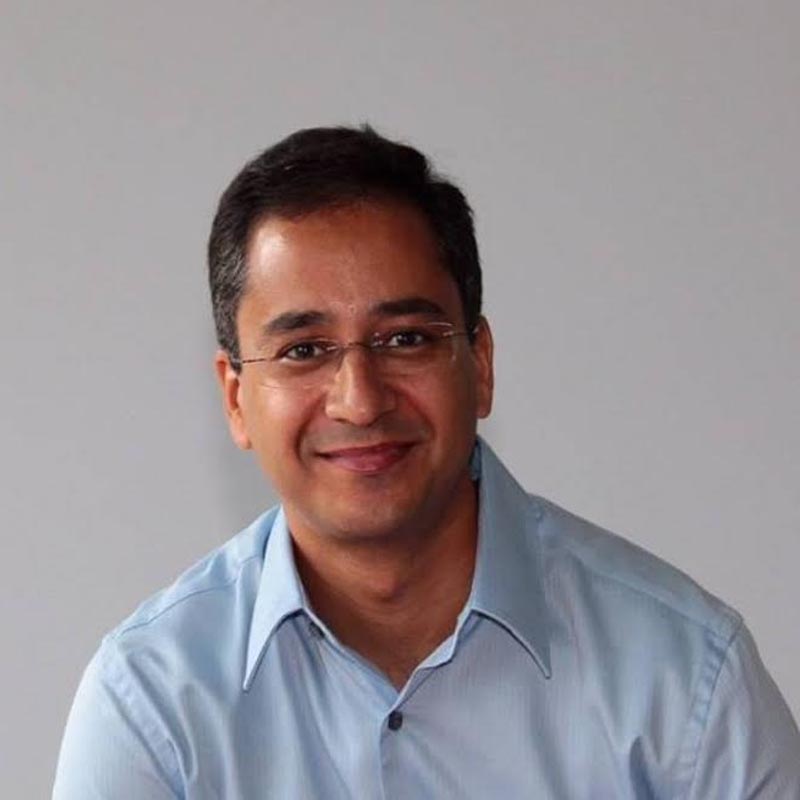
  • TV18’s Avinash Kaul on bringing the local Indian flavour to infotainment genre

    TV18’s Avinash Kaul on bringing the local Indian flavour to infotainment genre

    MUMBAI: Capturing viewers’ interest with shows on issues of contemporary, local significance like surgical strikes, national elections, Ganesha festivals, marvels and mysteries of India – that’s how History TV 18 aims to stand out in the niche segment of infotainment channels in India. 

    The channel has traversed the length and breadth of the country to bring season seven of its stand-out show, OMG! Yeh Mera India. Showcasing everything from bizarre foods and strange rituals to unexplained phenomena and rare talents that make this country Incredible India, the show has made a mark on audiences; and the new season is shaping up to be just as fascinating, featuring some more curious and extraordinary true stories from every corner of the nation.

    In freewheeling chat with indiantelevision.com’s Shikha Singh A+E Networks | TV18 MD & Network18 CEO Avinash Kaul shared the success story of OMG! Yeh Mera India, cracking the Indian infotainment space, viewers’ tastes, advertiser interest, and more.

    On what sets OMG! Yeh Mera India season 7 apart.

    The very fact that this is the seventh season, itself narrates its success story. It was a year-long process to shoot OMG! Yeh Mera India. We have travelled across India to curate stories. There is not one state that we have not done a story out of. From a standpoint of a viewer, it is our flagship property which has always delivered good ratings. Over the past five years, 18 crore people have watched this show. The digital impressions are 550 crores, with 84 crore views on digital platforms. These kinds of motivating stories remain on social media all throughout the year. They are regular people who are creating history every day and that is what HistoryTV18 stands for. I believe this is what has made it popular amongst viewers and advertisers.

    On how big the audience for factual entertainment in India is.

    Till about the NTO came in, HistoryTV18 would reach more than 100 million households. Basically this was the footprint that was available on distribution. As measured by BARC, we have 18 crore people who have watched this show on our channel. It is equivalent to what number one or two Hindi news channels would be. Those are the kind of numbers that factual entertainment typically delivers. Of course, the numbers have suffered after the implementation of NTO. But it also lends to the power of subscription, people would need to pay for watching this kind of content. I believe that is where business models eventually will pivot. While you may find a lot of English entertainment on OTT, you won’t find a lot of factual entertainment content. Hence, there is a bigger audience for India originals.

    On audience preferences evolving.

    In today’s time, viewers are exposed to a plethora of content. They have a finite amount of time, and just because 100 channels will be launched does not mean people would spend 100 minutes extra on television. They have a choice of OTT, linear television, social media and more such platforms. As and where our audiences go, we would like to make our content available to them. We are constantly working towards creating India originals and that is what has made us beat our own competition in this space.

    On growth in terms of revenue.

    The year 2020 has been challenging, in terms of revenue. Businesses across the globe have suffered. Ad-volumes have de-grown massively. Especially during the first and the second quarter, there was a huge drop in volumes. Things have started picking up from the third quarter onwards.

    On ad-rates for documentaries of such nature.

    For India originals, there are premiums rates associated with all the shows. So, it doesn’t operate at a normal rate because obviously it is produced locally in India. Our sponsors have supported us with that, and this year was no different, we do have a substantially higher premium than usual for India’s originals.

    BYJU’S is the title sponsor, HAVELLS is the co-presenting sponsor and LIC is the associate sponsor. Advertisersare always very keen to associate with the positive narrative that we as a channel are bringing to the table.

    On competition in this space.

    We compete in a genre where there are quite a few players, we don’t necessarily have survival content in our programming. Our emphasis has always been strategically on India content and we are continuously doing India-based content for the last seven years. Unfortunately, our competitors who have been in the country for more than 30 years haven’t really concentrated on local India production. It would be great having such shows across competition as proper franchises.

    On plans to licence OMG! Yeh Mera India and other originals to OTTs.

    So, far we have been conscious enough to put it out on our own platforms and work with that but going forward we are fairly open to the idea of licensing our shows on other platforms. The challenge is that on streaming platforms the focus is not yet on factual content, it is still on crime, thriller, horror or something which is bold in nature. OTT in India is still in infancy. But if we see international platforms in developed countries, there is a deeper wave of engagement where people look out for this kind of content. I believe in the next few years we will see the maturity of that industry coming in. With the new regulations also in place, we will see more of factual entertainment content as well on OTT. It would be a very welcome move.

  • Why storytelling is crucial in content marketing

    Why storytelling is crucial in content marketing

    NEW DELHI: Storytelling in content marketing is a vital tool to connect with the audience. Content marketing has always been used in a more personal manner. However, in today’s digital era, brands are eager to not only be creative in their advertising but also using content to sell, connect and engage.

    Madison Media Digital creative director Anuradha Agarwal says, “Content marketing can be the most cost-effective way for a new entrant to make a mark in a highly competitive market or for more established brands to play a larger role in the consumer’s life. Storytelling is a tried and tested means to create stickiness in an era where audiences are constantly distracted.”

    22feet Tribal Worldwide president Preetham Venkky also opines that content marketing has a significant role to play in establishing trust towards a brand. However, the main challenge marketers face is that they don’t have the relevant KPIs in place to justify spends on content marketing.

    According to him, “Brand marketers have short-term KPIs and look at monthly or quarterly KPIs linked to TOMA / SOV or equivalent. For content marketing to play a key role, the KPIs to marketers need to go beyond short-term and focus on the long-term.”

    Venkky also explains that marketing saturation has made consumers distrust content that comes directly from the brands because it seems too sales-y. “Brands have to learn to be more benevolent and not look at directly measuring the business impact of every piece of content produced,” he says.

    In the post-digital world, Venkky says that there is a shift in trust from brands to aggregator platforms. “With plenty of aggregator players in each industry investing heavily in content marketing (their primary source to grow their offering), brands will find it difficult to compete with them,” he adds.

    Kumar Deb Sinha, executive VP, Dentsu Aegis Network and country head, The Story Lab India explains that advertising is based on fabricating brand stories to amplify the features of the product and their usage to stand out. This model worked until the volume of advertising became overwhelming for a consumer.

    He says, “Content marketing starts playing a larger leadership role when marketers evolve to this realisation and use marketing as a tool to tell relevant consumer stories rather than brand stories. Some of the best examples of content marketing happen today in B2B marketing, where brands share content (whitepaper, research, latest trends, etc.) proactively with their prospective and existing consumers and initiate a conversation with him/her. A B2B marketer understands the significance of content marketing as the primary tool of engagement with their consumers. For a B2C marketer, unfortunately, it is still lagging behind the traditional routes which help reach a mass audience at low cost with minimal engagement.”

    If used right, it can play a leadership role in the broader marketing planning of a brand. “For any effective content marketing approach, brands should focus on seamless storytelling across platforms to keep an audience engaged over time. A content-first, platform-specific approach is the need of the hour,” shares YAAP partner Manan Kapur.

    Agarwal shares, “Brands need to find their place in this new world and connect with audiences through content that adds value to their life. The more authentic, credible and humane brands become, the better chances they have of building a loyal audience base."

    Sinha explains that trust is dependent on many things. Foremost amongst them is product experience. If the product doesn’t live up to the experience promised or expected by the consumer, no amount of content marketing or advertising will ever deliver trust.

    “It should be measured against parameters like relevant conversations it has driven for the brand (which is linked to brand marketing objective), engagement score vis-à-vis competition, sentiment analysis leading to the word of mouth and brand advocacy by their consumers and followers. It is the journey of falling in love with a brand,” he says.

    With other forms of engagement taking importance, such as influencer and social media marketing, brands may think content marketing is outdated. Sinha believes that influencer and social media marketing is the easiest entry point but content marketing isn’t limited to this.

    “I feel marketers/agencies miss the larger picture. We leave our content marketing effort limited to influencers and digital films only. We don’t take the conversation forward with our consumers that we have initiated through these initiatives. Content marketing can’t be a start and stop engagement through few initiatives a year. It has to be sustained engagement generating conversations around the year. And once you have sustained engagement, you will drive strong and meaningful conversations with consumers,” he says.

    Indiantelevision.com founder, CEO and editor in chief Anil Wanvari says that there’s a lot of promotion happening in terms of TVCs, digital content and messaging by brands asking consumers to buy their respective products; which works contrary to the communication's objective. Because of the barrage of communications, consumers develop a blind spot to it when it is being served to them.

    “To get the consumer's attention, a piece of communication needs to stand out . One way is to tell an engaging story, with different messaging. It tends to get larger traction if targeted right. It’s important that the messaging goes to the right set of audience. A consumer enjoys engagement with which he is able to resonate. A brand can sell a product by talking about its benefits or by weaving it into a piece of content well told but it needs to have a connection with its consumer,” he says.

    “We recently partnered with ZEE5 and created content around Sushant Singh Rajput on which we got millions of impressions on Indiantelevision.com's sister  brand TellyChakkar.com. Zee5 wanted to communicate to its subscribers and potential subscribers that they could watch Suhshant's shows on the streaming service. We produced a piece of native content which talked about Sushant's greeat attributes, his life, his charm, and his shows. Fans loved it. It was shared, it created a lot of buzz, and conversations. It was a more effective way of communication; as it was very sticky too. Engagment, virality, go to a different level if a piece of communication has a story which is told well,” Wanvari adds.

    If there is a long-term vision in place, content marketing can help humanise the brand, build authority trust and credibility, create awareness, generate organic sales and gradually, build loyalty.

  • OTT platforms may see scarcity in long-format premium content in H1- FY22

    OTT platforms may see scarcity in long-format premium content in H1- FY22

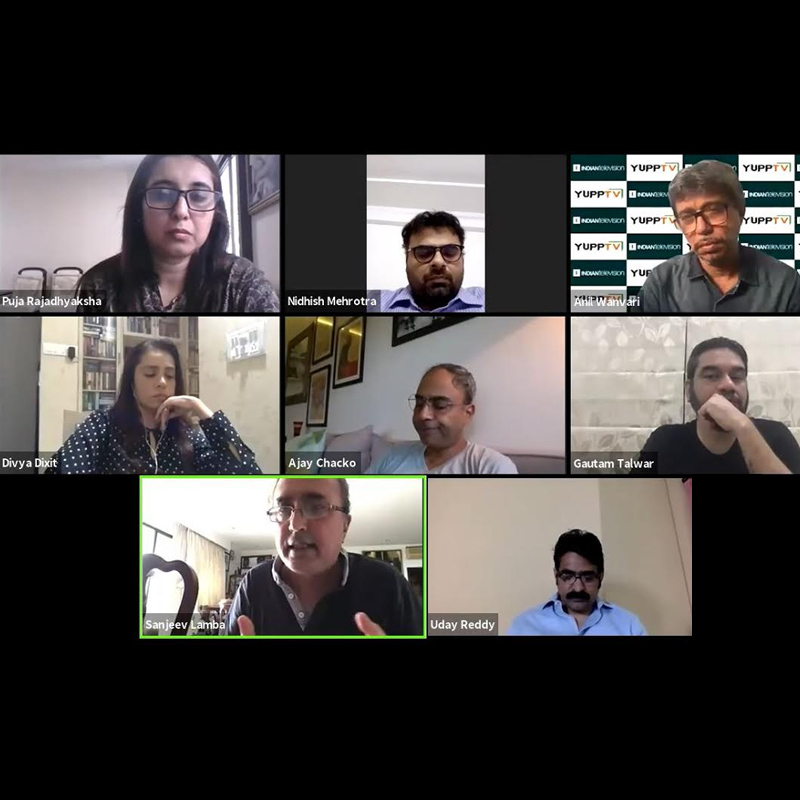
    KOLKATA: It may be the heyday of over-the-top (OTT) platforms but it’s not like the pandemic will not have any impact on their operations. While everything appears great on the surface, the constraints of shooting large-scale projects are going to affect the pipeline of long-format premium originals in the first half of FY22, according to executives who spoke at ‘Future of OTT content and its evolution in India’, hosted by Indiantelevision.com. Being cautious of the situation, the platforms are going to evolve content formats which can be shot amid all the constraints.

    MX Player chief content officer Gautam Talwar accepted that it would run out of shows which were shot before lockdown by the end of the year. The platform is trying to see if it can change the narrative and also trying to explore if there are shows which can be produced within the given constraints. He added that it would look at smaller shows which can be put together in fewer locations with fewer artists, but with interesting stories. Talwar emphasised that OTT platforms have to adapt to the environment. Hence, MX Player will get into the shoot with smaller shows.

    The other players also agreed that there will be a lag in long-format premium content at least for the first half of next financial year.

    Arre co-founder and CEO Ajay Chacko said that the impact of the pandemic will actually be felt in the next financial year from a release perspective. He stated that six months of not being able to shoot would definitely reflect on the content line up of FY 22. While asked if shooting in international locations is a viable idea, he clearly stated that would not be an economic model.

    Hungama Originals executive producer Sanjeev Lamba agreed to his peers’ views but also highlighted that it also depends on what kind of business the platform is in. According to him, the way people are getting affected is going to be different.

    “We believe in mixing up shows. We don’t believe in mega, large scale forever. For us, a small set of shows have worked really well. It’s actually the mass India that is growing for us constantly and mass India loves that. For us, the shoots have already started. We will start launching two-three originals month-on-month from November itself. The idea is to reverse the track of feeling the financial pinch in the Q1 of next FY,” said ALTBalaji marketing, analytics & direct revenue SVP Divya Dixit.

    Eros Now content head Puja Rajadhyaksha said that the industry and the format will evolve with the situation. She added that Eros Now will also look at doing shorter format which can be shot in the next four-five months. Talwar added that the lag in long-format content would not impact users as there is a demand for all types of content with good stories. 

  • Data has made us richer in thinking and approach: ZEE5’s Aparna Acharekar

    Data has made us richer in thinking and approach: ZEE5’s Aparna Acharekar

    MUMBAI: Data, touted as the new oil, has empowered creativity, especially in the segment of over-the-top (OTT) platforms. As audiences across the country are spoilt with options, streaming engines are integrating data massively in content strategy. ZEE5 India programming head Aparna Acharekar is also of the view that data has made the platform richer in thinking and approach, bringing a change in the decision-making of starting new projects as well as in content strategy.

    "Data is the first benchmark. It is the ammunition we have. Data is the new oil that runs the entire industry. The process is not different because all of these choices. Then again whether it is acquisition or buying, your filters will have to be the same,” she said.

    In a freewheeling chat with us, Acharekar, the mastermind behind all the great content ZEE5 is churning out explained how the decision-making process changed from what it was a couple of years ago. She also threw light on the evolution of the content strategy looking back at 2019 as time goes forward.

    While earlier a lot of commissioning was based on overall knowledge of what consumers in OTT want, now on the back of data they are noticing what each consumer likes. While ZEE5 has an enormous library of originals alongside catch-up content from the network, it’s important to keep a track of what a consumer is liking to retain him on the platform.

    According to her, last year the trends they picked up was different consumer sets and consumer tastes rather than the genres. She also added that most of the platforms have gone beyond from this typical thing of genres.

    “More than clear genres emerging as viewers, clear consumer taste evolved as viewers because at ZEE5 we tried out everything. We didn’t go after one genre because very early on we realised that if you go after any one type of content then you will get only one type of people, who are watching that type of content at multiple different sources. So for me to widen my base I have to keep attracting people who like different things,” she added.

    She also explained how the business and content strategy collide.

    “If two taste clusters overlap then we will make something that both of you like. The most valuable customer for us is the one who likes multiple things. If you are very rigid you are important for me but you give me less value. The ARPU I get from you is less. Content strategy is derived from business strategy,” she added.

    One big driver for the platform this year will be taking forward successful shows into the next seasons while the trend has been already set with Rangbaaz Phirse. As in last two years, the platforms have already set a base, now it plans to capitalise on all the wins that it had in the earlier seasons.

    “It is more of an evolution, not a change,” she commented on ZEE5's content strategy for 2020.

  • Amazon Prime Video India’s Vijay Subramaniam on content strategy, audience response, product proposition

    Amazon Prime Video India’s Vijay Subramaniam on content strategy, audience response, product proposition

    MUMBAI: India’s burgeoning over-the-top (OTT) space is witnessing an explosion what with aggressive competition brewing between home-grown and international players fighting for eyeballs and time spent. Amazon Prime Video, one of the leading global contenders, is aggressively expanding its Indian original library since its launch in 2016. Starting with critically acclaimed Inside Edge, the OTT platform has upped its game significantly with shows in different genres. After its recent blockbuster Mirzapur, Amazon Prime Video has started streaming its sixth original show Four More Shots Please.

    Amazon Prime Video India content director and head Vijay Subramaniam, the media veteran whose experience pans across brands like Walt Disney and Star India, heads the content segment of the platform. Indiantelevision.com’s Gargi Sarkar caught up with Subramaniam for an understanding of Amazon Prime Video India’s strategy. In a short freewheeling chat, he spoke about the content plan this year, response to its flagship show Mirzapur, regional originals and more.

    Edited excerpts:

    What will be your content strategy in 2019?

    We will try to focus on more variety, more authentic stories and open up more genres because we are just getting started. We have expanded our library from one in 2017 to five in 2018 which will reach to eight, hopefully, this year. You are going to see us crack open many new genres like we have Four More Shots Please. You can expect returning seasons of successful shows like Comicstaan and Inside Edge as well.

    How has been the response to Amazon Prime Video in India compared to other international markets?

    We are very happy with the growth and India is a very important market for us in the long term. Frankly, we are just getting started. As the service has been there for around two years, I think it is just dawn of day one for Prime Video. Customers seem to really like the variety we are providing and so we are seeing impressive growth and we remain committed to providing diversity of content. We added Kannada in November. We are going to add three more languages in the first six months of this year. So, we just want to make sure that something is there for every one of our customers; current as well as future customers. Within that, we are seeing how to balance gender diversity, age, right kind of content for kids, right kind of content for young adults, etc. It’s a blend of all of that. I think all these factors have been instrumental in helping us.

    Which factors help Amazon Prime Video to differentiate itself?

    Great content, being able to reflect the taste and preferences of customers and being able to serve them consistently help us to differentiate our service. We are providing a great product, user experience and value. The kind of content selection we have, if you look at our movies, is big Hollywood blockbusters and great US TV shows. Our US originals have been breakout hits like Jack Ryan, Homecoming, The Marvelous Mrs. Maisel and then Indian originals. If you look at our regional selection, we have latest and great films. I think this blend of content, great user experience and proprietary technology that allows you to choose your own data streaming limits and choose the quality you want to see, giving you the control of the amount of data you use. Prime benefit programs include shipping, shopping, music, video, and now reading. Moreover, all that is available in Rs 129 per month and Rs 999 per year.

    Which type of content is getting more traction?

    All of it. There are a couple of reasons. For the first time customers are becoming their own programmers; you can decide what to watch and when to watch. You have truly flexible opportunity to surf in and out of content, come back to our shows or finish watching movies, depending on the kind of story you want to watch. So, our customers are enjoying all of these.

    In addition to that, movies are always popular. We are Indians, we love movies. Our originals are fantastic drivers.  So, I think at this stage, customers are coming in for two things. One is for the things they are familiar with like Thugs of Hindostan. Then they are discovering all the great content. They are navigating through all sorts of content. At this stage, people love everything equally.

    How has been the response to Mirzapur in international markets?

    Well, it’s been a very successful show for us. We are both honoured and humbled by the love we got from customers for this. It has become a buzz-worthy show now. I think the love that has come from customers in India and outside is because of the authenticity. It is truly authentic to its roots and speaks the language of that land. It is set in that milieu. What we have learnt from this show is making our stories authentic. Four More Shots Please is a very authentic story. It’s unapologetic and looks at the friendship between four women without any pretends.

    What is the biggest challenge when it comes to business expansion in India?

    I am really excited about the opportunities that we have in front of us. As I said it’s a mobile-first country, data charges have decreased making it easy for folks to access. Mobile infrastructure has grown and phone has become primary screen for young adults. There is no dearth of great stories in this country, which has a rich culture of storytelling. We are super excited about all the opportunities we have to expand. If you look at our catalogue when we started versus today, you will see how we have ramped up, especially in additional languages.

    What’s your plan of launching original in regional languages?

    We constantly evaluate what customers want in every language and learn from that. If you recall we launched our first Telugu show to test and learn what exactly customers prefer. Recently we launched one in Tamil; it’s definitely part of our content strategy to expand into regional language original in the near future.

  • NeoNiche appoints Harish Iyer as Head: Content Strategy

    NeoNiche appoints Harish Iyer as Head: Content Strategy

    September 20, 2018: NeoNiche Integrated Solutions Pvt. Ltd appoints Harish Iyer as their Head: Content Strategy, adding new insights to the experiential marketing company. He will be responsible for spearheading the content services at NeoNiche.
    An alumnus of St Xavier’s College and NMIMS, Harish Iyer joins NeoNiche with over 14 years of experience in the experiential communications domain.
    Prior to NeoNiche, he was associated with organizations like Shobiz, Hungama Digital Services, and Madison; with the best of brands ranging from the IT and networking sector to FMCG. During his career, Harish has played a multi-faceted profile besides being an ace communication professional – a leading columnist, a development sector professional, an equal rights activist, a front-runner in the decriminalization of all consensual sex under section 377.
    Commenting on the appointment Mr. Prateek N Kumar, CEO & MD, NeoNiche says. “Having known Harish for over a decade now I have seen him emerge both as a proactive citizen who organizes campaigns on a timely basis and as a creative professional. His experience and diverse interests in varied fields will translate into ideas for client experiences that are unique, rounded, and deeply personal.”
    Speaking on his new role, Harish Iyer, says, “I am privileged to be working with an organization that is not only high on creativity but also stands up for diversity. Creativity thrives in organizations with open minds. I find it in abundance in NeoNiche. In keeping with different brand expectations, I look forward to working towards leading the change in the way media is generated, consumed, understood and shared”
    The recent ruling on section 377 by the Supreme Court of India, has given a fillip to the spirit of diversity and inclusion in corporate offices. A firm proponent of equal workplaces, Mr. Prateek N Kumar says “At NeoNiche we firmly believe that diversity should be a business decision and not a mere human resources function. Diversity in genders, sexual orientations, and ethnicities ensure heterogeneity in thoughts and impact the ideas that are generated. Gender identity and sexual orientation are integral and distinct for every individual. An organization with deep-rooted values of equality, where every employee brings their whole selves to work, is a formula for better productivity and thereby business growth”