Tag: content regulation

  • Rules focus on self-classification, not censorship: Javadekar tells OTTs

    Rules focus on self-classification, not censorship: Javadekar tells OTTs

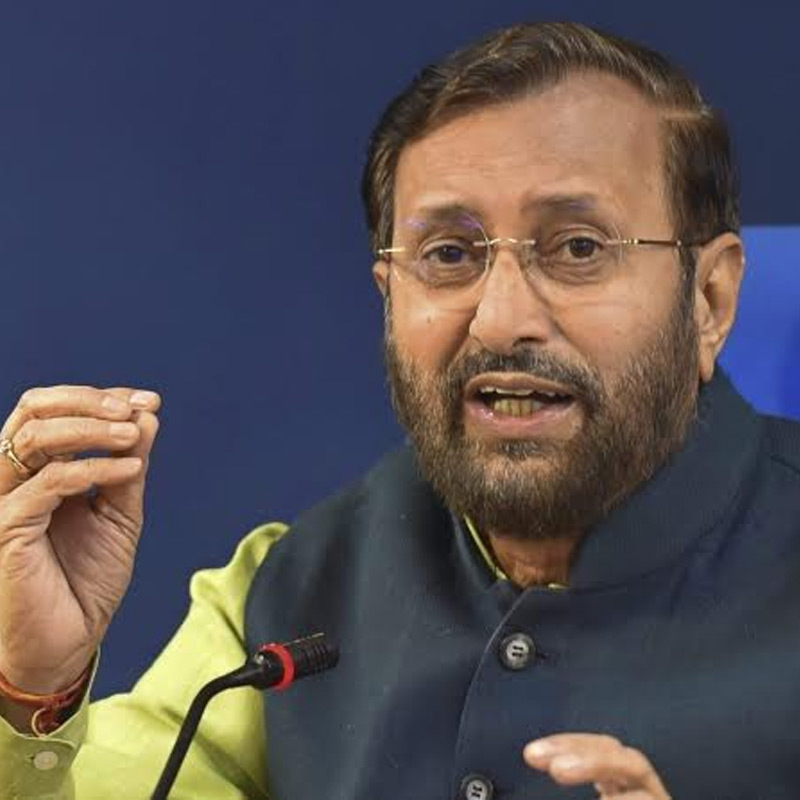
    KOLKATA: Minister of information and broadcasting Prakash Javadekar on Thursday held an interaction with representatives of various OTT platforms including from Disney+ Hotstar, Amazon Prime, Netflix, Jio, Zee5, Viacom18, Shemaroo, Mx Player, ALTBalaji.

    The Union minister mentioned that the government had engaged in several rounds of consultation with OTT players in the past and stressed the need for self-regulation.

    Javadekar stated that he had received representations from cinema and TV industries that while there were regulations for them, none existed for the video streaming industry. Thus, it was decided that the government would come out with a progressive institutional mechanism for OTT players and develop a level playing field with the idea of self-regulation. The minister appreciated that many OTT platforms had welcomed the rules.

    Informing the industry representatives about the provisions of the rules, the minister said it merely requires them to disclose information and that there is no requirement of registration of any kind with the ministry. He added that a form for this will be ready soon. Quelling fears over curtailment of creative freedom, he stated that the new digital media rules focus on self-classification of content instead of any form of censorship. Further, OTT platforms are expected to develop an effective grievance redressal mechanism.

    Previously, the Centre had proposed a three-tier mechanism for these platforms for content-related issues. The first tier would be officials appointed by these companies. As a second-tier, there would be a self-regulatory body that would address complaints. The third tier would be a government-appointed panel.

    Dispelling rumours, the minister clarified that in the self-regulatory body, no member will be appointed by the government, and that an inter-departmental committee will be formed to look into complaints that remain unresolved at the self-regulatory level.

    The industry representatives welcomed the rules and thanked the minister for addressing most of their concerns. Finally, the minister added that the ministry is open to any clarification or queries from the industry.

  • Will MIB crack the whip on online content: Experts debate

    Will MIB crack the whip on online content: Experts debate

    KOLKATA: It's been an oft debated issue over the past few years: how does one keep a tab on free as a bird, digital sector – OTT and digital news platforms? With the government bringing it under the regulatory oversight of the ministry of information and broadcasting (MIB) many a conservative who has complained about the content on streaming services may well heave a sigh of relief. But it is  exactly this which is creasing the brow of many a digital executive as they wonder now  if their creative freedom is about to be curtailed with the leash of a draconian censorship law.  But experts believe there is no reason to panic at the moment.

    They say that so far, the matter of digital content regulation was neither here nor there, dangling between the MIB and ministry of electronics and information technology (MEITY). The government’s move was aimed at drawing lines and clearly defining what comes under whose ambit. According to industry experts, MEITY has less knowledge about content and was also not very active in the sphere.

    “There is certainly a need for some kind of regulation. If self-regulation is adopted, exercised, and disciplined, that would have been ideal. That’s what the industry had signed up for some time back. Putting everything under censorship would be one extreme step which could be very difficult for the industry to work on as the OTT segment is a very different business in terms of content, infrastructure, investment, and challenges,” said PwC India media, entertainment & sports advisory partner a& leader Raman Kalra.

    He went on to add that there would be a need for the government to work in very close consultation with the various stakeholders in the industry and arrive at a middle ground. “You can’t have a completely unregulated environment. On the other hand, you can’t have a very tightly controlled censorship driven framework,” he quipped.

    Elara Capital VP – research analyst (Media) Karan Taurani conjectured that the ministry may be formulating a framework for regulating the OTT space but that may not be very anti-digital in nature.

    Since the industry cannot be left unregulated, the government’s gazette notification will ensure that the entire media ecosystem will be aligned in terms of processes and overview under MIB, commented former SonyLiv head and Kurate Digital Consulting’s Uday Sodhi.

    “It is still early days to predict the impact. I think it has done the re-categorisation and recognised OTT as a proper medium and therefore put it under MIB. This is the right way to go about. It basically integrates the entire content ecosystem whether it is entertainment content or news, whether it is digital or TV,” he added.

    In terms of censorship, Sodhi was of the view that change in ministry will not change the Centre’s take on the matter, which has been a hot button issue for a while now. But he believes that MIB will not impose any censorship, rather it will follow the self regulation model in traditional media.

    On the subject of investment in the OTT sector, Kalra stated that it will be affected if – and only if – there is a heavy regulatory environment. The harder it becomes to create a good content funnel, the slower will be the growth of the sector. However, he qualified his statement by saying that it’s still early days. On the other hand, Taurani claimed this will not discourage global OTT giants from investing, or impact the streaming sector negatively in a big way.

    “We look forward to working with the ministry to implement our industry's self-regulation efforts. As responsible content creators, we want to ensure this act not only takes cognisance of the nature of content being released, but also ensures that we safeguard creativity in this rapidly growing sector,” MX Player CEO Karan Bedi clarified.

    On a slightly different note, another senior media professional added that the move is aimed more at the news segment. The good part, he said, is that MIB will now be able to keep a check on fake news and foreign companies’ control over news determination. But he cautioned against the misuse of power as well. Things will get sticky from a political point of view if the action turns out to be ‘A vs B.' However, the ministry will need a piece of huge machinery if it really tries to monitor every piece of news content.

    With an increasing number of services  getting into streaming –  and some have  content which can  be construed as crossing the line of decency by a sensitive India today – it behooves the mainline streaming players to quickly come up with a self regulatory mechanism which is acceptable to the MIB.  Also, those streamers who have not signed on the dotted line, need to arrive at an agreement with those who have.  So far the fledgling sector's efforts to come up with self-regulation under the IAMAI have not  really excited the regulator.

    Advertisers, agencies, and  entertainment and news broadcasters have –  in their time – got together, buried their differences  and drawn up mechanisms which have kept audiences, and the government  satisfied.  OTT and digital outlets need to keep a picture in their minds: being forced to run to the censor board for every piece of content that they produce, should they fail to get a self regulatory code in place. That's a nightmare no OTT  executive would like to go through.

  • AVIA announces governance framework for online curated content services

    AVIA announces governance framework for online curated content services

    KOLKATA: The Asia Video Industry Association (AVIA) has announced the publication of the governance framework for online curated content (OCC) services (hereafter referred to as the “Governance Framework”). The governance framework delivers concrete commitments and standards in order to deepen discussions with APAC regulators and empower consumers in the region.

    OCC services are online video streaming services, which offer a fully curated content catalogue. Their unique characteristics distinguish them from other online video services, such as social media and user-generated content, as well as pay TV and broadcast TV. OCC services are operated by professional media companies and have suitable technology at their disposal to more effectively ensure controls and take responsibility for the content they distribute. These services stand ready and available for dialogue with governments, to help build a positive and growing content ecosystem.

    OCC services are transforming the way that content is created and consumed in Asia and around the world, expanding markets and options for creators and empowering consumers to safely view the professional content they select whenever, wherever and on whichever device they choose.

    A recent YouGov survey of consumers in five Asian markets found that there is a high expectation (62 per cent) that OCC service providers curate their content well with ratings and advisories, but an even higher expectation (77 per cent) that final content control is put in consumers’ hands. A large preponderance of consumers (77 per cent) also believed parental controls or content filters are an important attribute of OCC services.

    The new governance framework is designed to meet those expectations. Within its provisions, the framework proposes various industry actions that include robust systems of control by way of parental control features, program ratings, advisories, and consumer feedback mechanisms. It also proposes a notification process overseen by the regulator to ensure accountability, and formal industry-regulator consultations to continue to improve the framework.

    Importantly, the survey found that viewers have high expectations for access to the content they seek. The survey found that in reaction to government censorship, 80 per cent of streaming viewer customers would revert to piracy, cancellation or reduction of their use of legal services.

    An effective governance framework, rather than heavy regulation, is therefore critical for this dynamic sector providing an accountable framework for legal content consumption. It is designed to encourage growth of the OCC sector, and ensure the progressive adoption of higher standards by a greater number of curated service operators.

    AVIA CEO Louis Boswell said, “OCC industry leaders have already demonstrated their commitment to responsibility and ensuring accountability. This framework will help guide our members, and hopefully governments, to act in good faith and closely collaborate as this nascent sector continues to evolve. And, more importantly, it will give consumers confidence in the content provided by the OCC sector without the need for burdensome regulation on top.”

    The concept for the governance framework grew from initial discussions at the ASEAN Telecom Regulators Council dialogue, held in Bangkok in September 2017. This forum brought together both regulators as well as industry in dialogue, to create pan-ASEAN solutions. The initial output from this was the subscription video-on-demand industry content code for ASEAN. Similar content codes have also been released in India and Taiwan, creating room for a region-wide framework that puts forward guiding principles for the industry.

    AVIA has put these principles forward in the spirit of continued dialogue and engagement between industry, government, civil society and consumer groups. AVIA members look forward to discussing with governments how policy and regulation can be developed to benefit consumers across the Asia-Pacific region and help grow the region’s creative industries.

  • SC seeks Centre’s response on regulating OTT platforms

    SC seeks Centre’s response on regulating OTT platforms

    KOLKATA: It seems that when it comes to self-regulation, OTTs have a tough long road ahead, as the supreme court has sought the centre's response on a public interest litigation (PIL) for regulating these platforms by an autonomous body.

    According to a PTI report, a bench of the apex court comprising chief justice S A Bobde and Justices A S Bopanna and V Ramasubramanian has issued notices to the central government, the ministry o information and broadcasting (MIB) and internet and mobile association of India (IAMAI) on the possibility of setting up a proper body for monitoring and management of content across OTT and digital media platforms.

    The plea was filed by advocates Shashank Shekhar Jha and Apurva Arhatia. The petitioners have requested the court to order the government to constitute an autonomous body to monitor and regulate online video content. The petition added that the board should be headed by an IAS officer and have members from various fields.

     “With cinema theatres unlikely to open anytime soon in the country, OTT/Streaming and different digital media platforms have surely given a way out for the filmmakers and artists to release their content without being worried about getting clearance certificates for their films and series from the censor board,” the plea stated.

    The PIL has claimed that lack of legislation governing those platforms is turning out to be more prominent with several incidents.    

     According to the petitioners: “The government is facing heat to fill this lacuna with regulations from the public and the Judiciary; still the relevant government departments have not done anything significant to regularise these OTT/Streaming Platforms.”

    None of the OTT/streaming platforms including Netflix, Amazon Prime, Zee5, and Disney+Hotstar have signed the self-regulation provided by MIB since February 2020, the plea said.

    However, the government recently stated it is not under the process of framing laws for these platforms. It added that the matter may be looked into afresh when more clarity emerges in international jurisdictions.

  • OTT platforms proposing ombudsman model to the govt: Arre’s Ajay Chacko

    OTT platforms proposing ombudsman model to the govt: Arre’s Ajay Chacko

    KOLKATA: To regulate or not to regulate online content, that's the question. If yes then what should be the way forward? There has been no industry consensus on it yet. While in the earlier part of this year, Hotstar, Jio, SonyLiv and Eros formed an adjudicatory body Digital Content Complaint Council (DCCC), other platforms like Netflix, Amazon, MX Player, ZEE5, AltBalaji and Arre opposed it. Arre co-founder and CEO Ajay Chacko is strongly against DCCC model of regulation and said that they are now proposing an ombudsman model to the government.

    “We have not agreed to the DCCC model and are now proposing an ombudsman model to the government which is actually a midway path. I am hoping that works,” Chacko said in a webinar called ‘Future of OTT content and its evolution in India’ hosted by Indiantelevision.com.

    He again strongly advocated that the internet is a medium of choice and people should be allowed to decide what they want to watch or don’t. He also added that if the authority wants to get parity in regulations of all mediums then it should not bring the newest medium to the lowest common denominator of the oldest medium. According to him, the problem is not with OTT platforms not being regualted but with the way cinema and TV have been over-regulated. 

    Recently during FICCI e-Frames, ministry of information and broadcasting secretary Amit Khare said the ministry is proposing to bring content being streamed on over-the-top (OTT) platforms under its purview. Prior to that, I&B minister Prakash Javadekar gave streaming services 100 days to finalise a code of conduct.