Tag: Content marketing

  • Turn up the volume! Podcast marketing becomes brands’ new favorite

    Turn up the volume! Podcast marketing becomes brands’ new favorite

    Mumbai: Covid-19 disruptions and months-long lockdowns hampered the marketing industry for the last two years. While some mediums became irrelevant during the pandemic, others witnessed enormous growth. One leading example of the latter is podcast! Experts feel that with the restriction on movement during the pandemic, podcast emerged as a screen-free comfortable medium to deliver content to the listeners and consumers are increasingly inclining toward passive entertainment leading marketers to invest more in audio advertising.

    According to a KPMG study, podcast consumption increased by 29.3 per cent in the first year of the pandemic. A survey by Spotify and YouGov says that as of 2021, 50 percent of Indians prefer listening to at least one episode of a podcast every week. In 2018, PWC estimated that among 500 million internet users in India, only 40 million ever listened to a podcast. But the number changed dramatically during the pandemic as the listener base increased to 57.6 million monthly listeners, revealed another PWC report of 2020. The PWC Global Entertainment & Media Outlook 2020 study also predicted that India’s podcast listening market, the third-largest globally, is expected to reach Rs 17.61 crore by 2023, growing at a CAGR of 34.5 per cent.

    By offering advertising opportunities, the podcast is emerging as an influential platform. The key reason behind brands’ interest and increasing spending on podcast advertising is that it works, and it works more effectively compared to the traditional advertising mediums that have become increasingly less effective. It is a popular medium especially among millennials and gen-Z as the medium lets them learn more about self-love, discover something new, cope with anxiety, or simply entertain themselves.

    Surge in ad sales 

    Spotify, which is believed to be the largest music streaming app in India, recorded a surge in ad sales from a big investment in newer services such as podcasts while recording a 16 per cent increase in paid subscribers in the fourth quarter of last fiscal year. According to reports, Spotify has recorded major growth in the regional market, leading them to launch 30 new podcasts with local creators.

    Local creators tapped into the trend by understanding the need of the time. While the pandemic brought unavoidable challenges to life, podcasts made content consumption easier.

    As digital players are moving back to the traditional way of storytelling, open mics and sharing content through audio, audio platforms expect even bigger growth numbers in the upcoming years. Gaana.com, another leading music streaming app, is also eying to improve its marketing efficiency by 50 per cent by the end of 2022, tells Gaana head of marketing Shashwat Goswami. 

    Goswami says that their efforts are dedicated to diversification and personalisation. Revealing the marketing strategy for the year, he states, “Our major focus is non-music content for the year because the growth trajectory in the future will be led by podcasts.” 

    On being asked why is so hopeful about the growth of podcasts, he explains that podcasts are highly personalised and getting hyper-local. “Podcasts are becoming increasingly popular among local communities, if it goes at the same pace, we can expect growth in tier 2 and 3 cities,” he asserts. 

    Brands are all up to leverage the medium 

    This change in numbers attracted many brands to invest in the medium. If we see the trends, brands like Oppo, Netflix, HDFC Life, Unacademy, Cadbury’s, and many more started investing in the medium a long time ago. 

    The Man Company, an ultimate solution to becoming a gentleman, is soon launching a very exciting show with a significant modern gentleman as the host and an amazing lineup of guests, reveals The Man Company director-brand marketing Rumi Ambastha. 

    Ambastha feels that this becomes a platform that’s worth exploring both from an education and entertainment perspective. 

    QuackQuack founder and CEO Ravi Mittal says, “The usage of podcasts is going up in India. Our observation shows people who were listening to music are now also switching to podcasts for entertainment, knowledge and inspiration. We are finding this concept interesting for marketing our products.” 

    “Podcasts should see continuous growth in India for now as people opt to get more productive with their free time and consume more audio-based content. Audio-based marketing has a tremendous scope from a sponsorship point of view if done in the right manner leading to a win-win for the podcast and the brands,” he adds, while evaluating the future of podcast marketing. 

    The popular dating app Bumble also collaborated with JioSaavn during the pandemic to spread the message of being together among young adults. With a highly-engaged and young user base, JioSaavn was the perfect destination for Bumble to build a community to foster safe, meaningful, and true connections. 

    Dairy Milk Silk also launched a campaign with Spotify to bring lovestruck couples together. The campaign was targeted toward the couples who couldn’t meet during the lockdown. According to Spotify official data, the campaign reached five million+ listeners and eight thousand Spotify users opted to gift a Dairy Milk Silk to their loved ones. 

    Supertails, an online vet consultation platform, also invests in podcast marketing. Supertails co-founder Varun Sadana says, “We definitely see podcasts as an interesting brand building tool and are working in this direction. Our initiatives for the medium are still in the works and we’re excited to see how our community takes it when we launch.”

    Well! Not just the mainstream brands but other industry players are also investing in the medium. Scenic Communication, a leading communication agency, has invested in the medium by collaborating with leading podcasters. 

    Scenic Communication co-founder Anindita Gupta says, “We invest in the medium by collaborating with leading podcasters.” She added, “as a communication agency we are aware of how significant this platform is going to be in the future of brand engagement and we are working towards a strategy to involve most of our clients to create a presence on this platform.” 

    The relevance of podcast: Explained by experts 

    Gupta feels podcast as a medium has rapidly evolved over the last five years, mainly as an alternative to video, as it allows people to reduce screen time, multi-task, and still consume content of their choice. 

    “Over a period of time, podcasts also became a source of knowledge, entertainment and news, helping both podcasters and brands to engage with a fast-evolving audience willing to ‘Listen’ instead of being attached to an ‘immersive viewing’ experience all the time. This is how podcasts started as a marketing medium and are now used as a tool for brands to showcase their products and services,” affirms Gupta. 

    Adding to it, The Man Company’s Ambastha says, “podcast emerged as an interesting respite from all other video streaming platforms. So one can say podcasts literally and figuratively found their space and voice during the pandemic.”

    “Podcast is a welcome change from the erstwhile omnipresent mobile phones. Gives you the liberty to watch and do other household chores or workout all while listening to your favorite personalised podcasts,” she explains.

    Pulp Strategy founder and MD Ambika Sharma shares that podcasts are a great way to reach hyper-targeted audiences. “Podcasts can be information, and engagement on-demand while audiences are on the go, they are easy to tune into and offer the advantage of repetitive engagement if the content is great. It is a very useful medium for new-age brands that are majorly targeted to millennials and gen-Z and if we deep dive into the demographics of the users of audio platforms, we realise that 75 per cent of their consumers are from these age groups. Hence, audio streaming platforms become relevant for dating applications,” she further says. 

    4AM Worldwide chief creative officer Anand Nair thinks that audio-based content has certain transparency and intimacy to it. “The beauty of listening to a well-conducted podcast as it transports the listener to the room where the host and the guest are conversing makes it feel like a personal experience. Whether from entertainment or from a learning perspective, this kind of engagement is remarkable in the times we live in where distractions abound,” asserts Nair. 

    “Podcasts make more sense for a certain type of brand targeting a certain type of audience thanks to the level of intimate and extensive engagement it offers. It makes the speaker appear as an authority thus inducing trust which is the precursor to most purchase decisions,” he further says, adding that, “If used strategically as part of a larger media plan, it can help build recall and become a channel to build more evangelists for the brand since the audience listening are likely to be among the influencers of their social circles.” 

    Moreover, podcasts appeal to the mass audience as it has the added advantage of less attention span which does not require any extra screen time making them an ideal option for consuming productive content even in a busy schedule. 

    Grapes Digital CEO and co-founder Shradha Agarwal thinks that podcasts as a platform show a great affinity for story-telling. Explaining further, she said, “The sector has always shown significant growth, which in the past two years got the desired mileage with the onset of a pandemic that necessitated a reduction in the screen time which worked in favour of podcasts.”

    “However, the listenership for podcasts is growing, but on a small base because in the end, it’s difficult to define how many listeners have actually tuned in for how many minutes but there is an immense scope in the industry to grow.”

    “In recent times, various categories of brands have started advertising audio marketing. The brands usually tap the millennials or people in the age bracket of 20-40 years. With the rising popularity of podcasts and the wide reach it exercises, diverse brands are foraying in this platform where e-commerce, fintech, education, food delivery apps etc are highly active on the platform,” Agarwal attests.
  • Content Hub 2021: Content marketing – the most efficient tool for brand building

    Content Hub 2021: Content marketing – the most efficient tool for brand building

    Mumbai: With five shows running across platforms, two delivered, and another five lined up for 2021, TVF president Vijay Koshy is looking forward to an exciting second half of the year!

    At the fifth edition of the ‘Content Hub 2021 – TV, Film, Digital Video, and Beyond’ being organised by Indiantelevision.com, Koshy along with his colleague and Aspirant’s director Apoorv Singh Karki and Unacademy, senior director – brand, Sonal Mishra spoke about the craft and business of creating branded content. The session titled, ‘Content marketing – the most efficient tool for brand building’ was moderated by IndianTelevision Dot Com Group, founder & CEO, Anil Wanvari.

    Keeping ‘Aspirants’ – TVF’s original web series produced in association with Unacademy – as the point of discussion, the session began with Sonal Mishra being quizzed about the brand’s involvement on the creative front. The series or ‘digital original’, as Wanvari prefers to call it, traces the journey of three UPSC aspirants and their friendship against all odds.  Mishra shared that it took almost a year for the idea to crystallise in a way such that it relates to the target segment. “As a consumer-first company, our strength lies in the connection we build with the ‘learners’, so we have to remain focused on their realities and mindsets,” said Mishra.

    The panelists unanimously agreed on consumer insight being the most important element in any form of branded content. “All stories exist out there in the real world. Depending on the segment being addressed, the insights and storytelling vary. Therefore, we must be observant at all times,” remarked Mishra. Adding to her point, Apoorv Singh Karki shared that the series writer Deepesh Sumitra spent nearly eight months with UPSC aspirants in Delhi’s Rajendra Nagar (the hub of UPSC preparation) before coming up with the script which was finalised only after about eight or nine iterations.

    “At the end of the day our biggest client is the audience. We have stayed true to them while creating content that is engaging. ‘Aspirants’ spoke about essential life lessons with UPSC as the backdrop which is why it resonated with learners across segments,” said Koshy.

    Commenting further on how difficult it was to ensure that brand integrations do not turn into intrusions, Karki stated, “One has to develop the skill of finding a common ground for thematic and seamless integrations. While we cannot diverge drastically from the brief, such complexities can be handled through mutual understanding. As one of our finest clients, Unacademy understands us as creators.”

    TVF’s association with Unacademy began in 2018, and two of its most successful ‘digital originals’ – ‘Kota Factory’ and ‘Aspirants’ – were sponsored by the brand. With nearly 12.9 million views and an IMDB rating of 9.7, ‘Aspirants’ garnered both mass as well as critical acclaim. Going beyond numbers, the series played a crucial role in building brand salience for Unacademy.

    According to Koshy, the significance and success of branded content lies in the area of brand building. “Because digital is an ‘over measurable’ medium, people tend to get lost in the numbers – downloads, views, conversions. Everyone wants to see ROIs, but what about the good old brand building,” he exclaimed. “Performance marketing is non-negotiable as it builds the user base for brands, but even after spending huge sums of money, the efficiencies begin to fall after a period of time. This is where branded content comes in because, ultimately, stories are the best way to get your message across.”

    Urging brands across categories to come forward and experiment in the ‘happening’ space, he said, “Until 2019 there was a lot of ‘window shopping’ going on, but branded content is serious business today; even more so after the pandemic. We have onboard partners such as Philips Grooming and a medical brand Pristine Healthcare that were once unwilling to explore the space.”

    The last part of the session dealt with the ‘tough question’ regarding the ownership of IP. Gladly fielding the query, Koshy said that the issue needs to be discussed more because not only does it define branded content, but also forms the basis of what differentiates it from advertising. “Advertising is something that brands create depending on their requirement and push it out in the market after identifying the best possible media options. The audience is not actively seeking it; given an option, they will almost always skip an ad. However, with our kind of offering, viewers keep coming back to the platform on a daily, weekly or monthly basis wanting to consume more content. So it is best that the IP stays with us.”

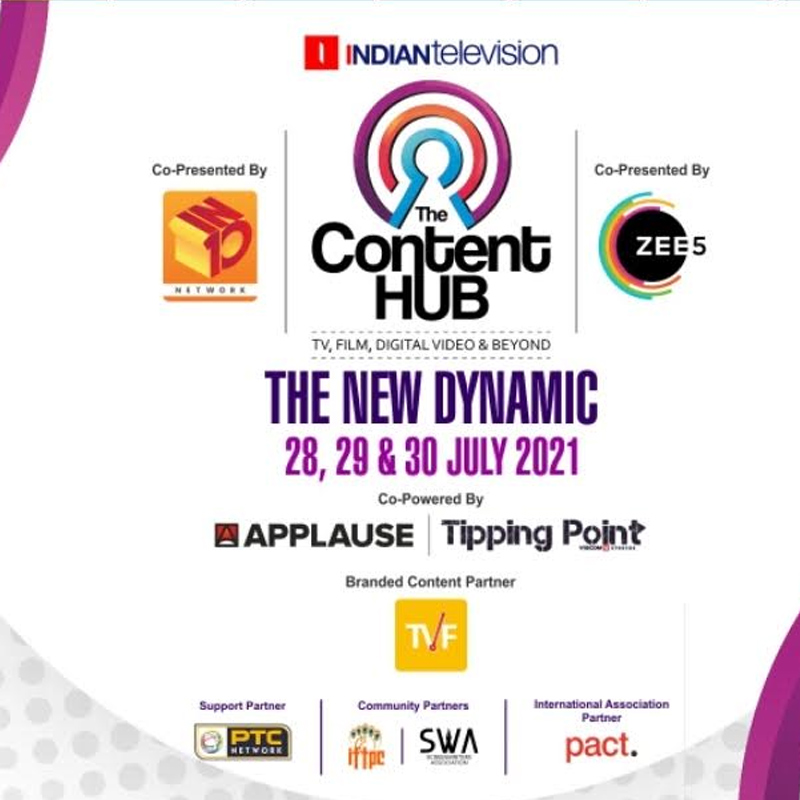
    The fifth edition of Content Hub 2021- ‘TV, Film, Digital Video, and Beyond’ is being organised by Indiantelevision.com from 28-30 July, 2021. The three-day summit is co-presented by IN10 Media Network and ZEE5, and co-powered by Applause Entertainment and Tipping Point, the digital content unit of Viacom18 Studios. PTC Network is the supporting partner. 

    Centred on the theme – ‘The New Dynamic’, The Content Hub 20201 will witness insightful sessions with industry stakeholders deliberating on how the new forces are transforming the way content is created and stories are told. It will also delve upon the impact of these changes on the business models for the world of films, TV and OTT.   

    For more details, visit: https://www.thecontenthub.in/

  • GUEST COLUMN: What marketers will need to learn about voice and audio

    GUEST COLUMN: What marketers will need to learn about voice and audio

    New Delhi: A renowned Content and Marketing Strategist, Lee Odden says “Content isn’t the king, it’s the Kingdom”.

    In a world of digitization and technological advancements, there are certainly no bounds to evolution in any industry. And, the content space is one such area that has seen a major evolution in the marketing landscape, especially in the audio space.

    Audio messaging has been around for a long time but the approach and outlook towards it has changed over the years. Consumer’s interests keep changing and their form of convenience too. Earlier, people were dependent on the radio for entertainment and news, and then TV took over the role. And now audio is back as the preferred medium of content consumption.

    With technological advancements and the demand for convenience, audio has become the forerunner in not only the marketing world but also in our regular lives.

    Audio – An old form of communication gaining popularity in modern times

    Audio holds great prominence in the world of social media and digital marketing. The audio-only feature has the power to eliminate all the distractions that are usually faced by a consumer consuming content on a visual medium, thus improving their attention span.

    With busy lifestyles and hectic schedules, people prefer consuming information or experiencing entertainment on the go. Tuning in to a podcast or live audio session on your topic of interest while driving, is a preferred option than being glued to TV and laptop screens or mobile screens for consuming the same information. Be it in a car, or at a gym, or in a public vehicle, access to an audio form of information and entertainment has become convenient. Audio mediums allow a consumer to consume content with ease while multitasking. It allows them to listen to their favourite audiobooks or podcasts while walking, cooking, doing laundry, or traveling.

    Voice-based technology – A better companion or convenient dependency?

    Audio mediums offer highly immersive experiences, and also make us perceive the depth of emotions. We all still have the voice of Vidya Balan’s ‘Good Morning, Mumbai’ from the Munnabhai MBBS movie playing fresh in our ears. It is this connection created by audio mediums with characters and hosts, which has led to the rise of the podcast wave and voice-based technology hardware.

    Consumer behaviour has evolved over the years, and there is an innate desire to adopt a relaxing and luxurious lifestyle. This explains why consumers opt for more enhanced sound systems at home for a theater-like experience to an increased dependency on virtual assistants. ‘Alexa, switch on the lights’ or ‘Hey Google, Play the latest music tracks’ has become a more convenient way of getting work done.

    Voice-controlled devices also provide a personalized experience, and marketers as well as brands and businesses use voice search interfaces to connect with consumers. Whether it is voice assistant applications or smart products like smart TV and speakers, voice search has great significance.

    Types of Voice Marketing tactics:

    ● Sonic Branding – Sound and music have a recall factor. Audio branding will be common and marketers will be seen creating audio logos to create a unique audio identity for audio-based content and to strengthen brand recognition, like the Nokia’s ringtone or Nirma’s iconic “washing powder Nirma”.

    ● Podcasts – The wave of podcasts has created a buzz. A few marketers have already created their market space with their branded podcasts, which have proven to be one of the highly engaging forms of audio marketing.

    ● Audiograms – Audiograms is the evolving fad and brands have started making the most of it by overlaying images with audio-based elements

    ● Voice Search Optimization (VSO) – The era of digital marketing saw brands market search engine optimization (SEO) based content for enhanced search results. With the evolution of search optimization, the voice-based search will be the next frontier, and voice traffic will soon be witnessed as an advantage for brands.

    Future of Audio and Voice-based technology

    The future of marketing will be based on voice recognition and audio formats. With more and more advancements in artificial intelligence and machine learning, we will soon see a revolution in the world of audio and voice-based technology. An increasing number of marketers and brands are using voice marketing tactics and using audio-based mediums to increase customer engagement.

    This is the sole reason why there have been new players in the market that offer only audio and voice features. Even existing social media platforms have realized the need for audio and are evolving their platforms accordingly. Clubhouse disrupted the live social audio market and it has been phenomenally adopted by the Indian audience. Twitter Spaces has also gained popularity and seen an increase in user base. Facebook has also launched live audio rooms and Spotify has come up with Spotify Greenroom.

    Voice and audio are certainly the future of social media and the digital world and can be leveraged by a country like India, where there are still limitations in context to writing. Audio content eliminates the barrier of writing appropriately and opens up a plethora of languages for a marketer to produce content for different audiences. Marketers now have an added advantage to reach a wider audience, which otherwise was restricted due to the limitations offered by visual mediums.

    Hence, voice-enabled search and audio-based technology open a whole new dimension for marketers to bank on. It will be interesting to see how marketers leverage audio content and voice marketing strategies for brands to create a buzz in the market.

    (Sowmya Iyer is the founder & CEO of DviO Digital. The views expressed in the column are personal and Indiantelevision.com may not subscribe to them.)

  • GUEST COLUMN: B2B brands need to think beyond lead generation

    New Delhi: In business-to-business (b2b), marketing often comes to a halt at the lead generation funnel. Given the economic environment created by the pandemic, the stress on lead generation is not surprising, but working on the lowest hanging fruit is not a long-term strategy.

    In the aggressively competitive environment, B2B brands need to think beyond just lead generation for their content marketing strategy. Simply put, what is your answer to this? What are you doing to help your customers succeed?

    Your content marketing needs to be a method of helping your customers succeed. Under the pressure of an immediate lead and conversion, we tend to lack business empathy, and thus our content intended to be educational ends up being more transactional. I encourage B2B brands to use content marketing as a tool to support and help meet customer goals. That is what the purpose of your brand is in the first place. Keep connected to the roots of why you thought customers would come to you and choose your product or service.

    There is a specific problem that your business solves for your customers, and that should be at the heart of your B2B content marketing strategy. It’s a whole new ball game possibly from what most B2B organizations are doing currently. Here are a few things to consider. I have outlined must-haves, good to have, and great haves for your content marketing strategy.

    B2B Content marketing ‘must-haves’ 

    Blog: While all organizations have a blog on their website but usually, they are sparsely populated and more focused on SEO than on content value. The resources section is Important and needs its due.

    Case Studies: I recommend case studies that are not just a synopsis of what the process was and what the ROI was but also a customer’s point of view. It may take a lot more work but in this case, it is an excellent differentiator, a brand will earn 10X in credibility vs the increase in effort.

    White papers, guides, and research: What is on ‘top of mind’ for any business is ‘who else is in my boat’ and what are they doing to navigate a circumstance. White papers are must-have tools in the arsenal. Remember that being unique is the key. Creating content is fairly easy. Creating good content that isn’t ‘hard selling’ and provides customers with genuine value — that’s a tricky, time-consuming business.

    B2B Content marketing ‘good to haves’

    Webinars and events: Online webinars and events are a good way to get your product or service to your customers, it is also an opportunity to build an improved relationship with your customers, it can be the platform to create thought leadership. Profiling and targeted invites are a great way to reach customers with whom you may not have engaged in the past.  

    Training & courses: Training is an important part of the B2B marketing content strategy. If you understand your customer then I recommend that based on your customer persona, develop training and certifications which not just train customers on your product but also add skills and learning beyond your product.

    Co-Creation & collaborations: Customers are in the same storm, and very slightly different boats; they are stressed for leads and under pressure to build engagement. Create a partnership with your customer, build value with combined resources, co-host events, webinars, build joint resources, create PR opportunities. You will be surprised that in addition to goodwill and visibility, the value it builds for your business in hard number crunched ROI.

    No matter which tools you choose, remember the Everest of marketing is getting your communication right and that peak is scalable only if you know and understand your customer.

    (Ambika Sharma is the founder & MD of Pulp Strategy. The views expressed in the column are personal and Indiantelevision.com may not subscribe to them.)

  • Why storytelling is crucial in content marketing

    Why storytelling is crucial in content marketing

    NEW DELHI: Storytelling in content marketing is a vital tool to connect with the audience. Content marketing has always been used in a more personal manner. However, in today’s digital era, brands are eager to not only be creative in their advertising but also using content to sell, connect and engage.

    Madison Media Digital creative director Anuradha Agarwal says, “Content marketing can be the most cost-effective way for a new entrant to make a mark in a highly competitive market or for more established brands to play a larger role in the consumer’s life. Storytelling is a tried and tested means to create stickiness in an era where audiences are constantly distracted.”

    22feet Tribal Worldwide president Preetham Venkky also opines that content marketing has a significant role to play in establishing trust towards a brand. However, the main challenge marketers face is that they don’t have the relevant KPIs in place to justify spends on content marketing.

    According to him, “Brand marketers have short-term KPIs and look at monthly or quarterly KPIs linked to TOMA / SOV or equivalent. For content marketing to play a key role, the KPIs to marketers need to go beyond short-term and focus on the long-term.”

    Venkky also explains that marketing saturation has made consumers distrust content that comes directly from the brands because it seems too sales-y. “Brands have to learn to be more benevolent and not look at directly measuring the business impact of every piece of content produced,” he says.

    In the post-digital world, Venkky says that there is a shift in trust from brands to aggregator platforms. “With plenty of aggregator players in each industry investing heavily in content marketing (their primary source to grow their offering), brands will find it difficult to compete with them,” he adds.

    Kumar Deb Sinha, executive VP, Dentsu Aegis Network and country head, The Story Lab India explains that advertising is based on fabricating brand stories to amplify the features of the product and their usage to stand out. This model worked until the volume of advertising became overwhelming for a consumer.

    He says, “Content marketing starts playing a larger leadership role when marketers evolve to this realisation and use marketing as a tool to tell relevant consumer stories rather than brand stories. Some of the best examples of content marketing happen today in B2B marketing, where brands share content (whitepaper, research, latest trends, etc.) proactively with their prospective and existing consumers and initiate a conversation with him/her. A B2B marketer understands the significance of content marketing as the primary tool of engagement with their consumers. For a B2C marketer, unfortunately, it is still lagging behind the traditional routes which help reach a mass audience at low cost with minimal engagement.”

    If used right, it can play a leadership role in the broader marketing planning of a brand. “For any effective content marketing approach, brands should focus on seamless storytelling across platforms to keep an audience engaged over time. A content-first, platform-specific approach is the need of the hour,” shares YAAP partner Manan Kapur.

    Agarwal shares, “Brands need to find their place in this new world and connect with audiences through content that adds value to their life. The more authentic, credible and humane brands become, the better chances they have of building a loyal audience base."

    Sinha explains that trust is dependent on many things. Foremost amongst them is product experience. If the product doesn’t live up to the experience promised or expected by the consumer, no amount of content marketing or advertising will ever deliver trust.

    “It should be measured against parameters like relevant conversations it has driven for the brand (which is linked to brand marketing objective), engagement score vis-à-vis competition, sentiment analysis leading to the word of mouth and brand advocacy by their consumers and followers. It is the journey of falling in love with a brand,” he says.

    With other forms of engagement taking importance, such as influencer and social media marketing, brands may think content marketing is outdated. Sinha believes that influencer and social media marketing is the easiest entry point but content marketing isn’t limited to this.

    “I feel marketers/agencies miss the larger picture. We leave our content marketing effort limited to influencers and digital films only. We don’t take the conversation forward with our consumers that we have initiated through these initiatives. Content marketing can’t be a start and stop engagement through few initiatives a year. It has to be sustained engagement generating conversations around the year. And once you have sustained engagement, you will drive strong and meaningful conversations with consumers,” he says.

    Indiantelevision.com founder, CEO and editor in chief Anil Wanvari says that there’s a lot of promotion happening in terms of TVCs, digital content and messaging by brands asking consumers to buy their respective products; which works contrary to the communication's objective. Because of the barrage of communications, consumers develop a blind spot to it when it is being served to them.

    “To get the consumer's attention, a piece of communication needs to stand out . One way is to tell an engaging story, with different messaging. It tends to get larger traction if targeted right. It’s important that the messaging goes to the right set of audience. A consumer enjoys engagement with which he is able to resonate. A brand can sell a product by talking about its benefits or by weaving it into a piece of content well told but it needs to have a connection with its consumer,” he says.

    “We recently partnered with ZEE5 and created content around Sushant Singh Rajput on which we got millions of impressions on Indiantelevision.com's sister  brand TellyChakkar.com. Zee5 wanted to communicate to its subscribers and potential subscribers that they could watch Suhshant's shows on the streaming service. We produced a piece of native content which talked about Sushant's greeat attributes, his life, his charm, and his shows. Fans loved it. It was shared, it created a lot of buzz, and conversations. It was a more effective way of communication; as it was very sticky too. Engagment, virality, go to a different level if a piece of communication has a story which is told well,” Wanvari adds.

    If there is a long-term vision in place, content marketing can help humanise the brand, build authority trust and credibility, create awareness, generate organic sales and gradually, build loyalty.

  • UC Ads under Alibaba Group initiates a revolution of content marketing

    UC Ads under Alibaba Group initiates a revolution of content marketing

    New Delhi, September 27, 2018: On September 28, Morden Chen, General Manager of Alibaba UC Ads, will reveal their short video ads platform at The MMA Forum being held at Taj Santa Cruz in Mumbai. This is an initiative by Alibaba UC Ads to start the revolution of short video ads in India and strive to become the largest one-stop content marketing platform. It is reported that UC Ads has maintained long-term co-operations with Amazon, Flipkart, PayTM Mall, Tokopedia, Lazada and other top e-commerce platforms in India and Indonesia. Other important partners include mobile phone brands, operators and FMCG brands, etc.
    UC Ads will launch a revolution of short video ads in the Indian market.
    "We've noticed that people in India were used to watching TV together with their families while more and more young people prefer to be with their phones and browse what they like, no longer confined to TV programs," Morden said. “With the popularity of mobile devices and declining mobile internet service charges, people are more accustomed to diverse contents on their mobile phones and reading is becoming fragmented. Short video features short time and can be viewed on the move, which is getting more and more popular. Many short video platforms have emerged against this backdrop, with information consumption upgrading from pure image-text to image-text + video.”
    He continued, “People's attention span is reducing. According to a survey by Microsoft in 2015, after a habit of using mobile devices is developed, people's attention span dropped from 12 seconds in 2000 to 8 seconds which is shorter than that of a goldfish. This calls for the digital content on mobile devices to be more refined with more selling points.”
    For brands, the short video ads not only cater to the consumers’ new habit of favoring fragmented contents on the mobile phone over long videos but also coincide with the memory pattern of users in the mobile phone era. The short video ads are well received by mature markets, however, their potentials have been underestimated by brand marketers in India where mobile device ownership has skyrocketed. Tomorrow at the MMA Forum, Morden Chen will introduce the practices of marketers in mature markets. They replace the strategy of brand videos with mobile first strategies and determine the presentation of video ads based on the demand of mobile clients to make ads more suitable for the application scenarios of mobile devices. UC Ads offers a variety of short video ads solutions, including the pioneering splash video, in-feeds video and in-article video and has facilitated brand marketers to implement the mobile first strategy for short video marketing, rendering more opportunities to effectively reach users.

    The first one-stop content marketing platform
    With hard-sell advertising flooding the marketplace, brands need new ways to reach consumers. A brand with a good reputation is more likely to be chosen by consumers, overshadowing its counterparts. The value of internet celebrity marketing has been verified as internet celebrities have stable followers and are able to generate much more data consumption. The products promoted under the celebrity halo are easily accepted by followers and quickly converted into orders. Internet celebrities can spark discussions in the community, creating a ripple effect of getting the consumers’ attention to a brand.
    However, existing platforms providing buzz marketing solutions with limited resources either focus on content creation of We-Media or targeted content releases. Advertisers need to reach We-Media on platform A to complete content creation, and then search for the appropriate media depending on the attributes of TA and media to issue ads. The problem is that content and platform do not match during the process.
    By directly connecting We-Media resources with technology platform of UC, UC Ads establishes a smart integrated content marketing lab providing one-stop buzz marketing solutions. In India and Indonesia, UC Influencer Pool is home to more than 100,000 We-Media from a dozen fields such as fashion, 3C, automobile and sports, etc., capable of creating buzz contents for brands. Through operating its information flow, UC understands the users’ interest so that the brand content matches with the most relevant users according to their interests on UC platform and push the relevant buzz created by the internet celebrities. UC has completed the whole process from organizing We-Media to content creation, crowd matching and targeted content releases, avoiding the resource mismatch of each link.
    The competition for users in the Indian market gradually expands from the first-tier cities to the second, third and fourth tier cities and rural areas. All applications and brands are trying to attract the increasing number of emerging class in these places as the newly-arisen users start to have the internet access. UC Ads resources are from UC browser, UC News and 9Apps with the information flow of browser reaching 130 million monthly active users in first-tier to second, third and fourth tier cities in India. This is conducive to the country’s consumption upgrading.

  • Sooperfly ‘investonomix’ markets SBI MF content

    Sooperfly ‘investonomix’ markets SBI MF content

    MUMBAI: Sooperfly has entered into a content partnership with asset management firm, SBI Mutual Fund (SBI MF), as a part of SBI’s investor education initiative to help medical and defence professionals make sound financial investments.

    Sooperfly will air a brand new series on its online personal finance content platform, investonomix. With a focus on assisting doctors and army personnel with their personal finances, the new series will offer investment advice on mutual funds and equity markets.

    The content has been devised keeping in mind the limited time that these professionals within the fields are able to devote to managing their money. investonomix will feature bite-sized animated listicles and engaging videos that will ease investment decisions.

    Investonomix editor in chief Vivek Law will also feature in the videos, discussing various investment problems with a certified financial planner on immediate as well as long-term goals. The series will feature interviews with doctors and investment queries from defence personnel.

  • Sooperfly ‘investonomix’ markets SBI MF content

    Sooperfly ‘investonomix’ markets SBI MF content

    MUMBAI: Sooperfly has entered into a content partnership with asset management firm, SBI Mutual Fund (SBI MF), as a part of SBI’s investor education initiative to help medical and defence professionals make sound financial investments.

    Sooperfly will air a brand new series on its online personal finance content platform, investonomix. With a focus on assisting doctors and army personnel with their personal finances, the new series will offer investment advice on mutual funds and equity markets.

    The content has been devised keeping in mind the limited time that these professionals within the fields are able to devote to managing their money. investonomix will feature bite-sized animated listicles and engaging videos that will ease investment decisions.

    Investonomix editor in chief Vivek Law will also feature in the videos, discussing various investment problems with a certified financial planner on immediate as well as long-term goals. The series will feature interviews with doctors and investment queries from defence personnel.