Tag: Content marketing

  • Gail blows away competition with ‘Hawa Badlo’, wins big at afaqs! Marketers Excellence Awards

    Gail blows away competition with ‘Hawa Badlo’, wins big at afaqs! Marketers Excellence Awards

    MUMBAI: When the air gets murky, Gail (India) Ltd knows how to clear the smog – not just from the skies but also in the marketing world. The public sector gas major bagged the ‘Best Content Marketing Campaign – Content’ award at the afaqs! Marketers Excellence Awards 2025 for its evocative and socially charged ‘Hawa Badlo’ campaign.

    The award ceremony, held on 14  June at The Westin, Goregaon in Mumbai, spotlighted the country’s most impactful marketing initiatives. Gail’s victory comes hot on the heels of another recognition: its ‘Hawa Badlo: Reconnect To Roots’ campaign was recently honoured at vIDEA 2025 – The Video Media Awards & Summit in Gurgaon.

    The ‘Hawa Badlo’ campaign, a long-running initiative from Gail, goes beyond a puff of publicity. It urges citizens to swap passive concern for active participation in tackling air pollution. Its latest chapter, ‘Reconnect To Roots’, spins a nostalgic yarn that reintroduces age-old Indian sustainability practices as contemporary environmental solutions.

    Whether it’s yoga, upcycling, or the art of composting, the campaign nudges Indians to rediscover their eco-conscious DNA. The campaign invites people to explore organic living, waste minimisation, and support for local economies — not through fear or guilt, but cultural pride and grounded wisdom.

    “Hawa Badlo: Reconnect To Roots is an impactful reminder of India’s rich culture and ecological heritage…” the campaign proclaims, with an emphasis on reviving practices that have been buried under urban chaos and modern habits.

    One of its central themes is yoga — not the Instagrammed version with headstands and hashtags, but its original form as a union of self and nature. “Rooted in the Sanskrit word meaning ‘to unite’,” the campaign notes, yoga symbolises a philosophy of balance, harmony, and environmental oneness.

    With back-to-back wins, Gail seems to be leading a breath of fresh air in both the environmental and advertising space. The ‘Hawa Badlo’ campaign has not only inspired conversations but continues to build momentum by weaving purpose into content, and culture into calls for change.

  • The Logical Indian joins forces with RVCJ Media Group

    The Logical Indian joins forces with RVCJ Media Group

    MUMBAI: “When two forces unite, their efficiency doubles” Isaac Newton’s timeless wisdom finds a perfect echo in today’s digital landscape, where two giants of content creation have joined hands to revolutionise how stories are told and consumed.

    Picture this: the unmatched credibility of The Logical Indian, known for its socially impactful storytelling, meets the vibrant cultural pulse of RVCJ Media Group, a name synonymous with entertainment and wit. Together, they promise to reshape India’s digital narrative into a powerhouse of creativity, authenticity, and reach.

    As people spend an average of 6 hours and 36 minutes online daily, with 2 hours and 23 minutes devoted to social media, this alliance emerges like a burst of sunlight in the ever-buzzing world of screens and swipes. For every swipe on your For You Page, for every share that sparks a conversation, a seamless blend of sharp journalism and engaging entertainment will now take center stage.

    Brace yourselves, India—your feeds are about to get a whole lot more exciting!

    The announcement was made during the second edition of RVCJ-owned Marketing Mind’s Millennial Achievers Awards in Mumbai on 29 November, marking a pivotal moment in India’s digital content evolution. This partnership, rooted in shared values of authenticity and purpose, positions the two entities to craft innovative content marketing solutions for brands and advertisers while captivating audiences across India’s diverse digital landscape.

    The Logical Indian, co-founder & CEO, Abhishek Mazumdar emphasised the significance of the partnership, “This isn’t just about scaling operations; it’s about scaling impact. The Logical Indian will continue to operate with editorial independence while leveraging RVCJ Media Group’s cutting-edge technology and audience reach to deepen our commitment to truth and transformation.”

    RVCJ Media Group co-founder & CRO, Aziz Khan highlighted the role of technology and vernacular storytelling in the collaboration, “AI is revolutionising how we connect with audiences. By localising content and delivering personalised experiences, this partnership allows us to lead India’s digital landscape. Together, we aim to craft content that entertains, informs, and empowers.”

    With a combined monthly reach of over four billion and a 55-million-strong audience base, the partnership aims to penetrate tier two and tier three markets, crafting narratives that resonate with varied communities. The integration of The Logical Indian into RVCJ’s ecosystem positions the group as one of India’s most diverse digital hubs, seamlessly bridging entertainment, information, and purpose.

    As part of the alliance, Marketing Mind co-founder, Atul Dwivedi has assumed the role of president of revenue and brand partnerships at The Logical Indian. He aims to strengthen the platform’s revenue model by fostering brand collaborations and expanding intellectual properties.
    “Together, our platforms will deliver unmatched storytelling that fosters deeper relationships between brands and their consumers,” Dwivedi stated.

    The partnership is set to empower brands with unparalleled access to diverse audience segments, from socially aware youth to mass entertainment enthusiasts. Khan summarised the vision behind the alliance, “This is more than a business decision; it’s a commitment to redefining how content serves India—a future where top-tier entertainment, reliable information, and social impact intersect seamlessly.”

    With an emphasis on rapid experimentation and continuous refinement, the collaboration is poised to lead the next wave of engaging and impactful digital content in India.

  • Guest Article: Content marketing unleashed: Strategies for engaging your audience

    Guest Article: Content marketing unleashed: Strategies for engaging your audience

    Mumbai: In the ever-evolving landscape of digital marketing, content has proven to be the cornerstone of successful brand engagement and audience building. Content marketing, when executed effectively, not only establishes a brand’s authority but also fosters a genuine connection with the target audience. The key lies in unleashing the power of creative and strategic content to captivate, educate, and resonate with the audience on a profound level. In this article by branding area, you will delve into the proven strategies applied by Branding Area PR agency that can elevate your content marketing game and truly engage your audience.

    Understanding Your Audience

    Before embarking on any content creation journey, it’s imperative to understand your audience inside out. Demographics, preferences, pain points, and aspirations should be deeply ingrained in your strategy. Utilise analytics tools, surveys, and social media insights to gain a comprehensive understanding of your target audience. This knowledge serves as the foundation upon which all your content efforts will be built.

    Storytelling: The Emotional Connect

    Humans are hardwired for stories. They evoke emotions, create connections, and make information memorable. Incorporate storytelling into your content marketing strategy to make your brand relatable and memorable. Share real-life anecdotes, case studies, and customer success stories that showcase the impact of your product or service. Craft narratives that resonate with your audience’s experiences and aspirations.

    Quality Over Quantity

    In the age of information overload, quality prevails over quantity. Crafting high-quality, well-researched, and insightful content establishes your brand as a credible source of information. Whether it’s blog posts, videos, or social media updates, each piece of content should provide value, solve problems, or entertain. Engaging content leaves a lasting impression and encourages sharing, expanding your reach organically.

    Diverse Content Formats

    Diversification is the key to keeping your audience engaged. Different people consume content in different ways. Some prefer written articles, others enjoy videos, podcasts, infographics, or interactive webinars. Embrace various content formats to cater to a broader audience. Moreover, experimenting with different formats can inject novelty and excitement into your content strategy.

    Personalisation for Connection

    In the digital age, personalisation goes beyond addressing the audience by their names. Leverage data to tailor content to individual preferences, behaviors, and interests. Use past interactions and purchase history to recommend relevant products or resources. Personalisation enhances the user experience and fosters a deeper connection between the audience and your brand.

    SEO and Discoverability

    Producing outstanding content is only half the battle; ensuring it reaches the right audience is the other. Search Engine Optimisation (SEO) techniques are crucial for enhancing the discoverability of your content. Conduct thorough keyword research and optimise your content for search engines to increase its visibility. A well-structured SEO strategy ensures that your content surfaces when your audience searches for related topics.

    Engagement and Interaction

    Content marketing is a two-way street. Encourage audience engagement by inviting comments, questions, and discussions. Respond promptly and thoughtfully to comments on your blog posts, social media, and other platforms. Host Q&A sessions, polls, and live webinars to directly interact with your audience. When individuals feel heard and valued, their loyalty to your brand deepens.

    Consistency and Reliability

    Consistency breeds familiarity and reliability. Develop a content calendar and adhere to it diligently. Whether you publish daily, weekly, or monthly, ensure your audience knows when to expect fresh content. Regularity builds anticipation and keeps your brand on top of the audience’s mind. Moreover, reliability in delivering valuable content solidifies your brand’s authority.

    Incorporate Visual Appeal

    Humans are visual creatures, and incorporating visually appealing elements into your content can significantly enhance engagement. Use high-quality images, infographics, and videos to break up text and convey complex ideas more effectively. Visuals not only make your content more engaging but also help in conveying information quickly.

    Collaborations and Influencer Marketing

    Collaborations and influencer marketing are powerful tactics to expand your reach and credibility. Partner with influencers or other brands in your niche to co-create content. Influencers have established trust with their followers, and their endorsement can introduce your brand to a wider audience. Be sure to choose collaborators whose values align with your brand’s message.

    In conclusion, content marketing is a dynamic strategy that can truly unleash its potential when aligned with the preferences and needs of your target audience. Understanding your audience, telling compelling stories, delivering high-quality content, and fostering engagement are the pillars upon which successful content marketing rests. By continuously adapting to new formats, technologies, and trends, you can create a content marketing strategy that not only engages your audience but also drives long-term brand growth.

    This article has been authored by Branding Area director Rahul Mandal.

  • Kaizzen goes global, begins operations in MENA region with Dubai office

    Kaizzen goes global, begins operations in MENA region with Dubai office

    Mumbai: Kaizzen, an integrated communications firm, announces its expansion into the Middle East and North Africa (MENA) region with its new office in Dubai, United Arab Emirates. This strategic move aims to cater to the growing demand for integrated and result-oriented PR and digital marketing solutions, offering a wide range of services to businesses across various sectors.

    As part of its MENA expansion, Kaizzen is delighted to introduce Dipankar Zalpuri as the president of the MENA region. As a seasoned professional, he brings over 18 years of experience in communications to the position. His expertise spans digital marketing, content marketing, public relations, and events consulting and execution. Having served thousands of clients with varied mandates across different geographies, he is well-prepared to deliver custom PR and digital marketing solutions for best-of-the-breed international brands as well as fast-growing startups.

    Kaizzen founder and CEO Vineet Handa expressed enthusiasm about the company’s latest endeavour, saying, “We are thrilled to embark on this new journey as we extend our footprint into the MENA market. The Middle East and North Africa region is a dynamic hub of innovation, culture, and growth. Dubai is a gateway to MENA and GCC region, which makes this a strategic decision to expand Kaizzen’s global ambitions.  With our expertise in crafting compelling narratives and our commitment to delivering tangible results, we look forward to helping businesses in the region connect with their audiences in meaningful ways.”

    Kaizzen group president Nikhil Pavithran “Our goal is to not only provide clients with world-class communication strategies but also to become an integral part of the region’s business landscape. With the support of our talented team and our commitment to innovation, I am confident that we will create impactful and transformative campaigns for our clients.”

    Zalpuri expressed his excitement about leading Kaizzen’s operations in the MENA region, stating, ” I believe that MENA is a region that values innovation, building relationships, and entrepreneurship. I am determined to make a substantial positive impact in this region with this prestigious mandate. This confidence comes from the backing of passionate hard work and exceptional dedication to deliver successful client campaigns that are encoded in the DNA of this remarkable organisation, right from the top. With the support of a vastly talented team, we will take forward the Kaizzen narrative of boosting businesses by creating appealing brand stories through comprehensive 360-degree communication strategies. Well, the way to get started is to quit talking and begin doing.”

    The opening of the UAE office marks a significant milestone, as it signifies the agency’s dedication to providing top-notch services to its clients, both locally and globally. The agency’s relentless pursuit of excellence and innovation forms a robust foundation for future endeavours. Kaizzen is ideally positioned to bring its unique blend of creativity and strategic thinking to the dynamic and diverse MENA market. 

  • GUEST ARTICLE: The creator economy and how it has evolved over the last few years

    GUEST ARTICLE: The creator economy and how it has evolved over the last few years

    Mumbai: For many decades, we have relied on traditional media outlets like television, radio, and print for our information and entertainment, consuming content created and curated by a few major media houses based on the preferences and requirements of the masses. The advent of the internet and web 2.0 brought a significant shift in how we consumed information by decentralising content communication, creation, and distribution. Thanks to the opportunity offered by social media, we found ordinary people like ourselves writing, filming, and creating niche as well as mass content that resonated with people worldwide.

    And as a result of this, people moved away from traditional media sources. They started surfing the internet to consume content and connect with people who shared similar interests and experiences. Over time, people learned to market their skills, hobbies, and interests online. This resulted in the rise of a new economy built by millions of independent content creators, curators, and community builders, marking the beginning of the “creator economy.”

    Today, the creator economy is estimated to be worth more than $100 billion, and it includes everyone who is a part of the web economy, such as social media, blogs, videos, software tools, and tech platforms like Hypothesis designed to help them grow and monetise.

    More than 50 million people worldwide identify as “creators,” with two million or more earning a living from their passion through platforms such as YouTube, Instagram, Twitch, TikTok, and others. According to a survey, YouTube content creators contributed a whopping Rs 6,800 crore to the Indian economy in 2020.

    The evolution of the creator economy

    ●      The birth of social media platforms

    Towards the end of the 2000s, we witnessed the birth of many social and content channels like YouTube, Instagram, Spotify, Medium, Linkedin, and more. The rise of the creator economy has relied heavily on the development of these platforms. We wouldn’t have creators if you didn’t have platforms on which they could create. It was due to social media sharing that content distribution became normalised. Today, creators are no longer at the mercy of large production companies, as these platforms have equipped them well to solve their distribution problems.

    ●      The emergence of influencer marketing

    Brands began to see the value in investing in creators to promote their products and services to their large on-platform audiences as they began to build a dedicated audience engaging with their content due to their skills and personalities. This proved a very successful marketing strategy, aka “influencer marketing,” as it allowed brands to tap into a new market and advertise to a niche audience more likely to be interested in the brand’s product during their moment of consumption.

    Brand sponsors began paying creators on platforms such as Instagram and Tiktok in exchange for their reach to an audience gained through the platforms.

    ●      Covid impact 

    As social media platforms proliferated, people found themselves increasingly attracted to screens, both as creators and consumers. What many believed would be a passing phase, like the dot-com era, soon became a compulsion.

    With the onset of the pandemic, millennials and gen-z turned towards social and subscription based platforms either out of boredom or to supplement their income due to the economic slump. Because of the nationwide lockdown, everyone was forced to use online health, education, shopping, and entertainment resources.

    This has led to the growing dominance of content creators in mainstream media who are willing to pay for tools that help them grow their content reach and maximise their revenue.

    ●      Creators are brands within themselves

    With the constant influx of influencers, competition for branded collaborations is becoming increasingly fierce, prompting influencers to seek alternative revenue streams.

    Instead of chasing revenue through generic clickbait content, influencers are becoming the new brands. Today, creators have gained enough loyalty from their audiences to be able to sell any product better than the traditional brands. Creators are launching their brands without investing millions of dollars in a team and resources, instead relying on a combination of audience and reach, good branding, and a distinct point of view with their product.

    Today, many brands consider working with creators an essential part of their brand and marketing strategy. But it remains a largely unorganised space, with discovering the right talent to work with and measuring success depending on how each brand structures its efforts. The creator economy needs a unified platform to connect brands with customers through the right influencers and manage the entire campaign pipeline. At the same time, it requires a platform for creators to engage with their audience and build meaningful relationships with brands.

    That’s where “influencer marketing software services” step in, allowing agencies and brands to discover the right creator, conduct outreach, set up campaigns, and track performance on one platform. On the supply side of the ecosystem, it empowers creators and influencers to reach their audiences by understanding their content performance and audience affinity and collaborating with brands and agencies.

    The author of this article is Hypothesis senior VP product and analytics Himani Agrawal.

  • lDBF 2022: Content marketing to become an extremely powerful tool for brands in future

    lDBF 2022: Content marketing to become an extremely powerful tool for brands in future

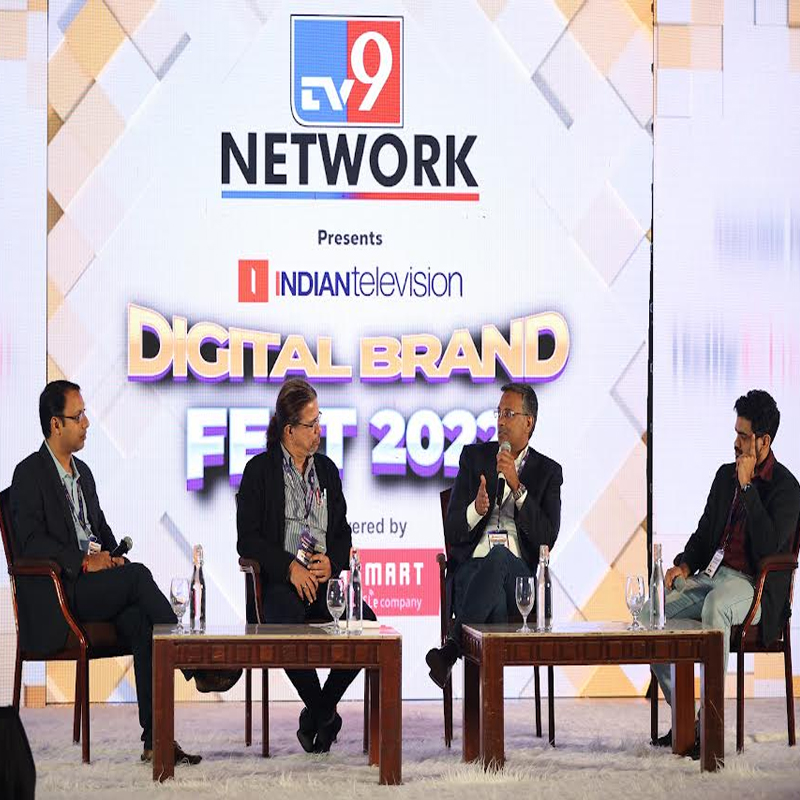
    Mumbai: The second edition of the Indian Digital Brand Fest (IDBF) 2022, which took place on 12 October at ITC Maratha, Mumbai, ran an intriguing panel discussion on the topic “Content Marketing for Web 3.0,” which brought together minds and thoughts on how content marketing is going to be the next big thing and how essential it is going to become to understand the consumer.

    The session was chaired by Indiantelevision.com Group founder, CEO & editor in chief, Anil NM Wanvari.

    Beginning the session and putting things into perspective with the topic of web 2.0, TV9 Network managing editor R Sridharan said, “If you look at the innovation that has happened in web 2.0 is far greater than what we saw much before. Earlier it was static content, then in web 2.0 we saw that it allowed people to interact with content like becoming a publisher on Twitter, Facebook. It became richer in many ways. In that way web 2.0 has done an incredible job in making content an integral part of marketing for every chief marketing officer (CMO).

    “More than advertising, content marketing is important, and for that web 2.0 has done a great job. Web 2.0 has been a great learning experience from a content marketing perspective,” he added.

    However, Madison India vice president Kosal Malladi was of the view, “We have done a job in content marketing, but have we done a good job? I’m not so sure. When content marketing started, we thought that the end consumer wanted to know everything, so initially the content marketing was quite bad. We are getting better; it’s an ongoing learning process.”

    “We got to understand that if there’s too much content and information being bombarded on the consumer, then that’s also a problem,” pointed out HDFC ERGO General Insurance vice president marketing Alok Bhargava.

    Talking about the onset of web 3.0, Sridharan brought out, “No one knows how it’s going to pan out, but some things are very apparent and obvious. Firstly, on the content side, it is going to become far more immersive, and secondly, it’s about privacy. These things are going to change the game, and brands have to understand how to know their customers and how to interact with them.”

    He reiterated, “Content marketing is going to become more important in web 3.0 because, as a brand, I need to build communities and platforms where people will come on their own and share information about themselves.”

    “It is about creating the right content in the first place – if you have created some content which is not engaging the consumer and the consumer is not enthusiastic about it, then you have to have a harder look at what you’ve created. Researching the customer and what would keep them engaged is probably the most important thing,” Sridharan pressed.

    Needless to say, content will become extremely powerful if it is done the right way. He said, “If the customer sees value in interacting with you, he/she will come back to you again and again. You won’t have to persuade them.”

    Bhargava opined, “Content creates a good factor for any brand. If your content is not good, you will have to push it harder to the consumer.”

    According to Malladi, most of the content marketing is paid. Sridharan was quick to add, “When a piece of content is dishonest to the consumer, it’s not going to work. They are able to see through when the brand is not being authentic.”

    Regarding whether digital will overtake TV in outreach, Malladi said, “If you are advertising on digital, it’s not just the reach that happens but your ad is also seen on multiple devices.”

    “Yes, digital will overtake eventually, with connected TV taking over linear TV family viewing habits in India. The content has to be medium-appropriate,” said Bhargava.

  • GUEST ARTICLE: How will metaverse shape the influencer and consumer engagement landscape

    GUEST ARTICLE: How will metaverse shape the influencer and consumer engagement landscape

    Mumbai: The internet is constantly evolving and has become more interactive. Soon, we will be able to experience it as a network of real-time virtual worlds. The metaverse is a three-dimensional virtual environment that allows your digital avatar to live, play, work, and socialise. It is a self-contained digital counterpart to the real world where you are engaged in your surroundings and experience and have access to various places, events, and activities while sitting in your living room.

    This next-generation version of the virtual space is a powerful tool. It offers excellent comfort, accessibility, interactions, and brand promotion opportunities, with user-generated content (UGC) playing an essential part in the form of text, images, audio, and videos. It will be a crucial building component for the metaverse in the coming years, providing uniqueness, credibility, and scalability.

    Brands and creators have acknowledged the first-mover advantage and are capitalising on consumer interest. As mega brands begin to leverage the metaverse, another trend that can stand to benefit is the realm of influencer marketing.

    Metaverse and influencer marketing

    Influencer marketing as a social media marketing tool emphasises product endorsements and recommendations from experienced influencers with a substantial social following. These influencers are highly regarded by their audience, and their product recommendations serve as social validation for brands’ prospective customers.

    Social media platforms have dramatically boosted the number of niche influencers and viewership in recent years. These creators have begun to engage with their audiences in new ways to widen the influencer-audience engagement time. They are eager to leverage the metaverse as a space to connect with a larger audience and provide a better consumer experience. Numerous opportunities exist for creators to collaborate and create engaging and multi-dimensional content to bond with their audience in the metaverse.

    Growth in virtual circles

    Social media platforms have significantly increased the number of influencers who interact with their audience. However, these interactions are frequently constrained to certain platform features.

    Metaverse can make the experience seamless and convenient for everyone. Creators can host virtual meetups and organise livestream sessions, fan fests, and other activities. Through metaverse, they can connect directly with their audiences’ digital avatars on the platform, garnering better engagement.

    Immersive influencer marketing

    The innovative use of technologies such as AR and VR expands the possibilities for generating immersive and engaging content while allowing creators to enter into new dimensions like the metaverse. For example, influencers in the music industry can stage virtual performances in the metaverse to attract viewers from all over the world, crossing all geographical boundaries.

    Similarly, artists can create and sell 3D art to display in virtual homes; fashion influencers can introduce their digital merchandise that their audience can purchase; and travel influencers can go on virtual world tours with their fans, making the experience more thrilling.

    The growing number of influencers has helped brands reach various demographics and engage with existing and potential consumers. Influencers can be present in more than one virtual space in the metaverse, which amplifies their reach. Brands can leverage this benefit to optimise their marketing strategies and interact with larger consumer segments.

    The future of influencer marketing

    Although celebrity influencers have pioneered influencer campaigns, micro influencers’ growth has expanded and will continue to strengthen business opportunities. Brands can easily connect with their consumers by leveraging a network of smaller influencers rather than investing in one or two big influencers.

    In addition, social media has witnessed an increase in AI influencers across sectors. Interestingly, brands have started creating virtual influencers, aka meta-influencers. This strategy enables brands to have ambassadors who can interact with consumers.

    In the coming years, AI influencers will coexist with their human counterparts in the metaverse, with brands having the power to control how they communicate their message and narrative.

    Way forward

    The metaverse is set to bring about profound changes in how we all live. It will alter our interaction with the physical world, from perception to content creation. There is an enormous potential for all creators to harness technology to create outstanding content in the metaverse and thrive in their domains. Content creators will play a critical role in the development of the metaverse, which will be pivotal to their success in the long term.

    The author of this article is AnyTag India Lead Shuchi Sethi.

  • VidNet 2022: Advertising On OTT – the way forward for the industry

    VidNet 2022: Advertising On OTT – the way forward for the industry

    Mumbai: The OTT ecosystem in India is growing every day with new players coming into the fray and novel, edgy content being churned out. The way we look at online streaming is also changing. Today the market has 40 odd players including regional players. For these platforms to sustain, there are two ways- one: is the AVOD, that’s advertising-supported and the second is the SVOD which is subscription-supported. In a market like India, SVOD remains a challenge. Even as the OTT subscription market in India continues to grow at a gradual pace, it remains an exciting prospect for an increasing number of marketers and advertisers who are keen to promote their brands and ads on these emerging platforms.

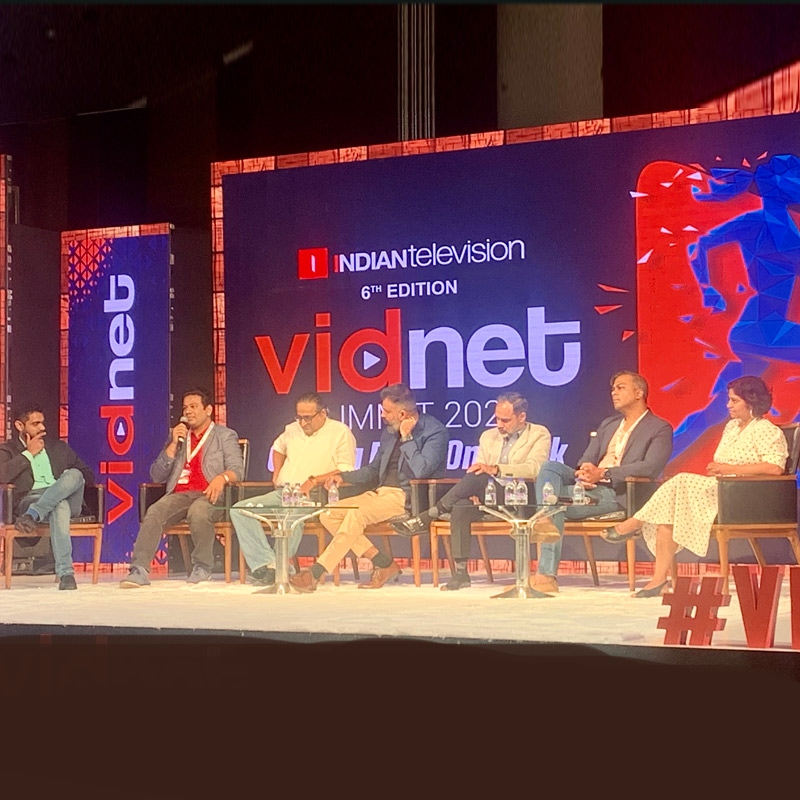
    The sixth edition of IndianTelevision.com’s annual VidNet Summit took an in-depth look at the way forward for the OTT ecosystem and all the platforms on it, and the opportunities and the challenges in the space.

    The two-day summit had technology partners Dell Technologies and Synamedia, summit partners Applause Entertainment and Viewlift, industry support partners Gupshup, Lionsgate Play and Pallycon, community partners Screenwriters Association and Indian Film and Television Producers Council, and gifting partner The Ayurveda Co.

    Day one of VidNet 2022 saw an interesting mix of sessions on the subject of advertising on OTT from industry experts and stakeholders on the various panels. The panel on ‘Advertising On OTT – Connecting The New Brand Order’ oversaw bristling conversations from panelists that included MediaCom chief product officer Averill Sequeira, Swiggy head of brand marketing Saurabh Nath, Zee Entertainment Enterprises chief revenue officer-Digital & SMB, South Asia Gaurav Kanwal, ITC head media & PR Jaikishin Chhaproo, Byju’s brand and creative strategy vice president Vineet Singh and Syska Group head of marketing Amit Sethiya. The session was moderated by Madison World vice president Kosal Malladi.

    Today data has become a complete commodity with large OTT players like Netflix, Prime Video, Zee5, Hotstar, Sony liv etc coming in, observed Malladi. Recently Netflix declared that it has decided to support advertising. The advertising revenues on these platforms in the last four years have grown by 400 per cent, Malladi shared. So will the subscription model stay or perish in India? Also, as brands are the numbers large enough for advertising on AVOD?

    According to Zee’s Gaurav Kanwal, the OTT industry in India is in its infancy. “There’s a huge AVOD play for sure, with increased reach more brands will come on board. On the SVOD side, as the economy progresses, people will pay for varied content that they can watch at their convenience. We already have about 70 million people paying for content on various OTTs across the board,” he said while adding, “As we evolve as an ecosystem, the pricing models will evolve as well and then we shall see a massive upswing in the SVOD subscriptions. It will be difficult to sustain only on the back of SVOD so an advertising-supported hybrid model will be the way forward.”

    Speaking about how OTT has caught the attention of brands, Syska’s Amit Sethiya said, “We have started exploring OTT from the last three to four years and the money that we are putting in it is increasing year on year in the entire media mix. From single-digit investment in the medium about four years back the brand has now expanded to double-digit investment. We are in a position to fetch incremental audiences with this new avenue and connected TV is aiding the entire process.”

    The role of agency here is more of a consultant or facilitator, rather than a gatekeeper in bringing the two worlds of brands and the rich, emerging ecosystem of OTTs together, MediaCom’s Averill Sequeira averred. “Am very bullish about the OTT sector, the pace at which they are growing, especially the phenomenal growth, regional OTTs and the void they have fulfilled in terms of quality content. They have opened people’s minds to new forms of storytelling.”

    Sequira spoke of two ways to validate OTT reach and audience. “As far as programmatic is concerned it is simpler as you’re buying the audience and not inventory on the platform. But where programmatic is not available, she encouraged all stakeholders to actively seek metrics such as search volumes, brand recall, and social chatter to serve as ‘proof of the pudding’.”

    On what attracted FMCG brands to OTT, ITC’s Jaikishin Chhaproo explained that their primary target audience is women. “We knew most women were missing the first telecast of their favourite shows and watching repeat telecasts. When that consumption moved to OTT they could watch it at their convenience on hand-held devices, rather than by appointment viewing as on TV. OTT provided that platform seamlessly,” he said, adding that “the other huge chunk of their TG is the youth 18-40, who watch differentiated on OTT only and who aren’t interested in appointment viewing. This age group that forms the core TG of FMCGs is also present on OTT.”

    Swiggy’s Saurabh Nath pointed out that for a food tech brand, the consumer journey is key as there are specific times of the day when food is relevant to their lives. “One can only increase their ‘desire to action’ by building awareness via advertising but one cannot expect immediate action. The kind of marketing that we are talking about is changed and is different when it comes to tech and D2C from that of FMCGs as the cycle is much more condensed,” he said, adding that, “the attribution for the FMCGs was very clear, that the brand will build over a period of time.”

    Nath shared three-pointers on brand equity for any brand to perform well- saliency, meaningfulness, and differentiation. Putting the ad on an OTT may give the brand salience but the outcome in terms of recall, engagement and differentiation will depend on one’s campaign relevance. The industry stakeholders agreed on the importance of “tracking the right metric” for the same.

    For D2C brands like edtechs, content marketing is the way to create love for the brand, affirmed Byju’s Vineet Singh, adding, “We need to figure out what works for us and what doesn’t as marketers first- Brand recall, salience, relevance etc.” Going back to basics is important such as understanding what our requirement is, instead of unnecessarily complicating. We’ve evolved from a world where just pushing the narrative is going to work. Creative excellence from a brand is important.”

    Investments in content continue to burgeon as viewers’ insatiable appetite continues to demand more and more. With all agreeing that OTT’s a high-growth industry with everyone wanting ‘a piece of the OTT pie,’ panelists agreed that the end goal/objective has to be clearly defined for the brand or a particular campaign. Cookie-cutter branding is not going to work for brands.

    It was agreed that OTT platforms need to take some responsibility too, even as marketers need to own it, for ‘passive integration’ will not work. With nearly 18-20 percent of FMCG’s money for television going to OTTs today, expectation setting needs to be clear and realistic.