Tag: Content Hub

  • Good writers are hard to find, says the television industry

    Good writers are hard to find, says the television industry

    MUMBAI: The heartbeat of any television programme lies in its story and content. Developing good content through various ideas and imagination is a significant priority for television channels and producers. Story-telling, as they say, is an art and the small screen is constantly looking for compelling scripts that tell stories which entertain, engage and enrich the audience. Over the past few years, the Indian television industry has been exploring new formats and series of programmes in order to give the viewers an excellent TV viewing experience.

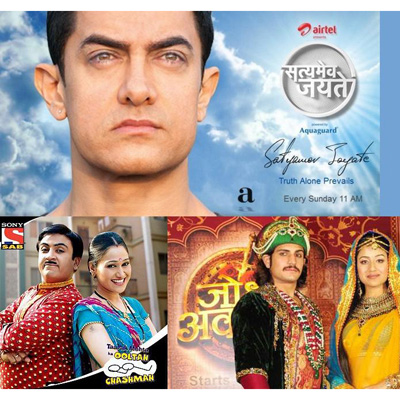
    Television director and creator of the unique chat show Satyamev Jayate, Satyajit Bhatkal says, “To be honest, we did not have any preconceived model for content creation or the kind of show we hoped to do. We made 6-7 documentaries on real life people and we realised that there was so much happening in the country. The common man faces so many problems and we needed to address these serious issues and give a 360 degree look to the matter.”

    However, except for a few who are willing to take up the challenge of creating something new, many are still stuck with the tried and tested.  According to Bhatkal, television, today, is way too cautious.  He elaborates, “It is a challenge that we have to cater to people of various education levels and social backgrounds. However, I feel we are not willing to move to a different level of aesthetics.”

    Director of many popular television series like Amanat, Kyunki Saans bhi kabhi bahu thi, and the current hit show Jodha Akbar, Santram Verma believes that there is a division amongst the audiences today as while some of the viewers want to watch fresh content, the older generation wants to stick to the same stories that were showcased years back. As a result, he feels that it is hard for the industry to evolve.


    He says, “Everybody is sticking to the safe formula of ‘saas-bahu’. Good writers are hard to find these days. Writers lack the fire in them to come up with fresh concepts. TV is not experimenting with novel ideas.”

    Speaking on the quality of writers, producer of the very popular show, Taarak Mehta Ka Ooltah Chashmah, Asit Kumar Modi says, “There is a lack of good writers. Generally speaking, channels go with writers that they have previously worked with. If we want to encourage new content, channels should have better adaptability for new writers and then, we can produce better content.”

    When asked whether broadcasters give the makers enough support and freedom, Modi informs that Sab played a good role in encouraging fresh content and promoting comedy shows like his on the channel.


    Bhatkal expresses that Star has been an extraordinary and participative partner for his show, “Star allowed us to feature the show on a Sunday morning instead of an evening prime time slot as we wanted the whole family to watch. Since it did not have a Telugu channel, the network gave the broadcast rights to its Telugu competitor as we wanted the programme to air in every Indian language. Star even permitted SMJ to be aired simultaneously on Doordarshan on the same day and at the same time, at the expense of its own traffic. What more could I ask for?”

    Talking about the concept of seasonal shows, Verma says, “Seasonal shows are the best. If implemented fully on Indian television, it will have a better emotional connect with the audience.”

    According to Modi, it is a good idea to have seasonal shows as after a point even the audience gets bored. However he is quick to point out that channels should also be convinced of the format.

    Channels need to have more confidence in seasonal formats and help in the distribution of the same. Modi emphasises that irrespective of ratings, losses and profits, one needs to constantly experiment on Indian television.

    To discuss more about the content on television, Indiantelevision.com is organising the ‘Content Hub’ that brings together writers, creators, producers, artistes and broadcast executives, both for TV and digital, all under one roof. This initiative is meant for all professionals, newbies and anyone who is keen to know about writing, producing and creating content for television and the digital space.

     

  • “Mini-series is the way forward”: Vipul A Shah

    “Mini-series is the way forward”: Vipul A Shah

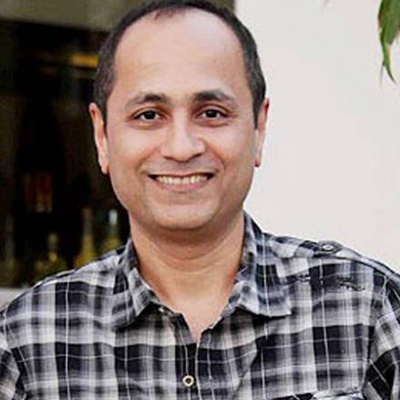
    MUMBAI: He started his career as a director with a soap opera called Ek Mahal Ho Sapno Ka on Sony Entertainment Television (SET) in the year 1999. It was the first Hindi fiction series to reach the landmark of 1000 episodes and is considered as one of the longest-running television serials of Indian television.


    After that, there was no looking back for Vipul Amrutlal Shah, who has given the film industry hit movies like Aankhen (2002), Waqt: The Race Against Time (2005), Namastey London (2007), London Dreams (2009) and Action Replay (2010) as a director. He has also produced movies like Singh Is King, Force, Commando and Holiday.  


    The producer cum director is back to the small screen, and this time with an action series Pukaar – Call for the Hero on Life OK.


    In the second of the Content Hub series, Indiantelevision.com had a quick chat with Vipul Shah to understand his views on the growth of content over the years and what the audience expects from a director/producer.


    According to Shah, the larger issue with television content is that it is static. “We have got stuck into the rut where we feel that the audience just wants to see the saas-bahu soaps and that is the only way forward. I don’t think that is right,” he says.


    He believes that audiences are not stagnant and they move forward even before the creators of the show realise. “There was a time when daily soaps would clock a TRP of 20 plus. Today the number one show is five or a little more than that. This only suggests that the number of viewers watching the series is no longer the same.”


    With most television content packed with saas-bahu soaps, Shah feels that somewhere the television audience is losing interest. “And largely, producers are to be blamed for not creating different content. I think the time has come where channels and producers need to realise and give a new dimension to the work we are doing.”


    He wants the television industry to evolve and think beyond saas-bahu soaps. With its new series being a bi-weekly and a finite one (slated for 24 episodes), he says that the audience is looking out for something new always. According to Shah, mini-series is the way forward. “Internationally, it is the way. We are going to move forward with mini-series,” he adds.


    He strongly believes that Indian content has the ability to travel abroad. Shah informs that his directorial debut Aankhen was going to be made in Hollywood as well. “We had almost sold our rights to a Hollywood studio. My producer messed up the deal; otherwise Aankhen would have been the first film to travel to Hollywood.”


    Shah states that we should not worry too much about what Hollywood wants and should concentrate on the Indian market. “If we are able to satisfy the 125 crore people in India, the whole world will come to us,” he opines.


    Talking about creative freedom from the broadcasters end, Shah says that he has always been given absolute freedom. “Nobody has ever told me anything in terms of how I should write or direct.”


    As a maker, Shah is open to look at concepts which are new, dynamic, challenging and fun to execute.


    For the background, Content Hub brings together writers, creators, producers, artistes and broadcast executives, both for TV and digital on one platter. The initiative is aimed at established professionals, newbies and anyone who is keen on taking the plunge into the fascinating world of writing, producing and creating for television and the digital space.

  • “Unlike the west, we don’t have developed comedy genre”: Anooj Kapoor

    “Unlike the west, we don’t have developed comedy genre”: Anooj Kapoor

    MUMBAI: Think you can tell great stories? If yes, then here is your chance to meet the best from the industry and learn from them.


    The growth of the visual medium, from traditional television to online short format content to mobile TV content, has changed the way it is created and especially how it is consumed. Now, more than ever before, there is a constant need for new and exciting content, and as a result, a requirement of dynamic creators and scriptwriters.


    Bringing together writers, creators, producers, artistes and broadcast executives, both for TV and digital, Indiantelevision.com’s Content Hub aims to bridge that gap.


    The initiative is aimed at established professionals, newbies and anyone who is keen on taking the plunge into the fascinating world of writing, producing and creating for television and the digital space.


    In the first of the series, indiantelevision.com profiles a broadcaster, which has never shied away from taking risks that too in the space of comedy. Sab sr EVP and business head Anooj Kapoor talks about the scope of Indian content going international, the different kind of concepts the channel is looking for, the demand for good story tellers and much more.


    Sab, the only channel dedicated to comedy has given viewers popular shows like Taarek Mehta Ka Ooltah Chashmah, Chidiya Ghar, F.I.R and Lapataganj. But according to Kapoor it wasn’t an easy journey.


    He says that unlike the west, it is very difficult to create comedy in India. “Sab has become the first dedicated comedy channel on the Indian television space and that has only happened in the last five years and therefore we have to make do with whatever restricted but very talented bunch of people that are present in the comedy genre in television. Therefore, yes, it is difficult to tell interesting stories in the genre of comedy,” he pin points.


    Moreover, since it taken upon itself the challenge of doing daily comedies, the task has become doubly difficult. “However, not only are we able to sustain the channel with good quality content albeit with a very restricted talent pool but at the same time through our marketing initiatives like Chai Pe Chutkule we are trying to source fresh talent and expand the talent base. I hope that as we go along not only do we grow as a channel, not only does comedy grow as a genre but also the talent pool of comedy writers, actors, directors and producers also increases,” states Kapoor.


    To further engage with the audience and give them some little more of entertainment, it tried its stint with stand-up comedy with Tu Mere Agal Bagal Hai which ran for 60 episodes and got a decent response from the viewers.


    The channel can also be credited for bringing paradigm shift in Indian content, moving away from melodrama to light hearted family entertainment.  “And, within that, the fact when the rest of the GECs were talking about the negatives of the joint family system, Sab was talking about the positives of the joint family system,” explains Kapoor.


    He further goes on to say that in the recent times, more and more general entertainment channels (GECs) have realised and recognised that the saas-bahu genre is passé and therefore one sees a lot more new and fresh themes now being tried across other channels.


    Is there some fatigue setting in comedy? Kapoor reverts saying that on Sab, he ensures that whenever a fatigue is setting on a comedy show, it is immediately replaces it.  “This is why we have a robust product line up and as well as, perhaps, one of the few channels in the television space which launches fresh programs at regular intervals,” says Kapoor.


    Kapoor believes, the Indian content definitely has the potential to go international. The channel’s show Gutur Gu, a silent comedy, first of its kind produced on Indian television was successfully sold at last year’s Mipcom in Cannes to several countries.