Tag: Content Hub

  • Content Hub 2021: Growing relevance of language personalisation in OTT advertising

    Content Hub 2021: Growing relevance of language personalisation in OTT advertising

    Mumbai: The last one and a half years have escalated the pervasiveness of the OTTs and streaming platforms in our lives like never before. Not wanting to lose out on their share of the OTT marketing pie, brands have begun exploring promotions and advertisements on these channels.

    With regional content being a major chunk of the consumer viewership on the OTT platforms, there is a growing conversation around advertising too being tuned towards regional to resonate more with their audiences. Representatives from some leading brands came together to discuss the growing relevance of this regional targeting in OTT advertising at the fifth edition of the Content Hub 2021- ‘TV, Film, Digital Video, and Beyond’ which was organised virtually by IndianTelevision.com from 28-30 July.

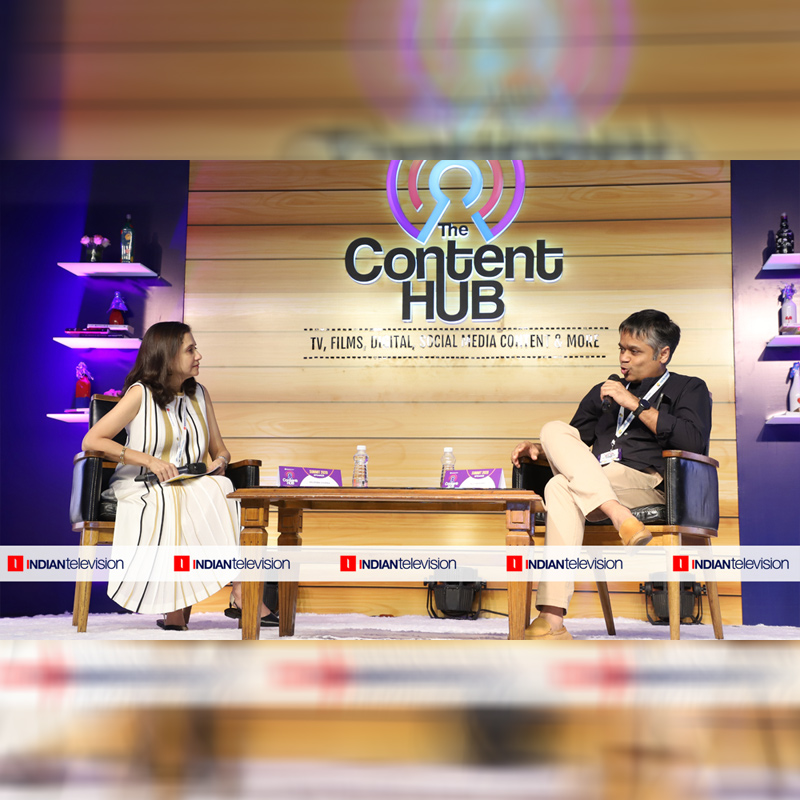
    The panel consisted of representatives from Lenskart, Myntra, DABUR, ESSENCE and Zee Entertainment Enterprises Ltd (ZEEL). The discussion was moderated by IndianTelevision’s founder, CEO & editor-in-chief Anil Wanvari, who began the session by seeking the panellists’ views on how brands are looking at the OTT ecosystem as a communication tool with their customers.

    “The platform (OTT) represents the best of both worlds,” remarked ESSENCE India, managing director, Sonali Malaviya, “It provides the ‘comfort & love of Television’ and the possibility of ‘an ad-free background’, which is what consumers have been wanting to have, since time immemorial. As an advertiser, it gives you the flexibility, the dynamism and the targeting dexterity which we have always wished for in TV. So definitely OTT platforms are here to stay.”

    As the OTT boom revolutionised the media industry, it also opened new avenues for advertisers who had otherwise been reviewing their ad spends on certain genres. One such example has been Lenkskart, which moved out of advertising on English genre, along with the premium audience which gradually moved to OTT.

    However, the lack of data measurability remains a concern, pointed out Lenskart, brand media head, Anupam Tripathi. “The only worrying factor is that little black-box of information about viewership, targets in terms of absolute numbers that doesn’t pass on via the OTT to the marketers. Especially during the streaming of live sports,” said Tripathi.

    While the OTTs have evolved in terms of content and consumer reach, the lack of adequate data measurement and the ability to compare that data with other platforms has proved to be an obstacle for advertisers looking to invest in OTT, according to the panellists. But they also contended that, since these are early days for digital platforms, it may take some time before the new technologies and data measurement systems are devised and made available for advertisers and brands.

    One of the many things that may be challenging for OTT is the high level of expectations that advertisers may have from it. Nevertheless, there’s one area that sets the OTTs apart as a marketing medium, is the regional reach, and the ability to target specific audiences through vernacular content.

    “From an OTT stand point, that’s where the next level of growth is going to come from,” highlighted Malaviya. “And, this is also what makes ‘measurability’ all the more critical- for brands to be able to figure out the scope of the language content, and for marketers to know where they are putting their money is the most optimal use of it.”

    Regional content is drawing advertisers’ interest across all segments. A major portion of the ad-spends of FMCG brands is also shifting towards regional, highlighted Dabur, head of media, Rajiv Dubey. The brand has also been creating regional marketing teams, producing local content & ads, getting local influencers, getting closer to the ground by creating custom made campaigns for that market.

    “This goes hand in hand with regional content on OTTs,” he added. “But, OTTs have to give people options to watch original content in their language. Then it becomes a level playing field. Right now the content is only skewed towards English & Hindi content. So there’s a huge place to grow over there. Though, reaching people behind the paywall will be a challenge.”

    Myntra vice president & head of marketing, Achint Setia concurred. “The next big growth for OTT will come from regional content and advertisers would want to be part of this journey. However, the expectations from OTTs are higher. Almost one-third of our money is deployed in sharp regional campaigns today, so I think it’s just going to get bigger as we see success in this. It’s bound to happen- if anybody has to scale in this country you just cannot not go regional,” said Setia. “It’s an industry which we all have to support because in the future, it will provide solutions which do not exist today.”

    While it took television several decades to understand the power of regional, digital platforms are plunging into vernacular content within a few years of their debut. “Regional is a dominant force in OTT content because of the sheer numbers of people consuming it. It’s just that the expectations from OTTs are also higher, in terms of addressability. The responsibility is higher,” said Zee Entertainment Enterprises Ltd (ZEEL), Revenue, COO, Rajiv Bakshi.

    The OTT platform launched three years ago has already expanded into 11 languages, including Hindi, Bhojpuri, Tamil and Telugu. It has been leading the way in regional content with the release of several original series in local languages, including Nanna Koochi (Telugu), Utsaha Ithihasam (Malayalam), Date with Saie (Marathi) and What’s up Velakkari (Tamil).

    “I don’t think any medium can invest or prepare for the future, as best as OTT,” added Bakshi, giving a sneak peek into the platform’s latest solution for brands and advertisers, which he said will differentiate why OTT is an important medium for tomorrow’s media planning. “So, when you are watching any piece of content, you can pause and see the jhumkas (or any other item), and when you press on it, you can see the price, colors, details etc and if interested, you can go to the platform and buy it. This is the new solution we are offering to our advertisers. So, at any point viewers can pause and visit the platform to purchase an item. We have the solution, now rest depends on our partnership with the client as to how to develop it so as to ensure it doesn’t affect the overall consumer experience. These are the kind of solutions we are investing in.”

    Summing up the discussion, Wanvari also drew attention towards the lower cost of advertising on digital and OTT, compared to TV. “Digital and OTT channels are offering reach at a fraction of the cost that print and TV offer, and that makes a case for allowing this new medium to develop and grow similarly too with adequate support. At the end of the day, for anyone using regional languages to target specific audiences, first movers would always stand to benefit from the platform as the medium grows because one builds a relationship early on,” he added.

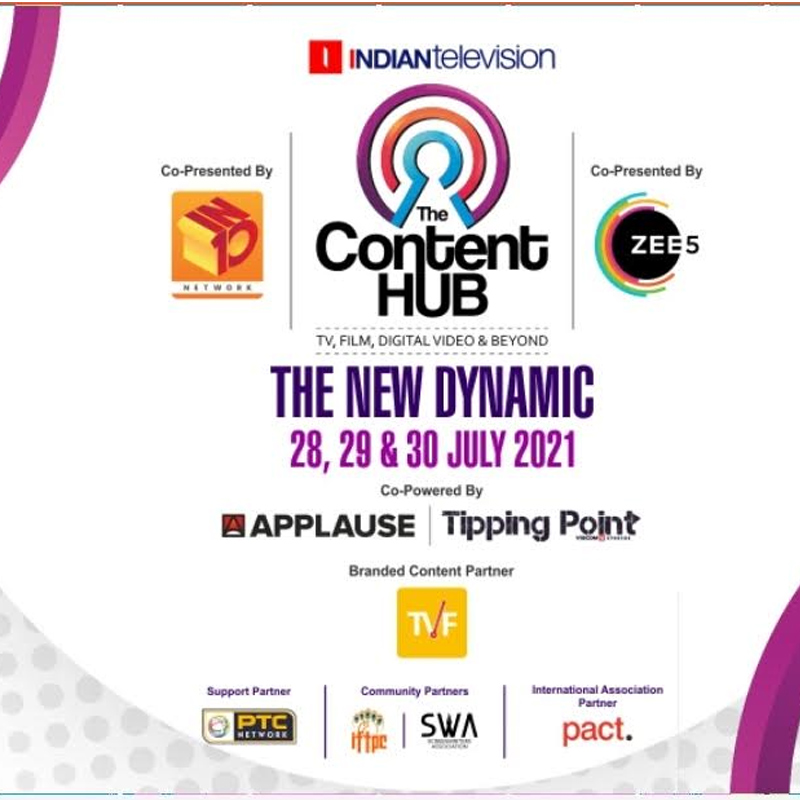
    The three-day summit organised from 28-30 July, 2021 concluded on Friday. It was co-presented by IN10 Media Network and ZEE5, and co-powered by Applause Entertainment and Tipping Point, the digital content unit of Viacom18 Studios. PTC Network was the supporting partner.

    Centred on the theme – ‘The New Dynamic’, the three-day event witnessed insightful sessions with industry stakeholders deliberating on how the new forces are transforming the way content is created and stories are told. It also delved into the impact of these changes on the business models for the world of films, TV and OTT.

    For more details, visit: https://www.thecontenthub.in/

  • Content Hub 2021: Stage is set for the mega gathering of content creators

    Content Hub 2021: Stage is set for the mega gathering of content creators

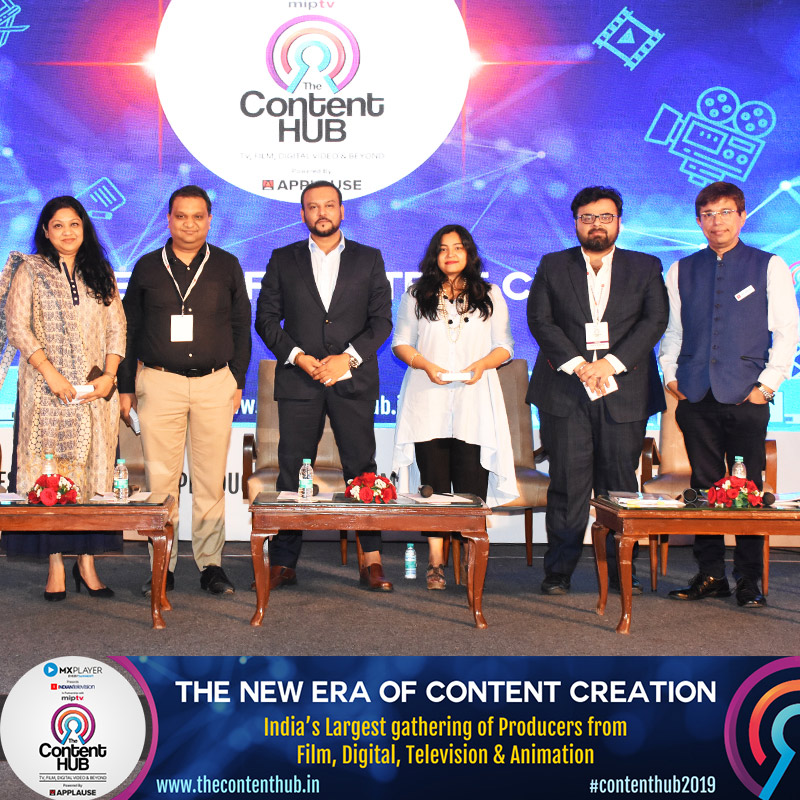
    New Delhi: The stage is set for one of the biggest gatherings of content creators from across media platforms. The fifth edition of Indiantelevision.com’s biggest initiative- Content Hub 2021- ‘TV, Film, Digital Video, and Beyond’ begins on 28 July (Wednesday), 11 AM onwards.

    The three-day summit is co-presented by IN10 Media Network and ZEE5, and co-powered by Applause Entertainment and Tipping Point, the digital content unit of Viacom18 Studios. PTC Network is the supporting partner.

    Centred on the theme – ‘The New Dynamic’, The Content Hub 20201 will witness insightful sessions with industry stakeholders deliberating on how the new forces are transforming the way content is created and stories are told. It will also delve upon the impact of these changes on the business models for the world of films, TV and OTT.

    Day One will begin with the virtual panel discussion on ‘The challenges & opportunities before India’s content creators’, where Endemol Shine India, CEO, Abhishek Rege, Contiloe Picture Pvt Ltd, chairman-MD, Abhimanyu Singh, Emmay Entertainment, director and screenwriter, film producer Nikkhil Advani and film director, writer-producer, Siddharth P Malhotra will be in conversation with Indiantelevision.com Group, CEO and editor-in-chief Anil Wanvari.

    This will be followed by a session on ‘Cinema-A new outlook’, where the industry stakeholders will discuss the changing dynamics of the cinema industry in the aftermath of the pandemic, with representatives from Lycra Productions, Cinepolis India, Zee Studios, Reliance Entertainment and Ellipsis Entertainment. Another session – ‘Television: A Twist in the Tale’ will witness insightful chat on the evolving television industry, and how the leading production houses are gearing up for the evolution. 

    There will also be fireside chats with actor Boman Irani on his film-making vision, Discovery Communications India, South Asia, managing director Megha Tata on the rising surge of factual entertainment and Arrow International Media, executive producer, Stuart Pender on the art of documentary making.

    The Content Hub 2021 will also bring together industry stakeholders for a session on ‘Regional Content: Storytelling at its best’. The session will have participation from Vaishnave Media Works Ltd & Arpad Cine Factory Pvt Ltd, MD and chairman, Kutty Padmini, PTC Network, MD and president, Rabindra Narayan, Guru Group, founder and CEO, Sunitha Tati and Mumbai Movie Studios, CEO, Naveen Chandra. Industry stakeholders will also deliberate upon ‘The Rise of OTT’ in one of the sessions, which will be attended by representatives from Viacom18 Digital Ventures, ZEE5 India, SonyLIV, BBC Studios India, Juggernaut Productions and Kurate Digital Consulting.

    The session on ‘The Growing Relevance of Language Personalisation in OTT Advertising’ will witness invigorating discussion among brands and broadcasters on the need for language personalisation. Lenskart, brand media head, Anupam Tripathi, Myntra, vice president, and head-marketing, Achint Setia, Zee Entertainment, COO Revenue, Rajiv Bakshi, Dabur, head of media, Rajiv Dubey, Rebel Foods (formerly FAASOS), co-founder, Sagar Kocchar, and ESSENCE India, managing director, Sonali Malaviya will be in conversation with Indiantelevision.com Group, CEO and founder, Anil Wanvari.

    The event will also be live-streamed on our social media handles. Join us for a series of insightful sessions starting 11 AM.

    To know more, visit: https://thecontenthub.in/index.html

  • Ipsos India appoints Raja Bunet as COO

    Ipsos India appoints Raja Bunet as COO

    KOLKATA: Ipsos India has appointed Raja Bunet as chief operations officer, for leading contactless data collection operations, with immediate effect.

    “Covid19 hampered our fieldwork operations due to lockdowns and restrictions, considering, face-to-face data collection accounts for almost 99 per cent of our fieldwork. And with woes of the virus far from over, we’ve majorly overhauled and launched our suite of contactless data collection solutions for clients to give them an edge in speed, quality and timely insights. And Raja Bunet from our top leadership team will be spearheading our contactless data collection operations with immediate effect. He will be designated chief operations officer,” Ipsos India CEO Amit Adarkar said.

    “Ipsos India has always been at the forefront of client centricity and innovation, and I’m pleased

    to announce  that we are redrawing our strategy and infusing newer techniques in providing

    clients with a large portfolio of tech-savvy, contactless data collection techniques and aligning

    and customizing them to client requirements and exigencies. Bunet will be structuring his teams

    for execution, of online and telephonic,” Adarkar added.

    Contactless data collection techniques will supplement F2F data collection. In order to

    overhaul the Operations and to put it on the grid,  Bunet will be working jointly with Pratim

    Thakurta (face-to-face, field operations head), in drafting the blueprint for Operations.

     Bunet has about two decades’ experience in market research and has held a number of top-level positions in Ipsos India – from head of customer loyalty, to head of mobile research, etc; and his work experience has straddled sectors and categories. He is an alumnus of IILM, Delhi.   

    “In the last few months, we’ve been working on operationalizing our arsenal of contactless data

    collection methodologies and are now focusing on building best-in-class processes to achieve

    operational excellence,” Bunet commented.

  • Customers are in an omnichannel world now, reaching them is a lot more complex: Tata Sky’s Anurag Kumar

    Customers are in an omnichannel world now, reaching them is a lot more complex: Tata Sky’s Anurag Kumar

    KOLKATA: India’s undisputed DTH leader Tata Sky unveiled a digital campaign to celebrate its 14 anniversary recently. Of all other usual campaigns, it stands out in its approach of keeping consumers at the heart of the video. Rather than boasting of success with putting a few numbers together, the company has conveyed its journey through its loyal subscribers. While it has invoked a sense of authenticity, Tata Sky chief communication officer Anurag Kumar reiterated more empathy, more authenticity, talking about community, the family in communication are making it easier to connect with consumers in the post-Covid2019 period.

    To get a sense of the campaign, Tata Sky’s challenges and opportunities going forward, we caught up with Kumar. He shared that when they were ideating about what would be the best way to reach consumers, they thought of going back to subscribers who have been a part of the brand’s journey for a long time. The subscribers spoke their mind, did not read a script given by the company, and the videos were shot on the phone. 

    According to Kumar, such pieces of content created around consumers have greater engagement on social media platforms while TVC would have been one-way. Hence, the company opted for a digital campaign. Even so, the campaign was put up on Tata Sky’s landing page for a short period of time. The video on the digital medium has garnered 23 million impressions and 5.9 million views within seven days.

    “I think what we have seen in lockdown is the desire to care about the community and the family has increased. People are more aware of who is around them, they are helping each other a lot. Hence, what we have found is that communication which will be conveyed with sympathy for consumers, authenticity in terms representing real life, what the customer is going through, how they are at home, that is connecting much better in the post-Covid2019 period than before. communication filled with more empathy, more authenticity, talking about community, the family is connecting more,” Kumar opined.

    While pandemic is accelerating an overall change, the media and entertainment industry has already started facing an overhaul of the ecosystem. Standing at the critical juncture, Tata Sky is treating OTT as a friend rather than foe. While it has forayed into the video-on-demand market through Tata Sky Binge, Kumar said the overall challenge is now how do they make the brand as phenomenal for OTT as it has been for live TV. 

    He shared their approach to counter that challenge. Tata Sky is an expert at aggregating content and brings it to consumers. Now, it is looking at bringing the same kind of convenience and aggregation to OTT. “We have to continuously innovate, try to be relevant in future, from a TV point of view and OTT point of view,” Kumar contended. He said along with opportunities in OTT, pay-TV still has opportunities with 100 million TV unpenetrated households. 

    There are challenges in the industry along with opportunities. Kumar said the regulatory uncertainty, that industry faces, is a big challenge  As a result of frequent regulatory changes, the entire relationship between the various players in the value chain has to be evolved constantly resulting in a change in the business model, customer selling strategy, customer management approach. 

    “The other challenge is a significant cost and investment which we have to spend to reach consumers via media as it is expensive in India. Earlier, it was TV and print while now there are so many platforms. The customer is actually in an omnichannel world now. If we want to reach a consumer that is a lot more complex now. It is true even for sales as they can go to e-commerce, a physical dealer can contact the call centre. Hence, reaching the consumer in an efficient way via media and physical channels is a challenge. It’s not insurmountable, but it is something which we have to keep in mind,” Kumar commented. 

  • Covid2019 creates opportunity for used car market

    Covid2019 creates opportunity for used car market

    NEW DELHI- Covid2019 battered the automotive industry in India with the demand for new cars and two-wheelers plummeted between March-May 2020. The month of April 2020 has gone down in the history of the country when not even a single car was except a few that were exported out of the country. The industry started to pick up since May 2020 and has been showing signs of recovery. Even then at a cumulative level, the first half of the year 2020 has battered the auto industry, even worst then the last year. In passenger vehicles, in particular, the April-June period saw sales drop of 78.43 percent, making it possibly the worst-ever quarter since the time such data were being compiled.

    Covid2019 actually forced people to think twice before making investment into a big ticket purchase like cars. As a result, it created a window for the already existing new car market to grow further. Several brands have reported that there is an increased number of inquiries from customers around used cars. These include brands like Maruti Suzuki True Value and Hyundai’s H Promise.

    Maruti Suzuki India Limited executive director marketing and sales, Shashank Srivastava said, “During lockdown scenario, most media got impacted due to restrictions and hence their consumption. In New normal, ensuring customer safety and communicating safe practices is of utmost priority.”

    As per experts, the car buyers who had plans to buy new cars will opt for used cars seeing the economic uncertainty and the tougher times ahead. As economic activities resume, people prefer personal cars over public transport for the fear of being affected by the virus and to follow the physical distancing norms. This will give an impetus to the used car business.

    People will either go for two-wheeler or pre-owned cars. Historically, it has been that whenever there’s an economic downturn people gravitate towards pre-owned goods as they are cost-effective.

    Covid2019 has created a great opportunity for brands like Droom, CARS24, Olx, Mahindra First choice, and others in the space. They are aggressively promoting their products and released campaigns to connect with their consumers.

    CARS24 rolled out a 360-degree campaign with MS Dhoni that talks about how CARS24 can help connect sellers with buyers directly making the process more transparent and easier for its new-age customers.

    OLX CashMyCar is also doubling down digital presence across platforms. Maruti Suzuki also launched a 360-degree campaign on ‘Buy & Sell’ for True Value before the lockdown happened.

    CARS24 co-founder and CMO Gajendra Jangid explains, “the size of the used car industry is 1.3 times the size of the new car market, in other words, used cars accounted for 55 percent of total 7.5 million car transactions in India. We are expecting a steady growth in demand post lockdown period due to the shift in budgets.”

    He further said, “According to our recent research study, we saw that Intention to use private cars by consumers increased by 41 per cent and 22.5 per cent people who were preferring to buy new cars earlier are now shifting to pre-owned cars which looks promising for the pre-owned auto segment.” 

    However, since the time economic activity resumed, several automobile brands have also launched new products that were on hold. They are realigning new strategies to connect with the target audience.

    OLX CashMyCar business head Amit Kumar shares that the launch of new models will definitely help the pre-owned car market as consumers will have a wider range of brands and models to choose from across price ranges. 

    Kumar explains, “Pre-owned car market actually benefits from the increased activity in the new car market. “An important source of pre-owned market supply is the new car sold on the exchange. So, more new cars entering the market augurs well for the pre-owned car market as this would result in the availability of fresh new models with the latest features.”

    However, the used car market in India is highly unorganized, only a few organized players are operating in the market. The organized market contributes only 18 percent of total pre-owned cars sold in the country. The used car market size is around 1.5-1.7x (times) of the new car market. As per estimates, over 4 million pre-owned cars were traded and sold in FY19.

    Increase demand, the rise in personal mobility.

    Covid2019 has impacted the consumer’s behavior and preferences towards their commute choices. He prefers personal mobility over public transport.

    According to Jangid, as social distancing is the primary norm of the ‘new normal’, people are inclined towards commuting through their personal vehicles. But at the same time, they are looking for more affordable and budget-friendly deals as well. “This is the reason behind people moving more towards owning a pre-owned vehicle that fulfills both requirements. Further to the resumption of the services as soon as Unlock was announced, we have witnessed a surge in used car sales, he said.”

    However, during economic stress, customers are expected to downgrade their demand due to declining affordability and enhanced focus on functionality.

    Srivastava explains, “Nearly 85 percent pre-owned car customers are two-wheeler upgrades. We are confident that the current situation and sentiments will have a positive rub off on the used car market as the price of the new vehicle would be higher.”

    He further adds that telescoping of demand is expected to happen due to economic stress and customers will give more importance to functionality buying, Customers who were earlier planning to buy a Swift top variant may now consider the base variant. “First-time buyers are also expected to increase,” adds Srivastava.

    The used car market has registered healthy growth in India in the last few months. According to statistics released by the Society of Indian Automobile Manufacturers’ (SIAM), pre-owned vehicle segment that accounts for 18 percent of the market share, registered estimated sales of 4.4 million units, whereas the new passenger vehicle sales in FY 20 stood at 2,775,679 units, dipping below the 3 million sales unit mark for the first time since FY17.

    Kumar concluded by saying, “Pre-owned cars could see an increased supply of new car models. Buyers of pre-owned cars now would also prefer transacting with their local sellers instead of traveling to far off places which would further boost their local economy.” He also believes that the pre-owned industry will adopt digitization as a key pillar to ensure business continuity.

  • ShemarooMe collaborates with Sony India

    ShemarooMe collaborates with Sony India

    KOLKATA: ShemarooMe has today announced its association with Sony India to expand the Smart TVs content library, further enhancing the accessibility and convenience for consumers. With this association, the ShemarooMe app will now be available for streaming exclusively on select BRAVIA Smart TVs. The all-in-one platform offers a wide range of multi-genre, multi-regional content, including Bollywood Premieres, Bollywood Classics, Shemaroo Kids, and the best of Devotional, Comedy and Regional content.

    Online content consumption has increased rapidly as consumers are confined to their homes due to the lockdown and are accessing streaming services from multiple screens such as tablets, laptops, mobile phones and smart TVs. During these unprecedented times, this partnership further deepens ShemarooMe’s reach by providing seamless access to BRAVIA’s vast number of consumers in the country as well as enables the latter to expand its Hindi and regional entertainment portfolio with the OTT platform’s exciting slate of popular shows and movies.

    Talking about this announcement, Shemaroo Entertainment digital COO Zubin Dubash said, “We are extremely delighted to have partnered with Sony India to help expand their entertainment portfolio with ShemarooMe’s diverse content catalogue. Over the years, Sony’s BRAVIA television has truly revolutionized the way Indians watch content. With this strategic association, we aim to expand our OTT distribution and transform the TV viewing experience for consumers, giving them access to our rich legacy with the added convenience of streaming blockbuster Bollywood as well as regional movies and live events, seamlessly on their television sets.”

    Sony India BRAVIA Business head Ranvijay Singh added "We are glad to partner with Shemaroo Entertainment and help amplify their diverse content portfolio across India. BRAVIA Televisions have a legacy of offering the most immersive viewing experience and with a rapid increase in the online content consumption, we are positive that this partnership will offer wholesome entertainment to our consumers.”

  • Eros STX Global forecasts 50 mn monthly paid subscribers for Eros Now by 2022

    Eros STX Global forecasts 50 mn monthly paid subscribers for Eros Now by 2022

    KOLKATA: Eros International and STX Filmworks completed the big Bollywood-Hollywood merger last month. The newly combined company Eros STX Global Corporation forecasts 50 million monthly paid subscribers for Eros Now and generate $1 billion in revenue for the calendar year 2022.

    Eros Now reached 33.8 million paid monthly subscribers and 205.8 million registered users as of 30 June. “Despite the business challenges arising from the pandemic, Eros STX has seen a substantial increase in both new subscriptions and consumer engagement on the Eros Now platform driven by increased time spent at home as well as fewer out-of-home entertainment options available,” Eros STX Global co-chairman and CEO Robert Simonds said.

     “Eros Now has a strong slate of films and original series scheduled for release over the coming quarters, and the Company expects this to help drive continued growth in the paying subscriber base in India and around the world. Consumers are watching more content on the platform than ever before, an acceleration of growth that will provide strong tailwinds to the combined business for the coming quarters,” he added.

    Simonds seems extremely optimistic about Eros Now as he said it has one of the largest libraries of local and regional language content in the Indian marketplace which would take a significant investment of capital for a competitor to even try to replicate it. He also cited the independent, third-party valuation that was done in February which valued Eros library at $1 billion approximately. 

    Other than Eros Now, Eros STX’s co-production with some of the largest global players like Amazon and Netflix also opens another growth window for the company. 

  • CarDekho to invest $20 million in the pre-owned car business

    CarDekho to invest $20 million in the pre-owned car business

    NEW DELHI: CarDekho will invest $ 20 million (approx. Rs 150 crore) in its used car business in the ongoing financial year.

    The Girnar Software owned venture plans to open 250 franchise stores this year and ramp up this network to over 1,000 retail locations by 2022. The franchise outlets would be branded CarDekho Trustmark stores.

    The used car market is seeing a surge in demand as buyers are increasingly preferring for personal mobility instead of public transportation due to Covid2019 scare.

    CarDekho co-founder, Amit Jain said, “There is a surge in demand for used cars as this pandemic has reinforced the need for a personal vehicle. In FY20, there were 1.3 used car transactions for every new car transaction. We see this number going well above 1.8 times in the current year as people prefer personal mobility at a lower cost. We are entering into the franchise business model for selling Trustmark cars with the aim of providing economical personal mobility solutions to people in the most transparent and hassle-free manner.”

    The pre-owned car market in India crossed 4 million units in size as the industry saw tailwinds post the GST rationalization to 12-18% and penetration of organized channels, said findings of the Indian Blue Book, compiled by Mahindra First Choice Wheels Ltd, released last year.

    The Trustmark stores will also provide on the spot Loans and insurance service along with RC transfer facility under one roof. Moreover, the evaluation report of every Trustmark car is transparently available on the website and any customer can see it and discuss it before buying.

    Announcing its foray, the company said it has launched its first franchise store for the sale of certified used cars in Jaipur. The next upcoming stores are planned in Delhi NCR and Bengaluru respectively.  

    The company already operates over 50 CarDekho Gaadi stores across India where it acquires used cars from their existing owners.

    Earlier in June, CarDekho reported that its digital platform saw a 99% recovery in customer traffic for used cars after the lockdown wherein cars in the ₹1-5 lakh range saw maximum traction.

  • Micromax aims to make a comeback: Reports

    Micromax aims to make a comeback: Reports

    NEW DELHI: Homegrown smartphone brand Micromax is reportedly planning to make a comeback to the Indian market. This time, the company is banking on the government support, with its Production Linked Incentive (PLI) scheme which was announced recently. The company said that it would invest Rs 500 crore towards manufacturing and research and development, as per an online report. The brand also plans to launch 20 new phones by the end of the next fiscal.

    The PLI scheme will help boost local manufacturing as part of government’s initiative to make India self-reliant (Aatmanirbhar). The PLI scheme was announced on April 1, 2020, under the National Policy on Electronics 2019 shall extend an incentive of 4% to 6% on incremental sales (over the base year) of goods manufactured in India and covered under target segments, to eligible companies, for a period of five (5) years subsequent to the base year as defined.

    Micromax co-founder Rahul Sharma in an interaction with a leading daily said that the company was looking to regain its spot in the smartphone market through the multiple handsets it has planned to launch in the future. He also mentioned that the phone would look to disrupt the market.

    On 15 August, the smartphone brand had also uploaded a teaser across its social media handles captioned “73 years of independence or being in dependence? On our 74th independence day, let’s stop being doosron pe nirbhar and become truly Atmanirbhar. Are you ready to join the revolution with us?”

    Due to the influx of Chinese brands including Xiaomi, Oppo, the homegrown smartphone brands got wiped out of the smartphone market. Reportedly, Xiaomi is currently leading the smartphone market with a 30 per cent market share.

  • SonyLIV unveils teaser of Scam 1992 – The Harshad Mehta Story

    SonyLIV unveils teaser of Scam 1992 – The Harshad Mehta Story

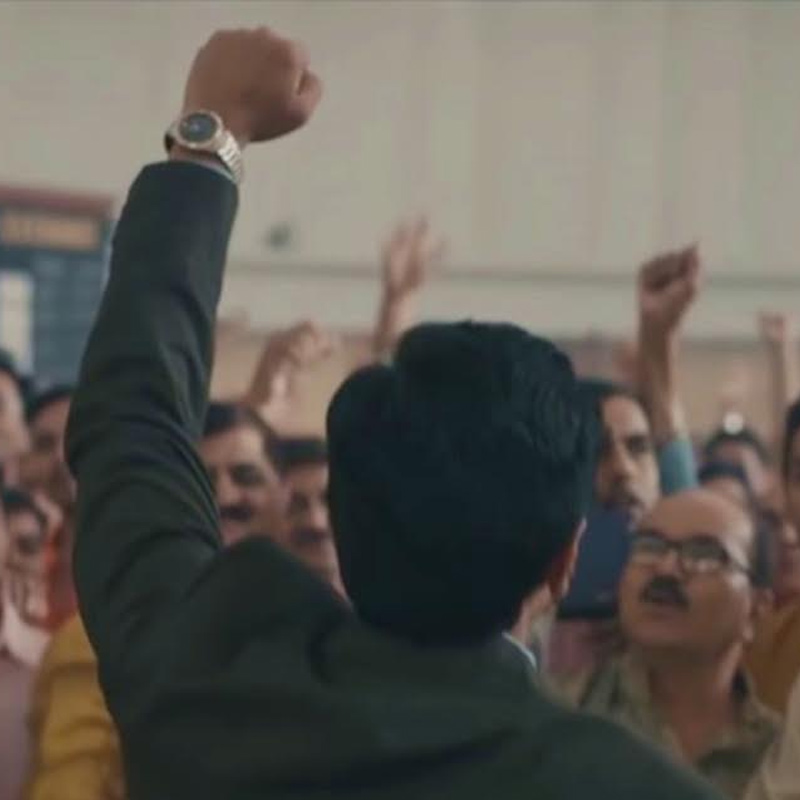
    KOLKATA: ‘SonyLIV 2.0’ has significantly upped its game in original premium content space. After releasing successful shows like Avroadh, Undekhi, it has now released a teaser of its upcoming show Scam 1992. Directed by Hansal Mehta, Scam 1992: The Harshad Mehta Story is about the real-life 1992 stock market scam involving the eponymous stockbroker, which led to major reforms, including the formation of Securities and Exchange Board of India (SEBI) Mehta has adapted a book on the 1992 stock market scam. The teaser of ‘Scam 1992’ has been unveiled featuring Pratik Gandhi, Shreya Dhanwanthary, and Sharib Hashmi. The story is set in the 1980’s and 90’s Bomba. At the beginning of the teaser, Sharib tells Shreya, about a Rs 500-crore fraud which has taken place. “We wrapped a mammoth 85 days shoot spanning 6 months, 550 pages, 170+ characters, and 200+ locations. It was tough but eventually satisfying. A great team saw this (and is still seeing it) through all the limitations and adversities. #Scam1992 is THEIR show. Thank you team!,” Mehta tweeted.