Tag: content distribution

  • Sony Pictures Networks taps Hitesh Sood to spearhead B2B partnerships

    Sony Pictures Networks taps Hitesh Sood to spearhead B2B partnerships

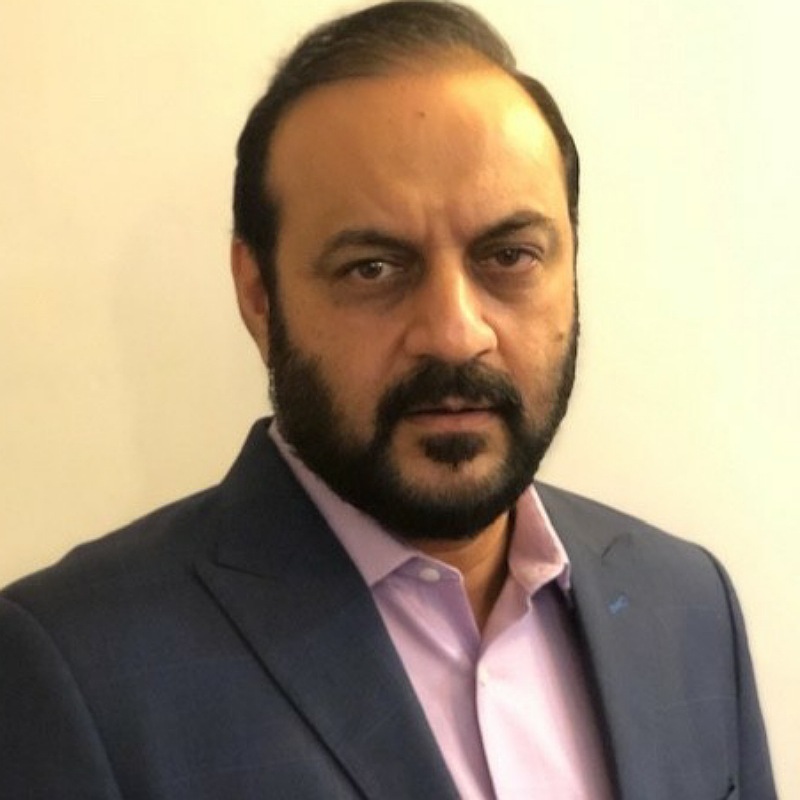
    MUMBAI: Sony Pictures Networks India (SPNI) has made a strategic move by appointing Hitesh Sood as vice president & head of B2B subscription and partnerships (digital business). Effective February 2025, Sood has already rolled up his sleeves to drive global expansion for Sonyliv and forge partnerships that will redefine digital content distribution.

    With a resume that reads like a thriller, Sood brings two decades of experience spanning telecom, media, and digital services. He has honed his expertise across continents, cracking tough negotiations and spearheading revenue-driven partnerships. From launching industry-first telco content bundles to scaling up OTT distribution, his track record is as impressive as a blockbuster’s opening weekend.

    In his new role, Sood will focus on taking Sonyliv beyond borders—literally. He aims to propel its reach to global audiences while working with telcos, banks, and content aggregators to make digital entertainment more engaging. With streaming services in an all-out war for eyeballs, this move signals Sony’s intent to stay ahead of the game.

    Before joining Sony, Sood made his mark at Renna Mobile, Grameenphone, Vodafone Idea, and Globacom, where he led marketing, partnerships, and product strategies. He played a key role in expanding digital content services and optimising customer engagement strategies. At Grameenphone, for instance, he quadrupled monthly active users (MAUs) in just two years—no small feat in a competitive streaming market.

    Sony Pictures Networks is banking on Sood’s knack for innovation to boost its B2B partnerships and subscriptions. With digital entertainment evolving at breakneck speed, Sony’s latest hire suggests the company is gearing up for a bigger, bolder future in the streaming industry.

  • Mountain River Films partners with China Intercontinental Communication Centre

    Mountain River Films partners with China Intercontinental Communication Centre

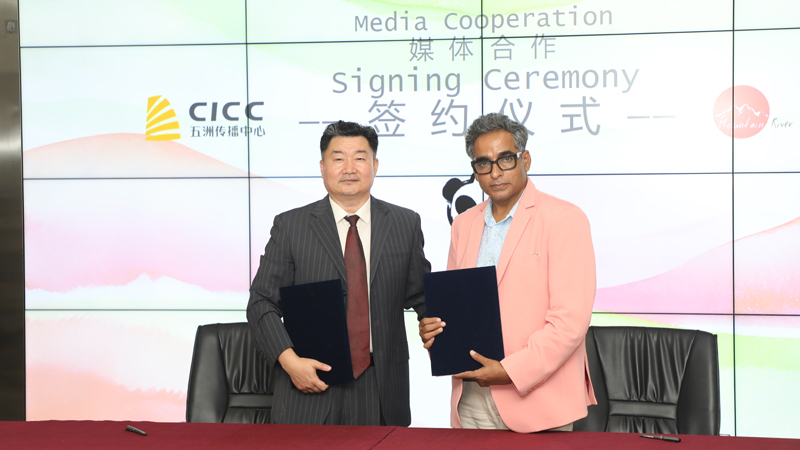
    Mumbai: Mountain River Films (MRF), a trailblazer in international sales and distribution, has forged a partnership with the China Intercontinental Communication Centre (CICC), marking a historic moment for the Indian content industry. This alliance solidified after a year of meticulous negotiations, represents the first collaboration of its kind between CICC and any organisation from the SAARC region.

    The official signing ceremony took place on 23 August 2024, at the CICC headquarters in Beijing, China. This momentous event was graced by the presence of high-ranking Chinese officials and industry leaders, underscoring the significance of this alliance, along with Chandra K Jha, an expert and well-known name in international film distribution and CEO of Mountain River Films.

    This partnership marks a significant step for Mountain River Films in navigating international markets. At a time when the Indian content industry faces challenges, Mountain River Films aims to revive negotiations for Indian films and series in the Chinese market.

    India’s content industry is growing, with more high-quality productions gaining global attention. China, a key market for Indian films, has shown renewed interest, as seen in the successes of films like Dangal, Andhadhun, and Bajrangi Bhaijaan, which collectively earned billions at the Chinese box office.

    Recognising the importance of a smooth market, Mountain River Films is working to ensure Indian content succeeds in China. This agreement with CICC is intended to foster a collaborative relationship between the two countries.

    Mountain River Films’ approach positions the company within the global content industry. This deal could create new opportunities for Indian filmmakers in one of the world’s largest markets.

    As the Indian content industry grows, Mountain River Films remains focused on bringing Indian stories to a wider audience.

    China Intercontinental Communication Centre deputy director Cui Binzhen stated, “Signing of radio and television (TV) business between two sides, opening a new chapter in media exchange and film and TV cooperation. Today, China Intercontinental Communication Centre (CICC) signed a contract with India’s Mountain River Films, jointly building a bridge to enhance people-to-people communication between China and India. We will give full play to our respective strengths, select and broadcast the freshest, most appealing documentaries, films, dramas, animations, and other programs, introduce more excellent Indian films such as “3 Idiots”, “Dangal” and other Indian movies to the Chinese audience through ‘UPanda Cinema Programme ’, enabling more Chinese and Indian audiences to enhance understanding and deepen our friendships. We also look forward to working with Mountain River Films to co-produce films and dramas with both countries’ characteristics that resonate with our people’s emotions and to promote mutual reference and integration between the two sides.”

    Mountain River Films CEO Chandra K Jha stated, “As we know, India and China comprise nearly one-third of the world’s population, and we are the third largest voice in the world. China and India have set remarkable examples as global leaders in various domains. We are the largest producers, the biggest cinema markets, and significant content creators, making our collaboration unique and promising. Unfortunately, there has not been much content exchange between these two nations after COVID, but today’s signing agreement of cooperation will pave the way for more and more content exchange. I am hoping Chinese audiences can once again see beautiful movies from India, so this event is truly a historical moment and a proud moment for Mountain River Film as we are the only organization from SAARC that has entered a high level of cooperation with Intercontinental Communication Centre, which apex body in China to cooperate with major international media.”

  • VBS 2024: Evolving content distribution landscape

    VBS 2024: Evolving content distribution landscape

    Mumbai: India is in the grips of seismic changes as far as video and broadband consumption is concerned. Pay TV cord-cutting is rampant even as free TV subscriptions are on the rise and OTT buy-ins are churning with the signs up for certain platforms stagnating even as others are seeing rapid increases and some are seeing cataclysmic drops. Aggregators of OTTs are popping up on the horizon promising cheap bundles along with value-added services for cable TV and DTH. There’s a rush to set up free advertising-supported TV channels by TV set manufacturers and smart TV device makers. There’s the Jio factor where it is seeking to convert most pay TV customers to free streaming of video content by offering access to consumers at no cost. The consumer continues to demand bandwidths higher than ever imagined even as prices are dropping. Margins are under pressure as every player goes one-up on each other to acquire and retain customers.

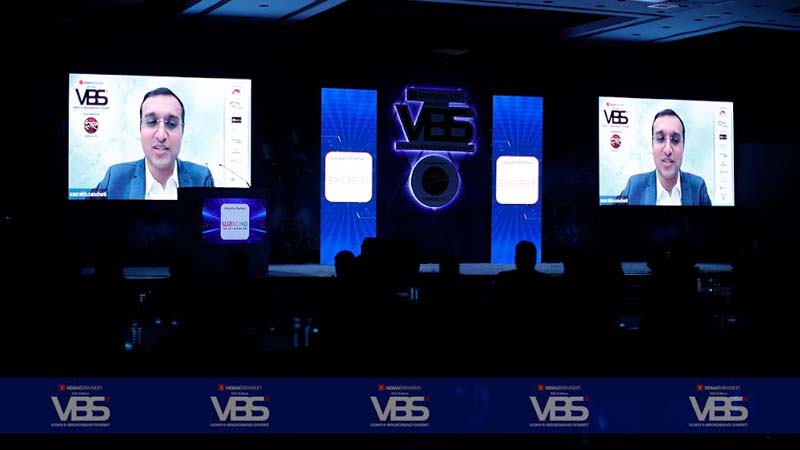
    Clearly, the video and broadband distribution landscape has not been as vibrant as it is now… How long will this pot-boiling continue? What will the magic potion of video and broadband look and taste like? And what’s the end game? Indiantelevision.com held its 20th edition of Video and Broadband Summit better known as VBS at Sahara Star Hotel, Mumbai.

    The very first fireside chat of the event, on the topic: ‘Evolving Content Distribution Landscape’ had Jio Platforms group CFO Saurabh Sancheti as the speaker in conversation with Indian Television.com group founder, chairman & editor-in-chief Anil NM Wanvari.

    Wanvari began the chat by asking Sacheti, how he has seen the content distribution landscape evolve over the past few years.

    Sacheti answered, “I think India is a very exciting market, and content distribution and media is like a market no other. Definitely, the last five years have been a big revolution on all fronts. So let me tell by seeing how the market is today and versus what it will be tomorrow. So today, yes, largely, even today, whatever people may say cable and DTH are very prominent platforms, they have the highest reach, they reach more than 100 million households and there’s a very big proportion, which they are serving directly as a pay TV. There’s a big business, which obviously, the free dish is having and the whole revolution on connectivity, which has changed not just the mobile, but the whole technology around, i.e., connected TVs, and large screens is there. There, we are just scratching the surface. So if I look, actually India had 350 million households, the last bottom 100 and 250 million don’t have a TV, and their only access is low-cost smartphones, for the content. If I look at the top tier, the top 50 million homes have connected TV, and many of them have a pay TV as well, which is where there are two products to the same segment, about 100 million pay-TV homes. So, the distribution landscape is changing very fast, because the numbers are not consumer time and attention is. That is what is leading to a lot of change in the mix of more choices, the customer time, definitely is now getting into multiple channels. So it’s an exciting time. I think the future is exciting for all the mediums of content distribution. Overall as the economy grows more prosperous, definitely the number of users and consumption is there to rise.”

    Moving on to the next question, Wanvari asked, “What are some of the key factors that have driven these changes in content distribution?”

    Sancheti replied, “One good thing that has happened is, definitely a lot of ecosystems are coming together. The access which was earlier very difficult is something which has been made easy. So earlier, we had it in mobility where, as a mobile subscriber, you had to pay 250 rupees a GB and therefore it was criminal to watch video on your mobile phone to now having very affordable tariffs that are less than 10 rupees a GB and everybody can afford a mobile phone with content and that opens up a huge audience. The same revolution, by the way, is also happening in phones, now almost touching 40 million internet users. It’s a very big market which is happening. What connectivity does is because it’s like the baseline infra but what it does is, it definitely changes the overall proposition. At the same time, with this opening up of the market, people are able to take exciting bets and make it really large. I mean, for example, just look at JioCinema and what has happened with digital watching on IPL, it’s like the whole model is pivoted, the whole attention has gone there. Therefore a lot of interesting experiments are happening, which is a very good thing to happen for the overall industry, because that is what maximises the consumer surplus and that really generates a lot of value for everybody in the ecosystem, not just the content producers, distributors, but the consumers as well. So it’s really exciting.”

    Wanvari then asked, “In your experience, what role do the new and emerging platforms play in reaching diverse audiences? How do you identify such platforms?”

    Sancheti then answered, “I’ll break the question into two parts. One is obviously as a content producer and then as a distribution channel. As a content producer, the good thing as I said, in India is there is no one India, there are many Indias, and overall, India is so big that even in the three Indias that I was discussing earlier, you have an opportunity of a global scale. Now, coming to the content producer angle, which is very interesting in India. So, D2C is the buzzword, that everybody’s trying to grapple with it, but the Indian consumer is kind of a high-touch consumer. So, existing relationships definitely prevail and across industries our learning is, that is definitely a winning point. Therefore, wherever you have a distribution channel, whether it be wire, a local cable operator, or a telco distribution, or any other distribution, where you have some touchpoint with the user, you have a lot of chance of getting him converted, and at least sample and if the content is of quality, definitely consume it. So, as a content producer and distributor, like I said, India is moving very fast, shifting fast, the market is growing, and it’s quite an exciting time to see how things are evolving. And if you have a great product, there is no dearth of consumers that clearly this market is showing.”

    Wanvari then added, “These days, we don’t look at a customer, we look at the lifetime value of a customer, how is that? What kind of role is that playing in terms of customer acquisition?”

    Sancheti commented saying. “I think that’s a very relevant question. The good thing is that consumers today have choices, and the bad thing is consumers ‘have’ choices. So if you are not able to take her attention at the right time with the right content, you’re lost. And that’s where I think, affordability, access, and the size of the market is a given, which everybody talks about. But content personalisation is the real secret sauce, which very few people talk about, and are working towards. I think one very important thing is unlike a lot of other categories, where the consumer is very involved in the purchase, and likes to go through the process of making the decision, entertainment is always a lean-back experience. The consumer may like to play around a bit, but the consumer doesn’t want to do a bit of big research to find the right piece of content. That’s where if you have the right content dished out at the right time, to the right consumer, the consumption obviously goes up. What I always try to remind my team is that choice is not actually a boon, it’s not certainly a gift, it’s a tax to the consumer. So the more you are making the consumer choose, you’re making them want variety. So in that sense, your variety of platforms is required but don’t expect the consumer to put a lot of effort in discovery. It should be seamless, the right content should surface and clearly, the who’s who of the world, the best people globally have this as the secret sauce. I think this is what in the whole Jio ecosystem, we have been able to do well. We have been able to segment the users, understand their needs, know what kind of content they need, and give them at the right time and price. And I think one more thing, which, I was talking to a large global techfin a couple of days back over dinner. One of the common pain points that came to them was, that digital is the sexy thing, everybody talks about it. But it’s really painful as a user because I don’t know what piece of content will appeal me where. Even if I have something in mind, I don’t know what platform it is available. It’s a lot of research. That’s I think, when we were just discussing what we have done in India, they were really blown away apart from that. So to summarise, I think the whole personalisation aspect is the aspect that is changing and which will differentiate, which will make the winners from the losers.”

    After that, Wanvari asked, “How important is the lifetime value?”

    To which Sancheti answered, “Let me explain it in a two-part equation. One part of the equation is the value derived from the users. But our principle in the business, and what I’ve learned through my own experiences here is that you should focus on the other part, which is what value you give to the user. If your product is valuable enough, and value is not only in monetary terms, it’s value in terms of giving the right thing, without the consumer having to put effort, giving it at the right price, giving it to the right user. What it does is, it adds a lot of value to the user. So the way businesses should look at it is to go beyond the LTV. That’s the internal control metric they should use, but focus more on giving and acquiring the right kinds of customer metrics. A lot of times what I’ve seen, a lot of people do is the whole process is more on vanity metrics of acquisition, and just trying to get the consumer in, and not figuring out what his or her needs are. So focusing more on the extracting part from the consumer, and focusing less on the giving part. And over a longer term, usually, the giving part is what makes the consumer stick around and, generate value. So focus on adding consumer surplus as I began with.”

    Wanvari then asked Sancheti about the challenges they have faced so far, as they’re not just looking at one port of distribution but at multi-channel distribution.

    Replying to this, Sancheti said, “I think the challenge, as I said, is that there is a large set of users today who have access to multiple channels. So it’s because a lot of things are in motion, like I explained. So it’s not like there’s only one channel, there’s only one way in which the consumer was. So if I zoom or go past 10 years back, life was very simple, because most of the consumers are either or. It’s either this kind of consumer or that kind of consumer, and when the choices are limited, it’s easier to get and retain the attention of the consumer to make him or her happy. But when there are too many choices, it’s important to first get the attention of the user and then make him or her happy. So I think what we have been trying to do is, figuring out what consumers need and at the same time, enable multiple products across the value chain for each of them. That is something that is working well for us because we have realised that rather than trying to compartmentalise the user that ‘okay, she is X kind of person, and they would need only Y kind of thing’. We are trying to give them a combination and figure out how to just serve what they want. So their attention is our currency, which we deeply track across businesses.”

    Wanvari then asked the next question “The consumer is more used to using mobile internet rather than internet at home. Is that true? Also, the fact that connected TVs are growing. Then apart from that, there’s a lot of competition amongst cable and DTH right now. There’s also free-to-air television. So what does this all mean for you? What kind of challenges do these factors pose to you?”

    Sacheti answered, “As I said, the part where we focus most on is delivering value to the user. And value is definitely dependent a lot on figuring out what the consumer wants. So at the end of the day, what you want is, the basic currency is attention of the consumer. Is the consumer spending more time with you, more attention to you, or staying with you longer, that’s all. That is the basic currency, everything else is the resultant. Therefore that is the lead indicator that we work on and analytics plays a very big part in it. So what analytics does is, in all our businesses, it plays a very important role. It helps us identify the right content for the right consumer and hypothesis testing and combine it with our tech capabilities. A lot of personalization and the whole consumer cohort strategy and dynamic cohorts are being created all by AI now. There are no longer a product manager who is standing up and saying, ‘Hey, I have five ideas, let’s test it out’, it’s the machines who are driving it, and which is helping us understand the customer better and serve it better. So if I go back to the previous one when I was talking about a multi-channel distribution strategy, a consumer has many choices. Getting their attention today is not easy. We are adapting for the new world by deeper analytics and serving them better.”

    Sancheti added, “I’ll tell you the fundamentals of business, which I have learnt. I think only one part in which people realise how to increase demand. So demand is what consumers demand. There is one part that people are overly fixated on, which is that if you make something cheaper, it increases the demand. But one thing, which is very rarely appreciated, is if you make something easier, that also increases demand. It’s not only the price thing, it’s easier and what is easier, personalised content, personalised product, something which understands me, I’ll be happy to lap it up. So that second part of the equation is often underappreciated. I’ve seen that by multiple people. That is what we focus a lot on.”

    Wanvari then asked, “In terms of content, what trends have you found that have been particularly effective in the current landscape?”

    Sachetio replied, “I’ll start with a global trend, and that is not unique to India. But what I realised is that people call some extrapolate two points and try to call it a trend. A trend is an underlying phenomenon, everything else is a resultant. So if I look at, just the underlying phenomena, for example, one thing which is given is what social media has done over the past 20 years is people’s attention spans are becoming shorter. There’s a whole boom of content and choices available. Therefore the need for gripping storytelling, something that captures attention is there. Now everything is just vying for attention. So attention span is smaller and the important or a different storyline is important. If I just extrapolate that to India, how I see things happening, I think, 10 years, if you talk about a concept, which was in the US, but you talk about in India, i.e., one season 24 or 30 episodes, the story ends and something else begins, was unheard of, and unthinkable, and it’s working very well. Or, say I think there’s a big digital audience, let me do a movie premiere on OTT people would laugh, it was not even thinkable. So all those kinds of things are definitely bringing new types of products, varieties to bring people in. I also think that, all the new formats, that have come in, and some of them are global formats, and all the new content formats, in a gripping storytelling way, which just captures the attention and imagination is there. This generates a lot of consumer surplus, because the whole consumer, which was posed to only a limited genre of content today has at least 100x more choices, if you just explore by types of subcategories. So the whole choice has exploded, the format has become shorter, and the storytelling is better and more gripping. So these are the trends and these are going to continue for the next 10 years as well.”

    Adding on to what Sancheti’s response, Wanvari said, “The audience has started participating a lot more and they’ve almost become a part of the content themselves. A lot more, as compared to if I watch what you do on JioCinema during the cricket tournament during the cricket tournaments that are going on, if I’ve watched what’s going on on Shark Tank, if I watch that the audience can actually also invest in, in those in the startup or whatever offerings they have.”

    After which, Sancheti said, “If you look at the overall piece, today audience is much more connected much more wanting to identify themselves personally with the content. And they are also very conscious about what they are about. So therefore, again, a larger variety of audience and more important, therefore to serve the right content to the right person, otherwise you end up taking away the attention or at least upsetting the consumer.”

    Wanvari then asked, “How is the entire Reliance Jio Group making sure that it stays ahead of the trends and it also stays relevant?”

    Sancheti replied, “This is something like we always remind ourselves, every day in the morning when we walk in. It’s not about what we have accomplished, but what is yet to be done. It’s still day zero. There’s a good saying which which we have in our team, that the best teacher in the universe is consumer, because especially when we are product managers, business folks, we think that we know the consumer, but consumer is the one who teaches us. Usually, those teachings come very late because we don’t realise it. So one thing which we do very rigorously is take the feedback and listen to consumer very, very intently, and look for signals where we are wrong. It’s important to know that consumer is right, and you will be wrong in multiple places. That is what we always look as a signal. We humbly accept it wherever it’s not working and we change our strategy and go ahead with that learning. So learning is is an integral part, it has always been important, but never as much as now, given the pace at which the whole industry is shifting. If you don’t learn, if you rest on your laurels, this is such a fast changing world, it will soon become mainstream. So we just keep reminding this to ourselves, and keep on putting ourselves the promise that consumer is right, maybe we are not getting it right and look for signs where we can improve.”

    Wanvari further asked, “Do we see pay TV and cable TV as well as DTH having legs because of the disruption that you’ll have been putting forth in the industry as a whole.”

    Sancheti answered, “Typically what happens is, a lot of times, people are quite pessimistic about things, but don’t see the overall opportunity and the size. So like I said, let me again, zoom into 10 years later, how do I see the market and what is going to happen in the market. 10 years later, India would have 400 million households and India would reach a per capita income of average of $5,000. That kind of per capita income, there would be a 90% penetration of TV, that’s like globally proven macroeconomic fact, which means that about 360 million households should own a TV at that point of time. Now, where are these people today? Today, those homes in contrast, are close to 350 million and 200 million only on TV. This means the overall homes which can be serviced by entertainment is going to expand significantly. I think there will be a top tier which is significantly large, which will be like about 120-150 million range, which will be fully digital, because at the end of the day, the choice and the personalisation, which can be delivered on digital will be unmatched. However, I still believe that out of the bottom 250 million left after that, or 210 million to be precise, left after that, pay TV universe would still be 100 million. The only challenge that pay TV will have will be the users who don’t have any touchpoint with the consumer. I think cable has a fantastic opportunity because you have a guy who has known the consumer for not just years, but decades. And therefore the kind of personalisation, adaptation, listening to consumer that you can do, is like nothing else. So cable definitely has a very bright future. DTH will have to reinvent itself a bit. At the end, obviously, there’s a big bottom tier about 50 to 100 million at least which will be on free dish or pay TV kind of offering. The beauty about Indian market is, it’s so big that any fun business you pick up, it’s still 100 million kind of scale, which is what you don’t even get in large countries. So the relevance definitely I see. The need for reinvention is also there. What I keep on reminding, across businesses to all our teams that, our past laurels are past laurels, but the way in which industry is changing, we need to reinvent ourselves. But I’m sure Indian organisations, our competition, or lot of people, especially Indian businesses are very smart. They will move and adapt quite quickly and we see a big market in it.”

    Wanvari then asked a question on forecasting the future, “How do we see the world of media and entertainment being aligned? Do we see three or four large players who are integrated like they are in the US, but the US has a lot more players now, because the tech giants are really driving the agenda. So what do we see happening in the marketplace as far as media and entertainment is concerned? We see a similar kind of play happening are we see telcos or do we see a software giant tech solution providers like like in the US?”

    Sacheti replied, “Out of 400 million households, 360 owning TV, I see three large markets. One is the digital-first market, which will be connected largely by telcos, who are obviously putting in a lot of money in fixed investments as well. That revolution is about to happen because even at 120 million out of 400 million, we’re at barely at 30 per cent penetration. Today, any country, of $5,000 per capita income goes higher, so that is bound to happen. Telcos will lead the distribution and digital companies, both the OTTs as well as the Internet giants, would be the media engines to them. I think the media engines of pay TV and free TV will serve the other 200 that will be there. The opportunity is so big, I do see a lot of space for everybody. That’s the beauty about India. Even if you pick up a niche, it’s 10s of millions. So the addressable market is large. The market is up for grabs and I’m extremely bullish on the future.”

    Adding on to Sancheti, Wanveri added, “India is this kind of a market, which is leapfrog a lot of things now. It’s very fertile, it’s very virginal. It’s very fertile for companies like Amazon, Microsoft, and Google to come in and make up a strong play and with the larger market that we have to come in, try to read up on acquisition strategy going forward. Do you see that happening?”

    Sancheti said, “All the global Internet giants will definitely make a mark. They have already made a mark. So it’s nothing like that. But having said that, isn’t there enough and more for Indian companies? I think the opportunity is so big that no one player, no one set of industry can take it over. It’s so big that everybody has a huge opportunity. Everybody has an opportunity to grow multi-fold from where we are.”

    Wanvari then asked, “Do you have anything to tell the cable TV or the pay TV fraternity as well as operators? Should they focus on broadband? Should they deliver video?”

    Sancheti answered, “What has been happening is, there has been a lot of pessimism and that happens in any inflection point. Anytime when things are not going as well as things are getting shaken up. A lot of self-confidence loss happens, whether it be cable fraternity or the pay TV. I think this is short-lived. This is an inflection point, this is where we can really build on our strengths. So the only thing which I’m working towards myself and my advice would be to reinvent ourselves be closer to the consumer, because there is a very big opportunity.”

    Wanvari commented saying, “But do we see the pipe or do we see wireless?”

    Sancheti said, “Everything will coexist. Look at the kind of consumption levels in India, you still are talking about a very little penetration even in wireless, the penetration levels are not the level that similar countries per capita will have when when we reach $5,000. So even wireless consumption, wired and I’ll even say the one-way medium also has a lot of flex because India has all the tiers available. When you think of yourself as a consumer, you also try to think that you are the only archetype. We are only one small portion of the archetype, there are many multiple archetypes. I have traveled to households in 75 villages and their outlook on how they consume media. That is what has opened my eyes. I found all sorts of contrast, people who move from one medium to the other. So yeah, it’s quite exciting.”

    Wanvari then wrapped up the conversation with his final question, “I think hyper localisation of content is what’s going to keep cable TV very relevant going forward apart from the bundle offerings and also even OTT is relevant at the same time. Whoever delivers more hyper localisation will also benefit apart from offering a wide diverse content offering.”

    Sancheti answered, “I couldn’t agree with you more. At the end of the day, the trend is that human beings are social animals and anything you get to them, which can correlate with their communities is going to help you. Communities are smaller, communities communities are local, they will be able to relate more they will be able to know more. I think what has not been cracked so far is a kind of economic model in which low-cost production can happen and be also telecasted or broadcasted locally, and regionally. But local and regional events is one of the key things which which will happen because that is where technology is going. It’s again a trend that is going to happen. So that suddenly will change the fortunes of cable.

  • Cabinet approves MoU cooperation between Prasar Bharati and Radio Television Malaysia

    Cabinet approves MoU cooperation between Prasar Bharati and Radio Television Malaysia

    Mumbai: The Union Cabinet chaired by the Prime Minister, Narendra Modi was apprised of the MoU/Agreement signed on 7 November, 2023 which has an immense potential to strengthen the cooperation in the field of broadcasting, exchange of news, and audio-visual programmes as well as significantly augment India’s friendly relations with the country. With this, the total number of MoUs signed by Prasar Bharati with different countries has increased to 46.

    Prasar Bharati plays a crucial role in nation building and lays continuous focus on providing meaningful and accurate content to one and all, both within the country and abroad. These MoUs are going to be crucial in distribution of content in other countries, in developing partnerships with international broadcasters and exploring new strategies to address the demands of new technologies.

    The major benefit arising out of signing of MoUs are exchange of programmes in the areas of Culture, Education, Science, Technology, Sports, News and other fields on gratis/non-gratis basis.

    India’s Public Service Broadcaster, Prasar Bharati has entered into a Memorandum of Understanding with Radio Televisyen Malaysia, the Public Service Broadcaster of Malaysia in order to promote cooperation in public broadcasting in the field of radio and television.

  • Trivayu Media Works announces its customer success services portfolio

    Trivayu Media Works announces its customer success services portfolio

    Mumbai: TriVayu Media Works has announced the launch of its new customer success service portfolio. The services will be launched under a new brand called TMW: NBUx (next billion users’ experience). With a presence in over 200 districts, 1,000 villages, and 20+ states across the country, TMW is a private hyperlocal content distribution company and distinguishes itself as a solution that assists India’s leading companies in targeting the hyperlocal market through the development of super-niche content, marketing, and resource services.

    TMW: NBUx’s customer success services include live chat support, email support, online reputation management, and telephony (inbound and outbound) in 10+ languages. TMW: NBUx service is a plug-and-play kind of module where clients just have to select their customers and define the aim or queries. TMW’s team will also facilitate the strategy and execution using their in-house CRM ecosystem. Soon, TMW plans to offer short services such as customer response surveys and user intent research surveys as well.

    “We are thrilled to announce the launch of our customer success services portfolio under the new brand of TMW: NBUx. The service aims to empower any B2C brand that is keen to enhance its customer loyalty and satisfaction. There are many tier-two-based SMB companies that want to set up a customer success team but are not able to do so due to a low budget and lack of awareness. With our cost-efficient and feasible plug-n-play hyperlocal dialect module, we are driven to serve more brands and help them scale quickly and build customer trust,” said Trivayu Media Works co-founder Ratnendra K Pandey.

    TMW offers content in 15+ languages to help brands reach a wider audience in tier two and tier three cities where branding and its associated concepts are challenging to develop. TMW also trains and employs youth in content learning, and the process is completely free until a candidate begins earning money. Candidates are hired based on their performance and work from TMW’s micro-offices, which the company claims no other company offers. By collaborating closely with trained resources from tier two and tier three cities, TMW is able to save its clients up to 30 per cent on project costs.

  • Hathway Digital onboards industry veteran Tavinderjit Panesar

    Hathway Digital onboards industry veteran Tavinderjit Panesar

    Mumbai: Industry veteran Tavinderjit Panesar has joined Hathway Digital as head of strategic initiative and broadcast partnerships. 

    In this role, he will be responsible for content buying and placement strategy, driving new strategic initiatives, managing operations in select markets, governance, and diligence.

    Panesar commands more than three decades of experience across diverse industries in areas such as management, strategic planning, marketing, distribution, business development, media and entertainment, and broadcasting.

    He was previously associated with Sundial Bizworkz as managing partner. His longest stint was with Star India for 17 years. He was in charge of distribution for DTH, cable, and commercial establishment verticals in the digital markets for Star India. 

    Panesar later joined Hathway Cable & Datacom in December 2014 and was elevated as director and CEO in November 2016. He was also president of DSports India between August 2017 and February 201. He started his career at JK Tyres and Apollo Tyres.

  • Webinar: Building a homegrown content distribution security system

    Webinar: Building a homegrown content distribution security system

    KOLKATA: Taking ahead its webinar with experts across media and entertainment industry, Indiantelevision.com will be hosting a panel discussion on content security distribution ecosystem.

    Moderated by Indiantelevision.com founder, CEO and editor-in-chief Anil Wanvari, the discussion will revolve around – “Television: getting back to business; building a homegrown viable content security distribution ecosystem.” It will focus on other areas like acceptance of Indian origin CAS, digital TV tech, and how the vocal for local narrative will yield results for operators.

    Some of the prominent speakers include MyBox Technologies MD and CEO Amit Kharbanda, SITI Networks Ltd CEO Anil Malhotra, TRAI advisor Arvind Kumar, among others. It will be held on Wednesday, 16 December at 4 pm.

  • Keshet partners Shemaroo’s inflight content distribution subsidiary

    Keshet partners Shemaroo’s inflight content distribution subsidiary

    MUMBAI: Leading global content producer and distributor Keshet International Studio (Keshet) has partnered Shemaroo Entertainment Ltd’s (Shemaroo) subsidiary Contentino Media for content distribution. Keshet, globally known for producing drama, comedy and entertainment content, will now give exclusive distribution rights to Contentino to sell shows to airlines across Middle-East and Asia.

    Contentino Media, which already provides movies in more than nine Indian languages, will be now providing airlines with global content thanks to the tie-up with Keshet. The library of Keshet includes top-rated shows from all across the world such as Prisoners of War, upon which the award-winning American spy thriller Homeland has been developed. The other notable shows include British show called The A Word and The Brave, an American show. With passengers looking forward to more variety in content during their travel, airlines can opt to provide best to their customers with this tie up.

    Contentino connects with more than 55 airlines all around the world and provides an eclectic mix of content. Some of the major airlines that the company provides content to are Jet Airways, Emirates, Singapore Airlines and Qatar Airways. At present, Contentino’s content library consists of more than 4000 movie titles across languages.

    Shemaroo chief operating officer Kranti Gada said, “With this partnership with Keshet, we are excited to broaden our content offering and premium international content. In 2015, we acquired Contentino Media, which helped us enter the inflight entertainment distribution space and, in just a short span of time, we have become one of the leaders. Now, with our partnership with Keshet International, we aim to further strengthen our content library in this space. We are in an era where inflight entertainment is becoming transformative with personal devices becoming gateways to a whole range of surface transport services.”

    Keshet’s head of Asia, Gary Pudney, said, “This deal with Contentino Media demonstrates our strategic approach to audience building. The Asia Pacific market is predicted to be the fastest-growing region for global in-flight entertainment and we hope this deal leads to other opportunities elsewhere.”

    “What is exciting is that we will now offer customers hundreds of hours of international programming to enjoy during their travels which includes critically acclaimed shows like The Brave and top rated European show Holloway Prison – Women Behind Bars. Our foundation in content will help us cross sell our propositions to all airlines,” Gada added.

    Also Read :

    Shemaroo appoints Hiren Gada as CEO in leadership rejig

    Shemaroo’s third quarter numbers improve, digital revenue increases

    Shemaroo board approves incorporation of US subsidiary