Tag: Content Creators

  • Facebook’s billion-dollar push to woo content creators

    Facebook’s billion-dollar push to woo content creators

    New Delhi: As its rival TikTok continues to rise up the charts, the social media giant Facebook has announced that it is all set to invest over $1 billion to reward creators for creating content on Facebook and Instagram by the end of 2022.

    The announcement is part of the US giant’s big-term plans to up its game against YouTube and TikTok which have been setting new records. The Chinese video sharing app has thrived despite the government bans, and recently became the first non-Facebook mobile app to surpass three billion downloads since 2018 when it became available globally.

    According to mobile analytics firm Sensor Tower, the milestone makes TikTok the fifth nongame app to cross the threshold, following WhatsApp, Messenger, Facebook and Instagram- all owned by Facebook. The US social media giant is now gearing up to compete with its rival’s spectacular rise.

    “From artists to style experts and budding entertainers, creators drive so much of the passion and creativity we see across our apps. By the end of 2022, we plan to invest over $1 billion in programs that give you new ways to earn money for the content you create on Facebook and Instagram,” Facebook CEO Mark Zuckerberg said in a FB post. “We want to build the best platforms for millions of creators to make a living. Investing in creators isn’t new for us, but I’m excited to expand this work over time.” 

    The company said the idea is to reward creators, especially those just starting out. The investment will include new bonus programs that pay eligible creators for hitting certain milestones when they use FB’s creative and monetisation tools. The company will also provide seed funding for creators to produce their content. “Our goal is to help as many creators as possible find sustainable, long-term success on our apps,” it said.

    Some programs are already available to select creators by invitation but the platform will now launch a dedicated place for bonuses within the Instagram app soon and later in the Facebook app. Instagram’s bonus programs will include incentives to use Reels,a feature developed post rise of TikTok.

    “This investment brings together our many programs and initiatives across the company that support the creator community and enable them to earn a sustainable income on our apps. It complements our growing suite of monetisation tools,” said the company.

  • Lay’s heartwork campaign gets content creators on board to showcase talent

    Lay’s heartwork campaign gets content creators on board to showcase talent

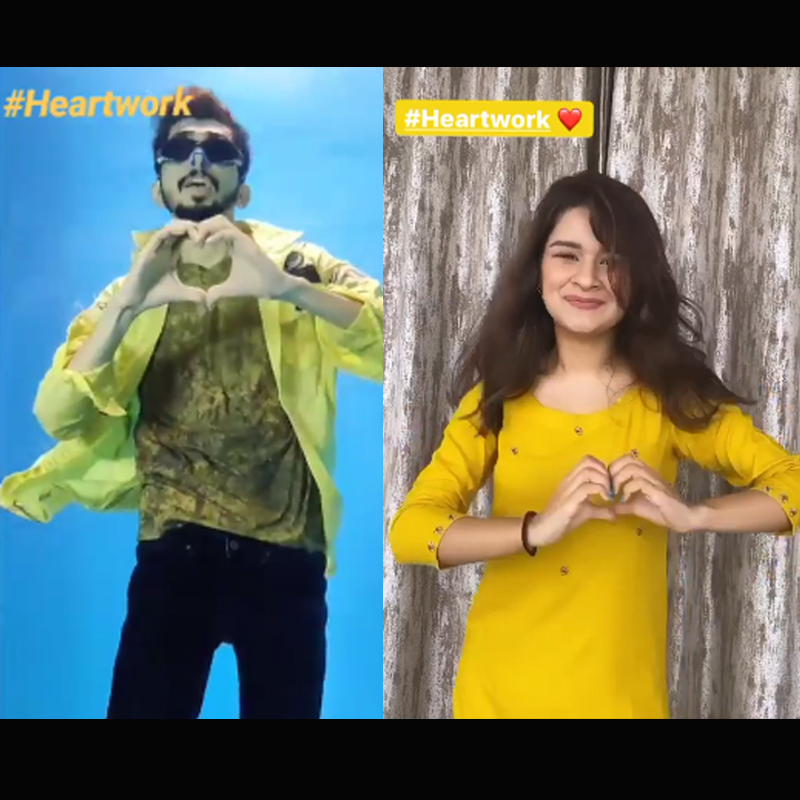
    NEW DELHI: Continuing the chain of gratitude initiated by the LAY’S #Heartwork campaign, popular short-form video content creators transcended platforms to showcase their talent through creative renditions of the campaign ode. The #Heartwork campaign is a heartfelt, emotional ode to all the heroes who are working relentlessly against all odds to bring joy to millions of consumers across the country. As part of the association, prominent social media stars who have garnered mass followers, continue to entertain their fans through their unique and engaging content. 

    Some of the talented creators that are being featured include Jaydeep Gohil aka Hydroman, a mechanical engineer from Rajkot who is also India’s first underwater dancer, Avneet Kaur, a budding reality TV star and actor and Yuvraj Singh aka Baba Jackson, a popular dance sensation who is much-admired for his imitation of Michael Jackson’s moves. Within 48 hours, the videos have got an overwhelming response from the netizens, leading to 2.7 million engagement on social media. 

    PepsiCo India senior director and category Head- foods Dilen Gandhi said, “We recognise the power of talented creators who bring differentiated content and formats to seamlessly connect, entertain and engage with the consumers. The heartwork campaign has touched millions of people across the country through authentic storytelling. In the recent leg of the campaign, we wanted to reach out to a pool of talented content creators who  are constantly engaging and entertaining their audiences through their creative brilliance. We are glad to work with such creators and believe their talent will take them places  irrespective of the platform they chose to be on.”

    Recently, LAY’s got leading singers and artists including Neha Kakkar, Jassie Gill, Dhvani Bhanushali, B-Praak, Shehnaaz Gill to share their renditions of the #Heartwork ode in support of the initiative and to applaud the efforts of the unsung heroes.  

  • Pocket Aces finds growth in brands seeking performance marketing

    Pocket Aces finds growth in brands seeking performance marketing

    NEW DELHI: The lockdown saw a double whammy – people stuck at home with an appetite for content and the inability to venture out and satiate that demand. While content creators tried to produce new and interactive content, this also gave an opportunity for brands to engage with online audiences by working with content creators. Pocket Aces VP sales and brand solution Vishwanath Shetty spoke to Indiantelevision.com on the new trends and shifts being observed in brand engagements in the pandemic and the change in consumption patterns among viewers.

    As everything went into lockdown, shooting from home emerged as a new trend. According to Shetty, “Working remotely has been a great learning experience for all of us as we experimented with different methods of production and created content that was lockdown-friendly. During this phase, we have been able to maintain a steady flow of operations over the last four months. Our first piece of content produced remotely along with a popular whiskey brand saw a phenomenal response. We garnered over four million views on Filter Copy and around 215,000 conversations, as well as an engagement ratio of about 5.78 per cent, which motivated us to know that we are on the right track.”

    There has been a different set of advertisers showing interest as well. “The lockdown has created a unique opportunity for brands to reach out to users through innovative ways and introduce new products specially catered to the needs of the hour. Ready to eat foods, dating apps, edutainment and ed-tech dominated this list. Fitness portals and health brands are actively promoting across channels. The new ‘big thing’ in the market today is Covid2019 insurance, a new offering from insurance brands, which is being widely advertised,” he shares.

    “A lot of other large companies are also moving budgets internally, to promote relevant products, while staying sensitive to the situation at hand.  Food delivery aggregators and services have also increased their marketing and advertising activities. While on a less grand scale, festive sales will still take place, which will, of course, be boosted across channels. So, advertising spends while reduced in some areas, have gone up in others,” he adds.

    Shetty asserts that it would be wrong to say that there has been absolutely no impact of the pandemic on the advertising industry. “Across the board, we have seen spends on OOH, TV, and others significantly drop. As brands and channel partners, we need to relook at our strategies and create value propositions that are mutually beneficial. Essential services and technology-powered brands will be drivers of the economy this year and will be the ones to invest in advertising. Brands are now focusing more on performance marketing, which is the need of the hour and this will continue to drive conversations and spends during the festive season and the rest of 2020.”

    He shares that the second season of Firsts was entirely shot at the actors’ homes, and they saw 30 per cent more views than the first season. “As a result of the success, brands saw this as a good opportunity to engage with their target audiences and in this manner, we continue to produce short format shows. The more such content we uploaded, the higher our engagement rates went, even touching over 13 per cent.”

    The brand's content channels have seen an overall 20 per cent rise in figures. Shetty shares, “The increase in views can also be attributed to curiosity, as audiences were exposed to new formats, which piqued their interest, and contributed to the success of our lockdown content.”

    Pocket aces eSports platform Loco has seen a huge uptake when it comes to the amount of content being streamed. Partnerships with influencers too brought in new users, and today it has 24 million registered users with an average time of 30 minutes spent on the app.

  • Influencers, advertising, data and tech at the core of BrandVid 2019

    Influencers, advertising, data and tech at the core of BrandVid 2019

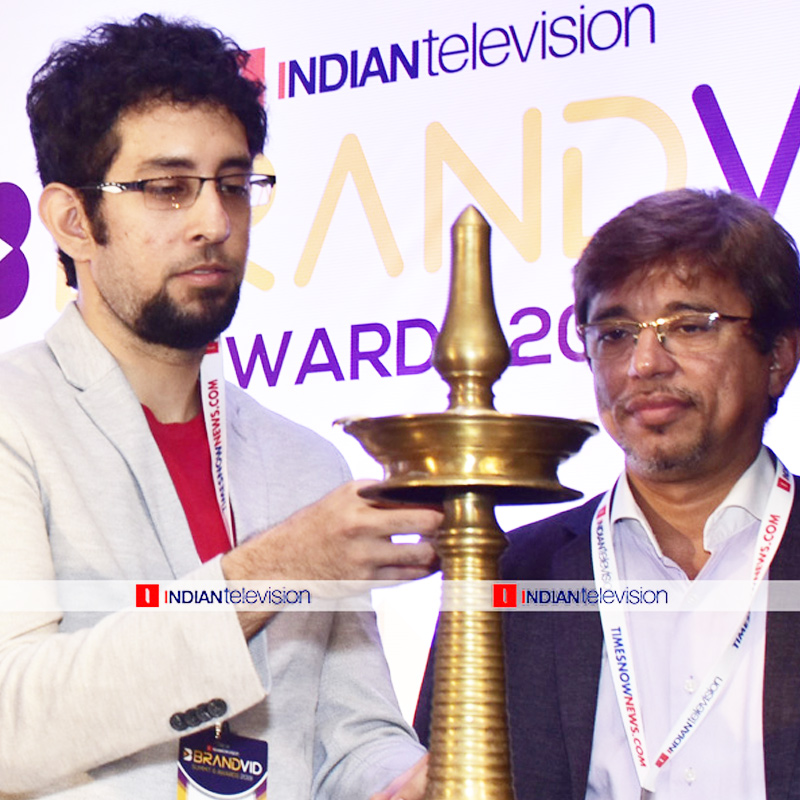
    MUMBAI: The second edition of the Indiantelevision.com’s marquee summit BrandVid 2019 concluded with some interesting and insightful discussions around the video content industry in Mumbai yesterday. The day-long conference saw some of the leading geniuses from the marketing industry talking about how to optimise video content as a brand communication tool and get better results in terms of consumer engagement as well as revenues.

    Indiantelevision.com founder, CEO and editor-in-chief Anil Wanvari opened the event. He mentioned, “Branded content has an emotional connect; it has a story to tell. The global content market is expected to grow to about $412 billion as per various reports out of which 10-20 per cent will be led by branded content.”

    The day was divided into five in-depth sessions and a fireside chats covering the various aspects related to the world of branded video content and was kickstarted by MullenLowe Lintas Group group CCO and chairman Amer Jaleel. He highlighted a key point that most brands seem to have forgotten today – that of not being very obvious to the consumer. “Brands today want to be obvious because of the insecurity of the clutter. Fuzziness is going and directness is returning. If brands want to be relevant today then the way forward is to be random, obscure and slanted,” he highlighted.

    Jaleel went on to make the point that it is impossible for creativity to catch up with the speed at which technology is moving. “Technology is synthetic and artificial and craft needs talking to people, which needs time,” he said.

    The events of the day continued with a panel discussion on ‘Branded Video Rewind’, which covered all the aspects of the evolution of branded video over the years and how the past fiscal was for the industry in terms of video spends, creative allocation, number and nature of brand films.

    Moderated by L&K Saatchi & Saatchi India CEO and Managing Partner Anil Nair, the panel had Sony Pictures Networks India Pvt Ltd head – content, partnerships, new initiatives – digital business Amogh Dusad, Shemaroo Entertainment Ltd COO Kranti Gada, GroupM South Asia president growth and transformation Tushar Vyas, Eros Now group CMO Manav Sethi, and Bajaj Consumer Care president Sandeep Verma sharing their views on the evolution of branded videos.Varma mentioned that today video content is no longer just for virality but is more holistic in the content marketing approach. However, the panellists agreed that there is no sure-shot way to guarantee that your content will hit the right note. Gada said, “Brands are not yet focusing on branded content as a core strategy. It is sporadic.” The panel also drove the point that in branded content, the creative thought should be the main driving force and the brand needs to ride on it not vice versa. The idea is to not force fit the content.

    The next item on the agenda was a fireside between YouTube India director Satya Raghavan and Indiantelevision.com founder, CEO, and editor-in-chief Anil Wanvari. Raghavan voice the opinion of many that today’s thumb-based apps have reduced the attention span to single digit numbers. In such a scenario, YouTube helps its content creators in getting reach. “YouTube’s algorithm helps the average content creator to get 50-60 per cent of its views. People are now optimising their content to get into the algorithm. So, content creators don’t have to worry about reaching the target audience,” he revealed.

    It was followed by a panel discussion on ‘GenZ: The New Video Sticklers’ between Burger King India CMO Srinivas Adapa, Leo Burnett Orchard COO Prashanth Challapalli, Onida CMO Pratyush Chinmoi     and MediaCom west head Priya Choudhary. It was moderated by Worldwide Media VP – Content Studio Vidyut Patra.
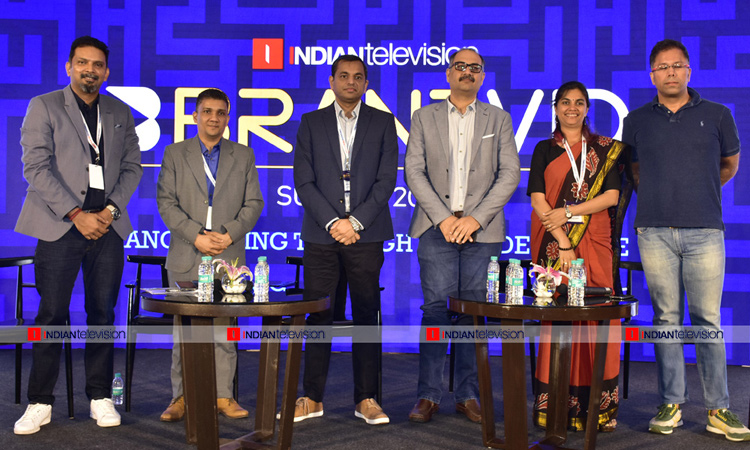
    The session covered how the brands are using video as a vehicle to achieve greater engagement and build personal connects with GenZ. Since Gen Z has a variety of apps to choose from and each with a different mode of working, brands need to pick the platform that is appropriate for its message. For instance, YouTube is for getting reach and long-form content, TikTok is for user-generated content while Instagram is for sharp targeting. “Not all brands have a content strategy. They all have a brand strategy. Therefore, they go after influencers. But, people are on Instagram because they are following their interest, not brands,” said Challapalli. To this point, Choudhary added, “Gen Z sees through influencers who are promoting brands so you have to smart in your strategy.” This is also the generation that is averse to seeing ads.

    The conference further continued with a panel discussion on ‘Moving the needle from exposure to engagement: Still the challenge?’. The session saw L'Oréal India head of media Neel Pandya, Colgate-Palmolive associate director and head – integrated marketing communication and e-commerce marketing Priyanka Gandhi, Syska CMO Amit Sethiya, Mondelez India Foods Pvt. Ltd. sr. category manager – equity and activation: chocolate marketing Sameer Yadav, and ITC Limited head – consumer health care Sanjay Srinivas in a deep discussion on how effective branded content offers advertisers a chance to engage with consumers in a rather intimate manner, incentivising brands to build ongoing relationships and how its vulnerability stands as a challenge to the marketers. The session was moderated by Tonic WorldWide CEO Chetan Asher.
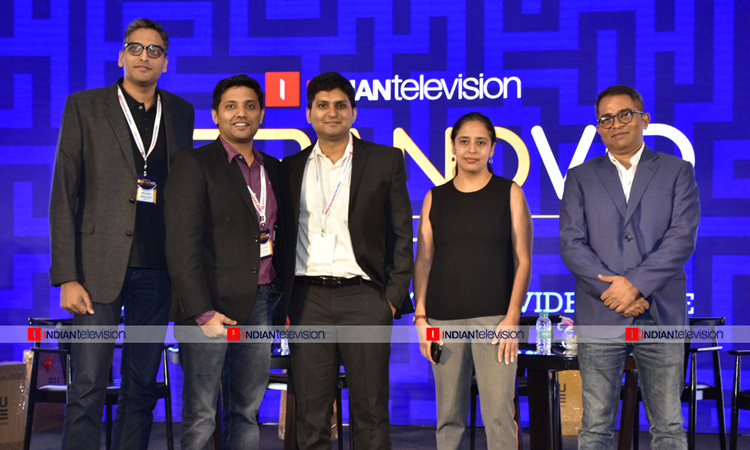
    The panel made the point that content marketers need to decide what does engagement mean to them; whether that is the number of likes and shares or beyond that. “Brands need to know how to integrate with authenticity. Your brand should not stick out. For this, first, there needs to be a purpose and then relevance,” said Gandhi. Pandya also added that brands need to realise that not every avenue can drive sales. The purpose of branded content is generally not to get more sales but to get engagement and visibility.

    The events of the day progressed with a panel discussion on ‘Driving Social’, with TVF global head content and business Rahul Sarangi, ISOBAR COO Gopa Kumar, Mastercard director marketing Puneeth Bekal, GoZoop director strategy Amyn Ghadaili, and Lokmat Media Pvt Ltd senior EVP and head of digital business Hemant Jain. The session moderated by Nirvana Digital CEO Pinakin Thakkar covered all the important aspects of using social media and related technologies effectively for telling memorable brand stories.
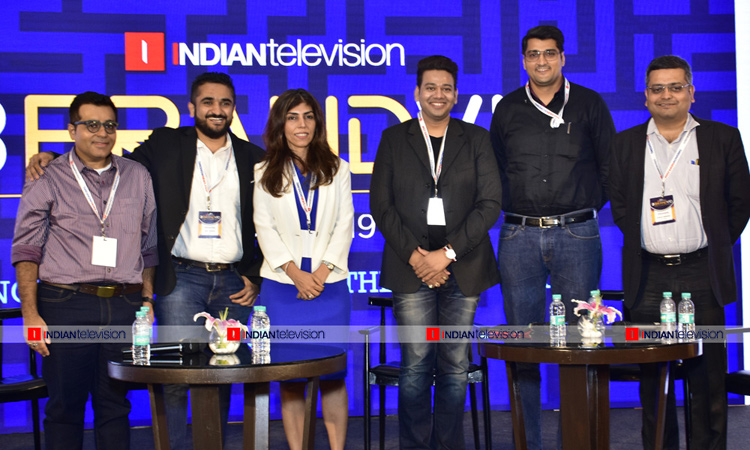
    TVF’s Sarangi said, “Brands need to have a personality for people to engage with them.” On the current trend of using influencers to drive sales and visibility, he pointed out that they themselves are content creators. While everyone is thinking of digital as the upcoming big medium, Ghadaili said, “Digital is not a medium. It is a space that has many mediums.” The panel also made the point that in this space what is important is that the product has value and the influencers also believe in it.

    The final session on the agenda was a panel discussion on “Understanding the audience: Data & tech in content creation (Brandfilm breakthrough)” spanning insights into how data can be better used to understand audience and what role can technology play in compelling storytelling.

    Part of the panel were Prime Focus Technologies VP creative services Bhaskar Sitholey, Shemaroo head of marketing Rahul Mishra, Byju's App marketing head Atit Mehta, Logicserve Digital co-founder and CEO Prasad Shejale, JioGenNext VP advertising Mohit Kapoor, and VDO.ai co-founder Arjit Sachdeva. The session was moderated by Qyuki Digital Media co-founder and managing director Samir Bangara.

    Mishra highlighted that digital had shifted the content creation balance. “Nowadays, consumers are creating content on digital and they are the content creators now,” he said. On the usage of data, Mehta felt that data inspires marketers to take bold steps. “If someone is spending on the world cup, then he is also spending on digital,” he said. To this, Shejale added the way forward is both data-driven and data inspired content.

    The event concluded with a gala awards event night, the first Indiantelevision.com BrandVid Awards

  • One Digital Entertainment to focus on content localisation, international expansion and tech innovation

    One Digital Entertainment to focus on content localisation, international expansion and tech innovation

    MUMBAI: Along with focusing on reaching out to global audiences, digital content network One Digital Entertainment is also focusing on the niche regional ones. Meanwhile, localisation of content is a key focus area this year.

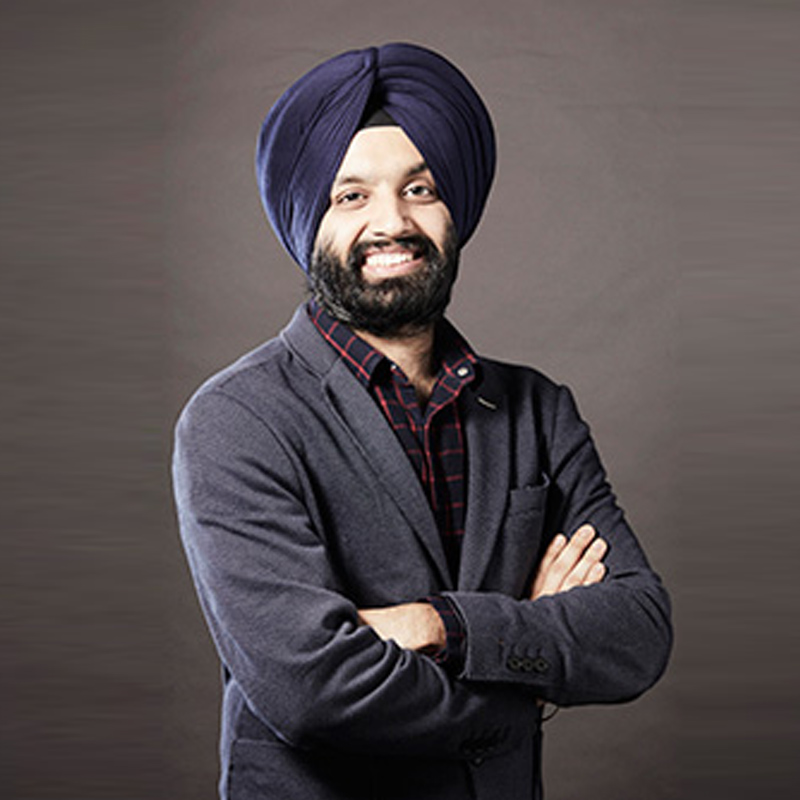
    “Besides the content for Hindi and English speaking audiences, we have a lot of creators producing content in regional languages like Punjabi, Marathi, Bengali, Haryanvi, Bhojpuri, and Gujarati etc.  And we are strongly looking at expanding it. The localisation of content is a key focus area this year,” One Digital Entertainment (ODE) COO and co-founder Gurpreet Singh commented in an interview with indiantelevision.com.

    The company is also planning to explore other international markets especially Southeast Asia and the Middle East. Singh added that the company’s popular in-house IP India’s Digital Chef is in the production phase with the scale being bigger than last year. More distinct IPs are being launched in the music, comedy and fiction spaces as well. ODE produced Lockdown for ZEE5 in partnership with Badshah and talks are on with other OTT players as well.

    ODE is now diversifying into new avenues and sticking to the core objective of scouting talent and building brands. Boasting a network of over 1000 creators and content partners, it is also aiming at building a collateral revenue model for clients that are sustainable in the long term with minimum risk career opportunities.

    The content network is currently managing content creators and channel partners delivering over 5 billion views every month. ODE manages creators like Badshah, Mostly Sane, Sanjeev Kapoor, Raftaar, Armaan Malik, Shankar Ehsaan Loy, Anubhav Sinha, Rannvijay, Food Food TV, Viacom 18 Motion Pictures, Excel Movies. It has also developed strategic partnerships with YouTube, Saavn, Hungama, Spotify, VH1, MTV, Gaana, iTunes, Facebook, Twitter and Dailymotion.

    “Our core thought is to create a self-sustaining digital content ecosystem by empowering creators with multiple support functions ranging from content strategy to production, post-production, artist management, marketing, collaborations, distribution and monetisation. We aim at transforming our creators into sustainable brands instead of just getting them the ‘likes and views’ sticking to our philosophy of building brands and not just views,” he emphasised.

    On the back of past success, the company now gets almost 200-300 emails every week of upcoming or established creators reaching out to join the network which are later reviewed by the artist onboarding teams. It has a revenue share model with the creators. Based on the associations with its clients and the ongoing investment, the IP sharing varies from deal to deal where it’s either solely held by creators or co-shared between ODE and creators.

    “The revenue mechanism and processes have been able to give all the artists their deserving royalties, revenues etc. in a transparent manner. We have learnt that it is imperative to foresee this business in a holistic way without which most hard-work would stand void. Scalability of this business only comes to effect with the formation of an ecosystem with a full life cycle with coerced services and a revenue stream,” Singh added.

    ODE’s ability to bring cutting edge, first-hand technology to young talented creators is what differentiates them. He added that using machine learning and AI in understanding content consumption patterns and by combining data with their own personal learning, they have been able to achieve very high ROIs. 

    “We recently announced a strategic partnership with Holosuit – the world’s first ever affordable, bi-directional, wireless and easy to use full body motion capture suit, that acts as a bridge between the virtual & real world and shall be extending this technology to our creators to produce next-generation content. Some heavy investments will also be made into building the offline connect between these creators and fans via multiple on ground events throughout the year,” he added.

    “Our self-service content distribution and influencer management platform OneAxcess.com has enabled hundreds of creators to manage their content and distribute across multiple platforms completely on their own with complete transparency and performance reports. Our association with Holosuit will further redefine the creation of next-generation AR/VR content by our creators,” he signed off.

  • Brands willing to spend double digits for branded content: TVF’s Vijay Koshy

    Brands willing to spend double digits for branded content: TVF’s Vijay Koshy

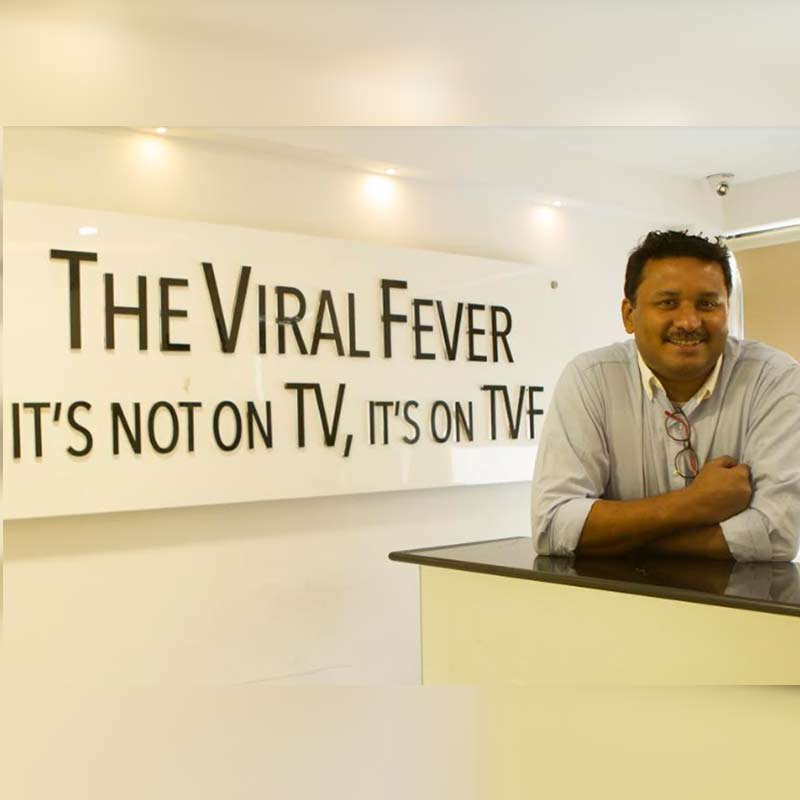
    MUMBAI: They are viral, that's for sure. Churning out millennial-relatable content, The Viral Fever (TVF) is not only one of the leading content creators in the digital space but can be termed as a pioneer too. It has been creating web-series with killer brand integrations from a time when the idea of branded video was very blurry.

    In an interaction with Indiantelevision.com, TVF brand partnerships head Vijay Koshy shared how TVF has evolved over time, coping with changes and challenges.

    The birth of online video content saw urban youth as the target. It is only recently with cheaper data  that tier II and tier III cities changed the orientation and strategy of content creators. Koshy said that TVF was very clear from the beginning that it would make content for the “real India”.

    “So, when it started itself we were very clear that we will cater to the real India. Real India does not necessarily reside in Bombay, Delhi, Bangalore. Meirut, Agra are as important as Bhubaneswar, Guwahati, Lucknow, Jalandhar. Now audiences from tier II cities are also consuming digital content thanks to better data penetration with brands like Jio. If it’s a good story, it will cut across country, they will relate to it,” Koshy said.

    The audience is always the hero of the story. The focus remains on creating stories which can connect to the life of audiences. Once the connection is established, then it will connect brands with core content.

    Online is experimenting and so is TVF. Despite  integrations in categories like auto and FMCG, it still saw more than half of its business came from e-commerce players. The latest one was with Brand Factory for the series Weekends.

    “Brand Factory has innovative ways of marketing and in that sense, it has always been open to experimenting with new formats. Brand Factory specifically has been always very proactive and talks to a very young audience unlike other brands in its category. When we worked with them, they were very clear that they wanted the brand to be thematically integrated into whatever the content would be,” he shared.

    TVF is also working with the BSFI industry, which is an interesting category. AMFI is one of the largest partners that TVF has on board. “Everyone knows mutual fund is good but to talk about what’s the lowest amount that we should start, where I can invest, that kind of important communication can happen very naturally through web series. So, brands are willing to experiment and try out web series. I think a lot of brands are now, at least, segregating double-digit share as far as branded content is concerned,” he added.

    According to him, a lot of brands are realising digital demands and are backing that up with budgets for branded content. He also added that as per his estimation eight out of ten brands are recognising the importance of digital platforms.

    Talking about the growth in investment in branded videos, he shared that brands are asking pertinent questions about pre-roll and display ads including completion rates, click rates, overall effectiveness and ROI etc. Some brands, therefore, want to take the road less travelled and invest in branded content.

    “Every time you create content, you are experimenting with change. Audience taste in this segment is also changing so dramatically that you need to be really close to them to understand their passions, motivations so that you can understand their content needs and preferences. The way we go about is telling brands that if you are spending on digital, start in a small way,” Koshy added.

    When it comes to TVF, revenue model is based on partnerships with brands. It has to maintain a fine balance of good storytelling while keeping the brand requirement also in line, which is not very easy to achieve. According to Koshy, over the years, TVF has managed to master that.

    However, TVF is evolving and not anymore limited to web content only. It is getting into other things like influencers, where it will collaborate with well-known influencers exclusively to help them create content. It is also experimenting with reality shows, while getting into the regional space in a big way starting from the South.

    Moreover, it also has its own platform which means brands can do pre-rolls and brand campaigns also on its content. International brands like Tuborg, Redbull, along with lot of local brands like Tata Motors have done a lot of pre-rolls with TVF. Hence with a large spread network, the company is confident that it will have multiple offerings for new brands who want to get into the digital space.

    “It’s a fine line. Often our brand partners have real concerns on the amount of visibility or ensuring that the brand values are intact. Because we have been doing this for so many years now, we understand what brands want. The biggest thing we tell them if this content does not work out, you can go back to selling cars, shampoo, something else but for us, it is our reputation that is at stake. We will do our best to make the content work,” he commented while asked about creative freedom in branded content.

    “So, when that kind of reassurance comes on, they tend to agree to take that risk eight out of ten times. Even brands before campaigns go on and research everything possible but get rejected. In today’s world brands are also willing to experiment because they are seeing their communication is not impactful as it used to be earlier,” he added.

    After ruling the space for so long, creating exemplary brand integrations, it has its own defined audience giving brands a reason to spend. What’s important for team TVF is that how does it engage with brands so that they come back and keep working with them on a regular basis. 

  • BrandVid 2018: Emerging importance of content creators in branded videos

    BrandVid 2018: Emerging importance of content creators in branded videos

    MUMBAI: With the rapid change in the online ecosystem, marketers are gradually increasing their investment for branded content. Subtle product placement and proper storytelling in branded videos are becoming two key elements of video marketing. Facebook and YouTube have emerged as the most important platforms while they are working closely with brands as well as creators.

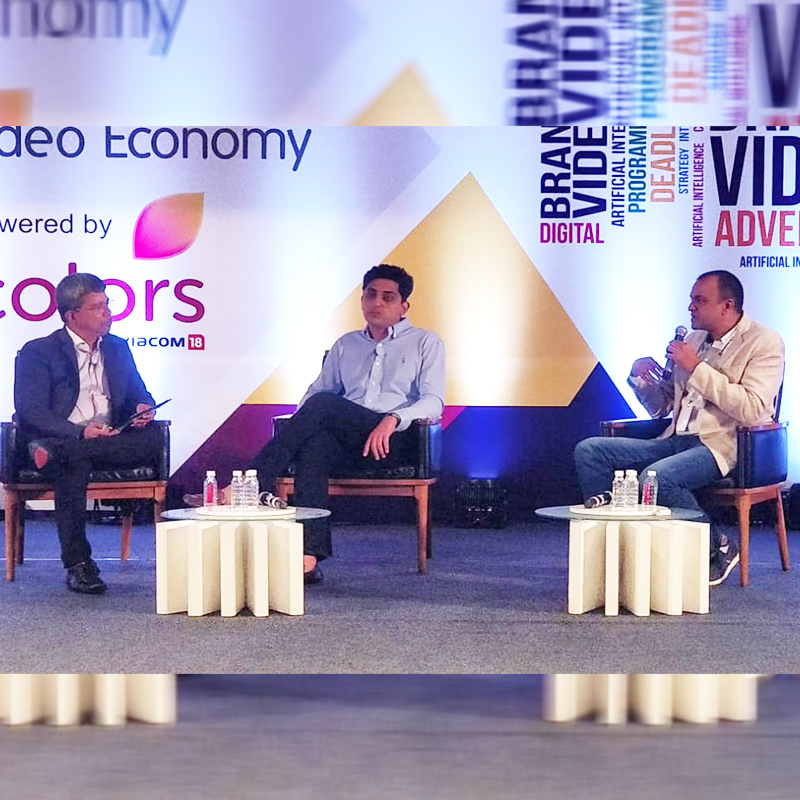
    In the first edition of Indiantelevision.com’s BrandVid powered by Colors, spokespersons from the two tech giants spoke about their experience in new video economy. YouTube India entertainment head Satya Raghavan and Facebook India entertainment partnerships head Saket Jha Saurabh discussed what each of them is offering to brands, how brands are operating in the respective ecosystems and what could be the best practices for them to follow.

    Talking about branded videos and digital films, Raghavan said YouTube always thinks about three primary stakeholders which are the consumers, creators and advertisers. Whether it is about integrating a brand within the existing content or a brand wanting to create content with creators, these three elements of the ecosystem always create amazing opportunities together. Going back in time, he mentioned #CrashThePepsiIpl campaign when they discovered all of these three stakeholders actually ended up coming together to make this program a huge success.

    “Last year we started new format called speed dating where we had brands give briefs to our upcoming creators and creators then got 10 minutes to pitch the solutions to brands and out of that also emerged pieces of content. I think we are just at the beginning of the interplay of content integration and branded content,” Raghavan said.

    Facebook has also started out building communities which can be monetised. As a platform, Facebook sees video as a form, not substance. “We feel that from Facebook and Facebook family of apps’ perspective, the idea is how you solve or customise solutions for brands. I think that’s really what we focus on,” Saurabh commented.

    While Facebook has definitely been the dominant one in video marketing ecosystem, he also mentioned how other apps from the group are also growing relevance. As an example, he spoke about Make My Trip’s association with WhatsApp, where the entire booking process was moved to the messaging app, and the company saw a huge fall in call centre complaints. In this case, Make My Trip leveraged the intimacy and inter-connectivity on Whatsapp to engage consumers.

    Fashion and beauty brands have been optimising Instagram on a great scale. “These people understand that visual storytelling is really the thing to do, especially when you are trying to reach a younger audience. Instagram is really a choice when it’s visual storytelling,” Saurabh added. According to him, brands are increasingly realising they have to do platform-first, mobile first content as well as creating customised videos.

    Speaking about what brands can achieve on YouTube, Raghavan said a consumer comes to YouTube to either entertain himself or inform or educate. According to him, it’s important for brands to understand this behaviour and even YouTube spent a lot of time trying to explain brands how to fit themselves into this continuum of things. 

    His advice for brands is that they should think about how they can be a part of all of these three types of storytelling whether its entertainment, education or information. “We are seeing a lot of that happening in financial services space now because brands are starting to penetrate deeper. Earlier, very few of us dabbled on things like the stock market or even mutual funds. But, that category is seeing amazing penetration at this point in time. So, a lot of brands from that area come to us and talk about what they can do about all of these three things.  This game is still to be played and in a couple of years we will see some amazing things happening in that space,” he added.

    Both of the experts were asked if a brand can become media destination for customers where they build a direct engagement with storytelling. Saurabh gave a few niche examples such as Craftsvilla’s birth and growth was aided by Facebook. Royal Enfield is also doing a great job in community building. In the case of Instagram, he gave the example of fashion designer Sabyasachi Mukherji’s page which depicts good storytelling.

    “Brands need to build the community ahead of the transaction, not when they will transact. It may lead to a transaction or different levels of engagement. The fact is that our goal is to make brand managers understand that whether it’s brand marketing or performance marketing, Facebook has solutions for both but building a community and having a certain thematic play in the market is very important,” he said.

    However, while all the gaga is over traditional brands who are investing in branded content, Facebook has noticed that creators are becoming brands as well. Hence, this is about content brands also who are finding their voice on the platform and being able to monetise what they do best.

    Agreeing with him, YouTube’s Raghavan put it in a little different angle. According to him, best practice a brand can follow is actually to think like a creator. “We encourage brands to think like a creator. Create consistent output of content and appreciate the fact that content has always been there. Think like a creator and work with our creators. They understand consumers and that’s how they continue to create content day in and day out. It’s really about the message,” he commented.

  • MipJunior 2014: Broadcasters look for creative content creators to attract kids

    MipJunior 2014: Broadcasters look for creative content creators to attract kids

    CANNES:  MipJunior 2014 has established one thing for all kids’ content creators and broadcasters: kids want to watch their favourite programme at the place of their choice and time. But the big question now is how to reach these kids who are consuming content using different platforms? This remained the main focus of the panel discussion on ‘What do buyers want: Emerging multi platform acquisition trends’ on day two of MipJunior 2014.


    While a lot is being spoken about kids moving to the second screen to consume content, Australian Broadcasting Corporation head of children’s TV Deirdre Brennan informed that in Australia even now close to 89 per cent of children’s viewing happens on traditional TV.


    Today, kids are ready to watch the content over and over again. “With so many platforms, we will now have to devise ways to reach to these platforms,” said Disney Channels Worldwide VP worldwide programming strategy, acquisitions and co-productions Karen K Miller.


    The increasing number of platforms poses another problem, of not being sure about which platform the consumer is consuming content from.  Citing the example of Germany, ZDF head of international co-production and acquisition Nicole Keeb said, “90 per cent of content viewing happens on TV. Being a public broadcaster, ZDF is also obliged to deliver content for TV first, followed by online or other platforms.


    Broadcasters world over feel that the television monitoring data is still evolving. “The quality of data is important, since we want to monitor the behavior of the consumers. Better data also helps us strategise better and know which platform is better for our audience,” said Cartoon Network VP content acquisitions and co-productions Adina Pitt.


    The session also delved on what these tech-savvy kids are doing on portable devices. “They are watching their favourite shows, playing games, they are using it in every way possible for entertainment,” informed Miller.


    With numerous kids’ channels offering almost the same content, it becomes important for channels to ensure that kids associate with the brand. “Kids are smart. They know the brand and associate with it. For us, word of mouth publicity helps. In fact the consumer becomes the marketer,” said Pitt.


    The broadcasters, while they have their core target audience, they also feel that there should be entry points. “So while Disney is considered more of a girls’ channel, we do have entry points for boys,” added Miller.


    For Australian Broadcasting Corporation, until a few years back, it had started looking at children as a separate audience. “We have now started looking at bringing both parents and kids together through our content,” said Brennan.


    Brennan also feels that reality shows have seeped in Australian television industry. “I want to bring back storytelling on television,” she opined.


    Another key point brought out during the session was that while internet has increased access to content, it is the responsibility of the content creators to ensure that kids are able to find the content.


    On a parting note, when World Screen group editorial director Anna Carugati, the moderator for the session, asked what was missing in the kids broadcasting space, Amazon Studios head of kid’s programming Tara Sorensen said, “There is a need for more creative content. The creators need to spend time in creating content.”