Tag: Content creation

  • Havas Media Group India launches Havas Content

    Havas Media Group India launches Havas Content

    Mumbai: Havas Media Group India has launched its specialized content division called Havas Content. With the launch, the media agency conglomerate will focus on leveraging dynamic content to help brands create meaningful media experiences and make a meaningful difference in consumers’ lives.

    Havas Content aims to bridge the gap by offering meaningful content solutions that not only entertain but also educate, inspire, and help consumers, map the brand’s performance to its content effectiveness and boost business returns.

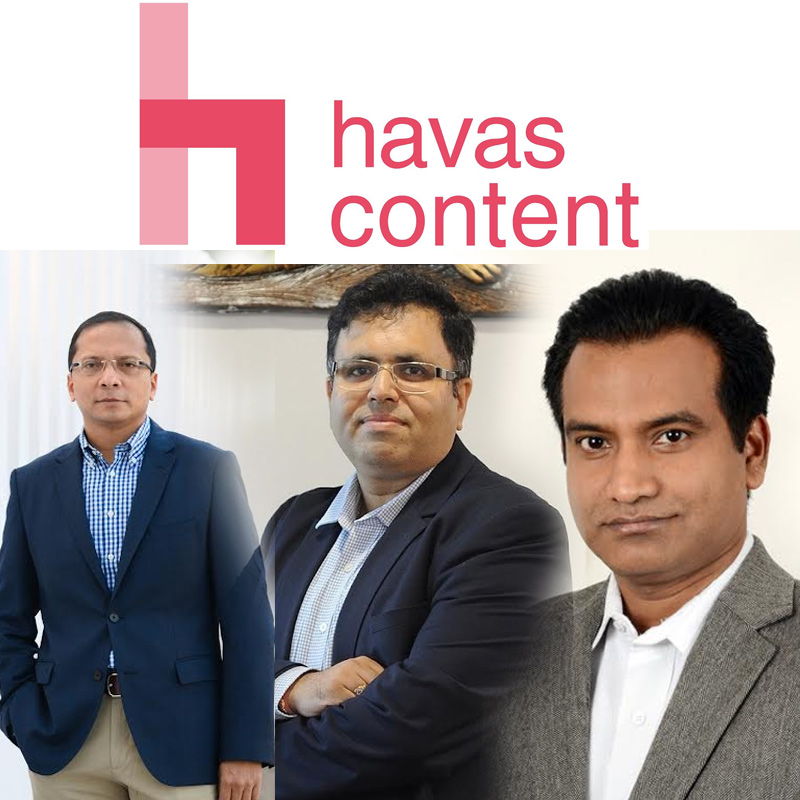
    Havas Content will be led by Uday Mohan, President and Chief Client Officer, Havas Media Group India. To further strengthen the division, the agency has made two key hires. Prachi Narayan has joined as Vice President, Content and Shivani Kaushik as Content Manager, who will support Uday in scaling this offering across Havas Media Group India’s client portfolio.

    With the division’s in-house capabilities of analysing data and driving insights, Havas Content is armed with a scientific approach to developing meaningful content which in turn resonates with the Group’s core philosophy of building meaningful brands.

    Over the last few years, Havas Media Group India has witnessed a 5x growth in the content space, with some clutter-breaking content created for prominent brands like Hyundai, OYO, Swarovski, Swiggy and Tata Motors (CVBU).

    Havas Content has also adopted a future-first approach and is helping brands navigate today’s dynamic content ecosystem that is constantly evolving with new trends like AR, VR, NFTs, and Metaverse, which has led to its sweeping success in India.  

    Speaking about the launch, Havas Group India Group CEO Rana Barua, said, “We understand the power of good content and the launch of Havas Content couldn’t have come at a better time. The wide range of work that the team has done for a varied set of clients in the content space, and the impact it has made to our client’s business made it a logical step to launch this as a separate vertical and further scale it up. It’s another step towards further empowering the brands that partner with us, and help them craft more meaningful stories.”

    Havas Media Group India’s CEO Mohit Joshi said, “Content has been an integral part of Havas Group’s Meaningful Brands proprietary study each year. In the past, the study has revealed that Content is falling massively short of consumer expectations. With the current content overload, misinformation, fake news and the pandemic-driven shifts in consumer behaviour, it has become more imperative than ever to create differentiated content that not just grabs the consumer’s attention but also helps & rewards them, making the brand a seamless part of the consumer’s journey. I am confident that Uday, along with Prachi and Shivani will make the content division the best in the business in India.”

    Uday Mohan further added, “In this new world order, consumers are constantly on the lookout for brands with a greater purpose, brands that can impact their lives positively. Content has proved to be an important tool in making consumers see that purpose. Havas’s reputation globally in the content space is unparalleled. With Indian brands becoming content-conscious, we believe this was the perfect time for us to officially launch our content division in India. Bringing together the combined expertise of Havas Village, and the content powerhouse within the Vivendi network, we are confident Havas Content will become a one-stop-shop for all our client’s content needs.”

  • Wondrlab appoints Sameet Ali Soni as content lead

    Wondrlab appoints Sameet Ali Soni as content lead

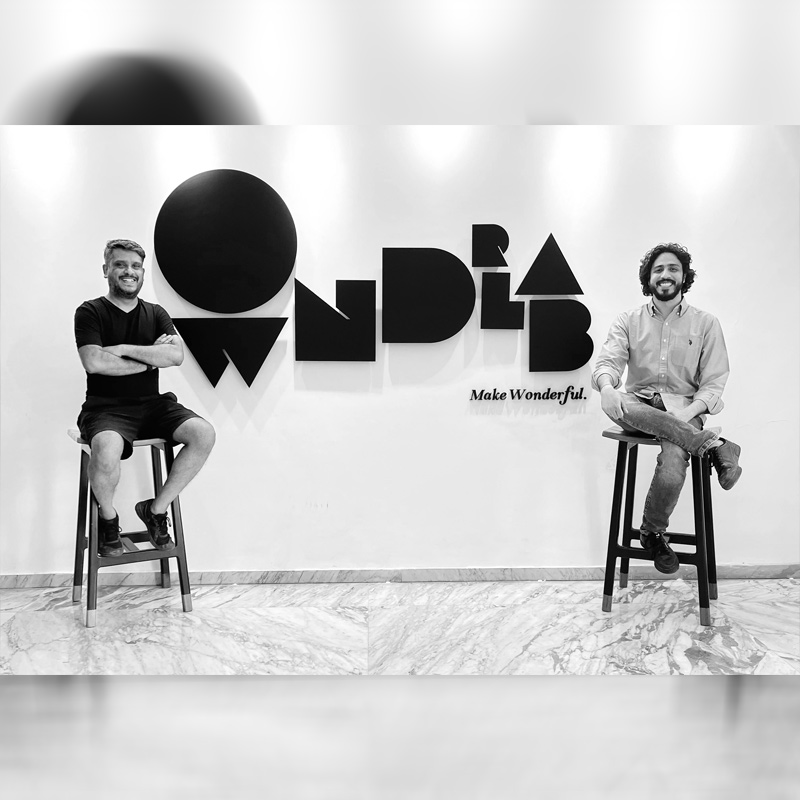
    Mumbai: A data-driven influencer marketing platform, Wondrlab has appointed Sameet Ali Soni as content lead. He joins from Wunderman Thompson Bangalore, where he was assistant vice-president (AVP) and senior creative director.  

    At Wondrlab, Sameet will oversee the creative integration and content creation on a large set of key accounts. He will report to the What’s Your Problem’s (WYP) co-founder and CCO Amit Akali. For the record, Wondrlab has acquired WYP in 2020. 

    Sameet comes with nearly 17 years of experience in advertising, having worked on brands like ITC Foods, Kingfisher, Sony ESPN, Lifestyle, Britannia (digital), Rohan Builders and McDowells.  

    Speaking in this context, Akali said, “We’ve done away with the 13/14 designations that other agencies have. Our senior-most creative positions are our ‘content leads’ and ‘content directors’. Sameet is someone I’ve worked with at the beginning of his career. Even then, he was a special talent creating the iconic Bingo Mad Angles ‘Board Room’ film.”

    “While he brings many more skills with him now, he brings the same love for advertising. The last year (our first at Wondrlab) has been amazing with us winning some of the biggest and most exciting brands. That is looking for the platform first, new-age, truly integrated work. The coming days are full of opportunities and I am sure someone senior and experienced like Sameet and Rahul will help us make the most of it,” he added.

    “What’s Your Problem and WondrLab have been doing some wonderful integrated work for all its brands with fresh platform-first ideas. I am excited as I set a path on a new journey and of course, working with my old boss and mentor Amit Akali,” Soni added further.

  • We want to make India a powerhouse of content creation: I&B minister Anurag Thakur

    We want to make India a powerhouse of content creation: I&B minister Anurag Thakur

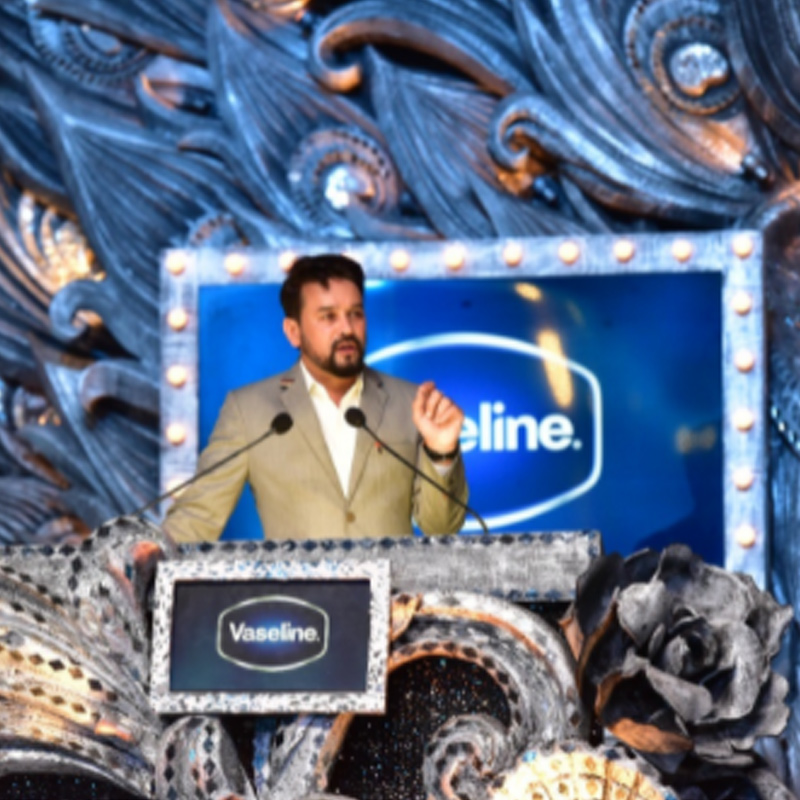
    Mumbai: Terming India as the world’s largest filmmaker, union minister of information and broadcasting Anurag Thakur said a lot needs to be done to make India a powerhouse of content creation in the world.

    Addressing the closing ceremony of the 52nd edition of the International Film Festival of India on Sunday, the union minister said there was also a need to scale up regional festivals. “We want to make India the post-production hub of the world by leveraging immense tech talent of youth. We want to make India the destination for films and festivals, we want to make India the hub of world cinema, and the most favoured place for storytellers.”

    Thakur said the government is committed to strengthening the National Film Development Council (NFDC). “Through this, you will get the opportunity to make even such films which are doubtful of giving a financial return, we will work together to showcase India’s culture and tradition across the world.”

    The minister also invited the global community to come and shoot films in India. “Please come and shoot films in India. The Film Facilitation Office will facilitate you with all help you need, from one state to another.” Speaking about the upcoming film city in Uttar Pradesh, the minister said that the state is coming up with a 1000-acre film city. “They are just waiting for the right people to come and invest in.”

    Keeping up with the winds of change, the latest edition of IFFI also saw the historic participation of all major OTT platforms such as Netflix, and Amazon Prime through exclusive Masterclasses, content launches and previews, curated film package screenings, and various other on-ground and virtual events. The participation of OTT platforms is set to become a regular feature in future.

    “More than 50 films were screened simultaneously on OTT platforms. 10 Master classes and In-Conversation sessions were organised in collaboration with OTT platforms,” said Thakur. “IFFI has embraced new technologies, platform choices of audiences and has kept pace with changing times. We have also showcased the best films from BRICS nations and we hope that this partnership blossoms further.”

    The 52nd IFFI presented a diverse catalogue of more than 148 foreign films drawn from 73 countries, and witnessed 12 world premieres, seven international premieres, 24 Asia premiers and 74 India premieres. 75 Indian films were screened, 17 of them specially selected under India @75 Section. As many as 10,000 delegates from across the world, including filmmakers, students and cine enthusiasts participated in a hybrid format. There were 234 screenings in which nearly 450 hours of movies were screened. Total hours watched online comes to a whopping 30,000 plus hours.

    Hungarian filmmaker Istevan Szabo and Hollywood filmmaker Martin Scorsese received the coveted Satyajit Ray Lifetime Achievement Award. Noted lyricist Prasoon Joshi and actor Hema Malini were awarded with Indian Film Personality of the Year Award.

    “The next edition of IFFI will be held next year at the same time and place as that of this edition, i.e., during November 20 – 28, 2022 in Goa,” said the union minister.

  • Trell’s latest masterclass gives tips to budding content creators

    Trell’s latest masterclass gives tips to budding content creators

    Mumbai: Content creators today have become one of the crucial aspects of product marketing as they influence the decision of buyers, and make recommendations that are beneficial to both the brand and the consumer.

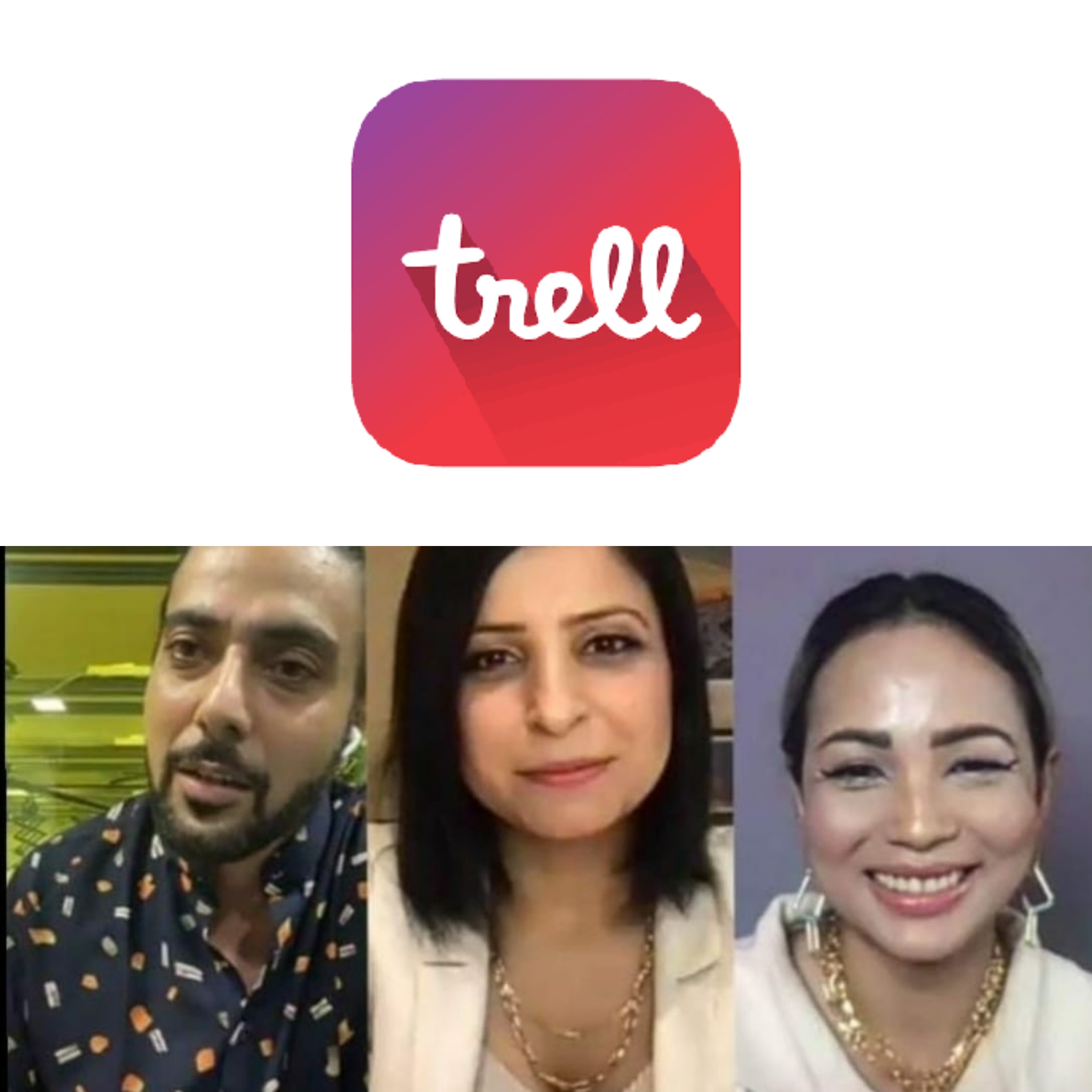
    Against this backdrop, lifestyle content app Trell recently conducted a masterclass with celebrity chef Ranveer Brar and Trell content creator Nilu Thapa, in which they shared their professional experiences and useful tips for budding content creators.

    “The only secret recipe about good content I have nailed down is that I took some time to discover myself in front of the camera through my content,” said Ranveer Brar. “In order to be authentic and to be able to connect with people, it’s important to learn and recognise to be yourself, be unique, and comfortable with your flaws.“

    “The biggest life lesson that I can share is to be patient and consistent with your content. A viral video doesn’t ensure huge followers but a viral video does ensure exposure,” he further added.

    “It is very important to have a vision when you create content, to have your own identity, vibe and signature,” said fashion and beauty influencer Nilu Thapa. “If you create the content blindly by following trends, it might not appear authentic to your audience, and you won’t be able to relate to it as well. It’s essential to create content which is organic, unique, and of the best quality.”

    “The aim of this Masterclass was to give a platform to content creators to learn from renowned influencers and better their content creations on social media,” said Trell’s VP & content head Parul Menghani. “We plan to do a lot of initiatives for content creators and provide them with better opportunities which can help them to grow along with Trell.”

    Trell has content creators creating content on various categories including health and fitness, beauty and personal care, travel, food, and more.

  • Why Rana Daggubati’s South Bay is a content platform with a difference

    Why Rana Daggubati’s South Bay is a content platform with a difference

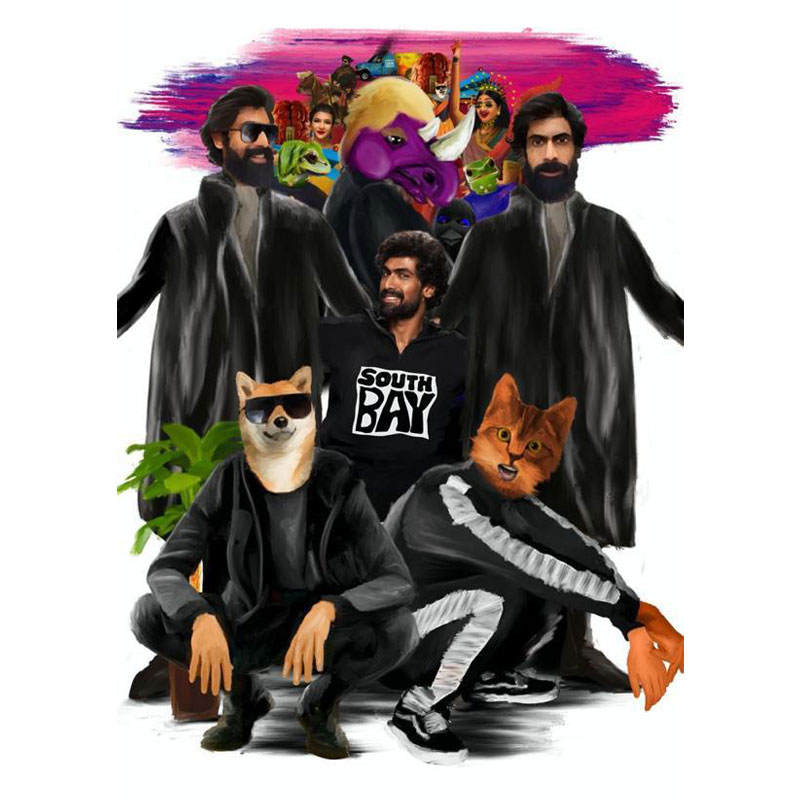
    MUMBAI: People tend to have a fixed perception when it comes to actor Rana Daggubati – that of a consummate action hero. What they don’t know is that the Baahubali star is a man who dons many hats – producer, VFX supervisor, master of the gab, entrepreneur. Recently, Daggubati launched his very own YouTube channel South Bay, marking his entry into the world of content creation.

    Rana’s South Bay will offer content from varied languages with duration ranging from ten seconds to ten hours. The actor’s intent behind this YouTube channel is to provide a platform where not only mainstream talent will be able to create cultural content but also to shine the spotlight on upcoming independent creators.

    South Bay will host programs cutting across genres and formats: from live chats, snackable short forms, news, music, animation, to fiction & non-fiction – there is enough and more for everyone. Daggubati described it as a launchpad for filmmakers who wish to go on major OTT’s.

    The driving force behind South Bay is to make it possible for those in the alternative sub-culture space to come into the mainstream, highlighted Daggubati. The idea is to start off with the YouTube channel and then take on Instagram’s IGTV. Their long-term plans involve hosting all content on their own platform – Southbay.live. On festival days, there will be two-hour-long live streaming sessions. He’s excited about his show Why Are You, which will feature Bhuvan Bam, Taapsee Pannu, Karan Johar, Ram Gopal Verma, Kangana Ranaut, Nargis Fakhri and many others. As the show progresses Daggubati wants to rope in politicians for the commentary piece.  

    “We wanted to bring a system of fair play where the large part of user base is scrolling and watching OTT content where there is so much to watch. But the idea hear is to start curating that content and then go back live system. First source of monetization is going to be through advertising and secondly through YouTube and Instagram monetization,” he said.

    For Daggubati, cultured content has always been on the cards but there was a dearth of platforms that were picking up content based out of India. Hence, he decided to launch a channel that focuses on India’s pop culture and something that address the newer generation. He added, “I have observed that in India everything is growing except cultural content. If something is sub-cultured ten years ago, it still continues to be sub-cultured and it never takes mainstream stage. We wanted to go digital because that is where the audience is. Another important aspect is the creator owns the IP as long as he lives. The problem with most content that is built, is the creator loses the value or the IP very quickly but here we are making sure we have enough creators who will stay with us for a longer period of time. We will help them with the monetization and grow further.”

    With its millennial news segment, South Bay will tap into the rising trend among young internet users to consume news on social media. For the uninitiated, 15 years ago Daggubati owned an animation company, but nothing worked out. Now, through his YouTube channel he wants to chase his passion with shows like Irreverent, promises to be a gamechanger in the Indian animation ecosystem. Unscripted content is also in the pipeline, with two shows featuring bonafide South superstars – Coming Back to Life with Lakshmi Manchu and Secret Box with Shruti Haasan – which will bring together personalities from across the globe for a conversation on life post the pandemic. For music enthusiasts, Sublime Collective will serve as a six-month-long campaign to promote handpicked independent artist across the country. Clearly, the programming line-up is packed with edgy, engaging and entertaining offerings.

    Viewers belonging to the age group of 16-45 years are South Bay’s primary target audience. For now, most shows will be in South Indian languages, while a few are going to be in Hindi. Post the first live show, Daggubati will start dropping content in independent languages. He has set his sights on bringing premium curated content in a free-play system. By generating a global awareness for Indian content, he wants to connect creators the world. Being present on the digital platform will provide them a chance to come together and build an overall ecosystem.

    South Bay has also collaborated with Triller as their exclusive and official short form video content partner. Through cross promotions South Bay and Triller will promote the respective content, programming of every single show will be packaged and uploaded specifically for the Triller format.

    Much like the characters he plays on-screen, Daggubati has undertaken a daunting endeavour in building a multi-cultural content platform that gives independent creators the chance to showcase their talent. But he’s confident and has developed a taste for success – be it on the big screen or small – and he’ll draw on his well-spring of diverse know-how and flexibility to ensure that his latest experiment pays off in a big way.

  • Balaji Telefilms sees stronger Q2 FY21

    Balaji Telefilms sees stronger Q2 FY21

    KOLKATA:  The Ekta Kapoor headed content production house Balaji Telefilms on Monday reported a consolidated revenue of Rs 78.3 crore in the second quarter, up 123 per cent from Rs 35.05 crore in the first quarter. The company has narrowed down EBIDTA to a negative Rs 12.4 crore from the negartive Rs 26.3 crore in the previous quarter. The company has posted a net loss of Rs 19.5 crore again an improvement over Rs 27.9 crore in Q1 2020.

    In a regulatory filing, Balaji Telefilms has stated that content production has resumed slowly leading to higher production cost of Rs 60.5 crore. 176.5 hours of TV content have been produced in the quarter. Six shows were on air during the quarter and the company is expected to launch two new shows in the coming quarter.

    “This quarter we took steps to restore our content production activity and have slowly returned to more normal levels of TV content production. The teams are adapting to the new processes of shooting and I am confident we will adapt quickly given our strength and successful track record. Our digital businesses had limited fresh content during the quarter but we have managed to get better engagement using our library of over 65 original shows. We will soon restart adding more shows to the platform as shows are ready for launch. Overall some of the cost optimization programs initiated should continue to allow us to see strong profitability as our operations return to pre-COVID levels,” Balaji Telefilms managing director Shobha Kapoor said.

    Total Revenue for ALTBalaji stood at Rs 14.7 for the quarter compared to Rs 14.9 in the previous quarter. The OTT platform has witnessed a marginal uptick in international subscriptions as it is gaining traction globally. While average daily subscriber addition in the quarter has stood at 9000, average revenue per user (ARPU) remains between Rs 140 to Rs 150 a year.

    The direct subscription revenue has witnessed a marginal de-growth as the country has slowly opened up and customers are returning back to work and social commitments. Moreover, revenue from its Zee5 deal has also resumed in the quarter. As there has been a huge change in content consumption trends, the recent lockdown has accelerated the shift of consumer base from tier 1 into non-metro and tier II or tier III towns and cities. 

  • Balaji Telefilms elaborates how pandemic hit

    Balaji Telefilms elaborates how pandemic hit

    KOLKATA: The complete shutdown of more than three months has had a sizeable impact on television and movie content creators. Although there has been a notable surge in TV viewing, leading broadcasters are also staring at huge losses as brands have limited their ad spends. In an earnings call, Balaji Telefilms management said that there would be a renegotiation with broadcasters. 

    “We will all have to take a small cut in our end prices but I think we are trying to compensate that by also reducing the cost so that we get closer to the gross margins of this year. It will be a little late than what was there in the financial year that just ended but we are trying to make that good by putting more volume,” the management stated. 

    Balaji Telefilms Ltd had witnessed a sharp decline of Rs 18 crore on the television business side in the Q4 of last financial year. While the pandemic induced crisis started towards the end of the quarter, the production house attributed Rs six crore to the Covid2019 crisis.

    When the industry started feeling the heat of the pandemic, Balaji Telefilms joint managing director and creative head Ekta Kapoor announced that she would forgo a year’s salary of Rs 2.5 crore. Later, several reports floated in late April that it would cut three months salary of their employees. The management mentioned that the salary bill was down to 50 per cent from where it was in pre-Covid2019 time in April, May and June. 

    While production cost was non-existent in that period, it is looking at an overall reduction of minimum 10 to 15 per cent in the production cost both on the digital and television side. “But this has to be measured on a week-to-week basis in the first two weeks of starting production. We are on track and we will keep you updated on how these cost-cutting measures take shape as the year goes on,” the management also mentioned. 

    “All the content that we put on ALTBalaji is for individual audiences whereas our movies and television are for family audiences. Given that theatres are not going to open too soon we will have our business model skewed more towards digital releases, especially for films that cost less than around Rs 25 crore to Rs 30 crore,” it added. 

    The management also addressed the query on finding investors, which was reported earlier by a publication. Although it did not clarify it did not refute it altogether as well. ”We have a roaring digital future. We keep getting enquiries from investors to invest in our platform but we are still holding our horses because we feel we have not reached the peak of our potential and it is going to be an opportunity in this crisis that we are fully poised to exploit in the remaining months of the financial year,” the management said. 

  • We see engaging stories and narrate it in the most entertaining way: Zee Studios CEO Shariq Patel

    We see engaging stories and narrate it in the most entertaining way: Zee Studios CEO Shariq Patel

    Even as the digital medium is emerging as the most preferred way to consume content, the big box at home or the movie theatres are also finding ways to retain viewers. Hence, striking the right balance between all the verticals is one of the basic premises on which Zee Studios is building itself. An old hand at the content-driven film-making is now also looking at providing content for the streaming services. ZEEL’s content creation arm is also not overlooking producing shows for TV under the head of Essel Vision Productions.

    In a recent interview with Indiantelevision.com, Zee Studios CEO Shariq Patel shared the guiding principle of the studio’s overall mandate. He did not play with words but simply said – the philosophy is to see engaging stories in the most entertaining manner. Sitting at his sunny cabin full of books on storytelling, Patel speaks about Zee Studios’ overall content strategy for the year, its partnership within ZEEL, outside the network, regional blueprint.

    Edited excerpts:

    What is the philosophy of content creation of ZEE Studios?

    So I think the philosophy is to see engaging stories, that really is the heart of anything that we are looking at doing, and then saying it in the most entertaining manner possible, that really should be at the heart of any production house.  There'll be certain people who will look at more. So as a film studio or as a content creator, you have to cater to everyone, we are not a specialised content creator in terms of that we will only do a particular kind of movie or a digital original show or TV show, or non-fiction show.  We do everything at different budgets and different skills, for the entire audience, the mass or class. So, it really is making sure that any story that we pick up, especially when we are talking about films, who is the primary audience for it. The smartness comes in is that how do you make sure that it reaches out to the audience that you've made it for in the most cost-effective and efficient way. That really is I would say winning philosophy.

    How do you strike the balance between films, TV shows, digital content?

    When it comes to films, we choose the ones we want to do. In the case of digital and television, it's all commissioned and so there has to be a broadcaster or a platform which, which has to buy into the idea. It's fairly distinct the different arms that are there. Zee Studios is the flagship brand for the films and Zee Studios Originals, which makes content for ZEE5 and as well as other platforms, which are there so we've got about three shows with ZEE5 which are in the process of pre-production and  going on the floor and then there's, of course, the TV broadcasting which so far predominantly has been with the ZEE network, so whether it's Dance India Dance or Sa Re Ga Ma Pa.

    Sa Re Ga Ma Pa Little Champ is going on the floor now. We are doing Sa Re Ga Ma Pa Punjabi and a couple of fiction shows in the newly launched Zee Punjabi channel there are about three fiction shows that we're doing between Zee and &tv. In the TV space, we have done so far, hundred percent work with Zee. There are the broadcasters we started the conversation with but it's all commissioned. So whatever the story idea, there someone has to gratify it as a client and may bring some changes. The channel people also kind of help guide the storyline and things like that wherein films it's all ours so for that there's a separate team. The creative team is more of  collaborative here.

    How are you synergising Zee Studio with other segments of the network?

    The legal entity is Essel Vision which is 100 per cent subsidy of ZEEL. On the film side, we pretty much are independent. However, having said that the films that we produce, our music most of the time is with the ZEE music and so the synergies are very strong, across different and each of the verticals. Our films go to our network channels, we'll get on to ZEE5 so that is pretty much the basic. In the off chance that the commercial value it derives from an outside platform is of higher value, we go for that. We have in the past done that, for example, Manikarnika has gone to Amazon so because of a higher value realisation. Having said that,  the business is standalone, I mean, the individual project has to recover money. More often the buyer is ZEE for our product that's there, but it does not preclude us, from doing deals that allow us to maximise revenue from an outside. Synergistically, there is an understanding, and we are mandated to, to try and make sure that we are feeding the pipeline for the TV channel and ZEE5 and the music.  So it's actually a fairly arm's length transaction with, of course, synergies and certain understanding which is there but the idea is that on a standalone basis, ZEE studios and whatever we do has to be, as profitable it is, is making sense for the business to run on its own.

    Are you looking at working with other OTT platforms than ZEE5?

    We are in conversation with all of the other platforms for various shows from the biggest international name to the newest entrant. We are in conversations with everyone, and at different stages of pitching is there are certain cases we've actually agreed on everything and then failed through budget expectations and things like that. So we are engaging with everyone and we are also looking at.  A lot of them are actually asking us for like regional content right both either as a movie or as show as regional is the next big frontier that everyone's looking at.

    What are the regional markets you are looking at?

    Marathi for sure, we will make shows in Bengali, Punjabi. Lot of the shows we are doing is going to be in partnership with other. As a studio, as a production house, we spread our net wide and we're talking to the talents of different regions. So, we are engaging with the South but not so much in the south languages. Having said that, there are some Telugu shows that we pitched but I think we are a little bit more confident in these other markets that we mentioned now- Punjabi, Bengali, Marathi for sure.

    Can you talk about your overall content strategy of 2020?

    We will release about almost 20 movies between Hindi, Marathi, Punjabi. Out of these 20 films, our in house productions will be about four or five, which would be like fully produced by us. Now, the six-seven will be co productions with other partners. And then the balance will be, pure distribution just to ensure that, we are distributing to other production houses just on the commission base. On the TV part of it, I think for the ZEE part of itself, we get the big four or five non-fiction shows including DID, Sa Re Ga Ma Pa. We've already got three fiction shows which are on air. In the Hindi GEC, there are two more shows. There's a fairly set calendar. We are trying to break through to other broadcasters and conversations are happening with other broadcasters to for us to produce and similarly in the OTT space, apart from whatever we're doing with the ZEE5, we are in conversation with other odd platforms are at different stages and we're hoping that in 2020, we will do original for one of the outside broadcaster or OTT platform. So that's the strategy.

    What are the challenges in the ecosystem you are facing currently as a content creator?

    Not specifically as such challenges but I think there are opportunities in the overall ecosystem. It's just that anyone with the right scripts and the right set up can make a film. Selling of concepts now has better possibilities because there are so many different avenues. I think it's an extremely exciting time for content creation, we as a studio are partnering with many and are open to multiple different opportunities. We have got a very strong development pipeline as well. So currently the challenge is everyone chasing the same writers, right? So finding the right talent to write the shows, write the films, because everyone's got it after a long time, especially writing talent has got the opportunity. So that's the only real constraint on the supply side. However, I wouldn't call it a challenge, I think these are opportunities. It's just an exciting time for anyone in the content creation space, if you get your development pipeline, if you get your scripts right, there is a market for it, and I think everyone's depending on what stage of evolution your company, your studio or production houses that some of them hit the jackpot earlier, some of them are hitting it later, but it all depends on us getting your raw material has to be in place, right. So I think really the constant self-constraint in terms of how do you make sure that the content that you are curating or creating is amongst the best, so that when you are putting it out there in the market, especially for OTT, it's picked up by the platform, and that really is the immediate challenge.

    Will there be any significant change in your capex for next financial year?

    We don't really have a CAPEX, our CAPEX is basically investment into acquisition of movies or signing off talent and producing and things like that. So won’t really call it CAPEX. In terms of cash-flow, of-course, as we are going more aggressive this year, we are looking at higher investment this year than what we did last year.
     

  • Building a large creator community independent of influencers: Firework’s Sunil Nair

    Building a large creator community independent of influencers: Firework’s Sunil Nair

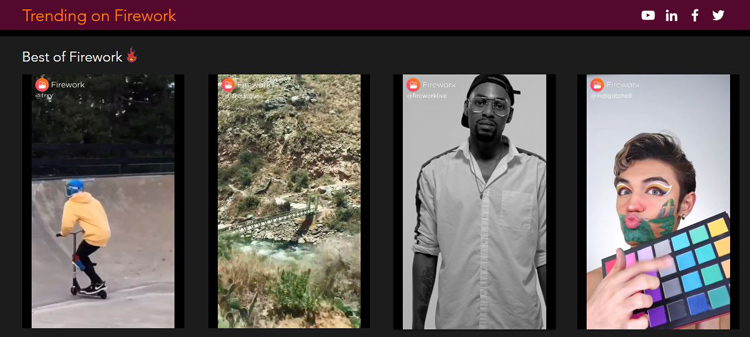
    MUMBAI: If you thought the world had enough of short format content, it's about to change that perception. Going beyond lipsync, filters, influencer dependent videos, Silicon Valley-based short-video making app Firework is looking at shortspan storytelling and building a large creator community which is not dependent upon influencers.

    After a few days of its launch in the country, Firework gave the mandate of its Indian business to Sunil Nair appointing him as the CEO and MD for its India operations. Nair has been associated with content creation for a long time but that of a different format. Having spent nearly seven years with ALTBalaji, he has experimented with long-format fiction shows but the arena of short-format is new to him. Nair finds the new journey more interesting as telling a story in 30 seconds demands the content to go beyond gimmicks.

    Nair claimed that younger audiences like teens are not committing time to watching an entire  show because there are too many things that the generation is doing. According to him, all the content they consume is between all the other things they are doing resulting in smaller attention span.  

    “Short format as a content feature became popular in China and it is also popular in all countries where there is long commute time because when you are in a bus, or a cab, or train and trying to watch content you cannot watch 1 hour show, you can watch 20 videos because you just flip very quickly. That’s the audience which is far more interesting as compared to an audience which is watching long form content because long form content has set its business. A creator ecosystem is already there, there are filmmakers, there are lots of business strategies. Every OTT service now has set its business in a proper manner that they don’t need to really have a new way of doing things,” he added.

    As the conversation proceeded, Nair had shown the quality of content and the various genres including travel, food, fashion available on Firework enthusiastically. He said that an influencer is not going to bring any value to content as they are more interested in bringing people to like them.

    “We are saying that creator has to tell us story. It is not about taking a selfie that he or she was in front of Tajmahal as that is meant for friends and family and may be five people outside who would be interested in their personal life. We are saying that can that same creator tell the story of Tajmahal or Shah Jahan or Mumtaz in the same span,” he explained.

    Firework, globally, is redefining itself which has got offices in Japan, Latin America, Russia, Poland, USA, Canada, and India currently. In India, the video-sharing app is focusing on Tier1 and Tier2 cities largely. Moreover, it is not restricting itself to Hindi or English content. “Anyone who has a story to tell in any language is welcome,” as Nair put it.

    In terms of monetisation, Fireworks would allow brands to come on board in India as it does in Japan and travel, lifestyle, E-commerce brands are showing great interest. Moreover, if any celebrity comes on the Fireworks network , followers who want to have private interaction can pay a monthly price and chat with them. However, he did not reveal the possible price-pointers. He also mentioned that people in Japan are already paying $9 per month to talk to the people that they want to follow. Firework has been widely seen as a rival to TikTok in India. Nair declines to term the social video sharing app as Firwork's competitor.

    “I think our creators are the biggest marketing medium. Firstly, we don’t behave like typical consumer marketing. The focus is not on getting 500 million downloads because that’s probably the wrong way of running a business at this time. The focus is on creating good content and getting discovered wherever it can be discovered. So our marketing is largely content driven. So the conventional method that brand head or marketing head coming and saying that you know I need x million to do a marketing campaign does not work. The x million is used by us for creating more content and that getting discovered across wherever it is,” he commented on the marketing strategy.

    Talking about objectives, he said that buying downloads is not a way he wants to run the business. He hopes to have about 50 to 100 million DAU in the this year or so which makes it a sizeable media platform. He also aims to have around 10,000 Indian creators in six months across eight-nine languages. The company is looking at creating a massive content-bank in India by working with a lot more film schools, content creators, directors and partners.

    “My responsibility is not just to settle India but also to open up to South East Asia and Middle East. We are opening our Indonesia office and we have our Dubai office coming up,” he signed off.

  • Content is not a commodity you can win with price war: Sameer Nair

    Content is not a commodity you can win with price war: Sameer Nair

    MUMBAI:  He’s been in the television space during its golden age, worked with leading broadcaster Star India and production house Balaji Telefilms and witnessed the changing landscape in the Indian media and entertainment industry. Media veteran Sameer Nair is now looking at new age content for streaming platforms as Applause Entertainment CEO.

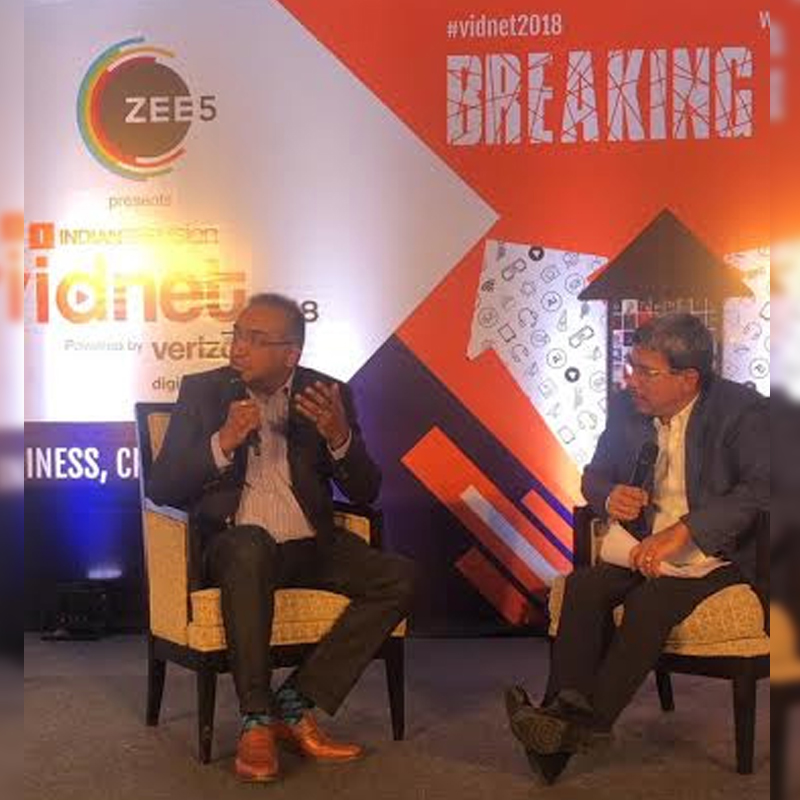
    At the stage of Vidnet 2018, the Aditya Birla Group chairman Kumar Mangalam Birla’s content studio CEO spoke on the state of the industry, Applause Entertainment’s plans in a fireside chat with Indiantelevision.com founder, CEO and editor-in-chief Anil Wanvari.

    187 million cable homes have made TV very powerful and matured, according to him. In addition to that, now the country has got around 500 million mobile phones leading to a flood of screens everywhere. As people are glued to these screens more than ever using in some way with a massive change in consumption habit, this creates an opportunity for everyone to be in the space.

    “I come from a time where we used to have people watching 4-5 hours of television a day. It’s probably down to an hour. But in the meantime, people are finding more time on screens to consume all sorts of content. So, I think the number of hours spent, time spent, is bound to grow. If you are able to do different things, it’s a good time to be in this space,” he commented.

    He saw the industry at a time when TRP was the benchmark to measure the success of a show. Now those days are gone when 10,000 boxes spread across India tried to tell what 600 million people were doing. The emergence of data gives much more accurate consumer feedback which Nair thinks is also “scarier”.

    Though there is no foolproof formula for success in this business, Nair thinks one should start making content with a reasonable understanding of market and audience. Moreover, working with focus groups of few people who want to watch ‘X’ or ‘Y’ to create content would be tricky. However, after creating content, data and audience reactions play a bigger role.

    Nair is vocal on the importance of finding a need gap by looking at things that are missing in the market. While drama series content on TV is dominated by daily soap opera, he thinks what India lacks is high-quality drama series. Though all the K-shows made huge money, according to him, in a diverse market like India, there should definitely be something more than just tele-novella.

    “Now the opportunity is to do more stories. I mean it’s just not drama, there are short forms, animation, and there are kids, all sorts of things happening. We are currently focused on doing dramas. But when you look at the market, when you see the opportunities that are there, I think it’s a good time to be a creator, no matter what you create,” he added.

    To grab more eyeballs in the burgeoning OTT space, there has been an upsurge of investment in content. Platforms with deep pockets are burning cash to make good content. Nair thinks it’s good for the industry to take up the value of content. According to him, it’s not only about monetisation but about the ability to build a business, a consumer habit. However, he also added that spending Rs 5 crore per episode cannot make that alone.

    “Content is not a commodity you can win with a price war. You have to win that with a great story, you have to reach out to consumers, you have to connect with them and then you could spend Rs 300 crore making it or Rs 10 crore. In recent time you have seen the examples in Bollywood too where small budget films have done well. The focus is got to be on that,” he said.

    Talking about Applause Entertainment’s near-term plan, he said it is working actively with the creative community, buying rights for international shows to adapt them into Indian context. It is also acquiring books to adapt them into series as well as original writing. They are also having conversations with platforms about who can carry these.

    It bought rights of two BBC productions The Office andThe Night Of to adapt. For the former, it has already made 28 episodes. It also bought the right of Debashis Basu and Sucheta Dalal’s The Scam. It is also working with Goldy Bahel and Abhimanyu Singh.

    “The way I see it is there are so many platforms, so many consumers, such a huge need gap for content, that I don’t regard myself a competitor. I am part of that mix. You are putting out ten shows, maybe you take one from me, you are putting out 100 shows, and maybe you take ten from me, that kind of thing. And we are essentially focused on helping build this industry,” he said.

    He said as broadcasters have been doing the same kind of shows for last 18 long years, the whole format is sort of fixed as producers also know what they are doing. But for new age content, writing 10-12 episodes and creating season after season is new.

    Nair thinks TV will be not dead in a hurry. While TV is making a lot of money, it’s not like that OTT does not have any room to grow. Moreover, even different models are emerging other than SVoD and AVoD in the OTT ecosystem. Hence, he reaffirms OTT and TV will exist together, at least in the next ten years.