Tag: content cost

  • ZEE5 Originals’ content cost to be 3x more than TV: Punit Goenka

    ZEE5 Originals’ content cost to be 3x more than TV: Punit Goenka

    MUMBAI: Zee Entertainment Enterprises Ltd’s (ZEEL) digital venture ZEE5 has shown impressive growth in a very short span of time. To continue taking rapid strides, the Punit Goenka-led company will beef up its content investment for originals as well as film titles. While ZEE5 is betting big on quality entertainment, the  content cost for digital originals will be around three times more than the television business.

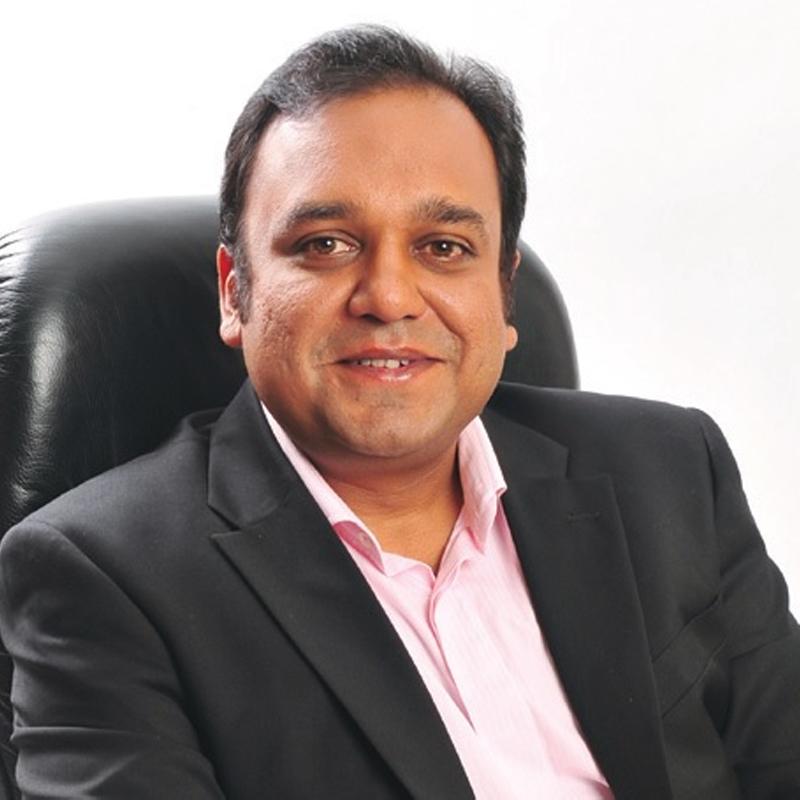
    After Q2 results, ZEEL managing director and CEO Punit Goenka spoke about content cost, strategy, marketing plans for ZEE5 in an earnings call. “The content cost will not be similar to television, they will be higher. If you leave out the things like Karenjit Kaur, etc., I think you can safely assume a 3x kind of a number in your content cost compared to TV,” the media veteran commented.

    As of now, ZEE5 has released 29 originals and the pace of new launches is expected to pick up in the second half of FY19. Initially, the target of 500-600 hours of original content without dubbing was set. According to Goenka, the company is on track to reach that goal.

    The episodic lengths of the properties will also be expanded as the platform has got more traction for 1 hour episodes compared to 0.5 hour episodes. However, there will be short-form series as well as long form, mostly depending on the storylines.

    “Unlike television, where it's a factory and we have to fill 260 episodes a year, here, we do not have any of those benchmarks or yardsticks. Here, an episode can range from 35 minutes to a full-length feature film, which could be also a web series,” he added.

    Notably, since its launch, ZEE5 has emphasised on “content in the language of comfort” which has clearly yielded results. Consumption in regional languages is far more than in Hindi. Both in AVOD and SVOD front, the regional languages are contributing almost 60 per cent of the viewership. Hence, the company will churn out more regional content going forward.

    However, it will also expand the number of movies in the library. Currently standing with exclusive digital rights of 3000 movies, the titles will be brought on gradually on the platform. “So over the next three months, you will start to see all of the 3,000 titles available on ZEE5,” Goenka said.

    While the company is aiming at moving more traffic to the app version over web version, it won’t sideline latter as it is the funnel to attract early users. Before downloading the app, consumers usually go to web version to test the waters.

    Recently, ZEEL buried the hatchet with Reliance Jio and renewed its content deal. According to the deal, ZEEL’s linear channels will be available on JioTV and the rest of the content will be available only on the ZEE5 platform.

     On live content front, the company will get paid for the content it shares with the telecom behemoth. As Goenka said, end consumer usage and data will all come to the company. If a consumer wants to access the content behind a paywall, they can pay for both or even individually.

    Standing with all the plans chalked out, Goenka confidently expects its digital entertainment platform to contribute 30 per cent revenue to its topline in five years.

     “If it is anything less than that then it is quite disappointing. And keep in mind that my overall business also will continue to grow,” the exec said on an optimistic note.

  • Den Networks reports higher revenue, operating profit

    Den Networks reports higher revenue, operating profit

    BENGALURU: Indian multi system operator (MSO) Den Networks (Den) reported growth in revenue and operating profit (EBITDA) for the quarter ended 31 March 2018 (FY 2018, fiscal 2018, year under review) as compared to the previous year FY 2017. Den’s operating revenue for fiscal 2018 increased 11 per cent to Rs 1,285.10 crore from Rs 1,157.34 crore in FY 2017. Total consolidated revenue including other income grew 9.7 per cent in FY 2018 to Rs 1,314.98 crore from Rs 1,198.67 crore in FY 2017. Consolidated simple EBITDA including activation revenue during the year under revenue increased 41.7 per cent to Rs 324.52 crore (25.3 per cent of revenue from operations) from Rs 229.01 crore (19.8 per cent of revenue from operations).

    The company’s net consolidated loss for FY 2018 reduced to Rs17.11 crore, which was less than a tenth of the loss of Rs 187.76 crore in the previous year. Consolidated total comprehensive loss for the year declined to Rs 16.77 crore from Rs 187.24 crore in FY 2017.

    Segment revenue

    The company has two segments – cable distribution networks (cable); and broadband. Cable segment revenue increased 12.5 per cent in FY 2018 to Rs 1,209.75 crore from Rs 1,075.54 crore in FY 2017. Den reported that segment had an operating profit of Rs 61.63 crore as compared to an operating loss of Rs 60.98 crore in FY 2017.

    Den reported 7.9 per cent decline in operating revenue for its broadband segment in FY 2018 at Rs 73.75 crore as compared to Rs 81.80 crore in the previous year. The segment’s operating loss reduced to Rs 31.91 crore in FY 2018 from Rs 36.31 crore in FY 2017.

    Let us look at the other numbers reported by Den

    Consolidated total expenditure for the year was almost flat – it increased by 0.1 per cent in FY 2018 to Rs 1,321.43 crore (102.8 per cent of operating value) from Rs 1319.79 crore (114 per cent of operating value) in the previous year. The company has seen a rise in content cost in actual value as well as in terms of percentage of operating revenue over the past quarters and fiscal 2018. Consolidated content cost increased 14.1 per cent in FY 2018 to Rs 539.80 crore (42 per cent of operating revenue) as compared to Rs 473.28 crore (40.9 per cent of operating revenue) in the previous fiscal. Consolidated placement fees reduced 7.9 per cent in FY 2018 to Rs 46.21 crore (3.6 per cent of operating revenue) from Rs 50.20 crore (4.3 per cent of operating revenue).

    Consolidated employee benefits expense during the year under review declined 12.5 per cent to Rs 107.99 crore (8.4 per cent of operating value) from Rs 123.37 crore (10.7 per cent of operating value) in FY 2017. Consolidated other expenses in 2018 reduced 5.7 per cent to Rs 312.79 crore (24.3 per cent of operating value) in FY 2018 from Rs 331.68 crore (28.7 per cent of operating value) in the previous year.

    Also Read :

    Aim to take phase 3 ARPU to phase 1 value: Den Networks’ SN Sharma

    DEN expands broadband services; plans Rs 100 cr capex

  • AIDCF asks b’casters to create level playing field for OTT & cable TV

    AIDCF asks b’casters to create level playing field for OTT & cable TV

    MUMBAI: The All India Digital Cable Federation (AIDCF) is on a roll. The multi system operator (MSO) association, which first submitted its recommendations to the Information & Broadcasting (I&B) Ministry and then to the GST Committee, has now written to broadcasters with Over the Top (OTT) platforms.


    The Association has written a letter to Star India, Multi Screen Media and IndiaCast Media Distribution. In the letter, AIDCF has stressed on how the broadcaster is giving content free of cost to its OTT platforms, while charging MSOs for the same content.


    Giving an example of Star India’s OTT platform hotstar, a source close to the development tells Indiantelevision.com, “Star India, on one hand offers simulcast or immediate transmission of fresh popular content completely free of cost to its OTT subscribers on hotstar and on the flip-side, it charges the MSOs huge sum for the same set of content.”


    AIDCF’s letter to broadcasters, a copy of which is with this website, reads:


    1) The cable industry is contributing huge subscription revenue to 

    broadcasters for the same set of content and programme.


    2) It contributes to a large viewership for the channels the network has.


    3) Also helps the broadcaster in gaining higher TRPs, which in turn leads to a better ad rate for the portfolio of channels thus increasing the advertisement revenue.


    The letter points out that this scenario of offering simulcast/immediate transmission of fresh content completely free of cost to OTT subscribers is not favourable for the Cable TV industry and its relationship with broadcasters, considering the growth in the subscriber base for the broadcasters’ OTT application.


    According to AIDCF, this is a threat to the pay TV cable business model, which defeats the purpose of paying huge license fees to broadcasters. “Some of our subscribers have started complaining saying, ‘Why should we pay you for the content, which is available free of cost via say hotstar or Sony Liv,’” informs the source.


    Giving free of cost content to OTT platforms is affecting the average revenue per user (ARPU) of the cable TV industry, subsequently hampering the growth of business at large.


    AIDCF in its letter has asked broadcasters to create a level playing field amongst respective distribution platforms. “We have requested the broadcaster to make content available on their OTT platform a paid service with a subscription fees. Alternatively, the same content should also be made available free of cost to other distribution platform,” the source reaffirms.

  • Siti Cable and Dish TV join hands to form ‘Comnet’

    Siti Cable and Dish TV join hands to form ‘Comnet’

    MUMBAI: Dr Subhash Chandra led Essel Group believes in innovation and how. The two companies from the group, multi system operator (MSO) Siti Cable Network and direct to home (DTH) player Dish TV have formed a joint venture (JV) to deal with the ever growing content cost. Christened ‘Comnet’, the JV will help synergise the strengths of both the organisations in dealing with broadcasters.


    Essel Group has synergies in broadcast, cable, DTH and over the top (OTT) services. “When we look at either of these platforms, the key to its existence is content. The cost of content today is increasing rapidly and at a pace with which even the connections in the market aren’t growing,” tells Siti Cable CEO VD Wadhwa to indiantelevision.com.


    According to Wadhwa, while the consumer average revenue per user (ARPU) levels is increasing in single digits, broadcasters, who sign one-year deals with distribution platforms, expect the revenues grow anywhere between 20-60 per cent. “This is impractical, unsustainable and is no way any business model will evolve or work,” he adds.  


    The reason both Dish TV and Siti Cable have come together is to be able to make the best use of each other’s advantages and disadvantages. While DTH doesn’t enjoy as much carriage as cable gets, when it comes to content deals, DTH platforms have an upper hand. “While my input cost, which is the content cost is growing at a fast pace, I am not being able to drive the market price. If consumer ARPUs remain low, we can’t allow the content cost to go up. Also considering both the platforms target the same set of consumers in the market, it made more sense for us to join hands to deal with broadcasters,” informs Wadhwa.


    Dish TV CEO RC Venkateish says, “This move will help both the entities to provide quality content at affordable price to consumers.”


    Both, the DTH and cable platform currently is unable to pass on the increased input cost to the customer. “And then there are the additional taxes. The Delhi government recently increased the entertainment tax from Rs 20 to Rs 40, not realizing that it is a price sensitive market. Neither the consumer nor the broadcaster is ready to take the burden of the increasing cost. In order to protect our business model and remain a consumer friendly company and comply with all the rules and regulations, we thought of coming together,” he says.  


    The JV will help the duo in not just controlling deals with broadcasters, but also in sourcing equipments. “Both Dish TV and Siti Cable need set top boxes. There are a lot of synergies if we work together,” he adds.


    Between Siti Cable and Dish TV, the two currently have more than 2 crore subscribers, which in the next two years, according to Wadhwa will go up to 4 crore. “If we are currently present in 2 crore households, we are talking of almost 9-10 per cent of India’s population. This gives us a lot of leverage,” he says.


    According to Wadhwa, while the broadcasters have already come together to work for the advantage of the broadcasting sector, the distribution platforms too need to work in a synergy. “While that is currently not possible, at least the two companies in the group should start working together immediately,” he opines.


    As part of the JV, the duo will hold joint discussions with broadcasters, taking joint call on the deals. “If the broadcaster wants to arm twist Siti Cable, it has to be careful that Dish TV may also react or vice versa,” he informs.  


    Starting 1 July, 2015, it is ‘Comnet’ that will do the negotiations with broadcasters for both the platforms together. Post that, a direct contract between the broadcaster and the distribution platform will be signed. “The benefit will be shared between Dish TV and Siti Cable,” concludes Wadhwa.