Tag: consumers

  • GUEST COLUMN: Paradox of Choice – How to influence consumers to pay attention to your brand

    GUEST COLUMN: Paradox of Choice – How to influence consumers to pay attention to your brand

    Mumbai: Twenty-four hours in a day and a zillion media choices to be made! This is the new regular day in the life of a consumer.

    From numerous apps to dime a dozen platforms along the consumer journey, audiences and advertisers are facing a present-day that is rife with limitless choices. Why? But of course, thanks to the internet, data, technology, and personalisation – things we have all become accustomed to. But there is a subtle undercurrent these trends ride on the back of – a paradox of choices!

    The internet has increased connectivity, and penetration is only expected to scale higher with time. The pandemic is accelerating pre-existing industry trends and altering consumer behaviours. In the context of the visual culture, we live in, courting the consumer with packaged and positioned choices is the first step, in the series of many, on the path to forging long-term relationships with them. And this journey is full of the subtle art of choosing.

    Evolving M&E landscape

    With the growth of the Indian digital segment, Television, online video, and social media are emerging as the top entertainment media. According to IBEF, internet browsing has gone up by 64 per cent with increased uptake of news, music, and AVGC. There is a marked shift from offline to online consumption for news with 45-minutes to an hour spent on news on social media and apps.

    Content to Commerce is the new consumer purchase journey. With cumulative time spent over two and a half hours per day, Indians are flocking to their social media accounts and consuming content in genres of news, comedy, the art of cooking, and culture. Then there is influencer-led content and shoppable ads here to delight consumers through the journey of content consumption across social channels.

    OTT Triggered Growth

    OLV and OTT platforms have witnessed a meteoric rise as the new entertainment destination. As per a report by Deloitte, popular platforms have garnered a 45-55 per cent increase in paid subscriptions after the outbreak of the pandemic with audiences spending 95-minutes daily on OTT channels. Rising demand for content and affordable subscription packages has triggered this growth. AVOD segment is anticipated to grow more by 2025. Vernacular adoption has also been accelerated during the pandemic and the momentum is here to stay with more than 13 per cent growth as compared to pre-Covid-19 levels, mostly from the hinterland of India.

    E-commerce Search Engines

    E-commerce and social apps are changing how consumers discover new products. Influencers have emerged as the new brand ambassadors and have evolved as a new marketing channel from discovery to conversion. Video commerce and social commerce are key and emerging conversational commerce-enabling brands are driving their D2C model through messaging apps like WhatsApp that the consumer is already acquainted with and uses extensively.

    The influx of short-form video apps is a testimony to this growth. Current statistics show that Indians spend five times more time on homegrown short video apps than global Instagram reels and YouTube shorts. Apps like Trell, Chingari, Sharechat, Roposo, etc. trail only Google and Facebook ecosystem in terms of time spent by Indians. Voice-based technology is breaking the literacy barrier in India. Searches on voice are expected to grow to 50 per cent, a 10x Increase in multilingual voice assistants is expected.

    All of the above trends indicate that the touchpoints to expose a probable consumer to a product have exploded. Meticulous decisions are required by industry mavens to validate the choices they make on one end. On the other, the consumer is scavenging for informed, yet simple choices to make better decisions, faster.

    For instance, at OMD, we balance the act with attention planning. In a world that is chaotic with choices, brands and advertisers need to be present on platforms their audiences are – adapting to consumer sentiment, being nimble, and providing a media mix of digital solutions to brands not hinged on a tall order but realistic metrics – distinctive packaging to cut through the clutter with creativity. After all, with the impact that the pandemic has had on inventory and ad rates, 2022 in the advertising world is going to be more about influencing the consumer to pay attention to your brand versus competitors and the journey will be interesting.

    (Sulina Menon is the chief client officer at OMD India. The views expressed in this column are personal and Indiantelevision may not subscribe to them.)

  • Valvoline unveils new digital campaign ‘Gensets Ka 1- 2- 3′

    Valvoline unveils new digital campaign ‘Gensets Ka 1- 2- 3′

    Mumbai: Global lubricant manufacturer Valvoline Cummins Pvt Ltd has launched a new digital campaign called ‘Gensets ka 1-2-3,’ which encourages and reminds consumers to regularly service their gensets to ensure no power blackouts, whether its at home or a commercial area.

    Valvoline Cummins is committed to ensuring regular power with its promising range of engine oil ‘Premium Blue’ specifically made to meet the lubrication needs of gensets and increase its efficiency.

    “Regular change of oil is the most important part of servicing a genset and Valvoline’s range of Premium Blue engine oil meets and exceeds the lubrication requirements, ensuring smooth and uninterrupted working throughout the season,” said the company in a statement.

    Premium Blue is a jointly developed technology between Valvoline and Cummins with extensive trials on the engines.

    “Through this campaign, we aim to encourage and inform the consumers to get their gensets serviced to ensure a well-lit home and other spaces which we generally ignore,” said Valvoline Cummins India CMO Ipshita Chowdhury. “We invest heavily in our research and development to introduce products which match or exceed consumer needs. With the same thought, we have ‘Premium Blue’ engine oil which provides sufficient protection to all the internal parts of a genset for a long time. We are proud that it is exclusively recommended and endorsed by Cummins.”

  • Zee urges consumers to shop local this Diwali

    Zee urges consumers to shop local this Diwali

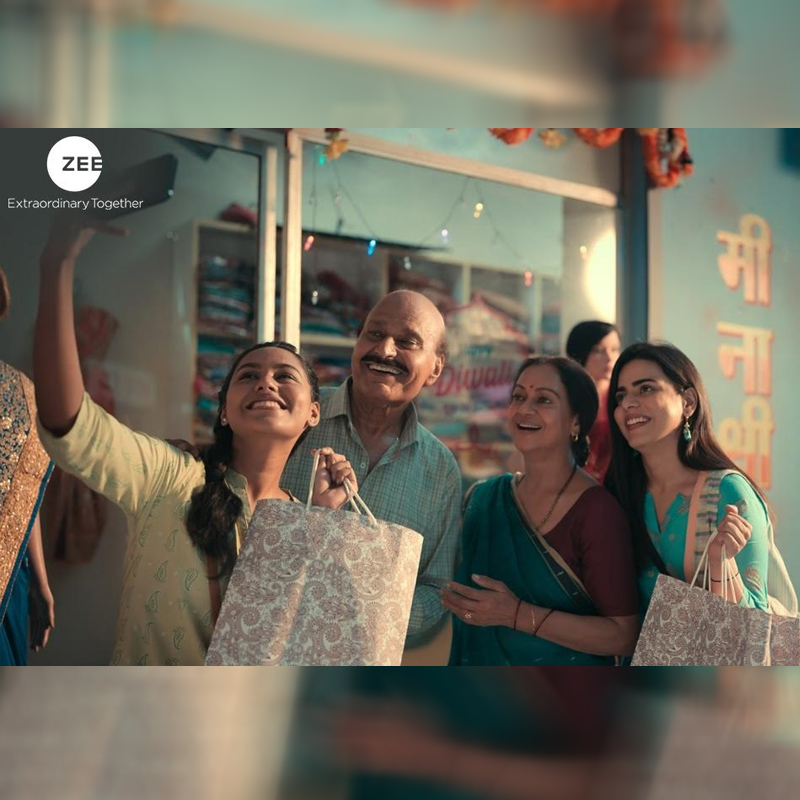
    Mumbai: The festive season is usually filled with countless stories that unfold on the streets. It’s truly an experience going to your local city market with your friends and family members and returning home with little moments of laughter. This Diwali, OptimiZEE, the social content hub at Zee is celebrating such stories that strike a chord with its purpose-led campaign #YehDiwaliKissonWali.

    Featuring veteran actors including the evergreen Zarina Wahab, Avtar Gill, and Virender Saxena, the heartwarming film rolled out across ZEE’s social platforms portrays a relatable moment and the countless stories that unfold with the message #YehDiwaliKissonWali. Depicting a saree shopping visit and another couple on a cutlery shopping spree, the feel-good films each bring alive a unique story that unfolds on the streets. Be it Sarojini Nagar market in Delhi or fashion street in Mumbai, OptimiZEE urges viewers to shop local to help them rediscover the small joys of helping your neighbourhood business and creating memories this festive season.

    OptimiZee head Kartik Mahadev said, “In the post-pandemic world, while digital transactions have helped many businesses flourish and given consumers convenience, it has also brought with it a tyranny for small businesses who thrive on the footfalls from the neighbourhood. ‘Stories’ emerge when people connect. With this belief, the campaign encourages people to make a local shopping trip, experience a story, and make their Diwali shopping trip a memorable one, while also supporting the neighbourhood business.”

    Tiqui-taka founder Jigar Fernandes, Founder, tiqui-taka who directed the films, said, “A visit to the local shop often rewards us with interesting moments. Through two such moments, the campaign highlights the joy of local shopping and asks the viewer to go experience their own local shopping stories this Diwali. It was a privilege working with legends like Zarina Wahab, Avtar Gill, and Virendra Saxena. Their timeless charm is the soul of the films.”

    The campaign is further bolstered by a user-generated content activity announced across Zee’s social handles calling for viewers to share their Diwali shopping stories with #VocalForLocal by tagging @ZEECorporate.

  • OnePlus partners with Croma for its OnePlus TV Category

    OnePlus partners with Croma for its OnePlus TV Category

    Mumbai: Global technology brand OnePlus has announced a retail partnership with Croma for its range of OnePlus smart TVs which are now available for purchase across select Croma stores and on croma.com.

    The extended partnership with Croma will enable OnePlus to further expand its offline reach and make its smart TVs more accessible to customers.

    The OnePlus Smart TVs are currently available for purchase at select Croma stores across Bangalore, Mumbai, Pune, Hyderabad, and New Delhi NCR, and will soon be accessible across all Croma stores in India in the coming months, it announced on Friday. As part of this extended partnership, all the OnePlus TVs will be available at Croma stores and croma.com including the latest OnePlus TV U1S.

    “The OnePlus TV U1S features a best-in-class 4K cinematic display, immersive audio experience, offers a seamlessly connected ecosystem, and is available in 50inch, 55inch, and 65inch variants,” said a senior spokesperson from OnePlus. “We have been consistently working towards expanding our offline presence, and our strategic partnership with Croma will further enhance our retail footprint in India and enable accessibility for our community.”

    As part of its ongoing retail partnership, consumers can also purchase smartphones, audio, and wearable products by OnePlus at Croma. “This OnePlus TV is going to make for a great new addition to the existing range of OnePlus portfolio which includes Smartphones & it’s accessories, Truly Wireless Earbuds and Smartwatches,” said Chroma spokesperson

  • GUEST COLUMN: FMCG companies took to apps, bet big on direct-to-consumer reach

    GUEST COLUMN: FMCG companies took to apps, bet big on direct-to-consumer reach

    Mumbai: The eruption of COVID-19 has left millions and millions of businesses scurrying for survival. Although somewhat less affected than some categories, the FMCG companies also faced headwinds for some time. And to counter these headwinds, technology has been the single most important intervention that they have employed during these trying times. And of the technologies, applications enabling a direct route to the consumer as well as other businesses in the value chain have been most prominent.

    While placing their faith in these applications, FMCG companies have also recast their value chains weeding out unnecessary elements at various levels allowing themselves greater leverage vis-à-vis their vendor partners and establishing a more direct connect with their end-consumers. And among FMCG firms, food companies, or those with prominent food product portfolios have been particularly noteworthy for taking the app route.  A step ahead of general trade, modern trade, or even traditional e-commerce channels, these apps have been popular yet necessary go-to modes for these companies.

    The big B2C advantage

    How does B2C prove to be advantageous for FMCG companies? Until now, customer-relationship building and acquiring customer insights were largely the preserve of the retailer community. However, what B2C apps do is that they facilitate a direct and one-on-one company-to-consumer relationship, with the former no more having to make efforts to establish bonding with a faceless consumer. On top of allowing deeper end-consumer insights for companies and brands, they can catalyse more relevant and individualised product and service propositions by the brand to the consumer thus leading to a more enriching customer experience which in turn would drive increased customer acquisition, conversion, and retention for the brand. And needless to say, the power balance between the brand and the retailer is further shifted in favour of the brand and away from the retailer.

    B2B applications not too far away

    However, this taking to applications has not been limited to B2C channels. FMCG companies have also incorporated apps in their business processes directly targeting retailers and kirana stores who offload their products and serve as a last-mile seller/supplier to end-consumers. Identifying and prioritising retailers who delivered top volume businesses, the companies made sure that the retailers continued to place orders for their products, and even more efficiently using these applications than they did before. In fact, thanks to Covid, the earlier forecasts projecting a contribution of around 10 per cent digital channels in the total FMCG market in the next ten years in the country has been advanced to next three to four years now. And at the same time, cutting out or minimising the role of distributors especially in terms of selection of retail outlets, the brands have reclaimed their power vis-à-vis the latter while effecting greater streamlining and consolidation of their distribution systems.

    Proliferation of new products

    While pivoting to digital technologies, B2C and B2B apps, the FMCG companies have also realigned their product portfolios in a major way capitalising on the shifting consumer preferences and behavior in times of the pandemic. And as part of this realignment, there has been a proliferation of new and innovative products which have been introduced to the market in the last few months. With health and hygiene being a predominant consumer focus, as many as 3,000 products in the health and hygiene category have been estimated to be launched in the September quarter alone last year. Earlier, in the April-September quarter, as many as 9,700 new products were launched by FMCG companies. Mindful of and in response to the country-wide lockdowns in place and customers being confined to their homes, 125 products were introduced in-home cooking segment alone during March-August 2020 in categories including ketchup, jams, cheese, and milk powders.

    Exploring alternative channels of distribution too

    Even as D2C apps gain traction, the FMCG companies are also exploring tie-ups with new-age delivery startups, food-tech service players, food aggregators, hyper-local apps, and courier firms to have their products delivered to the doorsteps of the end-consumer. In fact, some FMCG companies are also making product-specific tie-ups with delivery platforms and micro delivery platforms.

    Digitisation not limited to distribution: Influencer marketing gets a boost

    Rising uptake in apps and the broader digitisation has not only been confined to retail and distribution but also advertising and marketing. And riding on the increasingly entrenched position of social media and its consumption, influencer marketing has become a big part of FMCG’s digital marketing strategy in recent years. According to a report, globally, nearly a fifth (19 per cent) of FMCG companies have raised their influencer spending significantly as compared to pre-COVID-19 levels. And within India, during the festive season campaign alone, influencer marketing saw a 20 per cent jump in campaigns. A digital marketing agency has estimated India’s influencer market at $75-150 million a year, as compared to the global market of $1.75 billion, which is only set to get bigger in the coming months and years.

    Other technologies that could aid the B2C momentum

    At the same time, apart from apps, there are several related B2C technologies and platforms that could add teeth to the ongoing B2C drive. They could range from customer data platforms to data management platforms to marketing automation tools to business intelligence and data visualization tools to social listening tools, among others.

    So, in the future, there is no doubt that the B2C apps as part of an FMCG company’s digitisation program will acquire a more permanent dimension. Notwithstanding a resurgence of Covid in certain states, now with vaccination underway and revival of consumer sentiment in urban India, FMCG businesses including food companies are set to see greater activity and growth.  

    (Manish Aggarwal is director, Bikano, Bikanervala Foods Pvt Ltd. The views expressed in the column are personal and Indiantelevision.com may not subscribe to them.)

  • Ed-tech, OTT platforms bring about 30% of our revenue: GoPaisa’s Ankita Jain

    Ed-tech, OTT platforms bring about 30% of our revenue: GoPaisa’s Ankita Jain

    One of the early players in the cashback and rewards category functioning within the e-commerce space in India, product and offer aggregator platform GoPaisa.com was co-founded by the husband-wife duo of Aman Jain and Ankita Jain in 2012. The bootstrapped start-up has come a long way, with the platform currently recording more than three million user interactions daily. For online retailers, the platform acts as a massive ground for the promotion of their products and related deals. With an association of over 1,000 brands across categories, GoPaisa.com has already distributed over Rs 50 crore plus as cashback over the years.

    Having co-founded GoPaisa at the young age of 23, Jain was awarded the tag of the Youngest Female Entrepreneur, in addition to bagging the ‘Unconventional Women entrepreneur of the Year’ award for her fresh marketing perspectives and take on traditional norms of media as CMO. The brains behind the brand’s popular ‘Don’t be a Kaddu’ TV campaign that emphasised its core philosophy of “Why wait for discounts when you can get Cashback every time you shop”, Jain has always sought to go beyond demographics in defining and engaging consumers, in context with the brand proposition. The app already flaunts a portfolio of reputed brands including Amazon, Flipkart, Myntra, Ajio, OnePlus, mamaearth, Oneplus, 1mg, Norton, etc., and is present across key categories like BFSI, Fashion, Medicines, Grocery, Personal care, travel, digital products. Her ultimate dream is to make GoPaisa synonymous with ‘shopping’.

    ‘Bridging the gap between a solution and a seeker’ is a concept that always intrigued Jain. Expanding further on this premise, the scope for a more user-friendly platform that also enables extra income for users was identified. And thereof was born the couple’s new baby- the deal-sharing platform, Earnly. The latest entrant in the E-commerce space aims to eliminate all the technical challenges of affiliate marketing, by introducing an easy-to-use platform tailored to users who want to earn extra money by sharing curated online retailer deals.

    IndianTelevision’s Anupama Sajeet had an in-depth chat with GoPaisa CMO & cofounder Ankita Jain about the growth of GoPaisa during the pandemic, the company’s new platform, Earnly, and what it plans to achieve through micro-influencer marketing.

    Edited excerpts…

    On the GoPaisa business model

    We started back in 2012 when e-commerce was at a nascent stage. We had a tough task explaining our business model when we approached brands, for they would demand to know ‘what is it that our marketing agencies cannot do, that you can’. It is all about performance marketing- we only charge for sales, as we realise that at the end of the day it’s the conversion that matters. It’s not about the number of clicks or traffic, for these are fictitious by nature, and until and unless it leads to conversion it is of no use.

    Eventually, it became easier with big brands coming onboard- first was Snapdeal then we had Flipkart and Amazon. We work on a ‘cost per converted unit’ basis with the brands, which could differ from brand to brand. For some brands, the converted unit could mean the actual sales transaction. For some others, the premium paid or a credit card dispatched could be the converted unit, instead of sales.

    On the impact of the pandemic on consumer behaviour

    Our total traffic has gone up in the aftermath of the pandemic. Another major difference that I noted during this phase is the trend of adoption of new brands, unlike pre-pandemic, where people were hesitant and more comfortable with their ‘safe’ purchases from known brands like Parachute or Dove. The pandemic has changed that. Especially in tier-3, tier-4 markets, consumer behaviour has changed drastically. They have come online and are open to experimenting – ready to try new products from relatively newer brands like, say, a mamaearth’s onion hair oil or a beard cream from Beardo, which previously did not have penetration in these markets. The learning curve of the customer has been phenomenal and the entire gamut of D2C brands post-pandemic is the result of this.

    Since we work with all these brands, we completely know where the trend is now shifting. We closed the financial year with Rs 15 crore revenue. We are growing 15-20 per cent month-on-month. So based on sheer numbers we have performed quite well in the last year and a half.

    Also, there is this whole new category of products that has sprouted during the pandemic- digital products. By that, I mean the ed-tech platforms, OTT platforms, which comprise 30 per cent of our revenue. Right now our top five categories would be medicines, digital products, electronics, and furniture.

    On the marketing & advertising media mix adopted by the digital-centric brand

    Influencer content marketing has always been a major part of the Gopaisa marketing plan, along with the traditional digital advertising through Google, Facebook, etc. We did a small trial campaign on TV and then we went ahead with a marketing split of 50-50 between TV & digital mediums. Initially, we did TV advertising for three years, mostly during the festive season, so that we are assured of ROI on it. I wouldn’t say the ROI that we got on TV was bad. That’s also the reason why we plan to get the TV back in our marketing mix this quarter itself. But print and radio not so much.

    On the platform’s consumer demographics

    Our audience age group usually ranges from 18 to 34 years, with the core being from 24 to 34 years. Till last year 60 per cent of our consumers were from metros and 40 per cent were from non-metro cities. However, now the skew is towards non-metro. This is more so after we initiated regional marketing assignments, where we tied up with local micro-influencers from different regions and different languages like Kannada, Tamil, Telugu, Gujarati, Marathi for influencer marketing. That’s when we began seeing increasing returns from the tier 3, tier 4 towns.

    On influencer marketing & the idea behind Earnly

    As a policy, we did not approach the big influencers, instead, we tried the local influencers with a limited following. These influencers had high relatability and also had the tracking factor of their audience. We saw that the reach of these micro-influencers was phenomenal. But still, they did not make money. Because the branding deals only went to the top five per cent, and brands do not grant marketing budgets to micro-influencers.

    So how can they make money? And that is how we arrived at the idea of Earnly. With this new platform, they can actually commercialise their marketing efforts. And they rightfully ought to, for they make good sales through their video promotions of deals etc. When people see individuals like themselves, from a similar stratum of society or having a similar mindset, they buy due to the relatability aspect. Hence, we want to open up our entire gamut of 1,500 brands to these kinds of influencers with Earnly.

    On the USP of Gopaisa & Earnly platforms

    While competition has always been there in this space, our USP has been to work from an analytics angle. With advanced analytical tools, advertisers now have the freedom to pay for achieved results. We also understand the fact that we cannot be bombarding the customer with all 1,500 odd brands. So, for us to understand our customer is very important. Hence, we work a lot on our data analytics, which helps us to give the right offer to the customer at the right time. For that, we capture all the footprints that he/ she makes while or before making a transaction. So, ours is a very analytics-driven approach. And that is why our customer loyalty is high. Gopaisa has amassed 3.5 million subscribers as of today and with Earnly, we plan to cross 30,000 to 40,000 users by the end of this quarter.

    On the challenges ahead for the new e-commerce platform

    For three months, Earnly was in a Beta stage and we have already onboarded a thousand plus influencers to the platform, so the response has been really good. Right now, our main challenge is how fast we can spread the word. We have some campaigns going live on Earnly with big brands going on right now, and we are doing a lot of barter deals, where we can get the micro influencers’ costs for the product covered. We have negotiated with the brands such that the entire product cost, and commission- in cases when sales happen- is paid for by the brand so that there are zero investment charges for the influencer.

    It is said that 21 days is what it takes to build a habit. So in terms of consumer behaviour shift to shopping online- habit formation has happened. Because people are just too used to it plus the advantages of the price and the convenience of not having to step out. More so, one’s everyday routine requirements- it has shifted from offline to online, which is a major shift in consumer behaviour and which is here to stay I think.

  • TOI Bangalore makes way for good times with an 80-page issue

    TOI Bangalore makes way for good times with an 80-page issue

    Mumbai: One of the most palpable ways to tell if things are coming back to normal is to begin the day with a newspaper whose mere heft bears a piece of positive news.

    In the wake of a devastating second wave and amidst concerns about a third one, it’s how businesses strive to make the present worthwhile that inspires and injects new hope in all of the economy. It’s an effective stimulant on the consumer side too. When readers see a thicker paper filled with brand advertisements, they are more motivated to come out of the inertia of consumption and begin to feel a sense of comfort with the status quo.

    A bearer of this sweet news was Saturday’s Times of India Bangalore 80-page edition filled with ads from consumer-facing brands who want to usher in a wave of normalcy without waiting for the situation to fix itself.

    According to TOI, the edition featured as many as 125 advertisers. The paper drew brands from across the categories of consumer durables, retail, luxury, real estate, BFSI, apparel, digital, automobile, and more signaling that they are ready as ever to make the ‘New Normal’ not just a survival story, but a story of growth.

    “This uplifting edition could not have been accomplished without the combined efforts of the Times of India Bangalore team whose unwavering belief in change translated into this bumper issue,” the organisation said in a statement.

  • CavinKare to vaccinate all employees in India, Bangladesh and Sri Lanka

    CavinKare to vaccinate all employees in India, Bangladesh and Sri Lanka

    New Delhi: Fast moving consumer goods major CavinKare has announced that it will provide Covid-19 vaccination cover to all its employees and dependent family members in India, Bangladesh and Sri Lanka.

    The company said it will cover 1,700 employees both at factory and corporate level. In addition, it will provide financial assistance to the bereaved family by paying an annual salary for a fixed time frame as an immediate monetary support over and above the statutory insurance benefits, it said on Friday.

    As part of Covid-19 relief initiatives, the company has also extended educational support and sponsorship till college for two children of the deceased employee, it said.

    “We want to stand by our employees and their family during these trying times by offering the right support and nurturing a positive ecosystem. Their health and safety are of monumental importance to us at CavinKare,” said company director and CEO – Personal Care and Alliances, Venkatesh Vijayaraghavan.

    “We will continue to prioritise the overall well-being of our employees and extend support to their family in these uncertain times” he added.

     to their family in these uncertain times” he added.

  • Mzaalo launches AVOD platform

    Mzaalo launches AVOD platform

    New Delhi: Mzaalo, a blockchain-based video streaming application today announced the launch of its AVOD platform. The gamified video ecosystem is designed to reward consumers for viewing content on the platform. Mzaalo's system is secured by blockchain, trusted infrastructure for content and brands to own engagement and commerce for their users.

    The AVOD platform offers consumers 50,000+ hours of premium content from over 25 content partners. The content library features a mix of Bollywood and regional movies, original series, music videos, linear television programing and more that will be available in Hindi and nine other Indian regional languages. 

    The wide-ranging content catalogue will attract users who can enjoy an immersive experience in which they can earn for watching content, interacting with the community, inviting friends as well as sharing, liking, and commenting on social media platforms. The process of watching content and being incentivized in the form of blockchain-based rewards adds to Mzaalo's credibility in building engagement, loyalty and driving growth. 

    The earned reward coins are stored in the users' digital wallets and can be spent on premium experiences, physical merchandise, partner products and services, digital goods, games, and charitable giving. Mzaalo plans to on-board established brand partners spanning across range of categories such as health & fitness, fashion, accessories, electronics, travel, wellness, and much more.

    Mzalo COO Vikram Tanna said, "Technology is increasingly becoming the centre of every human interaction. Also, brands today are adopting to innovate and engage with users by creating bespoke, experiences without disrupting the entertainment journey. Mzaalo’s consumer-centric ecosystem is the first to reward consumers for their time and attention. Moreover, our engagement algorithm is designed for advertisers to build valuable user–brand experiences based on data transparency and privacy.”

    Mzaalo has conducted consumer research across the country to understand user sentiments towards sharing personal data on various platforms and the process of selecting winners and rewarding customers. Understanding the requirement of user privacy and data protection, Mzaalo created an ecosystem that addresses consumers' needs by providing a rewarding entertainment experience in a trusted environment.  

    Mzaalo shall adopt a secured Decentralized Ledger Technology (DLT) to establish a trusted entertainment ecosystem where participants derive value from their contribution to the network. Additionally, users will be empowered to take control of their digital identity and shall be gratified for valuable behavior such as providing engagement on the platform through recommendations and for bringing peers onto it.

  • Cadbury introduces two new flavours

    Cadbury introduces two new flavours

    INDIA: The sweet battle of Cadbury inventors has finally come to an end.

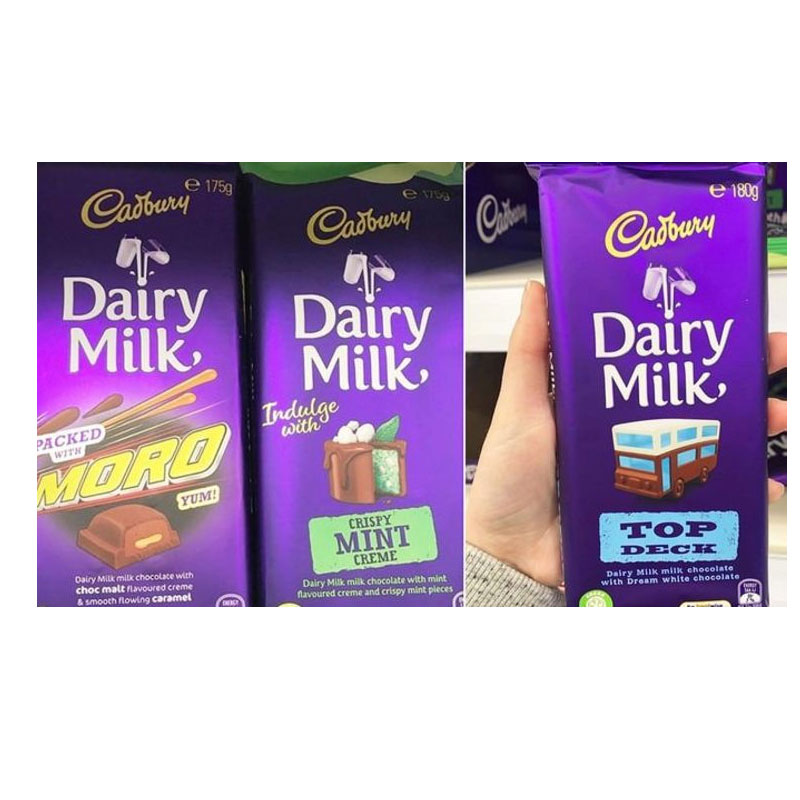
    Mondelez India, the makers and bakers of some of India’s leading snacking brands like Cadbury Dairy Milk, 5Star, Oreo, Bournvita, etc. has announced the winning flavours of the ‘go Madbury for Cadbury’ campaign.

    Introducing Cadbury Dairy Milk Hint O’Mint, made with Cadbury Bournville flavour and Mint crystals, and Cadbury Dairy Milk Paanjeer, combination of Paan flavor and Anjeer bites, created by Cadbury lovers Apoorva Rajan (Bengaluru) and Prabhjot Anand (Punjab), respectively. With the resounding success of Madbury’s debut edition – with more than 800k entries, the company is all set to launch Madbury 2.0, asking consumers “Kahaan Se Aayegi Hamari Agli Cadbury?”.

    Mondelez India senior director – marketing (chocolates), insights and analytics Anil Viswanathan said “Cadbury Dairy Milk’s ubiquity has been melted into unique versions to fulfil the various snacking needs of the nation, which reiterates its entrenchment in the lives of our consumers, as a household ingredient. Therefore, we launched Madbury to give all the chocolate lovers a chance to create their ‘Home Wala’ Cadbury, by experimenting with flavours and ingredients of their choice. As a result, further strengthening our consumer connect. It was elating to see such creative and unique ideas and combinations of flavours that people wanted to amalgamate with the taste of their favourite chocolate bar and brought out the love Indians have for desi/ localized flavours. Considering the incredible response that the first edition generated, we are now thrilled to roll out Madbury 2.0 and expect greater participation across the country.

    Read more news about Cadbury

    As a company, Mondelez India is always looking for ways to innovate and excite consumers, and Madbury is yet another attempt to further strengthen our connection through an engaging campaign curated ‘of the people, by the people and for the people’. We can’t wait to see what other exciting flavours will be introduced to the world of Cadbury!”

    The first edition of Madbury garnered more than 823 million impressions across platforms, 205 million views, and engaged with 1.7 crore consumers. As a result, the love for local flavours came to the fore with suggestions of Cadbury versions like- Chai and Elaichi, Paan and Mixed Berries, Kulfi and Badam, Cashew and Mishtidoi, etc. amidst an array of other ingredients. This is truly a consumer-centric initiative – special chocolate bars made by consumers, for consumers. The consumers finally voted for the Top 2 winning flavours. Supporting this consumer-centric launch, the brand will associate with Indian Celebrity Chef Kunal Kapoor, to create some special digital engagement for the winners and the winning flavours. These limited-edition bars – Cadbury Dairy Milk Hint O’Mint and Cadbury Dairy Milk Paanjeer, are all set to hit the shelves and delight consumers, by the first week of October 2020.

    Comprehending the enthusiasm and rigor with which the consumers participated to showcase their culinary creativity, Mondelez India is now all set to launch the second edition of the campaign- Madbury 2.0, asking consumers “Kahaan Se Aayegi Hamari Agli Cadbury”. This year, the brand will take it a notch higher by inducing a sense of competition across different parts of the country. They will also introduce a white chocolate mass in addition to the milk chocolate mass that was available in the previous edition, presenting the consumer with a whole new avenue to experiment and come up with exciting new combinations. Madbury 2.0 will witness 3 winners and will go live from 28 September, till 30 October.