Tag: consumers

  • Indkal Technologies announces Karan Johar as its BLACK+DECKER® ambassador

    Indkal Technologies announces Karan Johar as its BLACK+DECKER® ambassador

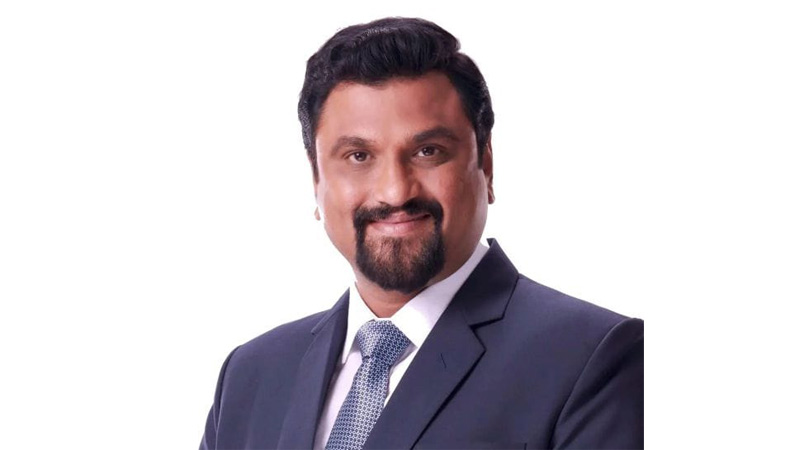
    Mumbai: Indkal Technologies, the license partner for BLACK+DECKER® large appliances in India announced that renowned director, producer and TV personality Karan Johar will be the ambassador for air conditioners, refrigerators and washing machines business in India.

    BLACK+DECKER® Large appliances offer a premium easy-by-design product range built with a host of intuitive features aligning with Karan Johar’s style, craftsmanship, and commitment to delivering superior experiences both on and off the screen.

    Speaking about the partnership, Indkal Technologies CEO Anand Dubey said, “We are thrilled to have Karan Johar as the face of BLACK+DECKER® large appliances in India. We believe Karan’s style compliments our customers’ appetite for premium products with cutting-edge technology, top performance, and elegant design.”

    The association with Karan Johar marks a significant milestone for Indkal as it continues to expand its presence and bring both innovation as well as versatility to the Indian market.

    Sharing his excitement, director, producer and TV personality Karan Johar said, “I am delighted to be associated with BLACK+DECKER®, a brand known for its high standards and innovative products. I’ve always believed that high quality and innovation lends style and class to everything in life, and BLACK+DECKER® brand has exemplified that for many decades. I’m looking forward to being a part of this journey and introducing consumers to the fantastic range of BLACK+DECKER® Large Appliances.”

    Stanley Black & Decker, commercial director licensing Amit Datta said, “As a global leader in home products, we continue to connect with our customers through meaningful experiences and deliver on the BLACK+DECKER® brand promise. This collaboration combines our easy by design vision with Karan’s reach and immaculate grasp of consumers in India.”
     

  • realme is all set to ‘Make it real’ with its revamped strategy

    realme is all set to ‘Make it real’ with its revamped strategy

    Mumbai: realme smartphone service provider announced their new slogan ‘Make it real’ in an open letter, Sky Li, Founder and CEO of realme, emphasised that this year will redefine realme’s brand standards. The letter highlights realme’s new mission, brand positioning, and spirit. Transitioning from an “opportunity-oriented” to a “brand-oriented” approach, realme is shifting its focus towards becoming a tech brand that resonates with young users.

    A tech brand that better understands young users

    Since its inception, realme has established its position with development strategy: to bring technologies and designs to young users worldwide. The brand aims to connect with more young users across various markets, leveraging its recognition among this demographic to elevate its standards even higher.

    Building on five years of success, realme is broadening its scope rather than changing direction. Leveraging its deep understanding of young users and steering the company’s development, realme is transitioning its strategy from trendy-based to a more inclusive and expansive one. This will steer its long-term investment and growth, enabling the brand to enhance its connection with a larger number of young users across various markets and global regions.

    As such, realme’s mission is to more concisely capture its future development aspirations: “To let young users around the world enjoy tech experiences that exceed expectations.” With increased focus and ambition, realme is poised to explore new possibilities and make breakthroughs.

    From “opportunity-oriented” to “brand-oriented”

    realme places the youth at its core and adheres to a user-centric approach, driving its competitiveness in three areas: product, technology, and brand strengths. This ideology will guide realme towards achieving long-term, high-quality growth.

    By planning to partner with over 30 leading tech companies and investing heavily in R&D in 2024, realme aims to bring the latest technology to its users. The brand aims to refine its customer insight process for a more dynamic experience. Focusing on the younger generation, realme will integrate user insights into ongoing brand and product development, creating a fluid and multi-dimensional brand experience.

    realme’s focus on product, technology, and brand strengths allows the brand to bring the latest technological advances directly to young users. This approach transforms its positioning as a tech brand that better understands young users from an idea into reality.

    Moreover, realme has also introduced a new slogan: “Make it real” that retains the spirit of “Dare to Leap” while placing greater emphasis on young users, aiming to bring real, clear, and tangible benefits to their lives.  

    As it moves into the next five years, realme pledges to stay true to its original intentions and grow alongside young people, aiming to be a tech brand that better understands their needs and aspirations to make it real

    For more information, please visit www.realme.com/in/  

  • “Brand leaders are only brand leaders by heavy expenditure”: Willpower Group’s Jayant Bhat

    “Brand leaders are only brand leaders by heavy expenditure”: Willpower Group’s Jayant Bhat

    Mumbai: The advertising industry is gaining momentum after COVID-19 due to large exposure to digital platforms. Large conglomerates are spending heavily on advertising consumers and also prefer quality products. In the current scenario to meet equilibrium companies are meeting their working capital needs. Hence revenue generation of the company is facilitated by rising cost of production and spending on marketing and advertising brands especially in the FMCG sector (Fast Moving Consumer Goods) increased advertisement costs almost by 10 % or more.

    Artificial Intelligence (AI) tools and the introduction of Chat GPT bring ads closer to the target audience. It is helping consumers to make the right decisions to buy a product. Collective market information and intelligence consumers are getting on one click. However, it is not sufficient for brands to collect information depending on AI. It cannot assure arithmetic and qualitative accuracy but it helps brands to identify consumer purchasing behaviour.

    As per a report by GroupM advertising expenditures of Indian companies are expected to grow by 15.5% on a year-on-year basis. In 2022 the FMCG sector had 38 % percent itself in overall digital advertising expenditure. According to this year’s GroupM’s ‘ This year, Next Year’ 2023 Global End of the Year Forecast, Indian adex (Advertising Expenditure) grew by 11.2 per cent anticipated to generate Rs 16.9 billion. In FY24 adex is expected to grow by 12.1 per cent to reach Rs 152740 crores. Increasing digital spending on the plate is allowing brands to maintain profit margins. Spending heavily on R&D (Research and Development) causes companies to raise prices along with advertisement costs.

    Marketer’s eye on D2C (Direct to Consumers) – With rising costs marketers are concentrating more on product offering directly to the consumers without any intermediaries, channels, or middlemen. Companies want to omit variable costs. The rising patterns of Affiliate marketing, and direct sales taking shape in the FMCG Industry.

    On this issue, Indiantelevision.com exclusively had interaction with Willpower Group of Companies chairman and CEO Jayant Bhat.

    Edited excerpts

    On Big Private FMCG players spending heavily on advertising budgets

    Large Private FMCG leaders have been into heavy advertising for decades now. They are brand leaders only due to heavy advertising and the ability to hold on to heavy marketing expenses along with scalability factors. Smaller start-ups have tried to scale based on burning money without sufficient reach. It would be a killer attempt to spend money heavily on marketing as FMCG is a low margin if attempted to scale on the basis of a distribution model. With changing times modes of advertising have changed and so have the psyche of consumers. So one must have a deep thought process to reach people.

    On finding the future of small retail businesses in rapidly changing technology

    Small retail businesses won’t be majorly affected as most of the smaller outlets are doing business on need-based requirements. This means as and when requirements arise customers visit them as they have been doing for since long time. There is space for everyone in the FMCG business arena. With the advent of DMART, everyone shouted that Kirana stores would be finished. With the advent of ‘ Big Basket’ ‘ Zepto’ etc, all thought Kirana stores will be killed. But nothing of that sort happened nor will happen. We are seeing Kirana stores are now taking orders on WhatsApp and delivering products at no extra cost.

    On looking at the current market segmentation of FMCG when it comes to revenue generation

    CMS (Current Market Segmentation) of FMCG varies business models and factors. Needless to say, FMCG will continue to grow by about 10 per cent to 12 per cent per annum. Newer categories and product variants will be introduced with a customer mindset ready to accept new concepts easily.

    On Willpower entering into a new concept of business structuring

    Willpower Group by design is into multiple businesses and multiple concepts. As our core business is consulting for scalability and mentoring to improve revenues as well as processes, we get good companies who are more than willing to tie up with Willpower and join with us.

    Our last venture is Dropservicing and we are launching the same in January 2024. We firmly believe that the Dropservicing business model is going to rule 2024 till 2034. Till now, we have focused on setting up manufacturing units and investing heavily in businesses that would give returns years later. Now we have decided to be an intermediary between service providers and service seekers.

    What typically happens is those who want services from freelancers are afraid that they will not get services as promised. We are building a network of freelancers who would get projects from us and will ensure that work is completed as promised. In case one freelancer fails to deliver we will get it done from someone else. It will be responsible for projects we take in hand.

    On people’s lack of awareness about organic and your take on spending on marketing

    Emphasising natural products is one thing and its reach is another. Pricing plays a major role for most Indians and keeping pricing as per the expectations of the majority of Indians. It is due to the price sensitivity of the Indian market the addition of chemicals and other ingredients to the maximum possible.

    But our business model is sustainable only under the direct-to-consumer business model. Our experience in the retail business has not been good. Our policy is against the heavy burning of money for customer acquisitions. Today companies burn about Rs 5 to earn one rupee revenue, forget profitability. We don’t spend anything on marketing other than direct marketing as well as free sources on FM, Instagram, etc. I have seen many brands coming and dying every year in the name of brand building only because of heavy spending.

    On the essence of your philosophy for the product and its marketing

    • If it’s not unique and different, it’s just not Willpower

    • Give a purity report to every customer and create awareness that they need to ask for a purity report from any company that sells it’s consumable products to them

    • Avoid chemicals or use chemicals to the minimum possible

    • Honouring commitments, showing transparency, and admitting mistakes

    • Focusing on the Direct to Consumers business model, using minimum expense on customer acquisition.

    • Promote the subscription-based model and acquire advance revenue through a subscription model.

    • This model helps in retaining customers for a longer duration

    • Let the quality speak than discounts

    On predicting something in the FMCG sector instead of e-commerce

    – E-commerce would switch over to M-Commerce i,e Mobile Commerce. In effect, it is e-commerce only. Customers today are used to convenience. Customers visit large format stores only for convenience. We are going to start our own e-commerce website www.sirfsale.com in January 2024. That is going to be our extension of the direct-to-consumer business model.

    The future would be with the ones who offer more convenience to consumers. Offering convenience is the key to success for every entrepreneur. Deep discounts are just fake whitewash and should not be considered a success because the customer is never loyal to brands that offer discounts. They keep rolling from one brand to another in search of discounts. So the burnt money to acquire such customers is often lost.

  • DoubleVerify releases report – ‘Four Fundamental Shifts in Advertising and Media’

    DoubleVerify releases report – ‘Four Fundamental Shifts in Advertising and Media’

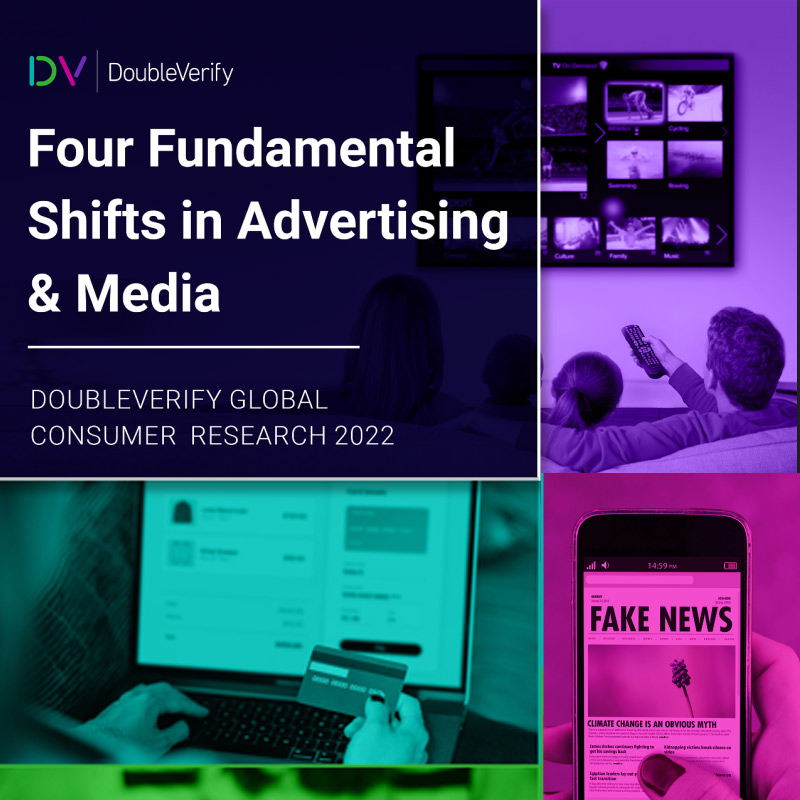
    Mumbai:  DoubleVerify (DV), a leading software platform for digital media measurement, data, and analytics, has released its report for the year 2022, “Four Fundamental Shifts in Advertising and Media.”

    Two years after DV’s original report, this expanded edition analyses insights from over 16,600 global consumers in 18 countries. At a time of significant macroeconomic change, these findings reveal the dynamic relationships between consumers, digital content, and advertising—arming stakeholders with the insights they need to make well-informed strategic decisions.

    The report marks some significant takeaways. Firstly, the economic downturn continues to ‘stay at home’ content consumption—particularly on CTV and social media—with most (55 per cent) consumers now spending more time consuming content daily than they did pre-pandemic.

    Secondly, attention fuels media efficacy—two thirds (66 per cent) of respondents claimed an ad that captures their interest in the first five seconds will make them more likely to pay attention.

    Thirdly, online shopping surges and is bolstered by a contextual approach—54 per cent of respondents report buying more items online now than pre-pandemic, while 67 per cent are more likely to pay attention to an ad if it’s relevant to the content they’re viewing—such as reviews or gift ideas.

    Fourthly, trust and shared values foster loyalty, but consumers are quick to judge. Consumers are concerned about the spread of mis- and dis-information, and it shows—61 per cent are even less likely to purchase/use a brand again if they see it advertised alongside mis-/dis-information.

    “This study highlights that consumer consumption habits are evolving in response to macro social and economic trends—from intensifying concerns about inflammatory or polarising content to a continued shift in the platforms and channels consumers are turning to for content consumption,” said DoubleVerify CEO Mark Zagorski.

    He continued, “Brands must react to these changing habits to ensure they reach the right audiences as efficiently as possible and maximise their digital investments. As our research shows, with digital content consumption rising, there’s a clear opportunity to garner consumer attention and power campaign performance. To unlock this opportunity, brands must evolve their ad strategies—meeting their audiences where they consume content and focusing on contextually relevant, attention-grabbing ad placements that also safeguard their brand reputations.”

    “In these hyper-evolving times, these insights are significant for brands wanting to boost their digital ROI. This is especially important in India, where the market is highly competitive and dynamic. As demonstrated in the findings, digital content consumption and post-pandemic online shopping are higher in India than in any other region. This presents a huge opportunity for marketers who need digital media strategies that can effectively reach relevant audiences while ensuring that they don’t inadvertently advertise/promote misinformation and disinformation,” said DoubleVerify head of sales India Nachiket Deole.

    He added, “This is the era of new-age consumers, who are more aware, conscious, and empowered than ever. Thus, we are working with clients to help them develop the best strategies to protect their brand reputations while achieving scale, and deliver on the desired outcomes of influencing the customers to convert to a purchase.”

    Consumer appetite for content continues to soar—led by CTV, streaming, and social

    Globally, most consumers (55 per cent) are spending more time each day consuming content now than they did pre-pandemic. This is as high as 78 per cent in India, the highest of all regions surveyed. Inflation is a key driver, with almost half (45 per cent) of respondents globally noting the reason they’re spending more time consuming digital content is because they are staying at home due to the rising cost of living.

    CTV (connected TV) and streaming services have clear momentum, with 55 per cent of respondents having subscribed to additional services in the past 12 months. The increase in sign-ups is strongest in India, where 74 per cent have subscribed to additional services in the last twelve months. Meanwhile, globally, 27 per cent expect to spend more time on social media in the year ahead—peaking at 41 per cent among 18-24 year-olds.

    With costs under consumer scrutiny and digital content consumption rising, ad-supported content represents a growing opportunity for advertisers, with 59 per cent open to ad-supported video streaming apps if they cut prices.

    Brands must address attention fragmentation—or risk losing consumers

    Survey respondents reported that they believe they see between one and 50 ads per day—estimates suggest the true average figure is at least 4,000.

    Where an ad appears determines its impact, according to consumers. YouTube dominates as the number one proprietary platform for securing the attention of respondents in 15 out of 18 countries surveyed—followed by Facebook (39 per cent) and Instagram (28 per cent). Newer platforms continue to attract consumer attention and engagement. TikTok is rapidly expanding, and 43 percent of 18- to 24-year-olds say they intend to spend more time on the app in the coming year.

    Timing is essential, with two thirds (66 per cent) stating that they are more likely to pay attention if an ad captures their interest in the first five seconds.

    Shopping’s digital maturity presents a new opportunity for brands to make an impact

    Online shopping continues to grow, as most consumers—54 per cent, report buying more items online now than they did before the pandemic. Meanwhile, consumers in emerging markets are more likely than the general population to say they are shopping online more now than they were before the pandemic, with Indians leading the pack at 74 per cent.

    Pre-purchase habits are also evolving, with over half (53 per cent) highlighting that they use digital content to inform planned purchases more often than they did before the pandemic—in India, this is a notable 75 per cent. With two thirds (67 per cent) of consumers saying they are more likely to pay attention to an ad if it’s relevant to the content they’re looking at—like reviews or gift ideas. This reinforces the importance of contextually relevant ad placements.

    Brand values are key as consumers reward action against inflammatory content, mis- and dis-information

    Likely exacerbated by polarised news and opinions, the majority of survey respondents (68 per cent) are concerned that levels of mis/disinformation are increasing—and brands must be conscious of ad adjacency. In fact, 61 per cent would be less likely to purchase/use the brand again if they saw it advertised next to content that they determined to be mis-/dis-information. In India, this is 63 per cent.

    The majority of survey respondents (82 per cent) state they have been exposed at some point to mis-/dis- information on social media.

    Brand action on mis-/dis-information will be rewarded with trust from consumers. The majority (69 per cent) value brands that actively fight against mis-/dis-information and the same number (69 per cent) state that companies that are genuine and authentic appeal to them.

  • The CTV India market maybe small, but it surely packs a big punch: mediasmart’s Nikhil Kumar

    The CTV India market maybe small, but it surely packs a big punch: mediasmart’s Nikhil Kumar

    With the changing digital landscape, consumers are warming up to connected TVs (CTVs) like never before. As Indian audiences increasingly embrace OTT content while gradually making the shift from traditional linear TV viewing, the change also presents an untapped advertising goldmine for brands and advertisers alike.

    On the sidelines of the Indian Digital Brand Fest organised by Indiantelevision.com, we caught up with mediasmart vice-president of India & SEA Nikhil Kumar, an Affle company, to understand how advertisers can buckle up to face this new beast in advertising. Last year, mediasmart commissioned research that helped understand the CTV behaviour patterns in India to provide greater market understanding. With mediasmart recently releasing its latest industry report on the CTV ecosystem in India that would help fast-track the growth of this industry, we take a deep dive into some of the underlying challenges and come away with some key takeaways.

    Kumar, a consumer marketing professional with over a decade of experience working in FMCG , retail, F&B, and ad-tech set-ups with global brands like TikTok, Puma, L’Oreal, Cafe Coffee Day, and InMobi, is extremely bullish about the current and future role of CTV as a medium for delivering impact for brands. He believes that CTV consumption today goes beyond the inhibitions of individual consumption on mobile screens and probably also brings back the family-viewing phenomenon of linear television, but with very measurable metrics of targeting and delivery.

    In an in-depth interaction with Indiantelevision.com, Kumar also talks about his journey from primarily marketing brands spread across the consumer goods sector, food retail, and sports & wellness, to now navigating the ad-tech space. While managing marketing for multiple brands, there were great learnings towards understanding consumer behaviour and sentiments, advertising objectives, media channel goals and analysis, and so forth. What I have really enjoyed after switching sides and working within ad-tech/mar-tech set-ups is the understanding of how each dollar spent is effectively reaching or not reaching the intended consumer. More importantly, the journey from ad exposure to intended purchase & the continued lifetime journey are built on strong data tech stacks with due diligence on consumer privacy. So for me, the whole journey from the brand side to now the adtech side has been an immense learning curve.”

    My learning, which I often share with my team, is—”Never sell the product, sell the insight—sell the solution to the problem that the marketer is intending to solve—that’ll bring better adoption for your offering,” shares Kumar.

    Edited excerpts:

    On why advertisers are cautious adapting to the CTV medium, despite the rapid adoption of it by consumers

    We live in an era that can be defined as pre-covid and post-covid. Covid played a huge catalyst in the growth of connected TVs as people realised that they could view the same content they see on their mobiles on a bigger screen via connected TV , thereby providing a better experience.

    For advertisers, the caution is actually natural, primarily because of the newness of the medium—connected TV & the scale/reach it brings from a planning lens. I think the hesitancy could also be derived from not understanding whether CTV reach spend should be bucketed under offline or digital spend, because it’s still TV and that’s well covered by most large spenders.

    Most large traditional advertisers feel they are already advertising on TV to a much more mass audience on broadcast, so why do they need to spend extra to advertise on CTV?

    When CTV started getting sold in India as an inventory for monetisation, it was being talked about as a digital medium. But then they are doing enough advertising for OTT already on mobile. And suddenly there’s this new accessibility for users via CTV. So you have to educate them that OTT is not CTV. The subset of CTV can be OTT, but that’s not the totality of it. There’s so much more that you can do on CTV, like play games, watch live news, etc., which led to its phenomenal growth. I think brands and advertisers, rather than being hesitant, are becoming more inquisitive.

    A year back, there was hesitancy, which has turned to inquisitiveness, and today, if you look at it, it’s a Fomo (Fear of missing out) created for every media planner or agency owing to the scale of CTV growth globally. If they don’t have CTV as a top priority, clearly it’s a miss. Even the agencies catering to smaller brands from tier II and tier III categories feel the need to hop onto the CTV bandwagon. More so because of the sheer pressure that the clients are creating on how to get their brand’s ads on the medium. Because that is where their audience is, watching their content.

    On whether the decline of DTH and linear TV viewing is leading to the spurt in CTV or vice versa

    It’s important to understand that sometimes users weren’t even contributing to DTH for them to decline from the database. These are the cord-nevers beyond the cord cutters.

    Suddenly, people are realising that the decline of DTH doesn’t mean the growth of CTV. Yes, it does imply that. But connected TV by itself as a base is growing. There’s a section of consumers who have never had a cable/DTH connection (cord-nevers), who bought a smart TV and immediately connected it to the internet and started watching it.

    Advertisers are also understanding that some of the audiences they want to reach out to are not there on TV. Thus, more than being hesitant, I think they are convincing themselves that this is a medium that’s creating more impact and providing a way to reach audiences they can’t reach otherwise on TV.

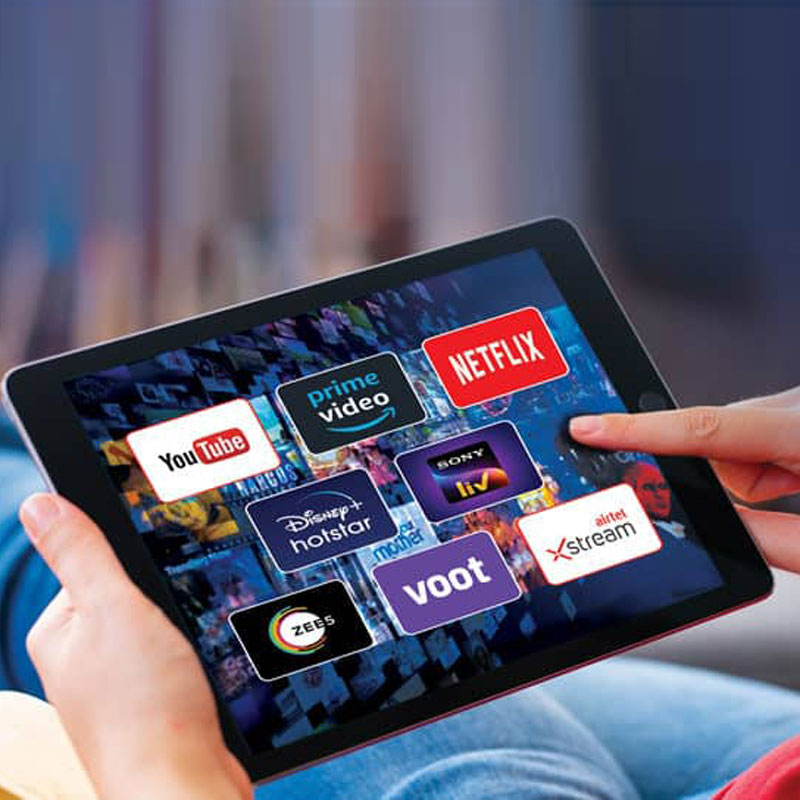
    Around 2.5 million DTH and cable subscribers have declined in the past two years or so, while comparatively, nine million wired broadband subscribers have increased. According to these two data points, the home wifi/broadband ecosystem is growing. There’s an accessibility to TV, while at the same time, there’s a decline in DTH, and last but not least, there’s suddenly a growth pattern in the availability of content. The number of OTTs that are available in the market is not just restricted to Hotstar, Netflix, Amazon, Sony, Zee, and Mx Player. There are 40 plus OTT players today—vernacular, regional, multi-lingual, event dialect-specific OTTs—there’s so much happening in the space.

    We have recently released a report titled “India CTV Report 2022,” which is one of the most comprehensive reports on this subject. Last year, when we first released it, it became a bespoke reference point for most avid marketers and media houses. This year, we did a very interesting comparison of the prices that you are paying. A comparison of the cost of these OTTs versus the average price of a DTH plan has not been put into perspective . If you compare the prices, it is actually not that expensive. So you can have all the content from around the world that you want to see at a price that is affordable. These are some of the factors that are really contributing to the growth of the connected television market in the country.

    And it’s not restricted to Gen-Z or millennial users, as we realised from our survey report. In our first-party survey covering a diverse audience segment across metros and non-metros, we realised more than 84 per cent claimed to be watching CTV with someone in the household rather than alone, similar to the TV broadcast era, in which family viewing was the dominant form of consumption. The TV broadcast era was followed by the era of mobile phones, which meant we went from a family viewing/co-viewing to a personalised content consumption experience on our mobile devices. This received a huge boost with the Jio revolution from 2016 onwards. And now, in a post-pandemic era, the connect TV experience has brought everybody back together for co-viewing, implying we have come full circle, but now with a way to answer the question: what happened after the TV ad was served?

    On how can agencies & advertisers overcome the lack of standard industry metrics- one of the key reasons limiting faster advertiser adoption of CTV

    There are always challenges related to a new medium in how measurability is going to happen. In fact, globally, one of the reports released recently claimed that there’s massive ad fraud happening already within the CTV space globally. If you see, most of the OTTs are owned by large broadcast networks. The OTT, or the platform, is evaluating the user reach and where your ads were served, along with who saw them. How does one evaluate ad fraud, which is obviously a difficult area?

    This is where programmatic advertising is becoming more and more important for advertisers, because for them it’s not important where the ad is shown, it’s more important to whom the ad is shown. The idea is to target audiences as opposed to targeting platforms where your ad is running, and hence, targeting the same user across multiple platforms becomes possible.

    Additionally, programmatic advertising provides transparency. You can access the dashboard. You can see the ads getting served, what time they were served, how they were served, which audience segments they were served to, and which audiences are engaging with them. Today we have technology where you can map a TV to a device id on a mobile phone. Hence the intuitive understanding that “this is the guy who has a TV at home; this is the device ID so I can continue the lifetime journey of engaging with that consumer either on his TV or on his mobile.”

    Technologies like ours are building that trust so that while currently there’s no measurement for what can happen on TV, you can link that journey to a user on their mobile where all possible mobile measurement options exist.

    And you can control it because it’s digital. So we know who saw the ad. Because you can track it down to a TV, to a location, to the size of a TV, to a certain household. So many data points can come up. You can target users by the size of the screen, by location, etc.—so many targeting options are available because of the digital nature of the medium. Hence, the trackability of success is also there. And hence, it’s clearly an impactful medium.

    On some of the underlying challenges & emerging trends in advertising on CTV in the domestic market

    So challenges can also be opportunities, and some of them we saw were in education, as India is still a market with high spending on traditional platforms like TV and print. We need to focus on educating advertisers and agencies on how CTV, as a digital medium, is a growing channel and an incremental reach medium at that. For instance, the festive season this time is all going to be about going back to retail, OOH, a massive print spend, and a big burst on television across brands. But, was your brand able to reach the users on CTV where they are most engaged and spend close to 4 hours a day? If not, you have clearly missed an opportunity. So that’s the first challenge in the ecosystem’s education.

    If we talk about trends, the growing trend is that gaming has grown by leaps and bounds on CTV and is going to become a destination. Another major trend is programmatic advertising via CTV to avoid spillovers. We are a country that does almost 60 per cent of media buying directly as opposed to 40 per cent programmatically. But how do you integrate the user’s journey across multiple ecosystems and screens that he operates on into one experience? That’s where programmatic advertising comes into the picture, which can help you build a unified view of the consumer.

    On how can marketers maximise viewer engagement on ads and improve the ad viewing experience for users on CTV?

    That’s an interesting premise because on CTV there are multiple ecosystems that clearly users spend time on—there is the OTT or on-demand content ecosystem, and the other is user-generated content (UGC) platforms. Beyond this, we also have news, gaming, and music, which are growing very fast.

    What does a user tend to do when they see an ad on a UGC platform? They are more likely to skip it since the 20-or 30-second ad in a three-minute video is more of a distraction.

    The user’s behaviour on on-demand OTT is observed to be very different, where on average they spend anywhere between 30 mins and an hour watching their favourite on-demand show or movie. The user is committed to spending a longer time there and hence doesn’t mind watching a 20-second ad here. Another thing to note here is that, as per the Ormax OTT Audience Report: 2022, only 31 per cent of India’s digital video audience is paid users, while the remaining 69 per cent is an advertising-based video-on-demand (AVoD) audience. Clearly, a huge chunk of the audience is reachable via ads on OTT and CTV.

    Also, CTV, with its immersive brand storytelling on the large screen, along with the ability to connect the journey from TV to mobile, can create an ecosystem that enables a user to retain the ad better for all kinds of segments like beauty, cosmetics, auto, FMCG, e-commerce, app-first etc. Ad retention and a CTA (call to action) created via omnichannel audience targeting, CTV household sync, and drive-to-store technologies enable users to act upon the ad that they have seen. Because at the end of the day, what is advertising for if not to act upon it?

    On how does the India market differ from the US and European markets in this aspect

    From a CTV advertising standpoint, I think the US and Europe are more evolved markets. They saw the trend almost three to four years ago. In the US, almost 90 per cent of households have at least one CTV device—clearly, it is a highly evolved CTV market. Besides, non-pay TV households are set to exceed pay TV households by 2023, indicating cord cutting and cord nevers are on the rise in the US.

    The European Union is very similar, though it obviously has GDPR (General Data Protection Regulation) laws and other regulations that affect how users are tracked. But in both global markets, the share of CTV impressions is growing really fast. In fact, in the US, the share of CTV impressions has exceeded the share of mobile, which has skewed the global average as well, in favour of CTV. If you look at the US, CTV ad spending will touch almost 10 per cent of the total ad spending by 2024. And within that high share, most ads are being transacted programmatically, not even direct buys. They have moved from a system dealing with multiple publishers. So, that’s the evolution and mindset that we are moving towards.

    If you compare it to India, it’s a very small market in terms of adoption. It’s been just two years since we started CTV advertising. So it’s early days, but last year we grew almost 30-40 per cent. We have seen the CTV reach go from six million to nine million and now to 14 million, and the pace is only increasing Q-o-Q. So, while the size of the market is small today, the adoption rate is very high in the domestic market. CTV penetration is growing really fast, and we predict that it will be 40–50 million by 2025. So, even though the Indian market is small, it is surely packing a big punch. CTVs are here to stay and grow.

  • 30 per cent prefer OTT platforms to watch new movies:  Axis My India Survey

    30 per cent prefer OTT platforms to watch new movies: Axis My India Survey

    Mumbai: Axis My India, in a report on India’s Consumer Sentiment Index (CSI) published on Thursday, found that a significant 30 per cent of viewers prefer to watch the latest movies on over-the-top (OTT) platforms.

    The survey, conducted for monthly consumption on various issues, revealed that 24 per cent of viewers choose movie theatres to watch the latest movies, while 45 per cent wait for them to air on television.

    The study further stated that six per cent of respondents are looking forward to using the metaverse (augmented reality (AR) and virtual reality (VR)).

    Also, 12 per cent of individuals polled said the content produced by them for social media handles like Instagram or YouTube reflected the rising generation of content creators.

    Commenting on the CSI report, Axis My India MD and chairman Pradeep Gupta said, “The internet in general and social media in particular have shaped consumer experiences in all spheres of life. From creating content for Instagram/YouTube to using AR/VR for testing and buying products, consumers have found ways to express their individualities amongst their online and physical social networks. In addition, the internet has provided flexibility due to which, despite big screen launches, consumers are growing to prefer OTT for their viewing medium. The potential of the world-wide-web is huge and is only evolving, and one can only expect it to further enrich consumer experiences.”

    The October net CSI score, calculated by percentage increase minus percentage decrease in sentiment, is at +8, from +10 last month, reflecting a decrease by two points.

    The sentiment study examines five pertinent sub-indices, including total household expenditure; spending on necessities and wants; healthcare spending; media consumption patterns; and mobility trends.

    The survey was carried out via computer-aided telephonic interviews with a sample size of 10,058 people across 32 states and UTs. 67 per cent belonged to rural India, while 37 per cent belonged to urban counterparts. In terms of regional spread, 24 per cent belong to the northern parts while 23 per cent belong to the eastern parts of India. Moreover, 28 per cent and 25 per cent belonged to the western and southern parts of India, respectively. 61 per cent of the respondents were male, while 39 per cent were female. In terms of the two majority sample groups, 34 per cent reflect the age group of 36 to 50, while 30 per cent reflect the age group of 26 to 35.

    Check out the key findings of the reports here:

    •  In comparison to last year, 21 per cent of consumers plan to spend more this holiday season. This sentiment has improved by one per cent since last month.
    • This festive season, a majority of 78 per cent plan to shop from local physical retail stores, while 14 per cent plan to shop from e-commerce majors like Amazon & Flipkart
    • Overall household spending has increased for 58 per cent of families, which reflects a decrease of three per cent from last month. The net score, which increased by 53 per cent last month, has now decreased by four percent to 49 per cent this month.
    • Families’ spending on necessities like personal care and household items has increased by 44 per cent, a two-percent decrease from the previous month. The net score, which was at 29 per cent last month, has decreased by three per cent to 26 per cent this month.
    • Families’ spending on non-essential and discretionary items such as air conditioning, cars, and refrigerators has increased by nine per cent, an additional two per cent from the previous month. The net score, which increased by two per cent last month, has improved by an additional three per cent this month. This marks heightened consumer sentiment towards the festivities.
    • Health and fitness continue to remain important for consumers amidst the festive season, wherein expenses towards health-related items have increased for 37 per cent of families. The health score, which has a negative connotation i.e., the less spent on health items, the better the sentiments, has a net score value decreased by 22 per cent, an increase of one per cent as compared to last month.
    • Media consumption remains the same as the last two months at 19 per cent. The overall net score, which decreased by one per cent last month, increased by three per cent this time.
    • Mobility has increased for six per cent of the families, which reflects a decrease of one per cent from last month. The overall mobility net indicator score, which was nil last month, has been reported to increase three per cent this month.
  • Mindshare onboards Mausami Prasad as national head of strategy & insights

    Mindshare onboards Mausami Prasad as national head of strategy & insights

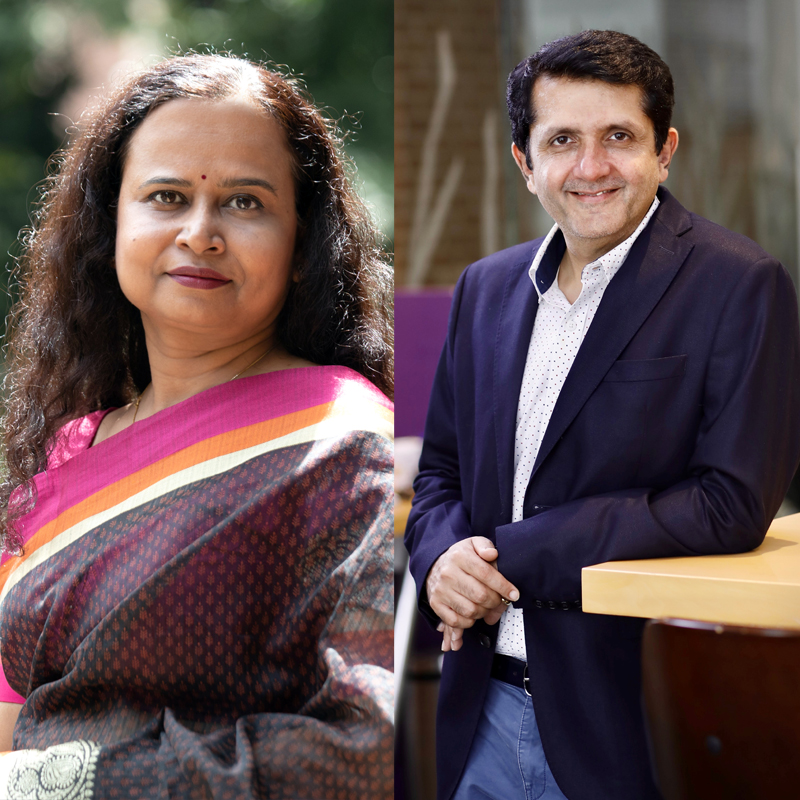
    Mumbai: Mindshare India, the flagship agency from GroupM, announced the appointment of Mausami Prasad as national head – strategy & insights. Mausami will be based out of Mumbai and will report to Mindshare South Asia CEO Amin Lakhani.

    With over 22 years of experience in crafting strategy, Mausami has been passionate about knowing consumers, their behaviour, concerns, aspirations, and everything in between to help craft growth strategies for brands. Mausami has worked on both sides of the table – getting sharp insights at Colgate and Future Retail and doing cutting-edge work at Indica and Kantar. In her last stint at Kantar, she was leading the Unilever relationship for India and was a SPOC for South Asia.

    Mindshare South Asia CEO Amin Lakhani said, “We are glad to have someone as experienced as Mausami on our team. Today, our clients are focusing on integrated strategies to grow their businesses. The expertise Mausami brings to Mindshare will allow us to continue to support clients by crafting insight-driven approaches. I am certain that Mausami will play a pivotal role in the brand transformation journey for our clients.”

     “I believe in earning the leadership that I have been entrusted with and would love to create winning journeys with my team,” said Mausami Prasad. “I am excited to join Mindshare, an industry leader in shaping creative strategies for its brands and clients to help them achieve their goals. I am thrilled about this opportunity, and I would like to thank the team for believing in me. I look forward to contributing to Mindshare’s ‘good growth’ journey by creating exclusive strategies for our clients,” she added further.

  • MIB secretary Apurva Chandra visits Tata Play’s technology centre

    MIB secretary Apurva Chandra visits Tata Play’s technology centre

    Mumbai: Ministry Information & Broadcasting (MIB ) secretary Apurva Chandra has visited Tata Play’s technology center in New Delhi to explore how Tata Play is leveraging technology and providing benefits to the end consumers.

    While exploring various ideas about technology that can benefit the customers, Chandra spent a considerable time understanding the complexities of a content distribution platform and steps Tata Play is taking to boost Make in India efforts for manufacturing set-top-boxes.

    During his visit, the Tata Play team demonstrated to Chandra the complete satellite communication and direct-to-home (DTH) delivery workflow and discussed other topics of mutual interest.

    Last year, Tata Play launched the first batch of Make-in-India set-top boxes in association with Technicolor Home and Flextronics. Earlier, Tata Play’s managing director & CEO Harit Nagpal had said that the India made set-top boxes would help generate employment and serve Indian consumers better.

    Tata Play has invested in advanced digital infrastructure and partnered with global leaders to provide superior technology. The company has a pan-India footprint of 23 million connections.

  • MX Player gets into a multi-year partnership with Lionsgate

    MX Player gets into a multi-year partnership with Lionsgate

    Mumbai: MX Player has partnered with global giant Lionsgate to bring premium Hollywood content, including award-winning titles across genres.

    With over 200,000 hours of content across 800+ original series, web series, international, dubbed content and an average time spent of 56 minutes per user per day, MX Player continues to ink partnerships to make quality content available to all of its users.

    MX Player senior vice president (content acquisitions and alliances) Mansi Shrivastav said, “At MX Player, we are invested in our consumers. As the second largest entertainment ecosystem across the globe, we have continually and consistently brought diverse content to the platform across genres, formats, and languages. Our partnership with Lionsgate allows us to bring some of the most popular and commercially acclaimed Hollywood films to our viewers in their local languages.”

    She further added, “This partnership also enables us to attract new users to the platform while consolidating our existing audience base. We are thrilled with this alliance and look forward to working closely with the team at Lionsgate to make more Hollywood content available for users in the region.”

    MX Player users in India, Pakistan, Afghanistan, Nepal, Bangladesh, Bhutan, Sri Lanka, and the Maldives will now have access to 50+ Hollywood blockbuster films dubbed in Hindi, Tamil, and Telugu each year as a result of this collaboration.

    Through this collaboration with Lionsgate, MX Player will have access to the most recent and well-liked Hollywood blockbusters, significantly broadening its current content inventory and enabling fans to watch movies in their preferred language.

    Lionsgate vice president (licensing and content partnerships) Gayathiri Guliani said, “Lionsgate has been bullish for its compelling content slate, and we are delighted to partner with MX Player as this will multiply our consumption, reaching out to maximum viewer base. It’s all about genre diversification, breaking language barriers, and having the best stories to watch. This alliance is all set to grow with multiple Lionsgate titles made available on the platform, spoiling viewers for choice.”

    “Hunger Games: Mockingjay part 1”, “Hunger Games: Mockingjay part 2”, “War” (2007) and “Destruction: Las Vegas” (2013) are among the recommended titles for September 2022 on MX Player.


  • Metaverse ecosystem opening up new influencer opportunities for brands, creators, & consumers: FleishmanHillard report

    Metaverse ecosystem opening up new influencer opportunities for brands, creators, & consumers: FleishmanHillard report

    Mumbai: FleishmanHillard and its research practice, True Global Intelligence, in partnership with Eleve Media, have released the ‘Web 3.0 Influencer and Intelligence Report 2022.’ It showcases the ways that conversation and influence are quickly changing in India around the rising evolution of the metasphere.

    Both the creator economy and the topics driving discussion of web 3.0 on social media have sharply increased over the past 12 months. The report research included a survey of over 500 influencers, content creators and select web 3.0 players from March through April 2022, in addition to the analysis of more than 12 months of social conversations. The research confirms the massive excitement around web 3.0, as well as specific areas of interest, including education, regulation and the need for re-imagined communities. 

    “Our report confirms the rapidly growing appetite for news and views about the metaverse and web 3.0-related trends. These advancements are already setting a precedent for brands and content creators who can design highly engaging and differentiated campaigns that leverage this advantage. We hope this report will increase our understanding of the subject and contribute toward the adoption of Web 3.0 in a meaningful way for brands and creators,” said FleishmanHillard India MD and partner Munavar Attari.

    The report also provides a detailed conversation analysis and an overview of the web 3.0 landscape in India.

    “Our research inspected the developments in the web 3.0 space over the past year and highlights just how dynamic the topic is, and how much open territory still exists for brand communications that satisfy this hunger. As brands adopt new technologies in web 3.0, understanding the velocity and direction of the current conversation can be valuable to start from a place of intelligence and understanding in India,” said FleishmanHillard TRUE Global Intelligence, managing director of APAC and global head of analytics Michael Rinaman.

    Major themes and findings are discussed in detail in the report, including how:

    •     The popularity of web 3.0 content reveals a dire need for a better understanding of the new generation of web technologies.
    •     The evolving landscape requires close attention to shifting conversations to understand emergent trends, nuances, and new risks.
    •     Most influencers want to create a community (web 3.0) over algorithms (web 2.0) in the metaverse.
    •     Influencers are on the lookout for next-gen tools to strengthen the creator economy.
    •     Creators and non-fungible tokens (NFTs) have paved the way for the metaverse to become an accelerated reality.
    •     Creators vote for Discord, virtual influencers, and social interactions as key web 3.0 tools.

    “Web 3.0 promises a more direct relationship between brands and consumers. And we would want brands to be equipped to experiment and explore web 3.0 platforms and opportunities. The ‘Web 3.0 Influencer & Intelligence Report 2022’ is a joint effort with FleishmanHillard in India to help brands strategically leverage this societal shift,” said Eleve Media CEO and founder Prince Khanna.

    From the web 3.0 Influencer and Intelligence Report 2022, the research from FleishmanHillard in India and Eleve demonstrates a sense of urgency that brands need to start to develop web 3.0 strategies now while there is still room for differentiation and partnership. As audiences become more familiar with web 3.0 topics such as NFTs, cryptocurrencies, blockchains, and tokens, there will be fewer opportunities to differentiate.

    Web 3.0 is set to change the influencer ecosystem and continue to drive conversation. In the report, brands can learn more about immediate opportunities to act – from embracing the key trio with creators (creation, consumption, and compensation) to crafting the right strategies and messaging to be considered relevant.