Tag: consumer

  • HDFC Bank opts for Adobe Marketing Cloud solution

    HDFC Bank opts for Adobe Marketing Cloud solution

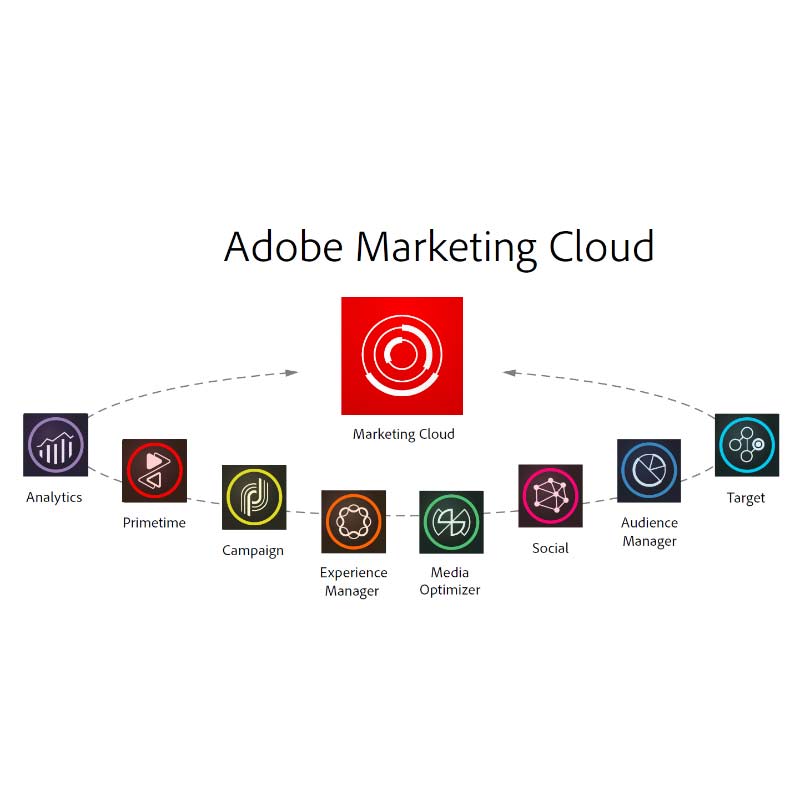
    MUMBAI: HDFC Bank announced that it has selected Adobe Marketing Cloud platform to deliver personalized digital experiences to its 37 million customers. This multi-million dollar deal represents one of the biggest implementations of Adobe Campaign globally, and reinforces HDFC Bank’s commitment to taking the lead in providing a truly world-class digital experience for Indian customers.

    In partnership with Adobe, HDFC Bank has developed a comprehensive email marketing solution based on Adobe Campaign that will span multiple outbound channels including email, SMS, social and mobile apps.

    “The ongoing digital revolution has opened up an array of opportunities as well as challenges for companies across the world. This is especially true for the BFSI sector in India, where more and more customers are relying on the power of the internet for all their banking requirements. At HDFC Bank, we are making strategic investments in driving a company-wide digital transformation to deliver on the fast evolving needs of our customers today. The implementation of this solution provides us with a comprehensive view our customers’ engagements with our campaigns, allowing us to share relevant, personalised marketing content with them, which enhances the customers’ experience with us with a real time response. As one of India’s leading brands, it’s important to us to maintain the trust and relationship we have built with our customers by continuing to improve and innovate,” said HDFC Bank’s Kartik Jain.

    As part of this partnership, HDFC Bank will replace its current engine for outbound campaigns with an all new solution based on Adobe Campaign that will help the Bank create multi-wave campaigns that will deliver an improved and personalized experience for its customers.

    “In today’s digital era, consumers have a low tolerance for irrelevant or meaningless marketing material. A laser sharp focus on delivering the right message at the right time for customers is key to the success of any brand. We are excited about partnering with yet another industry leader and leading brand like HDFC Bank to drive their digital transformation agenda and help them engage with their customers in a multi-screen, digital world,” said Adobe south Asia MD Kulmeet Bawa.

    Promoted by Housing Development Finance Corporation (HDFC), India’s leading housing finance company, HDFC Bank was incorporated in 1994 and is today one of the country’s premier banks providing a wide range of financial products and services to 37 million customers across India.


  • HDFC Bank opts for Adobe Marketing Cloud solution

    HDFC Bank opts for Adobe Marketing Cloud solution

    MUMBAI: HDFC Bank announced that it has selected Adobe Marketing Cloud platform to deliver personalized digital experiences to its 37 million customers. This multi-million dollar deal represents one of the biggest implementations of Adobe Campaign globally, and reinforces HDFC Bank’s commitment to taking the lead in providing a truly world-class digital experience for Indian customers.

    In partnership with Adobe, HDFC Bank has developed a comprehensive email marketing solution based on Adobe Campaign that will span multiple outbound channels including email, SMS, social and mobile apps.

    “The ongoing digital revolution has opened up an array of opportunities as well as challenges for companies across the world. This is especially true for the BFSI sector in India, where more and more customers are relying on the power of the internet for all their banking requirements. At HDFC Bank, we are making strategic investments in driving a company-wide digital transformation to deliver on the fast evolving needs of our customers today. The implementation of this solution provides us with a comprehensive view our customers’ engagements with our campaigns, allowing us to share relevant, personalised marketing content with them, which enhances the customers’ experience with us with a real time response. As one of India’s leading brands, it’s important to us to maintain the trust and relationship we have built with our customers by continuing to improve and innovate,” said HDFC Bank’s Kartik Jain.

    As part of this partnership, HDFC Bank will replace its current engine for outbound campaigns with an all new solution based on Adobe Campaign that will help the Bank create multi-wave campaigns that will deliver an improved and personalized experience for its customers.

    “In today’s digital era, consumers have a low tolerance for irrelevant or meaningless marketing material. A laser sharp focus on delivering the right message at the right time for customers is key to the success of any brand. We are excited about partnering with yet another industry leader and leading brand like HDFC Bank to drive their digital transformation agenda and help them engage with their customers in a multi-screen, digital world,” said Adobe south Asia MD Kulmeet Bawa.

    Promoted by Housing Development Finance Corporation (HDFC), India’s leading housing finance company, HDFC Bank was incorporated in 1994 and is today one of the country’s premier banks providing a wide range of financial products and services to 37 million customers across India.

  • Consumer fail to get adequate information on packages and so any agreement remains unilateral, says Chrome study

    Consumer fail to get adequate information on packages and so any agreement remains unilateral, says Chrome study

    New Delhi, 28 March: Even when the third phase of digitization of cable television is underway and the country is proceeding towards the final phase, the average consumer remains unaware of answers to simple questions that can be provided by the local distributor/direct-to-home operator or cable operator.

    Thus, a bilateral transaction remains unilateral as consumers pay for a certain package consisting of a series of channels but are not made aware when a package is revised, leaving them to continue paying the same amount, regardless of whether the revised price of the package is lesser.

    A Chrome DM report says that “the broadcasters and consumers are both left in the dark. Similarly, consumers may not necessarily require all the channels provided in the package, and would be watching channels worth less than the amount they are paying. For example, they may pay Rs. 400 per month, whereby their content affinity may be towards channels that cost only Rs. 250”.

    In fact, the Report says even basic questions remain unanswered despite the Telecom Regulatory Authority of India have introduced the e-CAF (Consumer Application Forms) to increase the efficiency in the system, and giving it priority by advertising on all TV channels.

    For example, few consumes know what DTH platform they use at home, the package they are subscribed to, or the channels available on those packages, as they accept a lucrative offer that comes their way and accept it without asking questions.

    The Report says these basic questions give rise to huge discrepancies on-ground, impacting the stakeholders in the scenario, in various ways; namely the government, broadcasters, cable operators and consumers.

    Interestingly, the study found that consumers are under the misconception that à la carte is only for sports channels. And though there may be curious consumers who visit respective websites to get information, they find that these may or may not be updated.

    Thus, the notion that the flow of information should be two-way is undermined as the key stakeholders – the consumers – remain uninformed.

    “The total package implementation that collectively took place in Phase I and Phase II is 16 per cent, across the digital universe, with a subscriber base of 2,90,14,214. Despite Phase I and Phase II being implemented in November, 2012 and December, 2013, respectively, the package implementation in Phase I has only been 24 per cent and 13 per cent in Phase II,” the study claims.

    PHASE
    PACKAGES IMPLEMENTED
    PACKAGES NOT IMPLEMENTED
    GRAND TOTAL
    % OF IMPLEMENTATION
    Phase 1
    20
    63
    83
    24%
    Phase 2
    32
    213
    245
    13%
    Grand Total
    52
    276
    328
    16%

    “Discrepancies have definitely arisen from the problem of package implementation. The overall scenario requires much more clarity and I always believe that this is purely contingent on basics. For instance, a leading DTH provider launches a brilliant mobile application meant to be paired with a certain set-top box – however, they go wrong by not seeding the new boxes before launching the application itself! Transparency in the system facilitates concrete addressability. If there were no electricity metres and individuals were to pay electricity bills based purely on negotiations, havoc would ensue.”

    The primary data Chrome DM collected from the ground showed some grave discrepancies. In two areas in Kolkata (Rajabazar and Radhamadhav Dutta, Garden Lane), two respondents in the respective areas are paying two separate prices to their cable operators (Rs 330 and Rs 350 respectively), whereas the former is receiving only 228 available channels and the latter is receiving 342. The respondents are not even provided with receipts.

    Chrome Data Analytics & Media founder and CEO Pankaj Krishna said that “the basics should be very carefully focused upon in order to create a strong and successful foundation upon which the rest of the infrastructure can be implemented.”

    The lack of awareness of the end-consumers and the gravity of this issue as a whole has to be addressed as early as possible if digital addressable system has to succeed, says the study.


  • Consumer fail to get adequate information on packages and so any agreement remains unilateral, says Chrome study

    Consumer fail to get adequate information on packages and so any agreement remains unilateral, says Chrome study

    New Delhi, 28 March: Even when the third phase of digitization of cable television is underway and the country is proceeding towards the final phase, the average consumer remains unaware of answers to simple questions that can be provided by the local distributor/direct-to-home operator or cable operator.

    Thus, a bilateral transaction remains unilateral as consumers pay for a certain package consisting of a series of channels but are not made aware when a package is revised, leaving them to continue paying the same amount, regardless of whether the revised price of the package is lesser.

    A Chrome DM report says that “the broadcasters and consumers are both left in the dark. Similarly, consumers may not necessarily require all the channels provided in the package, and would be watching channels worth less than the amount they are paying. For example, they may pay Rs. 400 per month, whereby their content affinity may be towards channels that cost only Rs. 250”.

    In fact, the Report says even basic questions remain unanswered despite the Telecom Regulatory Authority of India have introduced the e-CAF (Consumer Application Forms) to increase the efficiency in the system, and giving it priority by advertising on all TV channels.

    For example, few consumes know what DTH platform they use at home, the package they are subscribed to, or the channels available on those packages, as they accept a lucrative offer that comes their way and accept it without asking questions.

    The Report says these basic questions give rise to huge discrepancies on-ground, impacting the stakeholders in the scenario, in various ways; namely the government, broadcasters, cable operators and consumers.

    Interestingly, the study found that consumers are under the misconception that à la carte is only for sports channels. And though there may be curious consumers who visit respective websites to get information, they find that these may or may not be updated.

    Thus, the notion that the flow of information should be two-way is undermined as the key stakeholders – the consumers – remain uninformed.

    “The total package implementation that collectively took place in Phase I and Phase II is 16 per cent, across the digital universe, with a subscriber base of 2,90,14,214. Despite Phase I and Phase II being implemented in November, 2012 and December, 2013, respectively, the package implementation in Phase I has only been 24 per cent and 13 per cent in Phase II,” the study claims.

    PHASE
    PACKAGES IMPLEMENTED
    PACKAGES NOT IMPLEMENTED
    GRAND TOTAL
    % OF IMPLEMENTATION
    Phase 1
    20
    63
    83
    24%
    Phase 2
    32
    213
    245
    13%
    Grand Total
    52
    276
    328
    16%

    “Discrepancies have definitely arisen from the problem of package implementation. The overall scenario requires much more clarity and I always believe that this is purely contingent on basics. For instance, a leading DTH provider launches a brilliant mobile application meant to be paired with a certain set-top box – however, they go wrong by not seeding the new boxes before launching the application itself! Transparency in the system facilitates concrete addressability. If there were no electricity metres and individuals were to pay electricity bills based purely on negotiations, havoc would ensue.”

    The primary data Chrome DM collected from the ground showed some grave discrepancies. In two areas in Kolkata (Rajabazar and Radhamadhav Dutta, Garden Lane), two respondents in the respective areas are paying two separate prices to their cable operators (Rs 330 and Rs 350 respectively), whereas the former is receiving only 228 available channels and the latter is receiving 342. The respondents are not even provided with receipts.

    Chrome Data Analytics & Media founder and CEO Pankaj Krishna said that “the basics should be very carefully focused upon in order to create a strong and successful foundation upon which the rest of the infrastructure can be implemented.”

    The lack of awareness of the end-consumers and the gravity of this issue as a whole has to be addressed as early as possible if digital addressable system has to succeed, says the study.


  • E-Commerce giants dish out exclusive offers this Leap Year

    E-Commerce giants dish out exclusive offers this Leap Year

    MUMBAI: Even as e-commerce giants lure customers via various discount offers throughout the year, this leap year the companies have found yet another reason to attract more shoppers. 

    With an extra day added to this year in 29 February, e-commerce sites are poised to take advantage in order to boost sales by offering high discount rates. Websites like Askmebazaar.com, Amazon.in, Snapdeal.com, AmericanSwan.com, Zimmber.comand Paytm.com are offering special discounts on 29 February with an aim to pump up sales. 

    Askmebazaar.com, an online marketplace for shoppers has come up with exclusive leap year deals by offering up to 70 per cent off on every item. On the other hand, Snapdeal.com is offering free data and bank discounts on Infocus smartphones.

    Buyers will be able to avail offers of up to 65 per cent off plus 100 per cent cashback on every 29th order on AmericanSwan.com. The leap deal is also available on sites like Jabong where clothing, footwear and accessories have upto 80 per cent off, 20 per cent off and one per cent off respectively. Meanwhile, Shopclues.com is providing flat 77 per cent off on daily essential combo packs. 

    Grand appliances sale by Amazon.in is offering upto 50 per cent off on top appliances. It is also offering 25 per cent off on Lenovo, Asus, dell laptops and two in ones. Not the one to be left behind, Paytm.com is also offering mobile recharge offers where customers can avail Rs 65 cashback on every recharge of Rs 500.

    Moskart.com and Cubishop.com, the marketplace for consumer electronics industry is offering exclusive offers for the year’s extra day. Moskart.com is offering half price on mobile and mobile accessories, whereas Cubishop.com will be selling mobile charger for Samsung and Android mobiles for just Rs 150. 

    Zimmber.com, the only site that provides handyman services like electrical, AC, plumbing et al has come up with mega offers for 29 February by offering flat Rs 444 off on salon spa, car spa and pest control. It is also offering Rs 333 off on sofa spa, Rs 222 off on air conditioner services and Rs 555 off on home spa. 

    The online eyewear portal Lenskart.com is also eyeing more customers by giving customers 29 per cent off plus 29 per cent cashback on every purchase.

  • E-Commerce giants dish out exclusive offers this Leap Year

    E-Commerce giants dish out exclusive offers this Leap Year

    MUMBAI: Even as e-commerce giants lure customers via various discount offers throughout the year, this leap year the companies have found yet another reason to attract more shoppers. 

    With an extra day added to this year in 29 February, e-commerce sites are poised to take advantage in order to boost sales by offering high discount rates. Websites like Askmebazaar.com, Amazon.in, Snapdeal.com, AmericanSwan.com, Zimmber.comand Paytm.com are offering special discounts on 29 February with an aim to pump up sales. 

    Askmebazaar.com, an online marketplace for shoppers has come up with exclusive leap year deals by offering up to 70 per cent off on every item. On the other hand, Snapdeal.com is offering free data and bank discounts on Infocus smartphones.

    Buyers will be able to avail offers of up to 65 per cent off plus 100 per cent cashback on every 29th order on AmericanSwan.com. The leap deal is also available on sites like Jabong where clothing, footwear and accessories have upto 80 per cent off, 20 per cent off and one per cent off respectively. Meanwhile, Shopclues.com is providing flat 77 per cent off on daily essential combo packs. 

    Grand appliances sale by Amazon.in is offering upto 50 per cent off on top appliances. It is also offering 25 per cent off on Lenovo, Asus, dell laptops and two in ones. Not the one to be left behind, Paytm.com is also offering mobile recharge offers where customers can avail Rs 65 cashback on every recharge of Rs 500.

    Moskart.com and Cubishop.com, the marketplace for consumer electronics industry is offering exclusive offers for the year’s extra day. Moskart.com is offering half price on mobile and mobile accessories, whereas Cubishop.com will be selling mobile charger for Samsung and Android mobiles for just Rs 150. 

    Zimmber.com, the only site that provides handyman services like electrical, AC, plumbing et al has come up with mega offers for 29 February by offering flat Rs 444 off on salon spa, car spa and pest control. It is also offering Rs 333 off on sofa spa, Rs 222 off on air conditioner services and Rs 555 off on home spa. 

    The online eyewear portal Lenskart.com is also eyeing more customers by giving customers 29 per cent off plus 29 per cent cashback on every purchase.

  • ‘We always look at ways to improve our consumer experience’

    ‘We always look at ways to improve our consumer experience’

    MUMBAI: While growing up, we all loved the flavour of the soft, creamy choco-filled candy that effortlessly melted in our mouths, leaving us craving for more. Most of us have grown up with that familiar taste of Cadbury’s Eclairs. We have shared the choco-candy with our friends and family in the moments of joy and celebration and even otherwise. Now, the confectionary brand is repackaging one of its most popular products.

    Keeping up with the fast-paced lifestyle, Cadbury re-launched Cadbury Éclairs as Cadbury Choclairs. Even in 2009, Cadbury Eclairs was re-launched with an enriched chocolate center.

    The reason behind this change is very simple – as a brand, Cadbury always looks at ways to improve its consumer experience. Elaborating more on it, Cadbury India powdered beverages (Gum & Candy) associate vice president Amit Shah says, “In 2011, Cadbury Éclairs heralded in the New Year with another exciting addition to its fold – the new Cadbury Eclairs Rich Brownie. Our rebranding decision is based on this philosophy of product innovation and not so much on what is going on in the market place. Also, we hold the global copyrights for Choclairs and thought the time is right to introduce this name in India to align with the global brand name for the candy.”

    Except India, the candy from the house of Cadbury has globally been known as Choclairs. And it’s not just the name that has changed; there some specific positive product innovation as well in order to give consumers a new experience with every bite of Choclairs. Adds Shah, “Apart from enabling us to align with the global brand name, this name change will also help consumers distinguish our brand, the original Cadbury candy, from other branded and unbranded Eclairs available in the market.”

    And since old habits take time to die, the launch is accompanied by a 360 degree campaign to generate rapid awareness about the change. Television is, of course, the key medium that introduces the new brand name. However, the TV campaign is also supported by a radio campaign, print inserts, cinema campaign and social media activation.

    Besides, to reach consumers in small towns, the brand has opted for cyber cafe integrations with a branded jigsaw puzzle and Interactive Voice Recording (IVR) integration with Cadbury Choclairs caller tune. All these initiatives along with trade activation have been initiated to create awareness and build the excitement amongst consumers for Cadbury Choclairs.

    Contract Advertising has been brought on board to work on the campaign.