Tag: consumer insights

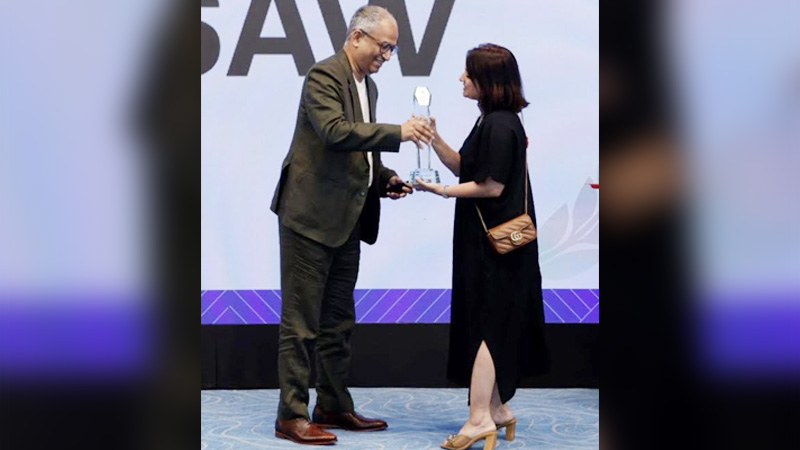
  • Jigsaw snags ‘Most Promising Research Agency’ crown at Unilever Awards

    Jigsaw snags ‘Most Promising Research Agency’ crown at Unilever Awards

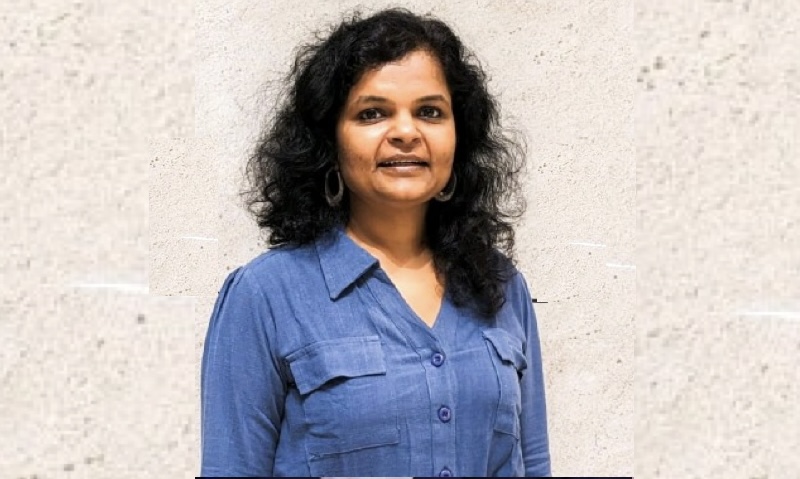
    MUMBAI: In a world drowning in data but starved for real insight, one agency has managed to cut through the noise—Jigsaw. The consumer research and strategy powerhouse has bagged the coveted title of ‘Most Promising & Emerging Research Agency of the Year’ at the prestigious Unilever Insight Excellence Awards. If research had a red carpet, Jigsaw just strutted down it in style.

    This milestone victory is not just about shiny trophies—it’s a testament to Jigsaw’s fearless approach to decoding the Indian consumer. Led by the indomitable Rutu Mody Kamdar, the agency has made a name for itself by challenging conventional wisdom and diving deep into the cultural and behavioural undercurrents that drive consumer choices. Forget stale Powerpoint decks—Jigsaw delivers insights that shake up boardrooms and shape business strategies.

    For Kamdar, this award is more than just industry recognition—it’s a nod to the power of curiosity, culture, and cutting-edge research. “Great clients make agencies do great work, and Unilever has undoubtedly set the gold standard. Their commitment to depth, clarity, and continuous refinement challenges us to push our own limits every day. This award belongs not only to our team at Jigsaw but to every Unilever team that has placed their trust in us, inspiring us to take on complex, thought-provoking projects that truly make a difference,” she said.

    Jigsaw’s meteoric rise in the research world is no accident. The agency’s sharp cultural intuition, deep behavioural insights, and innovative methodologies have placed it firmly in the league of research pioneers. By transforming dry data into compelling, strategic goldmines, Jigsaw is redefining what research means in an era of information overload.

    Winning at the Unilever Insight Excellence Awards cements Jigsaw’s reputation as a trailblazer. With an insatiable hunger for uncovering consumer truths, the agency is all set to scale new heights—turning complex problems into clear, actionable solutions that fuel brand growth.

    So, if you’re a brand looking for insights that don’t just inform but inspire, you might want to get in line—because Jigsaw is playing in the big leagues now.

  • Ormax Media introduces Ormax Mpact to revolutionise brand lift measurement

    Ormax Media introduces Ormax Mpact to revolutionise brand lift measurement

    MUMBAI: Ads are now sneakier than ever—slipping into your favourite reality show, casually making an appearance in blockbuster films, and popping up in places you least expect. But do they actually work? Ormax Mpact is here to find out. This state-of-the-art Brand Lift Measurement tool helps marketers navigate the ad clutter and determine what’s making waves and what’s just white noise.

    With India’s advertising space bursting at the seams, Ormax Media has launched this data-driven tool to evaluate and optimise brand partnerships, sponsorships, and advertising innovations. According to Ormax Media’s estimates, more than 8,000 major brand collaborations take place every year across various platforms, including sports sponsorships, reality show integrations, digital brand tie-ups, in-content product placements, and more. Ormax Mpact aims to quantify their effectiveness and ensure brands get the best bang for their buck.

    Ormax Mpact employs two sophisticated approaches to measure brand impact:

    . Audience vs. non-audience approach: This method compares individuals exposed to a specific media platform (such as a TV channel or digital platform) against those who aren’t, to measure its influence on key brand metrics.

    . Exposed vs. control approach: This model evaluates the impact of a particular creative—be it a TV ad, print campaign, or digital ad—by comparing those who have seen it with those who haven’t.

    By leveraging Ormax Media’s extensive 16 years of research & analytics and its robust online research panel of 300,000+ media consumers across 1,500+ towns in India, Ormax Mpact delivers rapid, cost-efficient campaign evaluations with quick turnaround times.

    Ormax Media founder & CEO Shailesh Kapoor highlighted the evolving nature of advertising, “We live in a time when ads aren’t just TV commercials anymore. Sponsorships, influencer tie-ups, and branded content are the new norm, and they come at a premium cost. With Ormax Mpact, we offer brands and media platforms a structured, data-backed approach to measure and refine their strategies, ensuring every rupee spent translates into real impact.”

    Echoing this sentiment, Ormax Media head – business development (TV, streaming & brands), Keerat Grewal added, “From an IPL sponsorship to a Shark Tank collaboration or a film integration like Pushpa 2, Ormax Mpact helps brands quantify their media investments. It also enables platforms—TV channels, AVOD services, print publications, social media—to build case studies that improve the effectiveness of their ad sales strategies.”

    Ormax Mpact is priced between Rs 2.5 lakh and Rs 6.5 lakh, depending on the research sample size. Having already built case studies across multiple industries, Ormax Media is targeting a broad spectrum of brands, media agencies, and platforms as potential users.

    In an advertising jungle where brands are battling for consumer eyeballs, Ormax Mpact is the ultimate survival tool-helping brands ensure their ad spend doesn’t just fade into the abyss. Because, let’s face it, if your ad spends flops, your brand’s just another tree falling in the forest with no one around to hear it.

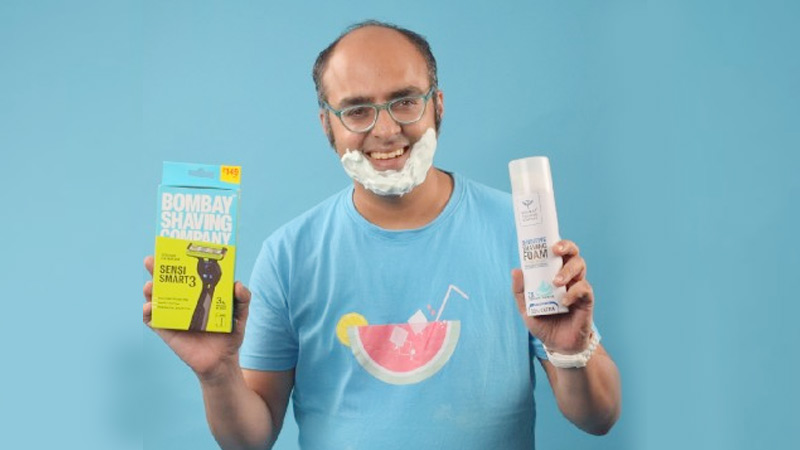
  • From codes to scents: BSC appoints Rohit Taneja as category lead for fragrances

    From codes to scents: BSC appoints Rohit Taneja as category lead for fragrances

    MUMBAI: In a world brimming with transformative journeys, Rohit Taneja’s story stands out as a masterclass in reinvention. Once immersed in the world of software engineering, Taneja has pivoted his career to become a seasoned product leader.

    Now, as Bombay Shaving Company’s newly appointed category lead for fragrances, he embarks on an ambitious mission to shape the company’s foray into the captivating world of scents.

    Armed with over a decade of expertise in marketing and brand management, Taneja is poised to craft a fragrant legacy that redefines the company’s expansion strategy.

    Taneja’s career began as a software engineer at Infosys. He then transitioned into marketing with DDB Mudra Group, leading brand perception studies for major clients. His tenure at The Goodyear Tire & Rubber Company as a sales manager saw him managing sales across Rajasthan, Madhya Pradesh, and Gujarat. In 2019, Taneja joined Bombay Shaving Company, serving as associate director of consumer insights & marketing. In this role, he focused on understanding Indian grooming and beauty preferences, translating data into actionable insights, and enhancing customer loyalty.

    Taneja holds a Post Graduate Diploma in Communications Management from MICA, where he was among the top students in Account Planning. He also earned a Bachelor of Technology in Electronics & Communication from Uttar Pradesh Technical University.

    In his new position, Taneja will lead the development and marketing of Bombay Shaving Company’s fragrance line, aiming to strengthen the brand’s presence in the men’s grooming market.

    Bombay Shaving Company continues to innovate in the grooming industry, offering a range of products designed to enhance the grooming experience for men across India.

  • Deepali Jain gets expanded insights head role at Marico

    Deepali Jain gets expanded insights head role at Marico

    MUMBAI: The fragrance of promotion and greater responsibility on most occasion smells good. As it has in the case of Deepali Jain who has been promoted and seen an expansion  in her role  to partner – head consumer technical insights + perfumery + design (India + international businesses) at Marico.

    A hard core-research oriented professional, Deepali, has progressed in a sustained manner over the 10 years and eight months she has been at the firm. Beginning as a consumer insights manager – innovation and technology she was promoted to principal manger – consumer science after a period of nearly five years. Another four years of consistency saw her being promoted to head consumer insights for hair care, personal care  and male grooming – a position from which she got another promotion.

    Before joining Marico Deepali spent three and a half years as group project director at TNS Global and nearly seven years at Nielsen beginning as a research executive and rising to consumer insights manager working on some of the top FMCG brands.

    “A big thank you to my incredible insights, perfumery, and design team, members at R&D and across geographies for their invaluable support. Looking forward to work for together to drive Marico’s success. Here’s to many more exciting milestones and achievements,!” said Deepali while announcing her expanded role at the Harsh Mariwala-founded company. 

  • Kantar’s AI-volution: Making AI-dable connections in consumer insights

    Kantar’s AI-volution: Making AI-dable connections in consumer insights

    Mumbai: India’s digital landscape is evolving, and at its heart lies a burgeoning AI revolution. With over 724 million users already engaging with AI features, the country is on the brink of a transformative shift. Kantar, a global leader in marketing data and analytics, delves into this dynamic AI market, offering actionable insights for brands. From the widespread adoption of AI in fitness and social media apps to the emergence of virtual assistants and smart home automation, the AI wave is reshaping consumer experiences.

    But it’s not just about adopting AI; it’s about humanizing it. Kantar’s innovative suite of AI-powered research solutions empowers brands to understand consumer behavior like never before, paving the way for sustainable growth and competitive advantage in an increasingly AI-driven world.

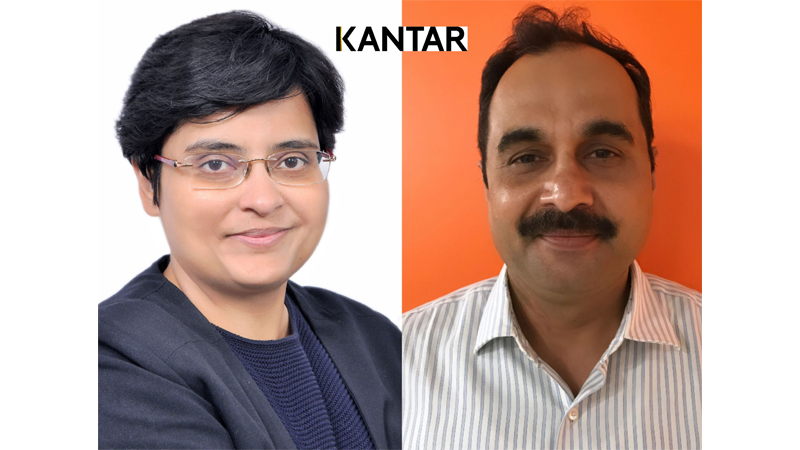
    Indiantelevision.com in conversation with Kantar MD and chief client officer- South Asia, insights division Soumya Mohanty and Kantar senior executive director, South Asia, insights division Puneet Avasthi delved into Kantar’s AI Summit that was held on 24 April 2024; the ways in which Indian consumers are incorporating AI into their daily lives, on Kantar’s AI-based offerings and more…

    Edited Excerpts:

    On the Kantar AI Summit and its key insights

    Puneet: The AI Summit is a platform where we’re going to be sharing the details of our full range of investments leveraging AI and our unique models, and datasets for the purpose of addressing client questions in this fast-paced world of AI. We have a very rich understanding of how consumers in India have adopted AI and the different features that really go under the umbrella of AI. This is really what matters from a connect-with-consumer standpoint and that is something that we’ve understood in depth.

    We’ve looked at, not just understanding the different features of AI in the country, we’ve also looked at an understanding of what kind of apps are enabling that usage. So that’s something that we’re going to be talking about in the AI Summit.

    On the ways in which Indian consumers are incorporating AI into their daily lives, and the implications that this has for marketers

    Puneet: AI in India has started out principally as a feature to make things more efficient for the Indian activator and user. There are people who are living in this very fast-paced digital world and AI really helps make life easier for them a lot more. And that’s really why AI has a reason to exist from a consumer standpoint.

    In that, it has started out with powering recommendation engines, image enhancement. So some of those features are pretty much reaching saturation levels and are going to be growing at the rate at which the internet grows in India, which is five-six per cent per annum. But really the big growth over the next two-three years is going to be in terms of virtual assistants and that is something that is going to be radically changing the way we see it how brands are also going to be creating unique experiences to reach out to consumers as the virtual assistants are growing very rapidly in terms of their reach.

    We are seeing a rapid growth and I think the next four-five years are going to be transformational in terms of the device and durable ecosystem at home with many more smart and connected devices at home that are going to be used by consumers.

    Soumya: Also, if you look at it broadly, AI will help marketers analyze data faster than they are able to do today because you can real-time analyze data and real-time take decisions. AI will improve experience of your customers because if you use recommendation engines better, you will improve the kind of experience they get through that method because you know what they are. I mean you look at something very simple, the kind of choices that you are shown when you go to an e-commerce site or when you are watching an OTT, all of that is AI-driven. So as AI becomes better and more powerful, those choices will become, what you expose the consumer to, will also become much more nuanced and much better.

    Today it is based on, let’s say, only my past history. Tomorrow it’s going to be based not just on my past history but maybe, the kind of browsing I do. Maybe I’ve spent just five minutes and I’ve stopped watching something. That can be fed into it. Other things that I’m doing can be fed into it. It can make a much richer experience for me. And finally, I think you can just sort of create marketing strategies on the fly.

    I can do a lot of that with AI. Of course, all this will be within, by the way, you can also type an answer to what AI will do for marketers using GoViolet or using ChatGPT. So it is generally transformative in that sense. But I think the challenge is that you are going to have walled gardens like Facebook.

    You won’t be able to follow the consumer through those walls. You really won’t. Actually, there will be stricter and stricter privacy laws. There already are, and they will become even more stricter.

    So, all this will have to be done keeping in mind that the data access that you have today may also reduce. Then, therefore, it will become important to have an understanding or a framework with which you analyze that data. That’s where actually the Kantar tools come in. Because we do so much of consumer research, we actually have an understanding of how consumers behave. We have a lot of data. Now, it’s not just random data, which is there on Twitter or on Facebook or whatever. It’s the data in a framework.

    So that’s the advantage when you start working with folks like us to make more sense of the data that you are surrounded by.

    On the ethical considerations that marketers should keep in mind when deploying AI-powered marketing strategies

    Soumya: The first one would be bias. I think AI is as good, apart from the fact that it’s as good as the data it is trained on, which is garbage in, garbage out.

    There is also some amount of analyst bias or the person who is actually writing the code bias that comes into any kind of AI. Obviously, after some time, open AI, etc, but it regards itself. But somewhere, some human intervention has led to its learning. So it can go horribly wrong at times.

    Just like social listening can go horribly wrong. If you are on Twitter, you will be served with what you are actually seeing, and you will end up believing what you are reading. For instance, during election season, you may end up believing whatever you are shown because it becomes such an echo chamber. Social media is getting weaponized. Marketers have to be really, really careful that it’s unbiased, it is neutral, it is objective.

    The challenge, again, is that we are in an era where two or three big players actually dominate the Internet in a way. Everything is dominated. It’s not as open as we think. That’s where I think they’ll have to take the data that is getting given to them with a pinch of salt. They will have to ensure the algorithms are not biased. There’s a lot of work to be done here.

    On Kantar’s AI-based offerings and how does it work for marketers

    Puneet: So Kantar has traditionally developed a very strong suite from the standpoint of understanding consumers and understanding specific marketing activities, whether it is ROI, whether it is creative. Naturally, when it’s about consumers, it is about understanding the needs of the consumers, understanding what trends are defining consumers.

    So what we’ve done is we’ve taken those frameworks which have been owned over several decades through the different researches that we’ve done and developed those models into a framework which is now pretty much where we’ve got the data across a multitude of studies that have been done over years along with our powerful engines which have been fed into the machine learning models as such to create a suitable mechanism of ensuring that the machine is able to process diverse data sets and create appropriate learnings about the consumer as such, whether it is understanding trends, whether it is leveraging the large database of ad pre-tests that we’ve been doing over years.

    In India, for example, we’ve done over 28,000 ads being pre-tested over the last couple of decades. Using that data, we’ve created a very nuanced understanding of what kind of ads are going to be working. That is particularly relevant in this new age where ads need to get rolled out very quickly in this digital age and particularly the YouTube age as such.

    In these environments, the ability to be able to test out the likely results that a particular ad or a creative is going to deliver in a fairly quick turnaround time is something that is a differentiator in itself. That is something that Link AI does very effectively. Similarly, we’ve got other tools such as Trend AI, which allows you to understand trends that are bubbling up and defining the consumer today, leveraging a multitude of data sources, unstructured data sources, that are being fed into our machine learning algorithms to create suitable understanding of how consumers are evolving.

    These are some of the offerings. We’ve got Needscope, which allows you to understand consumer needs, needs based on how, what are the spaces that a brand can take within their targeting framework.

    Soumya: So if I was to say how useful this is, less than one per cent of ads that are put out are tested. Most advertisers don’t test advertising. Now with our AI offer, they can actually test a lot more advertising and the chances of failure of ads reduces.

    If there’s something horribly off, at least you don’t have to risk putting it online and then taking it down because there is a big backlash. At least you can avoid those kind of mistakes by using these AI solutions that we have.

    On marketers effectively humanizing AI technologies to create innovative and relatable brand experiences for consumers

    Puneet: So to humanize AI, to create those superlative brand experiences and brands are always looking at ways and means of delighting the consumer because in a manner where the message of the brand is consistent and delivered in a way that it anchors itself to what is relevant to the consumer and is truly differentiated versus whatever, you know, are the options that are set in the marketplace.

    Brands are looking to create those superlative experiences and what AI and technologies do is, it creates a new mechanism of reaching out to consumers, targeting them effectively in their own spaces. Now AI is something that is increasingly getting embedded in consumers’ ways of living.

    There is a cohort of consumers and a fairly large chunk of consumers who are looking at a variety of images and playing with their own images, anything on their own and using some of those features of AI which are brilliantly available in a whole host of social media apps. So a lot of these things are already now, defined by consumers. It is actually about the marketer leveraging some of these trends that have already, the technologies and trends, both are actually in place now.

    You’ve got the technology, you’ve got the trend, consumers have adopted it. It’s for marketers to leverage it effectively and create those superlative brand experiences. Some that come to mind are, for example, what Britannia has done recently where they have leveraged the power of trend, the reach of trend as such and created something that is almost, a surreal dreamlike experience. You would imagine a newspaper and what if the images were to be moving and you’ve got this little QR code there which you scan using a mobile phone and it reaches out to the camera and it creates a big CRT which is quite brilliant. And you’ve got Ranveer Singh who’s suddenly talking about the brand message to the consumer. It’s done in a very interesting manner and leverages a tremendous amount of computing capacity and creates a very, a superlative brand experience.

    Similarly, Mondelez had done something very effectively where they had created a hyperlocal targeting program where they had helped retailers across various micro-markets to, grow their business or gain their business traction as such post the pandemic and they’ve done it very effectively through a campaign where they used the face of Shah Rukh Khan who spoke to the consumer in various parts of the country as such in that particular micro-market, advocating a specific retailer. That is something that is fantastic for the retailer and it is also a delight for the consumer who is residing in that particular market. These are some very interesting examples of how AI has been used to humanize this technology and create great brand experiences for consumers.

    Soumya: The simplest way in which AI can be humanized is that basically you can segment your audience better and you can target your audience better. The moment you start targeting better, you are creating personalized experiences, personalized recommendations. So automatically you are sort of humanizing it. Apart from these brilliant examples of using technology to make an experience normalized.

    On the role that you see AI playing in shaping the future of consumer insights and market research

    Soumya: It will make market research more accessible to a lot more people. In India, by the way, market research is probably penetrated less than 10 per cent, even less than that. If you look at how big the Indian economy is, and if you look at how big marketing and advertising spends are, that itself is very low in India. Within that, research and insights is even lower. So, effectively, the coming of AI and, of course, social media and the internet can increase the reach of everything, from marketing and advertising. Marketing and advertising itself will grow, and so will consumer research.

    Number one, it will improve accessibility. It will make it faster. It will make it more cost-effective for the kind of clientele that today may not be able to afford large-scale work. Having said that, what is most important is that you finally need a human behind the AI because the data that goes into the AI, and the algorithm that is written, is the most important part. Otherwise, AI can go horribly wrong.

    On the threats that AI can pose

    Soumya: I think more than threat, it’s an opportunity, because we are a neutral, third-party, objective source of information, and we have very validated, strong consumer frameworks.

  • Kantar Annual Trends 2022 report unveils 10 themes for recovery & innovation

    Kantar Annual Trends 2022 report unveils 10 themes for recovery & innovation

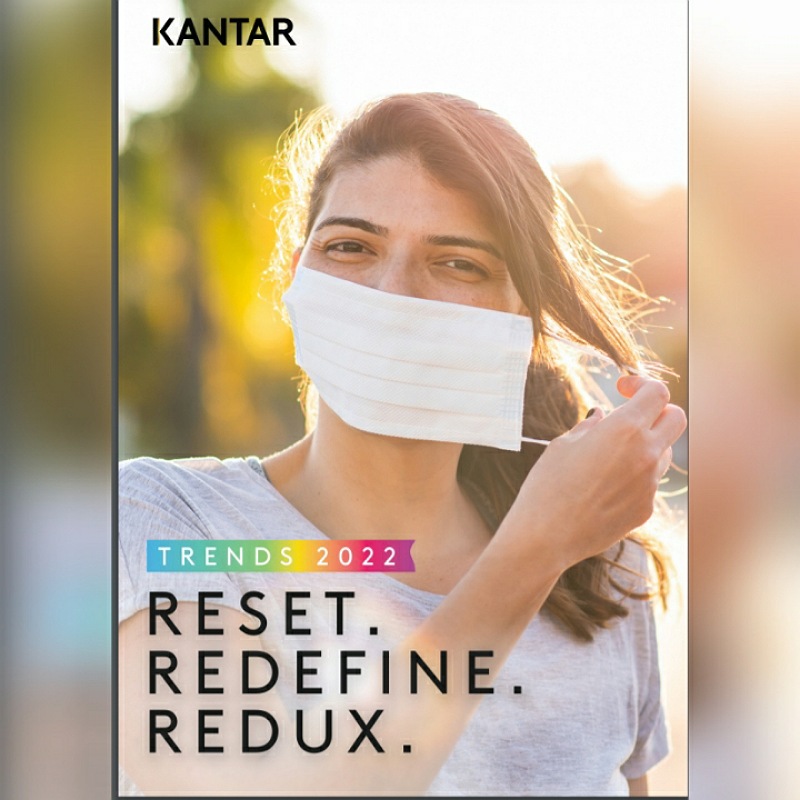
    Mumbai: 2021 has been a year of discovery for consumers. As we learn to adjust in a world that changes often and unpredictably, brands would need to listen more intently to consumers than ever before, be transparent in their promises and provide solutions for their evolving needs. Keeping this in mind Kantar has unveiled its ‘Annual Trends 2022’ report, that’s borne out of the insights generated, based on their conversations with consumers across the country.

    The report spells out ten themes that define how consumers are preparing themselves for 2022, even as it aims to guide businesses through a period of recovery and innovation:

    1.      Going small to live big

    The lockdown and the opportunity of working from home have allowed people to consider an alternative to the city humdrum. As companies chose remote working as ‘business as usual,’ the service sector employees chose to move ‘back home’ to smaller towns. The current trend offers a unique opportunity to reimagine our cities, our infrastructure and mobility, notes the report. Brands, on the other hand, need to reinforce supply chains to avoid losing customers due to last-mile connectivity gaps, Kantar says.

    2.      Seeking assurance in ‘ghar jaisa’ khana

    The pandemic has made consumers painfully sensitive about the importance of health and immunity. They are more mindful of what they eat and are willing to make an effort to table fresher meals, with nearly 72 per cent preferring fresh home-cooked food than the packaged with the fear of preservatives, as per the report. With increasing importance to freshly cooked meals, consumers would be open to kitchen solutions in terms of ingredients or appliances that make ‘home-made’ easier. Additionally, the affinity towards ‘home-like food’ will also guide what the food industry will offer in terms of offerings on restaurant menus.

    3.      Proactive upskilling

    Proactive self-learning through online courses has become the new norm for working professionals trying to stay employable as well as students gearing up to join the workforce. 65 per cent of learners were upskilled to strengthen career prospects and 33 per cent of learners were senior-level professionals. As both freshers and experienced employees become more conscious of the skill gap and lean in to bridge it, enrolments into online courses continue to exponentially grow, noted Kantar.

    Proactive and consistent training and development led by employers will be increasingly critical, not only to keep the workforce equipped for the changing workplace but also to ensure that employees are engaged and invested in the evolving business imperatives of the organisation.

    4.      Exercising autonomy through gig work

    The Indian freelance job market gained rapid acceleration with the pandemic-induced job instability.

    The nature of freelance work has also evolved and gig working is not limited to factory or support function jobs. With 15 million freelancers, India is already the second-largest gig market in the world, says the report. In the long term, the Indian gig economy has the potential to serve up to *90 million jobs in India’s non-farm economy. India Inc. should make the most of this opportunity to absorb a diverse workforce and let them contribute professionally while taking care of their personal comfort.

    5.      Shrinking personal space with remote work

    Though remote work was expected to improve employee productivity, there is mounting evidence of increased burnout, noted the report. 1 in 3 professionals in India feels burnt out due to increased workload and unmanageable stress. While the focus has been on making work from home more convenient through virtual workplaces, organisations will also need to start rethinking their entire work models, culture, and values to ensure better mental health amongst the workforce. Employees are also learning to draw a line between personal and professional while operating from the same physical space, notes Kantar.

    6.      Yearning to get away from home

    Lockdown fatigue had resulted in strong pent-up demand which is fuelling unique trends of ‘getting away from home.’ Travellers have started to rekindle their travel plans through weekend getaways and similar convenient means to escape from the challenging life of work-from-home stifling schedules. As consumers continue to seek respite from house arrest yet again, by planning for getaways, dropping into restaurants for a meal, or even choosing to work from coffee shops, the reassurance of sanitation and hygiene-related measures such as fully vaccinated staff would ensure that they keep coming back, says Kantar.

    7.      Instagram is the new store

    As the pandemic further accelerated the growth of e-commerce, social commerce has emerged as a favoured means of online shopping. Consequently, social chatter is fast becoming an active driver of brand choice; while advertising manages to influence 38 per cent towards a brand, 41 per cent tend to be swayed by comments or reviews posted on social media.  Riding on social word-of-mouth, today social commerce shoppers account for 53 per cent of total online shoppers in India.

    Stepping ahead of dynamic customer engagement, social commerce has proved to be an effective and affordable channel for smaller businesses, the report says.  This channel has also presented a cost-effective alternative for larger businesses and brands reeling under the pressure of mounting customer acquisition costs and struggling to protect these precious customers from competitors wooing them endlessly with deep discounts.

    8.      Beauty goes beyond skin deep

    With virtual workplaces and limited social engagement, there is no mad rush to show up looking one’s best and people are moving towards a more sustainable self-care practice grounded in nature, health and wellness. Consumers have become extremely conscious about taking care of their bodies, and not just for the purpose of looking good. What started as an obsession for sanitisers and hand-washes, has now gradually moved towards conscious choices of personal care, personal hygiene and wellness products.

    Brands need to be cognizant of shift in consumer choices towards personal care and grooming and cater to this growing affinity towards sustained self-care through their product solutions as well as communication of benefits, says the report.’

    9.      True inclusion finding a voice among the youth

    Consumers are being drawn towards brands that embrace diversity and advocate causes that support social equity, according to the report. There has been a shift in advertising campaigns featuring stories of real people told with a sensitivity that has found favour with consumers. However, the report says that brands looking to engage this generation will need to extend their efforts beyond mere lip service. Just dressing brand communication with diverse imagery will not be enough. To stay relevant, brands need to embed diversity in their organisational culture as well as in their product development endeavours.

    10.   Collective consciousness towards sustainability

    The pandemic has been a wake-up call; consumers are now acutely aware of the cumulative damage caused to the environment by human carelessness and are eager to ‘make good.’ 76 per cent pay a lot of attention to the environmental and societal issues in the news, says Kantar. 77 per cent are prepared to invest time and money to support companies that do good and while shopping 64 per cent consumers factor in sustainability at least once in a while.

    Brands can fuel these actions by increasing awareness about the use of green energy in their production process, making it easier to recycle, incentivizing consumers and making it convenient for them to buy sustainable products, notes Kantar.

  • Shifts in Consumer trends to look out for by 2030: Dentsu report

    Mumbai: Consumers are likely to prioritise concerns over climate change and data privacy, and look for ‘Titan Brands’ that fulfill all their lifestyle needs and technology up-gradation over the next decade, says a new report published by Dentsu International.

    The report – Dentsu Consumer Vision 2030: The Age of Inclusive Intelligence attempts to capture some of the long-term consumer trends that are likely to shape this decade and provides brands with a roadmap to navigate through the post-pandemic world.

    The projections are based on in-depth interviews with world-renowned futurists, academics, authors, and experts, together with multiple proprietary consumer surveys from over 20 countries.

    Concerns over health and climate change

    Health and well-being is a key theme throughout the report, with consumers reporting a desire to utilise technology to stay healthy in the future. As per the report, increase in e-commerce will pave the way for the ‘Rise of the Titan Brands’ trend, where online retailers will increase in size and scope.

    Majority of global consumers also expressed concerns over climate change and said that COVID-19 has made them more aware of the harm caused to the environment by global travel. This is likely to fuel greater consumer activism in the longer run, with purchasing decisions increasingly based on sustainable factors. Two-thirds of global consumers say that by 2030 they will not buy goods that could have a negative impact on the environment. 

    Technology rules the roost

    Trends forecast that technology will be leveraged in increasingly innovative ways to foster human connection. One-third of consumers today consider allowing AI to care for an elderly relative unsupervised. In 2030, robot companions will become more commonplace as a way of helping the elderly and disabled, providing in-home care more effectively, indicates the study.

    Changes in Consumer Behaviour

    The study identified four overarching themes that will shape the next ten years in terms of consumer behaviour and brand response: Universal Activism, Synthetic Society, Bigger Bolder Brands & The Human Dividend.

    Universal Activism

    The study underlines that brands will need to reconceive their customers as activists, driven in their decision-making by a new range of influences and causes, from climate change to data privacy and new definitions of identity. How brands communicate the concrete action they are taking along these causes, for instance, on combating climate change, alongside realising some of its benefits will be a delicate balancing act. It also predicts that by 2030, more and more consumers will be deploying new AI-enabled personal data assistants to manage their relationships with brands, creating a new power paradigm.

    Synthetic Society

    The study predicts by 2030 we’ll see the emergence of a new, privileged class of citizens who can afford technological upgrades to their physical and psychological states. Around a third of consumers would consider undergoing non-essential surgery to improve their mental health. By 2030, eSports and immersive gaming will have changed the way we look at ‘real-world’ sports and activities, forcing the latter to innovate to keep up.

    For brands, the implications are manifold. New arenas of potential sponsorship and partnerships will emerge as eSports become mainstream, while new domains of augmented experience will provide further opportunities for entertainment and engagement In the next decade, technology will be leveraged in increasingly innovative ways to foster human connection, forging togetherness despite distance or solitude, and democratising friendships and intimacy.

    Bigger Bolder Brands

    Over the next decade, the focus will shift to how brands can help service consumers more effectively across all aspects of their lifestyle. At the same time, data will enable brands to be more selective in the consumers they choose to engage with, focusing on those segments that will in time be most lucrative.

    Rise of the Titan brands:

    By 2030 we can expect to see consumers selecting specific brands to be their main lifestyle partners, becoming an integral part of their commercial activity and everyday lifestyle. Competing with these ‘Titan’ brands will also be made harder by their access to huge amounts of customer data, placing the onus on other brands to form effective partnerships and alliances— or to develop a direct-to-consumer relationship that secures access to first-party data.

    Every brand is a health brand:

    Nearly half of people globally believe that over the next five to ten years they will use technology to predict what will happen to their physical health. Building on this trend, in 2030, every brand will have become a health brand and all companies will be expected to help consumers enhance their wellbeing through the brand’s products and services.

    The Human Dividend

    Attention will shift towards those traits and capabilities that make us human, leading to a renewed celebration of what makes us unique. Humanised service will be at the centre of premium brand propositions by 2030. Faced with the threat of automation, there will be an even greater premium on human skills such as creativity and compassion—and the brands that successfully embody those traits. A never-before-event we could see emerge by 2030 is – ‘product labelling’ that clearly states whether something was produced by a robot or a human.

    Inclusive Intelligence : Crucial for brands

    Each of these trends carries specific implications for brands. But all of them sit on the concept of ‘inclusive intelligence’— the ability to incorporate new views, values, and behaviours into their value proposition against a backdrop of widening inequality, societal dislocation, and ethical complexity. This concept will be a key battleground for brands over the next decade, dentsu believes.

    dentsu international Global CEO Wendy Clark said: “What is very clear from the past year and the findings of ‘dentsu consumer vision 2030’ is that business leaders must prepare for a very different consumer landscape. One which is continually evolving via innovation in technology, health and well-being, activism, and climate change. Leading brands will use this information and inclusive intelligence to build human-centric experiences and relationships to meet these consumer expectations.” 

    dentsu Asia Pacific CEO Ashish Bhasin said: “Brands, especially those in our region, will need to be more open, more transparent, in the way they work and be comfortable collaborating outside of their organisations as they are within them. This is especially key in their dealings with clients, agency partners, NGOs, governments, communities. Building inclusive intelligence starts with superior consumer understanding. The time is now for brands to take charge of their future narrative by developing pre-emptive efforts in getting to know and predict end-user behaviour, rather than play catch-up with the speed of their consumers.” 

  • Tata Sky looks to gain deeper consumer insights with Cloudera

    Tata Sky looks to gain deeper consumer insights with Cloudera

    MUMBAI: Direct to home (DTH) player Tata Sky has selected Cloudera to support its big data initiative – to gain deeper customer insights from data gathered on subscribers across the country.


    Cloudera will provide Tata Sky with an enterprise data hub (EDH) to process and scale its analysis of customer data.


    Tata Sky, which offers an array of programming choices and interactive features, will use its Cloudera enterprise data hub to better understand the viewing habits of customers and to create opportunities that enhance and change the viewer’s experience.


    “Tata Sky being the fastest growing DTH providers in India today, needs an infrastructure that will help us scale our data collection, processing, and analysis efforts so we can continue improving the customer experience. Implementing an enterprise data hub from Cloudera will allow us to capitalize on the data we collect and cement our position as India’s preferred DTH provider,” said Tata Sky chief information officer Ravishankar N.


    “This significant customer win demonstrates our growing traction in India, while further cementing Cloudera’s platform as the platform of choice for communications providers looking to gain a 360-degree view of their businesses in order to further improve customer satisfaction and drive profit maximization. We’re excited to see the business impacts that Tata Sky will realize from using Cloudera’s platform and the new avenues that the company will explore with our technology,” added Cloudera big data evangelist and telecommunications subject matter expert Amy O’Connor.