Tag: consumer behaviour

  • Sunil Gupta lectures AI’s transformative role at IAA Conversations

    Sunil Gupta lectures AI’s transformative role at IAA Conversations

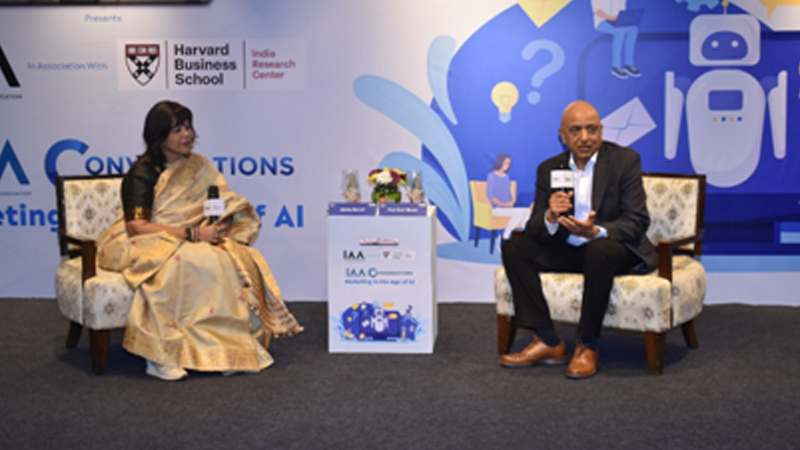
    MUMBAI: Artificial intelligence isn’t just a buzzword anymore—it’s shaping the way industries think, act, and innovate. At the recent IAA Conversations in Mumbai, Harvard Business School Edward W. Carter professor of business administration, Sunil Gupta delved into AI’s transformative power in marketing, branding, and beyond. The event, titled ‘Marketing in the Age of AI’, was moderated by VML India CEO and an IAA Mancom member, Babita Baruah and organised in association with Harvard Business School.

    The session kicked off with Gupta highlighting the disruptive nature of AI and how businesses across sectors are adapting to leverage it. “Almost every business, not just advertising, is thinking about AI and how it will affect their operations,” he noted.

    He outlined three ways AI is transforming industries:

    1    Augmenting and automating tasks to increase efficiency.

    2    Expanding and growing capabilities with innovative tools.

    3    Disrupting and experimenting, encouraging businesses to push creative boundaries.

    Gupta cited tech giants like Facebook and Google, explaining their use of AI to automate ad creation, audience targeting, and budget allocation.

    Gupta emphasised the unprecedented access to consumer data in today’s digital age. “It’s not just about what they buy or search for. It’s also about what they do on social media or why they contact a call centre,” he observed.

    AI, he argued, offers the ability to synthesise qualitative and quantitative data to create a 360-degree view of consumers. It enables brands to map customer journeys, uncover pain points, and even predict behaviours. “AI can act as a smart research assistant, helping brands connect the dots across vast datasets,” he added.

    Gupta also introduced the concept of synthetic consumers, personas created using past data to simulate market research scenarios. This approach offers quick insights at early product development stages.

    Gupta didn’t shy away from discussing the hurdles of AI adoption. “The use of AI will increase competition as it lowers entry barriers, making it easier for anyone to experiment and innovate,” he said.

    However, he flagged the risk of short-term thinking in advertising. “With AI’s ability to experiment and fine-tune ROI, there’s a danger that brands might focus too much on immediate results and lose sight of long-term brand building. And advertising is all about building brands,” he cautioned.

    Addressing how organisations should approach AI, Gupta urged companies to embrace the technology actively. “You can’t learn to swim by watching someone else. You need to dive into the pool yourself,” he remarked.

    He recommended dedicating time to understanding AI’s potential and limitations, noting that no technology has ever reduced workload—it has only shifted it. “Jobs don’t go away, tasks do. AI will eliminate non-value-added tasks, allowing professionals to focus on more impactful work,” he asserted.

    On a closing note, Gupta reminded attendees of the importance of starting with the problem, not the technology. “Sometimes, we get so caught up in the technology that we forget the problem we’re trying to solve,” he said, adding that copyright and IP protection will remain critical concerns in an AI-driven world.

    IAA India Chapter president, Abhishek Karnani underscored the event’s relevance, “At the India Chapter of the International Advertising Association (IAA), we take pride in being the only body in the industry that brings together creative agencies, media agencies, and media under one roof. This year, our focus is clear—Conversations, Skilling, and Artificial Intelligence—all aimed at preparing us for the opportunities and challenges ahead.”

    Organised with support from Free Press Journal as the presenting partner, the IAA Conversations event highlighted the intersection of technology, creativity, and strategy, offering a forward-looking perspective on how AI is reshaping industries.

  • Retail continues to undergo incredible shifts driven by changing consumer behaviour – Report

    Retail continues to undergo incredible shifts driven by changing consumer behaviour – Report

    Mumbai: Capgemini Research Institute published a report on 2023 consumer behaviour for products in retail industries. It is a navigating experience for consumers at large here are a few highlighted observations. Consumer behaviour is paramount for identifying market trends and analysis for future market anticipations.

    Importantly, this research report is based on five basic themes of purchasing patterns, cost of living, raising concern over essential products, fulfilment beyond in-store experiences, and rise of social media influencers.

    According to report observations and key findings, the majority (61 per cent) of consumers globally are extremely concerned about their personal finance situations. For Millennial (66 per cent), Bommer (55 per cent, and Gen Z (60 per cent) consumers as a whole. Consumers are worried about the increasing cost of living. 73 per cent of consumers are making fewer impulse purchases. 69 per cent of consumers are cutting costs on non-essential items such as electronics, plants, toys, and other non-essential products. More particularly cost-cutting measures or delaying the purchase of luxury items with convenience.

    Interestingly, the new trendsetter part of the report highlighted more than half of consumers (65 per cent) of consumers said that they are buying products preferring cheaper private label products over branded products. 64 per cent of consumers prefer to buy products from hypermarkets, and discount stores. Over 75 per cent of consumers are spending more time and energy to fund deals and discounts from physical stores. Consumers are navigating different ways to adopt affordability. The cost of living crisis forces consumers to lead to more sophisticated purchasing patterns or behaviours.

    Commenting on report findings, Unilever CFO Graeme Pitkethly said, ‘ We are starting to see consumers down trading and looking for greater value. Sales volume are beginning to fall as some shoppers switch from branded goods to own-label products in a bid to make ends meet. In another observation, 44 per cent of consumers said that they are reducing overall spending this year as compared to 33 per cent in November 2020.’

    A paradigm shift in consumer patterns after Covid 19, consumers started spending less since the pandemic period. The majority of consumers globally expect companies to help them through this difficult time.

    Also while navigating the best options for in-store and online sales for discounts and deals, still consumers’ preference for in-store shopping is declining amid the cost of living crisis. The slight decline from 67 per cent to 58 per cent in 2023 is an indicator of declining purchasing behaviour for in-store experiences. According to a survey in Capgemini Research in November 2021 survey, 38 per cent of consumers said they have significant interactions with retailers’ online channels. Consumer interactions with online retailer’s channels came down to 33 per cent in November 2022. But the long-term outlook increased to 38 per cent suggesting stabilisation and growth more from pre-pandemic times.

    According to last year’s survey, consumers are spending their purchases across physical and online channels. As per the latest data, 40 per cent of consumers spend less on groceries across all channels. As per report identification, consumers can shift to physical channels in case of non-available basic necessity products. Around 40 per cent of consumers are more likely to switch stores or online stores as per contingencies.

    According to the report section on sustainability and affordability parameters, more than half 54 per cent of consumers globally, they are preferring affordability over sustainability when making purchasing decisions. Rural consumers are buying less and recurring purchases of brand products as compared to urban consumers.

    According to reports, social e-commerce generated 724 billion dollars in revenue in 2022. Social commercial revenue is expected to realise a CAGR (Compound Annual Growth Rate) of 30.8 per cent.

    It is clear from the data Gen Z is considerably influenced by social influencers at large. 34 per cent of all global consumers learned about brands over social media while 22 per cent found new brands through TV ads.

    According to research consumer behaviour is concerned with financial decisions, price consciousness, and changing adaptability.

    Retail continues to paradigm shift in recent years which is driven by changing dynamics of consumer behaviour and expectations. Brands have to respond to ever-changing patterns of customer demand, shifting geographical situations, and global supply chain pressures. Inflation globally forces consumers to increase concern over affordability.

  • GUEST ARTICLE: Mobile OEM advertising solutions are helping D2C brands ace their performance marketing game this festive season

    GUEST ARTICLE: Mobile OEM advertising solutions are helping D2C brands ace their performance marketing game this festive season

    Mumbai: Due to conservative market behaviour since March 2019, covid-19 has restricted businesses from taking a full-scale marketing approach. However, mobile user penetration has grown enormously since the same period in India due to the increase in usage of internet services and the affordability and economic viability of smartphones. The upsurge in the use of mobile technology has led to an accelerated growth in the consumption of D2C mobile apps. Moreover, with mobility and in-person interactions returning to life in 2022, consumer behaviour toward D2C brands is also drastically growing.

    As the festive season in India is about to hit the roof, D2C brands are expected to garner significant attention and demand, and consumer sentiment looks upbeat, particularly in tier I & II cities. For these brands, the expectation of such seasonality means growth in revenue through performance marketing, as consumer brands during special promotions and festivals in India are proven to generate more business.

    Boom expected in the post pandemic era…

    As per the ‘Second Festive Pulse Survey by The Trade Desk/Nasdaq: TTD,’ there will be a 68 per cent increase in Indian shoppers this festive season with nearly seven in 10 shoppers intending to shop on D2C sites. While observing the current trends, there is increased competition between D2C brands as they become more focused on their ad spends to maximise growth during this festive season despite the concerns over rising inflation.

    App marketing opens up avenues to acquire loyal users for D2C brands…

    Indian D2C brands are thriving with an omnichannel marketing avatar that includes a mix of DOOH, TV, and digital ads using search and social, print, and more. While measuring the success of traditional marketing methods is difficult, one can effectively measure the ROAS (return on ad spend) with performance marketing through mobile OEM (original equipment manufacturer) app marketing.

    Leveraging OEM app marketing strategies to acquire users during this peak festive period can give D2C brands a more lucrative ROAS and increase user engagement. In addition, with mobile OEMs, D2C marketers can tap into untapped audiences and help them unlock a newer and more efficient revenue stream.

    Mobile OEM advertising offered by mobile OEMs such as Xiaomi, Huawei, Oppo, Vivo, and Samsung can help D2C brands with enabling app discoverability: D2C brands can leverage appographic targeting to target users with similar apps and unique app interests beyond the category during the festive season.

    Appographic targeting with mobile OEMs is potent in providing high-value users and acts as a powerful strategy for app marketers.

    Better Visibility: To increase ad visibility during special promotions or festivals like Diwali in India, D2C mobile apps can take full advantage of “app store featuring” with display formats such as Splash and Interstitial ads. In addition, mobile OEMs offer unique ad placements for special shopping and discount cards during the festive season.

    Increased re-engagement: Few mobile OEMs offer down-the-funnel re-engagement for m-commerce apps with special placements during the festive season to regain static users who have been inactive on the app. For such occasions, featured custom placements are highly recommended for increased brand awareness. In addition, D2C apps can also get consultations about the kinds of creatives that best work for the festive season to get the maximum reach and engagement.

    Getting the most of your app marketing strategy for ‘22 festive season…

    While developing creatives for display ads, app marketers must be highly attentive to ensure that their brand resonates with the colour scheme and fonts. It best helps the users identify and engage with the brand. Secondly, since mobile media buying inventories get increased bidding from app advertisers during the festive period, D2C marketers need to book high-impact branding placements on a timely basis. Before the pricing increases, D2C marketers need to plan media buying effectively. Equally important is to explore PMP deals at private marketplaces with mobile OEMs where app marketers can bid on high-performance-based suggested inventories.

    As consumers buy more from brands directly from the brands’ websites or apps, D2C brands should rightfully leave no stone unturned to scale their app marketing efforts and get some fresh eyeballs with a positive outlook on engagement and retention.

    The author of this article is AVOW co-founder Ashwin Shekhar.

  • AI-enabled advertising to be $1.3 trillion business by 2032: GroupM report

    AI-enabled advertising to be $1.3 trillion business by 2032: GroupM report

    Mumbai: AI-enabled marketing already accounts for nearly half of all advertising revenue, that is more than $300 billion of global advertising revenue. And its growth is only set to project upwards. By 2032, AI-enabled advertising could account for $1.3 trillion in advertising revenue, more than 90 per cent of the total, according to a forecast from GroupM. The global media investment company has released a new study titled ‘The Next 10: Artificial Intelligence’ examining how the media landscape and consumer behaviour will shift over the coming decade.

    The forecast shows that as channels like TV, audio and outdoor become more digital, addressable and programmatic by the year 2032, AI-enabled advertising will represent more than 90 per cent of all advertising. Consumers will expect marketing messages that are relevant, personalised, and non-interruptive, greatly simplifying their daily decision-making- all in a privacy-first way.

    The report also revealed some major implications including the declining reach of linear TV and less tolerance of irrelevant, interruptive ad pods.

    It also noted the growth of audio-first devices with digital assistants (i.e. earbuds and smart home speakers) means that voice search will overtake text-based search.

    An additional implication is that data will most often be managed on-device and will be increasingly unclear or anonymised by AI and privacy services.

    Other takeaways across a few key categories from the report:

    Advances in AI and these evolving media channels could result in marketers increasingly tying together products, consumer experiences and advertising experiences:

    o   Automotive: The use of generative AI and digital twins will enable greater personalisation of advertising in the sector—i.e. 

    a custom color model shown driving in the buyer’s own city.

    o   CPG (consumer packaged goods): Machine learning paired with genomic sequencing will make personalised nutrition and personal care products increasingly possible.

    o   Apparel: Computer vision, machine learning algorithms and generative AI could disrupt the apparel and retail industry by creating a vast gray market of copycat goods or user generated designs competing for image searches.

    o   Entertainment: Personalised storytelling could become a reality as ads and IP are customised based on audience data and/or selections.

    The Next 10 also raises ethical and responsible AI questions such as:

    ·       How do we protect at-risk users and all consumers from AI that exploits dark patterns or behavioural “hacks”?

    ·       What are the ways we can protect against the weaponisation of AI in advertising tools and platforms used to amplify misinformation, deep fakes, fraud, and abuse?

    ·       What is our level of comfort for what remains hidden in the black box of machine learning?

    ·       Should people be notified when they’re speaking or chatting with an AI chatbot and not a human?

    ·       How do we build safety and accountability into algorithmic incentives?

    ·       How should disclosures about the use of AI in advertising work?

    “AI is already here, and it’s not slowing down. The human effort can best be applied imagining what we want the future to look like, designing the right goals and guardrails, and learning to put AI to use in service of those,” the GroupM report further said.

  • We plan to launch 97 new SKUs in makeup in the next quarter alone: Plum CEO Shankar Prasad

    We plan to launch 97 new SKUs in makeup in the next quarter alone: Plum CEO Shankar Prasad

    Mumbai: India’s online beauty and personal care market has witnessed a boom due to a shift in consumers’ buying behaviour during the Covid-19 pandemic. The estimated number of online beauty shoppers by 2025 is expected to be over 122 million, with a $5.6 billion market opportunity for D2C brands in the beauty and personal care segment, according to Customer Perception Report 2021. This comes at a time when the space has also been seeing increased traction from investors.

    Earlier last week, the homegrown vegan beauty brand Plum made news when it raised $35 million in fresh capital led by A91 Partners. A fast-growing player in the D2C beauty space, Plum has been strengthening its omni-channel presence, building new categories in addition to its core skin care category- across channels and categories in skin, hair, body, men’s care, and now makeup. The fresh capital is expected to add further momentum to the new-age brand’s game plan.

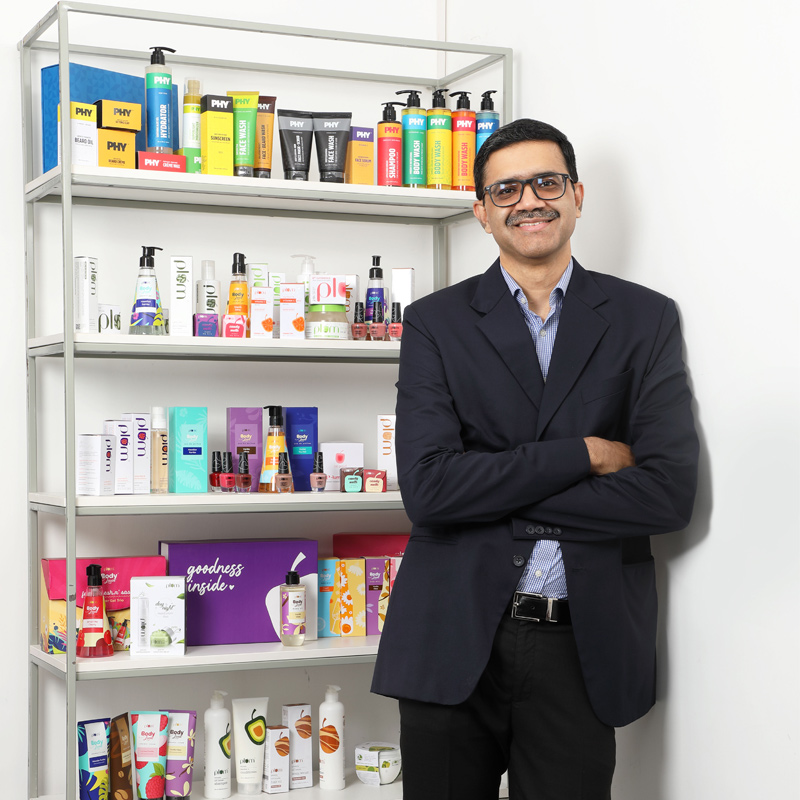
    IndianTelevision.com spoke to the founder & CEO of Pureplay Skin Sciences, the parent company of Plum, Shankar Prasad to find out more about the D2C startup’s road map, post the foray into new categories and the fresh capital infusion. Prasad also elaborates on the brand’s plans to scale up this year by aiming for a larger share in the beauty market following its entry into the competitive make-up category.

    Aiming for a larger share in the Beauty Pie

    From a business perspective, category and channel expansion is the way forward for Plum. The brand plans to deploy its series C funding on “marketing, technology, and people,” says Prasad.

    Speaking about the new make up products range launched by the brand, Prasad emphasises, “The fact that product efficacy goes hand-in-hand with the goodness of non-toxicity is appreciated by our consumers,” adding that what worked for the brand is its ‘skin loving makeup proposition’: “which is to say that our makeup is lightweight, nourishing, and free from toxins, apart from being 100 per cent vegan and cruelty-free of course.”

    The brand plans to build on this momentum and replicate the success across a full-face makeup range in the coming year. “We plan to launch 97 new SKUs in the next quarter alone. To put things into perspective, our current SKU count is 36, and we plan to take this to 143 by the end of the next quarter across eyes, face, lips, and nails,” Prasad further adds.

    Turning disruption into an opportunity

    The pandemic was a period of changing consumer behavior, when offline sales had come to a grinding halt and online transactions were the go-to. There was an overall increase in exploration and awareness of brands and content consumption during the lockdowns. The beauty industry was one of the biggest beneficiaries of this shift in consumer behaviour.  This had a direct effect on our business, agrees Prasad. “An increasing number of customers, even those who preferred shopping offline, were now turning to online avenues of buying, which gave a much-needed boost to all D2C brands, including us.”

    The D2C platform grew 2.5 times over the last year in terms of business. “We got over a million visitors a month on our platforms, with close to 35 per cent repeat rate on a 12-month period.” So while the brand’s makeup line took a hit due to people curtailing their discretionary spends and shying away from buying non-essential items, an increased awareness about hygiene gave a boost to its skincare category, a major part of its portfolio.

    The startup saw an opportunity in the reduced advertising costs due to the uncertainty in the market on the media front. “We increased our advertising spends to acquire new customers on our D2C and e-commerce channels.”  The brand also took cues from the shifting search trends as people were actively looking for products with specific ingredients, and innovated to launch products such as Aloe Vera Gel and Vitamin C Serum.

    The brand recently launched an ad campaign for the products with the millennial actor Mithila Palkar as brand ambassador. Prasad is happy with the response the campaign has garnered, referring to Palkar as ‘a natural fit’ for the brand, as she reflects Plum’s values of being ‘honest and real.’

    The D2C brand considers as its primary TG the young women across metros and tier 1 & 2 cities, typically in the age group of 18-34. “With increasing internet penetration, there is greater awareness around new-age D2C brands, not only in the metros but also in tier 1 & 2 cities and consequently, they’re increasingly gaining in share. So, we certainly see a huge opportunity here,” affirms Prasad.

    Betting big on social commerce

    Social commerce has been gaining momentum in the D2C space by virtue of its ability to educate and reach newer consumers, especially in the hitherto unexplored territories of tier 2 & 3 cities.

    Amid the convenience of shopping in the comfort of their homes, the experience of shopping was lost, feels Prasad. “Social commerce solves this by simulating such an experience through social networking sites such as Instagram, Facebook, etc. Higher customer engagement, personalised offers, increased average order value, faster decision-making towards the purchase, and ease of purchase are some of the benefits. Hence, it is a win-win situation for both the consumer and the brand.” Also, due to the interactive nature of the activity, feedback about the product from both the influencer and customers is rich and real-time, enriching the overall experience of the consumer and providing valuable insights to the brand, he stresses.

    Keeping this in mind, the D2C platform has a watch and buy section on its website, where users can watch the product being used and then make their purchases. It also has plans to leverage Instagram for social commerce soon, adds Prasad.

    Shaping an omni-channel presence

    Being a digital-first brand since inception, all its spends are digital and it plans to ‘aggressively’ continue down that road. However, with retail expansion, the brand plans to supplement its primary digital media with other channels such as radio, TV, OOH, etc. “With an increasing offline presence in terms of retail outlets, our consumer touchpoints need to increase proportionately and be relevant to our TG. In accordance with this, we plan to leverage other media such as OOH, radio, TV, print, etc. in the coming year.

    In keeping with the preferences of the new-age digital consumer, the brand also plans to be present on OTT media soon, as this will play a major role in expanding its reach to the right kind of audience.

    “From our consumer lens perspective, we are also looking at new-age digital consumers who are primarily cord-cutters (those who have cancelled their subscriptions to multichannel television services available over cable or satellite), which brings OTT channels into the mix.”

    Marketing road map and expansion plans for 2022

    The D2C’s focus is to maximise its reach on leading social media and video platforms such as YouTube, Instagram, and Facebook and a major chunk of its marketing expenditure would go on these digital reach-building channels, according to Prasad. “Our marketing spends are in the range of 25 per cent of overall sales and can even go up to 50 per cent at times.” The brand also has a robust influencer marketing program. “We have 1000+ influencers who we work with on a month-on-month basis as part of the affiliate program, which is called the ‘Plum List.’ Off late, we have been engaging with regional and vernacular influencers too, as these give us a very good return on investment.

    From a business perspective, the brand has been scaling rapidly in the offline space too. “We have three exclusive brand outlets in Mumbai and Chennai with plans to launch 50 in the next two years.” From a beauty industry lens, Prasad believes consumers these days are more aware of the products they use and also more conscious about the effect of their purchase on the environment. “This puts a spotlight on issues such as sustainability as brands will have to do more to live up to the consumer expectations,” he signs off.

  • Hygiene, health & wellness remain key consumer concerns: Kantar report

    Hygiene, health & wellness remain key consumer concerns: Kantar report

    Mumbai: Emerging from the pandemic, the Indian FMCD (Fast Moving Consumer Durables) market presents significant opportunities. While the pandemic caused much anxiety amongst consumers in general, there was a high demand in the FMCD health and wellness space, according to the latest Sustainability Report from Kantar. New-market segments such as air purifiers, ACs with purification filters, smaller sub-categories such as UVC disinfection categories, UVC Desk lamps, and growth of personal care health tech products such as smartwatches and fitness monitors saw amped-up sales, says the report. Consumption patterns have changed significantly – towards safety, premiumness and technologically advanced products.

    The data-driven analytics and brand consulting company unveiled the FMCD Sustainability Report – “Walking the Talk on Sustainability with Consumers – a roadmap for India’s FMCD Sector.” The Kantar report reveals that the Indian consumers are also becoming more conscious about the impact of human activity on climate change and other environmental factors. The report highlights how the intersection of the FMCD sector and sustainability will further enable growth. It aims to provide key sustainability roadmaps for FMCD brands to help them navigate the ecosystem with sustainable solutions.

    The India Story: Post-pandemic Consumer Attitudes and Behaviour

    According to the Kantar report, consumer reactions in the wake of Covid-19 continue to evolve and the Indian market presents several opportunities for the FMCD brands. The report further states that cautious consumption is the norm – hygiene, health and wellness are key consumer concerns, where 91 per cent Indian households are washing hands more often now, 47 per cent Indian households claim increased toilet cleaning, more so in rural (49 per cent) vs urban (43 per cent).

    Data also suggests that consumers are changing education and work codes, with work ecosystems being reshaped by digital transformation. With accelerated digital adoption, there is 125 per cent growth in usages of smart devices among internet users, paving the way for the emergence of a smart home. Some of them are – smart lights, smart speakers, smart air purifiers, smart display, smart home entertainment and smart cleaning.

    There is also evidence to suggest that ‘value’ is a key factor for consumers since post-pandemic financial concerns have cropped up, where 73 per cent attribute Covid-19 to have impacted household income, while 67 per cent pay greater attention to prices while shopping. This has led to an overall joint accountability of both businesses and consumers towards adopting a stronger sense of collective corporate responsibility, according to the report.

    “The FMCD sector is witnessing rapid growth even in post pandemic phase while we’ve also seen a great consumer shift towards sustainability and the environment urging brands to rethink their strategies,” said Kantar Insights Division Qualitative & Lead- Sustainability Practice South Asia managing director Paru Minocha. “Consumers have greater expectation from companies than from themselves; this is likely to be amplified in FMCD, where personal behaviors post purchase is led primarily by the policies/features of the product and company they use. With this report, we are putting forward recommendations to brands which help in solving customer tensions with sustainable solutions, addressing barriers such as packaging, service models, repairability, and return and recycling policies.”

    Commenting on the focus and relevance of FMCD, Kantar Shopper and CX Domain lead Sushmita Balasubramaniam said, “Consumers today are more aware and concerned about sustainability and other issues like pollution, carbon emissions, etc. For example, in the mobile phones category, consumers expect brands to address macro environment issues of carbon emissions and plastic pollution whereas in the computing category – carbon emissions, packaging and tax evasion are palpable concerns. In appliances, concerns exist on pollution (air and plastic) and emissions besides packaging. While we see consumers consciously making smarter choices, the responsibility resides with brands andmarketeers to provide sustainable solutions to resonate and build credibility with their audiences moving forward.”

    Launched at the recent CII’s FMCD Summit, the Kantar report also provided key recommendations for the FMCD brands such as embedding Green Lifecycle across portfolio and processes, connecting the environment and the everyday, addressing Consumer Knowledge Barriers and meeting accountability expectations. With the suggested roadmap, the report also highlights noticeable consumer trends that lead to a collective accountability of both businesses and audiences, seeking the path to a more sustainable world.

  • Digital Brand Fest 2022: How SMS and mobile marketing can accelerate brand growth

    Digital Brand Fest 2022: How SMS and mobile marketing can accelerate brand growth

    Mumbai: The digitally empowered consumers of today have more choices than ever before. As we enter into 2022 with new technologies propelling the digital transformation, several new age, as well as legacy brands, have jumped onto the digital bandwagon to up their marketing game, and retain connect with consumers.

    On day one of the Indian Digital Brand Fest 2022, IndianTelevision.com brought a host of industry experts together on one platform to discuss these trends shaping the future.  The week-long virtual summit is presented by Voot, and Interakt, Josh, and Pixis have joined as industry partners.

    The session on ‘Panel on SMS, Notifications & Whatsapp Marketing’ held virtually on Monday was moderated by Group M head of mobile and emerging tech Niraj Ruparel and the panelists included Soptle chief business & marketing officer Ritesh Ghosal, PhonePe corporate communications head  Priya Patankar, SUGAR chief business officer Suchit Sikaria, ex-WOW Skin Science VP of Marketing Madhur Acharya, Jio-Haptik’s SMB Solutions VP & business head Ahshad Jussawala, and Clever Tap SVP Marketing Jayant Kshirsagar.

    The industry executives discussed the latest trends driving the change in mobile marketing and how it has impacted the industry’s growth. SUGAR CBO Suchit Sikaria noted that the digital strategy has to revolve around mobile, and it starts right at the time of designing the asset and it has to be a mobile-first design.

    PhonePe corporate communications head Priya Patankar shared that PhonePe considers itself essentially as a utilitarian that begins with payments. “We have realised customers start with the most basic use cases for which they download an app. Once customers start trusting the app, they graduate to the more complex use cases,” she said about new consumer behaviour on the payment platform, while admitting that the pandemic has been a huge inflection point for digital payments.

    When it comes to mobile marketing, SMS and WhatsApp are very powerful media to build a connection with the customer, the marketers asserted. However, brand communication to the consumer has to be looked at through the lens of relevance, timing & value in the message, the panelists noted. According to WOW Skin Science VP of marketing Madhur Acharya, mobile marketing gives a better ROI & retention as there is more clarity on how one’s campaign is performing.

    The executives emphasised on leveraging WhatsApp for a mobile marketing strategy from the beginning. Jio-Haptik’s Ahshad Jussawala added, “For any small business or SME looking to grow their online sales and improve overall customer support, Whatsapp can be a game-changer.”

    On customer acquisition, Clever Tap SVP Marketing Jayant Kshirsagar said, “Retention is more important than acquisition and we help our customers retain their customers.”

    Also read: Digital Brand Fest 2022: Decoding digital transformation for tech-led future

    The industry executives were also unanimous in their views on the importance of hyper-personalisation in mobile marketing. Clever Tap’s Jayant Kshirsagar observed that the right kind of personalisation involves looking at customers as a ‘cohort’, and not as a ‘one size fits all’ with hyper-personalisation. Soptle’s Ritesh Ghosal agreed that personalisation on WhatsApp & SMS marketing allowed them to create a loyalty program, by crafting a value into the message. To which SUGAR’s Sikaria shared their experience of sending out personalised messages to their most loyal customers on Whatsapp, wherein the responses the brand received from its customers consisted of instant emotive acknowledgments.

    Group M’s Niraj Ruparel gave a huge thumbs up to Mondelez’s SRK campaign, citing it as one of the best instances of hyper-personalisation using AI & ML.  “Stop selling, start serving. Because if you serve your customers right they’ll refer to your brand and you’ll get new customers!,” said Clever Tap’s Kshirsagar concluding the discussion.

    Towards the end of the session, the marketers also addressed the concerns of Spamming in mobile marketing. Putting consumer fears to rest it was pointed out that WhatsApp has all the policies and measures in place to curtail Spamming activities by brands.

    For more details on the event, click here

  • Video commerce to grow exponentially at 47% in 2022 over 2020: WATInsights report

    Video commerce to grow exponentially at 47% in 2022 over 2020: WATInsights report

    Mumbai: The e-commerce market in India has been witnessing an evolution in recent years with the emergence of newer formats like video and social commerce. The video commerce segment is already on its way to being the next big thing in digital commerce with video content consumption gaining traction on social media platforms. According to the latest report released by WATInsights in its digital commerce series, the number of video commerce users is expected to touch 216 million by the end of 2022 from 146 million users in 2020, indicating an exponential growth of 47 per cent.

    WATConsult, the Isobar India group digital agency from dentsu India has unveiled its third report of WATInsights  ‘Digital Commerce in India – Video Commerce.’ The report by Recogn, the agency’s research division, shares insights on the scope of the futuristic channel of advertising and captures consumer sentiments towards using this platform for shopping.

    According to the report, currently, there are around 146 million video commerce shoppers in India who have purchased and transacted on video commerce platforms. Today, the total is nearly 49 per cent of all e-commerce users in India. With the number of video commerce shoppers expected to reach 216 million this year, the format promises the immense potential for brands to connect directly with their consumers.

    As per the report, when it comes to the video content format, most customers prefer explainer content videos followed by customer testimonials and product demonstrations. While product videos add a different dimension to the online shopping experience, video content with a duration of 15 seconds to a minute can make users stay longer on the platform. Also, if they like the videos, they share them with their circle of friends and family, further increasing the reach of the content.

    Live streaming commerce in India is gaining traction and it can help brands, retailers, and marketplaces to accelerate conversion, improve the brand appeal and create differentiation, says the report. More than half of the customers state their affinity towards shopping online during live streaming on social media and shopping apps. Amongst the platforms used for video commerce, YouTube led the pack with 53 per cent of users, followed by Instagram and Facebook at 39 per cent and 38 per cent respectively.

    “Video commerce has become popular with more Indians moving online and discovering new ways of shopping through video platforms,” remarked Isobar India group CEO Heeru Dingra. “When it comes to buying products, customers are interested and want to see what they are getting. It offers businesses and marketers a higher rate of conversion and is the most powerful instrument in today’s age. 

    “There is a huge opportunity to capture the video-based social commerce market, especially live-stream-based e-commerce while the market matures. Consumers today are frequently looking out to streamline and enhance their experience, they prefer instantaneous results. Brands can use this format to streamline their sales. I believe this latest issue of WATInsights will be an invaluable resource for anyone who intends to demystify video commerce in India,” Dingra further said.

    “The world has moved towards dynamic content and is driving commerce through video,” stated WATConsult managing partner Sahil Shah. “The true power of video-led marketing on digital will come into play when it can have a direct impact on the bottom-funnel metrics as well. On top of that, if one can get creative with the many formats available then it is the ultimate icing on the cake.”

  • Kantar Annual Trends 2022 report unveils 10 themes for recovery & innovation

    Kantar Annual Trends 2022 report unveils 10 themes for recovery & innovation

    Mumbai: 2021 has been a year of discovery for consumers. As we learn to adjust in a world that changes often and unpredictably, brands would need to listen more intently to consumers than ever before, be transparent in their promises and provide solutions for their evolving needs. Keeping this in mind Kantar has unveiled its ‘Annual Trends 2022’ report, that’s borne out of the insights generated, based on their conversations with consumers across the country.

    The report spells out ten themes that define how consumers are preparing themselves for 2022, even as it aims to guide businesses through a period of recovery and innovation:

    1.      Going small to live big

    The lockdown and the opportunity of working from home have allowed people to consider an alternative to the city humdrum. As companies chose remote working as ‘business as usual,’ the service sector employees chose to move ‘back home’ to smaller towns. The current trend offers a unique opportunity to reimagine our cities, our infrastructure and mobility, notes the report. Brands, on the other hand, need to reinforce supply chains to avoid losing customers due to last-mile connectivity gaps, Kantar says.

    2.      Seeking assurance in ‘ghar jaisa’ khana

    The pandemic has made consumers painfully sensitive about the importance of health and immunity. They are more mindful of what they eat and are willing to make an effort to table fresher meals, with nearly 72 per cent preferring fresh home-cooked food than the packaged with the fear of preservatives, as per the report. With increasing importance to freshly cooked meals, consumers would be open to kitchen solutions in terms of ingredients or appliances that make ‘home-made’ easier. Additionally, the affinity towards ‘home-like food’ will also guide what the food industry will offer in terms of offerings on restaurant menus.

    3.      Proactive upskilling

    Proactive self-learning through online courses has become the new norm for working professionals trying to stay employable as well as students gearing up to join the workforce. 65 per cent of learners were upskilled to strengthen career prospects and 33 per cent of learners were senior-level professionals. As both freshers and experienced employees become more conscious of the skill gap and lean in to bridge it, enrolments into online courses continue to exponentially grow, noted Kantar.

    Proactive and consistent training and development led by employers will be increasingly critical, not only to keep the workforce equipped for the changing workplace but also to ensure that employees are engaged and invested in the evolving business imperatives of the organisation.

    4.      Exercising autonomy through gig work

    The Indian freelance job market gained rapid acceleration with the pandemic-induced job instability.

    The nature of freelance work has also evolved and gig working is not limited to factory or support function jobs. With 15 million freelancers, India is already the second-largest gig market in the world, says the report. In the long term, the Indian gig economy has the potential to serve up to *90 million jobs in India’s non-farm economy. India Inc. should make the most of this opportunity to absorb a diverse workforce and let them contribute professionally while taking care of their personal comfort.

    5.      Shrinking personal space with remote work

    Though remote work was expected to improve employee productivity, there is mounting evidence of increased burnout, noted the report. 1 in 3 professionals in India feels burnt out due to increased workload and unmanageable stress. While the focus has been on making work from home more convenient through virtual workplaces, organisations will also need to start rethinking their entire work models, culture, and values to ensure better mental health amongst the workforce. Employees are also learning to draw a line between personal and professional while operating from the same physical space, notes Kantar.

    6.      Yearning to get away from home

    Lockdown fatigue had resulted in strong pent-up demand which is fuelling unique trends of ‘getting away from home.’ Travellers have started to rekindle their travel plans through weekend getaways and similar convenient means to escape from the challenging life of work-from-home stifling schedules. As consumers continue to seek respite from house arrest yet again, by planning for getaways, dropping into restaurants for a meal, or even choosing to work from coffee shops, the reassurance of sanitation and hygiene-related measures such as fully vaccinated staff would ensure that they keep coming back, says Kantar.

    7.      Instagram is the new store

    As the pandemic further accelerated the growth of e-commerce, social commerce has emerged as a favoured means of online shopping. Consequently, social chatter is fast becoming an active driver of brand choice; while advertising manages to influence 38 per cent towards a brand, 41 per cent tend to be swayed by comments or reviews posted on social media.  Riding on social word-of-mouth, today social commerce shoppers account for 53 per cent of total online shoppers in India.

    Stepping ahead of dynamic customer engagement, social commerce has proved to be an effective and affordable channel for smaller businesses, the report says.  This channel has also presented a cost-effective alternative for larger businesses and brands reeling under the pressure of mounting customer acquisition costs and struggling to protect these precious customers from competitors wooing them endlessly with deep discounts.

    8.      Beauty goes beyond skin deep

    With virtual workplaces and limited social engagement, there is no mad rush to show up looking one’s best and people are moving towards a more sustainable self-care practice grounded in nature, health and wellness. Consumers have become extremely conscious about taking care of their bodies, and not just for the purpose of looking good. What started as an obsession for sanitisers and hand-washes, has now gradually moved towards conscious choices of personal care, personal hygiene and wellness products.

    Brands need to be cognizant of shift in consumer choices towards personal care and grooming and cater to this growing affinity towards sustained self-care through their product solutions as well as communication of benefits, says the report.’

    9.      True inclusion finding a voice among the youth

    Consumers are being drawn towards brands that embrace diversity and advocate causes that support social equity, according to the report. There has been a shift in advertising campaigns featuring stories of real people told with a sensitivity that has found favour with consumers. However, the report says that brands looking to engage this generation will need to extend their efforts beyond mere lip service. Just dressing brand communication with diverse imagery will not be enough. To stay relevant, brands need to embed diversity in their organisational culture as well as in their product development endeavours.

    10.   Collective consciousness towards sustainability

    The pandemic has been a wake-up call; consumers are now acutely aware of the cumulative damage caused to the environment by human carelessness and are eager to ‘make good.’ 76 per cent pay a lot of attention to the environmental and societal issues in the news, says Kantar. 77 per cent are prepared to invest time and money to support companies that do good and while shopping 64 per cent consumers factor in sustainability at least once in a while.

    Brands can fuel these actions by increasing awareness about the use of green energy in their production process, making it easier to recycle, incentivizing consumers and making it convenient for them to buy sustainable products, notes Kantar.

  • 95% of consumers demand eco-friendly packaging: Havas Group prosumer report

    95% of consumers demand eco-friendly packaging: Havas Group prosumer report

    Mumbai: A whopping 95 per cent of Indian consumers demand eco-friendly packaging and 69 per cent want to see e-commerce organisations commit to sustainable practices across the value chain, according to the latest study by Havas Group decoding the ‘future of e-commerce.’ 68 per cent of consumers expect their e-commerce shopping experience to be tailored through personalisation and AI. An over-arching theme that is evident through the research is that the e-commerce industry still has a long way to go to address the gap in consumer expectations.

    Havas Group announced the launch of its prosumer report through structural research. The report is a global perspective on the future of e-commerce that captures information and insights on the sector, done through the network’s proprietary research tool. Drawing on responses from 3,000 consumers from Brazil, China, France, India, the United Kingdom, and the United States, the survey examines the upcoming trends in the e-commerce experience. 

    The prosumer report throws light on some interesting India-specific trends that will go a long way in making the industry shine. Contrary to popular euphemism, consumers are not averse to data sharing, provided there is transparency regarding what data is being collected. In this context, 97 per cent of the prosumers rate privacy as the key attribute, and 83 per cent are ready to boycott brands that do not have a transparent data collection policy. 

    Post-pandemic, the desire to replicate in-store/mall experiences has led prosumers to seek community shopping experiences from the e-commerce industry. In this context, the study saw a 66 per cent spike in demand for services such as the ability to shop on social media and 68 per cent rise in the ability to interact with fellow shoppers, respectively.

    The Covid-19 led economic slowdown has been catastrophic for most sectors, barring a few. The e-commerce industry belongs to the latter. The pandemic and its aftereffects led to a complete transformation and a massive surge in the e-commerce industry. If there is one aspect that the younger generation demands, it is a better consumer experience despite acknowledging the convenience that e-commerce has to offer. 

    “Prosumer is Havas Group’s global report that is released 3 to 4 times every year, each one covering a specific topic. It is one of the longest-running thought leadership properties of Havas Group that has become instrumental in predicting emerging trends in consumer behaviour,” Havas Group India CMO Pritha Dasgupta said.

    She further added, “Over the last two years, digital adoption has been extremely fast and has become a way of life. If we specifically look at the e-commerce sector, it has become a breeding ground of innovation and in the last two years every leading company in this sector has grown aggressively. Our latest Prosumer Report gives a clear direction to the industry of where this e-commerce sector is headed, and also identifies trends of the sector.”  

    Prosumers are the leading-edge 15-20 per cent of consumers, who are first to the market (usually 6-18 months ahead of the mainstream), forward-thinking, influential, proactive and socially and/or environmentally conscious. It is this key section of consumers that our research studies. 

    Throughout the pandemic, e-commerce has clearly established itself as the new retail norm as more than eight in 10 prosumers revealed that they prefer the online shopping experience over the traditional format of in-store purchasing. However, one out of three respondents claimed that their e-commerce experiences are quite boring. Havas Group’s Prosumer report deep dived into the e-commerce industry and came up with a few ways to upgrade the e-commerce experience by: 

    Focusing on new rules of e-commerce including free shipping & returns, seamless & fast delivery, customer ratings, loyalty discounts, and purchase recommendations. 

    Having a purpose beyond clicks: e-commerce must be about more than just access, it is about curating products that are good for society. 

    Being on the right side of data history as privacy is gaining momentum, so data education should be mandatory. As e-commerce is becoming more human and is moving to social, making the experience more community-driven will bring results. 

    The Havas Group prosumer report makes it evidently clear that e-commerce is no longer just about business transactions; it’s about customer empowerment and with the e-commerce market touching $84 billion in July, this is an industry one just can’t ignore.