Tag: consumer

  • Rajeev Singh appointed leader for transportation & mobility at Publicis Sapient

    Rajeev Singh appointed leader for transportation & mobility at Publicis Sapient

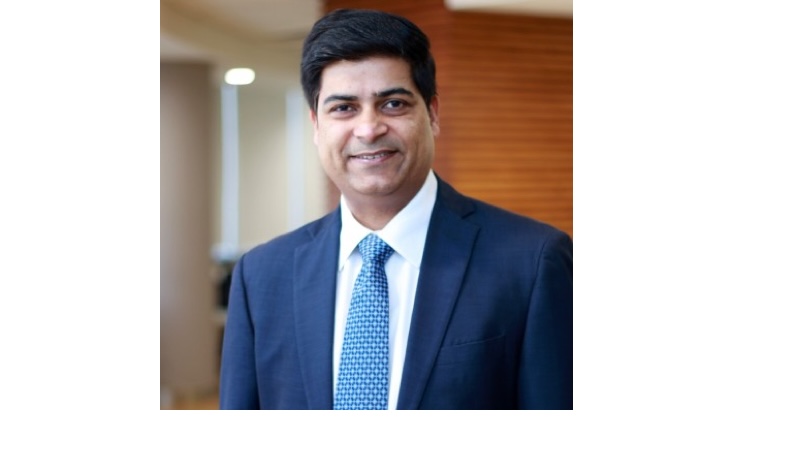
    MUMBAI: Rajeev Singh has announced his new role as leader for the transportation & mobility industry across EMEA and APAC at Publicis Sapient. In this position, he will focus on developing strategic visions and driving profitable growth within a rapidly transforming sector. 

    His leadership will focus on leveraging Publicis Sapient’s Speed capabilities—strategy, product, experience, engineering, and data & AI – to support clients’ digital transformation journeys.

    Rajeev brings extensive experience, having previously served as consumer industry leader at Deloitte Asia Pacific. With a strong background in automotive and consumer sectors, he is well-equipped to facilitate large-scale digital transformations and explore new business opportunities.

    He holds an MBA in operations management from SP Jain Institute of Management & Research and a bachelor’s degree in mechanical engineering from the College of Engineering, Pune.

    Excited about his new journey, Rajeev expressed gratitude for the support received during his transition and looks forward to leading innovation in tech-driven transportation solutions.

  • Channelplay leads the way in navigating the evolving retail landscape & redefining its future

    Channelplay leads the way in navigating the evolving retail landscape & redefining its future

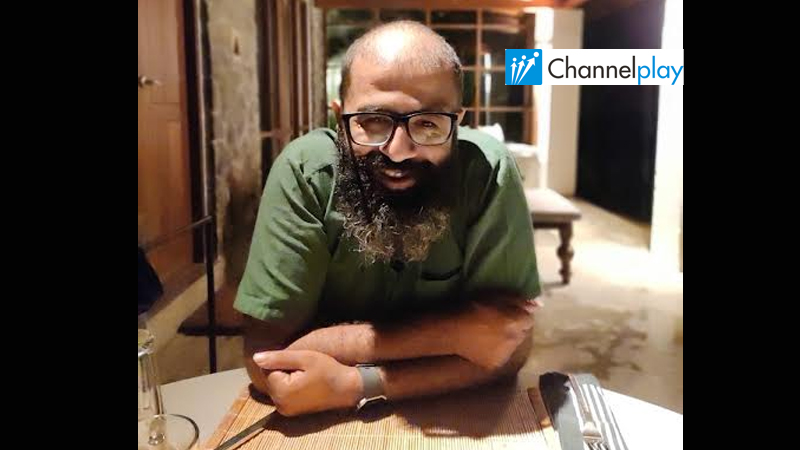
    MUMBAI: In the ever-evolving landscape of retail, where consumer expectations shift and technology drives change, visual merchandising has emerged as a powerful force for innovation. Since its founding in 2006, Channelplay has established itself as a trailblazer in retail distribution and solutions, specialising in sales outsourcing and visual merchandising. By harnessing cutting-edge technology and design expertise, Channelplay enhances customer experiences in remarkable ways.

    In a conversation with Indiantelevision’s Suman Baidh, Channelplay co-founder and co-CEO Suhas Misra highlighted how trends like Generative AI and the rise of digital signage are reshaping the retail environment. It has become essential for brands to emphasize design thinking and collaborate with experts. As retailers increasingly recognise the pivotal role of exceptional customer experiences, balancing creativity and practicality becomes crucial. This exploration reveals the key trends and future directions in visual merchandising, showcasing how leading companies are pioneering adaptability and measurable ROI in this dynamic landscape.

    Edited Excerpts

    On the key visual merchandising trends that you’ve noticed in the retail industry right now

    The theme resonating in visual merchandising meetings—as indeed in meetings across functions—is GenAI. The promise of GenAI is broad and unarguable but how it plays out specifically is something that time alone will tell. The #1 trend therefore is exploring applications that will change both the practice of visual merchandising as well as its potential use in actual retail assets.

    There is a somewhat related trend of more and more signage going digital. The share of digital signage is still low and therefore the coming of an s-curve is almost certain.

    The third trend is the change in the role of retail itself. From being only a channel, retail’s value in creating the ideal customer experience for a brand is becoming more established. More and more brands are therefore incorporating experience stores as an integral part of their plans.

    On creating displays that catch attention & provide a memorable experience for shoppers

    Well, memorable experiences aren’t easy to create, but design thinking is essential. Brands need to loop in architects and designers to create these. For all projects where memorable experience is the objective, we take a brand brief to the great architects we work with and let them ideate. It’s vital for retail marketers to know that the conceptualisation of space is a craft that needs to be leveraged to generate great customer experience.

    On the customers drawn to minimalist designs or  they prefer more vibrant & elaborate displays

    There’s no universal preference that one can have on this. It might be best to connect the customer’s noticing of something—or indeed being attracted to a display—to Jungian archetypes. There’s no wrong or right one, just a spectrum from clear and well-defined to confused and inconsistent.

    On incorporate the use of colours, lighting, and textures to create a visually appealing store environment

    Design is an expertise we respect deeply, And good design is rooted in context. The context for a store environment is the brand—what is its personality? What does it stand for?—and the constraints are spatial. An expert designer is able to optimise between telling a compelling story and having only a specific space to work with.

    On digital and interactive displays change the way stores design their visual merchandising

    This is one of the big shifts. Everything is going digital and visual merchandising is no exception. Digital and interactive displays bring brand messaging in retail closer to how it is on social media, and that’s a very exciting possibility. Yet, there’s no clear playbook for this. Some brands simply use such signage as a screen to display Instagram posts! However, we reckon that such signage—while having synergy with social media—needs to be thought through independently.

    On balancing creativity with practicality when designing displays that drive sales

    Creating displays that drive sales is fundamentally an ‘uncreative’ process! Most of the creative part has happened between the brand and the ad agency. The design of displays that drive sales is essentially about finding the best way to adapt creative thinking to space and respond to the constraints of space. Therefore, this process is more craft (if not science) than art.

    On visual merchandising trends that you think are just a passing fad or see them sticking around for the long term

    There are certain things that have seemed like fads from time to time. Buntings, for example; or one-way film. However, even these, and other such, sometimes fit a particular retail context so well that they just resonate. Therefore, we try and keep an open mind when approaching any retail marketing asset or element, and mostly even what seems like a fad becomes valuable for some context.

    On Channelplay taking to ensure that its retail solutions remain adaptable to the fast-changing retail environment & evolving consumer expectations in the years to come  

    As a company focused on VM, there’s an ongoing effort to stay abreast with all the changes. Our team regularly scours elements getting deployed in more evolved markets, elements that are getting manufactured in China, and indeed new technology that can birth new elements together. As consumers have a reactive relationship with visual merchandising elements, the effort is to evaluate things and possibilities on the supply side.

    On Channelplay ensuring a measurable ROI for clients using its sales outsourcing & visual merchandising services & tracking the impact on both sales performance and customer satisfaction  

    One of the most direct ways in which Channelplay delivers ROI is through more efficient use of retail marketing budgets. Our platform tracks inventory and deployment on a real-time basis leading to huge cost-savings on the fabrication side (often larger savings than the entire budget allocated to Channelplay!)

    Numerator increases in ROI is a collaborative exercise with clients and again our tech platform used by our visual merchandisers is able to give visibility to marketers to run correlations faster, leading to superior response times and therefore an ever-improving ROI. 

  • Over 90% of shoppers actively seek out comments about brands on social media before buying: Twitter & Publicis media research

    Over 90% of shoppers actively seek out comments about brands on social media before buying: Twitter & Publicis media research

    MUMBAI: How much does talking about brands and products impact sales? And how do businesses tap into this power? Over 90 per cent of shoppers actively seek out comments about brands, products, or services on social media before arriving at purchase decisions, according to a recent research study. 68 per cent of those surveyed said their impression of a brand was changed as a result of experiencing brand conversation, according to the study undertaken in collaboration by Publicis Media & Twitter. Over half of shoppers consider brand conversation on social media impactful as per traditional reviews.

    Twitter teamed up with Publicis Media to survey 9,600 consumers on six social platforms across the US, the UK, India and Mexico, to understand how brand conversations on social impact consumer decision-making and sales. The study uncovered several findings that point to the power of social brand conversation. The research aims to understand how brand conversations on social impact consumer decision-making and sales.   

    71 per cent of people surveyed felt they are more likely to consider brand conversations before a purchase journey begins. While the data shows the influence of brand conversation is high before or early in a purchase journey, it decays over time. This indicates that always-on engagement is key and can even kick-start buying decisions.

    According to the study, content and sentiment matter with 86 per cent of “very positive” conversations being considered as ‘memorable’ by respondents. Whereas only 49 per cent of “very negative” conversations are considered memorable. Three in four brand conversations resulted in more positive brand sentiment, as per the study.

    The research also corroborated brand conversations on Twitter as driving people to buy, with 60 per cent of purchasers who recalled a conversation on Twitter said it made them much more likely to consider the product they bought.

    Publicis Media Services India CEO Tanmay Mohanty said about the research, “In a world where interaction, opinion and communication are vital, this is the reason social media platforms are still seeing growth and can influence & shape consumer views and decisions.”

    “This groundbreaking study with Twitter illuminates how consumers actively seek opinion on brands on social platforms, and how social chatter can influence decision-making and purchase and build trust and popularity for brands,” he further said.

    Further insights, outlines and explanations on the research can be found in the blog post:  #LetsTalkShop: How brand conversation powers shopping (twitter.com).

  • boAt partners with Warner Bros. Consumer Products & DC

    boAt partners with Warner Bros. Consumer Products & DC

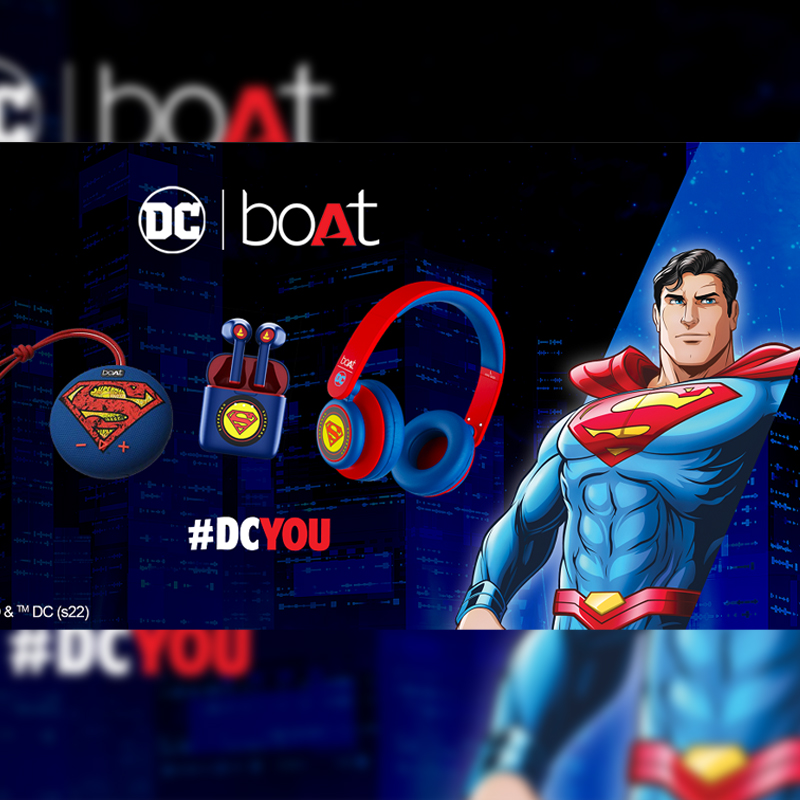
    Mumbai: boAt has unveiled new DC-themed designs across boAt’s top selling accessories in collaboration with Warner Bros. This new collection combines the epic characters Batman, Superman, and Wonder Woman with boAt’s superior technology. The new collaboration will give the Indian market a way to be closer to the massive DC Multiverse for the first time. The collection and its offerings have been carefully curated and thoughtfully designed to synergize with all the characters and their unique attributes. The iconic association is an outcome of extremely similar audiences of DC and boAt, who are on the lookout for powerful and inspiring consumer durables; the ones who adorn an individual style and seek perfection in every move they make.

    The collaboration between the powerhouse brands includes the following: boAt Rockerz 450 headphones in Krypton Blue (Superman), boAt Stone 190 portable speaker in Amazonian Red (Wonder Woman), and boAt Airdopes 131 earbuds in Knight Black (Batman).

    Speaking on this, boAt co-founder and CMO Aman Gupta said, “I feel extremely excited to announce our partnership with Warner Bros. Consumer Products and reveal our DC-themed boAt audio wear. DC Super Heroes are some of the most loved and watched characters across several age groups. We feel our boAthead community would really appreciate this truly unique collection.”

    Sharing his thoughts on the partnership, Warner Bros. Discovery India Southeast Asia & Korea head of consumers advertising and partnerships Vikram Sharma said, “We always endeavor to bring our iconic characters to fans through fun and engaging collaborations and we know the association with boAt will give DC fans in India an opportunity to bring the imagination of the DC Multiverse into their lives. We are sure they will enjoy this exclusive range.”

    The DC themed collection will be available on boat-lifestyle.com starting 18 June, 12 pm.

  • Guest Column: Hospitality brands repositioning themselves in the market post-pandemic

    Guest Column: Hospitality brands repositioning themselves in the market post-pandemic

    Mumbai: The pandemic has affected a substantial amount of businesses globally and has severely impacted the travel and the hospitality sector. The Indian hotel industry has suffered losses of Rs 620 crore. The hotel chain and standalone hotel segments are expected to lose more than Rs 130-155 crore, while the alternate accommodation category is expected to lose more than Rs 420-470 crore. This has changed the way hospitality brands used to engage and position themselves in the market.

    During the pandemic as the restrictions were imposed, the restaurants and F&B services of the hospitality brands managed to survive through home delivery of food, which was possible through service partners like Zomato, Swiggy, Uber eats, etc. The experience of fine dining, the ambience, ordering through a menu card, and the special hospitality services that customers used to gain were completely lost. Now that the pandemic restrictions have been lifted, they will expect more from these hospitality brands, as people no longer circumspect about the food they eat but it is about the services that they experience. This emerges the need for brands to invest in strong marketing and consumer engagement plans which will help them to stand out from their competitors.

    With the help of an effective PR strategy, these hospitality brands can once again gain visibility among their stakeholders and consumers, using announcement campaigns or a simple consumer engagement campaign. This can help in announcing their return to business with newer offerings and covid appropriate services, etc. thereby engaging with and reassuring their customers.

    Here are some of the benefits that the hospitality brands can obtain with a strong PR campaign to win back visibility and business opportunities:

    Brand positioning

    With a strong marketing and consumer engagement plan, the hospitality brand will be able to create a top of mind recall among the customers. With the change in the market scenario, most businesses have to innovate and create covid appropriate solutions and services, while also focusing on their existing products. A well-planned PR campaign can help hospitality brands to be relevant and effective in the new market.

    Long term customer loyalty

    An effective PR campaign can help in building the lost touch and renew customer relationships that were present before the pandemic. Through effective media engagement, brands can build transparency, trust, and credibility for the brand and in turn create visibility and rebuild a set of loyal customers.

    Helps build a narrative for the business

    A PR specialist can help in forming a strong narrative for the company, be it talking about the sanitized and safe environment, special menus, newer innovations in services and focused customer service. This helps in building an appropriate solution based on the scenario. With a better understanding of the problem, a PR specialist can accurately offer solutions by using the right phrases to help build the image of the brand.

    Ease of doing business

    PR campaigns that are developed around spokesperson profiling through interviews, industry story participation, opinion pieces and authored content, etc. can help in the building thought leadership and help in targeting the relevant customers. This in return gives the brand better support in the market among the stakeholders, resulting in ease of doing business.

    More engaging campaigns

    With the help of a PR specialist, hospitality brands can connect with their target customers with more engaging programs, which in return will increase brand engagement. These programs can be centered through experiences, which is possible by optimizing the product offering, complementary events, gigs/ live music, special celebrity appearances, etc. which is a great way to promote the brand, engage with the target audience and ultimately boost sales.

    With the help of an effective PR campaign, hospitality brands can reposition themselves with a strong PR narrative which can help them garner visibility and build the right image of themselves post-pandemic. Partnering with a good PR agency will help you combat these difficulties and provide solutions that will give you a strong head start to successful growth in the hospitality sector.

    The author is Anindita Gupta, Co-Founder, Scenic Communication

  • Nykaa onboards Shilpa Jain as AVP, consumer & market insights

    Nykaa onboards Shilpa Jain as AVP, consumer & market insights

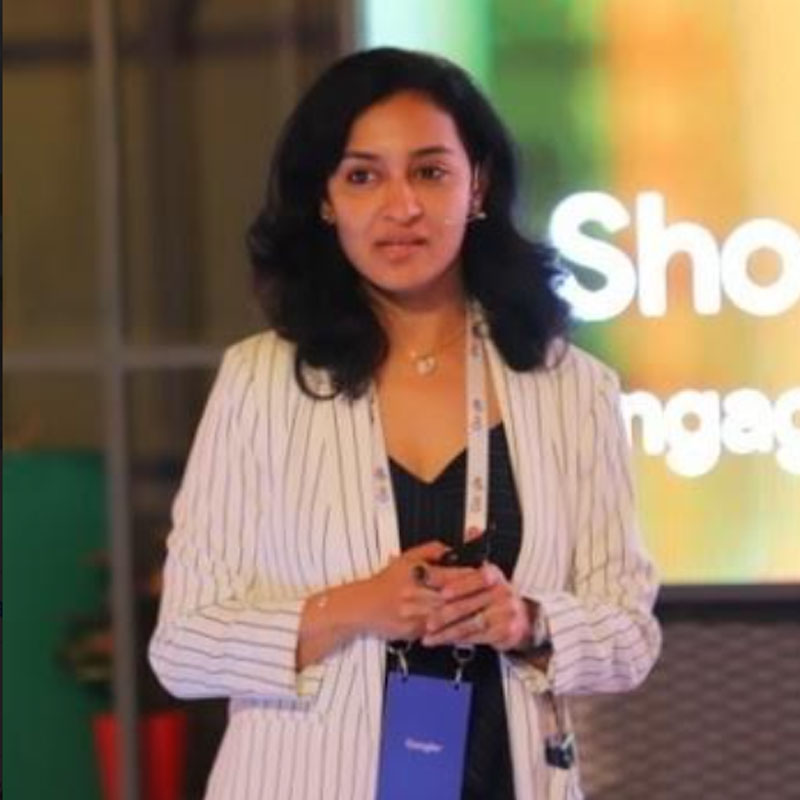
    Mumbai: Omnichannel beauty retailer Nykaa has brought on board Shilpa Jain as associate vice president (AVP), consumer & market insights.

    In her new role, Jain will be responsible for driving consumer & market insights, providing relevant insight-based solutions to address specific branding and marketing issues for the brand.
    Jain comes with over 13 years of experience in the consumer insights industry. She has previously worked with Google as the consumer & marketing specialist for around two years. Her past stints also include companies like Coca-Cola and UK-based Kantar.

    Jain is an MBA graduate from MICA Ahmedabad and has a bachelor’s degree in economics from Shri Ram College of Commerce.

  • Ford India elevates Kapil Sharma as GM – consumer marketing

    Ford India elevates Kapil Sharma as GM – consumer marketing

    MUMBAI: Ford India head of communications Kapil Sharma has been handed over the additional mandate of general manager – consumer marketing, said the company on Thursday.

    In this new role, Sharma will also be responsible for steering the Ford brand and business forward with integrated marketing and communications efforts. He takes over his new role on 1 June. 

    Sharma joined the American multinational carmaker in September 2013 as manager, corporate communications. He moved on from BMW India where he was manager – press and corporate affairs.

    In a career spanning over 15 years, he has worked at Genesis Burson Marsteller, and Mileage Communications.

  • DDB Mudra Group’s Point of New reveals shifts in 2021 consumer trends

    DDB Mudra Group’s Point of New reveals shifts in 2021 consumer trends

    New Delhi: DDB Mudra Group has unveiled Point of New, an e-book comprising a collection of essays that examine lasting shifts in consumer behaviour brought on by the pandemic. Using the group’s proprietary Signbanking process, over 600 Covid specific small signs of social change were aggregated over the course of eight months. Authored by the group’s strategy team, these 15 essays act as a guide in shaping decisions for the new world.

    Point of New showcases the impact of new rituals in a post-Covid world on people, businesses and society at large. The essays discuss the new rules of the new world modelled on themes that keep the wheel of life in motion such as being, identity, consuming and parenting amongst others.

    The research began by studying people's lifestyle and daily routines in their natural environment without intrusion. This anthropological approach to understanding consumer behaviour as it plays out in day-to-day lives helped predict larger cultural and behavioral shifts.

    DDB Mudra Group national strategy head Amit Kekre said, “The pandemic has forced us to consider a new and hopefully a better tomorrow. Just how much better this new world will be, depends on how we construct it. It depends on the choices we make on our path to the new. While a lot has been said about the pandemic from a quantitative point of view, ‘Point of New’ goes a step further. The essays contemplate what aspects of the new world could be truly meaningful and which might need us to exercise caution as brand and business owners.”

  • Guest Column: TRAI needs to focus on sectoral hygiene rather than economic regulation

    Guest Column: TRAI needs to focus on sectoral hygiene rather than economic regulation

    MUMBAI: A silent crisis has been brewing in the residential segment of TV viewing sector. Even as its viewership increased during the Covid-induced lockdown, sectoral revenues took a severe hit. While Covid was termed an act of god, TV’s current state appears to be a man-made disaster. TV is an integral part of media, the fourth pillar of democracy. Therefore, it is crucial to respect and preserve it.

    TV accounts for over 40 per cent of the Indian media and entertainment ecosystem’s revenues, making it the sector’s largest contributor. As per pre-pandemic estimates, the M&E industry was slated to grow at 10 per cent CAGR to touch $34 billion by 2022. Covid’s impact has slowed down that march, particularly because advertisement revenues have shrunk, production of new entertainment programs remained suspended and the addition of new subscribers, by direct marketing, has become difficult. The alternative lies in adopting a subscription-led model.

    Broadcasters source content from content producers and manage its distribution over electronic media for viewer consumption. There are costs involved in this management such as content editing, server storage, opex for uplinking, transponder rentals and taxes. Broadcasters rely on meeting these expenses through advertisements inserted into and cheek by jowl with content.

    Besides these, distribution platform operators (DPOs) charge broadcasters a fee to carry programs and their placement in their electronic program guides (EPGs). TV players  have to pay this fee even for channels which are free for viewers. Advertisement revenue covers approximately 60 per cent of such costs. The DPOs, in turn charge subscribers for connectivity and pay content charges besides taxes.

    Read more news on Trai

    Since the nineties, business models were skewed in favour of ad-driven revenues because the amount of video content to be distributed over the  networks exceeded network capacity. Further, business practices were not transparent as broadcasters were unable to verify how many subscribers were watching their channels.

    2011 onwards, the TV digitisation process was supposed to usher in transparency and help overcome capacity constraints by relaying encoded and encrypted program streams from broadcasters to consumers via approximately 1,500 MSOs and over 60,000 cable operators. Digitisation improves picture and sound quality and allows more content to be transmitted using the same resources, thus enhancing consumer choice. Coupled with encryption, this system is called the digital addressable system (DAS), which means the facility to enable or disable program viewing selectively and remotely. Encrypted broadcasting signals can only be decoded via a set top box (STB) programmed uniquely for each consumer as per their indicated choice. Consequently, consumers can access and watch only those programs that they have chosen and pay accordingly. Empowering consumers to exercise choice was the intended first step to enable a subscription-led industry model.

    While the government claims that the entire digitisation process was over in March 2017, the truth is otherwise. MIB tracked DAS implementation using only the number of STBs reportedly shipped out of headend service providers’ warehouses. It did not consider if these STBs had been programmed to show only those channels that viewers had opted for. The STBs, therefore, functioned only as digital to analog converters that enabled viewers to watch all programs in the network’s stream. The task force to oversee DAS implementation did not seek proof to verify that ‘addressability’ had actually been implemented in the subscriber management system, which was the very essence of DAS implementation. Thus, a lot of TV subscribers do not have STBs which allow them to watch only those programs that they opt for.

    In 2017, TRAI issued a tariff order that supposedly aligns regulations with the new digital regime. However, the explanatory memorandum of the tariff order is full of contradictions, attributable to limited knowledge of ground realities.

    One possible infirmity, in TRAI’s demonstrated inability, could be that their staff consists of bureaucrats and professionals from the IT enabled services sector. Telecom generically facilitates one-to-one communication without any concern for the content it carries. The charges too cover fixed and variable levies based on usage time. With such a background, TRAI has been entrusted with regulation of broadcast, which is based on content that is intended for mass consumption.  Since 2004, they have not been able to acquire information about how broadcasters price their content.

    Read more news on broadcasters

    In the explanatory memorandum to the tariff order from March 2017, TRAI says that content pricing is a dynamic process, best understood by broadcasters. At the same time, it restricts them from deciding the price of pay programs included in bouquets. A commercial approach to determine prices requires an understanding of the expected channel viewership, and the cost of producing or acquiring content. Addressing ground realities is important to gather accurate data on channel viewership.

    One must understand that most subscribers use cable operators’ networks, which are local monopolies. Such operators get STBs issued in bulk without requisite programming and pairing them with subscriber details. These STBs enable access to all programs contained in the stream net casted from the MSO, since they are not individually programmed to cater to consumer choice. The cable operators then started charging subscribers a fixed monthly sum without any bill or receipt.

    To address this situation, multiple suggestions were made to TRAI. An important one was to incorporate broadcast expertise, which differs from telecom, into regulation. This is especially important for content handling to ensure that the deployed distribution networks meet desired addressability and content security norms. This author too has suggested that an eminent person, with broadcast video distribution experience, should conduct a demonstrative audit for all empaneled auditors. However, TRAI remains reluctant to change its telco-oriented mindset, where the concern for content has never factored in. The most glaring example is  the regulator’s latest list of auditors to audit the digitalization process. Almost all of them are charted accountants with no experience in broadcast audit. The regulations prescribe the employment of a graduate engineer in the empaneled auditors’ teams, without even mentioning his/her educational background. Finding suitable talent is also challenging, as broadcast engineering, in general, and wired line broadcasting, in particular, are yet to find a place in Indian academia. To sum up, one can’t get the TV business right without getting the number of consumers right.

    TRAI will therefore do well to pay attention to the safe and secure delivery of content, rather than economic regulation that is confined to subscription fund flow audits. As it is, the regulator’s misadventure since March 2019, has resulted in a loss of estimated 26 million subscribers, besides reported closing down of multiple video broadcast programs. It can’t and shouldn’t create a situation where more programs are forced to go off air.

    (The author of the article is Lt. Col. V C Khare, a cable TV expert. The views are personal and Indiantelevision.com may not subscribe to them)

  • TRAI reminds consumers they can pick a-la-carte channels

    TRAI reminds consumers they can pick a-la-carte channels

    MUMBAI: In its latest missive the Telecom Regulatory Authority of India (TRAI) has taken note that broadcasters are only advertising bouquets of their channels and not informing customers about a-la-carte options. As per the new regulatory framework, consumers must be given the choice of picking individual channels too.

    “Now it has been noticed that several broadcasters are advertising their channels in the form of bouquets only. However customer may note that they have option to choose channels on a-la-carte also,” TRAI said in the release.

    It went on to state, “Consumer has complete freedom to choose their desired 100 standard definition (SD) channels within the network capacity fee of maximum Rs 130. The desired channels could be in a-Ia-carte free to air channels or pay channels or bouquet of pay channels or any combination thereof. The choice completely rests with the consumers.”

    TRAI has also mentioned that the maximum retail price (MRP) of a channel on a-la-carte can be viewed in the Electronic Programme Guide (EPG) or Menu of the TV screens of customers. However, Distribution Platform Operators (DPO) such as cable operators, DTH operators may provide discount on the MRP.

    For informing consumer properly, DPOs have been requested to run Consumer Information channel preferably on channel number 999 wherein consumer-related information including the prices of channels on a-la-carte and bouquets are made available.

    LCOs, MSOs, DTH operators are coming up with various options to consumers so that they can exercise their choice conveniently. LCOs can be reached by personal contact while the option of calling on call centre number is also available for many DPOs. Along with the website facility, many DPOs are also providing the option of apps.

    It once again reminded subscribers to make their picks in advance to avoid last minute hassles.