Tag: Consolidation

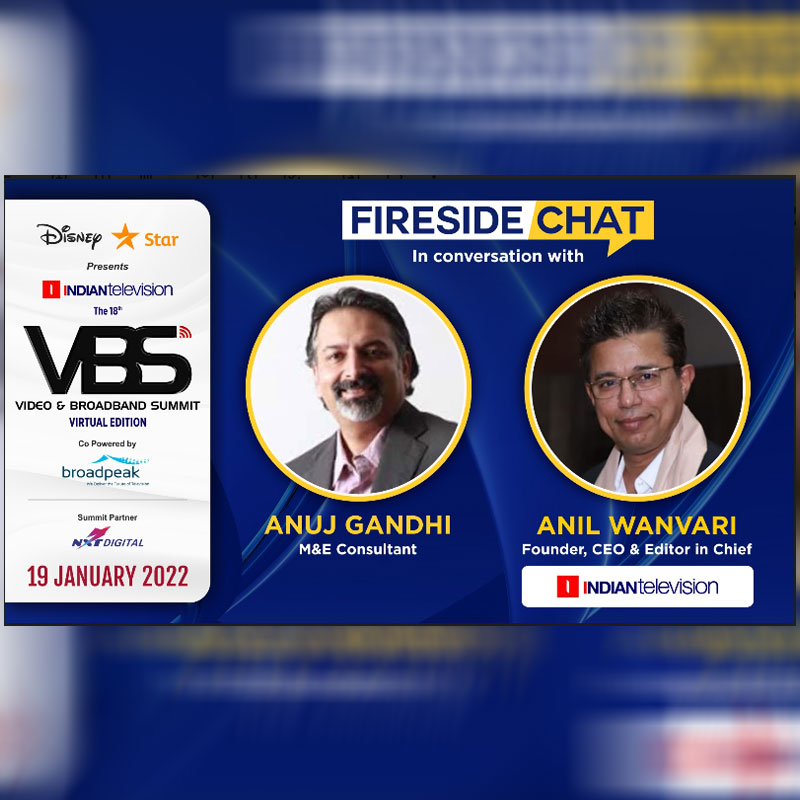
  • After edtech & fintech, now is time for media-tech: Anuj Gandhi at VBS 2022

    After edtech & fintech, now is time for media-tech: Anuj Gandhi at VBS 2022

    Mumbai: After the edtech and fintech, it’s time for India to now witness the rise of media-tech, said M&E consultant and industry veteran Anuj Gandhi while decoding the post-pandemic future of the industry at the 18th edition of the Video & Broadband Summit 2022 (VBS) organised by Indiantelevision.com on Wednesday.

    The day-long virtual summit was co-powered by broadpeak, with Disney Star as the presenting partner, and NxtDigital as the summit partner.

    In a fireside chat with Indiantelevision.com founder CEO and editor-in-chief Anil Wanvari, the media distribution veteran discussed the six major trends which, according to him, will determine the course of the media and entertainment industry over the next couple of years.

    Video Trends: Unlike the days of DD and bundled offerings, the modern consumer wants more freedom to choose. With the burgeoning delivery platforms, it’s no longer that case where everyone has to be on PayTV. Moreover, in the present scenario where people are spending hours on social media, even Instagram Reels are ‘content’. Clearly, going forward, the definition of video, as well as trends in the space, will depend on the demand-supply equation. The rise of Free Dish and OTTs during the pandemic is a classic example, and even as their growth accelerates, PayTV will also continue to exist in some form or the other.

    Broadband Growth: Broadband has evolved into becoming a utility today; it is no longer limited to video. Considering the amount of consumption that’s happening over work-from-home, education, and other services, video is just a small fraction of it. The Trai’s figure for wired broadband that was stagnant at around 10-12 mn for many years, suddenly shot up to 25 mn, and this does not even include the huge undeclared market run by cable companies. The hybrid ecosystem fostered by the pandemic will continue to push this number further in the coming days.

    The fate of linear TV: It is a cause for worry and excitement at the same time. Both in India and globally there’s no denying the trend of people consuming less pay/linear TV as a result of the availability of alternatives as well as the failure of linear TV to innovate in terms of content. The Free Dish market has largely been insulated so far, but it will also experience disruption in the near future as broadband penetration in the hinterland grows.

    B2C focus and consolidation: The changes that were effected and necessitated by the growth in digital, especially in the last decade or so, have shifted the focus of the entire M&E industry from B2B to B2C. As the ecosystem opens up more and more to consumers directly, the need for consolidation will also increase, whether it is to meet the entertainment demands of viewers or to simplify content discovery for them.

    Rise of FAST: The popularity of Free Ad-Supported TV (FAST) services in the US and Europe, clearly shows that the west is moving towards AVOD. In the case of Asian markets including India, even though SVOD is picking up, the growth of Free Dish, YouTube, and OTT players like MX, is a strong indication of the potential for FAST.

    Crumbling walls: Changes in windowing norms that existed thus far will have a far-reaching impact on pricing, quality, and consumption of content as well as the actual segmentation of consumers in a multi-screen environment.

    The former group CEO of IndiaCast Media Distribution, who was also instrumental in setting up IndiaCast in March 2012 said he is hopeful about a future where all forms of video delivery – Free Dish, PayTV, VOD -will coexist. However, considering the current regulatory environment, competition, and the pace at which viewers are evolving, he recommended that the industry players must adopt an approach that gives more freedom and power to consumers rather than trying to resist the inevitable change in order to survive in the long run.

  • The year M&A changed the face of the media and entertainment industry

    The year M&A changed the face of the media and entertainment industry

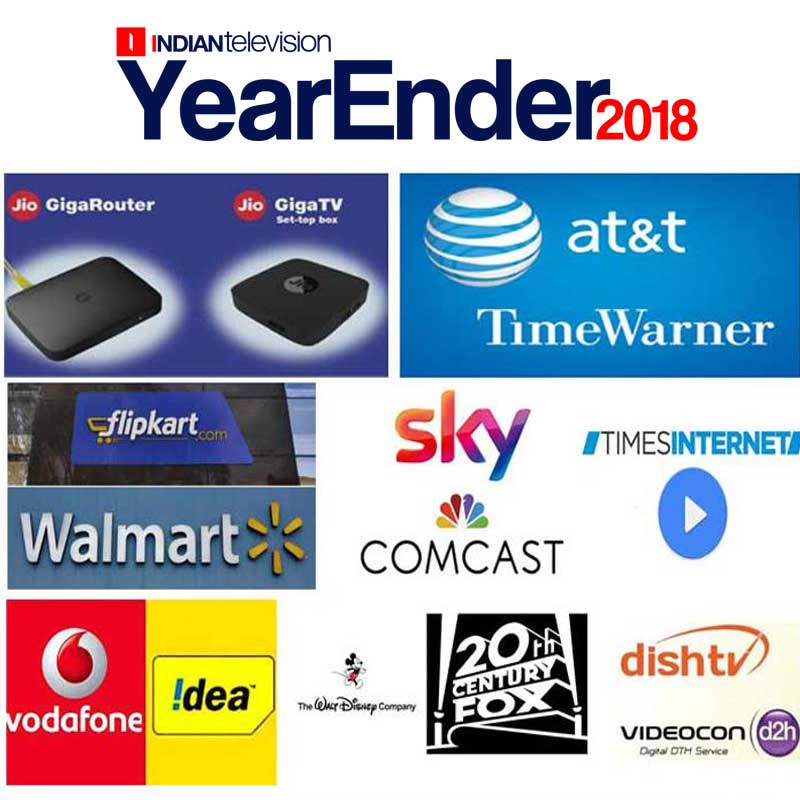
    MUMBAI: The emergence of numerous streaming platforms and convergence between technology, media, and telecom companies shook the core of the media and entertainment business globally. Giant tech and telco players, on the back of their direct customer reach, started taking content creation and distribution a lot more seriously. Rapid change in content consumption pressurised traditional players to invest more in technology and focus more on the B2C model. The ongoing flux brought the industry on the brink of instability, leading to consolidation in the form of mergers and acquisitions.

    In the last couple of years, the nature of competition in the global ecosystem has witnessed a gradual swing. Organisations like Netflix, Amazon Prime and Google have brought a structural shift forcing traditional players to rethink their approach to content and distribution. Legacy brands upped the ante to attract and retain more consumers even through cross-border deals. PwC India partner Raman Kalra points that everybody in this world of media disruption is trying to be relevant in reach and scale, the two critical factors that are driving deals. To corroborate his thesis, he highlights the AT&T-Time Warner deal where the former, with a huge reach, wanted to scale up its content play with the collaboration.

    Closer to home, billionaire Mukesh Ambani’s RIL rode the TMT convergence wave better than most. India’s richest man started the year with a bang, intensifying TV18’s stake to 51 per cent by acquiring 1 per cent of Viacom18’s equity from Viacom Inc. for a cash consideration of $20 million. The RIL-owned Jio Infocomm also acquired a controlling stake in two large MSOs – DEN and Hathway – building ammunition for its FTTH’s foray. That’s not all, RIL also pocketed a small but significant five per cent stake in Eros International.

    E&Y media and entertainment advisory services partner Ashish Pherwani expects more deals to materialise in 2019.

    “Especially technology-driven deals because so many changes are happening in that space, and consolidation, led by inbound investments. There are three types of deal. One type of deal is happening in order to build efficiency and scale in the business, led by cost pressures. Another type of deal is around relevance and market share – to get a bigger slice of the market to monetise a larger base of consumers.  The third type of deal which is happening is basically technology driven – for access to technology that could drive competitive advantage in the digital future. Hence, the three reasons market share, efficiency, technology are driving the deals,” he adds.

    There were other interesting deals struck through the year that are likely to reshape the media and entertainment business going forward.

    Birth of the world’s second largest DTH company

    The Indian market wasn’t exempted from the global merger frenzy. The coming together of two large DTH operators – Dish TV India and Videocon d2h – was finally concluded this year, creating the largest DTH service provider in the country with a subscriber base of about 29 million. Apart from leveraging their individual strengths, it was expected that the combined entity would benefit from economies of scale. One of the biggest attractions for Dish TV as the acquirer was Videocon’s significantly higher average revenue per user (ARPU). Significantly, the combined entity’s ARPU was Rs 207 in the second quarter as opposed to Dish TV’s standalone ARPU of Rs 144 pre-merger. The deal also helped Dish TV position itself better when it came to negotiating with broadcasters.

    Decks cleared for FTTH warfare

    From formally launching FTTH service Jio GigaFiber to acquiring majority stakes in two large MSOs to speed up the rollout, the Mukesh Ambani-led Reliance Jio was definitely the centre of attention in 2018. Reliance Industries Ltd (RIL) made an investment of Rs 2,290 crore for 66 per cent stake in Den and Rs 2,940 crore for 51.3 per cent stake in Hathway. It will save RIL the cost of reaching out to customers as well as making the last mile connectivity easier in its ambitious bid of seizing control over India’s wired broadband business. With the launch of its telecom service, RIL gave rise to what many call ‘digital democratisation’. As the Jio juggernaut marked its entry into India’s multi-billion-dollar cable TV and DTH businesses, traditional players eyed the development with a healthy mix of scepticism and optimism.

    Rivals joined hands

    The Indian telecom sector this year saw the marriage of two giant companies, creating the country’s largest telecom company. In the month of August, Vodafone India and Idea Cellular completed the merger after getting approval from National Company Law Tribunal (NCLT). The consolidation of India’s telecom sector was a direct result of Jio’s relentless pricing war. Post the Idea-Vodafone deal, India’s telco business now comprises of just three players. Analysts expect the combined entity to yield better coverage than before as it would have access to a more robust ecosystem of cellular towers. COAI also believes that as competitive pressures drive consolidation, customers and the industry stand to benefit from the greater stability and better networks which will emerge. Surprisingly, a few years ago, the Indian telco sector had 13 operators.

    Bansals became billionaires

    Walmart gained a strong foothold in India’s this year as it completed its much-talked-about $16 billion acquisition of the country’s largest e-commerce company Flipkart. Poster boys of India’s start-up community Sachin and Binny Bansal became billionaires in a big win for Indian talent and home-grown businesses. Despite protests from traders across the country, as the deal could potentially harm their business, the Competition Commission of India (CCI)’s green signal came earlier this year. The biggest e-commerce deal globally bolstered Walmart’s repertoire in its war with Amazon internationally. With India being one of the most attractive retail markets in the world, a strong play here is bound to further boost the American behemoth in a rapidly changing environment.

    Times Group joined the streaming sweepstakes

    With almost major broadcasters and media companies trying to grab a slice of the hottest piece of the M&E business – OTT, the Times Group too jumped on the bandwagon. To get a stronger foothold in the space, Times Internet invested over Rs 1,000 crore to acquire a majority stake in video playback app MX Player. According to media reports, the company will introduce a streaming service within the app. The large cross-border deal which surprised the industry will definitely help Times Internet in the OTT race thanks to the huge base and popularity of MX Player in south Asian countries. With over 30 OTT players vying for consumers’ attention in India, the game has just begun with enough opportunities for new platforms. Earlier in the year, MX Player content head Gautam Talwar had told Indiantelevision.com that like many other OTT platforms, MX Player too wants to tap into the millennial audience. It wants to cater to users with 50,000 to 100,000 hours of premium curated licensed content along with a high focus on originals, he further added. 

    The telco takeover

    Giant wireless carrier and telco AT&T’s acquisition of content powerhouse Time Warner is just one example of how the lines between distribution companies and content creators are blurring. With the $85 billion deal, the telco gained ready access to the content pool of CNN, HBO, and Warner Bros.

    “Under the terms of the merger, Time Warner Inc shareholders received 1.437 shares of AT&T common stock, in addition to $53.75 in cash, per share of Time Warner Inc.1 As a result, AT&T issued 1,185M shares of common stock and paid $42.5B in cash,” said AT&T providing the financial details of the deal.

    Though the deal was first announced in 2016, it had to negotiate past several subsequent legal hurdles. The Donald Trump-led US Department of Justice (DOJ) even filed a lawsuit against AT&T and Time Warner to block the proposed merger. Following a six week trial, a US district court approved the deal without any conditions on 12 June and also urged the government to not seek any stay. The main argument of the US administration was that the merger would hand over too much power to AT&T, making the market less competitive.

    A once-in-a-lifetime deal

    Another blockbuster deal that came through this year was the $71 billion acquisition of 21st Century Fox assets by Disney. After a long and sustained bidding war with Comcast, the Mouse House got its hands on much of the Murdoch empire. “Combining the 21CF businesses with Disney and establishing new ‘Fox’ will unlock significant value for our shareholders,” 21st Century Fox executive chairman Rupert Murdoch said. The shareholders of both the companies approved the deal immediately, with foreign approvals and regulatory reviews now the final procedural hurdle.

    Disney is now in pole position to take on streaming giants like Amazon and Netflix with its OTT Disney+. The company has also already indicated its desire to stop licensing content to Netflix by ending the deal in favour of its own B2C service. Moreover, Disney now has majority control of Hulu, Endemol Shine Group and Star India, making it the most powerful content owner in the world. The reaction to the growth of OTT services has clearly shown that joining forces with rivals and competitors is not unacceptable anymore to survive in the market.

    Second time lucky

    After a failed attempt to buy 21st Century Fox, US cable giant Comcast won the bid for European entertainment biggie Sky. The former sealed the deal for a controlling stake in the British broadcaster with a winning bid of $40 billion. Analysts said that Comcast and Sky would become the biggest private sector provider of pay TV in the world with 52 million customers. Given the vast reach and growing customer base of Sky in Europe, Comcast took the step to expand its international business with it losing ground in the domestic market. This deal was a direct effect of cord-cutting as Netflix’s growth in the US has posed a major threat to the likes of Comcast. According to an analysis from Ampere, post the media mega-mergers of Comcast/Sky and Disney/Fox, two in every 10 dollars spent on content worldwide will now be spent by these two entities.

    The merger madness from 2018 is likely to continue in 2019, as corroborated by experts we spoke to. Not only would it be interesting to track which companies opt for consolidation, but 2019 will also give us a sense of how the deals from 2018 take shape and play out.

  • Transform by tackling moral dilemmas: Sudhanshu Vats

    Transform by tackling moral dilemmas: Sudhanshu Vats

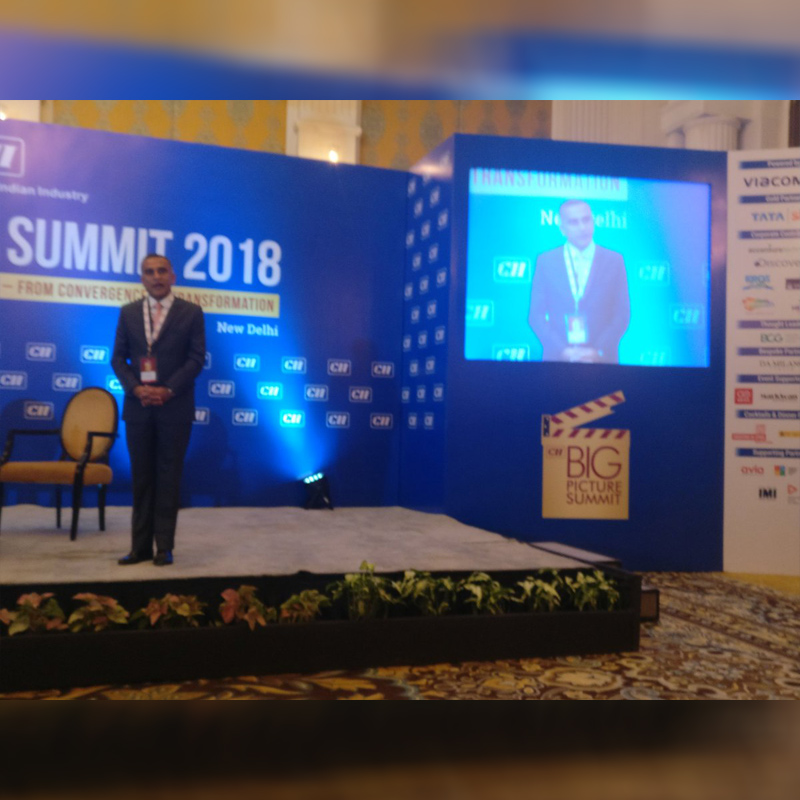
    MUMBAI: Media companies can no longer ask ‘if’ changes are happening. They are, there’s no doubt about it. But now it’s a question of how to respond. Addressing the CII Big Picture 2018 in New Delhi, Viacom18 group CEO and MD Sudhanshu Vats spoke on the topic of ‘Changing M&E landscape – from convergence to transformation’.

    According to him, the industry is battling moral dilemmas. “If you step back and introspect about all that is happening with our industry across the world, you will agree that we are battling several changes – and most of them are a result of moral dilemmas and our response to them. If we can tackle these dilemmas successfully (and defining success is the hardest part), we can believe that we have transformed,” Vats commented.

    Another issue bothering the industry is about misusing its reach and credibility to influence electoral processes across the world. Equally troublesome is ensuring fairness in terms of availability of content to consumers and parity across distribution platforms, especially in the future when convergence is going to dial up vertical integration across value chains.

    As the content consumption on digital is increasing rapidly, the access of media companies to consumer data will also go up. He said, “As consumption moves online, our access to data will increase. In many ways, data will be a competitive advantage and drive advertising revenues and personalised user experiences – what processes do we put in place to ensure it is not misused – how and where do we draw the line differentiating personalization versus privacy?”

    Correctly treating their biggest asset, human resources, both on screen and off, is also necessary. “How do we react when their individual, personal behaviour questions the fabric of the society we want to create? Think of this especially in light of the recent issues around diversity and inclusion that we’ve experienced. It’s important for everyone, but especially so for our industry,” he said.

    He also added that the list of moral dilemmas is endless. Hence, everyone needs to be cognizant of these dilemmas as organisations, industry bodies, policymakers and governments as they look to scale up businesses.

    “I’ve always been an ardent supporter of data and its importance in driving decision making. In this address, I have not used a single data point – because I believe that the course we take over the next decade will be determined more by these fundamental issues of values and how we tackle moral dilemmas than just commercial considerations,” he said.

    “Driving consensus will be difficult yet more important than ever before. This is even more so given that India is today amongst the world’s largest ‘open’ media markets and home to a multitude of players from all over and of all sizes,” he added.

  • Telecom sector continues to be highly taxed: Sunil Mittal

    Telecom sector continues to be highly taxed: Sunil Mittal

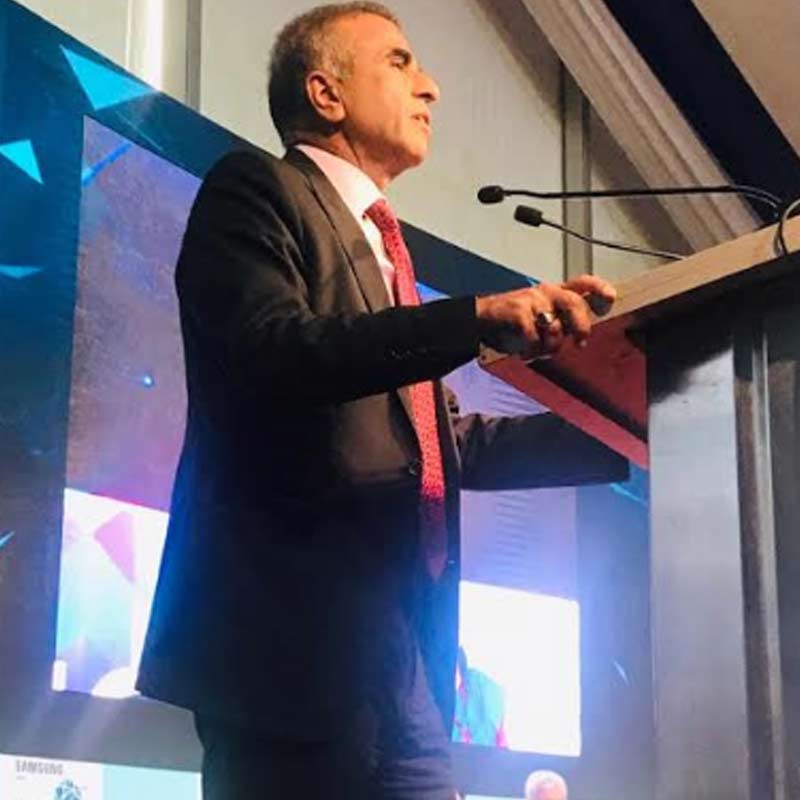
    MUMBAI: Speaking at India Mobile Congress 2018, Bharti Airtel chairman Sunil Mittal said telecom sector continues to be highly-taxed just like the tobacco industry. He also urged that the issue of high levy needs to be resolved and mentioned it as a deterrent to PM Narendra Modi’s digital India vision. He also added that the industry is a heavy capital-intensive industry, requires laying of fibre and heavy investment in networks.

    “Telecom levies are as high as 37 per cent. Spectrum fee and licence fee are very high coupled with GST at 18 per cent,” said Mittal.

    However, he thanked Telecom minister Manoj Sinha and secretary Aruna Sundararajan for the new telecom policy, NDCP 2018, as it includes all important elements. But he also mentioned that the policy clearly acknowledges that revenue maximisation is not the objective.

    "There is also one overarching objective of previous policy and also enshrined in NDCP that revenue maximisation is not the objective…Then why operators and Department of Telecom are under litigation for revenue maximisation," Mittal added.

    He also spoke about the consolidations happening in telecom sector across the world. The consolidation process hasn’t happened in an orderly way in India other than the Vodafone-Idea merger.

    “India's (telecom sector) consolidation hasn't happened in an orderly fashion with $59 billion wiped off, although the merger of Vodafone and Idea has happened and we are happy with that,” Mittal commented.

    Explaining the consolidation trends in other countries, he mentioned China and the US. While the upcoming merger of T-Mobile and Sprint would lead to three telecom players in the US, China is also moving towards a two-player market.

    While he believes India is not lagging behind in adopting 5G technology, he urged the government to come up with consultations on making fibre a national asset.

  • Guest Column: 5 Trends lending the Power to Believe in Indian TV industry

    Guest Column: 5 Trends lending the Power to Believe in Indian TV industry

    The four pillars influencing the M&E sector are: Infrastructure, Government policies, Devices and Digital Technologies. Growing consumer demand is inviting policy support driving innovation and resulting in increasing investments in the sector.

    There are 5 identifiable trends which lend television industry the power to dream and the analysts the power to believe.  These are:
    1. Positive Government Directives
    2. Surge in Digital consumption
    3. Consolidation the new buzzword
    4. Rural India beckons
    5. Data undergirds everything

    1. Positive Government Directives
    The M&E industry is expected to leap forward after a slow 2016. 2016 experienced two large government directives which affected the TV industry in negative ways for the short term. 

    Demonetisation came as a bolt from the blue and shaved off around 2% of ad revenues for the TV industry. 

    GST as another one to rationalise taxation across the M&E industry. While challenges abound initially, overall M&E industry is however a beneficiary for two reasons:
    • Availability of input credits across the board and inclusion of entertainment tax within the ambit of GST are both positive developments.
    • Formalisation of economy and widening of tax base will result in overall positive impact on GDP and thereby resultant positive impact on ad spends.

    public://guest.jpg

    Both Demonetisation and GST will however give a further boost to GDP in the long run. Over and above these, Cable digitisation is already creating a paradigm shift as a game changer with ARPU on an uptrend post digitisation.  Even as it is delayed, the same is expected to be completed in 2017.  

    2. Surge in Digital Consumption 
    The surge in digital consumption is compelling existing players to take a hard look at their business models.  OTT VOD is emerging as a parallel platform along with TV broadcast.   Entry of Netflix, Amazon Prime as global leaders; VOOT, OZEE, Hotstar and Sony Liv as broadcast network backed platforms; and Jio Apps and Airtel Wynk as telecom companies backed platforms joining the game with syndicated content offerings. 

    Development of a sustainable digital ecosystem will be required in the long run to address credible measurement and limited monetisation models.

    3. Consolidation the new buzzword
    Consolidation is gaining momentum across the value chain.  Even as there have been less number of transactions, the good news is that they are of higher value.  The three biggest ones are Dish TV and Videocon merger, Ten Sports acquisition by Sony and Reliance ADAG TV broadcast business takeover by Zee. 

    4. Rural India beckons
    Post commencement of rural measurement by BARC, the big story has bene that of the high levels of TV viewing habits of rural India. This has resulted in higher advertising spending in rural HSMs, introduction of new FTA channels and realignment of content focus for mass tastes.

    5. Data undergirds everything
    Along with the data dividends of digital becoming visible, BARC viewership data has led to consumer analytics becoming indispensable thereby leading to changes in content, distribution and ad strategies.

    Conclusion
    The long-term future for the television industry is very robust with CAGR projections above 14% for both segments of ad revenues and subscription revenues. The Indian Media & Entertainment industry is on the ball with Television leading the charge. 

    public://Untitled-3_17.jpg

    (Piyush Sharma, a global tech, media and entrepreneurial leader, created the successful foray of Zee Entertainment in India and globally under the ‘Living’ brand. The views expressed here are of the writer’s and Indiantelevision.com may not subscribe to them.)

  • Balaji seeks shareholder nod for consolidation of prod biz

    BENGALURU: In September last year, the Balaji Telefilms Limited (BTL) board had approved the demerger of the film production business of Balaji Motion Pictures Limited (BMPL) and merger of Bolt Media Limited (Bolt) with the company. Both the companies are wholly owned subsidiaries of BTL.

    With these moves, the company seeks to combine similar business interests, improve capital allocation, enhance operational efficiencies, optimise cash flows, consolidate business operations and streamline the group structure.

    BMPL is engaged in the business of production and distribution of motion pictures and films while Bolt is in the business of production of non-fiction, fiction, factual television shows, event management, etc. After the demerger, BMPL will focus on film distribution business, while Bolt is in the same line of business as BTL and its amalgamation with BTL will help in focussed and effective utilisation of production activities.

    The company has called for a court convened meeting of equity shareholders of the companies on 24 May 2017 at The Club, 197, D N Nagar, Andheri West, Mumbai. Voting by equity shareholders can be done physically at the court convened meeting at the venue, or by postal ballot or by e-voting.

    Shareholders who have opted for the latter two methods of voting can attend the court convened meeting, but they shall not be allowed to vote at the court convened meeting.

    Also Read :

    Balaji Telefilms to restructure its motion picture business

  • Consolidation & cooperation, the way forward

    Consolidation & cooperation, the way forward

    India’s cable TV industry is about to enter into a pivotal year, probably the most important in its 20-year old year history. As it does so, it needs to take a leaf out of the US cable industry playbook, a 60-year old franchise that’s been through rate regulation, digitalization, broadband and now, as it stares down the barrel at Netflix and Google, comes together to embrace consolidation and co-operation.

    At a recent investor day, industry godfather and arch value creator, John Malone, chairman of Liberty Media, urged cable MSOs to unite and create a national internet streaming platform as well as cooperate to drive technical moves, new content plays and more homogeneity in product innovation. 

    “The history of the cable business is replete with the industry solving its balkanization and scale problem through joint efforts,” said Malone.  “That can be done again. I see no reason why a vehicle, whether it’s Xfinity [from Comcast] or the equivalent, can’t be syndicated. Whether Hulu could be bought and syndicated. Or whether you’ve got some entrepreneur who’s going to come in and start something that the industry at large could get behind and give it the ability to purchase content on a ubiquitous basis.”


    It’s a critical movement for cable operators in particular. High levels of receivables and low levels of liquidity amongst MSOs is not encouraging for investors and promoters and sends out poor signals for Phase III and IV of digitalization

    Taking a leaf out of Dr Malone’s book and in the spirit of consolidation and co-operation, here are the key moves India’s cable TV operators must drive across the value chain in 2014 and beyond:

    Billing and monetization

    MSOs are coming together and slowly working with LCOs to implement gross billing but it needs to be accelerated in Q1 2014. While close to 21 million households in Phase I and Phase II have been seeded with cable STBs, monetization and ROI has been painfully slow, making the Rs 50 billion plus invested in capital expenditure appear to be an extremely expensive cost of capital. Without the comfort of carriage and placement fees, MSOs need at least Rs 100 per sub per month to breakeven on the digital cable business line – in general, the industry is well short of that at present.

    Den, Hathway and SitiCable appear to be making the right moves but each of the national MSOs need to join together with LCOs to drive billing to consumers and ensure pass through of revenues across the value chain. It’s a critical movement for cable operators in particular. High levels of receivables and low levels of liquidity amongst MSOs is not encouraging for investors and promoters and sends out poor signals for Phase III and IV of digitalization.

    Product, technology and the B2C ecosystem

    More MSOs must come together to ensure that there is homogeneity and innovation across product and technology. Scale through alliances ensures better economies to invest in STBs, CAS, middleware and more advanced functionality. Hathway and DEN appear to be the best positioned to do this with a combined base of 13 million gross digital subs. This is a good start but to seriously challenge DTH and lower capital costs and drive improved product functionality, more MSOs need to come to the table.

    Negotiating capital costs and driving a product roadmap for the next 30 million households will start becoming easier with consolidation. Phase I and Phase II did not require much consolidation and as a result, 90 per cent of STBs seeded came from the top five MSOs. However, Phase III and IV require alliances, consolidation and cooperation as the markets are fragmented and sub scale. 

    It’s also important to note that the first big chunks of cable digitalization in the US, Taiwan and Korea occurred as cable operators banded together to drive down costs, improve functionality and better the consumer experience. To be sure, multiple vendors were used for STBs but across CAS, middleware, compression and billing, often technology solutions were sourced from single vendors.

    Furthermore, the main cable TV players in India must band together to offer an innovative, simple, and functional product set with consistent, strong user interfaces. Digitalization means that all operators will reclaim analogue bandwidth and with superior capacity, this should just mean more channels but more HD channels and broadband.

    Billing systems and the creation of a robust B2C cable TV ecosystem is also important but doing this together rather than apart is important for large and small cable TV MSOs across India. The situation that the US finds itself in today – “Snow white and the seven dwarfs” (Malone’s acerbic reference to the product evolution and functionality at Comcast and its fellow cable MSOs) – is where India is heading at present with only a few MSOs driving digitalization and B2C decision making.

    Broadband and network evolution

    Cable TV broadband remains in its infancy. In spite of the spectre / threat of 4G broadband after 2014-15, cable still has headroom to grow through DOCSIS 2.0 and 3.0 technologies. Hathway has recently deployed DOCSIS 3.0 across selected markets; a strong broadband product with or without a bundle is critical for cable operators’ value creation story as it helps generate margins. New license fees are a concern but broadband with scale still offers plenty of returns.

    Longer-term, larger cable TV operators also need to start transitioning networks to (internet Protocol) IP and ensure cloud-based delivery of services and content to all devices. This will help drive TVE (TV everywhere)-type offerings in the future and ensure cable has a competitive advantage over DTH – the same issue is playing out in the US.

    Content

    Locality is always the cable operators’ last preserve and locality anchored to local content is a strong competitive advantage. While some regional MSOs have developed local content,the national ones have yet to get into the game though both Hathway and Den may have plans to do so in the future, in what may become an important differentiator over time.

    Depth over width

    The cable TV story has thus far been mostly about width and will remain so for some time as operators focus on digitalizing their entire footprint before acquiring more of the last mile. However, the long-term game has to be about acquiring and consolidating the last mile where feasible and at the right valuation as well as potential consolidation and M&A amongst other national MSOs. 

    This provides a level playing field and competitive advantage to programming and technological discussions and allows cable operators to start inheriting some telecom-type muscle and work on ramping up real talent into its ecosystem.

    Note that there is limited value creation across aggregators over the long–term in the history of global media; most of are usually displaced and made obsolete over time due to changes in consumption, delivery and technology. Ownership of assets, especially in the cable TV business, is crucial and in cable TV, the last mile and network remains everything along with consolidation and scale.

    Just ask Dr Malone.  

    (Vivek Couto is Media PartnersAsia executive director and co-founder. The views expressed in the above article are the author’s personal views)

  • Cable TV DAS and the head end factor

    Cable TV DAS and the head end factor

    MUMBAI: Digitisation is meant to bring about transparency and order to what has for long been talked about as an unorganized business. The pressure of scaling up in order to deliver digital cable TV has also had an expected fallout: consolidation. Smaller cable ops, independent operators have been forced to join hands with existing national MSOs like Hathway or DEN or amongst themselves. And this fusing has resulted in the reduction of the number of headends in the major metros – especially in Delhi and Mumbai where there has been a shrinkage from 110 to 15 and from 50 to seven respectively.

    “Consolidation of headends is taking place in the transition from analogue to digital phase. Also the trend now is that the MSOs set up headends only in areas where they cannot get access to a fiber line or a digital line. Also they are looking for solutions like getting a line from say Delhi or Mumbai to the nearby areas,” informs an industry expert.

    Industry experts attribute this change to factors such as rising costs of digital headends, billing procedure and administrative control.

    Explains Hathway Cable & Datacom MD & CEO Jagdish Kumar: “With digitisation has come the convergence of technologies and features like high definition content, VAS and broadband accessibility. All this in turn requires large amount of investment to manage economies of scale, thus ushering consolidation.”

    While Hathway currently has 23 headends and seven backup headends, including GTPL, several independent operators, informs Kumar, have evinced a keen interest in aligning with its ongoing digital plans, largely due to its success in Phase I and II.

    “We’ve drawn up ambitious expansion plans for Phase III and IV. We will soon make announcements on a few strategic acquisitions,” he exults.

    IndiaCast Media Distribution executive vice president Amit Arora agrees that a number of Delhi and Mumbai-based independent operators have started taking their digital feeds from bigger MSOs.

    “This arrangement is gaining popularity since it isn’t easy for every independent operator to make the huge capital investment needed for digital headends. And consolidation of headends has led to central warehousing of data and SMS,” he says.
    According to Ortel Communications CEO BP Rath, with a 200 channel headend costing nearly Rs one crore, it is not worth investing that kind of money for an independent operator who caters to say 10,000 customers in a small town.

    “So, they are joining bigger players in order to take feeds from them. While smaller operators merged with bigger players even during the analogue phase, it is now happening on a larger scale. And one will see further consolidation during phase III of digitisation,” he says.

    Apart from independent operators joining forces with bigger MSOs, the other reason for consolidation is the advent of the conditional access system (CAS) and the subscriber management system (SMS), as well as the prerequisite for getting these systems audited and approved by broadcasters.

    “When the bigger MSOs are taking so long to adjust to the new system and maintain quality as per the regulation, how will the small players be able to do it?” questions InCable managing director Ravi Mansukhani. “With consolidation, the big MSOs will take care of all the back office problems and the on-ground activity will be done by the independent operators.”

    “All this has led to a whole lot of process issues, which the smaller MSOs find difficult to manage and that is why independent operators are joining bigger players,” adds Rath.

    Ortel, which has 31 analogue headends, two digital headends and four analogue plus digital headends, is waiting for phase III. “It is only after that, we will see consolidation happening in Orissa and Chhattisgarh. Though we have our own headends, we are also talking about intercity connectivity,” informs Rath.

    Kumar too feels that “the trend will continue even in phase III and IV. The demand for digitisation will impact local independent operators, who will find it difficult to manage independently. Hence, the independent operator would continue to look to aligning with the bigger MSOs.”

    However, Arora thinks otherwise. “The consolidation process has already come to a phase where I do not see any further consolidation happening in phase III. The big wave has already happened in phase II,” he says.

    So when a smaller operator takes digital feed from a bigger MSO, how do they share revenue? “The revenue share worked out between bigger MSOs and independent MSOs is purely on mutually beneficial terms based on investments and services being provided in the market,” says Kumar.

    Arora elaborates: “Everybody has worked a different revenue model. Someone has opted for a 49:51 split, some have a 50:50, while some will have a 51:49 split. The revenue share depends on the strength and the need for funds.”

    Coming to another metro, Kolkata, unlike Delhi and Mumbai, its five big players: GTPL, Hathway, Manthan, IMCL and Digicable Network have not seen an urge to merge.

    Meanwhile, Arora sounds a cautionary note. “A takeover of one MSO by the other in Kolkata would only be possible if there is a national degree of consolidation.”

    According to Mansukhani, the biggest consolidation will take place nationally. “Right now only the small and middle level players are going to the big players and then ultimately few major players will have control.”

    Mansukhani feels that even international players will show interest in India once they see healthy cash flows of the MSOs in DAS I and II areas. “This is when the maximum consolidation will take place and this will happen once the entire phase I and II is complete.”

    Talking about the evolution of cable TV on the ground in Kolkata Manthan Broadband Services director Sudip Ghosh says, “Players with a subscriber base of more than five lakh might not consolidate headends. But Kolkata can see the consolidation of players with others having a subscriber base of around three to four lakh.”