Tag: connected TV

  • Amagi records over 100% revenue growth (YoY) for Q1 FY23

    Amagi records over 100% revenue growth (YoY) for Q1 FY23

    Mumbai: Amagi, a cloud-based SaaS technology for broadcast and connected TV, has reported a revenue increase of more than 100 per cent year on year in Q1 FY23.The company mentioned that the global surge in demand for connected TV devices, as well as the free ad-supported streaming TV (FAST) viewing experience, fueled it. Amagi’s growth accelerated in Q1 FY23, fueled by increased customer acquisition, ad impressions, and employee headcount investment.

    The company said, “The company’s strong all-around performance is a result of impressive traction for its innovative streaming TV solutions. As the rise of CTV and FAST streaming channels alter the TV landscape with FAST penetration among households having more than doubled year over year in 2021.”

    Amagi has kept shifting viewership patterns at the forefront of its innovations, reducing the cost of broadcast workflow and fostering the growth of the FAST phenomenon.

    Amagi has the most extensive FAST TV platform partnerships worldwide, allowing content owners and advertisers to reach new audiences through expanded distribution.

    The company has added new clients, including Cox Media Group and Banjiay Rights. Also, Amagi has expanded its growing global operations and entered new regions — most recently, South Korea and Australia.

    The company has seen increased demand for its products in the United States, resulting in a significant increase in US sales. Amagi has invested in sales, account management, and customer support teams to better serve customers in these regions, adding more than 50 employees to its workforce in the United States alone.

    Amagi recently hired industry veterans James Smith as EVP of Global Ads Sales and Programmatic, Daniel Marshall as EVP of Global SaaS sales, Marco Di Giacomo as chief marketing officer, and Prasad Menon as chief people officer.

    Amagi Live, the company’s premium live orchestration platform, has been updated, allowing content owners to orchestrate broadcast-quality live events on the go.

    Amagi Planner, its content planning and scheduling platform, now has new automation and AI-driven personalization capabilities.

    Amagi CEO and co-founder Baskar Subramanian said, “Amagi’s strong performance this quarter reflects our ability to stay ahead of the technological curve, enabling our customers to capture viewer attention and grow their audience in this ever-evolving market.”

    He further said, “With CTV and FAST clearly becoming the future for the streaming industry, Amagi will continue to build cutting-edge solutions to harness this rising consumer demand and power growth opportunities for content owners, advertisers, and streamers throughout the TV ecosystem.”

    Amagi offers a comprehensive suite of solutions for content creation, distribution, and monetization, and is a pioneer in enabling content distribution to free ad-supported streaming TV (FAST) platforms worldwide.

    Amagi currently has over 50 premium brand platform partners, including The Roku Channel, Samsung TV Plus, VIZIO, LG Channels, Tubi, TCL, Sling TV, Rakuten TV, and others.

    In addition, the company has a cutting-edge cloud broadcast operations centre that can support 1,000+ live linear channels. Amagi clients include content and media companies like ABS-CBN, A+E Networks UK, beIN Sports, CuriosityStream, Discovery Networks, Fox Networks, Fremantle, Gusto TV, NBCUniversal, Tastemade, Tegna, USA Today, Vice Media, and Warner Media, among others.

  • GUEST COLUMN: Five ways digital attribution can improve CTV & OTT advertising return on ad-spend

    GUEST COLUMN: Five ways digital attribution can improve CTV & OTT advertising return on ad-spend

    Mumbai: CTV/OTT viewership has exploded in India since the start of the pandemic, opening a new market of opportunities for advertisers. Combining the best of digital and traditional linear TV advertising, CTV/OTT advertising has become marketers’ favourites because of its ability to reach the right audience at the right time. These platforms provide advertisers with easy access to a vast pool of active buyers with high purchasing power.

    It is estimated that more than 500 million Indians are already consuming OTT content. The number of CTV (connected TV) users is expected to reach 80 million households or nearly 320 million users by 2025. As linear TVs continue to lose viewers’ attention, advertisers are scrambling to make the most of the rising CTV/OTT viewership. This has also led to an increase in the amount of money spent on advertising on CTV/OTT, especially by B2B marketers.

    In the OTT and CTV spaces, marketers have the advantage of clear targets, ideal buyer profiles, and clear-cut targeting strategies. While some other factors may affect the overall impact of CTV and OTT campaigns, these platforms also help in improving the return on ad spend (ROAS) through the right digital attribution.

    Here are five ways in which digital attribution can help improve the ROAS:

    Identifies customer touchpoints better

    Marketers have to engage with customers at multiple touchpoints for successful conversions. In video campaigns, it is not easy to identify the exact touchpoint at which the viewer decides to convert.

    Advertisers must have a comprehensive understanding of the customers’ journey for better ROAS. This issue can be mitigated by adopting multi-touch digital attribution for CTV/OTT, as it will enable the advertiser to locate the touchpoint that triggered the conversion. Such knowledge will empower them to reduce ad spend wastage.

    Filters out non-performing tactics

    Through conventional attribution, specific campaigns walk away with sales and conversion credit without giving an insight into what parameters actually worked. This technique fails to take into account that some of the sales may be due to repeat customers or old customers who may have restarted their services. For CTV/OTT, conventional attribution will fail to give the real picture as advertisers use multiple tactics to drive conversions. Digital attribution can help identify the exact ways that resulted in sales on CTV/OTT. It will enable advertisers to focus more on winning tactics and avoid unnecessary ad spending on non-performing strategies.

    Real-time optimisation

    CTV/OTT metrics provide real-time data on customer responses to ad campaigns, allowing marketers to make in-the-moment adjustments. If something is not working, advertisers can withdraw the campaign and launch its alternative or improved version in real time. Digital attribution plays an important role here by enabling advertisers to identify the highest-performing tactics and make adjustments in real time. For example, during live streaming of a new movie on CTV/OTT, if a 30-second video ad is outperforming a 60-second creative, the advertiser can use this data to allocate more budget towards the better-performing 30-second campaign rather than giving in to the length of a video campaign.

    Targets the right audience

    The CTV and OTT streaming markets have exploded since the pandemic. As a large part of the population was confined indoors due to lockdowns, the demand for new entertainment platforms and content also increased. The availability of cheaper data across the country further amplified viewership on OTT and CTV. The surge in OTT/CTV content demand gave advertisers access to a massive new audience.

    However, it has also become important to segment audience attributes for better targeting. With the right attribution, advertisers can easily segment customer databases to identify at which stage of the purchase the customer is actually converted.

    Identifies “buy signals” more accurately

    One of the most common differentiators between a successful and unsuccessful marketer is their ability to identify the “buy signal” from a prospective customer. The “buy signal” on CTV/OTT is an action or behaviour indicating a viewer is ready to become a customer. The actual sale often takes place much after the campaign is over. The right attribution can help in identifying the buy signal correctly. It will further enable marketers to match their strategy with sales insights to optimise the campaign for better results.

    To sum up

    Converting sales from a digital campaign requires slick digital attribution. This beats conventional ad-based tracking. It not only provides precise data points where the customer is most likely to convert, but it also provides insights into consumer purchasing behaviours. A modern world needs more contemporary digital attribution techniques, and we are already ready with one.

    The author is VDO.AI founder and CEO Amitt Sharma.

  • Havas Media Group, MiQ & Samsung Ads unveil India’s first brand lift study on connected TV

    Havas Media Group, MiQ & Samsung Ads unveil India’s first brand lift study on connected TV

    Mumbai: Havas Group India’s media investment and experience arm Havas Media Group India has unveiled India’s first brand lift study on CTV in collaboration with a programmatic media solutions provider and global leader in connected TV (CTV) advertising MiQ and a leading provider of advanced TV advertising Samsung Ads.

    With over 20 million CTV households and a wide range of video content, India is one of the world’s fastest-growing advertising markets. With changing media habits, CTV equips advertisers to personalise and target the campaigns at the household level, which traditional TV does not allow.

    The objective of this brand lift study was to demonstrate and prove the effectiveness & efficacy of CTV as an advertising medium and to enable marketers to measure the impact of their CTV campaigns on key brand KPIs such as purchase intent, brand awareness, and favourability.

    The brand lift study, conducted by Kantar, included a significant number of respondents from across India, revealed that the Samsung Ads CTV campaign had a significant impact on brand lift parameters and performed well across the entire funnel. The study also revealed some campaign findings including 19 per cent lift achieved in online ad awareness, 11 per cent lift in brand favorability, 10 per cent lift in purchase intent, strengthened brand attributes among target audience and significant impact on association with the brand message.

    Havas Group India CEO Rana Barua said, “As a network, we are constantly striving to be first movers in the industry in terms of innovation and thought leadership. Meaningful media has the potential to positively impact brand metrics, and we see CTV as an essential link between the digital and traditional ecosystems. The audience is changing the way they consume media, and CTV is dominating in terms of both screen impact and exponential audience growth. We want to draw attention to CTV and its ability to deliver with this first-in-the-country initiative. CTV is a future-forward dominating media space & by incorporating engagement on the same, we will further drive meaningful impact for the brand, business & people.”

    Havas Media Group India CEO Mohit Joshi said, “We’re ecstatic to see these game-changing insights emerge from the brand lift survey. We’re all aware that advertisers want media formats to work harder; with connected TV, we’re shifting away from competing for eyeballs and toward creating meaningful exposures to target our captivated audience. I’m confident that it will allow us to attract more advertisers to the CTV ecosystem and allow marketers to consider more full-funnel solutions to maximise reach to the addressable segment. With the rise of connected devices and the resulting increase in time spent, marketers should consider CTV in any way that it complements digital and TV strategies.”

    Commenting on the survey results,  MiQ managing director – India, SAARC and China Siddharth Dabhade said, “We’re excited about the promising results of the brand lift survey, as it highlights the huge growth potential of CTV advertising in India, which is projected to have 80 million CTV households by 2025. MiQ can help Indian brands catapult into this space and leverage our global expertise in TV intelligence and data-driven programmatic. We are confident of bringing many more brands to the CTV advertising space through our collaboration with Samsung Ads and media agencies.”

    Talking about the potential of advertising on Samsung TV, Samsung Ads senior director- India & South East Asia Prabhvir Sahmey said, “Marketers understand the value of CTV, and this study is a significant step to successfully prove the impact CTV can have on driving business outcomes in India. We’re excited to be working with MiQ to help marketers quantify results and validate the value CTV can have on the entire marketing funnel.”

  • Conviva data shows 10% streaming growth worldwide in Q1

    Conviva data shows 10% streaming growth worldwide in Q1

    Mumbai: Global streaming grew 10 percent globally, including continued growth in mature markets like North America (5 percent) and Europe (9 percent), during the Q1 of 2022 as compared to 2021, according to the latest Conviva’s State of Streaming report, the continuous measurement analytics platform for streaming media.

    “Despite recent news of Netflix’s subscriber contraction, streaming continues to grow worldwide, encompassing an ever-growing stable of platforms offering unique and original content. In mature markets like the US and Europe, viewers are upscreening from small devices to Smart TVs, setting the foundation for streaming to overtake linear TV on the big screen” said Conviva president, CEO Keith Zubchevich.

    Conviva’s Q1 2022 report found big screens (which includes connected TVs, smart TVs and gaming consoles) continue to be the streaming device of choice, responsible for 77 percent of all streamed minutes globally in Q1 2022. Within the big screen category, smart TV viewing time grew by 34 percent while desktops and gaming consoles declined by 15 percent versus Q1 2021. Connected TV device viewing slightly declined again this quarter, down 1 percent YOY. Within the connected TV category, Roku maintained the largest share of viewing time (31 percent) with Amazon Fire coming in second at 16 percent.

    When it came to actual minutes streamed, Android TV was the big leader in growth across all the top big screens—up 78 percent. In yet another win for smart TVs, LG TV, Samsung TV, and Vizio TV all also had double-digit growth, up about 20 percent.

    Quality Improves with One Exception: Globally, bitrate/picture quality (up 17.3 percent), buffering (down nearly 1 percent) and video start failures (down 17.6 percent) all improved significantly. Video start times were the one negative mark in terms of quality, as the wait for videos to start increased in every region, up 30 percent globally. Viewers in Africa waited the longest (8 seconds) while Europe had the fastest start time, waiting just four seconds on average.

    In Q4 2021, the streaming industry saw advertising delays and increased buffering, but streaming advertising bounced back nicely in Q1 2022. Ad impressions were up 18 percent and ad attempts were up 14 percent, thanks in part to big, live sporting events like the Super Bowl, March Madness and the Winter Olympics.

    TikTok Reigns for Sports Leagues: Streaming on social platforms continues to be a key way for sports leagues to engage fans, and according to Conviva, TikTok was the only platform to grow its streaming audience share for every sports league measured. Bundesliga, Serie A, and the Premier League increased their audience share for streaming videos on TikTok the most at 6 percent each with the NFL coming right behind them with 4 percent growth on TikTok YOY. In fact, both Superbowl teams – the Rams and the Bengals – gained over 100k TikTok followers in a single day (Feb 13-14).

    Methodology: Conviva’s data is primarily collected using proprietary sensor technology with a global footprint of more than 500 million unique viewers watching 200 billion streams per year across nearly four billion applications streaming on devices. Embedded directly within streaming video applications, the sensor measures across content and ads to analyze nearly three trillion real-time transactions per day for its customers. In the State of Streaming report, the year-over-year data from Q1 2022 as compared to Q1 2021 was normalized based on Conviva’s customer base. The social media data consists of data from over 2800 accounts, over 1.8 million posts, and over 10 billion engagements across Facebook, Instagram, Twitter, and YouTube in Q1 2022. Social data for professional sports leagues was collected from individual leaderboard lists for each sports league that totaled 262 individual team accounts and tallied over five billion cross-platform engagements in Q1 2022.

  • Adjust launches connected TV measurement solution ‘CTV AdVision’

    Adjust launches connected TV measurement solution ‘CTV AdVision’

    Mumbai: Adjust has launched a connected TV (CTV) measurement solution called CTV AdVision.

    “As marketers increasingly leverage this growing channel as part of their overall marketing strategy, many grapple with measurement challenges, including fragmentation, complexity and expense, that are preventing them from taking advantage of CTV advertising to reach a massive engaged viewership,” said the statement.

    As per a report by Interactive Advertising Bureau, advertising spend on CTV is projected to surpass $21 billion in 2022. The IAB reports indicates that 18 per cent of total ad spend on video including CTV, social, short-form video and traditional linear TV is currently allocated to CTV.

    “Marketers have struggled to turn CTV into a performance channel because, until now, they didn’t have the data to do so,” said Adjust director of connected TV and new channels Gijsbert Pols. “What sets CTV AdVision apart is that it offers brands of all sizes the ability to analyze the assisting power of CTV on performance and reveals the extent to which CTV is helping other channels to convert and improve ROI.”

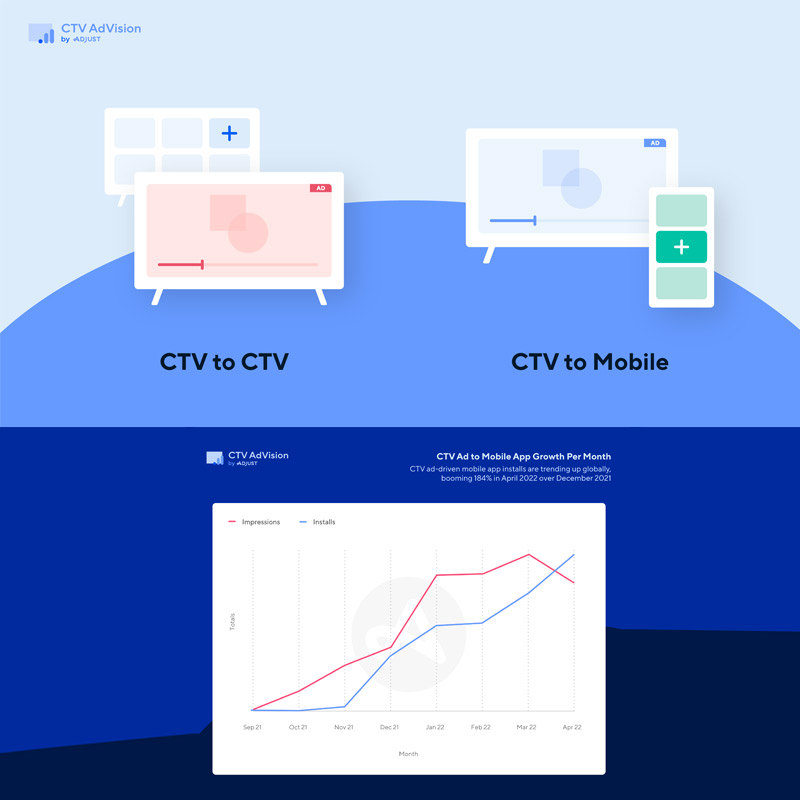
    CTV AdVision combines Adjust’s connected TV measurement offerings including CTV to Mobile and CTV to CTV with a dedicated CTV dashboard in Datascape. Marketers will be able to see how their CTV campaigns are performing overall, as well as the impact of CTV campaigns on their apps with metrics and KPIs, such as installs, revenue and RoI. Additionally, in the Datascape Overview dashboard and report building tool, marketers can gain a holistic view of their user acquisition and retention strategies to see CTV performance in context of other channels.

    The measurement solution will empower marketers to measure CTV campaign influence on mobile apps, analyse the assisting value of CTV campaigns on other campaigns, such as search and social, including the presence of CTV in customer journeys, measure the impact of advertising campaigns for apps functioning on CTV devices, create and track QR codes optimised for CTV In the dashboard and customize the attribution logic to fit the specific needs of the CTV ecosystem.

    “As CTV becomes a more prominent channel in advertising, we know marketers need to be able to prove ROI on their CTV campaigns,” said Adjust chief product officer Katie Madding. “We built CTV AdVision to empower marketers and advertisers with a unified attribution method, with reliable data and visualizations on CTV performance, that allows for consistent and independent measurement.”

    Adjust has partner integrations with leaders in the CTV ecosystem from platform providers like Samsung to intermediaries such as The Trade Desk and tvScientific.

    Clients including Plarium and PeopleFun are already using CTV AdVision to overcome the challenges of advertising on CTV.

    “With Adjust’s CTV AdVision, we’ve been able to achieve heightened visibility into the performance of our CTV efforts to optimize our campaigns,” said Plarium team lead Shlomi Laufer. “Previously, we had to make choices for our CTV marketing without the data to support or guide our decisions. With CTV AdVision, we’re able to easily and confidently purchase CTV ads.”

    “By using Adjust’s CTV AdVision, our growth team can view PeopleFun’s connected TV marketing strategy within the context of its greater digital marketing efforts,” said PeopleFun CEO Carol Miu. “We can now rely on one measurement solution, Adjust, when we promote our hit puzzle game Wordscapes on CTV. Before, we had to synthesize different measurement solutions from each CTV provider.”

  • YouTube announces free TV shows and films for US viewers

    YouTube announces free TV shows and films for US viewers

    Mumbai: Google-owned YouTube has announced that popular television shows and films from major studios will be available in the US for free, with ads, using smart televisions, mobile devices or web browsers. The video platform has over 1,500 films from Disney Media & Entertainment Distribution, Warner Bros, Paramount Pictures, Lionsgate, FilmRise, and more.

    The American audience will now have access to nearly 4,000 episodes of TV shows like “Hell’s Kitchen,” “Andromeda,” “Heartland,” and many more. New titles in March include “Gone in Sixty Seconds,” “Runaway Bride” and “Legally Blonde.”

    US users can access these films and shows and up to 100 new titles each week on web browsers, mobile devices, and most connected TVs via the YouTube on TV app.

    “More people are choosing to experience YouTube on the big screen with friends and family. In fact, according to Nielsen, YouTube reached over 135 million people on connected TVs in the US in December 2021. YouTube is at the forefront of the consumer shift to CTV viewership as the top ad-supported streaming platform with the content people enjoy and the creators they love,” YouTube said in a blog post.

    To enhance the viewing experience, the video platform is also unveiling brand new streamlined navigation and immersive banner art. The rich visuals and new menus will help users more easily find their favourite TV shows, whether they choose to rent, purchase, or watch for free with ads. Many of these titles are also now available in high definition 1080p with 5.1 surround sound audio on supported devices.

  • OACT2021: The evolution of Connected TV in India

    OACT2021: The evolution of Connected TV in India

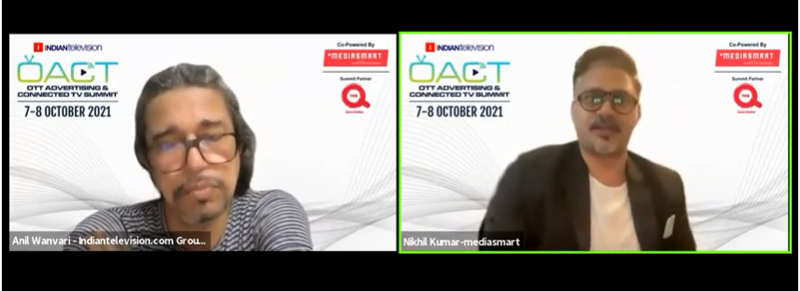
    Mumbai: The addressable connected TV (CTV) advertising universe is estimated at six to eight million, according to mediasmart, an Affle company, India and SEA, senior director- brand and strategy Nikhil Kumar.  The CTV evolution has arrived in India. Today, you can easily join the CTV ecosystem via a smart TV, dongle, gaming console, or connected set-top-box (STB).

    Kumar was addressing the ‘OTT Advertising and Connected TV Summit 2021’ organised by Indiantelevision.com on 7 October. The two-day event is co-powered by mediasmart, an Affle company and summit partner – The Q. Stakeholders across the industry engaged in insightful discussions on the dynamics of OTT and CTV advertising.

    The growth of CTV in India is driven by several factors. Chinese manufacturers have played a pivotal role by introducing low-cost smart TVs for as much as Rs 15,000. Low-cost dongles like Amazon Firestick and Google Chromecast are popular ways to access web content. Jio has led the adoption of connected STBs. These technologies have driven the penetration of the CTV market to a point where you don’t necessarily have to be from a metro or Tier-1 city to be a part of the CTV ecosystem. According to a report by Counterpoint Research, India’s smart TV market saw 65 per cent year-on-year growth in Q2 2021 due to increasing demand.

    Some may conflate over-the-top platforms with CTV but they are completely different ecosystems. While OTT can be seen as a subset of the CTV ecosystem, its journey began almost two decades back with Netflix. Certainly, a majority of the usage on CTV is driven by OTT viewing. A report indicates that 91 per cent of users watch movies on CTV, there is also a small but growing audience that is listening to music, playing games, and catching up on the news.

    “CTV is reaching an incremental base of evolved users who have come into the ecosystem to enjoy everything that the internet has to offer,” said Kumar, adding that the pandemic has played the role of a catalyst for CTV.

    “People confined at homes realised that linear TV was mundane because of repeated content and were looking at new ways to entertain themselves,” he added. It helped that India has the cheapest data costs in the world at $ 0.09 per Gb. A survey showed that 78 per cent of smart TV users were accessing the internet via direct apps instead of search and discovery platforms.

    Even though the base of CTV was nascent compared to other media, mediasmart was excited to tap into the opportunity. “We’ve always been a platform that’s believed in strong digital ownership of the consumer journey,” said Kumar.

    The company did not look at CTV in isolation. When it targeted a CTV household, it assumed that there were three to four members in the household who owned a smartphone. They developed a technology system called ‘Household Sync’ that maps the user journey on CTV and mobile.

    Marketers have always bifurcated between brand and performance, opined Kumar. “Here’s a technology that puts your brand advertising on the largest screen possible but also delivers middle and bottom-funnel conversions, so it takes you across the entire funnel. At mediasmart, we’ve always valued metrics such as cost per conversion and verticalisation approaches.”

    mediasmart’s solutions looked at delivering immediate action-oriented feedback to advertisers on the brand impact. Their platform allowed them to look at completion rates on TV followed by retargeting on mobile devices. It also let them measure click-through rates to analyse if the brand was reaching the last mile. “Ultimately, what every brand is concerned about is the bottom-funnel,” opined Kumar.

    The CTV market is growing in double-digits month-on-month that will lead to an increase in users, advertising penetration, and reach. In markets like the US, the share of video impressions on CTV is as high as the share of video impressions on mobile. While the US was never a major mobile market, unlike India, Kumar explains that the opportunity is still attractive because even though the base is small, the impact is large.

    He added, “There is a lot of headroom for CTV to grow in India. There is still a significant base of box TV users in India who may potentially migrate to low-cost smart TVs. Apart from cord-cutting, there is a whole new generation of ‘affluent cord nevers’ who are opting for CTV systems over DTH and cable connections.”

    (Source: India CTV Report 2021 by mediasmart, an Affle Company, VTION, and Interactive Avenues)

    For more information: https://indiantelevision.com/events/oact-summit-2021/

  • Stage is set for ‘OTT Advertising and Connected TV Summit’

    Stage is set for ‘OTT Advertising and Connected TV Summit’

    New Delhi: The streaming platforms have taken the world by storm, opening up vast avenues for advertisers and brands to connect with viewers through digital means. The business is now no longer limited to traditional media channels but has expanded to the vast universe of OTT platforms.

    However, this evolution has come with its own challenges. Unlike the age-old relationship that advertisers share with traditional media, OTTs face the challenge of forging new publisher-agency-brand partnerships. So, what is the scope of OTT advertising? How is it growing? What strategies need to be adopted so that a greater share of the pie can move towards OTT?

    All these questions will take centre stage at the ‘OTT Advertising and Connected TV Summit 2021’ being organised by Indiantelevision.com on 7 & 8 October, 2.30 pm onwards. The two-day event is co-powered by Mediasmart, an Affle company, and summit partner – The Q, and will witness stakeholders from across the industry engaging in insightful discussions on the dynamics of OTT and CTV advertising.

    The event will explore concerns around data privacy, and the metrics that advertisers can use to select the OTT platforms. It will also look at the reach of connected TV in India and how fast it is growing. The panelists will also deliberate upon the advertisers’ perception of the medium. There will be presentations from advertisers and agencies as well on how successfully they used OTT and CTV solutions effectively.

    One of the biggest virtual events of digital publishers, it will be attended by representatives from Patanjali Ayurved, The Q, Mediasmart, Airtel, Samsung Ads, Pyxis One, The Q, UPSTOX, NXTDigital, ALTBalaji, MX Player, Omnicom Media Group, Madison, Affle, Adobe, Ernst and Young, Essence, Social Beat, Kurate Digital Consulting, Shemaroo Entertainment and many more noted persons from the industry.

    For more information: https://indiantelevision.com/events/oact-summit-2021/

    To watch LIVE: https://www.youtube.com/channel/UCHHZMAXmHG0hkUgjzof0qzQ

  • Over 66% of CTV users subscribe to more than one OTT app says new report

    Over 66% of CTV users subscribe to more than one OTT app says new report

    Mumbai: India is undergoing digital transformation and consumers are steadily moving away from traditional linear TV to Connected TV and OTTs – a change that presents an untapped advertising opportunity for brands and advertisers. As many as 78 per cent of people own a Smart TV and 93 per cent of these smart TV users access internet-based content found mediasmart- an Affle company in its latest report.

    The survey – ‘India CTV Report 2021 – Mapping Connected TV (CTV) Viewership in India and the Opportunities for Brands’ released this week documented this changing media consumption patterns of the Indian consumer with an expert view on the possible advertising potential of the CTV medium. According to the report, mobile-first, active, and aware CTV consumers are young, urban adults who are already mobile-first and are actively engaging with diverse apps.

    Nearly 89 per cent of the respondents are social media users, and 82 per cent are e-commerce, 44 per cent are gamers and more. Over 59 per cent of respondents prefer downloading apps via Smart TV App Store, while 26 per cent respondents primarily consume content via pre-installed apps and a small section (15 per cent respondents) use the dongle to stream content on TV.

    Close to 70 per cent of respondents spend between one to four hours on CTV watching movies (91 per cent), streaming music (64 per cent), playing games (47 per cent) or watching news (64 per cent).

    In terms of the pending ability and OTT preferences, over 65 per cent of respondents subscribe to more than one OTT app.  There is over 40 per cent adoption for the leading eight OTT apps in India: Disney+Hotstar, Amazon’s Prime Video, Netflix, Zee5, MXPlayer, Sony LIV, VOOT , and Alt Balaji. The inclination on app usage is also heavily dependent on seasonality and timing

    There are limited barriers to viewership and adoption. Unlike mobile usage of the internet, which requires literacy levels, CTV consumption cuts across age, language, and city barriers. By going vernacular, advertisers can engage with users in ads of their language

    Mediasmart, senior director, Nikhil Kumar said, “The world is moving towards immersive watching experiences and CTV is an exciting space to be at. It is interesting to see leading advertisers in the country adopt CTV advertising as a critical new addition to their media mix. CTV advertising is here to stay and with evolutionary solutions provided by mediasmart on Household Sync technology, we are powering brands to engage with relevant consumers across the connected devices.”

    India is a young market with tremendous potential for CTV adoption. CTV inherently is more engaging than traditional TVs and brings together the twin strengths of (a) engaging storytelling associated with CTV advertising and (b) targeting associated with Programmatic & Digital advertising. 

    According to Interactive Avenue CEO Amardeep Singh advertisers globally – and in India – are lapping up the CTV opportunity as it continues to grow as an exciting medium for digital advertising. “We have seen great results and ROI for some of our top clients who are already using the CTV ad technology from mediasmart. This research is a step in the right direction to build standard industry metrics, even as technologies like Household Sync make CTV more measurable and impactful,” said Singh.

  • CTV behind the growing dissatisfaction with Nielsen’s audience measurement system

    CTV behind the growing dissatisfaction with Nielsen’s audience measurement system

    Mumbai: Nielsen is in the eye of the storm once again following the suspension of accreditation for National and Local TV Ratings service in the US by the Media Ratings Council, effective mid-September. The TV measurement company had long been facing criticism from the Video Advertising Bureau (the trade organisation representing the advertising sales departments of networks and distributors) over the accuracy of its ratings. The months-long feud culminated in the VAB formally petitioning MRC to strip Nielsen’s accreditation citing undercounting TV viewing during the pandemic, and the exclusion to-date of broadband-only homes as primary reasons.

    Submitting an in-depth 10-page document to the MRC, the VAB detailed the five specific violations of minimum standards committed by Nielsen starting March 2020. “Although Nielsen has taken steps to rectify the issues with its sample, our current analysis proves the issue persists.  With nearly 18 per cent of respondents still missing, the sample still does not accurately represent the TV viewing population, particularly diverse and younger homes,” it stated.

    While Nielsen cited Covid-related disruptions as an explanation for undercounting during the pandemic, the growing dissatisfaction with its panel-based measurement system stems from the more fundamental problem around both the underrepresentation as well as the misrepresentation of the large universe of the audience that has either completely cut the cord or is consuming both linear and CTV across devices and platforms. The numbers which were already on the rise witnessed unprecedented growth in the past 18-20 months in the US.

    According to database company, Statista’s research titled ‘Connected TV advertising in the US – statistics & facts’ published this June, the number of CTV users in the US reached an impressive 203 million in 2020. CTV ad spend at $13.41bn amounted to 4.7 per cent share in total ad spend, with the most common share of ad budget dedicated to CTV being 10-20 per cent. CTV ad household reach stood at 78 per cent. Stating targeting and efficiency as the top reasons, 42 per cent of advertisers were planning to increase spend on OTT/CTV.

    On 1 September, Nielsen CEO David Kenny had also, in a letter addressed to clients, said, “Broadband-only homes are an important audience now representing nearly 30 per cent of TV households in some local markets. We believe it is critical to include them in local measurement as soon as possible, but we agree that we need to move to an explicit universe estimate. Their exclusion to-date means a gap and bias in measurement and we have been and continue to commit to integrating them in a responsible way.”

    Last month, the firm had announced its intention to add Broadband-Only (BBO) homes to its panels in October, but that did not deter MRC from revoking Nielsen’s accreditation. The Council had expressed reservation about the effectiveness of the plan, given the need for fundamental changes in the current measurement system which oversimplifies viewing across CTV by extending linear TV measurement standards to it and/or combining two viewing data sets that do not have common metrics.

    For this very reason, the clamour for evolving a unified identifier has only grown since the groundbreaking innovation began redefining broadcast in the US close to a decade ago; however, the complexity and fragmentation of the ecosystem have kept the industry from arriving at it so far.

    The pandemic and other recent developments seem to have put the exercise on fast forward.

    Matters were further compounded by NBCUniversal launching a measurement RFP in August, calling for “measurement independence”.

    Hopes are now pinned on Nielsen ONE, the single cross-media product which will provide reach and frequency metrics by delivering a holistic, de-duplicated view of both content and ad performance regardless of screen, device or platform. The new flagship currency expected to launch in 2022 aims to address the pressing concern of duplication in CTV measurement, at the same time bringing linear TV measurement on par with digital viewing.

    Noteworthy here is the fact that Nielsen has been on an extended hiatus for its digital ad ratings (DAR) service since October last year. In January, it entered another six-month hiatus for its local TV ratings service, which was also extended through the end of 2021. On August 11, Nielsen had further initiated the accreditation hiatus process for its National TV ratings service with the MRC; all in an attempt to concentrate its audit-related efforts on continuing to address panel concerns alongside the transformation of the National TV product and development of Nielsen ONE.

    In fact, going beyond the unifier currency, Nielsen has been heading in his direction for quite some time now.  The big highlights were its decision to measure CTV campaigns on YouTube and YouTube TV for the first time (announced October 2020) and the Roku-Nielsen strategic alliance in March 2021.

    YouTube, vice-president – global solutions, Debbie Weinstein had said, “Over 100 million people in the US watch YouTube and YouTube TV on their connected TVs every month. Advertisers are asking for third-party measurement partners like Nielsen to provide a complete view of YouTube and YouTube TV audiences, so they can understand the scale of the audience they’re able to reach through CTV campaigns.”

    In March, Roku entered into an agreement to acquire Nielsen’s Advanced Video Advertising (AVA) business which includes Nielsen’s video automatic content recognition (ACR) and dynamic ad insertion (DAI) technologies. The objective of the acquisition was to accelerate Roku’s launch of an end-to-end DAI solution with TV programmers. Additionally, Nielsen and Roku forged a strategic partnership to integrate complementary Nielsen ad and content measurement products into the Roku platform and further advance Nielsen ONE. Roku is a leading American manufacturer of digital media players. The Company also operates the No. 1 TV streaming platform in the US as measured by hours streamed (Kantar 2020).

    Given that tech-led innovation has a history of effecting the worldwide industry overhauls in a not-so-organic manner, these developments, though specific to the US, are being carefully studied in India. While the connected TV/OTT ecosystem in the country is not as well developed and deeply entrenched yet, it is relevant here to recall Barc India’s intent to initiate ‘one video view’ measurement, announced last September by former CEO Sunil Lulla. The much-awaited and much-touted Nielsen ONE may well serve as a template or the indicator of the nearness of an inevitable change, if not a universal go-ahead for players globally.