Tag: connected TV

  • FreeWheel forge dynamic partnership to accelerate growth of CTV Solutions in India

    FreeWheel forge dynamic partnership to accelerate growth of CTV Solutions in India

    Mumbai: FreeWheel, a Comcast company and the global technology platform for the television advertising industry, has solidified a strategic partnership with CereOne, one of India’s leading digital media companies, as it seeks to accelerate its presence on the Indian market. As part of this collaboration, FreeWheel will provide CereOne with access to its digital full stack, facilitating seamless onboarding of online video and Connected TV inventory across India’s burgeoning premium video media landscape.

    CereOne has, in the last few years, extended its offerings from native-only ads to content marketing, digital out-of-home and premium video. FreeWheel’s digital full stack will offer CereOne unified and holistic decisioning on how to monetize content, curate audiences and ensure brand safety.

    “We’re excited to continue to grow into the complex but opportunity-rich Indian premium video market. Adoption of connected devices has grown significantly in the last couple of years in the region. This rapid growth coupled with the rise of international sport events on streaming is bringing exciting new opportunities for media owners to tap into global ad spend,” said Alvin Tan, commercial director, APAC at FreeWheel. “CereOne has a robust regional supply and demand network and we look forward to working with them as they launch their CTV ad offering and augment brand interactions.”

    Welcoming the new partnership with FreeWheel, CereOne Media director Deepak Karnani commented, “Aligned with our ambitious expansion strategies, our collaboration with FreeWheel empowers us to meet the growing demand for video ads and CTV in India. This partnership not only bolsters our offerings but also grants our clientele access to the cutting-edge technology that FreeWheel is renowned for worldwide.”

    CereOne Media co-founder Harish Patil, highlighted the significance of the partnership with FreeWheel. “Our partnership with FreeWheel and the support of its digital full stack will optimize and consolidate our bouquet of services as we strengthen our CTV offerings in the region,” said Patil.

  • “India is the second largest TV market globally with 210Mn Tv HHs”: GroupM’s Atique Kazi

    “India is the second largest TV market globally with 210Mn Tv HHs”: GroupM’s Atique Kazi

    Mumbai: The emergence of addressable TV has been nothing short of ground-breaking. Offering targeted advertising opportunities and personalized content delivery, addressable TV has swiftly carved out a significant niche in the industry. India, with its burgeoning digital market and rapidly expanding connectivity, has been at the forefront of this transformative shift.

    The latest insights from GroupM’s TYNY 2024 report shed light on the remarkable momentum witnessed in the realm of TV in India. Unlike the global market, TV marked a seven per cent growth with the market share of 29 per cent. With each passing year, the adoption of connected TV and the prevalence of addressable TV homes have surged, reshaping the way audiences engage with television content and advertising.

    The report cites phenomenal momentum in the space of addressable TV over the last few years. By the end of 2023, there were 34 million addressable TV homes streaming on connected TV in India. As per the report, in 2024, this growth is expected to be reaching 45 million homes with a YoY growth of 21 per cent.

    By delving into the key findings of the report, it becomes evident that addressable TV is not just a passing trend but a fundamental evolution in the media landscape, poised to reach unprecedented heights in the year 2024. With projections indicating substantial growth in the number of addressable TV homes, India stands on the brink of a new era in television broadcasting and advertising.

    Let’s explore the implications of this growth and future of media consumption in India as Indiantelevision on the sidelines of the GroupM event, caught up with GroupM India president (Data Performance and Digital Products) Atique Kazi, where he shared a lot of insights on the current addressable & linear TV space….

    Edited excerpts

    On the growth of addressable and linear TV in India

    In recent years, the growth of addressable TV homes has been significant. With 7-8 million Addressable TVs in 2021, it quickly rose to 17-18 million and now crossed 34 million. Current projections suggest it could breach 45 million, translating to approximately 21% of TV households in India, given there are around 210-213 million Television households. This growth is fuelled partly by the widespread availability of unlimited broadband, allowing people to stream content without constraints. Interestingly, many of the 45 million users are not completely abandoning traditional TV but are instead switching between linear and on-demand content. Primarily, these users are younger than 40, as older individuals may struggle with new user interfaces & habits. People are making smarter choices based on their viewing habits, opting for platforms that offer their preferred content without additional costs. This trend indicates a shift towards more flexible viewing options.

    On difference between USA and India’s television business and India reaching on par with the developed nations

    India is the second largest TV market globally with 210Mn Tv HHs. Recent increases in prices and the abundance of content accessible through streaming platforms are prompting consumers to transition from Pay TV to Free TV, often supplemented by low-cost or ad-supported streaming services made possible by improved internet connectivity. In the United States, over 85% of households are users of Connected TV (CTV), whereas in India, CTV penetration stands at only approximately 16% (FYR only 34mn/210mn), indicating significant growth potential in India. CTV advertising constitutes 7% of the total media expenditure in the US, while India has just embarked on this journey in the last three years, with digital extensions already accounting for 4% %( FYR only 5750cr/155386 cr ) of the overall advertising expenditure and expected to surpass the US average.

    On consumers preferring TV over mobile phones for media consumption

    The preference for viewing always rests with the consumer based on their convenience. For example, while I am outside home and want to catch on to my favourite content, mobile is definitely an option. But at the comforts of home when you have access to a large screen, preferences change. What has happened now is the ease of access to content is the same on TV & mobile, what changes is the environment with whom/where you watch them. With features such in IPL like multi camera viewing angles and enhanced post-match production, viewers are provided with an improved viewing experience, influencing their choice on a big screen vs small screen.

    On the fall of DTH industry according to TRAI’s latest reports on losing 1.32 paid subscribers in July-September 2023

    The DTH industry is shifting towards free-to-air (FTA) content over pay TV, building the need for smarter, internet-enabled set-top boxes. The advancement I foresee is for the insertion of addressable ads on linear television, revolutionizing the advertising ecosystem. However, the industry faces challenges due to broadcasters’ split strategy for television and their digital platforms, as well as the disconnect between broadcasters and distributors. Without collaboration to effectively sell addressable ads, the potential benefits of this technology, as seen in markets like Korea, may not be easy in India. Airtel and Tata Play have introduced smart set-top boxes capable of addressable ads, but without broadcaster collaboration, unlocking their full potential may prove difficult.

  • ABP News leads CTV viewership on counting day: Chrome Digital Track

    ABP News leads CTV viewership on counting day: Chrome Digital Track

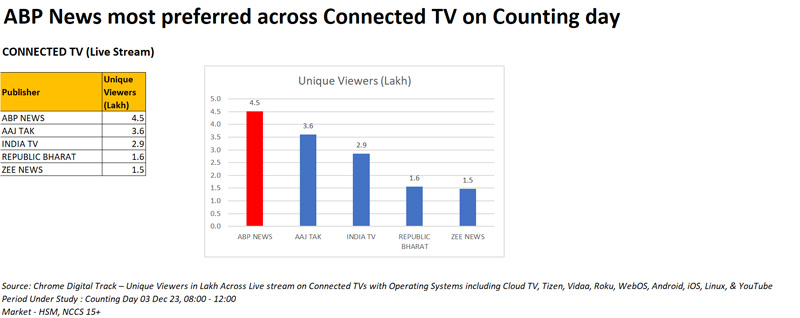
    Mumbai: ABP News, renowned for its unwavering credibility and extensive coverage, reaffirms its media dominance by securing the highest unique viewership during the pivotal period of counting day on 3 December, from 8:00 am to 12:00 pm. Recent data released by Chrome Digital Track underscores ABP News’s standing as the top choice for viewers seeking comprehensive and reliable coverage across various connected TV platforms.

    The comprehensive data, gathered across diverse operating systems including Cloud TV, Tizen, Vidaa, Roku, WebOS, Android, iOS, Linux, and YouTube, highlights ABP News as the preferred destination for news consumption. During this critical time frame, ABP News garnered an impressive 4.5 Lakh unique viewers across connected TVs (Market – HSM, NCCS 15+), solidifying its position as the go-to source for breaking news and in-depth analysis.

    abp

    ABP News has successfully established itself as the primary destination for news consumption across a spectrum of platforms. Its availability on popular operating systems underscores the network’s commitment to reaching a wide audience. This widespread accessibility significantly contributes to ABP News’s unparalleled viewership on connected TV platforms, cementing its status as the most trusted news source among numerous channels.

    Driven by this remarkable achievement, ABP News remains committed to offering top-notch journalism, delivering up-to-the-minute updates on diverse global topics to its audiences. As it continues to lead in providing comprehensive coverage, ABP News aims to uphold its standard of excellence in delivering news that matters.

  • ABP Network’s digital platforms hit record numbers in exit poll coverage

    ABP Network’s digital platforms hit record numbers in exit poll coverage

    Mumbai: ABP Network, a pioneer and leader when it comes to political journalism, has consistently been at the forefront of delivering comprehensive, timely, and insightful coverage of the political landscape in India. The network proved its leadership position in the industry was once again on Thursday with its detailed coverage of the ABP News-CVoter exit polls in five states that went to assembly elections in November.

    ABP News YouTube live channels saw great traction during the crucial hours of exit poll coverage on 30 November, staying on top of the charts throughout the evening. Similar performance was mapped across the digital platforms of ABP Network, including its websites, connected TV (CTV), and mobile apps.

    Marking a significant milestone in digital news broadcasting, ABP News YouTube live channels achieved the second-highest concurrent viewership during peak exit poll hours (6 pm to 7 pm) on YouTube.

    Over three lakh concurrent users engaged with ABP Network’s eight language websites between 6 pm and 9 pm, showcasing the network’s extensive reach across diverse linguistic audiences.

    A notable 19 per cent increase in average time-spend on ABP LIVE website properties was observed on 30 November, compared to the last 30 days of the entire election coverage cycle.

    ABP LIVE Apps recorded over 27 lakh screen views, with an average of 15.5 screen views per user, alongside a remarkable 1.7 lakh daily active users (DAUs) on the exit poll-day.

    In a display of the viewers’ preference for real-time election updates by ABP, the ABP LIVE CTV apps noted a five-fold increase in concurrent viewers during the Exit Poll coverage, compared to regular days. DAUs recorded across CTV Android devices rose by 23 per cent, indicating the growing trend of consuming news on connected TV platforms.

    ABP Network’s CTV channels amassed 15 million viewership minutes on November 30, with the average view duration per viewer increasing by 30 per cent to nine minutes during the peak exit poll coverage hours.

    These remarkable numbers show ABP Network’s commitment to delivering high-quality, real-time news across platforms. The significant increase in viewer engagement across YouTube, websites, CTV, and mobile apps reflects how the network strives to meet the evolving needs of today’s digital-savvy audience.

  • IBS: Redefining viewing experiences: The next era of connected TV  innovations

    IBS: Redefining viewing experiences: The next era of connected TV innovations

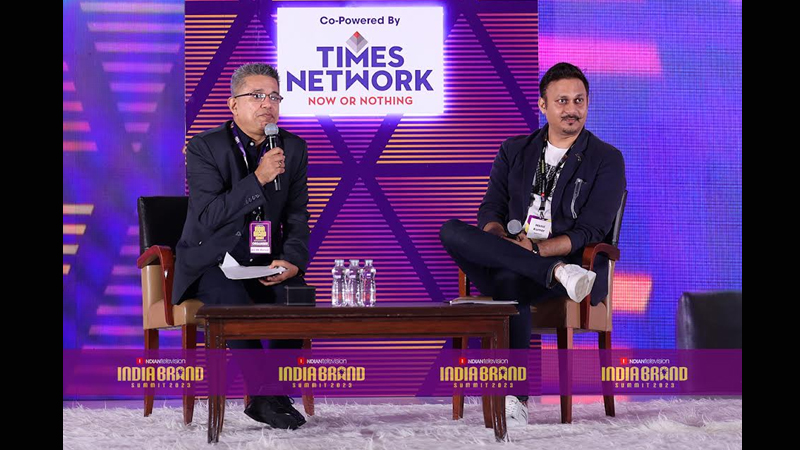
    Mumbai: The India Brand Summit held on 28 November 2023 at The Lalit Mumbai, convened leaders, marketers, entrepreneurs, and experts to explore current trends, challenges, and opportunities in the dynamic brands and marketing arena.

    Indian Television.com group founder CEO & editor-in-chief Anil NM Wanvari in a fireside chat with mediasmart vice president India, SEA and ME Nikhil Kumar

    Anil began the conversation by asking, “When speaking to industry, they see that the figure we should look at is 22 billion or 20 billion. Where are we at?”

    Nikhil replied “I mean, frankly, we feel the connected TV bases, approximately 18 to 20 million, which approximately means from an Indian context close to 60 million reach. In terms of households, but, the connected TV penetration, the number of activated connected TVs is close to 20 million to 22 million, but it’s growing really fast. By the time we have another panel like this, it could be 24, 28  and we all know Jio IPL is unexpecting and you know what it did or even the year so those numbers are growing really fast, double-digit, and pretty fast.”

    Anil questioned, “What are the innovations we’re seeing in terms of your experiences as far as connected TVs are concerned?”

    Nikhil commented, “Interesting things are happening, I mean, what connected TV has done is provide users with a very interesting way to engage with the television. Now, we all come from an era where you know, we were all growing up, we used to watch television together at home,  we found off watching.TV with a family, there used to be a Shaktiman and Ramayana I don’t know, choose your big night, right or no, or Baywatch, whichever finds your fancy. But we went to an era of personalized mobiles. And then suddenly everybody had a smart screen. Everybody was doing their own thing and the smart screen and then you found your families disintegrated. And then suddenly we were hit by this whole phenomenon called COVID. Where you didn’t have much to do at home, you watched television feed, which was quite depressing, because most of the live feeds were telling you depressing talks about people dying, which was not the most optimistic news you wanted to hear. media feeds led to a decline in what could be repeated and can be watched again, come on, it’s like well, months to 24 months to not have anything being shot. I think that is the time when connected TVs really started to rise and the growth of connected TV during that era actually catapulted the overall growth of connected TV. And when there are so many eyeballs, there are so many uses on connected TV, just the way you consume content itself also started to change. As an Indian, as a starting point, I don’t even need to talk about innovations. You watching Korean content, is that an innovation? Or is it just the way it’s supposed to be? If I asked people how many people have watched Money Heist or Squid games, I’m assuming it’ll be at 90 per cent. Again, none of you are Koreans. None of you are Spanish. But while you’re watching many eyes, I think that in itself speaks volumes of content consumption in terms of innovation,  I mean, there is all kinds of content available. There are 46 plus OTTs in India alone, That speaks volumes of just innovation, and the kind of content now, in terms of consumption and content innovation within connected TV, you can engage with the content you’re watching. Let’s say you can decide where  Ranveer Singh has to jump from the hill or Ranveer Singh has to take a row. We also what Netflix did recently, there are many such contents which are being developed by publishers that are letting users be controlled by Black Mirror one of the episodes you can actually control what the end outcome of the episode will be. Imagine the user in being control of the content.”

    Anil then went on to ask “What are the new innovations it seems to It appears to be that connected TV has kind of hit a pause mode in terms of content. So where is the innovation coming?”

    Nikhil replied, “I think innovations are coming and lots of engagement and interaction. I think your remote today is far more powerful than the remotes that you want it to have. And I think I was interestingly having a panel a couple of days back and what we did was we asked like a young gen Z to come and sit on the panel and really tell us what he wants from connected TV  and the kind of stuff he was saying is I don’t want to go all the way and pick up the remote from there, I won’t hand gestures so the world is moving towards Weiss automated commands. You can purchase the products that you actually want you can say hey, you don’t watch I’m going for a match. Need a Josie now suddenly you can have two TVs, you know tracking you down to a YouTube page or two or probably a website which you can actually view connected you can scan it which it opens up on your mobile the purchase can be made or in developed economy where the purchase itself can be made of the Apple TV because it’s connected to your card, your television experience is no longer the same, the innovation is actually coming a lot from the way you consume content. From the way you look at your television as an alternate screen, which it probably was never, it was only one side earlier, television is giving you content you are consuming. That’s why it was called the idiot box. Today, the smart TV is called a smart TV because it is smart. You can do a lot of things on your mobile, and your TV, you can connect your mobile to television, in fact, and suddenly you realise that my screens are all the same no matter where I watch it only the experience is better on the television.”

    Anil asked “I was watching one of the players Jio actually watching India vs. Australia. And there’s a QR code, which tells me you know, I have to go and that’s where we are at QR codes. When the ad is running, why hasn’t there been much more progress?”

    Nikhil shared “I think I’m a firm believer that everything doesn’t change. India was not built in a day, Rome was not built in a day either. And I think, at the cusp of where our ecosystem is, India has got over 800 internet users, we are 1.2 billion countries, I mean, things are gonna 20 million looks nothing when you talk about some statistics on the right. But look at the growth of it. Now Jio entering, the whole foray of connected televisions, suddenly changing the ballgame. It’s it’s gonna grow really fast. There’s a very contentious debate on whether you should be watching it on Star Sports or Jio, there’s a serious debate about where you should be watching it now.

    if you look at how things are changing QR codes, QR codes are probably a starting point. It’s getting the users a taste of what they can do with their television. Now, at the end of the day, if I get my user remote and tell him that you can buy a jersey of his favorite IPL team, probably he’ll get really confused. And it’s not just the consumer, I can start with the marketer. I mean, the marketer is questioning, how am I getting clicks from a connected television, they are really surprised by calling it fraudulent. But if you look at world economies like us, close to 50 to 60 per cent of the business is performance advertising on connected television. Now I would say connected TV and performance, how is it even met? Yeah, it is a screen. And you can use your remote to do a lot of things, download apps, engage with apps within apps, and do so many more things gaming itself is an ecosystem of connected TV where there’s an entire universe, you can put ads within games being played on cricket, TV connect with users across the globe purchase stuff from a store within that game, which have been delivered to your home, the world is moving really fast. India is taking its early stages of you know the revolution, which is connected to the TV, and if you see how we also started like three years back, vs where we are today, you can see the number of players talking like television, you can see the number of forums talking connected television, you can see the number of players with a connected television ecosystem, whether it’s OEMs, whether it’s smart tech companies, whether it’s publishers, they’re all out there it’s something that’s going to grow really fast.”:

    Anil further asked “What are the challenges that are in their place currently? And how do we get over them? And how do we get a connected TV viewing experience? How do we drive footfalls to stores even more? What is needed to get that to happen?”

    Nikhil commented “I think I sort of tend to agree and disagree that are we moving fast. I mean, we’re growing it 30 to 40 per cent quarter over quarter, I think that’s as good a growth. That’s what smart TV would actually look at. If you look at the factors, India is one of the most penetrated countries when it comes to the internet, we have got the cheapest package in terms of data per GB, if you look at any TV that is produced today is smart. Technically, I don’t remember the last time somebody was making a box TV. Just the accessibility but accessibility part of getting those smart TVs to your homes is well penetrated. It’s not like a tier one tier two phenomenon if you put these factors together, connected TVs only to grow. So technically, most people aren’t using the connected TV, but they probably don’t call it a connected TV the way we are calling it.

    If survive two years. And if you’re employed and you still have a job, I’m sure you figure out what Wi-Fi is. And that’s the factor that I think we are negating a lot how did CTV become so important? Why are why is IPL on Jio why, what’s going on? Why are the set-top boxes streaming set-top boxes anymore? These are all factors which are determined by what’s happened in the last three to four years. Some controllable factors, and noncontrollable factors like who doesn’t have Wi-Fi now today Wi-Fi is not a cost. You all have Wi-Fi most people don’t have Wi-Fi at home even in the remotest villages you would look at if they don’t have Wi-Fi India’s gonna be fine If you can’t read still, as a 5g country, you have well penetrated 5g ecosystems within the ecosystem. And that can very well actually support any kind of content that you want to watch on a connected TV.”

    Anil asked further” What are the innovative ad formats, that are coming in, not just in India, but globally, which which can be really put to use in India going forward? And which marketers can look forward to?”

    Nikhil replied “I think in terms of innovative ad formats, there are many things happening, I think. Just the fact that you can engage with the ad, just the fact that you can talk to your ad, just the fact that he can tell you the ad that I don’t want to see you. And itself is I think new in terms of innovation, when it comes to the large screen television, I think a lot of the comparative start to come with mobile, because there’s so much happening on mobile, but we need to understand the screens are different. They’re both digital, but just the way you consume anything, even as an ad on a large screen television versus where you are in itself is like ten steps ahead,  We come from an era where it used to be pushed down our throat, we could change channels, but we couldn’t escape an ad till the body had to step in says only 15 minutes of ad within one hour. Still, you can’t escape ads to now you deciding what ad comes to you? Can you engage with the ad? Can the ad really translate into you making a purchase? In fact, the innovation is not coming from just advertising innovation is also coming from ads transforming into a metric because any advertising is not done for the purpose of making a great ad, I as a marketer never made ads, because I loved making ads.

    I think most marketers have made ads for the share purpose of ROIs. As for ad spend, she would go back and say what’s the business? Where is the needle moving at. And connected TV today is able to serve that metric not as a post-mortem. So you’re not looking at the share of investments in advertising on television and looking at your market shares next month. With connected television, you can look at your investments in television in terms of TV ads being served in large screen format, which we love the TV ad and tracking it down to a metric right in terms of purchase website,  brand score search indexes on a real-time basis. Now from a marketing scenario, imagine that this is a best-case scenario because technically you’re not looking at a post-mortem which happens next month after your spending has been done because the body is lying there whether it was good or bad. I mean, you’re just finding out later with connected television or advertising and finding out real-time. you can down the funnel all the way to purchase remarketed re-retention reordered referred to my family. Imagine suddenly you have a metric which is the best-looking triangle, obviously upside down and you’re saying I showed an ad to a user. This guy engages with the ad. He filled out a form for a driving test driving a BMW. The BMW came to his house. It took him free he has gotten converted from the ad that he saw on television he is actually a purchaser of the BMW etc best case scenario.”

    Anil asked “I wish for a seamless content experience—starting a show on my connected TV, continuing in my Wi-Fi-connected car, then on my phone in the elevator, and finally, back on my office TV. Why isn’t this integration more widespread across platforms?”

    Nikhil commented on this “That’s already here, glad you brought it up, I think while content syndication needs to happen, I think from an ad tech lens from an advertising lens, this technology already is out there. I think I was talking to my earlier panelists that eventually, you want to use the reach the user at multiple levels, right, you want to reach them on their pistol on a phone screen, while they’re entering the left exactly like you said, you want to reach them and they are driving across the busy Bandra ceiling and a fancy holding. You want to reach them and reach home and switch on their television and watch their content of, I don’t know Annapurna whatever they want to watch a cricket match on the connected television. And eventually, it was sleeping at night, looking at the mobile going down to sleep now you want the user to see your ad in all these locations. But if you choose to be operating at multiple levels, with multiple partners doing multiple things, and at a certain frequency, which you believe is good, what are you creating? Are you making a little series ad 12 times 14 times where he’s saying, Why are these guys spending so much on me like, or could you create an environment where the multiscreen touch points are engaging with each other? We know this is the same. We need to catch him on maybe 12 times, no, maybe nine times or six times across the screen. So he suddenly realises Oh, yeah, I love the ad man. I’m seeing it everywhere. It’s not fatiguing me.”

    Anil asked further “Hotstar has been doing they had maximum mode, and vertical mode during the Cricket World Cup this year. That calls for content to be reimagined, it does not score for the app to be reminded. “

    Nikhil shared his opinion “Absolutely. You know, I think there the advertisers have the power to do it. Now. You know, it’s we live in a world today where ads can be shot on iPhone movies, it can be made on an iPhone. So we have evolved from an era where you shot an ad spent a bomb, and then you couldn’t change your advertising strategy or tank it. Now India has one that’s a sentiment and if your ad is coming during that sentiment, it will have a positive. Hopefully also be repercussions. India is lost. There is a certain sentiment on a Sunday, and you are bombarding the user with a very different happy ad of India very much. I don’t know what emotional outcome it could lead to.” 
  • News9 Live culminates ‘Duologue with Barun Das’ season 01 featuring Dr. Devi Shetty

    News9 Live culminates ‘Duologue with Barun Das’ season 01 featuring Dr. Devi Shetty

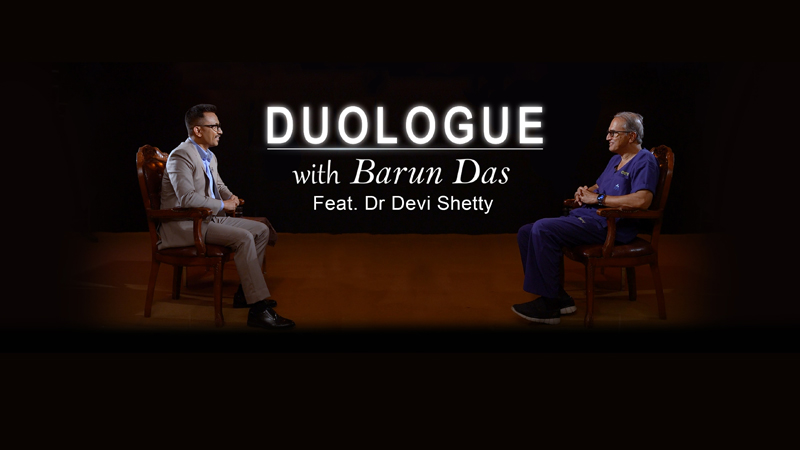
    Mumbai: News9 Live, India’s pioneering 24/7 digital exclusive news stream, is poised to conclude its intellectually stimulating ‘Duologue with Barun Das’ season one series with an unforgettable finale featuring Dr. Devi Shetty, on World Heart Day, 29 September at 10 PM, accessible via connected TVs.

    In a departure from conventional interview formats, ‘Duologue with Barun Das’ reveals an unseen facet of Dr. Shetty’s persona during a candid tête-à-tête with the show’s host TV9 Network MD & CEO Barun Das. The Devi Shetty episode kicks off with a profound exploration of empathy to soon evolve into a thought-provoking discourse on the intricate calculus of happiness.

    ‘Duologue with Barun Das’ sets the tone to address India’s heart health crisis with a focus on innovative solutions.

    When the show host, Barun Das proposed the concept of incentivizing fitness to stimulate the health sector, Dr. Devi Shetty responded in affirmation. He said, “India stands on the verge of an extraordinary achievement – the liberation of healthcare from affluence. This transformative objective is not a distant dream but an attainable reality within the next five years.”

    Furthermore, the host leads the conversation transcending the physical aspects of heart health, delving into the emotional and mental well-being of individuals.

    Reflecting on his experience, Shetty said, “Duologue with Barun Das is one of the most memorable experiences in my life. I thoroughly enjoyed it.”

    News9 Live’s impressive undertaking for ‘World Heart Day’ includes a special programming initiative that focuses on heart health, emerging challenges, and cutting-edge technology diagnostics. All shows premiere via connected TVs and later YouTube. The special programming window on India’s first and only 24×7 digital English news service includes:

    • The World Heart Day lineup kicks off with the ‘Heart Health Show’ at 11 AM.

    • At 1 PM, ‘Heart Emerging Challenges’ takes centre stage.

    • The day continues with a groundbreaking program at 6 PM and 9 PM, ‘Heart Technology-Diagnostics’.

    Don’t miss the opportunity to be part of this enlightening and engaging World Heart Day programming on News9 Live. Tune in via your connected TVs on 29 September or catch the premieres on our YouTube channel. Join the season finale and explore the many facets of heart health and cap off the evening with an unforgettable Duologue featuring Barun Das and Dr. Devi Shetty.

  • 64% Indian streamers are more receptive to ads on streaming platforms than social media: Magnite report

    64% Indian streamers are more receptive to ads on streaming platforms than social media: Magnite report

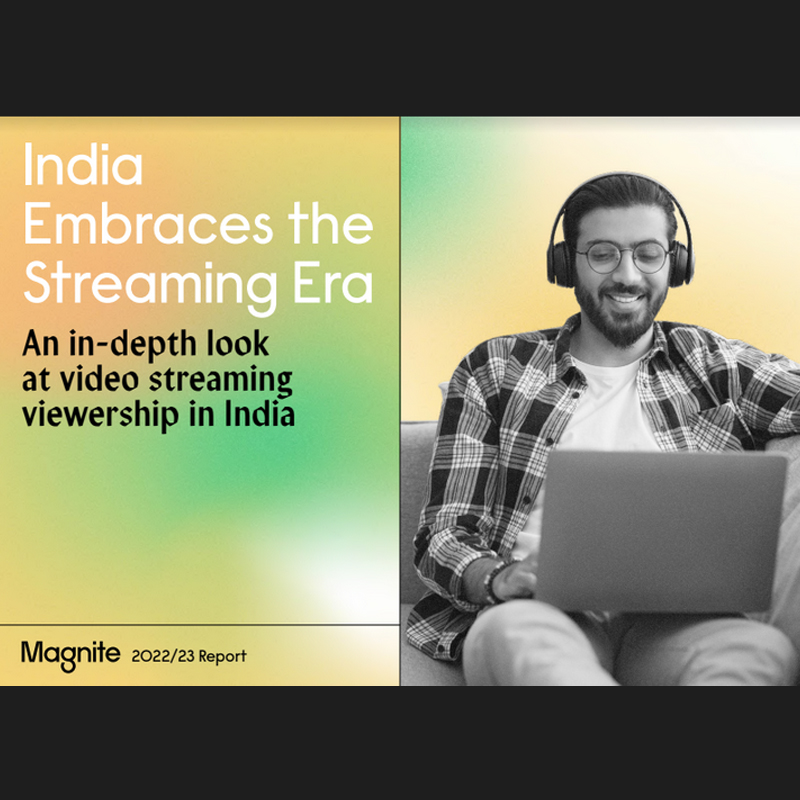
    Mumbai: Magnite, the independent omnichannel sell-side advertising platform, on Tuesday released a study entitled “India Embraces the Streaming Era” that found ads on streaming platforms capture more attention than ads on social media. Nearly two-thirds of India’s streamers (64 per cent) are more responsive to advertising on streaming platforms, with many stating they often search for the product (48 per cent) and make a purchase (33 per cent) after the fact.

    The study also found that free or ad-supported content is preferred to paying for an ad-free experience. 80 per cent of streamers prefer to watch ad-supported content versus subscribing to an ad-free platform for a monthly fee.

    “OTT is unmatched in its ability to engage viewers, and we commissioned this study to better understand consumption patterns across the rapidly growing Indian streaming audience,” said Magnite managing director, Asia Gavin Buxton. “One of the study’s key findings shows that OTT advertising outperforms other mediums like social media when it comes to attention and purchasing power. With three-quarters of video viewers streaming more now than a year ago, advertisers should be actively exploring this channel to reach the right audiences.”

    According to the study, two thirds of streamers prefer to watch streaming services over traditional TV, and streamers rank the quality of content, platform usability, and content discovery as the top factors driving their decision to stream. The majority (75 per cent) of streamers are streaming more video content than a year ago, and 66 per cent expect to stream more next year.

    “We are witnessing the next stage in streaming’s evolution—one where the lines between SVoD, AVoD, and FAST are being blurred as we see audiences continue to fragment,” said Samsung Ads, India senior director Prabhvir Sahmey. Whilst globally we’re seeing the major streaming giants introduce ad-funded and hybrid models, locally we’ve seen the adoption of these freemium models in India gain considerable viewership. It is exciting to see such a promising future for ad-supported streaming confirmed both recently in our TV ad engagement study and validated in this new report from Magnite.”

    “The migration of audiences from linear TV to streaming signals an opportunity for our clients who are looking to invest in CTV and incorporate TV buys into their overall advertising strategies with screen-agnostic planning,” said Omnicom Media Group chief digital officer, APAC Bharat Khatri. “With the breadth of available inventory increasing and the preference for streaming across India according to Magnite’s research findings, advertisers should take note of where viewership is moving and invest in OTT to reach highly engaged viewers watching their favourite shows. At the same time, we are seeing a big shift happening on the measurement front, with viewability amounting to three seconds or half of an ad flashed on rapidly scrolling screens. It’s easy to see a growing gap between the opportunity to be seen and actually being seen, thus the need of the hour is to start optimising based on attention to generate incremental value across creative, media planning, and buying, and in turn improve brand health and performance.”

    Additional key findings from Magnite’s study include:

     ●  Mobile commands the majority of streamers’ time, and 88 per cent of viewers reported a positive viewing experience on smartphones, comparable to the number that reported a positive viewing experience on TV screens.

    ●  Mobile is the top streaming device, but time spent streaming on CTV is growing as smart TVs are introduced into Indian homes. 59 per cent of streamers are now watching CTV and spending an average of eight hours per week streaming content on a big screen.

    ●  Live streaming is becoming mainstream. Nearly all streamers (86 per cent) said they watch live content through streaming platforms, with streaming being particularly prevalent across news, sports, and reality content. Streamers are more likely to watch live programming on streaming platforms than on traditional TV.

    Check the full report here. ( https://www.magnite.com/research/india-streaming-era/).

  • GUEST ARTICLE: Connected TV is emerging as an opportunity for entertainment brands in India

    GUEST ARTICLE: Connected TV is emerging as an opportunity for entertainment brands in India

    Mumbai: Connected TV (CTV) viewing has been gaining momentum in the western part of the world and is now on an escalating curve in India with 12–14 million monthly active CTV users, according to the FICCI-EY report of March 2022. The advancing new trends in the media and entertainment (M&E) industry have led to a noticeable change in the TV viewing habits of Indian audiences, leading to connected TV making a strong appearance in India. The exponentially growing CTV, which was earlier incomparable to linear TV, has now loomed out of the shadows and is considered a potent alternative for brands to advertise on. In the current digitally evolving ecosystem, affordable prices of smart televisions, increasing data penetration, and the availability of global content have aided in the medium’s rapid growth, making it a prominent mover and shaker in the M&E space. According to the March 2022 FICCI-EY report, by 2025, this number is expected to hit 40 million, highlighting its explosive growth as a medium in the country.

    A revenue stream within digital:

    For many years, traditional TV was the only platform for media buying. As users move towards connected TV, the medium is creating an opportunity to grow business revenues. In today’s time, content dissemination and consumption are platform-agnostic, giving brands an opportunity to generate visibility for themselves on the big screen. With CTVs ushering in the next big revolution, the ecosystem holds the potential for greater returns. As a new revenue stream within the digital landscape, CTV has grown to become an impactful channel that provides targeting capabilities and measurability. In a digital-forward world, measurement capabilities make the medium a must for any brand to push forth its marketing strategies and capitalise on the same.

    A powerful addition to the marketer’s toolbox:

    Connected TV, which has recorded notable growth in the past few years, is becoming a paradise for advertisers. In today’s data-rich world, consumers are increasingly demanding brands to deliver focused and relevant messaging. With more eyes on the big screen, CTV helps brands reach out to new and hard-to-reach audiences and form deeper connections with them. It has surfaced as a successful growth opportunity for advertisers who want access to a highly engaged, affluent audience. Advertisers, globally and in India, are lapping up the connected TV opportunity as it continues to grow as an exciting medium.

    With the widespread adoption of digital, CTV as a medium appears to be very promising for both consumers and advertisers. The growing adoption of streaming content through connected devices makes the medium an important and new touchpoint for advertisers. According to the IAB 2021 Video Ad Spend & 2022 Outlook report, globally, ad spending on connected TV grew 57 per cent in 2021 to $15.2 billion and will grow another 39 per cent in 2022 to $21.2 billion. In India, while CTV advertising spends are yet to fully catch up with growing smart TV subscriptions and consumers spending more time on these devices, ad spends will eventually move in a positive direction, making connected TV advertising the next big frontier.

    Towards a promising future:

    Presently, growing at a burgeoning pace, the connected TV market seems to have a propitious future. In our approach to reaching out to our digital audiences, CTV acts as a significant contributor. Needless to say, the medium will further prosper as a result of increasing attention from advertisers as they look to leverage the potential of digital advertising to reach their target customers in an innovative and effective manner. The overall ecosystem of connected devices, driven by technological advancements, will provide enormous headroom for growth in the future of media and entertainment. For a progressive future, it will become imperative for all stakeholders to strategically cater to this exponentially rising consumer growth trend.

    The author of this article is QYOU Media India COO Krishna Menon.

  • OnePlus unveils ‘Stay Connected Stay Smarter’ campaign with Shahid Kapoor & Mira Kapoor

    OnePlus unveils ‘Stay Connected Stay Smarter’ campaign with Shahid Kapoor & Mira Kapoor

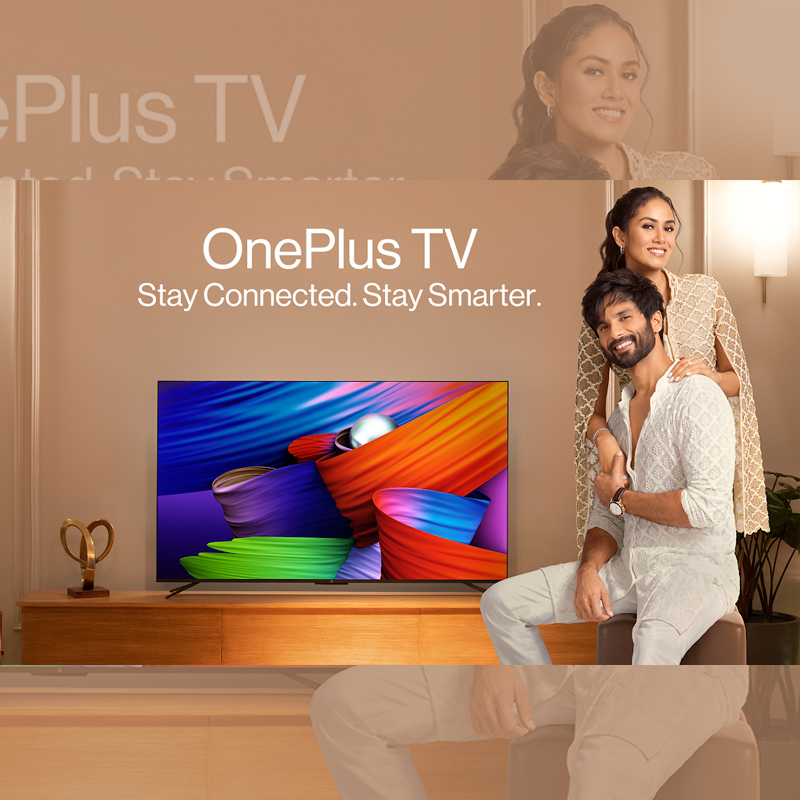
    New Delhi: OnePlus has unveiled the ‘Stay Connected Stay Smarter’ campaign with Shahid Kapoor and Mira Kapoor. Featuring the OnePlus TV U1S, the unique ad film unconventionally urges its users and community to genuinely bond with their loved ones by disconnecting from their televisions.

    The campaign was conceptualised by Utsav Gokani and created in partnership with Media Monks. The ad film was directed by Suraj Wanvari.

    The ad film begins with Mira enjoying watching content on their OnePlus TV in their home decked up for the festive period. Mira is seen fully immersed with her OnePlus buds pro connected to the OnePlus TV and seamlessly operating the television using her OnePlus 10T 5G in line with the brand’s connected ecosystem experience.

    Shahid simultaneously enters the living room and is attempting to convey an important message to Mira, all this while Mira is still engrossed in the smart TV’s functions. Ultimately, Shahid highlights how it is a special time of the year and points at the OnePlus TV, subtly implying the need to disconnect. The ad film smoothly concludes with Mira simply using Google Voice Assistant to switch off the TV, leaving viewers with a refreshing message to enjoy their festivities away from the TVs and closer to their dear ones.

    The ‘Stay Connected Stay Smarter’ ad film also simultaneously showcases the brand’s smart functions such as the Google voice assistant feature, NFC, quick app switch, smart volume control and seamless IoT connectivity with other OnePlus products such as OnePlus Buds & OnePlus smartphones.

    Commenting on the campaign, OnePlus India director-marketing communications Ishita Grover said, “At OnePlus India, our community is at the heart of all our efforts. As a brand, we are always invested towards delivering the best for our community. While we are excited to deliver the best of smart TV technology which offers unparalleled connected ecosystem experience, we also want our users to not miss out on the beautiful moments in life. And much of these might be best enjoyed in living those moments by truly bonding with our loved ones. With this thought, we launched “Stay Connected. Stay Smarter.” campaign. We wanted to provide our community with a delightful insight on defining quality moments in life by choosing to disconnect from their smart TVs for once, and thereby offer them a thought-provoking perspective to digital consumption. And we hope that our community will thoroughly enjoy this unique ad film and resonate with our campaign voice.”

    OnePlus director of brand & category management Saurabh Kapoor shared, “Through the ‘Stay Connected Stay Smarter’ campaign, our intent is to further strengthen the relationship with our community and help them make mindful choices in life. It is this very relationship that was the impetus behind OnePlus’ emergence as the fasting growing smart TV brand in India H1 2022 with a 123 per cent YoY growth rate, and today, OnePlus is among the top three smart TV brands in the overall TV market in India in Q2 2022, as per the latest Counterpoint report. It is our community’s trust and support that has led to our success. And therefore, through campaign efforts like ‘Stay Connected Stay Smarter’, we hope to also help our community derive a better quality of life with their loved ones”.

    Sharing his thoughts on the campaign, renowned Bollywood actor, Shahid Kapoor said, “We are living in a digital age where people across all age groups are quite invested in content consumption and might just miss out on celebrating milestone events with families. I firmly believe that the festive season is an apt occasion to remind people to switch off from their digital world and further strengthen their family bond by celebrating with their loved ones. The ‘Stay Connected. Stay Smarter.’ campaign has been beautifully crafted that leaves a strong message to bring families together and showcases how OnePlus’ seamless connectivity with other smart features can make life easier.”

  • 3SS at IBC 2022: Operators get the opportunity to find their perfect match

    3SS at IBC 2022: Operators get the opportunity to find their perfect match

    Mumbai: 3Screen Solutions (3SS) will have its biggest-ever show presence at IBC 2022. Following a three-year hiatus from face-to-face events, the renowned user experience pioneer will present an unprecedented array of customer deployments and empowering technology partnership integrations. All of this is part of the multiple award winning 3Ready Entertainment Ecosystem.

    3SS CPO & CMO Pierre Donath said, “It’s truly wonderful to be back at IBC, and have the chance to see our industry colleagues from around the world, and to explore how together we can make entertainment more simple and personal for everyone,” he commented.

    He further added, “This is a milestone year for 3SS: we’re super excited to showcase our latest deployments and enabling technologies that help operators provide their customers with experiences that they really love, and to celebrate our collaborations with over 100 ecosystem partners, on our bigger-than-ever IBC exhibit.”

    “Our theme this year is ‘It’s A Match!’ and we really look forward to welcoming IBC visitors to our stands and helping operators discover the products and solutions that perfectly match their business needs for powering their next-generation entertainment platforms,” he added.

    The ever-expanding 3Ready product platform was created to assist operators in accelerating time-to-market, delivering a unified experience across all devices, launching revenues, and rapidly innovating while avoiding technology vendor lock-in.

    3Ready is now enabling next-generation video experiences for over 20 major operators around the world, with a combined reach of more than 35 million households. The 3Ready Entertainment Ecosystem enables service providers to fully exploit 3Ready’s flexibility, which is enabled by its underlying architecture. 3Ready works seamlessly with the backend, revenue protection, recommendation engine, STB, and other system elements of the operator’s choice thanks to its extensive pre-integration options. Uncertainties in technology are eliminated, allowing providers to focus on providing excellent service.

    3SS reimagines in-car entertainment at IBC

    For the first time, 3SS will present the future of in-car digital entertainment at IBC. The company has brought a “Polestar 2” car to Amsterdam and parked it outside the exhibit area, inviting visitors to take a seat and experience its 3Ready-powered automotive experience, which is based on the Android Automotive Operating System (AAOS).

    In-vehicle displays, in addition to all of the familiar screens, are the next touchpoints for enjoying video entertainment on the go. 3Ready enables operators and automobile manufacturers to add entertainment to any in-car infotainment system. UX can be adjusted and targeted dynamically, with the ability to curate all content, including third-party apps. The end result is superior entertainment and enjoyment for all occupants of the vehicle. To date, 3SS has two projects with automobile manufacturers.

    All-new 3Ready Control Centre takes centre stage

    3Ready Control Center 3.0 is a new SaaS experience management solution from 3SS. With this centralised, one-stop solution that is highly visual and intuitive, anyone can curate a highly personalised and unified experience across all screens. 3Ready Control Center allows more members of an operator’s content curation and marketing teams to easily target, manage, and visually optimise UX to increase customer retention. Operators benefit from real-time management of all service and device apps’ content, features, and branding from a single unified location.

    A/B testing is the most direct and powerful method of gauging viewer preferences, and it can be done with high automation, individually or by customer segment. Experiments with new features can be carried out quickly and with confidence, as can adaptations.

    The dashboards of the 3Ready Control Centre have simple functions and navigation that do not require technical knowledge. This reduces reliance on technical specialists. Editors can make necessary UI/UX changes visually, and all of the operator’s apps will automatically retrieve and apply them without requiring any code changes. Consistent, stable, and scalable cross-device user experiences result, with significant time and effort savings.

    3Ready Control Centre integrates seamlessly with any backend, recommendation, metadata, analytics, and advertising solution that an operator selects.

    The benefits of holistic content discovery and recommendation benefit both super-aggregators and their customers. The 3Ready Control Centre allows you to curate content from any source, including third-party providers. The end result is a unified and personalised user experience across all screens. Operators gain greater utility and flexibility than ever before by managing all client apps, including connected TV brands, STBs, tablets, smartphones, in-car displays, and so on, in a streamlined, highly efficient manner.

    Demos of the latest integrations for transformational UX

    The 3SS booth (5.A83) will feature an unprecedented demonstration array of enabling technical integrations with world technology leaders. These include, among others:

    Targeted advertisements: 3SS will demonstrate a solution integrated into the 3Ready platform that enables operators to quickly deploy linear ad insertion on OTT and hybrid STBs while providing their customers with a seamless ad experience (Live to Ad). It is independent of any ad solution or ad network and provides cross-device control over the advertising experience to enable ad-supported business models.

    KAON, 3SS, and Green Streams: KAON, 3SS, and Green Streams have collaborated to develop a new pre-integrated end-to-end technology platform that will enable Tier 2 and medium-sized providers to quickly and affordably deliver super-aggregated video services based on Android TV. Green Streams’ TVaaS backend platform, powerful yet reasonably priced KAON Netflix Certified STB, and the advanced 3Ready UX comprise the new turnkey solution. Tier 2 and mid-sized providers can thus accelerate service launches and revenue growth.

    Allente implements 3Ready Control Center 3.0 in collaboration with ContentWise: Nordic pay-TV behemoth Allente has become the first operator to deploy 3Ready Control Center 3.0. This project is a critical enabler of Allente’s next-generation super-aggregated TV services for Sweden, Denmark, Norway, and Finland. Allente and its customers will also benefit from 3Ready Control Center 3.0’s seamless integration with ContentWise’s UX Engine (stand 5.C65). This technological combination boosts customer engagement by personalising user experiences in real time.

    Tele2 AB’s new TV Hub Mini: A high-spec 4K dongle for OTT (over-the-top) TV, was developed in collaboration with 3SS and SEI Robotics Inc. (stand 5.F64). Subscribers enjoy a custom 3SS-engineered user experience powered by 3Ready in 3SS’ first major operator dongle deployment, which is based on Android TV OS. The SEI Robotics 4K dongle provides Netflix, as well as a variety of other streaming apps and TV channels.

    ThinkAnalytics with 3SS : ThinkAnalytics and 3SS will debut their new pre-integrated solution that transforms UX testing and optimisation, assisting operators in increasing engagement and reducing churn. 3Ready Control Centre is now pre-integrated with Think360, ThinkAnalytics’ content discovery and analytics platform, enabling operators to deploy user experiences that maximise monetisation opportunities by leveraging data-driven continuous improvement. Editors, marketers, and curators do not require technical expertise, which reduces costs and accelerates time-to-market. Actionable insights enable operators to provide their customers with the entertainment UX they truly desire.