Tag: connected TV

  • MiQ taps Ribhu Mishra to power up India revenue play

    MiQ taps Ribhu Mishra to power up India revenue play

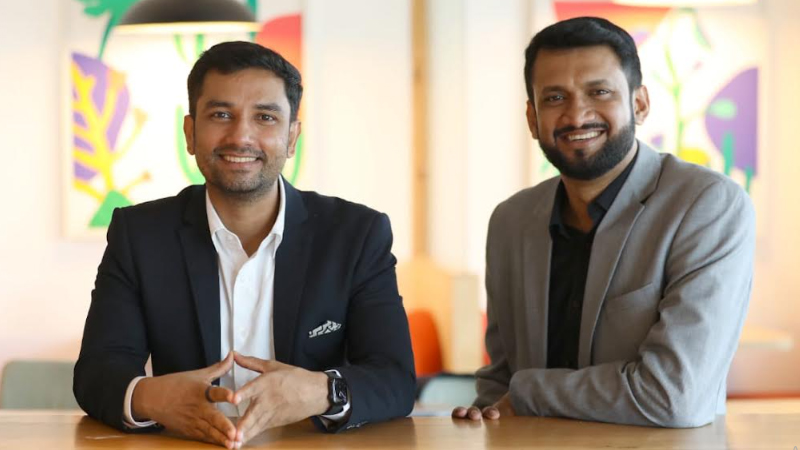
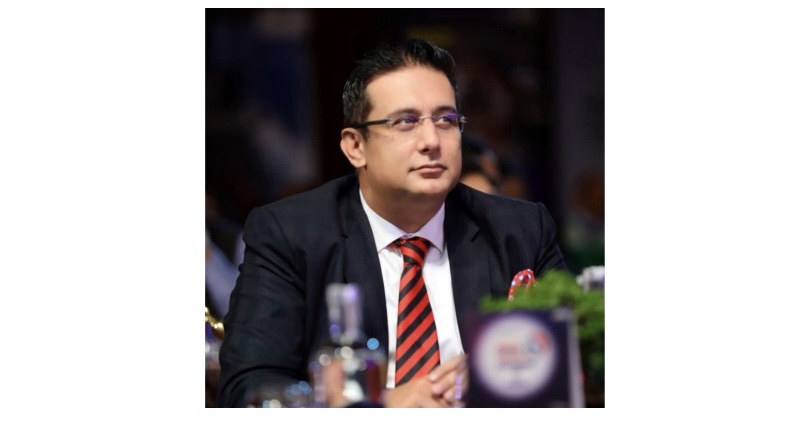
    MUMBAI: MiQ is turning up the heat in India’s adtech arena, elevating Ribhu Mishra to vice president – Revenue, India, as it gears up for a high-growth 2026 fuelled by Connected TV, advanced data, and its new Sigma AI platform.

    In his new role, Mishra will steer revenue strategy, lead commercial teams, and drive market expansion across India. The move reinforces MiQ’s intent to strengthen its leadership bench and scale innovation in one of its fastest-growing markets.

    Mishra, who joined MiQ from Amazon India in 2024 as AVP of Revenue, has been instrumental in shaping the company’s go-to-market approach and driving client success stories across verticals.

    “India’s digital ecosystem is entering a new era, and the coming year will be pivotal for data-driven programmatic execution,” said MiQ India chief commercial officer Varun Mohan. “Ribhu has been a key player in our growth story, and with this elevation, we’re doubling down on commercial excellence and innovation.”

    Sharing his excitement, Ribhu Mishra said, “MiQ has built a reputation for innovation and impact, and I’m thrilled to lead our revenue function at such an exciting time. My focus will be on deepening partnerships, expanding markets, and driving sustainable growth.”

    With more than a decade in media, adtech, and digital transformation, spanning roles at Amazon and Appier, Mishra brings a wealth of experience to the table.

    For MiQ, the move signals more than just an internal milestone, it’s a strategic step toward solidifying its place at the heart of India’s programmatic advertising revolution.
     

  • Gracenote says advertisers are botching connected TV with wrong targeting tactics

    Gracenote says advertisers are botching connected TV with wrong targeting tactics

    NEW YORK: Connected television was supposed to be the performance marketer’s dream: precision targeting on the biggest screen in the house. A decade in, it’s not delivering. American advertisers will spend $26.6 billion on CTV this year, up 12 per cent from 2024, according to the IAB. Yet 27 per cent cite lack of insight into whether ads reach their intended audience as their top challenge. Nearly a third rate CTV only “moderately effective” despite pouring money in.

    The problem is a mismatch between strategy and medium. Marketers are treating CTV like social media—chasing users with demographic and behavioural targeting—when they should be focusing on what people watch, not just who’s watching. A Gracenote survey of 600 American brand and agency executives found 30 per cent rank brand awareness as their top CTV objective, with customer retention a distant fourth. Yet 80 per cent still prioritise audience-based targeting over contextual approaches.

    “CTV has not delivered the scale and premium reach that marketers expect of the largest screen in the house largely based on the use of narrow targeting tactics,” said Gracenote VP of partnerships Jake Richardson. “By taking better advantage of contextual targeting capabilities with their CTV campaigns, they have new opportunities to drive both return on ads spend and the scale they’ve been looking for.”

    The irony is sharp. CTV now accounts for 48 per cent of American viewing time, overtaking live television’s 46 per cent in the first quarter of 2025. Ad-supported content makes up 45 per cent of streaming viewership. The audience is there, engaged and watching ads. But marketers haven’t adapted their playbook.

    Nearly 46 per cent of survey respondents have shifted at least 26 per cent of their budgets to CTV over the past three years. Among financial services, retail, technology and healthcare brands, that figure rises to 52 per cent. A quarter now allocate 40 per cent or more of total budgets to CTV. Yet confidence remains shaky. Only 28 per cent consider their CTV spending “extremely effective.”

    The culprit, according to Gracenote, is fragmentation and missing metadata. With 85 per cent of CTV buys purchased programmatically, incomplete or inconsistent content data leaves platforms blind. Nearly 70 per cent of respondents say lack of standardisation is at least a modest challenge when developing campaigns.

    Free ad-supported television (Fast) channels illustrate the problem. Gracenote tracked nearly 1,850 active Fast channels distributing more than 182,000 programmes as of July 2025. Pluto TV, Tubi and The Roku Channel accounted for 5.7 per cent of total American television usage in May 2025, up 36 per cent year-on-year. Yet the metadata is patchy. Before enrichment, 55 per cent of sports programmes on  Fast  channels lacked original air date information. A sample of 28 sports programmes shared by Rain the Growth Agency found only eight included proper content titles—three simply said “tv.”

    This matters because knowing whether a sports event is live, which teams are playing, or whether it’s a playoff game is crucial for advertisers. TV listing data can distinguish an MLB game between the Los Angeles Dodgers and San Francisco Giants from a Liga MX match between Santos Laguna and Pumas UNAM—both aired live on Fast channels on 12 July 2025.

    When asked if standardised content metadata would boost confidence in CTV planning, 62 per cent of respondents said yes. More than half said it would justify higher spending. When asked about TV schedule information, 72 per cent said it would help with planning and investing—rising to 78 per cent among financial services, retail, technology and healthcare advertisers.

    The solution, Gracenote argues, is contextual targeting at programme level. Only nine per cent of respondents currently prioritise this approach, compared with 29 per cent for demographic targeting. Yet contextual signals—knowing a programme has a TV-MA rating, includes adult language, has a gritty mood, or involves arms trafficking—provide the brand suitability insight that audience targeting can’t.

    The pitfalls of over-focusing on existing customers are well documented. Nike’s 2020 direct-to-consumer pivot, which neglected broader brand building, became a cautionary tale last year. Despite CTV’s addressable nature, excluding anyone outside the funnel inhibits future growth. Marketers want CTV for brand building, but to capitalise they’ll need to embrace a simple truth: what people watch matters as much as who’s watching.

    The survey was conducted online between 10 and 20 July 2025, polling brand and agency associates with director-level titles or above across media, entertainment, telecommunications, retail, financial services, automotive, consumer goods and healthcare.

  • Korea’s VoD market tops $1.1 bn as Netflix stays ahead, TVING–Wavve plot fightback

    Korea’s VoD market tops $1.1 bn as Netflix stays ahead, TVING–Wavve plot fightback

    SEOUL: South Korea’s premium video-on-demand market hit $1.1 billion (€0.94 billion) in the first half of 2025, with paid SVoD subscriptions climbing to 24.5 million after 1.5 million net additions, according to data from ampd, the measurement arm of Media Partners Asia (MPA).

    Growth was led by scale players and turbocharged by connected TV measurement, introduced in the second quarter. This added roughly 35 per cent more monthly active users per platform and nearly doubled measured viewing hours to 1.2 billion.

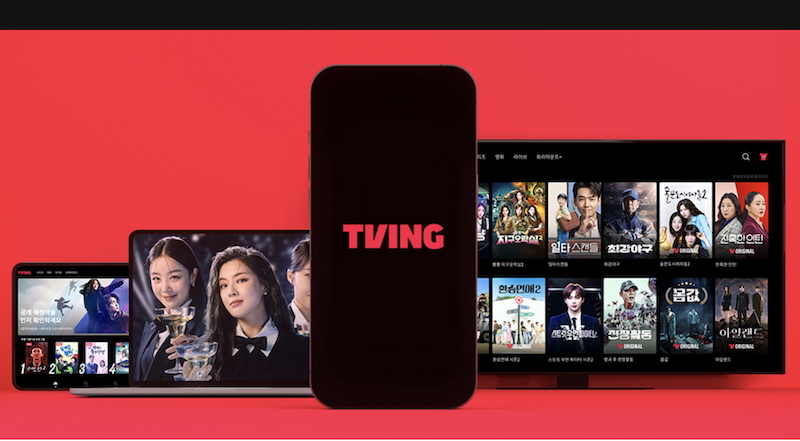
    Netflix retained the crown with 8.2 million subscribers and 47 per cent of premium VoD viewership, fuelled by Squid Game season three, a steady pipeline of licensed films, and its Naver Plus tie-up offering the ad-supported standard plan free to members. TVing posted the biggest net gains thanks to a low-priced ad tier, drama and variety hits, and live sport. Coupang Play grew with a free ad-supported tier and its Sports Pass, while June’s TVING–Wavve merger sets up a 9.2 million-subscriber challenger to Netflix by year-end.
     

    Premium VoD viewership by content type“Korea’s premium VoD sector is consolidating around a handful of scaled leaders,” said MPA executive director Vivek Couto. “Local storytelling remains the foundation of engagement and monetisation, while CTV is unlocking new audiences and advertising opportunities.”

    Local content dominated, accounting for 86 per cent of all viewing hours in Q2, led by dramas (48 per cent) and variety/reality shows (27 per cent). US films were the largest foreign category at just six per cent.

    “K-dramas, comedy and variety shows drive cross-platform reach,” said MPA and ampd  lead analyst Dhivya T. “Ad tiers are now central to subscriber growth, especially in urban and price-sensitive segments.”

  • Kantar study: CTV revolution gains ground as 23 per cent  Indians ditch linear TV

    Kantar study: CTV revolution gains ground as 23 per cent Indians ditch linear TV

    MUMBAI: India’s media landscape is turning the page, and the headline is clear: Connected TV (CTV) is booming, and one in four Indians is now digital-only. That’s the key takeaway from Kantar’s Media Compass 2025, which maps the country’s evolving media consumption habits across linear TV, print, and digital.

    With a whopping 87,000-strong sample and quarterly tracking, Kantar’s new offering aims to replace outdated guesswork with data-driven firepower. And the early signs are disruptive: 35 million Indians have jumped on the CTV bandwagon, and 23 per cent of the population now accesses the internet without watching a second of linear TV.

    While linear TV still claims 58 per cent monthly reach, the shifts are seismic. CTV, once a metro darling, is now reaching deep into rural India. And digital-only audiences are mushrooming among young, male, and lower-income demographics—dispelling old myths and throwing up new marketing equations.

    Media preferences split starkly by age: 55 per cent of Indians aged 15–34 favour OTT and social platforms, while 44 per cent of those above 45 remain loyal to the TV set. Notably, 75 per cent of digital-only and linear TV viewers reside in rural areas, demolishing the notion of urban dominance.

    CTV remains a premium medium, with its incremental growth concentrated in NCCS A households, while digital is democratising access in lower-income groups.

     Kantar director – specialist businesses, insights division (south Asia) Puneet Avasthi said: “In today’s fragmented and fast-evolving media landscape, brands are under pressure to make every media rupee count. Yet, most decisions are still being made using outdated or incomplete data, leading to suboptimal media planning and missed connections with consumers. Media Compass 2025 aims to correct this and equip advertisers with timely, in-depth insights across platforms- enabling smarter media planning, stronger audience engagement and sharper targeting for maximum impact.”

    The message to marketers? India’s media map is redrawn. The compass has shifted. Time to follow the data.

  • Pranav Bakshi gets promoted to pilot Network18’s Connected growth engine

    Pranav Bakshi gets promoted to pilot Network18’s Connected growth engine

    MUMBAI: Network18’s digital dynamo Pranav Bakshi has just bagged a bold new title — chief growth officer, Network18 Connected — as he takes charge of accelerating content, audience, and revenue across connected TV, social platforms, and strategic partnerships.

    But this isn’t just a new nameplate on the desk. With his finger on the pulse of where audiences are headed (and not where they’ve lingered), Bakshi is gearing up to rewire how content is created, consumed and commercialised across the media conglomerate’s vast portfolio.

    “This role is about leading the charge, not catching up,” said Bakshi. “It’s about scaling platforms, monetising content smartly, and building future-proof digital ecosystems.”

    Having previously helmed digital video strategy for over 45 Network18 brands — from CNN-News18 and CNBC-TV18 to Firstpost, Moneycontrol and History TV18 — Bakshi’s remit covered everything from CTV to creators, from off-platform growth to platform partnerships.

    Before his Network18 innings, Bakshi brought the firepower at Times network, heading digital video, strategy, partnerships, and social media for a bouquet of brands with a collective follower base of 60 million. He’s also worn hats at NDTV, TOI, Taj Hotels and even Maersk, with a track record of marrying content with commerce and strategy with scale.

    With his elevation, expect Bakshi to keep the content taps flowing — but this time, through smarter pipes, faster funnels, and next-gen platforms. The build, as he says, continues.

  • Affle gets regulatory clearance for rebranding to Affle 3i

    Affle gets regulatory clearance for rebranding to Affle 3i

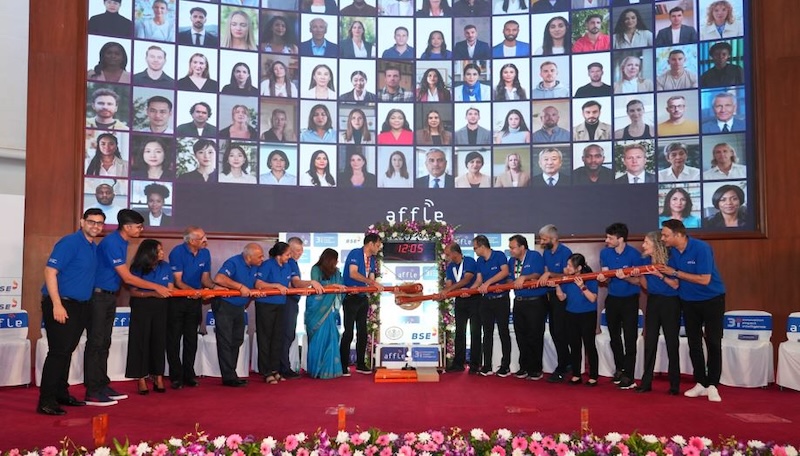
    MUMBAI: Adtech and martech firm Affle has marked its third decade with a rechristening and a bold leap into AI-driven advertising. The rebranding to Affle 3i officially went into effect today with  approval from the registrar of companies,  ministry of corporate affairs. Earlier in April, an extraordinary general meeting of shareholders had given the management the go-ahead to rename the firm. Affle 3i informed the Bombay stock exchange (BSE)  about the official name change today.

    Earlier this week the company held a  glitzy summit at the BSE where it showcased its “Power of 3i” vision to investors and clients.  The “3i” pillars—innovation, impact, and intelligence—were the stars of the show. Affle 3i demonstrated OpticksAI, a system capable of delivering hyper-personalised, real-time consumer experiences, powered by advanced AI. It s also highlighted its AI integration across connected TV (CTV) advertising, aiming to democratise the platform and boost ROI.

    But the real showstopper was Affle’s live demonstration of 100 AI agents, showcasing what the company calls  “active and authentic intelligence.” This, it claims, builds on the company’s formidable intellectual property, including 15 Indian patents and two US patents related to AI-driven experiences, filed well before the generative AI craze.

    Affle 3i chairperson, managing director, & chief executive officer  Anuj Khanna Sohum said the company’s vision is to “invoke the power of 3i” for intelligence that goes beyond efficiency. The aim is to scale from targeted creatives to millions of dynamic, personalised experiences, driven by “authentic, actionable, and augmented intelligence.”

    Chief architect & technology officer Charles Yong added that digital advertising is ripe for generative AI adoption. Affle 3i’s AI agents, he claimed, will streamline workflows and meet the demand for real-time, personalised content.

    In a flourish, Affle 3i also snagged records from the Asia Book of Records and the India Book of Records for the first-ever “Live Intelligence in Action” presentation at the BSE, proving the ad tech firm is not just talking the talk, it is walking the AI-powered walk. This rebranding and AI push signals Affle 3i’s intent to dominate the future of digital advertising, and it is not pulling any punches.

  • LG research: viewers keen to spend and shop through the connected TV screen

    LG research: viewers keen to spend and shop through the connected TV screen

    MUMBAI: The humble television has evolved from mere entertainment box to potential shopping portal, as new research from LG Ad Solutions reveals viewers are itching to flex their purchasing power from the comfort of their sofas. A whopping 62 per cent of connected TV viewers fancy interactive advertisements, with 56 per cent wishing they could splash cash directly through it.

    The February 2025 survey of 1,210 American screen-gazers paints a picture of consumers increasingly susceptible to what flickers before their eyes. Among connected TV viewers, an impressive 79 per cent admit to being influenced by adverts in their shopping decisions, while 63 per cent regularly discover new brands through the box. Nearly half have actually followed through with a purchase after seeing a TVC in the past quarter.

    “The days when people merely absorbed adverts passively are gone with the wind,” says a marketing guru. “Today’s viewers reach for their wallets almost as quickly as they reach for the remote—particularly when offered a discount.”

    LG television owners appear especially vulnerable to advertising’s siren call, showing influence rates a stunning 28 per cent higher than their counterparts. These same viewers are 20 per cent more likely to wish they could shop through their screens—statistics guaranteed to make marketing directors drool into their expense accounts.

    When it comes to actually parting with cash after seeing an advert, mobile phones remain the weapon of choice, with 60 per cent of viewers grabbing their handsets to complete purchases. Laptops and in-store visits follow at 41 per cent and 35 per cent respectively. Connected TVs themselves account for 22 per cent of purchases—a figure that jumps by 20 per cent among LG TV owners specifically.

    Perhaps unsurprisingly, 71 per cent of connected TV viewers confess to keeping their mobiles within arm’s reach whilst watching—creating what industry types call a “second-screen opportunity” and what everyone else calls “modern life.”

    The research also reveals surging interest in free ad-supported television (FAST) services, with 77 per cent of connected TV users regularly tuning into these platforms. LG’s own service—rather blandly christened “LG Channels”—now offers over 350 live channels and 7,000 on-demand options for the discerning viewer who prefers not to pay.

    With nine in 10 consumers in the US now using an internet-connected TV and 60 per cent preferring free streaming with adverts, Fast platforms have become fertile ground for shoppable innovation. Regular Fast users show 12 per cent higher purchase rates after viewing adverts than the general population.

    The report reveals multiple methods viewers are open to using for purchasing through their televisions:
    * 70 per cent fancy saving products to a wish list directly on the TV
    * 67 per cent would send a text for more information or discount codes
    * 62 per cent are willing to scan QR codes to checkout on mobile devices
    * 62 per cent would use voice commands to add items to their cart
    * 60 per cent would save shipping/payment details for quick checkout on the TV
    * 54 per cent are open to an AI assistant contacting them via email, text or social media

    Younger viewers aged 18-34 show particular enthusiasm, with 21 per cent higher interest in interactive TV adverts than the general population.

    For brands looking to capitalize on this trend, the report suggests a three-pronged approach: test creative variations, leverage Fast platforms, and utilize custom landing pages for a seamless shopping experience.

    When it comes to persuading viewers to part with their cash, discounts and promotions prove most effective, with 57 per cent of viewers citing offers as their primary purchase driver. Product features (42 per cent) and attractive visuals (32 per cent) also factor into purchasing decisions, while one in four viewers are influenced by the ability to click through to learn more.

    The creative elements of adverts significantly impact engagement levels:
    * Time-sensitive offers showed a staggering 12.4x higher purchase intent
    * Click-to-landing page functionality delivered 8.1x higher purchase intent
    * Special offers generated 5.6x higher purchase intent
    * Concise messaging resulted in 5x higher brand consideration
    * Clear calls-to-action produced 4x higher brand consideration
    * Dynamic creative animation yielded 2x higher purchase intent

    A case study highlighted in the report showed a major quick service restaurant chain achieving 2.5x more QR code scans and 10 per cent lower cost per reach by following these best practices during a 24-day holiday campaign.

    The report offers tailored advice for different retail categories based on analysis of TV advertising patterns throughout 2024:
    * Clothing and apparel brands should increase connected TV spending during peak periods (Q2 and Q4) to counter higher traditional TV spending from competitors
    * Electronics brands should maintain consistent connected TV spending throughout the year, with increased investment during holiday and post-holiday periods
    * Grocery and consumer packaged goods companies should maintain steady levels all year, with some increase during summer months
    * Appliance brands should boost connected TV presence during summer to compete for share of voice ahead of Labour Day sales
    * Restaurant brands should increase spending towards the end of each month and create special offers to drive engagement

    As one retail executive put it: “The living room is becoming the new shopping centre, and the remote control is the new credit card.”

    For those concerned about a dystopian future where white goods join the sales pitch, prepare yourselves—14 per cent of consumers expressed interest in shopping through their refrigerator, while 10 per cent fancy making purchases via their car dashboard or washing machine. One wonders if one day the toilet might suggest a particular brand of paper.

    LG Ad Solutions recommends advertisers implement the following strategy:
    1. Test various creative variations and calls-to-action for optimal results
    2. Leverage connected TV native ads and custom landing pages for immersive experiences
    3. Capitalise on the shift to free ad-supported streaming services to find new audiences

    The message for retailers is crystal clear: American armchair shoppers are poised with their plastic—and all they need is the right button to press. 

    Are there any lessons in this for Indian advertisers and for Indian platforms? 

    Indeed. 

    Most Indian connected TV owners are international travelers who have been exposed to Fast channels during their travels, but have been loathe to reach for the purchase button because fulfilment can take longer in markets like the US than in India where goods can be delivered in 10 minutes. By consistently following some of these best practices and adapting them to Indian nuances, advertisers on connected TVs can get a better bang for their buck. 

  • Amagi and Olyzon plan to shake up CTV ads with AI-powered partnership

    Amagi and Olyzon plan to shake up CTV ads with AI-powered partnership

    MUMBAI: The world of connected TV (CTV) advertising just got a serious upgrade. Cloud-based SaaS pioneer Amagi and AI-driven adtech disruptor Olyzon have teamed up to redefine how brands engage viewers and monetise content. This technical partnership enables clients to roll out cutting-edge CTV ad formats—without the hassle of additional integrations or vendors.

    By tapping into Amagi’s Thunderstorm server-side ad insertion (SSAI) platform, the collaboration allows for seamless fetching and insertion of AI-optimised ad formats from Olyzon. The move introduces innovative ‘in-content’ ad placements—think overlays and L-band units—designed to hold viewers’ attention beyond traditional ad breaks.

    “We are excited to partner with Olyzon to enhance the experience for viewers and advertisers while improving monetisation opportunities for streaming content. With six overlays per hour, this collaboration allows advertisers to use diversified ad formats for increased reach,” said Amagi co-founder and chief revenue officer Srinivasan KA.

    Olyzon’s co-founder and CEO Jules Minvielle called the deal a “game-changer” in the complex world of CTV advertising. “Our unique formats deliver tangible results—boosting engagement, brand impact and publisher revenue. With this integration, our clients can stand out in the battle for attention with just a few clicks—no technical complexity required.”

    Amagi, trusted by media giants like NBCUniversal, Lionsgate, and DAZN, continues to lead the charge in cloud broadcast and advertising solutions. Meanwhile, Olyzon’s AI-powered platform, used by the world’s top 100 advertisers, is on a mission to transform CTV advertising with unparalleled targeting and automation.
    With this partnership, the future of CTV ads is sharper, smarter, and more profitable—giving advertisers, publishers, and viewers a winning deal.

    (Picture courtesy Adobe)

  • JioStar breaks viewership records with Tata WPL’s historic opening

    JioStar breaks viewership records with Tata WPL’s historic opening

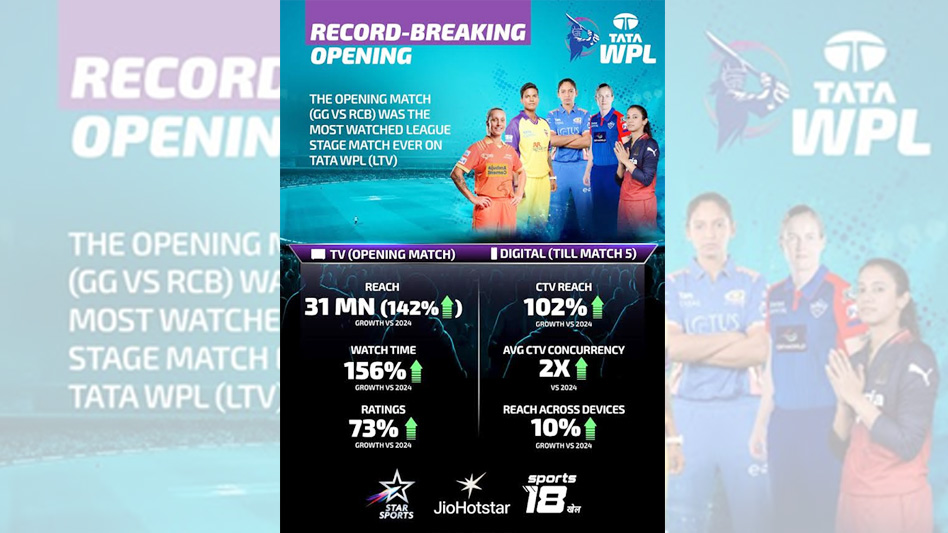
    MUMBAI: The Tata Women’s Premier League (WPL) 2025 has made a thunderous start, smashing viewership records on JioStar. With cricket fans tuning in across platforms, the opening match between Gujarat Giants and Royal Challengers Bangalore became the most-watched league stage match ever on television.

    As the second leg of #WPL2025 kicks off in Bengaluru, BCCI secretary Jay Shah took to social media to celebrate the tournament’s historic viewership figures. In a tweet, he revealed, “the Opening match was watched by over 3 crore viewers on TV, making it the most-watched league stage match ever. TV ratings on @StarSportsIndia surged 150 per cent, while digital viewership on @JioHotstar climbed 70 per cent compared to last season. Witnessing records being shattered is truly inspiring,” he remarked.

    The numbers speak for themselves—TV ratings for the opening game skyrocketed by 73 per cent compared to last year, proving that women’s cricket is no longer a side event but a main attraction. Meanwhile, connected TV (CTV) saw an astonishing 102 per cent surge in reach, with average concurrency doubling till match five. Digital streaming reach also grew by 10 per cent, cementing JioStar’s dominance as the go-to platform for live sports.

    With digital consumption at an all-time high, the Tata WPL’s explosive growth on JioStar signals a shift in how audiences engage with cricket. The numbers highlight a clear trend—sports streaming is the future, and JioStar is at the forefront of this revolution.

    As Tata WPL 2025 continues its action-packed season, fans and brands alike have a golden opportunity to be part of this cricketing evolution. The landscape of women’s cricket is changing, and JioStar is leading the charge.

  • FAST frenzy: Viewers binge more, advertisers cash in, everyone wins!

    FAST frenzy: Viewers binge more, advertisers cash in, everyone wins!

    MUMBAI: Not too long ago, TV lovers had two choices—pay up for endless subscriptions or rely on old-school cable. But just when you thought you were stuck juggling streaming bills like a circus act, FAST (free ad-supported streaming television) swooped in like a digital superhero. Forget flipping channels—now, viewers get premium content for free, advertisers get their dream audience, and content providers rake in the ad dollars. It’s a win-win-win, and Amagi’s latest Global FAST Report 14 Edition proves it.

    The report unveils staggering double-digit growth in both hours of viewing (HOV) and ad impressions, making it clear that FAST isn’t some fleeting trend—it’s an advertising revolution. Gone are the days when ads interrupted your binge session; now, they power the very shows you love.

    Amagi crunched the numbers from 3,300+ channels streaming via its SSAI (Server-Side Ad Insertion) platform, Amagi Thunderstorm. The results? A jaw-dropping 95 per cent YoY surge in global HOV and a 65 per cent jump in ad impressions—because when it comes to FAST, the stream never stops, and neither do the ad dollars. If streaming had a crystal ball, it would be flashing ‘bright future ahead!’

    Key takeaways:

    . U.S. and Canada keep the FAST train running at full throttle, contributing the lion’s share of global ad impressions and HOV. Who needs cable when free streaming is this good?

    .  APAC is the new streaming superstar, boasting a blockbuster 132 per cent YoY increase in HOV and a 130 per cent spike in ad impressions. If FAST were a stock, you’d want to buy in now.

    . LATAM and EMEA aren’t sitting on the sidelines, with entertainment, news, and documentaries leading the charge. Because who doesn’t love free content that informs and entertains?

    .  Entertainment remains the undisputed champion of FAST, making up 40–45 per cent of global HOV. Drama, reality TV, and movies—FAST has it all, without the price tag.

    .  New FAST channels are shaking up the game, with 25 per cent of global HOV and ad impressions coming from channels launched after December 2023. The future of TV is FAST, and it’s only getting started.

    The streaming wars may be ongoing, but FAST has found its niche. Unlike SVOD (Subscription Video on Demand), which relies on subscription models, FAST offers premium content free-of-cost, funded entirely by ads. Viewers have spoken, and their preference for free, high-quality content has set the stage for an advertising revolution.

    Amagi’s consumer survey of 500+ U.S. households revealed key trends:

    . 75 per cent of respondents watch free, ad-supported streaming content.

    . 66 per cent reported watching FAST channels multiple times per week.

    . 67 per cent noticed and engaged with overlay ads, proving the model’s efficacy for advertisers.

    FAST isn’t just standing alone—it’s merging with traditional Pay TV and SVOD models. Pay TV services now offer FAST channels, SVOD giants like Warner Bros. Discovery are experimenting with ad-supported tiers, and FAST services are enhancing their content portfolios with premium offerings.

    With global advertisers shifting their focus from Pay TV to CTV (Connected TV) and FAST, content providers are being forced to rethink their distribution strategies. Industry leaders like Dazn are already unifying conventional broadcasting with FAST to create a seamless viewing experience.

    As more regions embrace FAST, expect to see a sharper focus on localised content, better ad targeting, and stronger partnerships between streaming giants and advertisers. The numbers don’t lie—a 95 per cent rise in viewing hours and a 65 per cent spike in ad impressions make one thing clear: FAST isn’t slowing down—it’s just getting warmed up.

    So, whether you’re an advertiser chasing eyeballs, a content creator searching for the next big platform, or just someone who loves free TV with a side of perfectly timed ads, FAST is your new best friend.