Tag: Congress

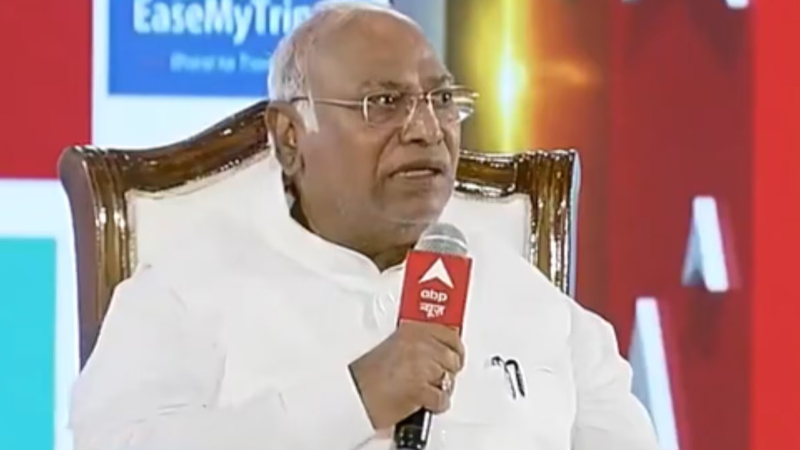
  • Mallikarjun Kharge at ABP ‘Shikhar Sammelan’: BJP repeats lies until they are believed as truth

    Mallikarjun Kharge at ABP ‘Shikhar Sammelan’: BJP repeats lies until they are believed as truth

    Mumbai: Congress leader and leader of the opposition in Rajya Sabha, Mallikarjun Kharge candidly addressed critical issues and priorities facing the nation in an insightful session at the ABP ‘Shikhar Sammelan’. Speaking about Bharatiya Janata Party, Mallikarjun Kharge said, “BJP repeats lies until they are believed as truth. Many promises like two crore jobs, 15 lakh rupees, double MSP for farmers, and increased scholarships for students remain unfulfilled. Modi ji is a marketing genius, focusing solely on infrastructure while ignoring unemployment. We must check ground realities, not just believe TV ads.”

    “Congress is not in the habit of telling lies. In India, where there was no power to produce a needle, we made rockets here. We fought with Pakistan, and liberated Bangladesh,” he added.

    Kharge on BJP’s accusations of corruption and nepotism in Congress, commented, “BJP cleans its image using a ‘washing machine’ when caught in scandals. After 1989, no family members from the Gandhi family has become prime minister, chief minister, or held significant positions. BJP’s attacks a family that sacrificed their lives for the country. Youngsters don’t know why Indira Gandhi was killed. They just know what Modi is saying and believe that. The Congress party built India’s foundations; BJP just advertises on clean sheets.”

    Reflecting upon Congress’ handling of election pressure, Kharge said, “If faced with unlawful actions, we must resist to protect fundamental rights and democracy. BJP leaders like Nirmala Sitharaman (minister of finance of India) claim financial shortages despite massive donations. They target the opposition with penalties, locking our accounts, and creating an unfair playing field. Modi ji’s priorities seem to be misplaced, focusing on trivial matters while ignoring serious issues like law and order problems in Manipur. BJP benefits most from electoral bonds and misuses institutions like ED and CBI. Their actions resemble deception rather than governance.”

    Speaking about why many leaders from the opposition and Congress are joining the BJP, he said, “Some leaders leave despite getting what they want, showing they lack ideological commitment. Our focus is on uniting and strengthening India, regardless of the number of supporters.”

    Speaking about the chances of the INDIA alliance winning the next election, Kharge said, “We acknowledge challenges in alliance management but emphasise unity for democracy’s sake. We are determined to win the necessary seats to defeat BJP’s dominance. We highlight BJP’s failures compared to our contributions post-independence. BJP’s promises like job creation and increased income for farmers remain unfulfilled, while they suppress dissent and focus on fear tactics. Our alliance prioritizes democracy, constitution, and citizens’ rights over personal ambitions. We aim to eradicate BJP’s ideology for a better India.”

    The ‘Shikhar Sammelan’ crystallised ABP News’ unwavering commitment to invigorating democratic dialogue and fostering an informed electorate poised to shape the nation’s destiny. As the herald of democracy reverberates across the land, ABP News remains steadfast in its mission to illuminate the path forward, emboldening citizens with the power of knowledge and civic engagement.
     

  • News18 India’s Chaupal concludes with a lineup of influential figures from politics, cricket and Bollywood

    News18 India’s Chaupal concludes with a lineup of influential figures from politics, cricket and Bollywood

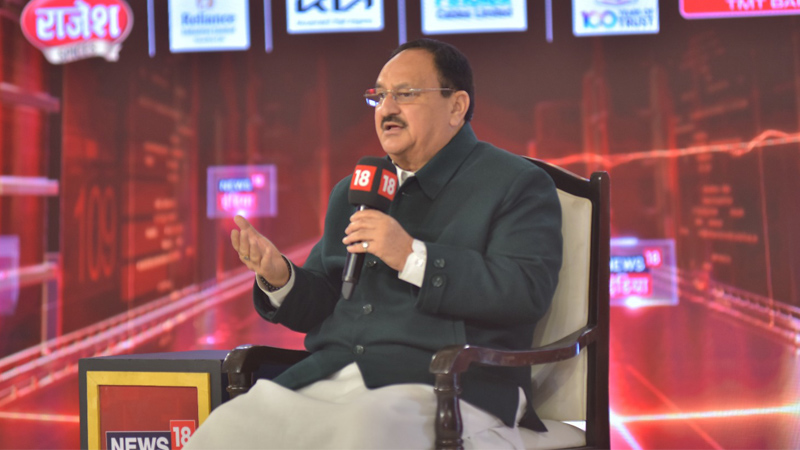
    Mumbai: Concluding its highly acclaimed flagship summit, News18 India, the nation’s premier news channel, on Monday (February, 2024) hosted a gathering of India’s foremost voices. This illustrious event provided a platform for intense discussion, debate, and deliberation on the pressing matter of India’s journey towards becoming a developed nation by 2047. With the Lok Sabha Elections looming on the horizon, the summit set the stage and established the tone for the forthcoming political discourse. Viewers were afforded a unique opportunity to engage with a diverse range of luminaries, including political stalwarts, thought leaders, policymakers, as well as eminent figures from the world of cinema and sports.

    The event commenced with thought-provoking discussions and concluded on a high note with closing remarks delivered by BJP president JP Nadda. It featured an impressive lineup of distinguished participants, including Congress national president Mallikarjun Kharge, and several Union Ministers such as Kiren Rijiju, Smriti Irani, Nitin Gadkari, Ashwini Vaishnav, Dharmendra Pradhan, Anurag Thakur, and Piyush Goyal. Additionally, the event saw the presence of prominent regional leaders, including Punjab chief minister Bhagwant Mann, Madhya Pradesh CM Dr Mohan Yadav, and Himachal Pradesh CM Sukhwinder Singh Sukhu. Noteworthy political figures such as BJP leader Mukhtar Abbas Naqvi, Congress leader Digvijay Singh, and BJP Rajya Sabha MP Sudhanshu Trivedi also contributed to the discussions.

    In addition, the event witnessed representation from the Delhi government, with Minister Atishi Marlena making valuable contributions to the discussions. Notable luminaries from the film and cricket industry, including Aamir Khan, Ayushmann Khurrana, Ashutosh Rana, Kiran Rao, Shikhar Dhawan, and Mohammed Shami, also actively participated, enriching the discourse with diverse perspectives. The esteemed speakers commended News18 India and its organizing team for orchestrating the successful News18 India Chaupal, which featured thought-provoking sessions and brought together a multitude of voices and viewpoints under one roof.

    Railway and Telecom minister Ashwini Vaishnav, delivered a full-fledged report through graphic illustration on the advancements within the Railway Ministry. From 2004 to 2014, he highlighted the significant increase in the railway budget from Rs 15 thousand crores to Rs 2.52 lakh crores. The audience regaled the session. On the other hand, Nadda addressed various aspects concerning the upcoming Lok Sabha elections in 2024. He posed a question to Rahul Gandhi regarding his temple visits, questioning the timing of such visits coinciding with election periods. Additionally, Nadda discussed the inclusion of Nitish Kumar and PM Modi’s vision for the 2024 Lok Sabha elections in his discourse.

    The panel discussions, anchored by veteran journalists of News18 India, featuring Digvijay Singh and Mukhtar Abbas Naqvi, along with the fiery exchange between the Delhi Education Minister from AAP and BJP Rajya Sabha MP Sudhansu Trivedi, captivated the audience, vividly illustrating the essence of democracy. In this vibrant display of diverse perspectives, individuals from both the ruling establishment and the Opposition exercised their fundamental right to freedom of expression.

    The News18 India Chaupal emerged as a catalyst, igniting discussions on strategic initiatives for impactful change that can significantly contribute to the nation’s progress. Union Ministers Smriti Irani, Piyush Goyal, Nitin Gadkari, and the Information and Broadcasting Minister showcased the developmental efforts of the Modi-led BJP government, expressing confidence in Prime Minister Modi’s potential for a third consecutive victory in the Lok Sabha elections. Conversely, Congress president Kharge criticized the BJP-led ruling dispensation and emphasised the party’s endeavour to unite all individuals under a common umbrella.

    Respecting the constitutional framework that binds the Centre and states, the News18 India Chaupal summit provided a platform for chief ministers to share their perspectives on their respective states’ developmental endeavours and political landscape. Madhya Pradesh chief minister Dr. Mohan Yadav, Himachal Pradesh CM Sukhwinder Singh Sukhu, and Punjab CM Bhagwant Mann passionately articulated their states’ developmental initiatives. These interactive sessions, skilfully anchored by veteran journalists, empowered viewers with insightful discussions and a deeper understanding of the regional dynamics shaping India’s political discourse.

    Cricketers Shikhar Dhawan and Mohammed Shami addressed their respective plans and experiences in the cricketing world, with Dhawan expressing his determination to return to the Indian team through the IPL. Shami also shared the moments of Team India’s defeat in the World Cup in Chaupal. He also shared the moments of meeting PM Modi in the dressing room after the defeat in the World Cup, along with social media trolling.

    Actors such as Ashutosh Rana, Ayushmann Khurrana, Aamir Khan, along with his former spouse Kiran Rao, actively participated in the conclave, lending their voices to the discourse. Each brought forth their unique perspectives and insights, enriching the discussions with their diverse experiences and viewpoints. Their presence added a dynamic dimension to the event, engaging the audience and contributing to the holistic exploration of pertinent issues.

  • ABP News-CVoter survey: Close fight in all 5 States, but voters’ choice of CMs clear

    ABP News-CVoter survey: Close fight in all 5 States, but voters’ choice of CMs clear

    Mumbai: The pre-poll survey conducted by ABP News and CVoter has brought to light the public sentiment in the five states heading for elections — Chhattisgarh, Mizoram, Madhya Pradesh, Rajasthan and Telangana. The results are surprising, and the most notable aspect was that a majority of the people in each of these states seem to be looking for a change, indicating a significant wave of anti-incumbency.

    While the final verdict will only be known on 3 December, the ABP News-CVoter opinion poll can give you a sense of which way the wind appears to be blowing.

    Madhya Pradesh: A significant 55.4 per cent respondents in Madhya Pradesh were found to be dissatisfied with Shivraj Singh Chouhan’s government. The Congress is pro to win 118-130 seats out of the 230, with a 44.3% vote share, while the BJP might secure 99-111 seats, reflecting a 42.1% vote share.

    Rajasthan: CM Ashok Gehlot’s efforts to break the state’s historical pattern of alternating between BJP and Congress may encounter resistance. The opinion poll indicates that 49.2% of respondents are dissatisfied with his government, though a substantial 45.5% are not seeking change. Both BJP and Congress are projected to increase their vote shares since the last election. However, the BJP seems set for a pronounced victory, potentially securing 114-124 seats out of the total 200 with a 44.8% vote share. The Congress, meanwhile, is projected to win 67-77 seats with 41.7% of the votes.

    Gehlot, however, is still the most favoured CM candidate, with 40.7% of respondents endorsing him. BJP’s Vasundhara Raje stands as the second preference, with 24.7% support, while Congress’s Sachin Pilot garners 10.5% of respondent support.

    Chhattisgarh: The state presents a complex picture, with 48.5% of participants wanting a change, but 44.8% are satisfied with the current government under Bhupesh Baghel. The ruling Congress is projected to win 45-51 seats in the 90-seat assembly with a 44.8% vote share. The BJP trails with a projected 42.7% vote share and an estimated 36-42 seats. Baghel is favoured as CM by 45.8% of the voters, with his nearest rival being the BJP’s Raman Singh.

    Telangana: The ruling Bharat Rashtra Samithi (BRS) is expected to get a 40.5% vote share, with Congress at a close 39.4%. Asked if they were satisfied with the state government’s performance, 57% of the respondents showed discontent with the KCR rule. Seat projections, however, place BRS slightly ahead with an estimated 49-61 seats, while the Congress is expected to secure 43-55 seats in the 119-seat House. KCR remains a popular choice for the Chief Minister post, with 37% voter support.

    Mizoram: The Mizoram government under Chief Minister Zoramthanga is facing a similar anti-incumbency sentiment, with 50% of the survey respondents seeking new governance. However, his party MNF is likely to win 17-21 seats in the 40-seat assembly, outperforming the Congress that is projected to bag 6-10 seats. The MNF shows a vote share support of 34.7%, against the Congress’ 30.1%. ZPM’s Lalduhoma has emerged as the most favoured candidate for the CM post, with 32.4% of respondent support.

    Methodology: This opinion poll is based on CVoter Pre Poll CATI (MP, Rajasthan, Chhattisgarh and Telangana) and Face to Face Interview (Mizoram) conducted among 63,516 people aged 18+ statewide, all confirmed voters.

    Survey date: October 9 to November 3

    Sample size – Rajasthan: 17534; MP: 28323; Chhattisgarh: 5782; Telangana: 9631; Mizoram: 2246

    LS Seats Covered – Rajasthan: 25; MP: 29; Chhattisgarh: 11; Telangana: 17; Mizoram: 1

    VS Seats Covered – Rajasthan: 200; MP: 230; Chhattisgarh: 90; Telangana: 119; Mizoram: 40

    Margin Of Error (State Level) .+_/_- 3%

    Margin Of Error (Regional Level): .+_/_- 5%

    Confidence Level: 95%

  • In cliff-hanger, BJP may just touch half-way mark in MP assembly polls, says India TV-CNX opinion poll survey

    In cliff-hanger, BJP may just touch half-way mark in MP assembly polls, says India TV-CNX opinion poll survey

    Mumbai:  The ruling BJP may emerge as the single largest party and may just touch the half-way mark of 115 seats in the Madhya Pradesh assembly election to be held next month on November 17, says India TV-CNX opinion poll survey. Results of the survey were telecast today on the news channel.

    The opinion poll projections show, BJP may win 115 seats, compared to 109 seats it had won five years ago in the 230-member assembly. The main opposition party Congress may win 110 seats, compared to 114 seats it had won five years ago, says the survey. ‘Others’ including independents hold the key, and they are likely to win five seats. In the last elections, seven seats were won by independents and local parties.

    Vote share projections show, BJP may get 44.38 per cent, Congress may get 42.51 per cent, and ‘Others’ may get 13.11 pc. In the 2018 elections, BJP had got 41.02 pc, Congress had got 40.89 pc, and ‘Others’ had got 18.09 pc votes.

    REGION-WISE SEAT PROJECTIONS

    Region-wise, India TV-CNX poll projections show:  

    In Baghelkhand having 51 seats, BJP may win 31, Congress may win 19 and Others may win one seat.

    In Bhopal having 24 seats, BJP may win 16 seats leaving the remaining eight seats to Congress.

    In Chambal having 34 seats, Congress may win 22 seats, leaving 12 seats to BJP.

    In Mahakaushal having 47 seats, Congress may win 26 seats, BJP may win 19 seats, and Others may win two seats.

    In Malwa having 46 seats, BJP may win 25 seats, Congress may win 20 seats, and the remaining one seat may go to Others.

    In Nimar having 28 seats, Congress may win 15 seats, BJP may win 12 seats, and the remaining one seat may go to Others.

    PREFERENCE FOR CHIEF MINISTER

    The survey findings show Shivraj Singh Chauhan leading with 44.32 per cent respondents wishing him to continue as chief minister. Chauhan is closely followed by State Congress chief Kamal Nath with 38.58 per cent respondents showing their preference for him as the next CM. BJP leader and union minister Jyotiraditya Scindia stands in third position with only 9.00 per cent, Congress leader Digvijay Singh with 1.52 pc, and ‘Others’ being preferred by 6.58 pc respondents.

    KEY FINDINGS

    •  A whopping 65.32 per cent respondents said, there should be a caste-based census in MP, while 20.63 pc were not in favour. 14.05 pc said, Can’t say.
    •  27.4 per cent respondents said, unemployment was the biggest issue in MP, while 21.05 pc said, Development is the biggest issue. 19.11 per cent said, Inflation was the biggest issue. 14.42 pc said, Hindutva was the biggest issue, while 7.23 pc said, Corruption was the biggest issue. 
    •  46.83 pc respondents rated Shivraj Singh Chouhan’s performance on a scale between 8 and 10, while 40.67 per cent rated him on a scale between 0 and 4.  12.5 per cent rated his performance on a scale between 5 and 7. 
    •  37 per cent respondents said, they were fully satisfied with the work done by their MLA in the last five years, while 32.12 per cent said they were fully dissatisfied. 
    •  Asked which government performed better in MP, 42.43 pc said BJP government, while 37.02 per cent said Congress government.
    •  On a question asked from women voters only, 47.3 per cent women said, Chouhan’s Ladli Behna Yojana will have an impact on the election, while 36.5 per cent said ‘No’.
    •  Asked which party’s welfare scheme (guarantees) was good, 43.62 per cent opted for BJP while 42.15 pc opted for Congress. 
    •  44.75 per cent voters said they were dissatisfied with the state government’s handling of Covid pandemic crisis, while 35.61 per cent voters said, they were satisfied. 
    •  A whopping 53.25 per cent respondents said, BJP’s decision to field central ministers and MPs in election will give advantage to the party, while 37.18 per cent said, No.

    The opinion poll survey was carried out by CNX among 11,500 respondents (5,758 males and 5,742 females) across 115 randomly selected constituencies. The respondents were selected randomly for a sample population encompassing diverse professions, including cobblers, tailors, barbers, daily wage labourers, petty shopkeepers, migrant labourers, registered medical practitioners, auto and taxi drivers, real estate dealers, among others. The age group ranged from 18 to 60 years old.

  • “Women should be given importance in party responsibilities”: Jothimani Sennimalai

    “Women should be given importance in party responsibilities”: Jothimani Sennimalai

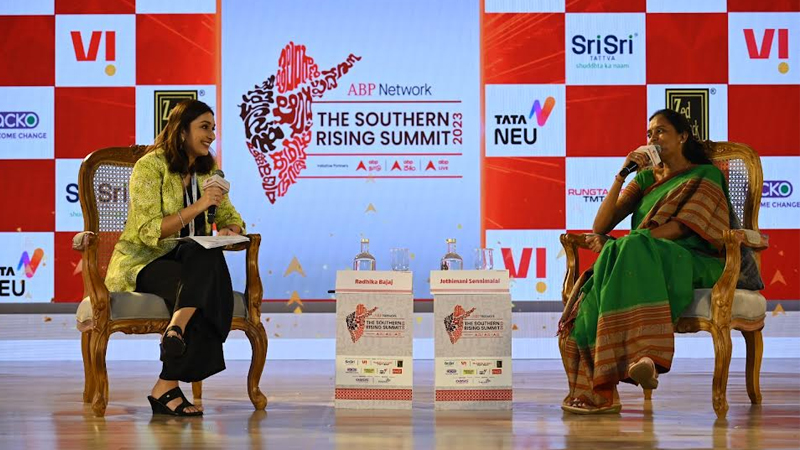
    Mumbai: In an empowering address at ABP Network’s ‘The Southern Rising’ Summit, Jothimani Sennimalai, a member of parliament in the Lok Sabha (Congress), placed a spotlight on the importance of prioritising women in pivotal party roles. During the enlightening session, “Women in Politics: A Different Kind of Leader,” Sennimalai’s insights not only ignited inspiration but also catalyzed transformative change.

    Highlighting her personal journey, Sennimalai said, “From the time I contested panchayat elections 25 years ago till now, Politics has always been considered as a male-dominated arena. It’s been a continuous learning experience in the political realm. However, progressive parties are beginning to see more women in parliamentary roles.”

    The challenges she faced and the triumphs she celebrated as a woman in Indian politics. She highlighted the importance of reservation for women. Adding to this she said – “For the last 70 years’ men have been going to parliament and legislatures. No one questioned them. But if only women contest the elections, they ask, what are you going to do? This is why reservation for women is necessary”.

    Sennimalai further emphasised that– “To empower women in politics, there’s a need for fundamental changes in the party structure. At the party level, men are present in various positions starting from the local government to the district level. If such opportunities are given opportunities especially to women through that experience they can perform better even when they come to power”.

    The session left an indelible mark, not only celebrating Sennimalai’s journey but also serving as a source of motivation for aspiring women leaders in politics. “In politics, women have to first fight for their gender, and then the issues follow so be brave and follow your instincts.” She concluded.

    ‘The Southern Rising’ Summit was conceptualised and instituted by ABP Network as a tribute to the exceptional growth, cultural opulence, and societal harmony exemplified by the southern states of India.  It aims to celebrate the spirit and richness of southern states, united on a singular mission of driving a transformative journey for India. The summit thus witnesses profound deliberations and sharing of insights by the movers and shakers of South Indian states and Union Territories.

  • A must-read ad & marketing book

    A must-read ad & marketing book

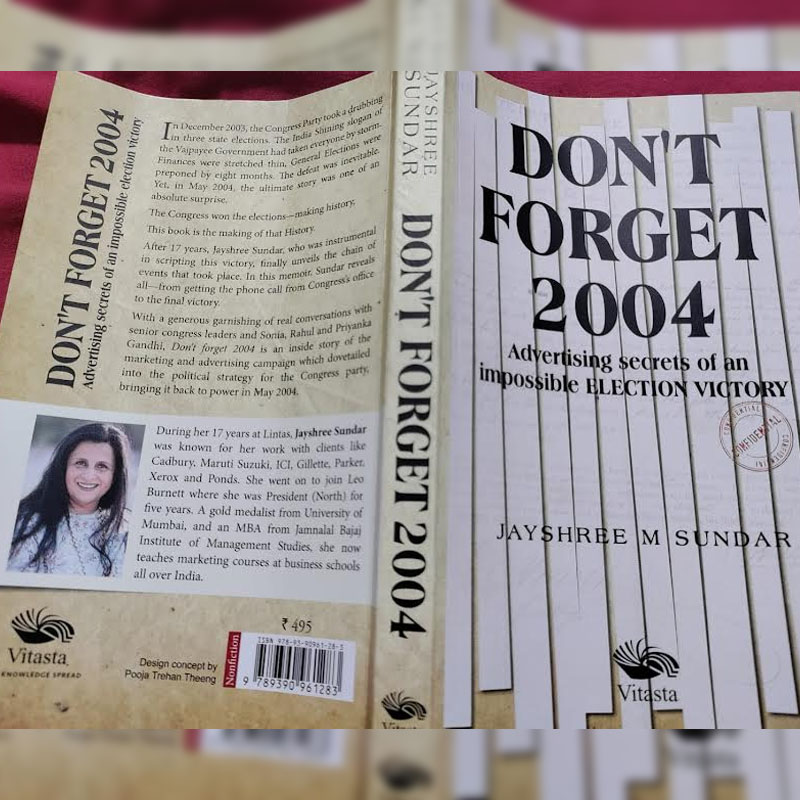
    Mumbai: Political advertising and marketing case studies might be a bit of a bore for many. But once you pick up ‘Don’t Forget 2004 – Advertising secrets of an impossible ELECTION VICTORY’ by Jayshree M Sundar and start flipping through its pages, you can’t put it down. Written in the manner of a fast-paced diary and personal narrative, it keeps you thirsting for more, and it hardly feels like you are reading. The pages flip by so fast, and before you know it, you are at the end of the book, a lot richer in your understanding of what politicians think like,  how ad agency executives can interact with them, and what it takes to draw up a winning election strategy and brand campaign.

    Jayshree should know. The senior advertising executive was heading the Delhi office of Leo Burnett India (once Chaitra Advertising founded by Walter Saldanha) when she got a call from Congress (I)’s senior leader Salman Khurshid’s office. The voice at the other end informed her that her agency was in the running to help the Congress (I) as it sought to make a comeback in the 2004 hustings at the Centre. The party had been out of power for more than a decade and a fierce opposition BJP was riding high with top media expecting it to win again by a thumping margin.

    Some of us may have a recollection of the savage campaign by Saatchi & Saatchi titled “Labour is not working” which swept Margaret Thatcher’s conservatives to power in 1979. Jayshree, along with her team, took a similar tack, working against impossible deadlines for a client which had no idea about the political marketing direction it should take. What made it even more challenging was that the BJP was looking smug as hell, splurging top dollar on ads all over the nation talking about how India was shining.  

    The Congress (I) mandarins provided no brief and they had limited budgets. Jayshree and her team had to come up with the communication that would position the Congress (I) right and yet show up the failures of the outgoing BJP government. Agency executives had to work and communicate with political heavyweights like Sonia Gandhi, Salman Khurshid, Ambika Soni, Jairam Ramesh, Ahmed Patel, Rahul, and Priyanka Gandhi, Motilal Vora – folks who commandeered a lot of respect, and whom they had only seen on TV.

    Through the book, you find out how she and the agency’s creatives pivoted to get quick answers through cheap and cheerful primary and secondary research. That and the fact that it approached the assignment as a regular brand campaign helped it come up with a pitch presentation that was bought by the steeped-in-the-old-ways-of-working Congress (I) senior leaders. The riposte to BJP’s India Shining slogan was “Aam aadmi ko kya mila?” “Congress Ka Haath aam aadmi ke Saath” and addressed the heartlands of India, against the former which was more focused on the urban Indian. The B&W visuals featured farmers, unemployed youth, the middle class and children, women as against the BJP’s well-dressed urban Indians.

    The book details how the agency came up with the four phases of the campaign, the steps it took to maintain utmost secrecy while creating the campaign, and later when ads and TVCs were released to publications and TV channels in various languages all over the country.

    Jayshree’s effort is not just all about words; she has peppered the book with advertising artwork which made it to the newspapers over the various phases of the campaign.

    The Leo Burnett team’s communication and marketing strategy did work well if you recollect. Despite the BJP’s bigger advertising war chest, it and its allies managed to retain only 185 seats (1999 count 298). The Congress (I) however celebrated as it individually captured 145 seats (against 112 seats in 1999) and 220 seats (as against 135 in 1999) with its allies. It of course came to power, and the rest they say is history.

    ‘Don’t Forget 2004’ is a must-read for students and practitioners of marketing and advertising as well as those in the political ranks, given that there is very limited literature available on political advertising. It is rich in detailing the learnings the agency had while working on the Congress (I) campaign. Be sure to pick up a copy.

    (Don’t Forget 2004- Advertising secrets of an impossible ELECTION VICTORY – Jayshree M Sundar, pp284, publisher Vitasta Publishing, Rs 495)

    You can buy it on Amazon too by clicking on this link: https://www.amazon.in/-/hi/Jayshree-M-Sundar/dp/9390961289

  • BJP leads political ad spends on Facebook

    BJP leads political ad spends on Facebook

    NEW DELHI: Social media has emerged as one of the most powerful tools in elections. All the political parties are making the utmost use of social media platforms during the elections to tilt the opinion in their favour.

    From February 2019 till August 24 this year, BJP spent Rs 4.61 crore on Facebook advertisements and Congress Rs 1.84 crore, according to the data available on the social media giant’s spending tracker. Keeping an eye on Maharashtra elections, the ruling Bhartiya Janata Party spent most on this money tp push social issues, elections, and politics. 

    Four other advertisers, linked to the BJP, also made it to the top 10 list including three that share the same address in Delhi as the ruling party’s national headquarters, according to the tracker.

    These four include two community pages, ‘My First Vote for Modi’ (Rs 1.39 crore) and ‘Bharat Ke Mann Ki Baat’ (Rs 2.24 crore); Nation With Namo, which is categorised as a news and media website (Rs 1.28 crore); and, a page (Rs 0.65 crore) affiliated to BJP leader and former MP R K Sinha, who owns Security and Intelligence Services (SIS).

    According to Facebook, an ad is categorised under “social issues, elections, and politics” if it is made by or on behalf of a candidate, political party, or advocates an outcome; is about a particular election or referendum; is regulated by political advertising, or is about a local social issue.

    In total, these accounts and BJP spent Rs 10.17 crore on advertising, which accounts for 64 per cent of the total amount spent by the top ten rank holders, that is Rs 15.81 crore. The period covered includes the general elections in April-May 2019, which saw the BJP return to power with an overwhelming majority.

    Earlier, a report by the Association for Democratic Reforms (ADR), claimed that BJP is by far the richest political party in India. The ADR analysed the audited accounts of the BJP, and six other national parties, including the Congress, for 2016-17. In 2019, BJP earned Rs 2,410 crore.

  • BJP’s magic-bullet approach to social media for Election 2019

    BJP’s magic-bullet approach to social media for Election 2019

    MUMBAI: With less than 10 days left for the most awaited General Election of India, where the country selects its next prime minister, global social media giant Facebook, which also owns Instagram and WhatsApp, took down around 700 pages for showing “coordinated inauthentic behaviour”, associated with various political parties, from its site.

    The list of the pages taken down by the global giant from Facebook and Instagram under its refined social media policy for political campaigns included 687 associated with an IT Cell of the Indian National Congress (INC) and 15 belonging to Indian IT firm Silver Touch, which usually handles the duties for the ruling National Democratic Alliance (NDA) government.

    These pages were spending a hefty amount of money on promotions and advertisement. While the 687 accounts linked with Congress had spent $39,000 between August 2014 and March 2019, the 15 pages being associated with BJP had nearly double spends with $70,000 flowing from June 2014 to February 2019.

    And it can very well be just the tip of the iceberg. It is no revelation that social media has been playing a prominent role in the political battles not just in India but globally for the past few years. In fact, the landslide victory that BJP recorded in the 2014 polls, probably the biggest ever in its decades-old history, has been significantly attributed to the smart use of social media as a tool to allure young voters.

    And this year is no different. While all political parties are spending a considerable amount of money and manpower in refining their social media strategies, BJP is way ahead of the curve. Compare the amount spent by a collective of 687 pages with just the 15 that have been taken down by Facebook, and one can see the stark difference in the expenditures being incurred by the parties.

    `While none of the pages revealed the identity of the source running these accounts and from where the money was pouring in to spend on these promotional activities, it is evident that the IT machinery of BJP is quite strong and refined. Given that its magic-bullet approach resulted in a success in 2014, it is obvious that the party will once again take the same route.

    As per Facebook’s Ad Library, which includes data related to ads of political nature and relevant to national importance on Facebook and Instagram, political advertisers cumulatively have spent more than Rs 8 crore in less than two months and again leading the charts is BJP with top three accounts promoting it. One of the topmost pages called “My First Vote For Modi” has spent close to Rs 61 lakh in the past two months. In fact, the same page is offering gifts and free BJP merchandise to people who pledge to vote for the ruling party in the upcoming elections, which means extra expenditure on those goodies.

    The BJP social media teams and leadership have been intelligent with their hashtag campaigns too. Just recently the #MainBhiChowkidaar campaign was trending on Twitter. Not just that, the on-ground rallies with people showing support to this slogan surely grabbed a lot many eyeballs. Other hashtags like #ModiOnceMore are being used widely by the party supporters.
    While social media is a war zone that BJP is banking on very strongly, another interesting attribute of its campaigns is the Modi merchandise. From caps to sarees to masks to kids’ snack packets, Modi’s face can be found anywhere and everywhere. The TV, print, and radio campaigns have seen an equally big investment in promotions.

    Though such wide promotions might give an edge in terms of recognisability to the party, it might not be a stepping stone to success, says TRA Research CEO N Chandramouli on being asked to compare the expenditures made by the parties across media.

    He shared, “When speaking to a local political party's communication advisor recently, we got discussing on the ad budgets of the current ruling party and the others. The ad budget differences between the BJP and Congress are estimated to be at least 3 to 4-fold. With such high budgets, BJP has started advertising with high intensity early on using all media at its means. On the other hand, Congress, which is estimated to have an ad-spend of just 25-30 per cent of the ruling cash-bags laden party, is surely waiting for the appropriate time to spend most productively.”

    Elaborating more on the same, Chandramouli continued, “Not many notice this but the seven phases can be construed as a wily orchestration of distributing the lesser budget of the opposition over two extra phases to try and reduce their advertising fire-power. That said, such battles are not just won depending on the amount of ammunition that the side has, but on the ability of the party's message to mobilise people through positive messaging. Parochial politics, dividing, blaming, and finger-pointing and jingoism do not have a high impact on the highly aware electorate, who decides with the ballot keeping their personal concerns and needs in mind.”

    The party having the highest ad-decibels and ad-spends faces one more critical challenge, that of their messages going into the blind-spot of the voter due to the repeated 'noise'.

    India will go into polls over 7 phases starting 11 April to 19 May. The results will be announced on 23 May.

  • Facebook takes down 700 fake pages ahead of elections

    Facebook takes down 700 fake pages ahead of elections

    MUMBAI: Social media network Facebook, in its first big crackdown ahead of the Lok Sabha polls, has taken down around 700 pages associated with various political parties in India. The global giant cited “coordinated inauthentic behaviour” for removing the pages over four separate takedowns.

    Out of the accounts taken down from Facebook and Instagram, 687 were linked to individuals associated with an IT Cell of the Indian National Congress (INC), while 15 belonged to an Indian IT firm, Silver Touch that usually handles pages for NDA.

    In a blogpost, Facebook head of cybersecurity policy Nathaniel Gleicher stated that the pages were taken down based on their behaviour, not the content they posted. He wrote, “We are constantly working to detect and stop coordinated inauthentic behaviour because we don’t want our services to be used to manipulate people. We’re taking down these pages and accounts based on their behaviour, not the content they posted. In each case detailed below, the people behind this activity coordinated with one another and used fake accounts to misrepresent themselves, and that was the basis for our action.”

    Facebook further revealed that an advertisement amount of around $39,000 had been spent on the 687 accounts linked with the Congress between August 2014 and March 2019, while the 13 accounts linked with Silver Touch had spent $70,000 from June 2014 to February 2019.

    However, none of the official accounts of either BJP or Congress have been affected by the takedown.

  • TV sees 53% dip in political ad insertions as compared to 2014: TAM AdEx

    TV sees 53% dip in political ad insertions as compared to 2014: TAM AdEx

    MUMBAI: For almost three decades, TV has remained the preferred choice for political parties to advertise during the poll seasons, given its mass outreach.

    However, despite leading the charts in terms of ad insertions made on any traditional medium, TV has seen an indexed dip of 83 per cent in ad insertions made during the period of 1 January to 16 March 2019 as compared to the same period during 2014 polls.

    The findings have been shared by TAM AdEx in its latest stats of political ad insertions made this year. While TV accounted for the highest ad insertions during the 5th and the 11th week of 2019 as compared to radio and print, it fared relatively lower otherwise.

    Interestingly, radio showed a striking growth as a medium since 2014, as it noted a 14 per cent growth in ad insertions. Like TV, print also saw a dip in ad insertions this year, showing an indexed sink of 9 per cent.

    Leading the bill in the political advertisers list is, unsurprisingly, the ruling party BJP holding a 53 per cent share in the combined ad insertions across TV, print, and radio. Following it is the rival Congress, but with a considerably lower share of 14 per cent.

    Other parties in the list are Telugu Desam (6 per cent), Amma Makkal Munnetra Kazhagam (3 per cent), and AIADMK (3 per cent).

    The general election is scheduled to be held in seven phases from 11 April to 19 May 2019. The counting of the votes and declaration of the results will happen on 23 May.