Tag: Confederation of Indian Industry

  • Vinesh Menon appointed as co-chairperson for CII committee for school education

    Vinesh Menon appointed as co-chairperson for CII committee for school education

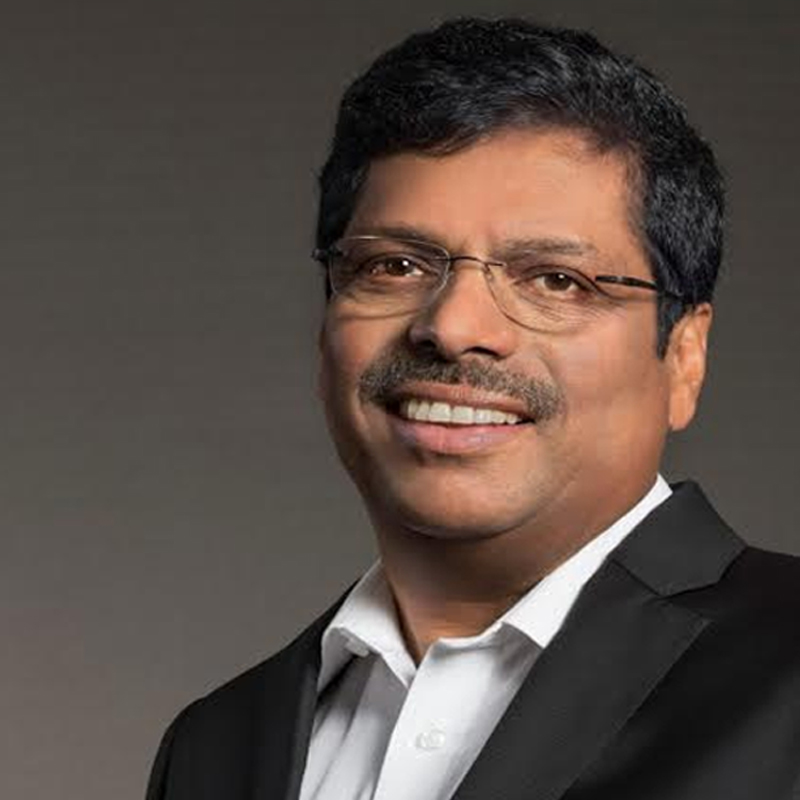
    Mumbai:  The Confederation of Indian Industry (CII) has recently onboarded Ampersand group CEO Vinesh Menon, as the co-chairperson of its National School Education Committee. The move further underscores CII’s commitment to adding value to the all-important K12 sector. The committee also has many renowned thought leaders who represent well known schools and pre-schools in India.  On boarding Menon will enable CII to harness his vast wealth of knowledge and experience in the education sector both within the private and government domains.

    It is expected that as co-chair, Menon will make a significant contribution to CII and be a catalyst to drive impactful initiatives to transform education delivery in the country.

    As the CEO of Ampersand Group, Menon has been instrumental in establishing strategic alliances with government bodies to enhance the quality of school & pre-school education along with skill development initiatives and healthcare solutions. His accomplishments include the successful implementation of many government-backed programs including technology integration into government schools, enablement of Day Care centres for construction labourer’s children under age six who are unable to go to Anganwadi, setting up of Astronomy labs in government schools etc. Menon’s commitment to social impact extends beyond education to the healthcare sector, where he has recently launched emergency medical response platforms for livestock in collaboration with the Department of Animal Husbandry & Veterinary Services. His unwavering dedication to making a difference in various aspects of society is a testament to the vision set by the AMPERSAND group founder chairman Rustom Kerawalla.

    “I am humbled, honoured and excited to be on boarded into the role of Co-Chairperson at CII to contribute to the recently set up National School Education Committee. I do believe that the education process in India is at an inflection point and bodies like CII which is already influencing India’s economic growth through industry participation can make a huge difference in influencing the much needed learning & education transformation that is so vital for the country’s development & citizen livelihood. This is an incredible opportunity to leverage my experience and passion to work with CII secretariat and the members National School Education initiative of CII and contribute to shaping a brighter future for social impact, innovation, and sustainable growth for the nation,” commented Menon.

  • Apurva Chandra talks about credibility of social media, RPD and direct-to-broadcast: CII The Big Picture Summit 2022

    Apurva Chandra talks about credibility of social media, RPD and direct-to-broadcast: CII The Big Picture Summit 2022

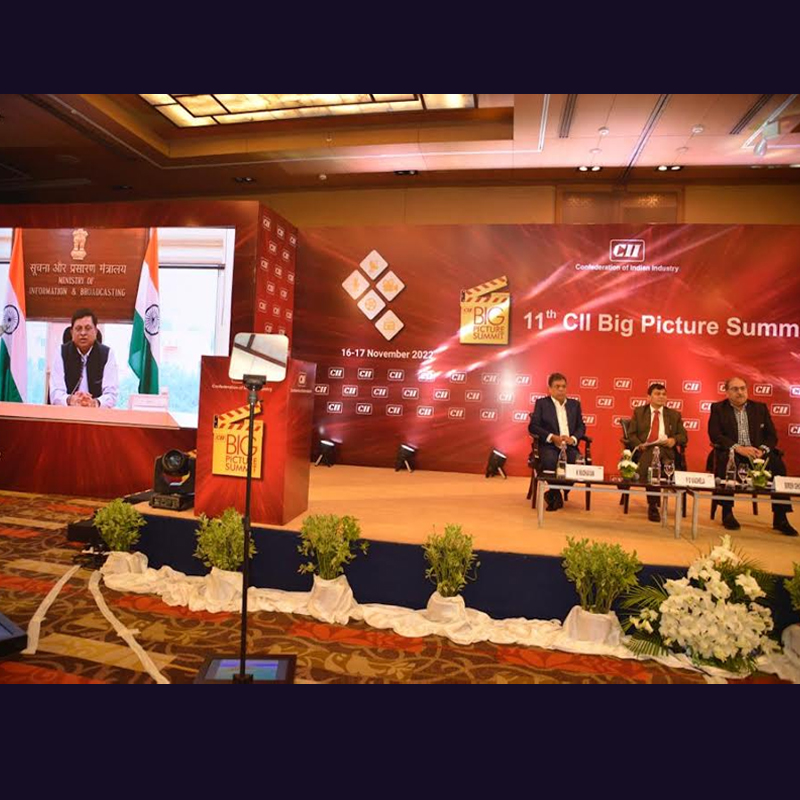
    Mumbai: At the Big Picture Summit organised by the Confederation of Indian Industry (CII) on 16 & 17 November, among the many dignitaries that were in attendance and spoke on various topics, the ministry of information & broadcasting (MIB) secretary Apurva Chandra was also present.

    On his recent visit to the Global Media Congress in Abu Dhabi, he made some observations and spoke about the same. He raised his concern (as well as the concern of many) with regard to the fact that the use of social media is on the rise and traditional media is on the decline.

    “The use of social media is increasing – that is how the consumption of media now takes place. And within that too, there is the short video format, which has become more popular. In fact, I was surprised to learn that youngsters now turn to TikTok for search and not Google anymore – TikTok has now become a more popular search engine as compared to Google because nowadays short videos are available for anything and everything,” he stated.

    Chandra elucidated that now there is an issue of credibility. “For people of our age, the credibility of the media is paramount. Achieving credibility in social media will be the challenge. The media authorities will also have to consider that viewers’ tastes are changing towards shorter and shorter versions.”

    He went on to reveal that the next big thing that MIB is working on is direct-to-mobile broadcast. A pilot study by IIT Kanpur and Sankhya Labs on direct-to-mobile broadcasting that had been undertaken in Bengaluru has been successful; a similar pilot study will be launched soon in Noida or someplace near Delhi.

    He added, “There are 20 crore households, 60 crore smartphone users, and 80 crore broadband users. Once we start direct-to-mobile broadcasting, the reach of the TV media would be much higher.”

    Additionally, Chandra mentioned that they are also working on the issue of TRP ratings.

    “The reverse path data (RPD) pilot has also been successful; the report has been submitted. We will now take it forward on integrating more and more RPD. The major concern was that the number of households involved in Barc ratings is very low and it should be increased. Once RPD is implemented, the TRP will become much larger,” he assured.

  • Boosting local market manufacturing will help the Indian M&E industry to become a supplier to the world: CII Big Picture Summit 2022

    Boosting local market manufacturing will help the Indian M&E industry to become a supplier to the world: CII Big Picture Summit 2022

    Mumbai: The 11th edition of the Big Picture Summit 2022, organised by the Confederation of Indian Industry (CII), is a two-day event that is taking place on 16-17 November. The Summit witnessed the participation of various eminent panellists and marked the release of the CII-BCG report on “Shaping the Future of Indian M&E” and the CII-IBDF-KPMG report on “Sports Broadcasting in India.”

    CII Big Picture Summit 2022, with a range of sessions, has participation from content creators, broadcasters, buyers, studios, production companies, publishers, distributors, and developers across the gamut of the Media & Entertainment (M&E) landscape.

    On 16 November, the first day of the event, discussions centred around global trends and opportunities, the bounce-back of revenues to pre-pandemic levels, domestic consumer preferences, and local opportunities for a global audience through digital platforms that have never existed before, especially for the creative industry, storytellers, and technology providers.

    Speaking at the event, the ministry of information and broadcasting (MIB) secretary Apurva Chandra, stated that MIB, along with the Indian M&E industry, has set a goal of making the M&E sector a $100 billion industry by 2030. Chandra acknowledged the announcement by the ministry on the incentive policy for cinema at the Cannes Film Festival this year, out of which many proposals have been accepted for foreign productions in India.

    He further revealed, “The animation, visual graphics, gaming, and comics (AVGC) taskforce, which was launched as a part of the budget 2022, has completed its deliberations and is in the process of finalisation. The government will soon work towards actioning on the recommendations that come out of the report.” As regards the broadcasting sector, Chandra stated that the ministry has recently revised the guidelines for uplinking and downlinking for satellite television channels in India to ease the burden of compliance on channels.

    Telecom Regulatory Authority of India (Trai) chairman Dr. P.D. Vaghela highlighted the significance of the Indian M&E sector in the national growth story and economic prosperity. With about half of the population being young, the Indian demographic dividend presents a huge opportunity for Indian M&E services. Television is the largest and fastest-growing segment, representing around 50 per cent of the total media and entertainment revenue.

    He added that during the last decade, the M&E sector in the country has undergone several radical changes and is experiencing a paradigm shift due to the advancement of technologies and innovations in the creation, distribution, and consumption of media. He stressed that the traditional media would lose ground unless it understands, adopts, and merges its own business models with society 5.0, AI, machine learning, and other technologies that are being unleashed. Vaghela further mentioned, “The government needs to come out with policies that are flexible in nature and allow new players to easily enter the industry while at the same time not strangling the traditional sector with numerous regulations.”

    MIB joint secretary Sanjiv Shankar mentioned the various efforts made by the ministry in the recent past to ensure significant interventions in the regulatory framework, largely based on ease of doing business, Atmanirbhar Bharat, and Make in India. He stressed on the Broadcast Seva portal, which offers a single point facility to various stakeholders and applicants to apply for various permissions, registrations, licences, etc., for the development and integration of the broadcast industry.

    CII National Committee on media & entertainment chairman and Disney Star country manager & president K Madhavan, in his opening remarks commended CII for bringing together key stakeholders and policy makers together to discuss the future of India’s M&E industry and its potential in shaping societies. The M&E sector in India is underpenetrated, with a contribution of 0.9 per cent to the GDP compared to 3-4 per cent for many developed countries.

    He further advocated the potential for growth for the industry, owing to the presence of 300 million households in India, of which about 100 million households still have no access to television headsets. He further urged for timely support by policymakers in the areas of privacy, ensuring a supportive IPR protection measure, and announcing content-related policies while taking note of changing consumer habits and helping the industry to reinvent itself and adapt to creating travelable content.

    CII National Committee on media & entertainment chair & CII sub committee for AVGC & Immersive Media – vice chairman, and Technicolor India country head Biren Ghose in his closing remarks mentioned about the need to evolve in the ways content is being created and urged the stakeholders to look at growth from a different lens, particularly away from a linear vertical growth. Moreover, he mentioned fostering collaboration between government, industry, and academia for the continued growth of the M&E sector.

    Furthermore, Trai advisor Anil Bharadwaj said that while Trai is trying to enable a positive, consultative-based, industry-friendly approach with regards to the new tariff order (NTO), the industry needs to focus on building capacities and centres of excellence.

    CII has been driving several initiatives to take the Indian M&E sector to new heights and expand its global footprint in close collaboration with MIB. These include representing the Indian film and entertainment industries at the prestigious Cannes Film Market for the past 20 years, at the Berlin Film Festival for the past five years, and at the Toronto Film Festival for the past three years. CII’s strength in policy advocacy is acknowledged and accepted by both the government and media industries.
  • AVGC fastest-growing sector in South Indian M&E industry; TV leads by share: CII

    AVGC fastest-growing sector in South Indian M&E industry; TV leads by share: CII

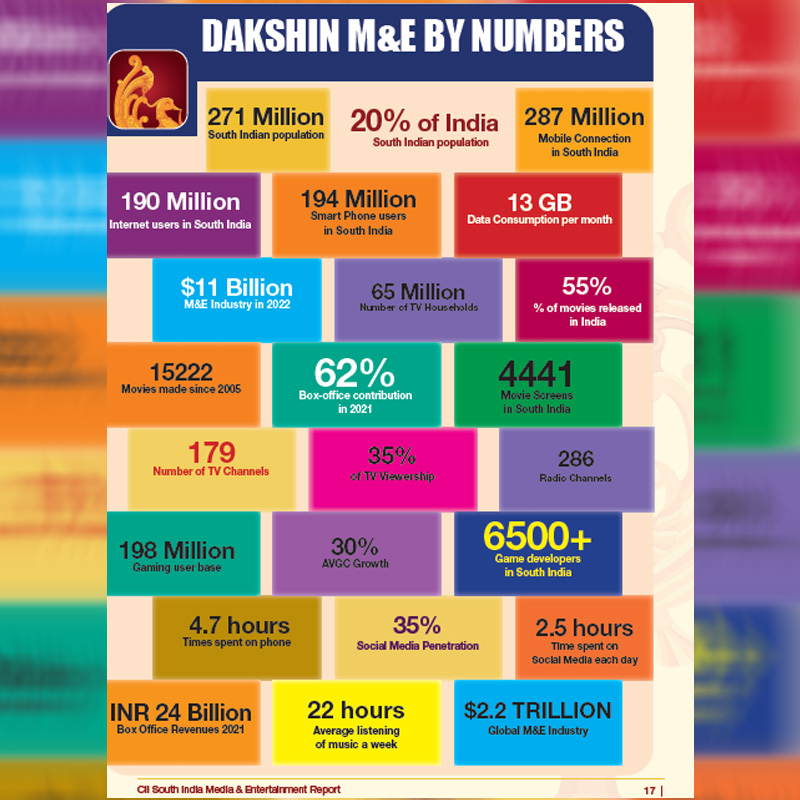
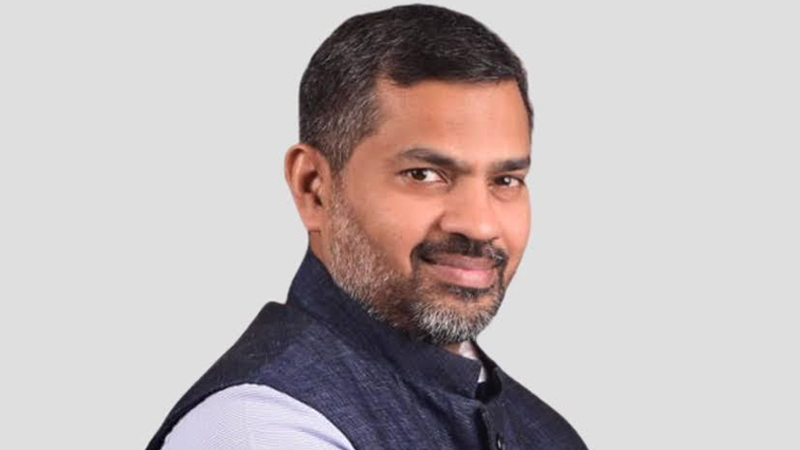
    Mumbai: The South Indian media and entertainment (M&E) sector, with a market value of around Rs 70,000 crore and a share of 40 per cent, will play a critical role in assisting India to follow a sustainable path to becoming the world’s largest credible marketplace, with M&E contributing two to three per cent to the country’s GDP. The findings were revealed in the CII Southern Region’s report titled ‘Regional is the New National – Way Forward for the South Indian Media & Entertainment Industry.’

    Television continues to occupy a major 45 per cent of the South India M&E market share. By the end of 2022, it is expected to be worth Rs 33,100 crore, with a 10 per cent compound annual growth rate. The south Indian TV sector had a market size of Rs 36,000 crore in 2019, which dropped to Rs 29,000 crore in 2020 because of the Covid-19 epidemic, but recovered to Rs 30,100 crore in 2021. It is expected to grow even more in the coming years, reaching Ra 33,100 crore in 2022 and surpassing 2019 by 2024.

    Subscriptions continue to be the most lucrative source of revenue for television, followed by advertising and programming. According to industry estimates, TV stations in South India earned Rs 25,200 crore in subscriptions, Rs 9,360 crore in advertising, and Rs 1,440 crore in programming in 2019. Due to the pandemic’s impact, these figures fell in 2020 to Rs 20,300 crore for subscriptions, Rs 7,540 crore for advertising, and Rs 1,160 crore for content-based revenue.

    AVGC is the fastest growing sector in the South Indian M&E industry, with a CAGR of 30 per cent. It is expected to account for up to 10 per cent of the overall M&E sector by 2030. The budget allocation for VFX in high-budget films is expected to rise to 30-35 per cent by 2023, up from 25-30 per cent currently.

    Establishment of a state-of-the-art 30,000 Sq ft Centre of Excellence in Whitefield, Bengaluru, and the construction of Image Towers in Hyderabad, which is a 600,000 square feet dedicated space for the AVGC-XR sector, has contributed to this growth.

    More than half of the films released in the last year were in one of the four south Indian languages. The South Indian film industry has also produced some of the most successful box office hits in recent years. It is expected to be worth Rs 6050 crore by the end of 2022, with a compound annual growth rate of 13 per cent.

    Southern films have performed exceptionally well on OTT platforms, and they are among the most watched films in Indian cinema. With a compound annual growth rate of 25 per cent, the South Indian streaming and digital media market is expected to be worth Rs 16,200 crore by the end of 2022, nearly two-and-a-half times the film revenues. Disney Hotstar, Amazon Prime, Zee5, Netflix, and SonyLiv are aggressively establishing themselves in the southern states.

    The South Indian print industry market is expected to be worth Rs 9,900 crore by the end of 2022, with radio, digital, OTT, and music following close behind. Further, South India’s five states account for 286 of India’s total 1369 radio channels, accounting for a 21 per cent share of the total radio pie in India.

    “South India has continued to play an important role in the evolution of the M&E industry, owing to the popularity of vernacular content, rapid digitisation and connectivity, an evolving ecosystem, global viewership, and personalisation,” the report stated. “Tamil Nadu, Kerala, Andhra Pradesh, Telangana, and Karnataka, the five southern states, have been at the forefront of leading the transformation of India’s M&E sector.”

    “The growth story of the South Indian M&E sector, like that of the rest of India, continues to be unique and multimodal, with digital and traditional media co-existing and growing with very different underlying trends,” it added.

  • Indian M&E industry can reach $100 billion by 2030: K Madhavan

    Indian M&E industry can reach $100 billion by 2030: K Madhavan

    Mumbai: The Indian media and entertainment industry touched $19 billion in 2020 down from an expected $22 billion, but it’s poised to grow up to $100 billion by 2030, said The Walt Disney Company India and Star India, president, K Madhavan. This goal is ambitious and challenging but not impossible, he added.

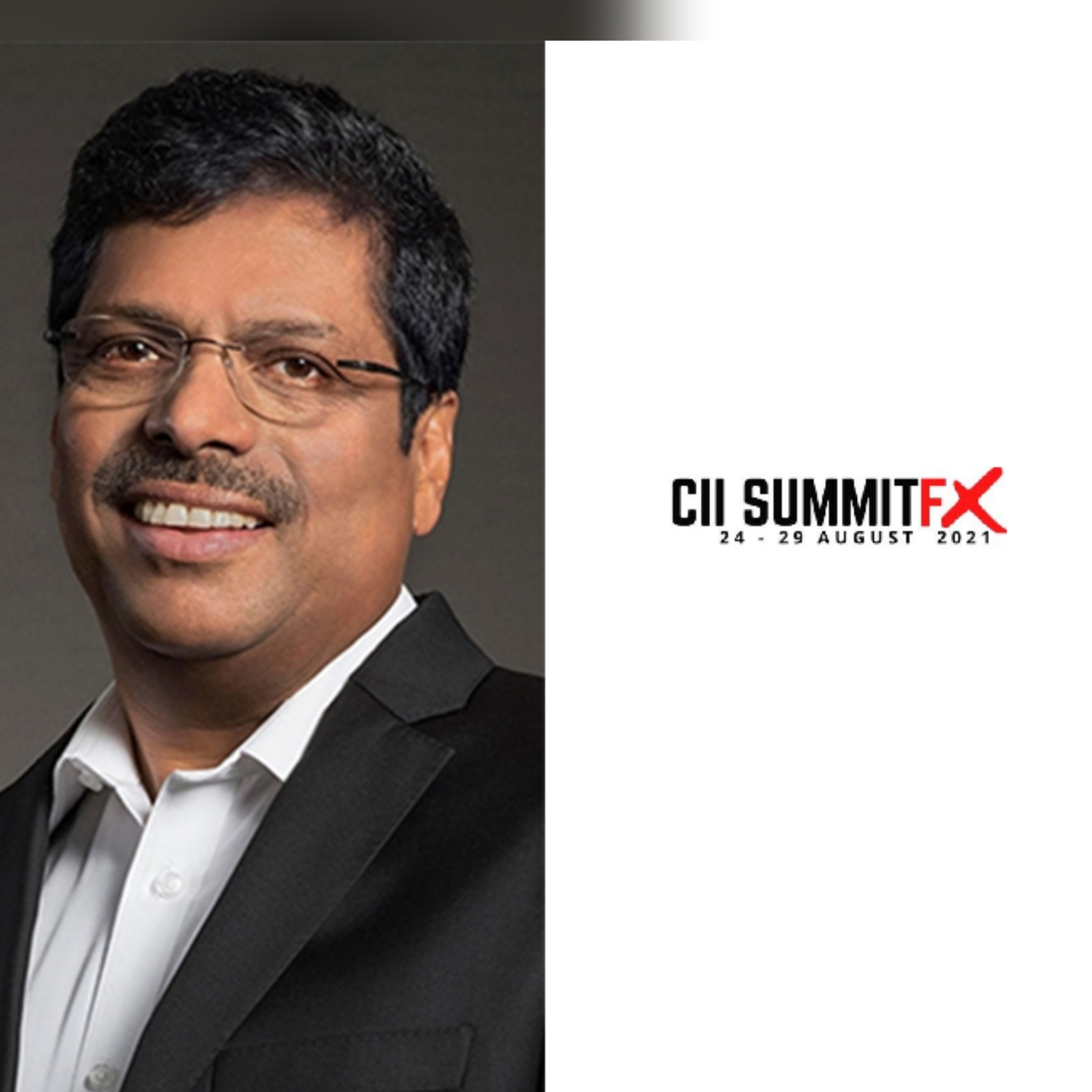
    Madhavan was speaking at the Confederation of Indian Industry (CII) SummitFX – Global AVGC and Immersive Media Summit, which began virtually on Tuesday. “The pandemic forced the M&E industry to adapt, but it is still growing and that is an encouraging sign. There have been changes in the habits of audiences, in the way content is produced and new and evolved methods of distribution”, said Madhavan, who is also the chairman of the CII National Committee on media and entertainment.

    Over 55-60 million Indians subscribed to video-on-demand services, more than doubling from the 23 million in 2019.The paid subscribers are likely to grow to 89 million by the end of 2021, and reach 150 to 160 million by the end of the decade, contended Madhavan.

    “The rise of digital subscription did not lead to a fall in TV viewing audience” he noted, adding that there are 300 million households out of which only 200 million are connected to TV. There are 120 million pay TV households.

    In a developed country, the media and entertainment industry generally contributes three per cent to the country’s GDP. In India, however, the contribution is one per cent. Also, customers in developed countries spend $7-10 for entertainment whereas in India it is less than $1. The pricing in India is very customer friendly, he noted.

    Speaking about the animation, visual effects, gaming and comics (AVGC) industry, he said, “The global market for AVGC industry is close to $260 billion and India’s share of that is less than one per cent i.e., $2.1 billion. The AVGC industry in India has the highest potential to grow and we should aim for a five per cent share of the global market with annualised growth at 25-30 per cent.”

    Similarly, the global gaming market is pegged at $160 billion worth more than music and movies combined. Online gaming in India has grown by leaps and bounds and last year there were 360 million gaming audiences and 17 million viewership of esports in India. “The gaming and esports industry are still in infancy and need freedom to grow without conflicting regulation. The Indian AVGC industry can be a global success story for India, the same as the IT revolution,” said Madhavan. “The emerging esports landscape is projected to grow at 36 per cent CAGR over the next few years.”

    The Star India president also charted a roadmap for India to capture five per cent of the global AVGC market. Currently, 65 per cent of India’s AVGC revenues come from exports. Madhavan emphasised that we need to create B2B opportunities in the country. Policymakers, regulators and industry must work together for ease of doing business. There should be convergence initiatives between technology and the creative sector.

    “There’s a huge demand for VFX and animation, globally and in India but we are not in a position to deliver” he said. To make this happen, job creation in this sector must increase by three to four times in the next four to five years. “We have 400,000 engineers graduating every year, but they need to be trained properly and brought into the content pipeline. There must be regional content creation and distribution hubs in Tier II and III cities.”

    “I’m sure this industry will thrive with innovation,” he summed up.

  • K Madhavan tapped as Walt Disney India & Star India president

    K Madhavan tapped as Walt Disney India & Star India president

    New Delhi: K Madhavan has been named president, the Walt Disney Company India and Star India, effective immediately. He takes on the mantle from Uday Shankar, who stepped down in October and exited the mouse house at the end of 2020.

    The announcement was made by The Walt Disney Company chairman international operations and direct-to-consumer Rebecca Campbell early on Wednesday.

    In this role, Madhavan will drive the strategy and growth of the company in India, with responsibility for the vast Disney, Star and Hotstar businesses and operations spanning across entertainment, sports and regional channels, and direct-to-consumer. This includes oversight of channel distribution and advertising sales, as well as a thriving local content production business which currently is responsible for the creation of 18,000 hours of original content across fiction, non-fiction, sports, and movies in eight languages.

    “For the past several months, I have had the pleasure of working directly with KM and have seen first-hand how he has adeptly managed our India business, which has been and will continue to be critical to our global and regional strategy,” said Campbell. “A skilled leader with an extensive background in media, KM has taken our vast Star networks and local content production businesses to new heights despite continued industry evolution and significant challenges due to the pandemic.”   

    “I am very proud to have the opportunity to lead the incredibly talented and passionate team we have in India, and to further build upon our strong portfolio of channels and high-quality programming that is a favourite with viewers across the region,” said Madhavan. “We have an exciting journey ahead of us. I am committed to continuing to move our business forward, working more closely together with colleagues across Disney to enhance our global and regional offerings.”

    Since 2019, Madhavan served as country manager of Star & Disney India, overseeing the media conglomerate’s television and studios business in India. He has been responsible for driving the growth of the business, focusing on innovation, and creating compelling content for consumers. 

    Madhavan joined Star India in 2009 as its south head. Under his leadership, the company built a thriving regional entertainment portfolio. Previously, he was the driving force behind Asianet’s growth as the undisputed leader in Malayalam with more than 50 per cent of market share, serving as MD and CEO in 2000-2008. Madhavan’s vision for the regional language network led the company to set benchmarks in quality programming in south India. Prior to his media career, he was in the banking and corporate finance sector. 

    Madhavan currently serves as president of the Indian Broadcasting Foundation (IBF) and as chairman of the National Committee of Media & Entertainment CII (Confederation of Indian Industry).  

  • CNBC-TV18 & CII conducts CEO poll on lockdown

    CNBC-TV18 & CII conducts CEO poll on lockdown

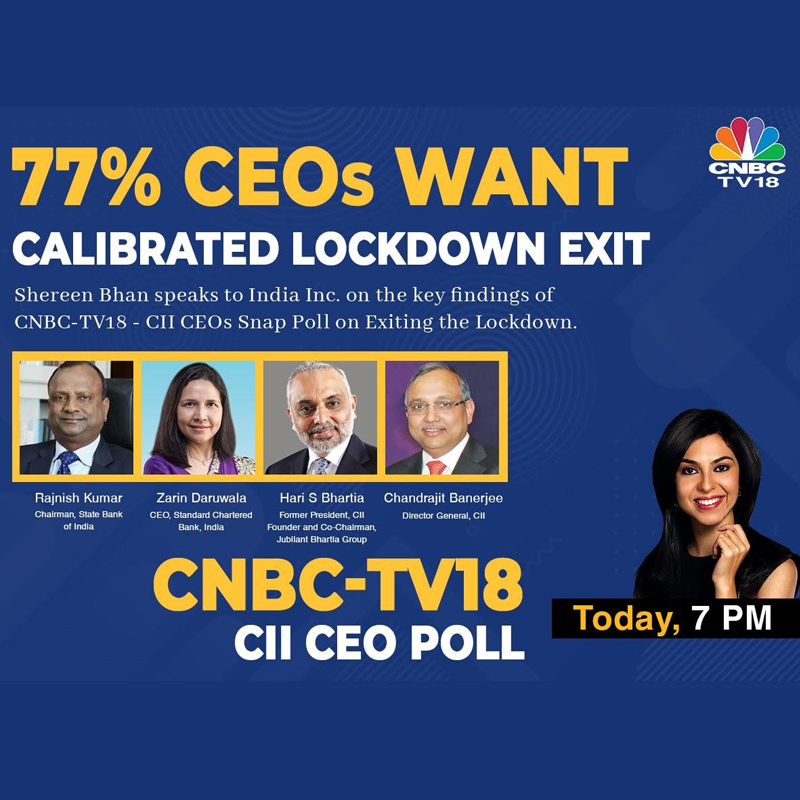
    MUMBAI: CNBC-TV18, in association with Confederation of Indian Industry, conducted the CNBCTV18-CII CEO poll that surveyed 250 of the country’s leading CEOs amid lockdown.

    The extensive survey, touted as India Inc.’s biggest survey poll on the lockdown, deep dived into the post-lockdown actions from some of the biggest names of India Inc. The survey provided a clear picture regarding multiple areas that concern the Indian economy and business operations at large.

    The show revealing the findings of the survey was hosted by CNBC-TV18 managing editor Shereen Bhan. Along with her, four industry bigwigs discussed the findings of the poll and presented their opinions and key analysis.

    The special show featured the likes of State Bank of India chairman Rajnish Kumar, Standard Chartered Bank India CEO Zarin Daruwala, Jubilant Bhartia Group founder and co-chairman Hari S Bhartia, and CII director general Chandrajit Banerjee offering their respective views on discoveries of the poll, thereby commenting on the challenges and opportunities that lie ahead for the nation.

    The comprehensive survey encompassed 15 questions asked to 250 CEOs across various sectors. The findings revealed that 76.8 per cent of head honchos felt that it is time to move to a calibrated exit from the national lockdown whereas 85.9 per cent believed that a graded exit will be beneficial.

    Even as several companies have started to lay off their staff and imposed salary cuts, 71.2 per cent still opined that layoffs are not imminent in their organizations;  however with 34.1 per cent leaning towards looming wage cuts.

    Asked as to when businesses will return to normal, 54.4 per cent said they expected operations to resume anywhere between six months to a year, while 29.2 per cent opined it could take more than a year.

    While 33.5 per cent felt that the recovery will look convoluted, 28.6 per cent said it will recover with a positive trajectory; however 25 per cent expected a very minimum recovery. Overall, one of the major findings of the poll indicated that about 50.6 per cent of India’s CEOs expect their company’s top line to fall by more than 25 per cent in this FY.

    With the nationwide lockdown being extended for another two weeks, the movement of people as well as the economy continues to face severe limitations and restrictions.