Tag: conditional access system

  • TRAI expects stakeholders to work towards infrastructure sharing

    TRAI expects stakeholders to work towards infrastructure sharing

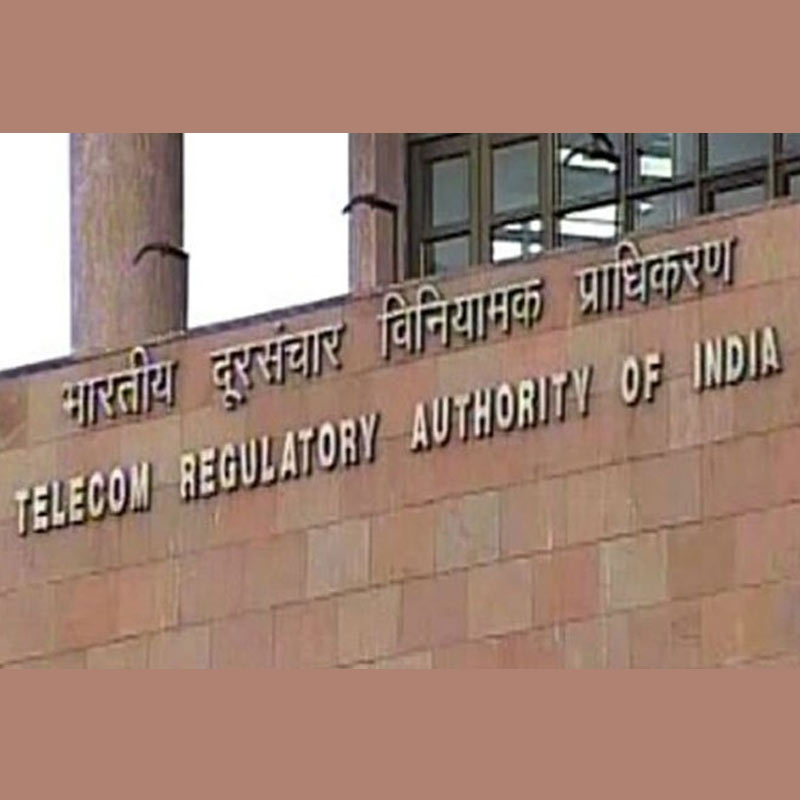
    NEW DELHI: India is witnessing a huge growth in the television sector and is on the threshold of complete digitization. The Telecom Regulatory Authority of India has asked stakeholders as to whether they feel the need for infrastructure sharing – irrespective of whether it is cable TV and HITS operators, DTH operators, or CAS and SMS. 

    Stakeholders have been asked to send in their comment by 21 October, 2016, with counter-comments on 4 November 2016. At the outset, TRAI says the country now has 864 private television channels apart from six private DTH players and two HITS players and a large number of MSOs and LCOs and infrastructure sharing may help the industry to grow. 

    “There appears to be a distinct possibility for sharing of distribution infrastructure among multiple DPOs for its optimal utilization. It may result in reduction in capital expenditure and operating expenditure for distributors,” says the regulator.

    Infrastructure includes satellite transponder, earth station, Head-end, Hybrid Fibre Coaxial (HFC) network, conditional access system (CAS) and subscriber management system (SMS) used for delivery of the TV broadcasting services to the subscribers.

    Each multi-channel distribution platform retransmits large number of satellite TV channels. Of these large number of satellite TV channels retransmitted by each operator, many are common across the distribution platforms in a relevant market. Therefore, retransmission of such common channels independently on each distribution platform ends up duplicating the infrastructure.

    In the light of this, TRAI has asked the stakeholders to consider certain points:

    Infrastructure sharing among Cable TV and HITS operators

    (1) Is there a need to enable infrastructure sharing among MSOs and HITS operators, or among MSOs? It is important to note that no mandate for such infrastructure sharing is being proposed.

    (2) Which model is preferred for sharing of infrastructure among MSOs and HITS operators, or among MSOs?

    Infrastructure sharing among DTH operators

    (3) Is there a need to enable infrastructure sharing among DTH operators?

    Relevant issues in sharing of infrastructure

    (4) What specific amendments are required in the cable TV Act and the Rules made there under to enable sharing of infrastructure among MSOs themselves?  

    (5) What specific amendments are required in the MSO registration conditions and HITS licensing guidelines in order to enable sharing of infrastructure among MSOs and HITS operators? 

    (6) What specific amendments are required in the guidelines for obtaining license for providing DTH broadcasting service to enable sharing of infrastructure among DTH operators? 

     (7) Do you envisage any requirement for amendment in the policy framework for satellite communication in India to enable sharing of infrastructure among MSOs and HITS operators, and among DTH operators? If yes, then what specific amendments would be required? 

    (8) Do you envisage any requirement for amendments in the NOCC guidelines and WPC license conditions relating to satellite communications to enable sharing of infrastructure among MSOs and HITS operators, and among DTH operators? If yes, then what specific amendments would be required?

    (9) Do you envisage any requirement for amendments in any other policy guidelines to enable sharing of infrastructure among MSOs and HITS operators, among MSOs, and among DTH operators?

     (10) What mechanisms could be put in place for disconnection of signals of TV channels of defaulting operator without affecting the operations of the other associated operators with that network after implementation of sharing of infrastructure among MSOs and HITS operators, among MSOs, and among DTH operators?

    (11) Is there any requirement for tripartite agreement to enable sharing of infrastructure among MSOs and HITS operators, among MSOs, and among DTH operators? Kindly elucidate with justification.

    (12) What techniques could be put in place for identification of pirates after implementation of sharing of infrastructure among MSOs and HITS operators, among MSOs, and among DTH operators?

    (13) Is there any need for further strengthening of anti-piracy measures already in place to enable sharing of infrastructure among MSOs and HITS operators, among MSOs, and among DTH operators?

    (14) Is there a requirement to ensure geographically targeted advertisements in the distribution networks? If yes, then what could be the possible methods for enabling geographically targeted advertisements in shared infrastructure set up?

    (15) Whether it is possible for the network operator to run the scrolls and logo on the specific STBs population on request of either the broadcaster or the service delivery operator after implementation of sharing of infrastructure among MSOs and HITS operators, among MSOs, and among DTH operators?

    (16) Whether implementation of infrastructure sharing affects the differentiation and personalization of the TV broadcasting services and EPG? If yes, then how those constraints can be addressed?

    (17) Whether, in your opinion, satellite capacity is a limiting factor for sharing of infrastructure? If yes, then what could be the solutions to address the issue?

    Sharing of CAS and SMS

    (18) Is there a need to permit sharing of SMS and CAS? 

     (19) If yes, then what additional measures need to taken to ensure that SMS data remain accessible to the tax assessment authorities and Authorized officers as defined in the Cable TV Act for the purpose of monitoring the compliance with relevant the Rules and the Regulations?

    (20) Whether sharing of CAS can in any way compromise the requirement of encryption as envisaged in the Cable TV Act and The rules and the regulations. 

  • TRAI expects stakeholders to work towards infrastructure sharing

    TRAI expects stakeholders to work towards infrastructure sharing

    NEW DELHI: India is witnessing a huge growth in the television sector and is on the threshold of complete digitization. The Telecom Regulatory Authority of India has asked stakeholders as to whether they feel the need for infrastructure sharing – irrespective of whether it is cable TV and HITS operators, DTH operators, or CAS and SMS. 

    Stakeholders have been asked to send in their comment by 21 October, 2016, with counter-comments on 4 November 2016. At the outset, TRAI says the country now has 864 private television channels apart from six private DTH players and two HITS players and a large number of MSOs and LCOs and infrastructure sharing may help the industry to grow. 

    “There appears to be a distinct possibility for sharing of distribution infrastructure among multiple DPOs for its optimal utilization. It may result in reduction in capital expenditure and operating expenditure for distributors,” says the regulator.

    Infrastructure includes satellite transponder, earth station, Head-end, Hybrid Fibre Coaxial (HFC) network, conditional access system (CAS) and subscriber management system (SMS) used for delivery of the TV broadcasting services to the subscribers.

    Each multi-channel distribution platform retransmits large number of satellite TV channels. Of these large number of satellite TV channels retransmitted by each operator, many are common across the distribution platforms in a relevant market. Therefore, retransmission of such common channels independently on each distribution platform ends up duplicating the infrastructure.

    In the light of this, TRAI has asked the stakeholders to consider certain points:

    Infrastructure sharing among Cable TV and HITS operators

    (1) Is there a need to enable infrastructure sharing among MSOs and HITS operators, or among MSOs? It is important to note that no mandate for such infrastructure sharing is being proposed.

    (2) Which model is preferred for sharing of infrastructure among MSOs and HITS operators, or among MSOs?

    Infrastructure sharing among DTH operators

    (3) Is there a need to enable infrastructure sharing among DTH operators?

    Relevant issues in sharing of infrastructure

    (4) What specific amendments are required in the cable TV Act and the Rules made there under to enable sharing of infrastructure among MSOs themselves?  

    (5) What specific amendments are required in the MSO registration conditions and HITS licensing guidelines in order to enable sharing of infrastructure among MSOs and HITS operators? 

    (6) What specific amendments are required in the guidelines for obtaining license for providing DTH broadcasting service to enable sharing of infrastructure among DTH operators? 

     (7) Do you envisage any requirement for amendment in the policy framework for satellite communication in India to enable sharing of infrastructure among MSOs and HITS operators, and among DTH operators? If yes, then what specific amendments would be required? 

    (8) Do you envisage any requirement for amendments in the NOCC guidelines and WPC license conditions relating to satellite communications to enable sharing of infrastructure among MSOs and HITS operators, and among DTH operators? If yes, then what specific amendments would be required?

    (9) Do you envisage any requirement for amendments in any other policy guidelines to enable sharing of infrastructure among MSOs and HITS operators, among MSOs, and among DTH operators?

     (10) What mechanisms could be put in place for disconnection of signals of TV channels of defaulting operator without affecting the operations of the other associated operators with that network after implementation of sharing of infrastructure among MSOs and HITS operators, among MSOs, and among DTH operators?

    (11) Is there any requirement for tripartite agreement to enable sharing of infrastructure among MSOs and HITS operators, among MSOs, and among DTH operators? Kindly elucidate with justification.

    (12) What techniques could be put in place for identification of pirates after implementation of sharing of infrastructure among MSOs and HITS operators, among MSOs, and among DTH operators?

    (13) Is there any need for further strengthening of anti-piracy measures already in place to enable sharing of infrastructure among MSOs and HITS operators, among MSOs, and among DTH operators?

    (14) Is there a requirement to ensure geographically targeted advertisements in the distribution networks? If yes, then what could be the possible methods for enabling geographically targeted advertisements in shared infrastructure set up?

    (15) Whether it is possible for the network operator to run the scrolls and logo on the specific STBs population on request of either the broadcaster or the service delivery operator after implementation of sharing of infrastructure among MSOs and HITS operators, among MSOs, and among DTH operators?

    (16) Whether implementation of infrastructure sharing affects the differentiation and personalization of the TV broadcasting services and EPG? If yes, then how those constraints can be addressed?

    (17) Whether, in your opinion, satellite capacity is a limiting factor for sharing of infrastructure? If yes, then what could be the solutions to address the issue?

    Sharing of CAS and SMS

    (18) Is there a need to permit sharing of SMS and CAS? 

     (19) If yes, then what additional measures need to taken to ensure that SMS data remain accessible to the tax assessment authorities and Authorized officers as defined in the Cable TV Act for the purpose of monitoring the compliance with relevant the Rules and the Regulations?

    (20) Whether sharing of CAS can in any way compromise the requirement of encryption as envisaged in the Cable TV Act and The rules and the regulations. 

  • Freedish & FM-ization’s slow development will hurt Prasar Bharati’s growth: Parliamentary Committee

    Freedish & FM-ization’s slow development will hurt Prasar Bharati’s growth: Parliamentary Committee

    NEW DELHI: Noting that it had asked the Government to expedite the Freedish Project and make necessary efforts to complete all procedural formalities in this regard, a Parliamentary Committee has expressed concern that the implementation of Conditional Access System (CAS) has been held up due to the inordinate delay in firming up a vendor.

    For Doordarshan to realise the benefits of upgradation and expansion, Prasar Bharati had taken initiatives to enhance the subscriber base and publicity of DD Freedish DTH platform along with providing a dedicated customer service division and a 24×7 call/help centre.

    The Parliamentary Standing Committee for Information Technology, which reviews issues related to Information and Broadcasting Ministry said in a report laid in the Parliament that all these initiatives will not yield the desired benefit unless the DD Freedish initiative is expedited by fast tracking the implementation of CAS.

    As providing Freedish is crucial to enhance competitiveness of Doordarshan vis-a-vis the private TV channels, the Committee in its Action Taken Report said, “It is highly imperative that the procedural hurdles with regard to CAS need to be removed.”

    The Committee, therefore, stressed that Prasar Bharati needed to complete all the procedural formalities for expeditious execution of the Freedish project.

    Similarly, with regard to FM-ization, the Committee had recommended that Prasar Bharati formulate a comprehensive plan on FM-ization at the earliest for seeking Cabinet approval.

    But the Committee, which was suggesting a roadmap for revival of Prasar Bharati said it was “perturbed to note that no action has been initiated so far by the Prasar Bharati to prepare a comprehensive proposal. As FM-ization needs enhanced Plan allocation under the 12th Plan and the proposal can be approved at the time of revision of the 12th Plan before sending the final proposal for approval of CCEA, the Committee urged that Prasar Bharati take urgent steps for preparation of a comprehensive proposal for FM-ization without any further delay.”

    In its original report, the Committee had said, “The Committee recognises that the idea of providing Freedish and progressive FM-ization can play a vital role in shaping the future roadmap for the revival of Prasar Bharati. As part of its FreeDish endeavour, Doordarshan has upgraded the technical infrastructure of DD FreeDish DTH platform and is presently providing free to air 64 SDTV channels in MPEG-2DVB-S. The technical infrastructure of the remaining 48 SDTV channels has also been installed and tested. Once these channels are made CAS enabled in free-to-view mode, subscribers can view these channels with a onetime annual registration. Doordarshan is planning to commission these 48 SDTV channels in Freedish mode only after implementing the CAS Service, upgrading its platform to 112 channels. The Committee need hardly emphasize that popularization of Freedish may indeed prove to be one of the major keys which can turn around Doordarshan in a big way, especially when it is competing with private TV channels who are providing hundreds of channels to its viewers. Therefore, the Ministry should make efforts to complete all the procedural formalities so as to facilitate the expeditious execution of the Free Dish Project.”

    The Committee had also said that to bring Prasar Bharati on the revival track, it needs to move swiftly with its FM-ization initiative. On the issue of FM-ization, the Ministry has informed that it is for the Prasar Bharati to take a call on FM-ization. It had conveyed to Prasar Bharati that the issue can be addressed at the time of revision in the 12th Plan, which may be approved by the Prasar Bharati Board and the final scheme proposal may be forwarded to the Ministry for approval by CCEA. The Committee recommended that Prasar Bharati should accordingly go ahead and formulate a comprehensive proposal on FM-ization at the earliest for seeking Cabinet approval.”

    In response to its queries, the Information and Broadcasting Ministry in their Action Taken Note stated, “Prasar Bharati has informed that Upgradation/Expansion of DD Freedish platform from 59 channels to 112 channels has been partly completed by the Engineering Wing of DD. Upgradation involves introduction of CAS-enabled MPEG-4 channels in addition to the existing “unscrambled” MPEG-2 channels available to current subscribers. Four upgraded and bandwidth efficient MPEG-2 streams have already been enabled with 64 channels. Two MPEG-4 streams capable of carrying 48 SD channels are also being uplinked, but cannot be received by viewers due to non-implementation of CAS. Implementation of CAS has been held up due to inordinate delay in firming up a CAS vendor due to concerns raised with regard to the process adopted to identify a CAS vendor and one of the shortlisted entities, it has been decided to issue a fresh tender to identify the CAS vendor.

    Once implemented, the CAS enabled MPEG-4 streams will open new opportunities for offering Value Added Services (VAS) such as EPG, home channels, overlay of advertisements, and similar other consumer oriented and revenue-generating services. It will also enable DD arrive at a precise estimate of Free Dish subscriber base, on the basis of which it will be able to demand higher carriage fees on its platform. For DD to realize the benefits of Upgradation/Expansion, DD Free Dish has to be supported by an active publicity, sales and support wing, which will help expand the subscriber base and make it the most popular DTH platform. This has to be supported by a dedicated customer service division, along with a 24×7 call/help centre. Both these efforts have been initiated by Prasar Bharati.”

    The Ministry also noted that Prasar Bharati had further informed that Radio Iistenership has moved over to FM Radio because of superior stereo quality and variety of 10 programming. In addition, availability of FM Radio on mobile phones has further enhanced its popularity. AIR FM Radio presently covers only 45 per cent of population. Cost of ensuring FM across entire nation is Rs 3000 crore (approx). This would require enhanced Plan allocation, mid term 12th plan review and generation of new resources. The Ministry has already communicated to Prasar Bharati that any revisions in the approved Plan Scheme will have to be taken up with CCEA after such proposals for revisions are furnished to the Ministry with due approval of Prasar Bharati Board.

  • DD Freedish set to beam up to 250 channels under 12th Plan

    DD Freedish set to beam up to 250 channels under 12th Plan

    NEW DELHI: Doordarshan’s free-to-air (FTA) direct-to-home (DTH) Freedish, which currently has only 64 slots for television channels and is expected to go up to 112 by March-end, has received a shot in the arm for upgradation to 250 TV channels under the 12th Plan.

    Information and Broadcasting Minister Arun Jaitley told Parliament that the Department of Space had agreed in principle to provide additional transponders on new GSAT 15 satellite required for 250 TV channels

    Meanwhile, he said that DD was facing issues in implementing Conditional Access System (CAS), which is a part of upgraded system. But it had now decided to adopt Indian Conditional Access System (Indian CAS), which is being finalised by Department of Electronics and Information Technology. As was reported earlier by Indiantelevision.com, DD is acquiring the Bangalore based ByDesign India’s CAS.

    Late last year, the Department of Electronics and Information Technology (DeitY) approved a proposal by ByDesign India to develop an Indian conditional access system. ByDesign was to receive a support amount of Rs 19.79 crore from DeitY to develop the new system in association with Centre for Development of Advanced Computing (C-DAC).

    The ByDesign model is totally indigenous and built for DVB-C setup. This CAS solution will enable broadcasters to control access to their services by viewers, and thereby enabling them to extend their business models to subscription based schemes. 

    Apart from the TV channels, Freedish also beams 21 All India Radio (AIR) channels. 

    DD director general C Lalrosanga had earlier told Indiantelevision.com that the DTH player will switch over to MPEG 4 from the current MPEG 2 in two phases. “The first phase may begin by early next month,” he informed.

    Meanwhile even as regional channels of DD switched over to INSAT 4B, DD’s main channels have also shifted to GSAT 10, which was launched in September 2012. The regional channels were shifted in view of End of Life (EOL) of INSAT-3A as declared by Indian Space Research Organisation. Four new transponders have been provided for these channels on INSAT-4B by ISRO. 

    It has 12 Ku-Band, 12 C-Band and 6 lower extended C-Band Transponders. 

    Now GSAT 10 started transmission on C-Band transponders.

    The channels that have been switched to GSAT 10 are DD National, DD News, DD Bharati, DD Sports, DD Urdu, DD India, Rajya Sabha TV and DD HD.


    Department of Space sources told this website that GSAT 15 satellite will ultimately accommodate Freedish, as it has more capacity of transponders to provide more bandwidth and better coverage. 

    GSAT-15 satellite, launched recently, has planned its mission for 12 years and this satellite will be located at same direction of INSAT-3A / INSAT-4B satellite at 93.5° East Longitude.

    GSAT-15 carries 24 Ku-band transponders with 36 Mhz high bandwidth.

    GSAT-15 also has two GAGAN navigational payloads and 2 Ku-Band beacons. This satellite will be use mainly for Direct to Home services, radio navigation services and VSAT services.

  • BECIL to audit Mumbai’s Home Systems, Star directed not to disconnect signals: TDSAT

    BECIL to audit Mumbai’s Home Systems, Star directed not to disconnect signals: TDSAT

    NEW DELHI: The Broadcasting Engineering Consultants (India) Ltd (BECIL) has been directed to examine the headend of Mumbai’s Home Systems Pvt Ltd following a petition filed by it against Star India.


    Telecom Disputes Settlement and Arbitration Tribunal (TDSAT) chairman Aftab Alam and members Kuldip Singh and B B Srivastava said BECIL will find out whether the Conditional Access System (CAS) and the Subscribers Management System (SMS) at the petitioner’s headend are properly integrated on the date of the audit.


    It would also examine, on the basis of the historical data available in the system, whether the systems were properly integrated during the period April 2014 to November 2014, when the commercial audit was made by Star.


    It will be open to the Star to submit to BECIL the report of its audit and the data collected from the Home System in course of the audit. Home Systems will bear the cost of the audit.


    It is expected that the BECIL will submit its report to the Tribunal within four weeks and so the case has been listed for 6 November.


    The petition had been filed by Home Systems against a disconnection notice issued by Star India based on non-payment of dues. The dues are under two heads – one relates to the licence fee and the other relates to the demand made by Star on the basis of a commercial audit of the petitioner’s headend. The licence fee dues as shown in the notice amount to Rs 56 lakh.


    After the notice Home Systems paid a sum of Rs 27,37,690 and according to it, the licence fee dues upto 31 August amounts to Rs 26,74,536, apart from the fee for September. 


    According to Star, in course of audit it was found that at the petitioner’s headend the CAS and the SMS were not properly integrated and hence, the data generated by SNS was incorrect. Home Systems disputed this.

  • “India has a very broad market with a lot of potential, which make us more confident” – Eugene Zhang

    “India has a very broad market with a lot of potential, which make us more confident” – Eugene Zhang

    With India working towards getting into a fully digitised mode, this year’s ‘Convergence 2015’ will act as a destination where companies will showcase some of the world’s best technologies to help stakeholders achieve targets.


    One such company is China based Cloud Vision Networks Technology (CVN), which will be showcasing its Conditional Access System – JetCAS. And leading it from the front is the company’s CEO and president Eugene Zhang.


    Zhang ventured into the business in 1993, with 20 years of experience in company operation management.


    Since 1999, he was engaged in domestic TV broadcasting industry, and worked in Hong Kong DVN Holdings as the executive vice president of its subsidiary DVN, to be in charge of domestic digital television business and the management of all-service operation management including R&D, manufacture and sales of products.


    In 2010, he served in Cisco Systems as the general manager of its wholly owned subsidiary Cisco Systems (Shanghai) Video Technology in China, to be in charge of the R&D, manufacture and sales of cable television products in China.


    It was in 2012, when Zhang resigned from Cisco System and started his own business; after successfully raising funds from Fosun Capital Investment, he founded Cloud Vision Networks Technology (CVN).


    As he gears for the big day, Indiantelevision.com’s Seema Singh talks to him about his plans for India, the products on display and more…


    Excerpts:


    What products and services are you exhibiting in Convergence? Can you elaborate on the product and its benefits?

    We are exhibiting our core product Conditional Access System – JetCAS.


    JetCAS, the fourth generation system, is a researched and developed conditional access system by Cloud Vision Networks (CVN), with independent intellectual property rights, over a decade experience on digital TV business and advanced idea on design from absorbing international advanced technology achievements.


    What are the kinds of services and solutions you offer?

    Cloud Vision Networks Technology was established on 8 February, 2012. We are engaged in product technology development, production and sales of hardware and software products, technology application services and other businesses involving broadcasting and TV networks two-way transformation and digital TV in broadcasting and TV industry.


    Are you looking at any strategic partnerships in India? If yes, can you elaborate on the same?

    We have an excellent strategic partner in India, Xperio Labs. We will work together to develop the market of Indian broadcasting industry.


    Which are the regions you are available in China? How many customers do you have in China? Which are the regions you are looking at in India?

    CVN is available in more than 17 provinces and 90 cities and about 800 towns, and also covers 120 million customers in China.


    We do not limit the regions that we are going to provide our service and products in India to.


    How would you say is your service better than those of your competition?

    Our CAS has never been commercially cracked and the security level of our smartcard is evaluated as the highest international smartcard level — EAL5+.


    We also own other advantages, such as cost, marketing, sales capability and excellent product performance, which make CVN the leading company in broadcasting and TV industry.


    How much have you already invested in the technology in China and how much further are you will to invest in China?

    CVN puts more than 30 per cent of sales amount into R&D every year, and considering our quick steady development, the investment in future can only be more.


    Are there any investment plans in the Indian market? If yes, please share details.

    CVN will plan to invest in Indian market according to the market development of Indian broadcasting industry.


    What is your manufacturing capacity in China?

    Our manufacturing capacity is more than 10 million smartcards per year.


    Can you elaborate on the kinds of solutions you provide in different sectors? How does it benefit the stakeholders?

    Multi-direction development is always an important strategy for CVN, except the main business of JetCAS, we also dabbled in other sectors, such as Downloadable CAS, DRM, OTT middleware, Public Wi-Fi and so on.


    Our stakeholders are happy and satisfied to see that the profit of company is maintaining a fast growth.


    Have you done R&D on the Indian cable TV sector? If yes, what are the findings?

    CVN has finished a basic market research through a local professional research company in India. We are glad to see India has a very broad market with potential, which make us more confident that we can achieve a win-win goal with local customers in this beautiful country.


    What is ‘JetCas’, how does it function and help the broadcasters? Do you think a product like this will be helpful to the Indian cable TV industry as well?

    JetCAS provides a total solution on open conditional access system, which is a perfect combination with cable TV, satellite TV, analogue TV and broadband networks. It provides a controlling on payable TV and media design with its comprehensive management console, 4th generation smartcard-device technologies and network access management, so as to control programme authorisation on subscribers.


    What are the similarities and differences between the Indian and Chinese broadcasting and TV industries?

    Speaking of the similarities between the Indian and Chinese broadcasting and TV industries, they both have plenty of customers and broad market.


    Since they are both developing nations, they are filled with business opportunities.


    Of course there are also a lot of differences between these two countries, such as different specifications, requirements, business models, and so on.


    CVN’s Conditional Access System (CAS) is the most advanced digital TV encryption system in China. What is your take on the Indian CAS market?

    We are providing our best product in India, which is the securest and most reliable CAS system, because we value the Indian CAS market so much.


    How will digital TV change the dynamics of the broadcasting industry in the near future?

    The development of the Internet and broadband technology is making the revolutionary changes in the radio and TV industry, digitised and networked broadcasting and television has become radio and television industry development inevitable trend.


    Digitisation can extend cable TV channels from dozen sets to hundreds sets, the extensional channel resources can provide more kinds of services for cable operators. After digitisation, cable operators can provide not only broadcast programmes but also professional and personalised programmes; not only unidirectional broadcasting but also interactive VOD; not only radio, film and television programmes but also a variety of information service.


    In short, digital TV will bring more market opportunities and business models to the broadcasting industry.

  • Trai launches ad campaign for CAS

    Trai launches ad campaign for CAS

    MUMBAI: The Telecom Regulatory Authority of India (Trai) has set the ball rolling for CAS (conditional access system).

    Not resting just on fixing the maximum rate of individual channels at Rs 5 per subscriber, the regulator has come out with an ad campaign to inform that pay broadcasters would have to provide their pricing within the ceiling by 12 October.

    “The reporting to Trai of prices of pay channels within the ceiling by broadcasters should be by 12 October,” the statement said.

    Trai has set a similar deadline for multi-system operators (MSOs) to inform the regulator about the tariff packages on their set-top boxes (STBs). The conclusion of commercial agreements by service providers should be reported to Trai by 15 Octoiber, the campaign said.

    The regulator has marked 31 December as the date for implementation of Cas.