Tag: Comnet

  • With d2h merger, Essel Group will have world’s largest subs base

    With d2h merger, Essel Group will have world’s largest subs base

    BENGALURU: The Essel group is one of the largest media and entertainment industry players in India. Its flagship company is Zee Entertainment Enterprises Limited (Zeel) that has a weightage of 45 per cent on the National Stock Exchange’s Nifty Media Index.

    Its group company, Dish TV Limited (Dish) is also is the largest DTH player in the country in terms of number of subscribers. Along with DTH services, the group also has one of the largest cable operators or multi-system operators (MSO) in Siti Networks Limited or Siti (the erstwhile Siti Cable Network Limited). Amongst the major MSOs in India, Siti is the only one that has added 1.5 million (15 lakh) subscribers over the past few quarters, while its peers have had stagnating subscriber numbers.

    On combining the number of subscribers, the two carriage industry players are already a force to reckon with – a fact that the Essel Group recognised, and will leverage. In an industry first, the two formed a content negotiating joint venture (JV) called Comnet. Both Dish and Siti are equal partners in the JV that came into existence on 1 July, 2015. As part of the JV, both companies said that they would hold joint discussions with broadcasters post which separate direct contracts between the broadcaster and distribution platform will be signed. Further, the JV’s intent is to bring together the industry on contentious taxation issues like the hike in entertainment tax in Delhi.

    Let us look at what we have on the table — Siti had 12.2 million (1.22 crore) subscribers — of which 8.4 million (84 lakh) were digital as per its Q1-17 report, and Dish has reported a subscriber base of 15.1 million (1.51 crore) – totalling 27.3 million(2.73 crore). Now the merger with Videocon d2h will bring in another 12.5 million (1.25 crore) subscribers into the Essel fold for a grand total of 39.8 million (3.98 crore), hence about 2 million (20 lakh) more than the 37.8 million (3.78 crore) subscribers reported for DIRECTV.

    Zeel’s channels have been regularly making it to the top five or 10 in the Broadcast Audience Research Council (BARC) ratings across various genres, be they Hindi general entertainment (GEC), regional channels, movies, English entertainment, etc. Another group company, Zee Media Corporation Limited (ZMCL), offers general news and business news across its television channels.

    The fact that a number of the top rated channels are Essel group companies as well as a huge slice of the Indian television subscription market is indeed huge leverage – bear in mind that the group will probably control more than 25 percent of the carriage industry in the country. And what with the sunset date for DAS phase IV nearing with no let-up in sight from the government, subscription numbers will only grow.

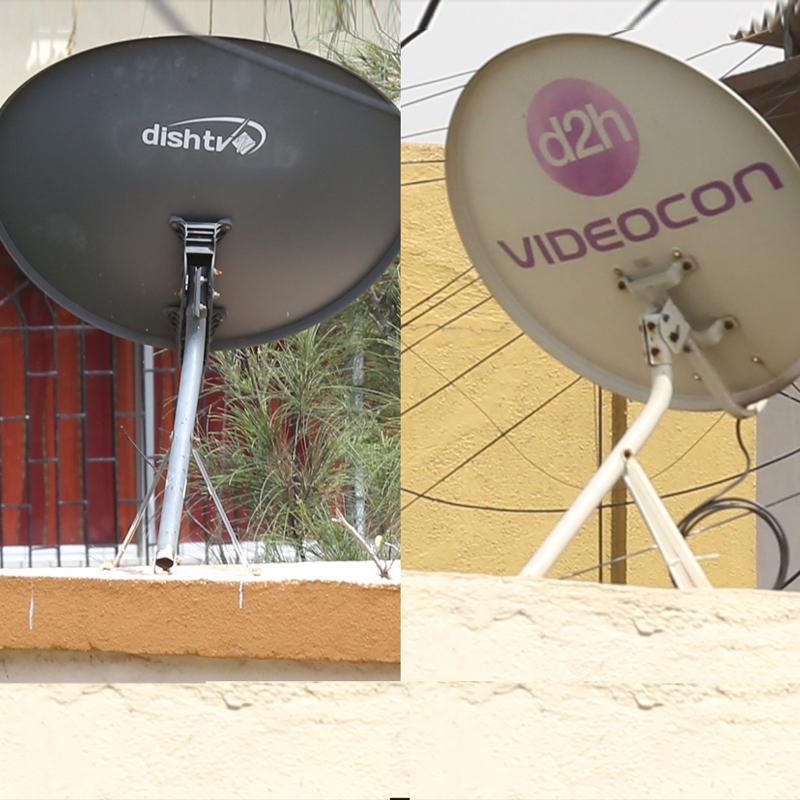
    With this merger, synergies of the two match perfectly. Dish is more of a value player with offerings for all markets including rural, while Videocon d2h is a premium player.

  • With d2h merger, Essel Group will have world’s largest subs base

    With d2h merger, Essel Group will have world’s largest subs base

    BENGALURU: The Essel group is one of the largest media and entertainment industry players in India. Its flagship company is Zee Entertainment Enterprises Limited (Zeel) that has a weightage of 45 per cent on the National Stock Exchange’s Nifty Media Index.

    Its group company, Dish TV Limited (Dish) is also is the largest DTH player in the country in terms of number of subscribers. Along with DTH services, the group also has one of the largest cable operators or multi-system operators (MSO) in Siti Networks Limited or Siti (the erstwhile Siti Cable Network Limited). Amongst the major MSOs in India, Siti is the only one that has added 1.5 million (15 lakh) subscribers over the past few quarters, while its peers have had stagnating subscriber numbers.

    On combining the number of subscribers, the two carriage industry players are already a force to reckon with – a fact that the Essel Group recognised, and will leverage. In an industry first, the two formed a content negotiating joint venture (JV) called Comnet. Both Dish and Siti are equal partners in the JV that came into existence on 1 July, 2015. As part of the JV, both companies said that they would hold joint discussions with broadcasters post which separate direct contracts between the broadcaster and distribution platform will be signed. Further, the JV’s intent is to bring together the industry on contentious taxation issues like the hike in entertainment tax in Delhi.

    Let us look at what we have on the table — Siti had 12.2 million (1.22 crore) subscribers — of which 8.4 million (84 lakh) were digital as per its Q1-17 report, and Dish has reported a subscriber base of 15.1 million (1.51 crore) – totalling 27.3 million(2.73 crore). Now the merger with Videocon d2h will bring in another 12.5 million (1.25 crore) subscribers into the Essel fold for a grand total of 39.8 million (3.98 crore), hence about 2 million (20 lakh) more than the 37.8 million (3.78 crore) subscribers reported for DIRECTV.

    Zeel’s channels have been regularly making it to the top five or 10 in the Broadcast Audience Research Council (BARC) ratings across various genres, be they Hindi general entertainment (GEC), regional channels, movies, English entertainment, etc. Another group company, Zee Media Corporation Limited (ZMCL), offers general news and business news across its television channels.

    The fact that a number of the top rated channels are Essel group companies as well as a huge slice of the Indian television subscription market is indeed huge leverage – bear in mind that the group will probably control more than 25 percent of the carriage industry in the country. And what with the sunset date for DAS phase IV nearing with no let-up in sight from the government, subscription numbers will only grow.

    With this merger, synergies of the two match perfectly. Dish is more of a value player with offerings for all markets including rural, while Videocon d2h is a premium player.

  • Siti Cable and Dish TV join hands to form ‘Comnet’

    Siti Cable and Dish TV join hands to form ‘Comnet’

    MUMBAI: Dr Subhash Chandra led Essel Group believes in innovation and how. The two companies from the group, multi system operator (MSO) Siti Cable Network and direct to home (DTH) player Dish TV have formed a joint venture (JV) to deal with the ever growing content cost. Christened ‘Comnet’, the JV will help synergise the strengths of both the organisations in dealing with broadcasters.


    Essel Group has synergies in broadcast, cable, DTH and over the top (OTT) services. “When we look at either of these platforms, the key to its existence is content. The cost of content today is increasing rapidly and at a pace with which even the connections in the market aren’t growing,” tells Siti Cable CEO VD Wadhwa to indiantelevision.com.


    According to Wadhwa, while the consumer average revenue per user (ARPU) levels is increasing in single digits, broadcasters, who sign one-year deals with distribution platforms, expect the revenues grow anywhere between 20-60 per cent. “This is impractical, unsustainable and is no way any business model will evolve or work,” he adds.  


    The reason both Dish TV and Siti Cable have come together is to be able to make the best use of each other’s advantages and disadvantages. While DTH doesn’t enjoy as much carriage as cable gets, when it comes to content deals, DTH platforms have an upper hand. “While my input cost, which is the content cost is growing at a fast pace, I am not being able to drive the market price. If consumer ARPUs remain low, we can’t allow the content cost to go up. Also considering both the platforms target the same set of consumers in the market, it made more sense for us to join hands to deal with broadcasters,” informs Wadhwa.


    Dish TV CEO RC Venkateish says, “This move will help both the entities to provide quality content at affordable price to consumers.”


    Both, the DTH and cable platform currently is unable to pass on the increased input cost to the customer. “And then there are the additional taxes. The Delhi government recently increased the entertainment tax from Rs 20 to Rs 40, not realizing that it is a price sensitive market. Neither the consumer nor the broadcaster is ready to take the burden of the increasing cost. In order to protect our business model and remain a consumer friendly company and comply with all the rules and regulations, we thought of coming together,” he says.  


    The JV will help the duo in not just controlling deals with broadcasters, but also in sourcing equipments. “Both Dish TV and Siti Cable need set top boxes. There are a lot of synergies if we work together,” he adds.


    Between Siti Cable and Dish TV, the two currently have more than 2 crore subscribers, which in the next two years, according to Wadhwa will go up to 4 crore. “If we are currently present in 2 crore households, we are talking of almost 9-10 per cent of India’s population. This gives us a lot of leverage,” he says.


    According to Wadhwa, while the broadcasters have already come together to work for the advantage of the broadcasting sector, the distribution platforms too need to work in a synergy. “While that is currently not possible, at least the two companies in the group should start working together immediately,” he opines.


    As part of the JV, the duo will hold joint discussions with broadcasters, taking joint call on the deals. “If the broadcaster wants to arm twist Siti Cable, it has to be careful that Dish TV may also react or vice versa,” he informs.  


    Starting 1 July, 2015, it is ‘Comnet’ that will do the negotiations with broadcasters for both the platforms together. Post that, a direct contract between the broadcaster and the distribution platform will be signed. “The benefit will be shared between Dish TV and Siti Cable,” concludes Wadhwa.