Tag: Community Radio

  • Only 180 community radio stations despite financial aid by govt

    Only 180 community radio stations despite financial aid by govt

    NEW DELHI: Despite the scheme being almost a decade old and the government extending financial assistance, the total number of operational community radio stations (CRS) in the country is just 180.


    This is despite the fact that the Information and Broadcasting Ministry has issued around 410 permissions to set up community radio stations in the country. In addition to other assistance, the Government has even set up a fund for helping CRS.


    A Parliamentary Committee noted recently that 209 applications for setting up of community radio stations were pending with various Ministries. Even though the number of applications pending in the Ministries concerned has come down substantially, there are at least 50 applications that are pending, which have crossed the stipulated timeline beyond three months.


    Though the scheme was launched around a decade earlier, the outreach of the CRS was enhanced in 2006 to include non Governmental and Community based organisations with at least three years of legal existence.


    Earlier this year, Parliament was informed that only 76 letters of intent (LOI) had been issued out of the 689 applications from educational institutions, registered societies, trusts and NGOs etc received since 1 January, 2012 for setting up community radio stations.


    As many as 285 applications had been returned or rejected, while 263 had been referred back to the applicants.


    According to the list placed on the Ministry’s website as on 1 May, 2015, the largest number of community radio stations – around 90 – are being operated by private and governmental educational institutions, around 65 by non-governmental organisations, around 20 by universities including six by state agricultural universities, and six by Kendriya Vidyalya Kendras.


    Tamil Nadu has the largest number of CRS numbering around 27, followed by Uttar Pradesh with 21, Maharashtra with 17, Madhya Pradesh with 14, and Karnataka with 13. All other States and Union Territories have 10 or less CRs with Delhi having six.

  • Airwaves are public property & community radio stations are an extension of that concept: Jaitley

    Airwaves are public property & community radio stations are an extension of that concept: Jaitley

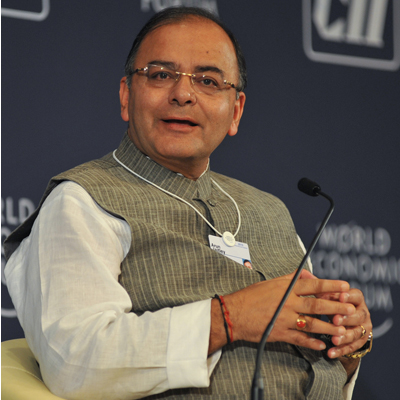
    NEW DELHI: Information and Broadcasting Minister Arun Jaitley said today that the government was committed to ensuring that ‘airwaves’ constitutes property of the people or the community and there is no interference of the state in creating any monopoly in this regard.


    He said Community Radio as a medium of communication constituted an integral component of the right to free speech and expression. This medium of information dissemination formed a part of the “Airwaves”.


    Inaugurating the 5th National Community Radio Sammelan on the theme “Community Radio for Good Governance” here, Jaitley said community radio as a platform of communication formed a part of the tripartite stakeholder partnership: the broadcaster, the person disseminating the information and the listener, who was keen for information, knowledge and dissemination of facts.


    Jaitley said radio had acted as an instrument for dissemination in the past, and would also do so in the future, in which community radio would play a critical role for the expansion of radio content. Community Radio as a concept was vibrant as it facilitated the expansion of an idea – a concept that discussed a range of issues including culture, languages and practices, amongst others.


    He hoped the Sammelan would provide a roadmap to the ministry to fine tune the blueprint for policy interventions in the future.


    The Minister said the Government was committed to ensuring that the sector was expanded and strengthened to achieve the goals of inclusive growth through social change. The Sammelan also offered an opportunity to highlight the relevance of flagship schemes through the medium to people, who in turn could benefit by such interventions. Sessions on Agriculture and Community Radio, Role of the Medium in promoting Water and Sanitation with emphasis on ‘Swachh Bharat Abhiyaan’ and the relevance of the medium in the context of Jan Dhan Yojana were innovations adopted for the Conference.


    A compendium on ‘Community Radio for Good Governance’ was released on the occasion by Jaitley and Minister of State for I&B Rajyavardhan Rathore.


    I&B Secretary Bimal Julka said the Community Radio Model offered a third model of radio broadcasting in addition to commercial and public broadcasting. As a platform for communication they served geographic communities and communities of interest. Community radio, rural radio, cooperative radio, and development radio hold the key to unite India’s linguistic and ethnic diversity and improve economic development.


    Referring to a Supreme Court ruling of 1995, Julka said airwaves were declared public property to be used for promoting public good and ventilating plurality of views, opinions and ideas, and the role of community radio was important in this context.


    He also outlined the recommendations of the Telecom Regulatory Authority of India (TRAI) on Community Radio Stations (CRS) permissions and related issues. The terms of permission are to continue to be for five years; the duration of advertisement on a CRS is to continue to be five minutes per hour; the stipulations that rates for advertisement approved by the Directorate of Advertising and Visual Publicity on CRS are lowest and exclusive to DAVP are to be relaxed in case of CRS. Julka specifically mentioned the role and relevance of CRS during disaster management situations and said that as the medium played a critical role in the given situations consultations with NDMA would be held to outline the detailed guidelines for the said purpose.


    He also referred to the TRAI recommendations related to the allowance to be given to CRS to broadcast news and current affairs content, sourced exclusively from All India Radio (AIR) in its original form or translated into in its local language/ dialect. This would enhance the mandate of the medium in the context of operating partnership with AIR.

    Jaitley and Rathore also presented the 4th National Community Awards in various categories.


    The Conference assumes importance in view of outlining the vision for community radio in India. One of the key highlights of the three day Sammelan is the session on Access to Justice for poor and marginalized communities in the context of the role of community radio and the work done by the National Legal Services Authority. The Conference will also deliberate upon the integration of CRSs and PRIs. The role of CR stations in promoting livelihood generation and other economic activities would be discussed. Sessions on Community Learning, Emerging Demography and Migration would provide critical inputs in taking the process forward. 


    The Sammelan has brought together Community Radio Operators, policy makers, Ministries/Departments, the UN and other international bodies like UNICEF and UNESCO and other stakeholders for exchange of ideas and cross learning.


    The sessions will highlight the vision of the Community Radio movement in India and its role in setting the agenda on the development discourse at the local level. 

    The Ministry has been organizing the National Community Radio Sammelan every year since 2011. The Ministry has also been organizing intensive Awareness Workshops in various parts of the country to increase awareness about Community Radio. Sixty three workshops have been organized so far. These workshops have proved to be useful not only to operate CRS in an effective way. 

    The Ministry has so far issued 409 permissions to set up community radio stations in the country. Out of this, 179 stations have become operational while others are in the pipeline.

  • Govt allocates Rs 100 crore to promote community radio

    Govt allocates Rs 100 crore to promote community radio

    NEW DELHI: The Government today announced a new scheme to promote community radio with an allocation of Rs 100 crore.


    This will support about 600 new and existing community radio stations, Finance Minister Arun Jaitley said while presenting his budget for 2014-15.


    He said that 400 permissions for setting up of a community radio stations had been issued so far.


    The Government had recently announced a scheme for grants to those who come up with innovations in development of community radio and has also instituted annual awards in various categories for community radio stations.


    “Budgetary allocations for promoting community radio are also welcome, though the sector policies needs re-visiting to ensure the viability of these stations on a long-term basis,” concluded PricewaterhouseCoopers leader- entertainment & media practice India Smita Jha

  • FICCI welcomes MIB’s assurance of stable policy regime

    FICCI welcomes MIB’s assurance of stable policy regime

    NEW DELHI: The Federation of Indian Chambers of Commerce and Industry (FICCI) has applauded the statement of Information and Broadcasting Minister Prakash Javadekar that the new government would follow a stable policy regime and time-bound speedy mechanism with transparency.

    FICCI also expressed satisfaction on the assurance of the Minister that providing information, entertainment and knowledge to the citizens would be the priority of his Ministry.


    “Opening 1000 community radio stations is a good move. This will help in spreading knowledge and information among the common citizens of the country and also will help in generating employment,” FICCI said.

    FICCI had earlier met the Minister and shared with him FICCI’s ‘Policy Roadmap for the Media and Entertainment Sector in India,’ comprising key recommendations for the television, film, print, radio, AVGC and live events sectors.


    FICCI expressed confidence that the implementation of these recommendations will provide the much-needed boost to the media and entertainment sector, which has tremendous potential for dynamic growth and multiplier effect on employment generation without much spending from the public exchequer. 


  • Government committed to communicating with people across media platforms: Javadekar

    Government committed to communicating with people across media platforms: Javadekar

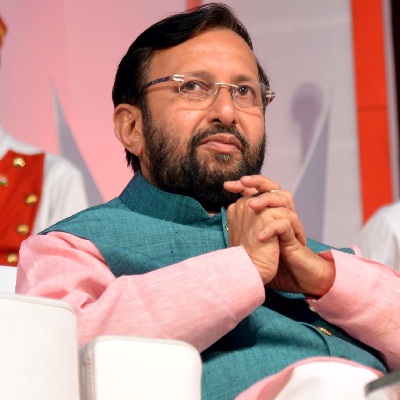
    NEW DELHI: Information and Broadcasting Minister Prakash Javadekar today promised a stable policy regime with transparency and time-bound mechanism and said efforts would be streamlined so as to make the process of clearances speedy and transparent.

    He said while addressing the “CEOs Roundtable on Media & Entertainment” by Confederation of Indian Industry (CII) that the government has always promoted the Media & Entertainment fraternity as partners in growth and would remain a facilitator to encourage the growth of the industry and provide a roadmap in the interests of the people.

    Javadekar said the potential of the Indian M&E industry is untapped and endorsed the CII vision of taking the Indian M&E industry to $100 billion by the end of this decade. He said the government will be “partner in progress” with the growth of the M&E industry.

    Reacting to suggestions from stakeholders, Javadekar said the policies of this government would be people-centric and would aim at meeting the aspirations of the common citizens. He added that providing information, entertainment and knowledge to the citizens would be the priority of the Ministry. Innovative approaches would be encouraged so as to ensure quality information.

    “This government is about communication and consensus. We will create a process in which decisions will be taken in four weeks which was taking four months earlier,” he said with reference to decisions pertaining to the broadcast sector.

    The Minister was categorical that the ongoing digitisation will not be abandoned, Radio phase III licensing will be processed faster, news allowed in FM radio, current DAVP rates will be relooked and self regulation advocated for print medium.

    The Minister also emphasised on the need for expanding the reach of Community Radio and aimed at opening up of 1000 Community Radio Stations in near future.

    Referring to the vision of Prime Minister Narendra Modi of ‘Speed, Skill and Scale’, the Minister urged the media industry to strive to attain new heights.  

    Praising new-age technologies, he described how the social media platforms had changed the dimensions of news reporting.

    While recognising the importance of the Freedom of Speech and Expression he emphasised on the need for responsible journalism. Javadekar assured the stakeholders that their suggestions on various policy issues would be looked into in a time-bound manner.

    Earlier, I&B secretary Bimal Julka assured the media that the Ministry would work as a facilitator for the industry and would work towards single-window clearances ‘with no multiple grills’ for better transparency and accountability. He said the phase III FM Radio auctions will be completed by December 2014. Julka also made a request to the M&E industry to present budget proposals to his Ministry by 23 June to be presented to the Finance Ministry.  

    40 top CEOs of the M&E sector interacted with the Minister and were confident that pending decisions will not be further delayed by the new government. Issues related to broadcast, films, DTH, cable, radio, print, news broadcast were briefed by industry leaders at the CII roundtable.

     “We believe that the soft power of Indian M&E sector can bring innumerable benefits to the Indian economy. The M&E industry provides direct employment to around 10 million people and has the potential to double the number. This sector also is on the cusp of achieving the same global success that the Indian IT industry has achieved,” said CII president Ajay Shriram.

    CII Media and Entertainment Committee and group CEO, Viacom 18 Media, Sudhanshu Vats said accountability, clarity and foresight from M&E stakeholders will take the sector to new heights.

    In his opening address CII DG Chandrajit Banerjee said that an innovative push from the government in an enabling regulatory infrastructure and policy reforms will create a world class knowledge driven entertainment in India. 


  • Radio For The Community

    Radio For The Community

    Radio is theater of the mind. Once you get people laughing, they’re listening and you can tell them almost anything.

    That’s the motto of Radio MUST, Socho, seekho, bolo, badlo, chamka do duniya ko, jeeet lo is jahaan ko….

    (This motto has been composed into a tune by a few students and recently Shankar Mahadevan very cordially sung it for us)

    Community radio – as the name suggests – is radio for the community, by the community and of the community.

    Of course, the meaning of the word community is interesting and differs from person to person. Today, in the age of radio revolution, the airwaves may appear to be jam packed, but there is still a lot of space for a community radio.

    Essentially in India, the concept of community radio is still very unclear as it was never cultivated. But after the Supreme Court verdict that the airwaves are public property, many licences for community radios are being given all across the country. But still, for us Indians who still can’t properly differentiate between traditional radio and the new private radios, community radio is altogether a new concept. Many people will further ask, ‘do we really need another kind of radio? Or is there space for such kind of a radio?’

    The community radio movement has gained a lot of pace over the years in the US, UK South America and Australia. In places like Bolivia, there are community radios even for minors and are doing pretty well. It makes sense to have a dedicated community radio for say NRIs residing in a English county or a community radio that caters to the specific needs of the farmer community. Basically a community radio is a non profit, non commercial application used to share information among the given community.

    The traditional public radio broadcasting service is a strictly guarded and regulated medium of the government to provide information which they think is right. And we have the new players i.e. the private radio broadcasters for whom it’s a medium to invest in the long run and make money out of entertainment.

    Having stated the different types of radio, we need to understand a very basic thing and that is ‘radio par dikhta nahi hai’. One who truly understands this fundamental point will rule the airways. Maybe that’s the reason why most of the radio stations in the metros sound the same.

    But talking about community radio, in today’s world, it has a great role to play in terms of providing correct, precise and useful information to the people on a host of topics. Be it farming practices, garbage management, health consciousness, etc. Sounds pretty serious and gross… But if all this information can be transferred through the radio waves in an entertaining manner, the purpose is served. And that’s exactly what you mean by infotainment.

    Many universities across the country are now being given licences to operate community radios in their campuses. A community radio service can be heard across a 15 km area as it can have a maximum of 50W transmitter. Anna FM of the Annamalai University, Chennai, was the first campus community radio to be set up in India and it is still doing very well. Many universities have followed but have not been able to match up to the level of broadcast set by Anna FM.

    Last year, Mumbai University also got a license to operate an FM community radio from its campus. Not many people have imagined or tried to use the FM radio waves to provide academic information to the people. But Radio MUST @107.8FM (Mumbai University student’s transmission) will dare to explore the hidden treasure of infotainment through this community radio. In a city like Mumbai, which already has eight FM stations, what can a simple FM community radio offer or can it make a difference?

    With nearly 75 departments in the university, along with 400 colleges in and around Mumbai affiliated to the university, Radio MUST has huge potential. Also, being a part of the sesquicentennial celebrations (150 yrs) of the university, people have great expectations from Radio MUST. With the radio station coming up at the Kalina campus, this FM community radio needs to be handled with care and in an innovative manner.

    Here we would like to set a benchmark in terms of the programming. With Mumbaikars already having had a feel of what FM radio is all about, it will be a great challenge at Radio MUST to provide a similar kind of programming and packaging without the popular music.

    The content will be sheer infotainment. Information ranging from academic to social issues to civic responsibilities to slum redevelopment to career options to college festivals to exams and more. The possibilities are unlimited. Not just students but even ex students and volunteers can join in the bandwagon to share important and interesting information through this community radio.

    We at Radio MUST hope to utilize the radio waves efficiently with a lot of entertainment. This community radio will be a professionally managed non commercial radio and may just turn out to be the nursery for future radio professionals. This radio station will be run by all the students and these students will get a stipend paid by the university for all the work they do. So it becomes a double incentive for all.

    We also plan to upgrade out systems in the near future as the colleges affiliated to Mumbai University are spread over a large area geographically. Also, we plan to stream it live on the Mumbai University website for greater coverage.

    Already students from various colleges are working on a variety of programs. So you may soon be able to tune in to Munnabhai and Circuit discussing management fundas, Devdas and Chandramukhi talking about HIV AIDS awareness, James Bond talking about careers in forensic sciences. The list is pretty impressive… mixed together with information about exams, results, festivals, college happenings, social messages etc. this will be an open forum for all who want to make this city a better place to live.

    And who better than the future of the country, the youngsters, the students, to do the job. With all the rules and regulations for a FM community radio being followed, Radio MUST will become a must for all of us.

    Do you have an opinion on brands taking a social stance. Help Pankaj Athawale write the next chapter. Post your thoughts to editor@indiantelevision.com

    (The author is Mumbai University FM community radio head Pankaj Athawale)

    (The views expressed here are those of the author and Indiantelevision.com need not necessarily subscribe to the same)