Tag: Communications

  • GSat29, India’s communication satellite, launched

    GSat29, India’s communication satellite, launched

    MUMBAI: Precisely at 5.08 p.m. Wednesday the GSLV-Mk III rocket on its second developmental flight began its ascent with a strong deep growl that reverberated like a thunder roll breaking free from the second launch pad at the Satish Dhawan Space Centre (SDSC) in Sriharikota carrying communications satellite GSat29.

    The Indian space agency had flown a similar rocket on June 5, 2017, with GSAT-19 satellite. Prior to that ISRO had flown another rocket with 3.7-tonne dummy payload in 2014 to test its in-flight structural stability and aerodynamics, according to wire agency reports.

    According to Indian Space Research Organisation (ISRO), GSat29 with a life span of 10 years is a multi-beam satellite that carries Ka/Ku-band high throughput communication transponders intended to meet the communication requirements of users including those in remote areas.

    In addition, several new technologies such as Q/V-band payload, data transmission through optical communication link will be demonstrated. This will help in realising future advanced satellites, ISRO said.

    ISRO chairman K. Sivan said the launch was one of the “very important missions and a milestone” for India’s space programme.

    “This is GSLV-MkIII-D2 second developmental flight. It is going to launch very important and high throughput satellite GSAT-29. The satellite will be useful in Jammu and Kashmir and North East region for providing connectivity under the Centre’s Digital India programme”, Sivan was quoted by agencies as saying.

    According to the ISRO, the GSat29 satellite is intended to serve as a test bed for several new technologies. It is specifically designed to cater to communication requirements of users from remote areas of the country.

  • How iProspect’s Vivek Bhargava foresaw a digital future two decades ago

    How iProspect’s Vivek Bhargava foresaw a digital future two decades ago

    One trip to the US in 1997 was all it took for a young man’s entrepreneurial journey to begin. When this man, who was taking global trips on behalf of his family business to sell tablas and sitars, decided to sing a different tune, he was told by his father to pack his bags and get going without turning back.

    Fast forward 20 years ahead to today – 2017. This Bollywood-sounding real scene is the story of Vivek Bhargava and his successful digital agency iProspect. He actualised his idea back in 1997 when he founded Communicate 2. The company joined hands with iProspect from the Dentsu Aegis Network (DAN) in 2012 where he led iProspect Communicate 2 as the founder and managing director. The company was rebranded to iProspect India at the end of 2015 and Bhargava was made CEO. In December 2016, Rubeena Singh was made CEO and he was promoted to a larger role as CEO of DAN Performance Group.

    Indiantelevision.com spoke to the man who took a leap of faith in 1997 and the newly appointed CEO, Rubeena Singh where Bhargava speaks at length about his journey, challenges in the digital environment, talent retention and much more. Excerpts:

    How did the iProspect journey begin for you? And how did you pick digital as the medium?

    Bhargava: When one speaks of 20 years, it makes me feel really old but it has been a great journey. I come from a conventional family that sells tablas and sitars. It is called Bhargava’s Musik that was started in the year 1944. As kids, we used to go abroad for trade fairs once in every two to three months and that is where the seed of communication was sowed into our minds. What we noticed was that western countries were using technologies for marketing communication and advertising, which we didn’t see here in India. By the time I was an adult, I decided to quit my family business and start my own venture as I wanted India to make a mark in digital communication. When I gathered courage to tell my father about my decision, in an ominous tone he told me that if I quit the family business, I can never join that again. Today when I look back, I am glad I took that decision because when I went through tough times during these last 20 years, what kept me going were my father’s words.

    You decided to sell off Communicate 2 to Dentsu Aegis Network (DAN). Why did you take that route? 

    Bhargava: As an independent agency, you’re restricted in doing things. When you want to grow to a certain size to work with bigger clients and you want access to bigger technologies, you have to take the plunge and look for a bigger agency to partner with. The biggest challenge I faced in my career before joining DAN was talent attraction and that problem was solved to a great extent.

    What are the perks of working with a full service agency? 

    Bhargava: The most amazing thing about DAN is that it retains 70 per cent of entrepreneurs after the earn process (acquisition) is over, whereas that ratio is only 20 to 30 per cent in other networks. DAN gives you complete freedom, they let you have your individuality and let you run the company. They also give you the ability to approach anybody in the network to help out and we have one P&L (statement) per country and that truly creates the feeling of ‘One DAN’.

    We haven’t seen any major structural changes in your organisation which is a common practice in almost all networks and agencies today. Why is that?

    Singh: iProspect has a high-performing team and so we don’t believe in making major structural changes. We’ve just built on what we already have. We’ve launched new products and carved out new roles for people, but, on a larger level, we are trying to automate a lot of repetitive work. We are upscaling our people to spend more time thinking and looking at data in order to help clients out with their problems and offer solutions rather than doing mundane desk labour.

    How challenging is it for agencies to retain clients in today’s time? What do agencies need to do to ensure client retention?

    Bhargava: If agencies continue to deliver value and you are authentic about your capabilities, you can retain clients for a longer period. Usually, clients tend to move on because agencies are not solving the real problem, and it’s always about achieving a price or delivering a service. As my father would say to me, “Taking interest in client’s brand and taking interest in team members is the only way an agency will grow.”

    Singh: It is really important to look at both sides of the spectrum. We have been fortunate enough to work with clients that have been with us for over 10 years and we have been able to grow them and that comes from the mindset of ‘client first’. We believe in evolving our products and services in line with clients’ needs.

    Clients usually have high expectations from an agency but they keep their pockets zipped. How challenging does it become to deliver the product?

    Bhargava: We have always charged premium amount in the market. A client once refused to do business with us because he said that they couldn’t afford us. To that my reply was, ‘The problem is not that we are expensive, but that we are proud of it.’ We believe that since we charge more, we are able to deliver more value to their brand. I’ve seen a lot of agencies that started up around the same time as I did and had to wind up because they reducing rates which led to inferior talent coming on board leading to inferior output. Of course, clients left. For an agency to deliver the best output, it is very important that it prices right and does not succumb to client-satiating tactics.

    How do you ensure you meet your yearly targets? 

    Bhargava: We have always been very honest with our clients and given them honest reviews because we believe in setting realistic expectations and being on their side of the table. A lot of times agencies tend to take care of their self-interest and give different advice to clients and when numbers aren’t as promised, clients will move away.

    How different is the Indian media industry as compared to the West?

    Bhargava: Western agencies charge for every single planner. For instance, if a client is meeting an agency where six prominent people from the agencies are present in the meeting, they charge $6000 for that meeting as they believe every minute of a media planner is worth that kind of money. That is not the case in India, as here we believe in spending hours trying to solve the client’s problem and ensuring that they leave happy after the meeting. Here, it is about understanding and building a rapport with them. In India, things are less technology led but solution led. Most of the clients in the west are very precise about what they want but here it is more about solving the client’s problem where we may end up working twice as hard than what we expected but you hope that the client will take care of you.

    You’ve seen India transition and adopt technology along with digital in these 20 years. How would you say has digital evolved over the years in the Indian context? 

    Bhargava: It took 14 years for digital to come in India and as a digital agency, we have been a witness to that evolution. Earlier, no brand wanted to include digital in their marketing budget and advertising. Today, almost every brand spends around 15-20 per cent of the advertising budget on digital. Today, it is playing the role of a catalyst and it’s not limited to advertising. We are living in a digital age today as compared to doing just digital advertising. In future, people are going to stop seeing digital as digital but it will only be known as advertising just as today we don’t say, ‘cellular phone’ but we just say phone. In future, the word digital will be dropped out.

    What does the industry need to do to attract more talent and to ensure talent retention?

    Bhargava: Truth be told, the salary of a person working for a digital agency as opposed to someone working in a conventional media agency will be twice as high. Hopefully, some would be motivated by money, so if they want to earn more money, digital is the best option. It will be one of the highest paid jobs in just a few years from now.


  • PepsiCo India ropes in Poonam Kaul as new VP Communications

    PepsiCo India ropes in Poonam Kaul as new VP Communications

    MUMBAI: PepsiCo India, the food and beverage giant, has appointed Poonam Kaul as the new vice president of communications. Kaul will be a part of their India Region Executive Committee.


    Poonam will develop and lead the work to sustain PepsiCo India’s corporate image and reputation among internal and external stakeholders including the media. She will oversee internal and external communications, leadership communications, and crisis management and consumer relations in PepsiCo’s India region.


    Poonam has over two decades of leadership experience in driving integrated communications to build brands, influence policy, shape perceptions and manage crisis. Prior to her appointment with PepsiCo India, she was the director communications, Nokia for India, Middle East and Africa and was heading 90 markets.


    Kaul has also been with Microsoft India where she was heading advertising and public relations for all business units of Microsoft in India.

  • Interim Budget: Communications and Information Technology Ministry

    Interim Budget: Communications and Information Technology Ministry

    NEW DELHI: The budgetary allocation in the vote-on-account for 2014-15 for convergence, communications and strategic electronics in the Communications and Information Technology Ministry has gone up to Rs 27 crore.


    In the interim budget (vote-on-account) for 2014-15 presented in Parliament for the first four months of the new year 2014-15 in view of the general elections later this year, the amount set aside in this sector which includes broadband and broadcast convergence has gone up from Rs 15.75 crore in the revised estimates but is marginally lower than the budgetary allocation of Rs 28 crore in the 2013-14 budget.


    An explanatory note says this includes supporting research and development in convergence communications, broadband technologies and strategic electronics. The indigenous efforts are aimed at facilitating developments in emerging, next generation convergence communication, broadband, broadcast and strategic technologies for inclusive and sustainable growth in the country.


    In addition, there is budgetary allocation of Rs 7 crore for Media Lab Asia, which is far less than the revised estimates of Rs 12.75 crore for 2013-14. Media Lab Asia is a Section 25 company aimed at bringing the benefits of the most advanced information and communication technologies to the common man and the needy people.


    Keeping in view large-scale incidents of hacking or damaging websites, the budget for cyber security has gone up three times from Rs 36.87 crore in the revised estimates for 2013-14 to Rs 114 crore.


    The explanatory note says that cyber security is gaining adoption in all types of products for a variety of reasons including national security and appreciation of the consequences of insecurity, and the grants to the Indian Computer Emergency Response Team (Cert-in)

  • Sibal says some nations are indulging in cybercrime

    Sibal says some nations are indulging in cybercrime

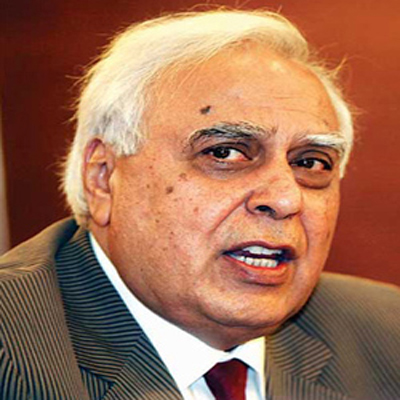
    NEW DELHI: Communications and IT Minister Kapil Sibal says some nations are found to be indulging in cybercrime, or are employing individuals who are not directly linked to them for carrying out such practices.


    Sibal said: “Now, what is happening today is that we know for a fact that nations have organised themselves to indulge in cyber crime. We know for a fact that they work sometimes through individuals far removed from them and from spaces that may not be even cited in their own country and part of the attack may come from somewhere else.”


    Speaking at an IT-ITeS body Nasscom event here, the minister said that there is a need to create a global standard to fight cybercrime. “Now, the internet world today does not allow us to find where the attack came from and who attacked us, nor does it allow us to disclose the identity of the attackers. We need to develop global rules for that. We need a global accord for that and we then need a system of cyber justice,” he added.


    Sibal said it is important to evolve rules so that internet freedom does not deteriorate into lawlessness. “So in that situation how do we evolve rules to deal with those issues? If we don’t do that we will have lawlessness. Freedom and lawlessness are two sides of the same coin. If freedom is not exercised with a sense of responsibility, then it results in lawlessness. So, freedom becomes its own enemy in the absence of accountability. It is a very dangerous proposition and we can’t let that happen,” he added. 

  • Publicis acquires Beehive Communications

    Publicis acquires Beehive Communications

    MUMBAI: The Publicis Groupe has acquired six companies since mid-2012 and today, it was time to take one more leap. In a new development, the French multinational advertising and PR major announced the acquisition of Beehive Communications, one of the country’s foremost independent integrated communications agencies, which serves clients across South Asia.

    With this deal, Beehive will be rebranded Publicis Beehive, to operate as a unit within Publicis Worldwide’s global network. The agency’s current team will continue to lead it under the direction of founder and CEO Sanjit Shastri, and will report in to CEO South Asia Publicis Worldwide Nakul Chopra.

    Without disclosing the value, Shastri said both companies were happy and added that the deal gave Beehive a wider platform, better growth prospects and overall appeal as the agency was entering a totally new league. He pointed out that the work strategy would be pretty much similar to what has been the norm so far.


    “I think we will continue with our same old approach, focusing on building steps and verticals and providing integrated solutions through digital media and other creative platforms. Employees will be benefitted too as they will get much more exposure and will get to work at a higher level. We have clients from four different buckets including retail, education, travel and tourism and we have recently started handling a few clients from real estate as well. We are also in the process of signing deals with a few more real estate people,” he said.

    For Publicis, the Beehive acquisition marks a significant step in becoming the leading communications network in India.

    “Beehive brings both scale and strategic value to the Publicis offering in India. The verticals that they have are complimentary. Like, Publicis currently has very good exposure in sectors such as food, beauty, fashion, personal sector etc. While Beehive comes with exposure in other sectors, they are not exposed to the areas that we handle. So, the association is going to be a learning experience for both the companies,” said Chopra and added that their employees would be benefitted as well. “Employees of the smaller company gain by being a part of the larger organisation. They gain because they are exposed to better platforms and newer opportunities,” he added.
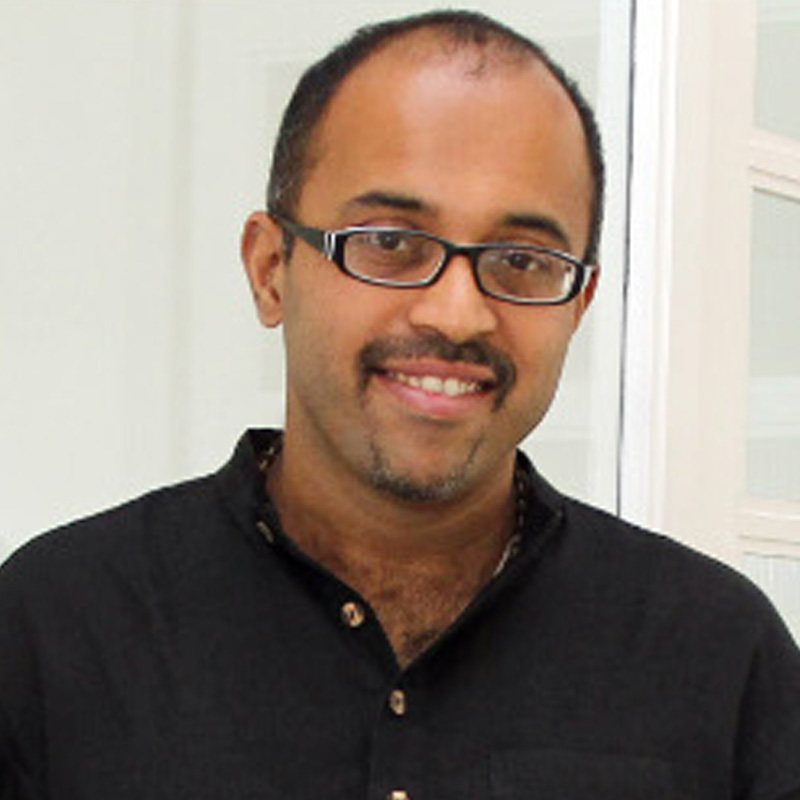
    B Sanjit Shashtri (L) and Nakul Chopra (R) are expecting their association to reap profits

    Founded in 2003, Beehive Communications today employs more than 130 staff, and provides integrated solutions in creative, reputation management, media, digital, brand activation and research. Beehive’s clients (over 50) include the likes of Malaysia Tourism, General Motors, Korea Tourism, Jubiliant Retail, India Bulls Finance and Bisleri among others. Headquartered in Mumbai, it has a presence in Delhi and Bangalore as well. Known for its ability to build expertise in important vertical markets with speed and efficiency, the agency has built a reputation for growing and winning over their clients.

  • Cyber Security violations should be dealt with: Sibal

    Cyber Security violations should be dealt with: Sibal

     NEW DELHI: Even as National Security Adviser Shivshankar Menon feels that the issue needs to be settled in international law, Communications and IT Minister Kapil Sibal said Indian authorities should have the jurisdiction to deal with cyber attacks against the country irrespective of their source.

    Sibal said that there should be “accountability and responsibility” in the cyber space. “If there is a cyber space violation and the subject matter is India because it impacts India, then India should have jurisdiction. For example, if I have an embassy in New York, then anything that happens in that embassy is Indian territory and there applies Indian Law.

    “If the impact of such a violation is on India, then Indian courts must have the jurisdiction. That should apply across the world,” he said.

    When it was pointed out at an Observer Research Foundation seminar on cyber security that the American National Security Agency was accused of spying on Indian and other missions there, Sibal said, “Do not trivialise the issue.”

    Menon said, “It is not a settled issue in international laws. That is why you need an agreement and consensus on it.”

    Sibal said: “The issue of identity in cyber space is of enormous importance. There must be accountability and responsibility in the cyber space.”

    He said the government believed in complete freedom of cyber space. “Freedom of expression is central to our ideological stand on cyber space but at the same time, there should be a de facto recognition of threats that are there in cyber space.”

    “We need to deal with those threats locally and globally. We need a consensus on those. What we don’t need is a governed space. I think governance in cyber space is oxymoron,” he said.

  • Carving out a space for independent agencies: Scarecrow Communications founder director Raghu Bhat

    Carving out a space for independent agencies: Scarecrow Communications founder director Raghu Bhat


    Mark Zuckerberg started his company when he was 20 years of age and Steve Jobs when he was 22. However, most of the independent agencies in India have been started by guys above the age of 35. Also, a lot of them had already attained professional success in their jobs at network agencies. This means, an independent agency is largely born out of a network agency’s inability to retain its senior creative people. Dissatisfaction in their current working environment has forced them to turn entrepreneurs and start their agencies, rather than the Silicon Valley mindset – the fierce desire to create a multi-million dollar valuation firm in the minimum possible time.

    This brings us to the next question? Why are senior creative people unhappy in a network agency? In our viewpoint, there are two big reasons. One is lack of creative freedom or independence. In many cases, the final creative call is taken by a suit. This can stifle creativity and individualism. The other is, lack of compensation proportional to their contribution to the agency. The latter is still negotiable but the former is indispensable for a genuinely talented creative guy to survive.

    In an independent agency, the potential of the creative person gets unshackled. His ideas don’t die before they reach the client. For this reason, many independent agencies are doing sparkling work.

    We believe that there is loads of creativity in the big network agencies. What they don’t have is a mechanism to ensure that the best ones reach the client. They do good work but the hit rate percentage is lot lesser than the smaller agencies. Independent agencies offer quality creative thinking, flatter structures, quicker response times, personalised attention and lots of passion.

    The other big advantage is that in an independent agency, the creative people get to hear the business problem itself, from the horse’s mouth as they get to deal directly with the big decision makers. We believe the brilliance of the creative solution is proportional to the clarity with the business problem is articulated. This puts them in a vantage position to solve it with maximum efficacy.

    Creative people get the liberty to present ideas they truly believe in. There are no unnecessary rules, no baggage, no hierarchy. Both agency and the client have only one objective – to solve the problem at hand in the given budget and timeline. This single-mindedness of agenda and purity of purpose is hugely liberating, from a creative standpoint.

    The other big differentiator for an independent agency can be the ‘creative culture’. At one level, this is intangible but at another level, it is very real as it is something employees experience on an everyday basis. Culture is the aggregate of the agency’s actions, internally and externally. Most network agencies behave in a similar fashion. They do the same things while dealing with employees and clients. Also a culture is created when most of the people in the organisation believe in the same things. Therefore, it’s easier for an independent agency to carve out its own distinct culture. Doing so will help it become a talent magnet and lead to a happy productive workplace.

    Admittedly, there are many challenges too. Some of the them are not very different from those faced by a network agency. For example, the ability of an independent agency to grow depends on their ability to attract top talent, at the senior and junior levels. They have to manage finances well. A weakened economic sentiment, the prospect of Europe being in recession for 5-10 years and a bearish stock market might mean lower marketing spends by Indian companies. This could hit the agency’s capacity to invest in people as they aren’t sitting on huge cash reserves.

    The independent agency also has to ensure it doesn’t become a victim of stereotyping. Based on a hi-profile campaign, an independent agency can quickly acquire a reputation for specialisation, without even realising it. In India too, there are independents who are known as ‘lifestyle’ agencies or ‘mass FMCG type’ agencies. While the agency may have the capability to handle different products across diverse audiences, they can still lose out, as the perception might overpower reality. The best way to counter this is to aggressively showcase work across categories and acquire a varied portfolio as fast as possible.

    One of the accusations against independent agencies is that they are creative boutiques, dependent solely on a pair of creative people. They may not be seen as ‘organisations’. Their capacity to deliver integrated solutions or handle big businesses is sometimes questioned. Bandwidth can become an issue. Some of them may not have the ability to hire great account planners. This is a reality that the agency heads have to face.

    To deal with this, they should craft out a short term and long term strategy. It’s important to have one eye on the present without losing sight of the future. A conscious attempt should be made to expand the bouquet of communication offerings. The independent agency should be on the lookout to develop expertise in related areas like design, digital, strategy, retail, rural marketing and healthcare. This will make the agency less vulnerable to recessionary trends.

    Moreover, it will accelerate the learning curve and ensure that the agency heads aren’t caught up in attending to just the short-term contingencies. In case the agency head plans to sell off his agency after a few years, this will also help in the valuation. It’s also important to plough back some money into making a decent office as that’s where people spend 10-12 hours every day.

    Ultimately, the independent agencies will co-exist with the large network agencies. There will be ample opportunities for both. The Indian economy is a domestic consumption story and we expect that growth will happen at a steady if not spectacular rate. The creative people who will enjoy embrace the added responsibilities (Cash flow, staffing, client management, accounting) of running the independent agency, along with the creative tasks, are the ones who will stick it out. The creative guys who want to concentrate only on doing creative work will be tempted to sell out.

  • France to set pace for digital TV in Europe: Study

    France to set pace for digital TV in Europe: Study

    MUMBAI: France has set a new benchmark for European digital television (DTV) policy.

    Strategy Analytics Broadband Media and Communications service has come out with a study Digital TV Transition: Europe Watches France’s Mandates As Terrestrial HDTV Arrives.

    France’s new ‘TV of the Future’ law has taken an important step towards high definition television (HDTV) on the digital terrestrial television (DTT) platform by allocating capacity for HD channels and mandating HD tuners in HD-Ready TV sets.

    These decisions will have ramifications for other countries in Europe, which will watch these developments with interest. There will also be important lessons from the French approach to licensing HD channels that takes place over the next few months.

    According to this report, the decisions made in France will put increased pressure on other European countries to accelerate their own policies towards HD on DTT platforms.

    Strategy Analytics principal analyst David Mercer says, “Most other European countries are still at the discussion stage regarding the introduction of HDTV on their DTT platforms.

    “France has taken an important lead by allocating the capacity for HDTV and ensuring that future HDTVs will be able to receive these new channels. The industry will be satisfied that France has set clear policy goals on these important issues.”

    Also according to the report, France’s plan to switch off analogue television broadcasts by 30 November, 2011 remains an ambitious goal, given much of the country’s still heavy dependence on those signals. But the country’s aggressive top-down approach to policy setting gives much-needed clarity to industry decision makers, which will allow technology vendors and service providers to plan with confidence.

  • Iamai to organise digital summit later this month

    Iamai to organise digital summit later this month

    MUMBAI: The Internet and Mobile Association of India (IAMAI) is organising the India Digital Summit 2007 on 18 and 19 January 2007 in New Delhi. This will look at the progress the internet and mobile are making.

    The organisation notes that the internet has ushered in a quiet but definite revolution at homes, offices and cyber cafes in India and changed the way we look for content, communicate or undertake commercial transactions. Whether it is through the PC or the ubiquitous mobile device, internet and wireless based technologies are transforming the socio-economic fabric of India in ways that we never thought of before.

    The combination of technologies and devices have for the first time thrown open the possibility of acting as a great leveler making it possible to ‘walk the talk’ on empowerment and inclusiveness. Communications, availability of content and commercial transactions are much more efficient. cost effective and pervasive due to these technologies.

    The speakers at the seminar will include People Group chairman Anupam Mittal, eBay India chairman Avnish Bajaj, On Mobile CEO Arvind Rao, ACL Wireless persident Atanu Mandal and Connecturf MD and CEO Neville Taraporewala.

    The first day looks at the internet. The topics are the driving forces of the Internet in India, how businesses can use it, what the net can offer and the role of the youth in driving net uptake. The second day looks at the mobile in terms of value added services. The speakers will look at what makes a successful mobile marketing company in India. then theer is the issue of forces that are driving adoption beyond metroplolitain cities.

    The panellists will also look at whether the policy environment is right for mobile value added services industry.