Tag: communications satellite

  • India launches its heftiest satellite yet

    India launches its heftiest satellite yet

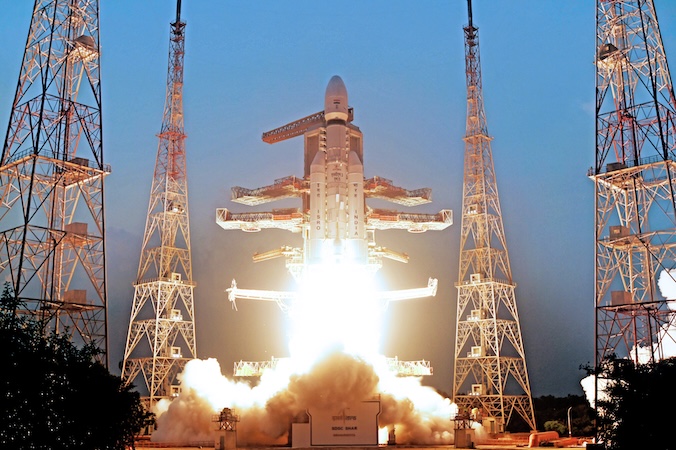
    SRIHARIKOTA: India just flexed its space muscles. On 2 November, the Indian Space Research Organisation (Isro) hurled its heaviest communications satellite ever into orbit from home soil—a 4,400 kg behemoth called CMS-03 that will keep the navy’s ships, submarines and aircraft chattering across the Indian Ocean. The launch from Sriharikota at 5:26 pm marked the end of an embarrassing era: no longer must India send its bulkiest satellites abroad for a lift.

    The rocket doing the heavy lifting was LVM3, ISRO’s most powerful launcher and now nicknamed “Bahubali” for its Herculean payload capacity. This souped-up version sports a beefier cryogenic upper stage—the C32, carrying 32,000kg of fuel and belching 22 tonnes of thrust, a 10 per cent upgrade on the previous model. It can now haul 4,000kg to geosynchronous orbit and 8,000kg to low Earth orbit without breaking a sweat.

    Until now, India’s chunkier satellites hitched rides with foreigners. France’s Arianespace launched the 5,854kg GSAT-11 and 4,181kg GSAT-24. Elon Musk’s SpaceX ferried the 4,700kg GSAT-20. No more. Isro chairman V Narayanan crowed about the mission being “a shining example of Atmanirbhar Bharat”—self-reliant India, in case the point wasn’t clear enough.

    The CMS-03, also known as GSAT-7R, isn’t just heavy; it’s clever. Bristling with indigenous components, the multiband satellite will provide encrypted voice, data and video links for 15 years, giving the Indian Navy real-time situational awareness across a vast oceanic region. The navy called it a testament to national self-sufficiency in maritime defence.

    This was LVM3’s eighth consecutive successful launch, following triumphs like Chandrayaan-2, Chandrayaan-3 (which made India the first nation to land near the lunar south pole), and OneWeb satellite deployments. The upgraded rocket also feeds directly into Isro’s Gaganyaan programme, which aims to send astronauts into space. Three uncrewed missions are planned first, including one carrying Vyommitra, a robotic astronaut, later this year.

    Narayanan said the space organisation is eyeing seven more launches by March 2026, with another LVM3 mission slated for December. India’s space sector, he declared, is “soaring high.

    With launches this meaty, it’s hard to argue.
  • ISRO eyes 100th satellite on 12 Jan; GSAT-11 launch in April

    ISRO eyes 100th satellite on 12 Jan; GSAT-11 launch in April

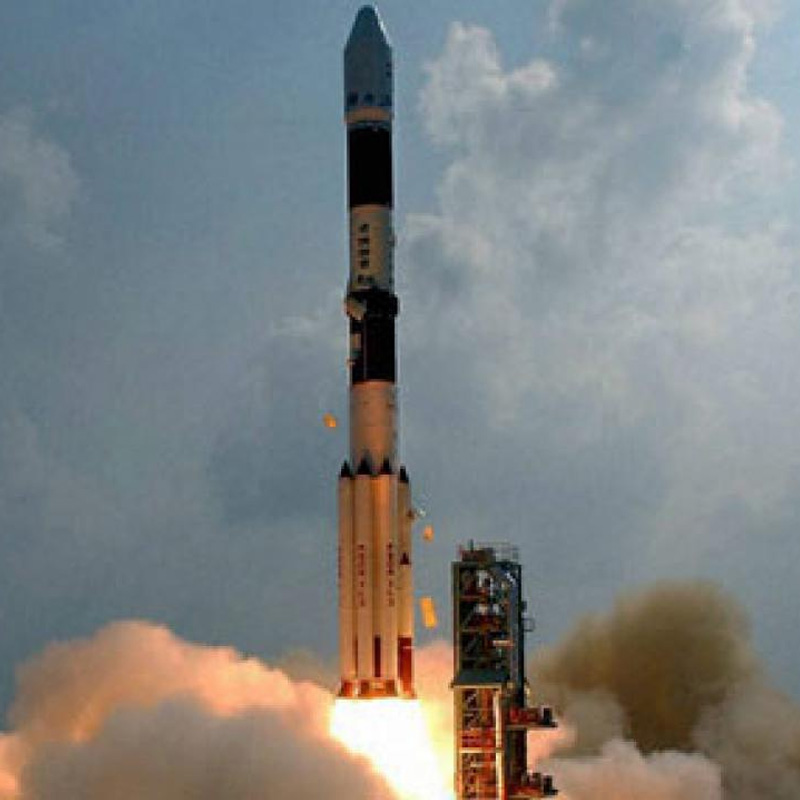
    NEW DELHI: The Indian Space Research Organisation (ISRO) will launch its 100th satellite along with 30 others, including those from other countries, in a single mission on 12 January 2018 from Sriharikota It will be a milestone event in the country’s space history even as communications satellite GSAT-11 is being prepared for an April launch.

    ISRO said it was “back in the game” with the launch, the first Polar Satellite Launch Vehicle (PSLV) mission after the unsuccessful launch of the navigation satellite IRNSS-1H in August last, PTI stated Tuesday in a report from Bengaluru.

    “The 31 spacecrafts, including weather observation Cartosat-2 series satellite, will be launched by PSLV-C40,” ISRO Satellite Centre (ISAC) director M Annadurai said. Stating that 28 of the satellites were from other countries, the official noted that the launch of three Indian satellites during the mission would mark the roll out of the 100th satellite from ISRO.

    “When the last satellite is ejected out it will become the hundredth satellite…the first century we have done. It is the maiden century. So PSLV-C40 marks maiden century of Indian satellite….we are eagerly waiting for that,” the official was quoted in the PTI report as saying.

    PSLV-C40 will launch the 710 kg Cartosat-2 series satellite for earth observation and 30 co-passengers (together weighing about 613 kg) at lift-off on 12 January 12 at 9.28 am, ISRO said. It will be launched from the first launch pad of the Satish Dhawan Space Centre at Sriharikota, about 100 km from Chennai.

    The co-passenger satellites include one micro and nano-satellite each from India. Three micro and 25 nano satellites from six countries, (Canada, Finland, France, Republic of Korea, the UK and the USA) make up the other payload. Referring to the PSLV-C39 failure, Annadurai said ISRO had understood it and repeated tests had been conducted to ensure that such problems did not reoccur.

    On 31 August 2017, India’s mission to launch its backup navigation satellite IRNSS-1H on board PSLV-C39 failed after a technical fault in the final leg following a perfect launch. ISRO then said the heat shield did not separate and, as a result, IRNSS-1H got stuck in the fourth stage of the rocket.

    The total weight of all the 31 satellites carried on board PSLV-C40 is about 1323 kg.

    Regarding plans for the year, Annadurai said Chandrayaan-2 or Mission Moon was in the final stage of testing and integration of the orbiter, lander and rover, and was expected for launch this year.

    Also, IRNSS-1I, a follow-on satellite will be the first satellite whose assembly, integration and testing will be fully done by the private industry, he said, adding “we are enabling the private industry”.

    GSAT-11, a six-tonne class communication satellite, he said, was at the final leg of testing, and the launch target was April.

    ALSO READ:

    ISRO to double annual satellite launch

    Arianespace to launch ISRO-built DTH & telecom satellites

    ISRO gears up for GSAT-19, GSLV Mk III launch today

    ISRO stresses on indigenization; TRAI for Open Sky policy