Tag: communication

  • IIMC and QUT join hands for training and capacity building

    IIMC and QUT join hands for training and capacity building

    NEW DELHI: The Indian Institute of Mass Communication (IIMC), New Delhi, and Queensland University of Technology (QUT), Brisbane, Australia have agreed to collaborate in academic programmes and in frontier areas of research in Media and Communication.


    An International Cooperation Agreement to this effect was signed by Information and Broadcasting Ministry Secretary and IIMC chairman Bimal Julka and Professor Peter Coaldrake, Vice Chancellor of the Queensland University of Technology (QUT).


    The agreement envisages bringing ICT in academic programmes in a significant way. Both the institutes have agreed for the development of joint venture projects and also for opening avenues for developing a collaborative doctoral programme to benefit students and faculty. The bilateral cooperation agreement also envisages organization of joint academic and scientific activities, such as courses, conferences, seminars, symposia or lectures, exchange of staff and students and exchange of materials and publications of common interest.

    One of the core areas of the agreement is to facilitate training of senior and mid-level Indian Information Service officers at the QUT, especially in use of modern technology and social media for providing information about government policies to stakeholders. The objective is to ensure skill development of IIS officers in critical areas of the changing media landscape.


    This is the first agreement signed by IIMC seeking international collaboration and partnership with a foreign university. The agreement aims to facilitate a two-way value added training and capacity building programme in the field of Mass Media and Communication.


    This cooperation agreement will be valid for five years and will be reviewed six months prior to expiry and may be renewed for a further term by mutual agreement.


  • Infectious appointed as creative agency for Pied Piper

    Infectious appointed as creative agency for Pied Piper

    MUMBAI: Infectious has been signed on by MNR Marketing as their communications partner to launch Pied Piper, a first of its kind Intelligent Pest Repellant. It works on ultra sound and is non-messy, chemical-free, eco-friendly and most importantly, a permanent solution to pest problems. Infectious is entrusted with branding, identity, packaging and communication for the brand.

    Rahul Bafna, Director, MNR Marketing said “We met several advertising agencies before deciding to partner with Infectious. However, we honed in on them because they not only have strong credentials but also the passion of going out on their own to deliver something they truly believe in. This young enthusiastic team gets under the skin of the product, understands consumer needs and then creates work. This is a quality which perfectly fits the needs of any entrepreneur.”

    Commenting on the win Ramanuj Shastry, Co-founder & Director, Infectious says, “It’s a game changing product which can have a far reaching positive impact on urban home sanitation and health. The challenge is to design communication that is as effective and simple as the product itself”

    Nisha Singhania, Co-founder & Director, Infectious says, “It’s always an honor when a client entrusts you with their brand. We hope to make Pied Piper a leader in pest repellant solutions.”

  • Ogilvy Mumbai positions IDBI Bank as Bank aisa dost jaisa

    Ogilvy Mumbai positions IDBI Bank as Bank aisa dost jaisa

    MUMBAI: After a successful run of the elephant campaign, IDBI Bank and Ogilvy have decided to refresh the communication.


    While friendship was always the ultimate message in all their previous work, it was time to say it differently. Elaborating on the association, Ogilvy & Mather executive chairman and creative director, south Asia Piyush Pandey said, “Our initial thrust for IDBI Bank a few years ago had been to tell the world that just because we are a big nation-building bank, does not mean that we are not approachable to address your smallest need. And now when we look at the next step in the evolution of the communication, what better than the universal emotion of childhood friendships to symbolise the role that IDBI Bank plays in its customers’ and partners’ lives.”


    On the campaign, O&M NCD Abhijit Avasthi said, “When we started work on the new campaign of IDBI Bank, we were very clear that we are changing the campaign and not the values that the Bank stands for. The idea we came up with does exactly this. In an innocent and charming way we are telling people ‘What if a bank would do what a friend would do’. When you say something like this, you really don’t need to say much more.”


    The challenge before the creative agency was to craft the dialogues for each one of them. O&M group creative director Harshad Rajadhyakasha explained, “We wanted moments from a child’s world, because anything else would have been unfair to the campaign and fake. In one film a kid says, “One day my pant tore in school and my friend walked behind me all day to cover me.” It had to be as honest and as silly as that.”

    The campaign will see four films wherein in each one there are two kids and one kid is telling people why the other one is his or her friend. Curious’ Vivek kakkad has directed the films.

  • India leads in those using video conferencing for new businesses

    India leads in those using video conferencing for new businesses

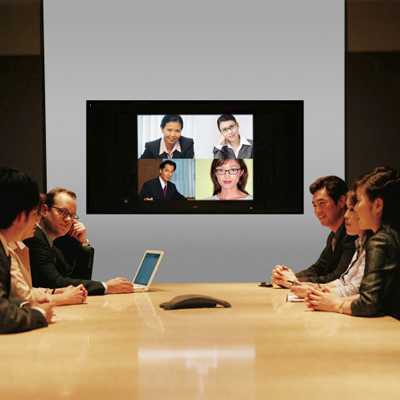
    NEW DELHI: Polycom, has announced that almost all (96 per cent) business decision makers believe video conferencing removes distance barriers and improves productivity between teams in different cities and countries, with India, Brazil and Singapore showing significant usage.

    According to the “Global View: Business Video Conferencing Usage and Trends” survey of more than 1,200 business decision makers, conducted by Redshift Research and commissioned by Polycom, video conferencing is an essential tool helping improve team collaboration and closing the physical and cultural gap between colleagues doing business across distances. 

    India leads the way in using video conferencing for new business with 60 per cent of respondents saying they use or would use video conferencing for new business. This was followed by Russia and Brazil at 49 and 44 per cent, respectively.  Across the globe, 38 per cent of respondents use video, or would use video, for new business.

    The survey found that video is becoming more pervasive in businesses across the globe.  When asked to choose their preferred methods of communications today, respondents ranked video conferencing third (47 per cent) after e-mail (89 per cent) and voice/conference calls (64 per cent), and those same business leaders and managers expect video to be their most preferred collaboration tool in three years (52 per cent), followed by e-mail (51 per cent) and voice/conference calls (37 per cent).  Respondents who use video conferencing today said the three biggest advantages are: better collaboration between globally dispersed colleagues (54 per cent), greater clarity of topics being discussed (45 per cent) and more efficient meetings (44 per cent).

    Over three quarters of decision-maker respondents (76 per cent) are now using video conferencing at work with 56 per cent of video users taking part in video calls at least once a week.  The survey found that in Brazil, India and Singapore that number jumps up significantly, as more than two-thirds of respondents in those countries use video conferencing at least once a week. 

    The survey also revealed that 83 per cent of respondents, and almost 90 per cent of those in their 20s and 30s, use consumer video conferencing solutions at home today, and almost half of all respondents use video conferencing at home at least once a week. 

    “The growing popularity of video conferencing at home, especially by millennials entering the workforce, is a big driver of increased preference for and adoption of video collaboration in the workplace,” said Polycom EVP and chief marketing operator Jim Kruger.

    “Some key factors to making video as popular in the office as it is at home is ensuring it’s easy to use, providing a high quality connection, delivering enterprise-grade security, and participants’ willingness to accept and adapt to cultural differences as they communicate across borders.  We’re seeing businesses around the world defy distance every day using video collaboration, including increasing productivity, enhancing employee engagement, improving time to market and helping to save lives,” he added. 

    The study also showed that laptops and desktops are the most popular devices for business video conferencing (75 per cent of respondents), followed by conference rooms (48 per cent) and mobile devices (42 per cent).  As video conferencing continues to become more pervasive, in three years laptops and desktops are still expected to be the most preferred device (72 per cent), while mobile devices and conference room usage will increase to 55 and 51 per cent, respectively.

    The survey provided sharp insights from video conferencing users into which behaviours constitute an ideal video meeting, and which are distracting for business decision makers. 

    The survey found the top three most important criteria for an ideal video meeting are: the ability to hear everyone clearly (69 per cent); technology that is straight forward and easy to use (60 per cent); and Good eye contact with colleagues/ everyone is clearly visible (58 per cent).

    Respondents who use video conferencing said the most distracting things, which should be avoided during video meetings, are: Mobile phone going off during a meeting (58 per cent), people attending from inappropriate places – e.g., public transit, in stores (52 per cent), people who are multi-tasking or look distracted – e.g., tapping on keyboard – (51 per cent), and inappropriate background distractions such as colleagues, music, noise (50 per cent).

    The Polycom survey shed light on different opinions between users of video collaboration in various countries, where one activity may be distracting in one country but accepted in another. 

    When asked if people not wearing business attire was a distraction, respondents from India, Singapore and Poland topped the list (30, 26 and 21 per cent, respectively), and on the other end of the spectrum, 13 per cent or fewer of respondents in the UK, France, Russia and The Netherlands find attire to be a distraction.

     In the Asia-Pacific (APAC) region, international communications (between colleagues in different countries) ranked as the most important use of video conferencing (65 per cent), versus 57 per cent for inter-country communications. 

    The U.S. leads the way in leveraging video conferencing for recruitment and hiring, as 32 per cent of video respondents said they use or would use video for this purpose, followed by APAC at 28 per cent.  

    In the Europe, Middle-East and Africa (EMEA) region, respondents were mostly using video conferencing to empower flexible working environments, which was cited as the second highest reason for using the technology, after “connecting with colleagues across the country.” 

    As access to video conferencing increases to virtually all employees with a mobile device or laptop, the survey found that video users in various business functions within organisations use video to defy distance in slightly differing ways: 

    CEOs and founders rated flexible working and inter- office/local meetings (50 per cent each) as their top reasons they use or would use video conferencing, followed by international meetings (46 per cent), new business/sales and company/department meetings (39 per cent each), and during an average week, the marketing function uses video collaboration the most frequently (64 per cent use video at least weekly) in an organisation, followed by IT/engineering and facilities (62 per cent use video at least weekly).  However, when it comes to daily usage of video at work, the HR function is the power user (32 per cent indicate they use video conferencing daily), followed by sales executives (28 per cent indicate they use video conferencing daily). The IT/engineering and manufacturing/supply chain functions are most likely to use video collaboration for international meetings, with 61 and 58 per cent of respondents, respectively, saying they use or would use video to collaborate face to face with colleagues internationally. In fact, according to the survey results, these are the two job functions that use video collaboration more for international meetings than local, in-country video meetings.

    All respondents, regardless of role, predominantly used video conferencing for inter-office meetings, followed by international inter-office meetings. Overwhelmingly, respondents said it is important to try and understand different country cultures when meeting using video conferencing (97 per cent) and 89 per cent of respondents called for etiquette rules to be established to help them better use video conferencing for business. 

    To help business better navigate these differences and drive more effective use of video conferencing, Polycom is launching Polycom’s Guide to Collaborating Across Borders, an insightful new guide designed to help readers understand the nuances of doing business across the globe.  This guide is one of several new resources for business leaders across almost every enterprise function – from IT to HR to the C-suite – to learn how video conferencing can help them defy distance and achieve their goals more quickly and efficiently. 

  • Draftfcb+Ulka’s Star One building future leaders

    Draftfcb+Ulka’s Star One building future leaders

    MUMBAI: On the back of some new client wins and growth in existing businesses, Draftfcb+Ulka has brought on board trainees from some of the management, communication, art and design schools in the country through their Star One programme.


    Elaborating on the programme, Draftfcb+Ulka Mumbai COO Nitin Karkare said” Star One is not just about talent. It is about nurturing a culture and a value system which is unique to this agency. We are delighted that the program is now in its 23rd year and growing from strength to strength.”


    The agency Star One is the advertising industry’s most comprehensive entry level training programme. The trainees are put through an intensive two-month training of which the first month is classroom sessions conducted by senior managers from the company.


    Draftfcb+Ulka vice president Anita Gokral was a part of the Star One 1995 batch sharing her own experience of Star One programme she said, “Star One guided me into the organisation’s culture, its approach to the business and exigencies of the real world. One could have picked this up on the job but the program gives you space to absorb, appreciate and develop a perspective without getting overbearing. It puts forward the Agency’s confidence and commitment which are critical to managing enthusiasm and morale in the initial years.”


    Similarly, Draftfcb+Ulka vice president HR Savita Mathai said, “The fact that this programme has been running consistently for 23 years now is testimony to the Agency’s commitment to growing and nurturing talent. For us it is not just about talent acquisition; it is about creating a culture that grows leaders.”


    More than 30 people graduate from Star One every year, and get deployed to Draftfcb+Ulka’s offices across the country.

  • Nimbuzz collaborates with ‘The Bachelorette’

    Nimbuzz collaborates with ‘The Bachelorette’

    MUMBAI: Nimbuzz, a leading communication and entertainment platform, has associated with Life Ok to provide an innovative and interactive brand engagement module on mobile – the Nimbuzz Chat Buddy for The Bachelorette, a dating reality show starring Bollywood starlet Mallika Sherawat. The Bachelorette Buddy would reach out to over 25 million Nimbuzz users in India on their mobile phones giving Life Ok an opportunity to initiate a dialogue with the masses through a format native to the Nimbuzz platform. The Buddy was made available to all Nimbuzz users from 5 October.

    Nimbuzz Chat Buddies appear as regular contacts on the chat roster of Nimbuzz users across India. The Bachelorette Buddy is an extension of Life Ok’s reality show that focusses on finding a match for Mallika Sherawat from among the 30 contestants. The Buddy intends to create one to one engagement through questions around Mallika’s eventful Bollywood career and her exciting personal life. The Bachelorette Chat Buddy on Nimbuzz gives users the opportunity to make live suggestions to Mallika on who she should date and who she could do without.

    Speaking about the association, Nimbuzz head of monetisation and strategy Anubhav Sharma said, “Nimbuzz Chat Buddies have been extremely successful in connecting the biggest brands to their relevant audiences. We are extremely excited about our partnership for primarily two reasons. Firstly, this is the first time that a reality show of such scale has recognised the engagement value that Chat Buddies bring to the entertainment industry and secondly our foray into the lifestyle-entertainment space is being marked by some of the biggest names in the ecosystem including Mallika Sherawat and Star network.’’

    Commenting on the launch of The Bachelorette’s biggest mobile campaign powered by Nimbuzz, Life OK head of marketing Pratik Seal said, “The Bachelorette is a unique concept that looks to capture the interest of a wide audience irrespective of their demographics. Keeping in mind the uniqueness of the format and the audience, we were looking at associating ourselves with a platform that could not only reach out to the masses but also offer engagement value that makes our users feel as much a part of the show as the contestants. We are confident that our partnership with Nimbuzz will be immensely successful in generating interest around the show.’’

    The Bachelorette Buddy on Nimbuzz will be the core of the brands mobile strategy for The Bachelorette. The reality shows premiered on 7 October at 9:30 pm on Life Ok.

  • McDowell extends the ‘Spirit of Friendship’ through Karaoke app

    McDowell extends the ‘Spirit of Friendship’ through Karaoke app

    MUMBAI: Over the last four years, the McDowell’s No.1 has been addressing its young Indian target audience with its positioning as the No.1 spirit of friendship with the intent to add cheer to moments of camaraderie and friendships amongst the youth.

    It has come up with an integrated approach of communication wherein it is important to actively engage with the youth. Music has always been at the forefront of the young Indian’s favorite hobbies. Hence, Karaoke became McDowell’s No.1’s perfect opportunity to reach out to its consumers.

    The McDowell’s No.1 came up with a Karaoke App which is an easy to download mobile App across all platforms. The aim of the app is to create moments involving the participation of friends whenever and wherever, bringing to life the role of McDowell’s No.1 as the No.1 spirit of friendship. McDowell’s No.1 leveraged its brand ambassadors Chris Gayle and his friends – actor Purab Kohli and Indian Idol Meiyang Chang – to come up with a fun commercial.

    The app is meant for a group of friends who want to have a good time regardless of the time or place feels Vipul Thakkar

    DDB Mudra South ECD Vipul Thakkar said, “The McDowell’s No.1 Karaoke App is meant for a group of friends who want to have a good time regardless of the time or place. With this app you don’t need to be at a party, or a specific venue, and neither do you have to be a great singer to enjoy karaoke. And what better way to communicate this than to show a hard-hitting batsman become a singing sensation overnight and belting out totally different kind of hits from his app.”

  • Radiation norms non-compliant mobiles can no longer be sold in India

    NEW DELHI: The government, which had introduced stringent mobile radiation norms from 1 September last year, has now said in new norms that non-complaint phone makers will not be permitted to operate in India.


    Companies manufacturing or importing mobile phones for sale in India will have to ensure that the handsets are compliant with new norms. In the EMF (Electromagnetic Frequency) Radiation Standards issued last year, mobiles to be manufactured from 1 September 2012 were to have one tenth of the radiation levels compared to the then mobiles.

    The government had also said at that time that the mobile handsets with existing designs which were compliant with 2.0 W/kg averaged over 10 gram of human tissue would continue to co-exist up to 31 August 2013. Thereafter, only the mobile handsets with revised SAR value of 1.6 W/kg would be permitted to be manufactured or imported in India.


    It is expected that this may also help in curbing illegal imports and help Indian manufacturers such as Micromax, Karbonn, Lava and Spice to avoid pricing pressure in the market since they will not compete with lesser known rivals.


    Under the new rule put in place by the Communication and Information Technology Ministry, the exposure of radiation emitted from a mobile phone over a gram of human tissue should not be more than 1.6 watt if a consumer uses it for six minutes.


    All companies will have to display radiation emitted from mobile phones on the handset in terms of SAR (specific absorption rate) unit. According to a Department of Telecom official, no fresh stock of non-compliant mobile phones will be allowed to be sold from 1 September.


    Bureau of India Standards is also working on certain norms which are expected to provide clause for seizure of non-compliant handsets, the official said. These guidelines made India one of the select few countries in the world to have stringent, established in the interest of public health, for mobile towers and mobile handsets. Indian standards are now 10 times more stringent than more than 90 per cent countries in the world.


    Furthermore, the Manufacturer‘s mobile handset booklet will contain safety precautions. All cell phone handsets sold in the market in India will comply with relevant standards and shall be available in hands free mode.


    A scientific study in India-specific context is being undertaken jointly by the Department of Telecom and Department of Science and Technology in collaboration with the Indian Council for Medical Research, the Ministry of Environment and Forests, and the Science & Technology Ministry to derive norms based on credible scientific evidence taking into account diversity of Indian social context.


    While guidelines for consumers on mobile handset usage have been issued and placed on the DoT Web site (http://www.gov.dot.in), they include keeping distance – Holding the cell phone away from the body to the extent possible; using a headset (wired or Bluetooth) to keep the handset away from and not pressing against the head, and limiting the length of mobile calls and using text.


    Radio Frequency (RF) energy is inversely proportional to the square of the distance from the source – being very close increases energy absorption much more. Other precautions include putting the cell phone on speaker mode and not carry a mobile phone that is close to the chest or pants pocket. When a mobile phone is switched-on, it automatically transmits at high power every one or two minutes to check (poll) the network.

  • Digiworld appoints Value 360 Communications as their strategic communication partner

    Digiworld appoints Value 360 Communications as their strategic communication partner

    MUMBAI: Digiworld has appointed Value 360 Communications, as their strategic communication partner to manage all the external communications and public relation activities across India. Value 360 Communications, an affiliate of Huntsworth, is one of the leading Public Relations (PR) Agencies, headquartered in New Delhi with five network offices and 36 regional partners in India. Value 360 claims to have helped more than 100 startup brands from across the world to fulfil their corporate communication requirements.

    Digiworld, a large network of stores showcasing leading brands in consumer electronics, home appliances, mobile phones, laptops, cameras and other IT accessories has partnered with Value 360 Communications to build brand awareness and manage external communication. The company looks forward to provide experience of latest technology by vast array of brands.

    Commenting on the tie-up Digiworld COO Jaideep Rathore said, “We were looking for an agency that can partner with us to further assist us in communicating our newly unveiled brand identity and building a progressive, dynamic and contemporary upholding. We are affirmative that Value 360 Communications‘, knowledge of emerging markets and capability to seamlessly implement national campaigns will be invaluable in positively putting across our brand‘s growth. Value 360 Communication‘s proficiency in establishing the reputation of businesses appealed to us and the company‘s strategic understanding of the industry landscape ascertains our belief in this association.”

    Value 360 Communications director and co-founder Kunal Kishore commented on the appointment, “We are extremely elated on our alliance with Digiworld. We anticipate establishing compelling PR activities around the brand messaging and the newly coined identity. Our successful experience and key learning congregated over the years will help us achieve the brand‘s communication objectives. Digiworld‘s vast network and multi brand availability are indication for its quality services and offerings. We are positive to highlight brand‘s growth and progress and the essence behind its new brand positioning.”

    Value 360 Communications will work with Digiworld on a nationwide mandate, spearheaded by its New Delhi office. The agency has been tasked with drawing on its strategic communications expertise to creatively engage consumers and stakeholders on a nationwide scale.

  • Rediff.com launches improved news app

    Rediff.com launches improved news app

    MUMBAI: Online provider of news, information, communication, entertainment and shopping services Rediff.com India Limited has modified and upgraded its Rediff News App service. Users will now be able to access news from over 30,000 Indian and International sources for free by downloading the news app.

    As part of the enhancements, the app also aggregates news from top news sources such as Reuters, The New York Times, Washington Post, The Times of India, The Economic Times, and The Hindu.

    In order to make sure that the app can be used by maximum mobile users, Rediff has released multiple versions of the app for mobile devices ranging from those using the latest versions of iOS, BlackBerry, Windows 8, and Android, to feature phones using the classical Java and Symbian operating systems. Each version is designed to provide the best user experience on the respective operating system and provides aggregated news content from multiple sources.

    The app has a tiled interface design that displays the latest news with images and a short description across popular categories such as top news, world, business, sports, cricket, and entertainment. A user can tap on an image to get a summary of the news and a further tap takes him/her to the full article on the original news source.

    The app also provides an offline access to previously downloaded news content even when the user is not connected to the internet, providing each user with a unique and differentiated news search and viewing experience.

    Rediff.com chairman and CEO Ajit Balakrishnan said, “The Indian mobile internet user base is expected to grow exponentially on the back of initiatives by the Government of India and leading Indian telecom service providers. Our launch of the Rediff News app that can work on almost all mobile phones provides users with better access to worldwide news and enhances search functionality. This is part of our continued strategy of enhancing our offerings to improve the Rediff user experience and positions Rediff to take advantage of future growth opportunities.”