Tag: communication

  • TRAI says nyet to regulating communication  OTTs

    TRAI says nyet to regulating communication OTTs

    MUMBAI: The Indian communication OTT ecosystem can breathe easier now. After slapping oodles of regulation on the TV sector, as voiced regularly by the television broadcasting community, the Telecom Regulatory Authority of India (TRAI)  has recommended that no controls need to be imposed on  OTT services such as voice over internet telephony, SMS, video calling, and instant messaging services.

    On three counts, the TRAI has agreed to wait for it to evolve and consensus on regulations at the ITU level to emerge before imposing any further controls on OTTs:

    . Market forces may be allowed to respond to the situation without prescribing any regulatory intervention. However, developments shall be monitored and intervention as felt necessary shall be done at appropriate time.

    The TRAI further said in a report released today that the increase in usage of OTT, traffic of telecom service providers has also grown. “Various studies on appropriate business models are already under consideration in various jurisdictions and it is emerging. Therefore, any regulatory prescription in haste may leave adverse impact on industry as a whole.”

    Read our coverage on TRAI

    No regulatory interventions are required in respect of issues related with privacy and security of OTT services at the moment.

    The TRAI noted that:  ”After studying the issues, it has been observed that architecture of OTT communication services is evolving to protect the end users and encryption technology deployed in a manner which prevents intermediaries from getting the communication in a clear text or in an intelligible form. Imposition of any requirements to cater to get the details of communication in an intelligible form or clear text would either lead to change in the entire architecture of such OTT services which might not provide same level of protection as offered today or would require to introduce provisions which may make the agents involved in the communication vulnerable to unlawful actors.”

    It is not an opportune moment to recommend a comprehensive regulatory framework for various aspects of services referred to as OTT services, beyond the extant laws and regulations prescribed presently. The matter may be looked into afresh when more clarity emerges in international jurisdictions particularly the study undertaken by ITU.

    Regulation of OTT services is a widely debated topic in many jurisdictions as well as in ITU. While few jurisdictions have started exploring possibilities to regulate some aspects of a few OTT services through legal and technical measures but these efforts are yet in nascent stage and the overwhelming majority of jurisdictions and the ITU are still studying various aspects of OTTs. Since, ITU deliberations are also at study level, therefore conclusions may not be drawn regarding the regulatory framework of OTT services. However, in future, a framework may emerge regarding cooperation between OTT providers and telecom operators. The Department of Telecommunications (DoT) and Telecom Regulatory Authority of India (TRAI) are also actively participating in the ongoing deliberations in ITU on this issue. Based on the outcome of ITU deliberations DoT and TRAI may take appropriate consultations in future.

    Market forces may be allowed to respond to the situation without prescribing any regulatory intervention. However, developments shall be monitored and intervention as felt necessary shall be done at appropriate time.

    Industry has anywhere for some time been stating that the Code of Criminal Procedure, 1973 and the Information Technology Act, 2000 are robust enough to regulate the OTT sector. 

  • These brands faltered in their communication

    These brands faltered in their communication

    NEW DELHI: There have been ample researches by Kantar stating how important it is for the brands to have a voice amidst this lockdown and keep advertising. It has been insisted that brands stay creative, empathetic, and understand consumer needs as they work on their campaigns. 

    Dwelling at length on how brands should be planning their communication to Indiantelevision.com in an earlier interaction, Dentsu One president Harjot Singh Narang said that brands will have to go deeply humane and adapt to the new paradigm exactly like how human relationships adapt to and grow in uncertain times. Wunderman Thompson South Asia chairman and group CEO Tarun Rai had also mentioned that brands need to be empathetic in their approach. 

    However, despite so much discussion about what and how a brand should be promoting itself during this period, there were some brands that faltered in their planning. The biggest example of this came in the form of KENT RO’s distasteful, classist, and misogynistic ad for its atta maker. 

    The social media ad was called out by netizens and brand experts alike and the brand quickly took it down with an apology, stating that it was ‘unintentional’. 

    There were two other campaigns that caught the attention of communication consultant Karthik Srinivasan, which he talked about in his blog and LinkedIn page. 

    The first one was cooking oil brand Gold Winner, which did a ‘shabby’ job out of its influencer campaign on social media. 

    The brand used images from other popular cooking channels and websites without taking creators’ permission or giving credits and used them for a mass copy-paste campaign on Twitter. The worst part was that they misused the sentiment of “we cooked for our mom” to earn some brand points. 

    Srinivasan wrote in his blog, “I have no clue why brands and agencies still indulge in such monumentally stupid and shallow online promotions. It’s not as if they know all these things. The only explanation is that they know it and couldn’t care less. All they want is a LOT of people talking about their product with stock statements and stock photos. It doesn’t need to be real for them and even questions and mockery of the campaign don’t really matter to them at all. You could call it anything – confidence, bravado, chutzpah… or idiocy.”

    Next was not as much a brand going wrong with communication but the unfortunate placement of its ad next to a piece of negative news. Amul and Indigo found their ads placed quite close to the news of Indigo fliers testing positive for Covid2019 on the first day of them resuming flight operations. 

    Most recently, Diet Sabya, an anonymous social media account calling out designers and celebrities for copying designs, voiced its opinions on a far graver issue by calling out jewellery brand Dhora for creating a Covid-themed necklace. 

    The brand clarified that it sees the design as a lesson that all have learnt from the crisis. It wrote in an Instagram story, “I guess, it’s the lessons we learn from all the crisis, wars, struggle for independence, etc. and yet remember that day as a lesson to empower our present. You can shut your eyes with disgust to a crisis or you can take the learnings and implement it to make a better future.”
    Dhora further added, “I am glad that we all can co-exist happily with different opinions yet support each other. We are all game for criticism. Thanks to our supporters and customers. However, it’s probably the worst time to pull each other down @dietsabya. All we have right now is each other.”

    Diet Sabya was quick to respond stating, “Trying to leverage Covid-19 by making over-priced necklaces is anything but privilege… Do you really think that any more would want to remember a crisis that has so far uprooted the lives of millions? Do you really think people want to remember the worst recession in history? Do you really think ANYONE would want to wear this ‘ART’ to remember the 362,124 lives lost?”

  • COVID-19 a disruptor that comes with great learnings

    COVID-19 a disruptor that comes with great learnings

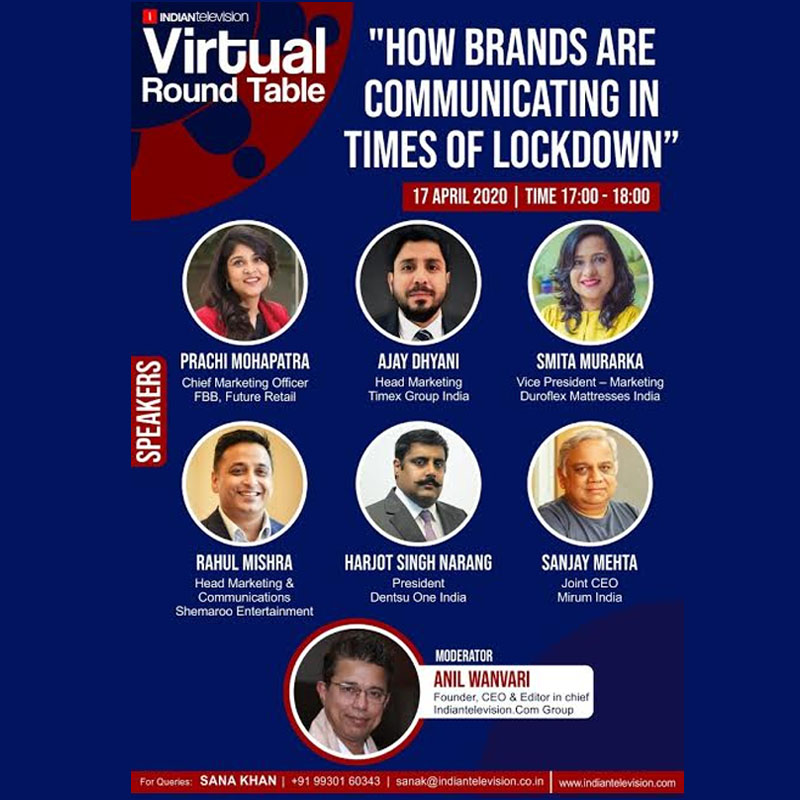
    NEW DELHI: The ongoing COVID-19 crisis has come as a great leveller to the brands and marketing industry, conceded a panel comprising industry experts during a virtual panel discussion on “How brands are communicating in times of lockdown”, organised on Friday by Indiantelevision.com.

    The panel included Future Retail CMO-FBB Prachi Mohapatra, Timex Group India head marketing Ajay Dhyani, Duroflex Mattresses India VP-marketing Smita Murarka, Shemaroo Entertainment head marketing and communications Rahul Mishra, Dentsu One India president Harjot Singh Narang, and Mirum India joint CEO Sanjay Mehta.

    The panel was moderated by Indiantelevisio.com CEO, founder, and editor-in-chief Anil Wanvari.

    The participants agreed that while the pandemic came as a huge disruptor, causing feelings like anxiety and doubt, it gave them a better understanding of how their respective industries function.

    Murarka quipped that she took on the charge of Duroflex just a month prior to the lockdown and while it was challenging, it really helped her figure out the industry and the brand proposition, which wouldn’t otherwise have been possible in such a short span.

    According to Narang, the pandemic also helped great human relationships flourish with teams bonding over the work in critical times and client relationships getting better.

    The panel also agreed that once the situation gets back to the “new normal”, which according to Anil Wanvari would have nothing normal, will come as another disruption in the industry, making people more mindful of their purchases. Mehta said that a young person who might have faced a job loss or pay cut might be thinking about saving more in the coming future and may skip the backpacking trip one took.

    Mohapatra stayed hopeful that the ongoing pandemic might once again result in a lipstick effect for the fashion industry and especially for her brand whose USP lies in its pricing.

    The panellists predicted that the business and life might bounce back to normalcy around September-October, which they are seeing as a great time for the businesses to pick up again, given that it will be the festive season in India.

  • ISRO launched 8 communication satellites over 4 years

    ISRO launched 8 communication satellites over 4 years

    NEW DELHI: Eight communication satellites were launched by India’s space agency ISRO over the last four years that carried transponders in various frequency bands of C, extended C, Ku, Ka and S for telecommunications, broadcast and mobile communication services.

    Navigation satellites were part of the indigenous constellation NavIC, India’s own regional navigation system. Navigation satellites carried navigation payloads in L and S-bands for providing position, navigation and timing services.

    Earth Observation satellites are used for deriving inputs for natural resource management, disaster management, cartographic applications, weather, climate and ocean studies.

    Communication Satellite

    8

    Navigational Satellite

    7

    Remote Sensing Satellite

    5

    Meteorological satellite

    2

    Science Satellite

    1

    Technology Demonstration/ Student Satellite

    9

    Astrosat (science payload) is a unique multi wavelength observatory in space, providing an opportunity for observation of celestial sources in ultra-violet, optical and X-ray wavelength bands.

    ISRO has also launched satellites for technology demonstration and student satellites to encourage the young generation to work in the field of space.

    This information was provided by the Minister of State in the Prime Minister’s Office for Personnel, Public Grievances and Pensions, Atomic Energy and Space, Dr Jitendra Singh, in Lok Sabha (Lower House of Parliament) on Wednesday.

    Also Read :

    ISRO readies GSAT-6A satellite for launch

    ISRO, DoT turf wars delaying connectivity reach: govt official

    ISRO to double annual satellite launch

  • Communication of Reham Khan’s exclusive interview with WION

    Communication of Reham Khan’s exclusive interview with WION

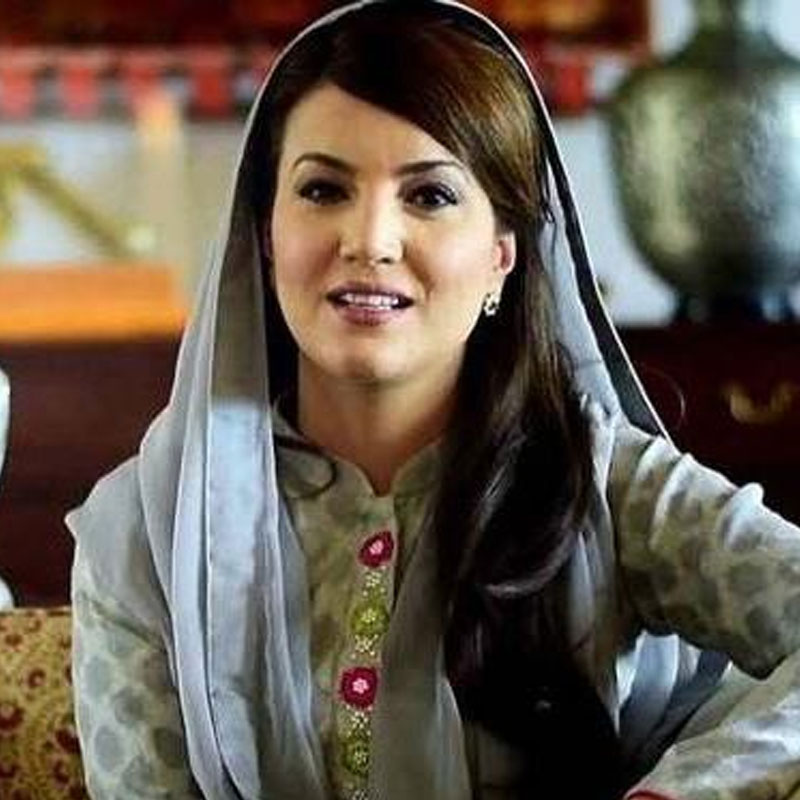
    MUMBAI: Imran khan’s ex-wife has spoken exclusively to WION on his recent remarriage. Reham Khan who was Imran Khan’s second wife, told WION from her home in London that ‘Imran Khan’s latest marriage is a political misadventure, those who seek power need to make good judgements’. Imran khan tied the knot for the third time recently. He married Bushra Bibi whom he calls his spiritual guide .Reham khan told WION she was never part of Imran’s political life but was accused of political ambitions ‘when i had none’.

    The former television anchor hinted at massive political corruption in Pakistan, alleging a legislator’s seat ‘goes for 20 plus crores’. Reham khan also spoke about Pakistan’s troubled history with democracy and slammed the country for banning the Indian film ‘Padman’. On her soon-to-be released autobiography, Ms. Khan said, ” I was told ladies don’t publish books”.

    On being asked what message she had for Imran khan and his new wife, Reham khan said, “The marriage is good news for Pakistan, as long as Mr & Mrs Khan are busy, there is little chance of their party coming to power. The hypocrisy of Imran Khan isn’t lost on anyone”.

  • 15 operational sats for communication, 26 under development

    NEW DELHI: Fifteen of the 42 currently operational satellites are being utilised to meet the requirements of the communication industry, the minister of state in the department of space Jitendra Singh has said.

    Singh told the Parliament that the operational satellites in orbit comprise 18 earth observation (including meteorological), 15 communication, seven navigational and two Space Science satellites. Another 26 satellites are currently under various stages of realisation.

    The minister said that a plan is in place to suitably augment the space infrastructure to ensure continuity of services and to meet further requirements in these areas.

    Satellite-based data and services are being used by various ministries/departments in planning, monitoring and evaluation of developmental activities in various sectors, which include agriculture, forestry and environment, water resources, urban and rural planning, asset mapping, mineral prospecting, ocean resources, meteorology, satellite communication, location based services, tele-education, tele-medicine and disaster management support.

    In order to step up the building of satellites, the Indian Space Research Organisation is involving a consortium of industries for assembly, integration and testing (AIT) of satellites, and the sub-systems and infrastructure are being provided by ISRO. The AIT of a navigation satellite is in progress and the satellite is getting ready for launch in second half of this year.

    In order to accelerate the use of satellites and its services, an outreach facility has been established in Hyderabad to cater to the requirements of capacity building in space-based applications. This facility caters to several activities like training, information kiosks, content generation, outsourcing and mass communication. The facility comprises a large number of thin client systems providing access to satellite data and various software tools for building applications for various developmental activities.

    ALSO READ :

    Communication facilities increased with 7 satellites in last 3 years

    TV channels’ failure to start in a yr: 18% permits cancelled

    Telangana govt. wishes to own satellite to air TV channels

    Transponder leasing yields Rs 7.5 bn for communication satellites

  • Second digital India summit to be launched by Times Network

    Second digital India summit to be launched by Times Network

    MUMBAI: In a bid to help speed up the transition to a vibrantly Digital India, Times Networkannounced the launch of the Second Digital India Summit (SDIS). The Network claims that the summit will lead the country on the path to digitalization by providing the leaders and digital evangelists a platform to ideate on important areas and issues, and also by recognizing and honouring individuals, businesses and organizations that are harnessing the power of information, communication and technology and digital tools.

    SDIS will be telecast on Times Now and ET Now. The summit will get under way on 22 March 2016, with a day-long event in New Delhi, which will begin with a keynote address from the union minister of communications and information technology, Ravi Shankar. The session will be addressed by Dell’s Asia Pacific and Japan president Amit Midha and Dell emerging markets chairman.

    Times Network managing director and CEO M K Anand said, “India is surging ahead on the path of progress, powered by young, creative, digitally-savvy people and a strong government emphasis on the best use of information, communication and technology to usher in digitization across cities and platforms. As the nation’s most influential network with the biggest English and business news channels that inform and empower viewers, Times Network is proud to announce the second digital India summit. Our goal is to contribute to transforming India into a global economic superpower over the next decade, and we are confident that the second digital India summit will create a significant positive impact.”

    The day will conclude with the Digital India Summit awards being given out to those leaders whose efforts and initiatives have contributed the most to the Digital India Summit’s primary objectives to help India on the path to transform business processes, improve delivery of public services and thereby to create a positive impact on society. SDIS works to identify and honour the top individual torchbearers harnessing the power of ICT and digital.

    To promote SDIS, Times Network says that it will run and exhaustive high-decibel call-for-entries campaign to invite participation from businesses and organizations that are harnessing the power of technology and transforming businesses and lives of people. The entire process, from call for entries to the selection and short listing process, through an eminent jury meet, and finally, the winners’ announcement and felicitation on the awards night, will flow across a month.

    The awards are divided into two parts, Good For India and Good For Organizations.

    While the Good For India awards recognize the initiatives taken by stakeholders towards the accomplishment of the digital India dream, on other hand the Good for Organizations awards will recognize organizations that have made the first move towards digital India by using ICT in integrating people, processes and data to achieve business transformation and growth.

    Good for India has seven categories – e-governance solutions, e-education learning solutions, e- healthcare delivery solutions, skills and employment solutions, energy solutions, environmental solutions and agricultural solutions. Good for organizations has four categories under digital enterprise which are manufacturing, services, digital start-up innovators and digital social innovation.

    Supporting the event are the lead and award partner Huwaei, lead partners GTL Infrastructure and Union Bank of India, knowledge partner MAIT and Tech 4 good partner NASSCOM foundation.

  • Second digital India summit to be launched by Times Network

    Second digital India summit to be launched by Times Network

    MUMBAI: In a bid to help speed up the transition to a vibrantly Digital India, Times Networkannounced the launch of the Second Digital India Summit (SDIS). The Network claims that the summit will lead the country on the path to digitalization by providing the leaders and digital evangelists a platform to ideate on important areas and issues, and also by recognizing and honouring individuals, businesses and organizations that are harnessing the power of information, communication and technology and digital tools.

    SDIS will be telecast on Times Now and ET Now. The summit will get under way on 22 March 2016, with a day-long event in New Delhi, which will begin with a keynote address from the union minister of communications and information technology, Ravi Shankar. The session will be addressed by Dell’s Asia Pacific and Japan president Amit Midha and Dell emerging markets chairman.

    Times Network managing director and CEO M K Anand said, “India is surging ahead on the path of progress, powered by young, creative, digitally-savvy people and a strong government emphasis on the best use of information, communication and technology to usher in digitization across cities and platforms. As the nation’s most influential network with the biggest English and business news channels that inform and empower viewers, Times Network is proud to announce the second digital India summit. Our goal is to contribute to transforming India into a global economic superpower over the next decade, and we are confident that the second digital India summit will create a significant positive impact.”

    The day will conclude with the Digital India Summit awards being given out to those leaders whose efforts and initiatives have contributed the most to the Digital India Summit’s primary objectives to help India on the path to transform business processes, improve delivery of public services and thereby to create a positive impact on society. SDIS works to identify and honour the top individual torchbearers harnessing the power of ICT and digital.

    To promote SDIS, Times Network says that it will run and exhaustive high-decibel call-for-entries campaign to invite participation from businesses and organizations that are harnessing the power of technology and transforming businesses and lives of people. The entire process, from call for entries to the selection and short listing process, through an eminent jury meet, and finally, the winners’ announcement and felicitation on the awards night, will flow across a month.

    The awards are divided into two parts, Good For India and Good For Organizations.

    While the Good For India awards recognize the initiatives taken by stakeholders towards the accomplishment of the digital India dream, on other hand the Good for Organizations awards will recognize organizations that have made the first move towards digital India by using ICT in integrating people, processes and data to achieve business transformation and growth.

    Good for India has seven categories – e-governance solutions, e-education learning solutions, e- healthcare delivery solutions, skills and employment solutions, energy solutions, environmental solutions and agricultural solutions. Good for organizations has four categories under digital enterprise which are manufacturing, services, digital start-up innovators and digital social innovation.

    Supporting the event are the lead and award partner Huwaei, lead partners GTL Infrastructure and Union Bank of India, knowledge partner MAIT and Tech 4 good partner NASSCOM foundation.

  • AP Tourism to spend 40 crore on communications campaign

    AP Tourism to spend 40 crore on communications campaign

    BENGALURU: State tourism departments across India have become more and more visible across the Indian media and mass communication space, including the digital space. Andhra Pradesh (AP) Tourism too has decided to pile on the aggro with a budget of Rs 40 crore for this fiscal.


    AP Tourism Development Corporation (AP Tourism) conducted a road-show – “Fall in Love with Amazing Andhra Pradesh” – in Karnataka at Bengaluru in order to promote tourist places in the state of AP. The state plans to use the tagline ‘Eeverything’s possible’ in its communications.


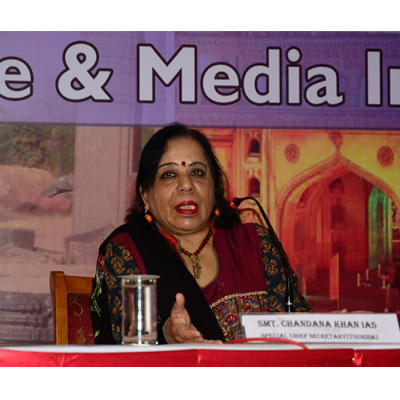
    Government of Andhra Pradesh, special chief secretary (Tourism) Chandana Khan says, “The budgeted spends for next year are likely to be higher. We use a number of agencies for creative as well as media buying.”


    “People are under impression that Andhra is only a land of myriad of opportunities and industrious people. The state has a rich culture and heritage legacy. We are putting in a lot of efforts to attract tourists to the state. A number of ideas are under consideration. With this road-show, we also look forward to have tie-ups with tour operators in the state,” she further adds.


    Hyderabad will also stage the first edition of the Hyderabad Travel Meet & India Tourism Heritage Conclave from 21 to 24 February. “While Hyderabad Travel Meet (HTM) will showcase Andhra Pradesh as a destination, bringing together all buyers, sellers and potential consumers, the India Tourism Heritage Conclave will have seminars and panel discussions on various aspects of the Tourism industry,” says Khan.


    AP Tourism has tied up with airlines to offer complete packages such as Balaji Darshan. It has also placed its facilities through Online Booking and has increased accessibility of making AP Tourism bookings in a big way.

  • Ethos eyeing television as a part of mass media communication mix

    Ethos eyeing television as a part of mass media communication mix

    BENGALURU: Indian chain of luxury watch studios Ethos Limited (Ethos) is looking at television commercials as a part of its mass media communications mix during the next fiscal. The company is considering business news channels such as NDTV Profit as well as some niche channels. Ethos is an authorised retailer of over 65 luxury watch brands.

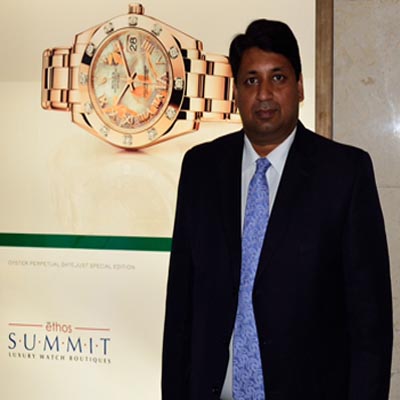
    The company plans to up by around 50 per cent its media spends revealed Ethos associate director Manoj Gupta to www.indiantelevision.com. “We will start in a small way, and gradually up our presence on television,” revealed Gupta.

    Industry sources peg Ethos spends between Rs 7 to 10 crore per year, this includes contributions from the major brands that it sells. At present, Ethos uses print, outdoor and in-house quarterly publication Ethos Summit, besides the digital online medium, which has seen more than three lakh unique visitors per month to its portal claims Gupta.

    So far, its media planning has been done in-house. Ethos is having discussions with a couple of media buying agencies in Mumbai and will chalk out its media buying plans’ once it picks a suitable partner. While most of its creative work is done in conjunction with the brands, a lot of the work is done by a Delhi based creative agency Scribbles.

    “The average price of a fashion watch in India would be between Rs 15,000 to 20,000, a premium watch would cost about Rs 1 to Rs 1.25 lakhs, while a luxury watch would cost Rs.7 lakh upwards,” informed Gupta.

    Ethos estimates the size of the fashion, premium and luxury watches at Rs 1500 crore and expects it to grow to Rs 4,000 crore over the next three years. The company has 41 outlets in 12 cities of India, of which about eight sell fashion watches, about seven luxury watches. It also has single brand watch stores for brands such as Rolex, Omega and Swatches.

    Ethos generated a revenue of Rs 210 crore, last year and Gupta is confident of a 25 to 30 per cent growth in revenue this fiscal.

    Gupta was in Bengaluru for the launch of a range of core and professional Rolex watches, earlier launched at Baselworld 2013, one of which costs Rs 44.68 lakh.