Tag: communication satellite

  • ‘Demand-driven’ communication satellite GSAT-24 launched; capacity leased to Tata Play

    ‘Demand-driven’ communication satellite GSAT-24 launched; capacity leased to Tata Play

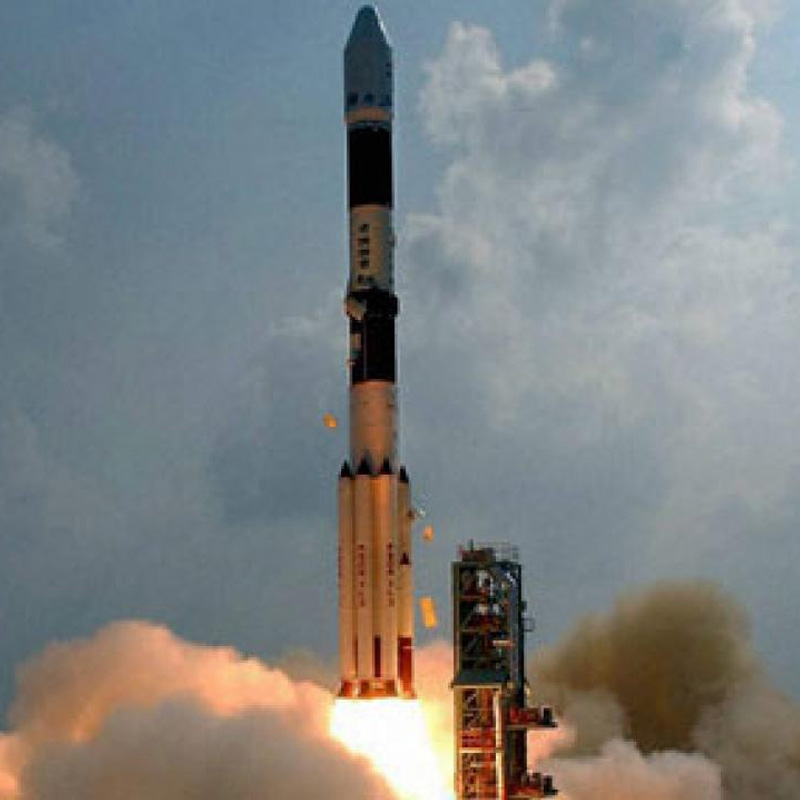
    Mumbai: NewSpace India (NSIL) on Thursday successfully launched GSAT-24 in its first “demand-driven” communication satellite mission post space sector reforms, leasing the entire capacity on board to direct-to-home (DTH) service Tata Play, as per a news agency report.

    The 24 Ku-band communication satellite was built by Indian Space Research Organisation (ISRO) for NSIL. It will provide pan-India coverage to meet DTH application needs, stated the report.

    The satellite was launched by French company Arianespace in French Guiana (South America).

    As part of the space reforms announced by the government in June 2020, NSIL incorporated in March 2019, was mandated to undertake operational satellite missions on a “demand-driven” model, wherein it had the responsibility to build, launch, own and operate satellites and provide services to its committed customer.

    GSAT-24 is configured on ISRO’s proven I-3k Bus with a mission life of 15 years.

    “Demand-driven” mode basically means when a satellite is launched, one will know who the end customers are going to be and what’s the kind of utilisation and commitment so that you have very effective utilisation of this satellite capacity once it goes into orbit,” the news report said qouting an NSIL official.

    “Earlier the mode was supply driven, with capacity being leased after the launch with largely no firm commitment by customers beforehand,” the official added.

    “The entire mission including satellite, satellite launch, launch campaign, insurance, in-orbit maintenance, transformation and support is fully funded by NSIL. Once the satellite is in orbit it will be fully funded and owned by NSIL,” NSIL chairman & managing director Radhakrishnan Durairaj also opined in the report.

    Post the successful launch of GSAT-24, NSIL would own and operate 11 communication satellites in-orbit and meet the bulk of the communication needs of the country.

    NSIL is the commercial arm of ISRO and a public sector undertaking by the Government of India.

  • DTH-aiding GSAT-19 launch plan under way

    DTH-aiding GSAT-19 launch plan under way

    NEW DELHI: The Indian Space Research Organisation is working towards putting into orbit an indigenous communication satellite GSAT-19, weighing 3.3 tonne and carrying Ka/Ku band payloads. Ku Band is suitable for direct-to-home platforms.

    The satellite assembly is in an advanced stage, the space minister Jitendra Singh told the Rajya Sabha yesterday.

    Meanwhile, the launch campaign for the first developmental flight of GSLV Mk-III commenced on 29 September 2016 at Satish Dhawan Space Centre (SDSC), Sriharikota.

    ISRO is working towards increasing the payload capacity of GSLV Mk-III beyond four tonnes in the coming years. The strategies identified to achieve the increased payload capacity include performance improvement of propulsion systems, inert mass optimisation and miniaturisation of avionics system.

    The Chandrayaan-2, comprising Orbiter, Lander and Rover, with a total payload mass of 3250 kg is planned to be launched on board GSLV Mk-II during the first quarter of 2018.

    Also read:

    http://www.indiantelevision.com/satellites/satellite-launches/isro-to-launch-83-satellites-on-single-rocket-create-world-record-161029

    http://www.indiantelevision.com/satellites/satellite-launches/gsat-18-successfully-launches-new-capacity-for-dth-operators-tv-channels-161006

  • DTH-aiding GSAT-19 launch plan under way

    DTH-aiding GSAT-19 launch plan under way

    NEW DELHI: The Indian Space Research Organisation is working towards putting into orbit an indigenous communication satellite GSAT-19, weighing 3.3 tonne and carrying Ka/Ku band payloads. Ku Band is suitable for direct-to-home platforms.

    The satellite assembly is in an advanced stage, the space minister Jitendra Singh told the Rajya Sabha yesterday.

    Meanwhile, the launch campaign for the first developmental flight of GSLV Mk-III commenced on 29 September 2016 at Satish Dhawan Space Centre (SDSC), Sriharikota.

    ISRO is working towards increasing the payload capacity of GSLV Mk-III beyond four tonnes in the coming years. The strategies identified to achieve the increased payload capacity include performance improvement of propulsion systems, inert mass optimisation and miniaturisation of avionics system.

    The Chandrayaan-2, comprising Orbiter, Lander and Rover, with a total payload mass of 3250 kg is planned to be launched on board GSLV Mk-II during the first quarter of 2018.

    Also read:

    http://www.indiantelevision.com/satellites/satellite-launches/isro-to-launch-83-satellites-on-single-rocket-create-world-record-161029

    http://www.indiantelevision.com/satellites/satellite-launches/gsat-18-successfully-launches-new-capacity-for-dth-operators-tv-channels-161006