Tag: committee

  • MIB gives an extension to broadcasters on TV rating committee’s report

    MIB gives an extension to broadcasters on TV rating committee’s report

    Mumbai: The ministry of information and broadcasting (MIB) has granted an extension on the deadline seeking comments from broadcasters on the report on ‘Guidelines for TV Rating Agencies in India’ till 30 November.

    Major broadcasting associations including the Indian Broadcasting and Digital Foundation (IBDF), News Broadcasters Association (NBA), and News Broadcasters Federation (NBF) have received the report.

    The MIB had reached out to broadcasters earlier in the month seeking their comments by 17 November on the report. The report was submitted by a committee instituted by MIB on 4 November 2020 and led by Prasar Bharati chief executive officer Shashi Shekhar Vempati. The committee submitted its 39-page report in January.

    Govt committee seeks to set up a specialised regulator for media ratings in India

    The comprehensive report highlights 20 recommendations of the committee to restore faith in the integrity of the TV rating system in India. The committee was formed in response to the TRP scam that broke out in October last year where three TV channels were named by Mumbai Police for allegedly tampering with rating data.

    As reported previously by Indiantelevision.com, the recommendations made by the committee in their report were aimed towards strengthening corporate governance at Broadcast Audience Research Council (Barc) India which is the premier TV audience measurement company in the country. There were also recommendations pertaining to the technical aspects of the TV measurement system like the use of return-path data (RPD), instituting a regulatory mechanism for media rating agencies, adopting an open data ecosystem, and moving towards hybrid audience measurement.

    The four-member committee included IIT Kanpur professor of the statistics department of mathematics and statistics Dr Shalabh, C-DOT executive director Dr Rajkumar Upadhyay and Decision Sciences Centre for Public Policy professor Pulak Ghosh.

  • Parliamentary panel raps MIB on knuckles for DAS implementation

    Parliamentary panel raps MIB on knuckles for DAS implementation

    MUMBAI: The Parliament’s Standing Committee on Information Technology and Communications (SCIT) has sent out a stern message to the stakeholders of India’s broadcast and cable industry, including the Ministry of Information and Broadcasting (MIB): get your acts together.

    BJP MP Anurag Thakur-chaired all-party parliamentary panel has been especially critical of MIB’s handling of country’s digitisation of TV services or digital addressable system (DAS). It pointed out that MIB could not “absolve” itself of “responsibility” of DAS implementation as it was the administrative ministry for media matters.

    It has exhorted the ministry to put in place a monitoring mechanism at the federal level at the earliest to coordinate with the authorised officers for tracking violations by operators and to also hold periodic meetings with the stakeholders concerned to ensure that the mandated cable TV digitisation process is enforced.

    Putting the onus on the ministry to persuade MSOs to complete seeding of consumer data in the cable TV operators’ management information systems at the earliest, the parliamentary panel has directed the government to ensure proper agreements are signed between stakeholders (broadcasters, MSOs and LCOs). MIB has also been directed to update the panel on the progress made by MIB and to take extreme step of even cancellation of MSO licence in case of non-compliance.

     Interestingly, the committee told the nodal ministry to take a final decision within a definite time period in the case of Tamil Nadu government-controlled MSO Arasu Cable in keeping with TRAI norms for MSOs seeking to provide digital service.

     Arasu has been seeking temporary extension of its licence saying it has been unable to fully seed its subscribers with STBs that were taking long to import. In separate recommendations made earlier — not yet accepted by the government — TRAI had suggested barring federal or state governments or its organisations from segments of broadcast and TV services’ distribution.

     The committee said that it expects MIB to address effectively issues raised in the complaints filed by some MSOs and LCOs in Tamil Nadu (mostly against Arasu) and that the ministry should revert within three months reporting the progress made.

    The committee, while suggesting infrastructure sharing for distribution platforms, urged the government to provide necessary resources or financial incentives to distribution platforms like MSOs who were aiming to provide services in rural areas. Its rationale: developing infrastructure individually may be a costly proposition for cable TV operators.

     Alive to number of litigations in the broadcast and cable sectors, the committee exhorted MIB and the government to explore having a dialogue with courts on the need to close early cases relating to TRAI’s new guidelines on tariff, QoS and inter-connect, which were issued in 2016 but challenged in Chennai and Delhi high courts by Star TV-Vijay TV combine and Tata Sky and Airtel Digital. Both the cases are still pending final verdicts from the courts.

    The committee has recommended that an option of pay-per-use, as made available by DTH operators to subscribers, be explored for cable TV too as it could give the consumer more flexible options.

    Finally, the committee has directed the MIB to do a formal cable TV digitisation impact assessment study including all its aspects to get a clear picture on how far DAS has actually been able to achieve its intended objectives.

    Also read:

    Arasu can’t operate outside Tamil Nadu despite DAS compliance

    MIB report: 50% digital STBs seeded during DAS’ first three phases

    Arasu digital STB costs Rs 200, govt alerts subs


  • TRAI should reconsider Spectrum Trading, says DoT

    TRAI should reconsider Spectrum Trading, says DoT

        
    NEW DELHI: A Department of Telecommunications (DoT) committee has for the present turned down any proposal to permit spectrum trading.

    In a report to the Telecom Commission, this Committee has however admitted that this finds place in the National Telecom Policy (2012). It has said there is need for a more holistic view on the matter to prevent ‘some unintended consequences’.

    It feels that the Telecom Regulatory Authority of India (TRAI) should be asked to give a detailed recommendation in this regard. At present, only right-to-usage of spectrum is auctioned and the legal framework under which it can be treated as transferable and tradable in whole or part needs to be prepared, the Committee added.

    According to the report, any Presidential Reference on this issue should be in conformity with the Supreme Court order in the 2G spectrum allocation case.

    The Committee says there is need for assessment of market sale of spectrum. This would assume more importance in merger and acquisition (M&A) cases, for assessment of the fair value of spectrum, where the entire business might be taken over as a going concern along with the spectrum, without separate determination of the price. It should also have provisions to curb fly-by-night operators entering for only trading benefits.

    Earlier, the DoT had sought TRAI’s views on the conditions and timing for allowing trading of what got through auction, the quantity for trading by an operator, revenue payable and the legal, regulatory and technical framework. This followed a recommendation by Planning Commission Deputy Chairman Montek Singh Ahluwalia to Communications and Information Technology minister Kapil Sibal to allow trading of spectrum. The matter was also discussed in a meeting of the Empowered Group of Ministers (EGoM) on telecom headed by Finance Minister P Chidambaram.

    The DoT committee has said TRAI should reconsider sharing of spectrum. Guidelines are to be finalised for the sharing of spectrum in accordance with the TRAI suggestion on a spectrum management and licencing framework. However, the present recommendation for a flat spectrum usage charge would impact the previous recommendation, it felt.

  • Gujarati film ‘The Good Road’ is Indian nomination for Oscars

    Gujarati film ‘The Good Road’ is Indian nomination for Oscars

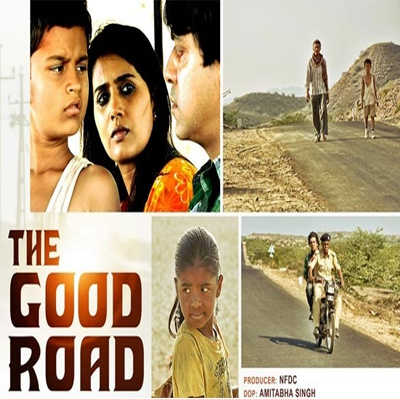
    New Delhi: Debut feature filmmaker Gyan Correa’s Gujarati film ‘The Good Road’ will represent India at the Oscars 2013 in the Foreign Language Film category.

    The film was picked by a 16-member committee headed by eminent Bengali filmmaker Goutam Ghose appointed by the Film Federation of India.

    Ritesh Batra’s Irrfan Khan starrer ‘The Lunchbox’, which has been a front runner for India’s entry to the Oscars, was the closest contender.

    However, ‘The Good Road’ was unanimously picked by the committee which comprised of eminent film professions representing different regions and languages from all over the country.

    Others in the running included ‘Bhaag Milkha Bhaag’, ‘Ship of Theseus’, ‘English Vinglish’ and ‘Shabdo’.

    ‘The Good Road’ had bagged the National Award for Best Feature Film (Gujarati) earlier this year.

    The National Film Development Corporation-produced film stars Sonali Kulkarni, Ajay Gehi, Keval Katrodia, Shamji Dhana Kerasia, Priyank Upadhyay, and Poonam Kesarsingh Rajput.

    Rajat Dholakia who has composed music for ‘Delhi 6’ and ‘Mirch Masala’ among others gave the music for this film.

    Based in Kachchh, Gujarat, the film revolves around a journey of three sets of people who travel on a highway, traveling across Banni, which borders the Rann. They are all on a journey to achieve their respective pursuits but over the next 24 hours, they discover something altogether different, something new and unexpected about their lives.